Corner Decorating Ideas That Actually Work: A Real Guide for Every Awkward Nook in Your Home
Empty corners are where good rooms go to die. You spend money on a sofa, hang the art, get the rug right, and then there’s that one weird wedge by the window that just sits there looking like a mistake. Corner decorating ideas usually get sold as “just add a plant!” but anyone who’s tried that knows a lonely pothos in a 9-foot ceiling corner looks worse than nothing at all.
I’ve rearranged the same corner in my living room (north-facing, next to a drafty window, weirdly angled because of an old radiator) probably six times in three years. I’ve bought the wrong-size chair. I’ve owned a fiddle-leaf that died in eleven days. So this is what I’ve learned actually works — by function, by budget, and by what your space will let you do.
Pick the Job First, Then the Stuff
Before buying a single thing, decide what the corner is for. Almost every styling mistake I’ve made started with skipping this step.
The six corner jobs that cover 95% of homes:
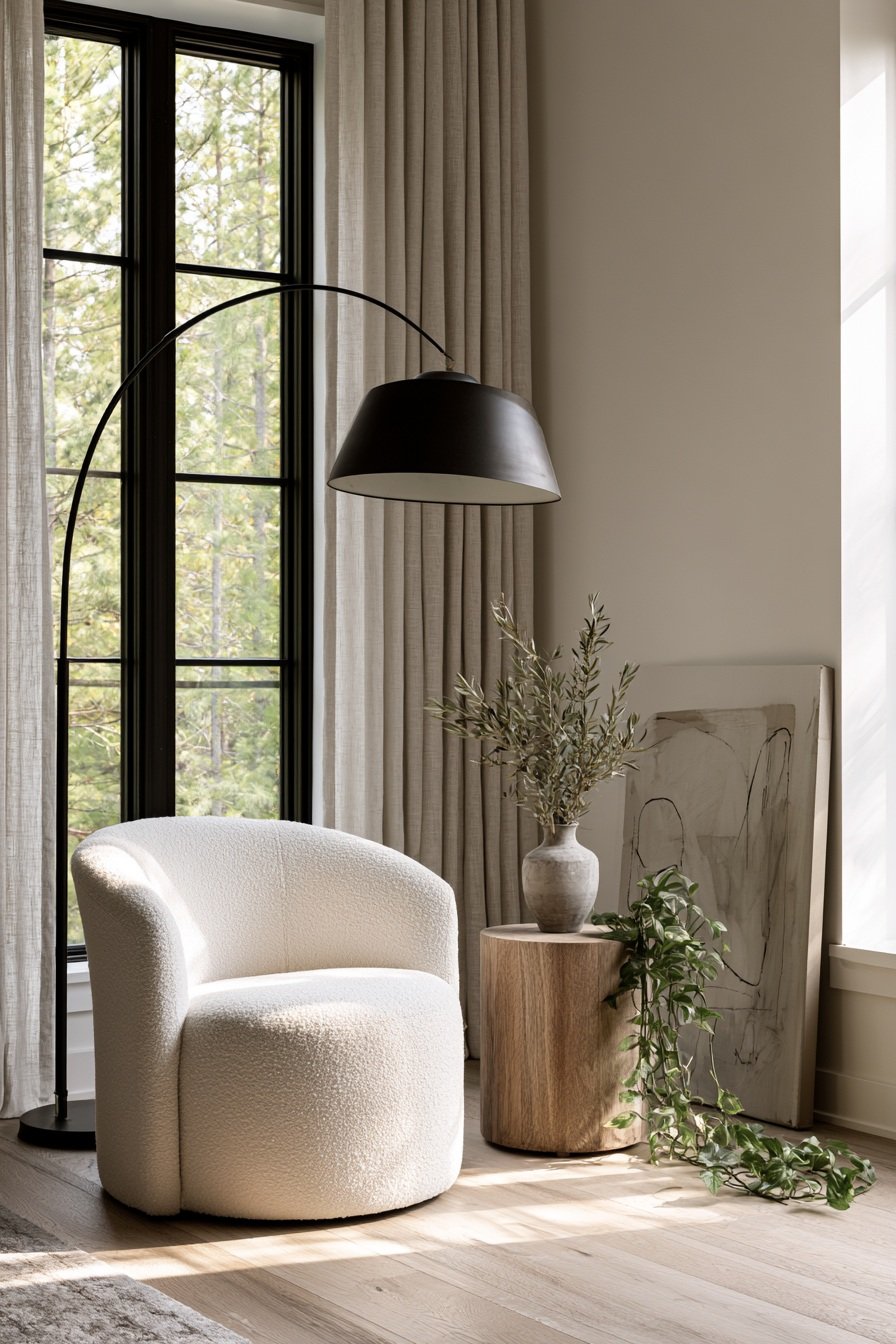
– Reading nook — chair, lamp, side table, art
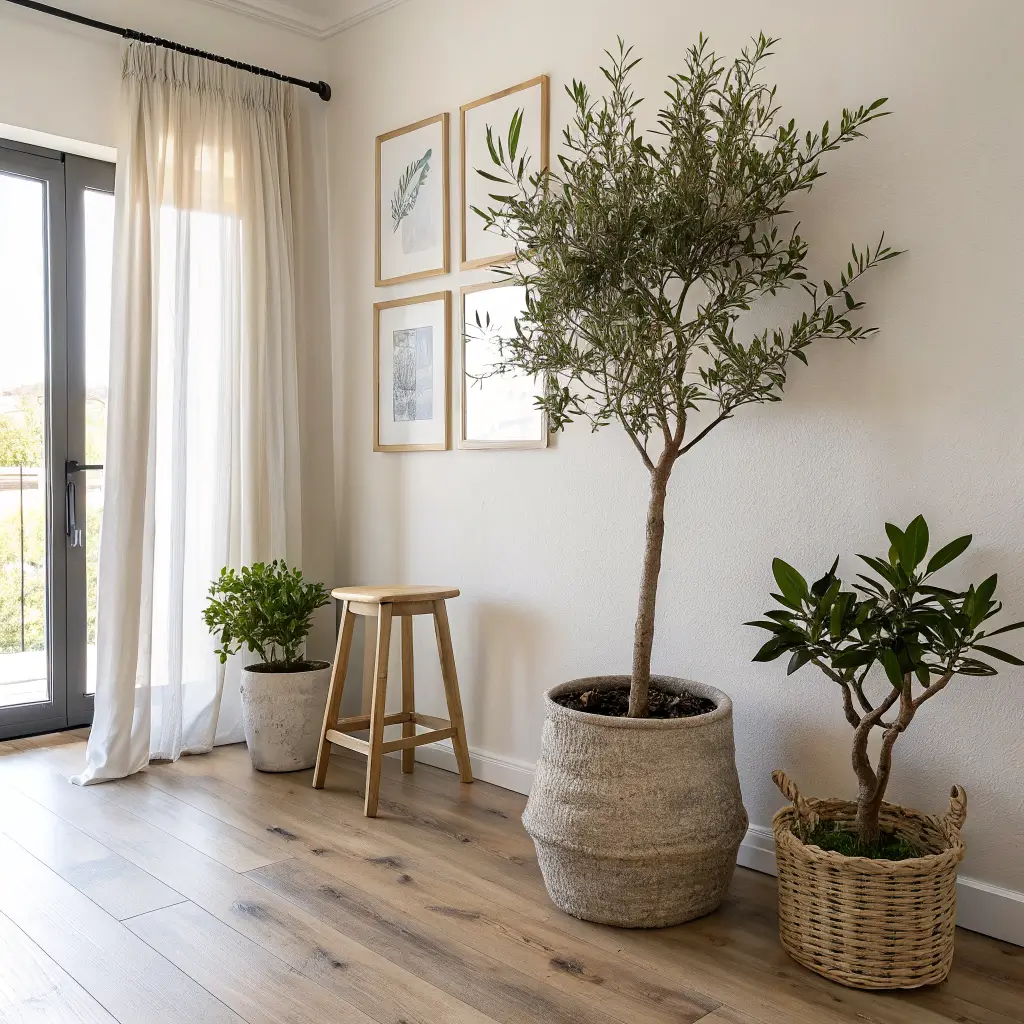
– Plant corner — single tall plant or a stepped cluster
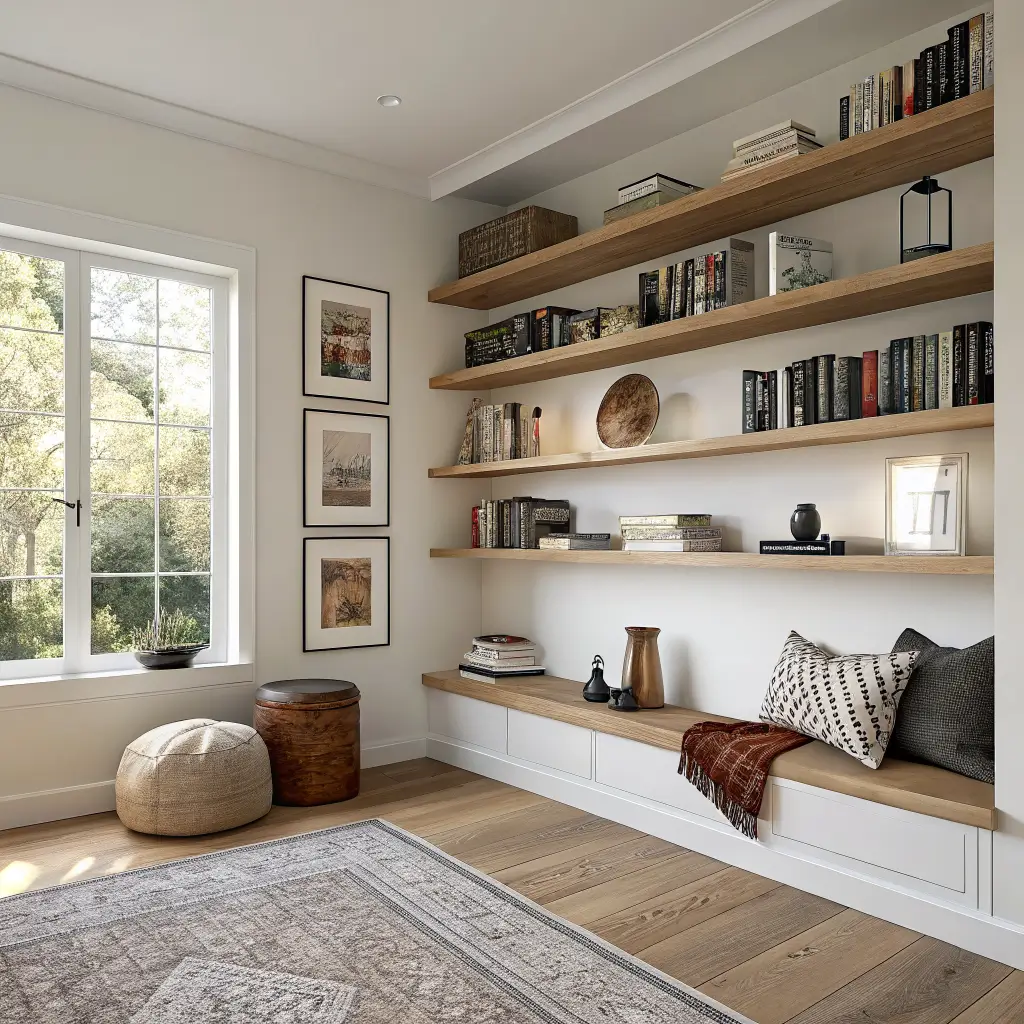
– Shelf/display — floating shelves, ladder, or cabinet
– Workstation — desk + chair + storage
– Bar or coffee station — cart, tray, glassware
– Mirror/vignette — full-length mirror or pedestal moment
Pick one. Two functions in one corner almost always looks confused unless the corner is huge.
Time and Money: What You’re Actually Signing Up For
A quick reality check before you open another tab to shop.
Setup time
– Plant + lamp + side table vignette: 30–60 minutes
– Full reading nook (assembly included): 1–3 hours
– Floating shelves or a small gallery wall: half a day to a full day
Cost, low to high
– Budget corner (IKEA, Target, Amazon, thrift): $150–$400. Realistic for a plant + lamp + small side table, or a basic shelf setup.
– Mid-range: $500–$1,200. Better chair, decent faux tree, plug-in sconces, or a quality bar cart.
– High-end with built-ins or custom millwork: $800–$2,500+.
The single best money I ever spent was on a $60 plug-in brass picture light above a thrifted print. The worst was a $220 faux olive tree with leaves so plastic-looking I had to spray-paint the trunk darker and bend every branch by hand to make it pass.
How Much Space You Really Need
– Vignette corner (pedestal + vase, or plant + stool): 3′ x 3′ is plenty
– Reading nook: 4′ x 4′ minimum, 5′ x 5′ comfortable
– Corner desk: at least 4–5 feet of wall on each side, 24″ desk depth
If you have less than 3 feet square, don’t force a chair. A floor plant and a leaning piece of art will look ten times better than a cramped seat nobody uses.
The Style I Keep Coming Back To
I’ve cycled through boho, full minimalism, and a brief and regrettable mid-century phase. What’s stuck is what most people are landing on right now: modern organic — warm whites, light oak, black accents, real or convincing greenery, and one textural fabric like bouclé or a chunky linen.
Colors I actually use and recommend:
– Walls: warm whites like Sherwin-Williams Alabaster or Benjamin Moore Swiss Coffee. They photograph beautifully and don’t go blue at night.
– Larger pieces: greige and taupe upholstery
– Accents: matte black in lamp bases, frame edges, picture lights
– Greenery: sage and olive tones, real or faux
– Warmth: terracotta, camel, rust in pillows and vases
Materials that play well together: light oak or ash, bouclé, rattan, matte black metal, ceramic, and stone. If you pick three of those and repeat them, almost any corner will look pulled together.
What Goes In Each Corner Type
Reading Nook
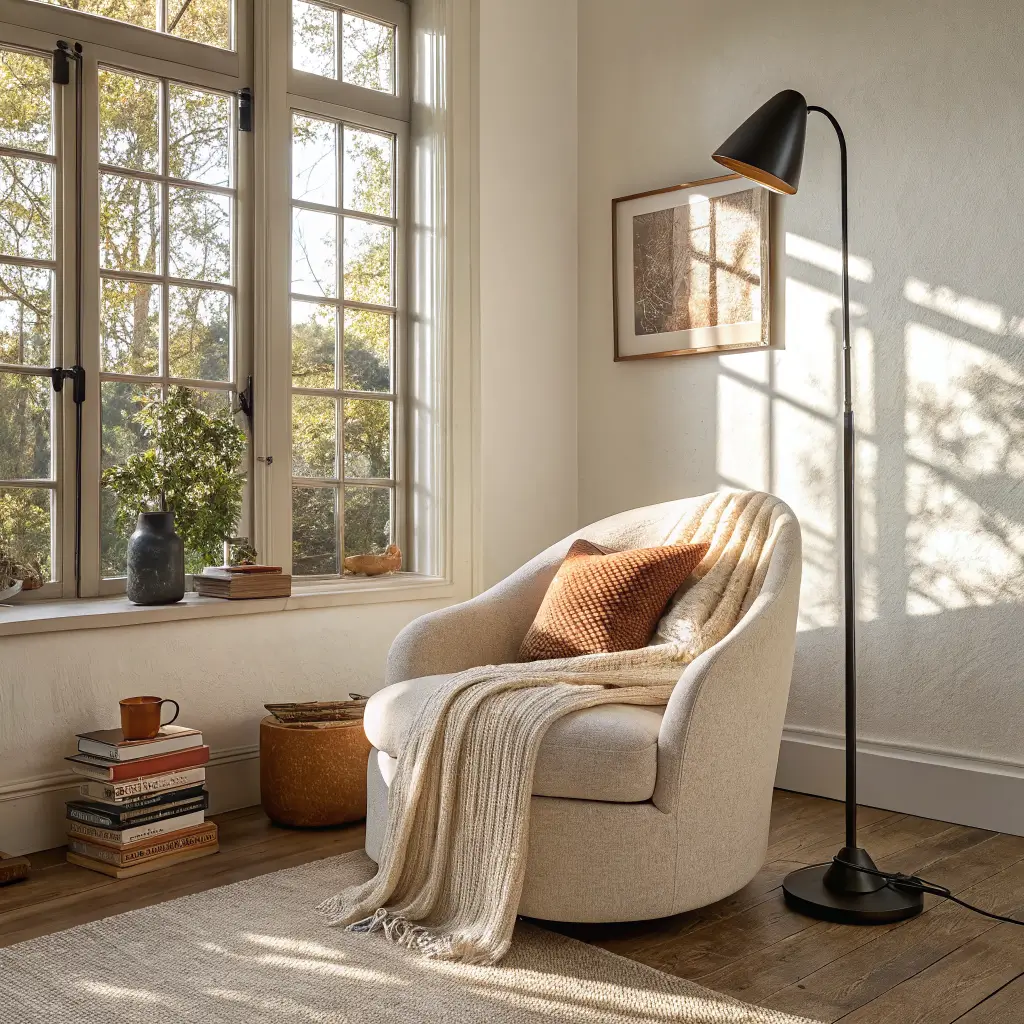
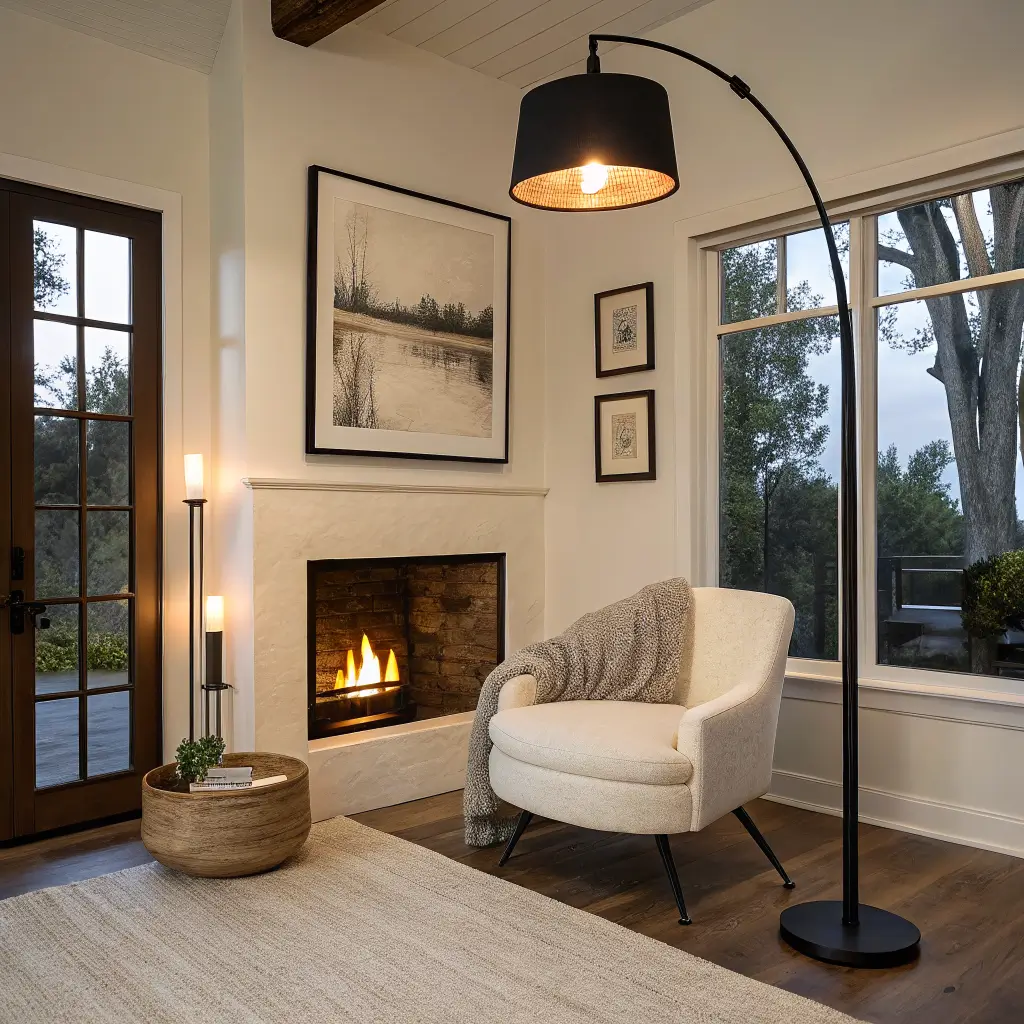
– Accent chair: 26″–32″ seat width fits most corners. Bouclé barrel chairs and swivel slipper chairs are everywhere right now for good reason — they’re rounded, so they don’t fight the angle of the corner.
– Floor lamp: arc or slim pole, drum or dome shade. Position it behind the chair so light falls over your shoulder.
– Side table: round, 12″–18″ diameter. Round matters — square tables crowd a chair visually.
– Throw and one or two pillows in coordinating neutrals.
My mistake here: I bought a beautiful square marble side table that was too tall for the chair arm. I had to set my coffee down lower than my elbow. Sold it within a month. Side table height should be within 2 inches of the chair arm.
Plant Corner
– One tall plant (5–7 feet): olive tree, fiddle-leaf, rubber plant, or bird of paradise
– Or a cluster of 2–3 in coordinating planters at varied heights — stools and stands between 12″ and 30″ work well for stepping
– A seagrass basket to hide the ugly plastic nursery pot
The trick most people miss: put the tallest plant at the back of the corner, not the front. Stepping smaller plants forward gives depth instead of a flat wall of green.
Shelf or Display Corner
– Floating corner shelves: L-shaped, 18″–24″ per side, around 8″–10″ deep
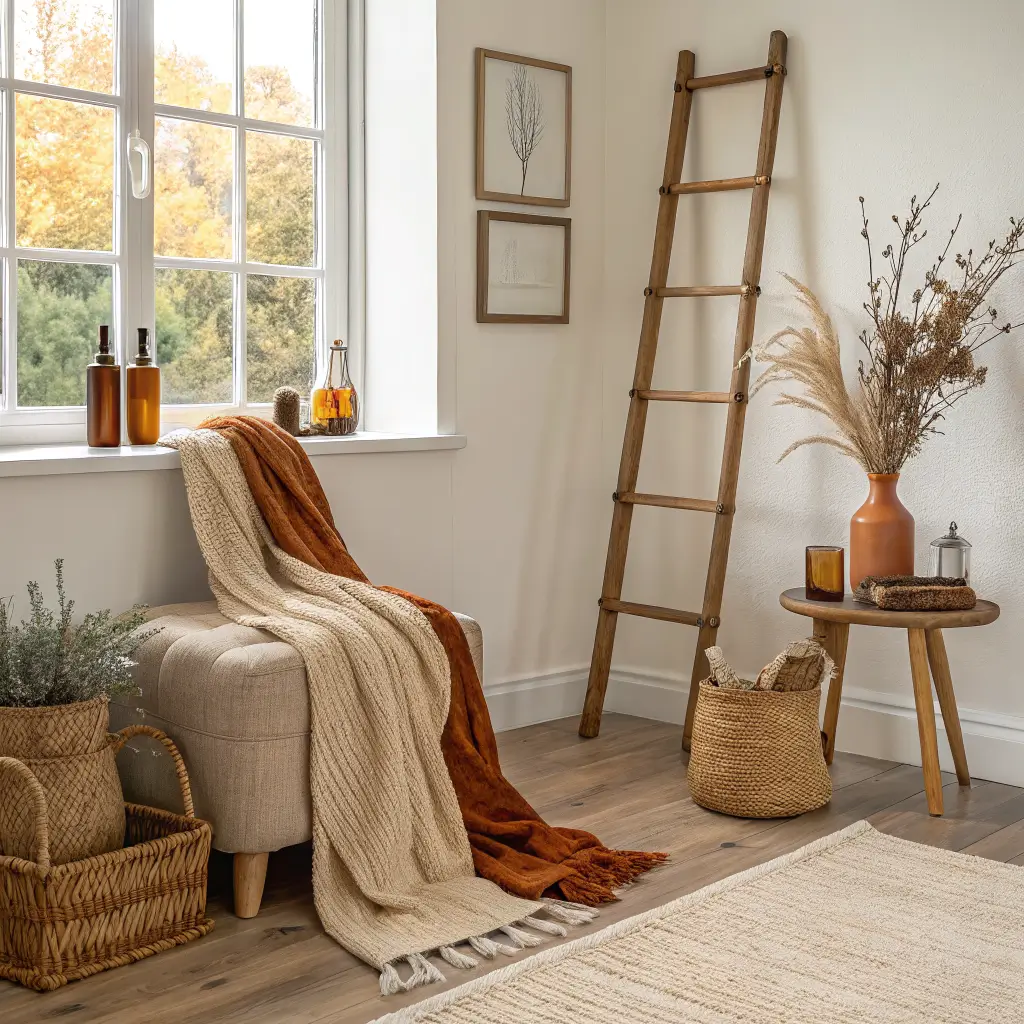
– Or a leaning ladder shelf, 5–6 feet tall
– Styling objects: stacked books, small framed art, a candle, one sculptural vase, one small plant per shelf
Follow a one-third rule — leave about a third of every shelf empty. Crammed shelves read as clutter no matter how nice each individual object is.
Workstation
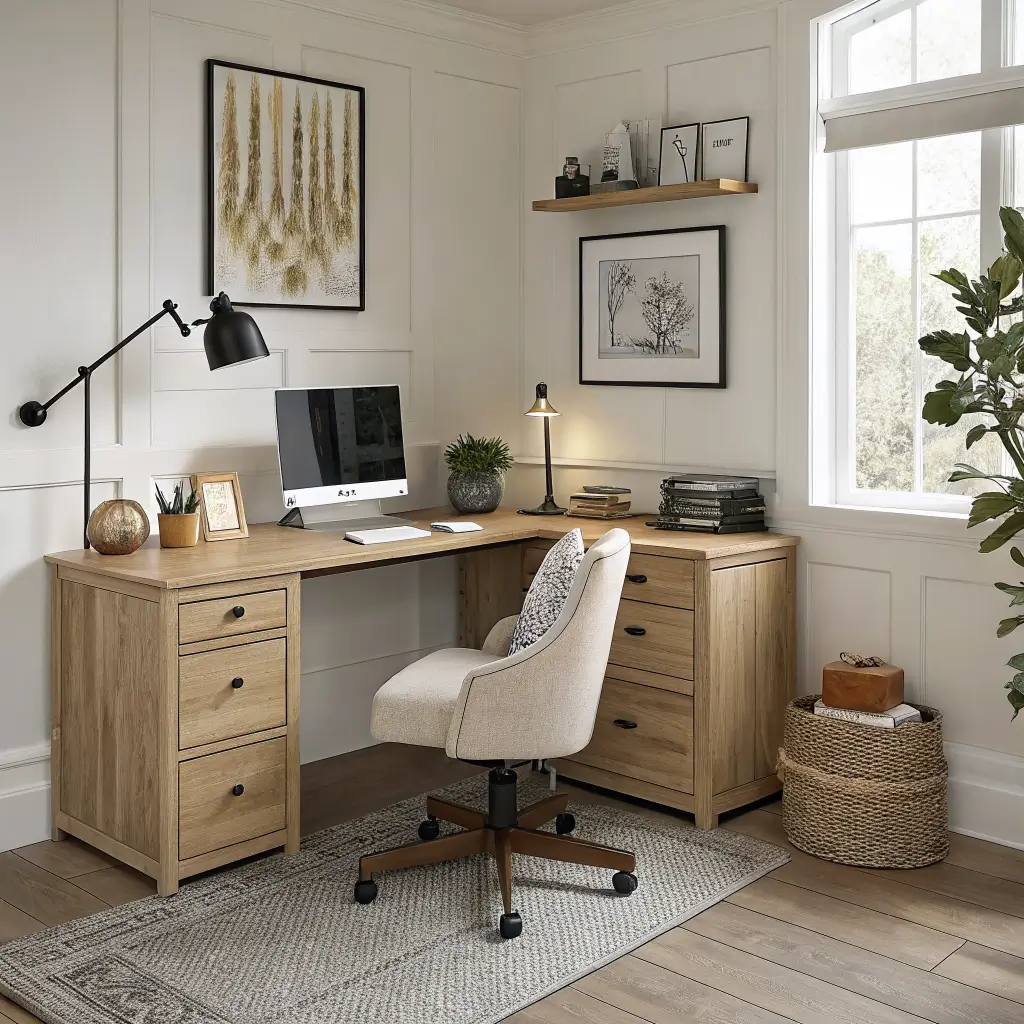
– Desk: 24″–30″ deep, 36″–48″ wide. L-shape if the corner is your main work area.
– Chair clearance behind: 30″–36″ to roll back comfortably
– Task lighting: desk lamp or plug-in wall sconce
– One or two shelves above, mixing function (pen cup, file box) with one or two styled pieces
Bar or Coffee Corner
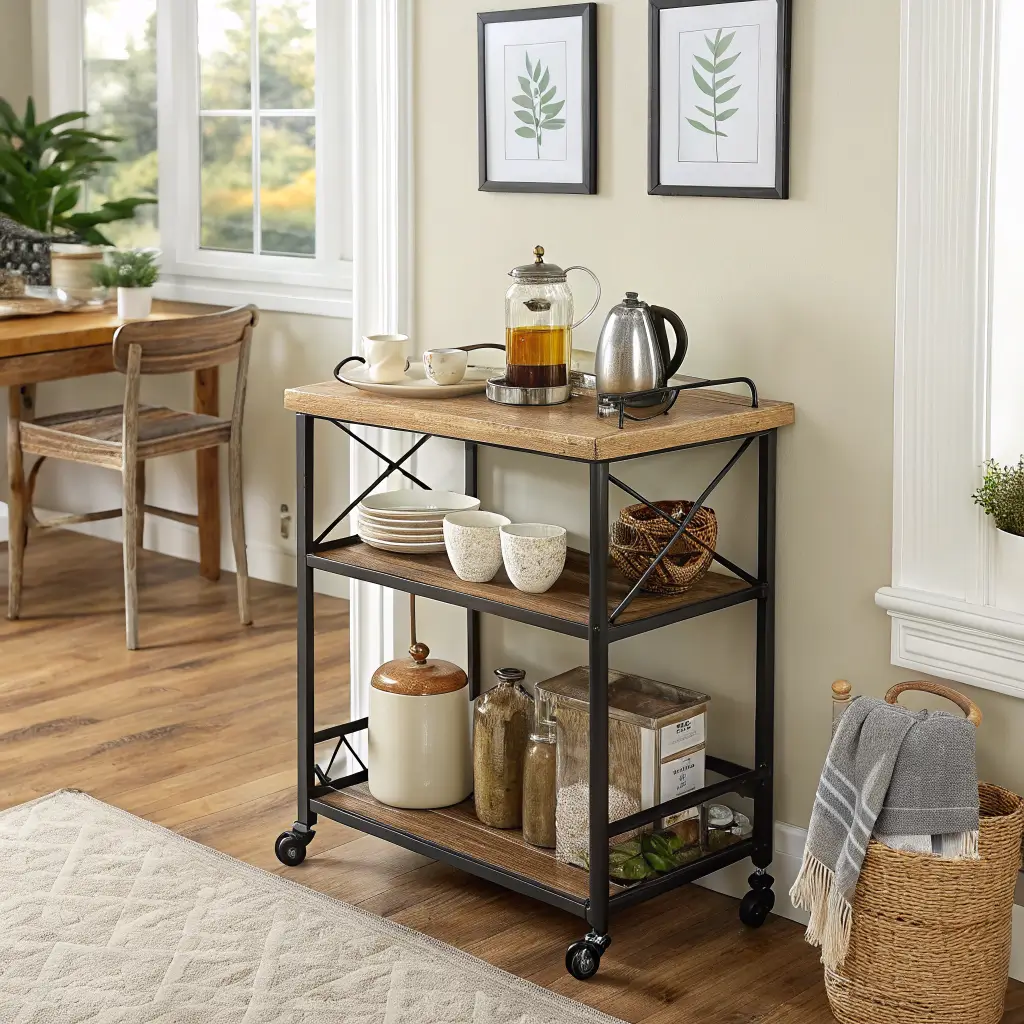
A cart, 24″–36″ wide, 30″–36″ tall, rolled into the corner with a couple inches of breathing room. Top shelf for bottles or canisters, bottom for glassware or a kettle. Always hang something above it — art, a small mirror, or a single shelf. A cart on a blank wall looks like it’s waiting to be moved.
Mirror Corner
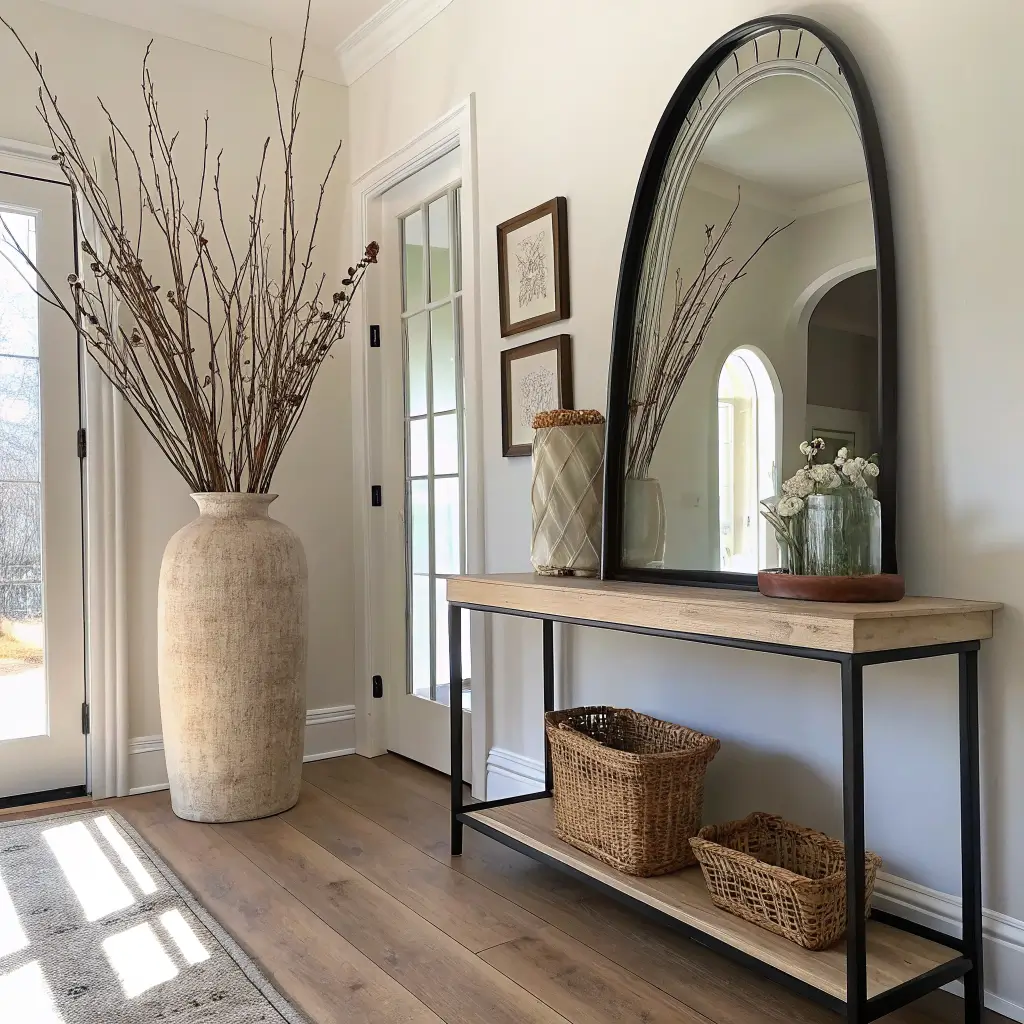
– Narrow full-length mirror, 16″–24″ wide, 60″–70″ tall. Arched and black-framed mirrors are the easy win.
– Pedestal or slim console, 30″–36″ tall
– One sculptural vase with tall branches — eucalyptus, pampas, or bare cherry branches in winter
This is the corner that makes a hallway feel like someone designed it.
The Three Rules That Actually Matter
Rule 1: Repeat your accent color at least three times.
If you’ve got black, put it in the lamp base, the picture frame, and a small detail like a planter rim or a candlestick. One black thing in a corner looks accidental. Three feels intentional.
Rule 2: Style top to bottom.
Start with what goes on the wall — art, mirror, picture light. Then mid-level — lamp, shelves, chair back. Finish with floor — plants, baskets, rug. Doing it the other way around is how you end up with art hung at random heights to “fill space.”
Rule 3: Use three textures minimum.
A bouclé chair, a wood side table, a ceramic vase, and a linen pillow is four. That’s a corner that looks layered. A leather chair, leather pillow, and wood table is one texture pretending to be three.
Lighting Is Where Most Corners Fail
If a corner doesn’t have a light source after sunset, it disappears. The room looks unfinished and you don’t know why.
Minimum for a reading corner: 400–800 lumens at the lamp. A 60W-equivalent LED bulb hits that range easily. For a vignette corner without seating, a plug-in picture light over art is the cheapest dramatic upgrade you can make — I paid $58 for mine on Amazon and it changed how the whole room reads at night.
Renters: plug-in sconces with cord covers painted to match the wall are nearly invisible. Don’t skip them because you can’t hardwire.
Mistakes I See (and Have Made) Constantly
– One small object in a giant empty corner. A 12″ candle holder on the floor in a corner with 9-foot ceilings looks abandoned. Go tall or go layered.
– Overcrowding. Stick to a 2–3 item rule per level: floor, mid-height, wall. More than that and it reads as visual noise.
– Ignoring vertical space. Most corners die because everything sits at coffee-table height. Pull the eye up with art, a tall plant, or a picture light.
– Mixing four styles in one corner. Pick a direction — Scandi, boho, modern organic — and stick to it for materials and shapes. A rattan chair plus a chrome lamp plus a tufted velvet pouf is a yard sale.
– Forgetting traffic flow. Keep 24″ minimum walkway clearance. Don’t put sharp-cornered side tables where people swing past.
Easy Seasonal Swaps (Without Redoing the Whole Corner)
The corners I update seasonally are the bar cart, the shelf, and the blanket ladder. Everything else stays put.
– Fall: amber glass bottles, a rust pillow, a heavier wool throw
– Winter: evergreen or eucalyptus branches in the existing vase, faux fur throw, a small string of warm-white fairy lights wound through a ladder
– Spring: swap to a linen pillow cover, add fresh tulips or faux ranunculus
– Summer: lighter cotton throw, a woven fan on the wall, striped pillow
The goal is one or two swaps per season, not a full restyle. If you find yourself buying ten new things every October, the base corner isn’t doing its job.
If You Only Do Three Things
For anyone staring at a blank corner right now: get a 5–6 foot plant or tree, add a floor lamp at least 60 inches tall behind or beside it, and hang one piece of art at eye level on the adjacent wall. That’s a finished corner for under $300 and under an hour of work.
Everything else is just refinement.
The best corner decorating ideas are the ones you stop noticing because they finally make the room feel whole. My fiddle leaf fig in the living room corner started as a desperate fix for an empty spot, and now it is the first thing people comment on when they walk in. Start with one thing that fills the space properly, and let the rest settle around it.
Conclusion
The corner decorating ideas that worked for me came from accepting that the corner was never going to be the center of the room. I put a small armchair there, added a floor lamp with a warm bulb, and hung a single framed photograph of my grandmother’s garden. Now it is where I sit with coffee on Sunday morning and read the same paragraph three times because I am watching the light move across the wall. That is what a corner should be — not a problem to solve, but a place to be still.
More Decor Ideas to Explore
- 29 Luxury Master Bedroom Ideas That Feel Like Your Own Private Retreat
- Effortless Modern Coastal Decor: Transform Your Space Without Breaking the Bank
- 29 Luxury Dining Room Ideas That Make Every Meal Feel More Elegant
- Farmhouse Spring Decor: Transform Your Home with Vintage Charm and Seasonal Warmth