Corner Fireplace Ideas That Actually Work (Without Making the Room Feel Off)
Corner fireplace ideas usually get Googled at the exact moment someone realizes their living room feels lopsided and they can’t figure out why. I’ve been there. My first apartment had a corner gas fireplace shoved at a 45-degree angle into a 12-by-14 living room, and for almost a year I arranged the sofa straight against the long wall like the fireplace wasn’t even there. The room felt wrong. I just didn’t know the fix was the furniture, not the fireplace.
Once I started treating the corner as the anchor instead of an inconvenience, everything clicked. Here’s what I’ve learned from rearranging that room about four times, helping my sister redo hers, and watching a friend blow her budget on a stone refacing she didn’t actually need.
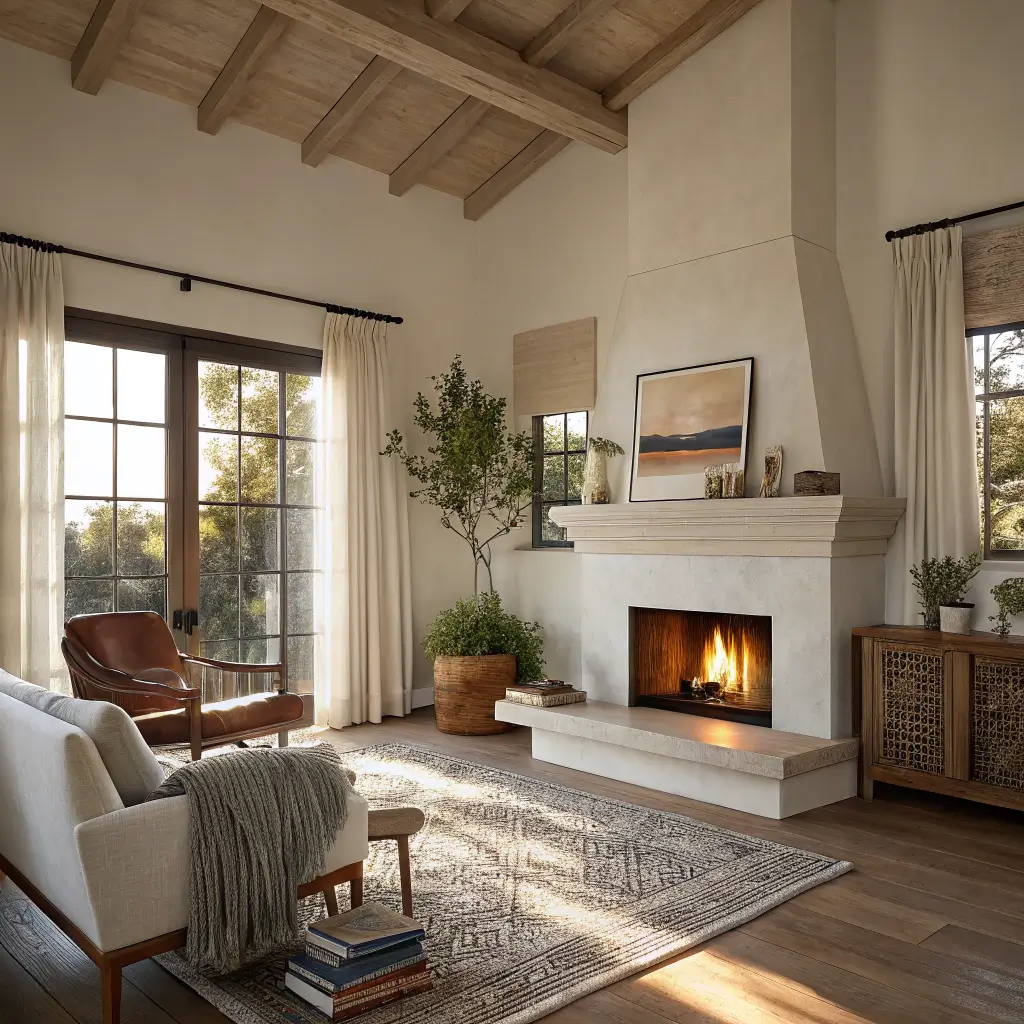
Who This Look Is For
A corner fireplace is the right setup if you want to:
– Keep your long walls free for a sofa, console, or art
– Solve a weirdly shaped living room (long rectangles, open-plan combos, rooms with too many doorways)
– Create a real focal point in a small space without sacrificing seating
It works in living rooms, dens, family rooms, and great rooms. I’ve also seen it pulled off in a home office lounge with two leather chairs angled toward the hearth and a single brass floor lamp behind them. That was it. Looked expensive.
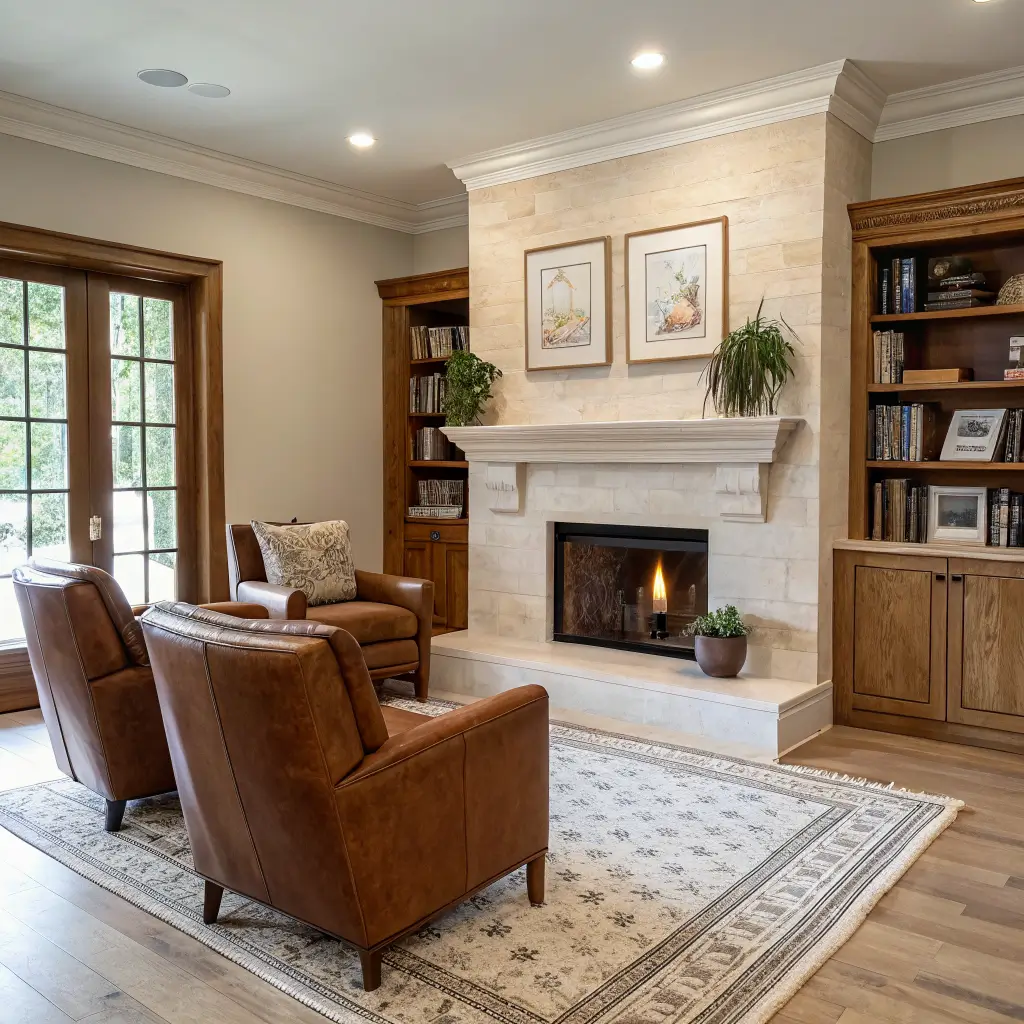
What It Costs to Pull Off
Styling only (mantel decor, art, candles, baskets, a mirror): $50–$300. This is the weekend project, and honestly it’s where most people should start before they spend a dime on construction.
Mid-range update (new mantel, fresh paint on the surround, a small built-in or bookshelf beside it, refreshed decor): $300–$1,500.
Full renovation (stone or plaster refacing, custom built-ins, ceiling-height surround): $2,000–$10,000+. I’ve seen friends spend $6K extending plaster to a 10-foot ceiling, and it absolutely changed the room — but only because the rest of the layout already worked.
Time-wise: a styling refresh is one afternoon. A mantel swap and paint job is a weekend. Anything structural is a contractor conversation.
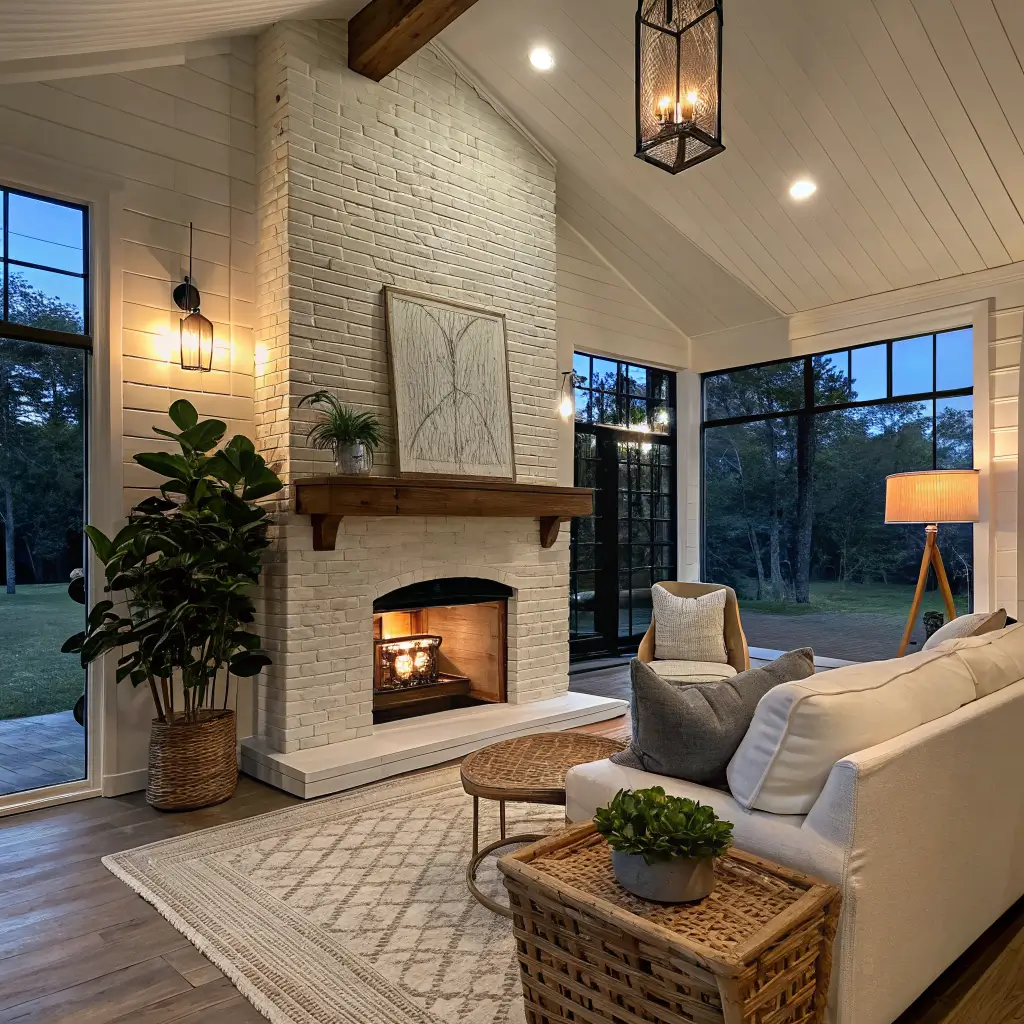
The Style Direction
There isn’t one “corner fireplace style.” The current looks I keep coming back to:
– Modern organic: plaster surround, oak mantel, clay vessels, linen upholstery
– Transitional: neutral stone, clean-lined wood mantel, symmetrical art arrangement
– Modern farmhouse: painted brick (Sherwin-Williams Alabaster or similar warm white), reclaimed wood beam mantel, matte black hardware
– Coastal: whitewashed brick, pale oak, woven baskets, one soft blue accent
– Boho: textured plaster, rattan side chair, layered Moroccan-style rug, stacked ceramics
The palette I default to: warm white, oak, charcoal, and one earthy accent — sage, rust, or clay. Three to five colors total. More than that and the corner starts looking busy from across the room.
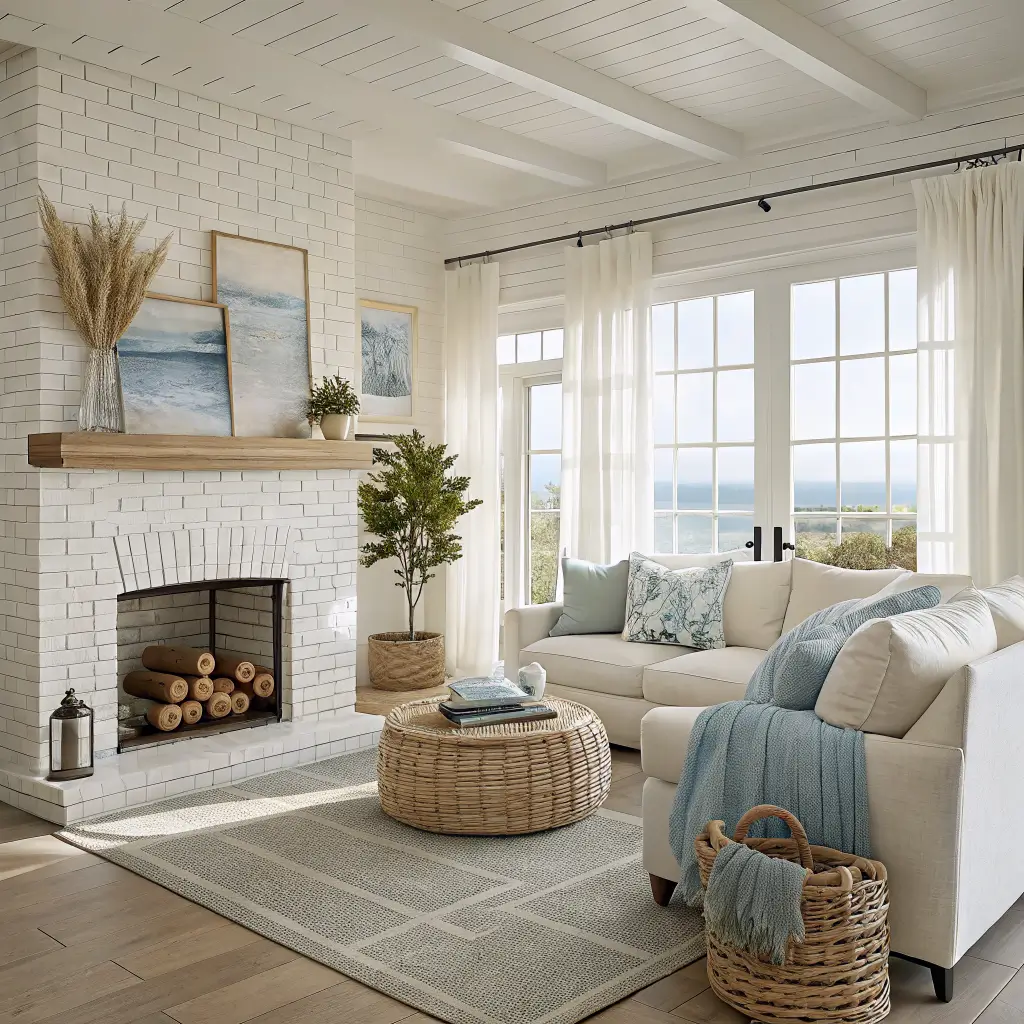
The Pieces That Actually Make It Work
The surround. This is your hero. Stone, brick, plaster, tile, or just clean painted drywall — pick one and commit. The surround sets the tone for everything else.
The mantel. A floating oak shelf, a chunky reclaimed beam, or a slim painted ledge. For a modern look, I’d go with a 4-inch-thick white oak floating shelf, roughly 6 inches deeper than your surround on each side.
Seating that acknowledges the corner. This is the part everyone gets wrong. In a small room, a loveseat angled toward the hearth. In a bigger room, two chairs at a 30–45 degree angle facing the fireplace, with a sofa across from them. Do not push furniture flat against the walls. The corner needs to be in the conversation.
Something tall beside the fireplace. This is the secret weapon. A bookshelf, a slim cabinet, a tall plant, or open shelving on the wall next to the hearth. It fixes the asymmetry that makes corner fireplaces feel awkward.
Soft, low pieces in the other corners. A floor lamp. A 4-foot fiddle-leaf fig. A woven basket with a folded throw. Empty corners are what make a corner fireplace look accidental.
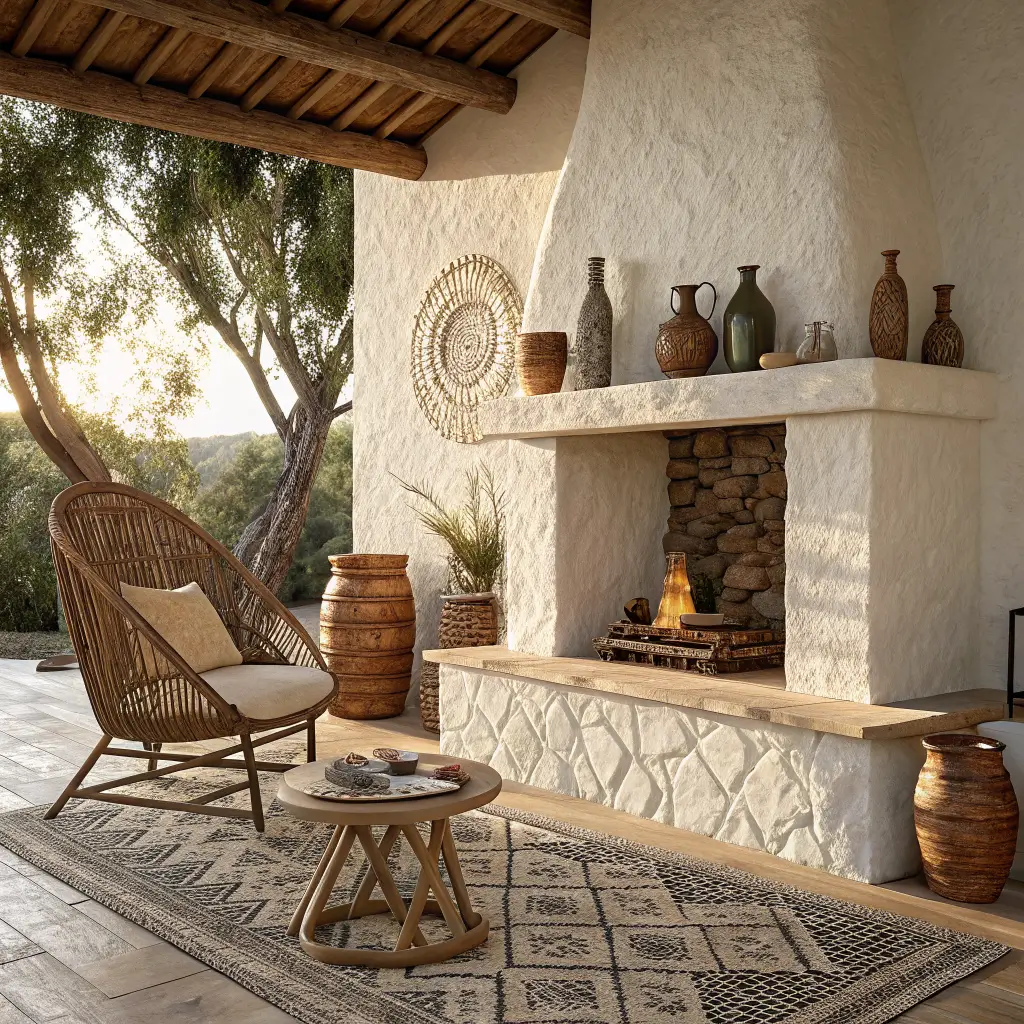
How to Lay Out the Room
Start with your largest piece — the sofa or loveseat — and place it so someone sitting on it can see the fireplace without turning their head more than about 30 degrees. That’s the test. If you have to crane your neck, the layout’s wrong.
Then:
1. Add a chair (or two) on the opposite side, angled toward the hearth.
2. Drop a rug that grounds all the seating. It should touch at least the front legs of every piece.
3. Style the mantel.
4. Fill the wall beside the fireplace with shelving, a cabinet, or tall art.
5. Address the other corners last with lamps, plants, or low storage.
A small detail that matters: leave at least 36 inches of walking clearance between the front of the hearth and the closest piece of furniture. I crammed an ottoman too close once and the room felt claustrophobic for months before I figured out why.
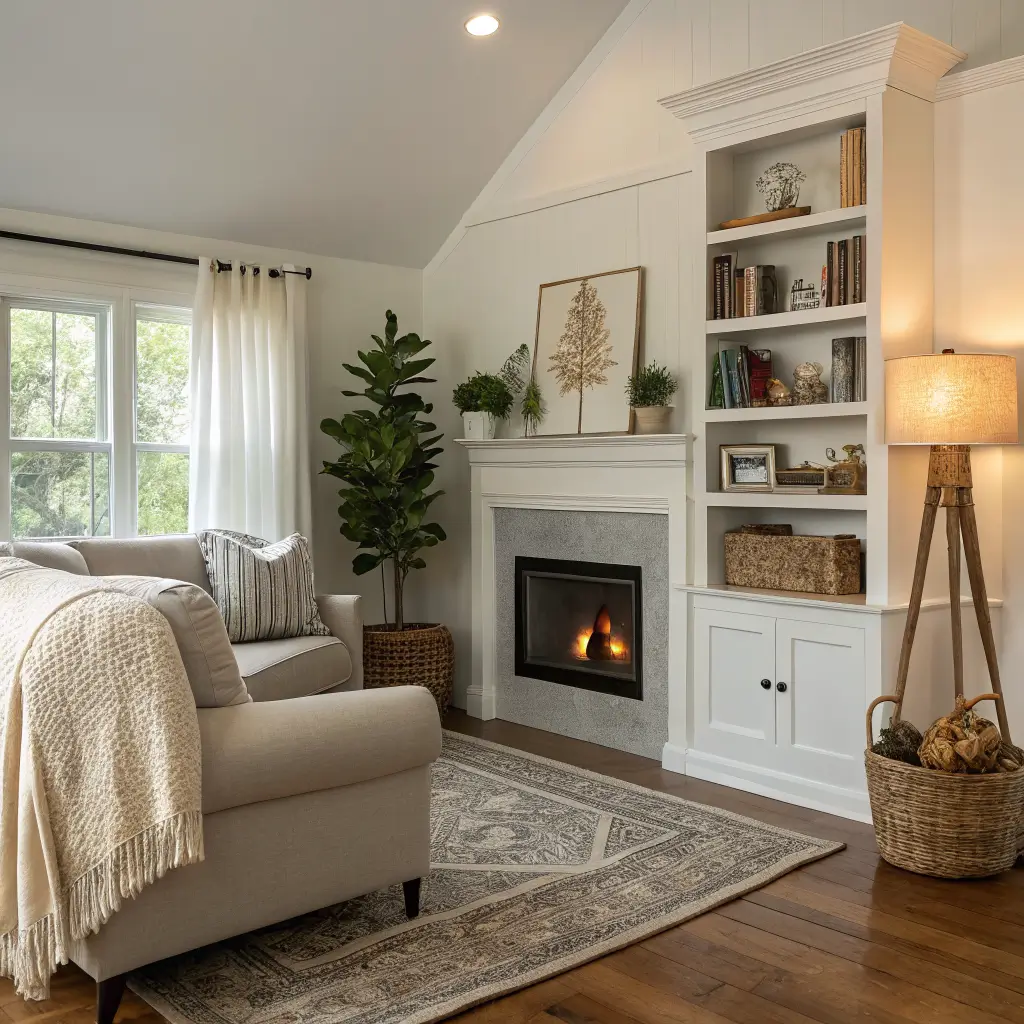
Styling the Mantel
Fewer, bigger pieces. Every time.
My go-to formula:
– One tall element on one side (a piece of leaning art, roughly 24–30 inches tall, or a vintage mirror)
– One medium piece offset from it (a chunky ceramic vase with eucalyptus or olive branches)
– One low, horizontal element (a stack of two or three books with a small object on top, or a shallow brass tray with a pair of taper candles)
Asymmetry beats symmetry on a corner fireplace nine times out of ten because the corner itself is already asymmetrical. Trying to force symmetry fights the architecture.
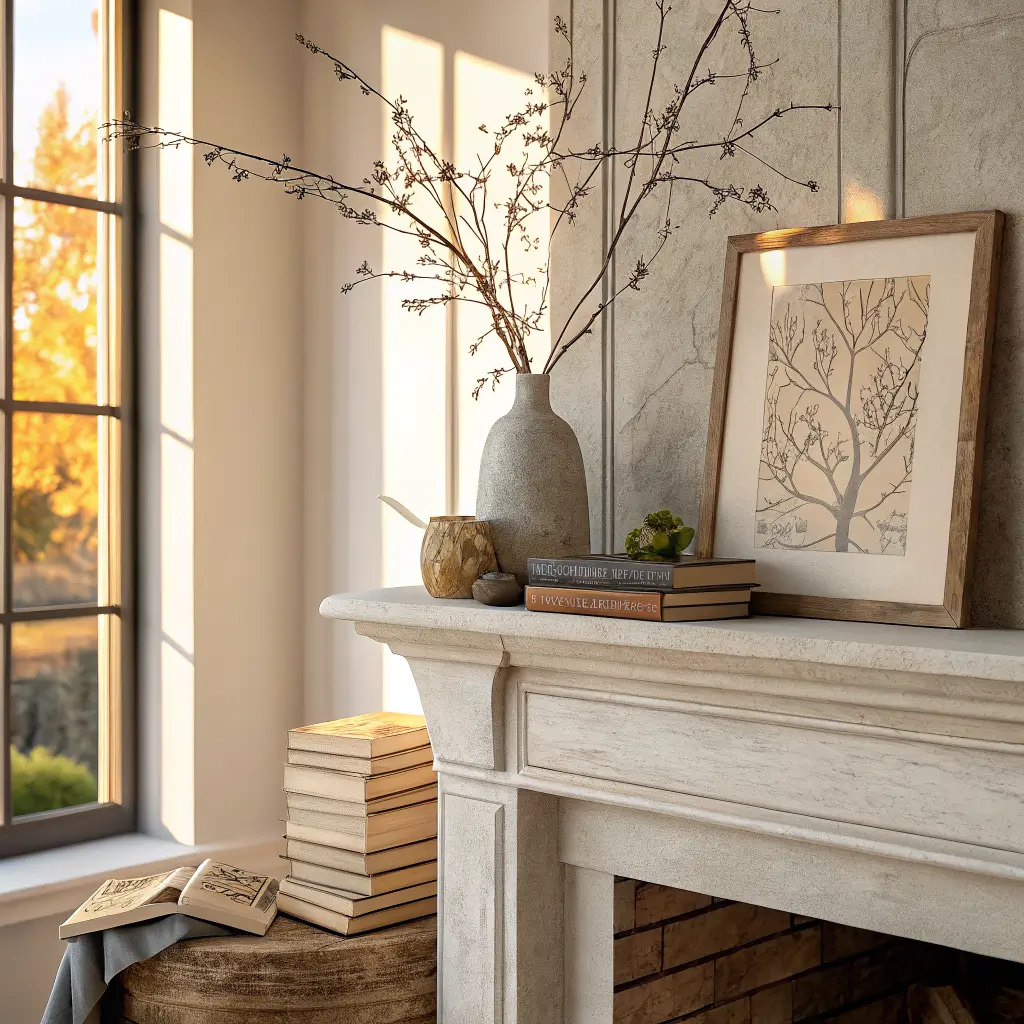
The TV Question
If your TV has to live in the living room and your fireplace is in the corner, here’s the honest answer: don’t mount it above the corner fireplace unless the mantel sits below 54 inches from the floor. Most corner fireplaces are too tall, and you’ll end up with neck strain and a TV that dominates the room.
Better options:
– Put the TV on the adjacent wall, perpendicular to the fireplace, and arrange seating so both are visible from the sofa
– Use a low media console on the wall next to the fireplace with the TV mounted at standard height (center of screen around 42 inches from the floor)
– Skip the wall mount and use a slim media cabinet across from the sofa
The “TV over the fireplace” instinct usually comes from running out of wall space, which is exactly the problem corner fireplaces are meant to solve. Don’t undo it.
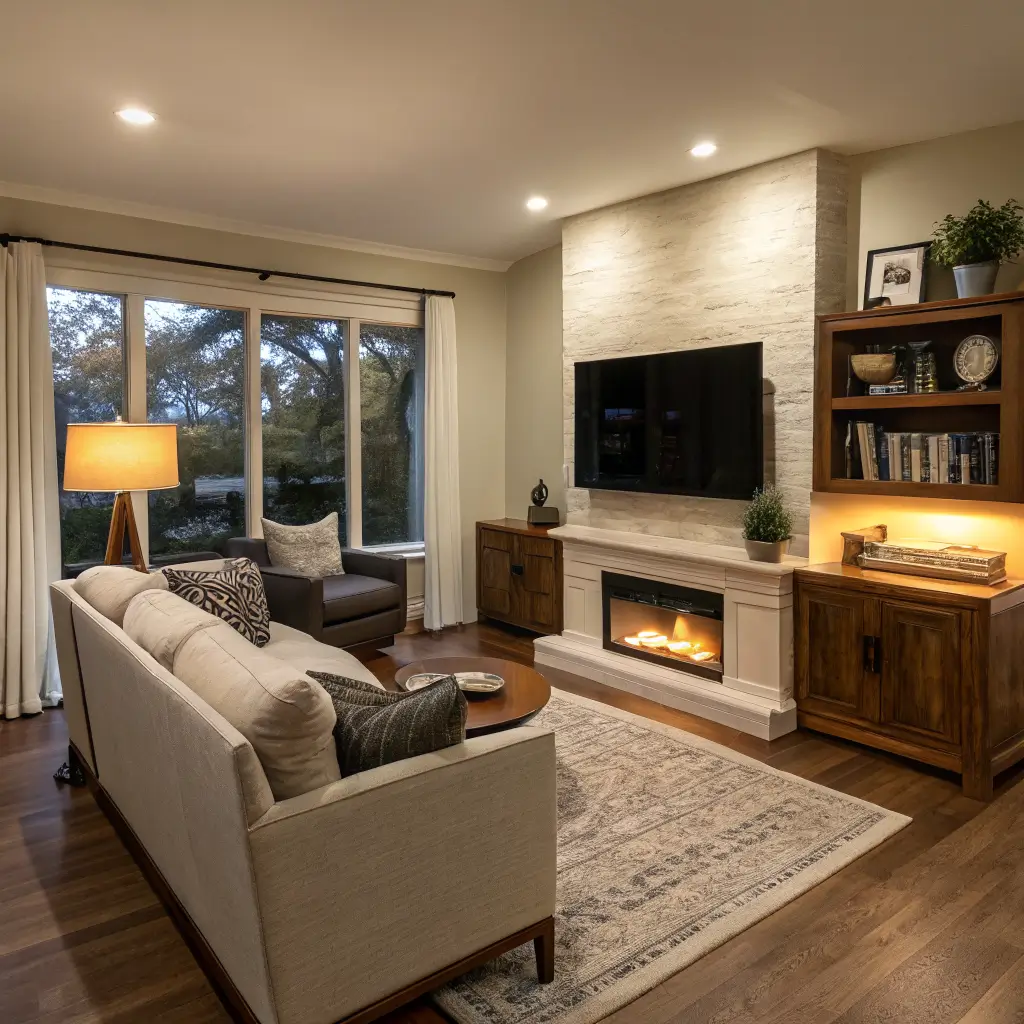
Making a Small Corner Fireplace Feel Bigger
Small fireplaces in big rooms look like an afterthought. Fix it with height and width:
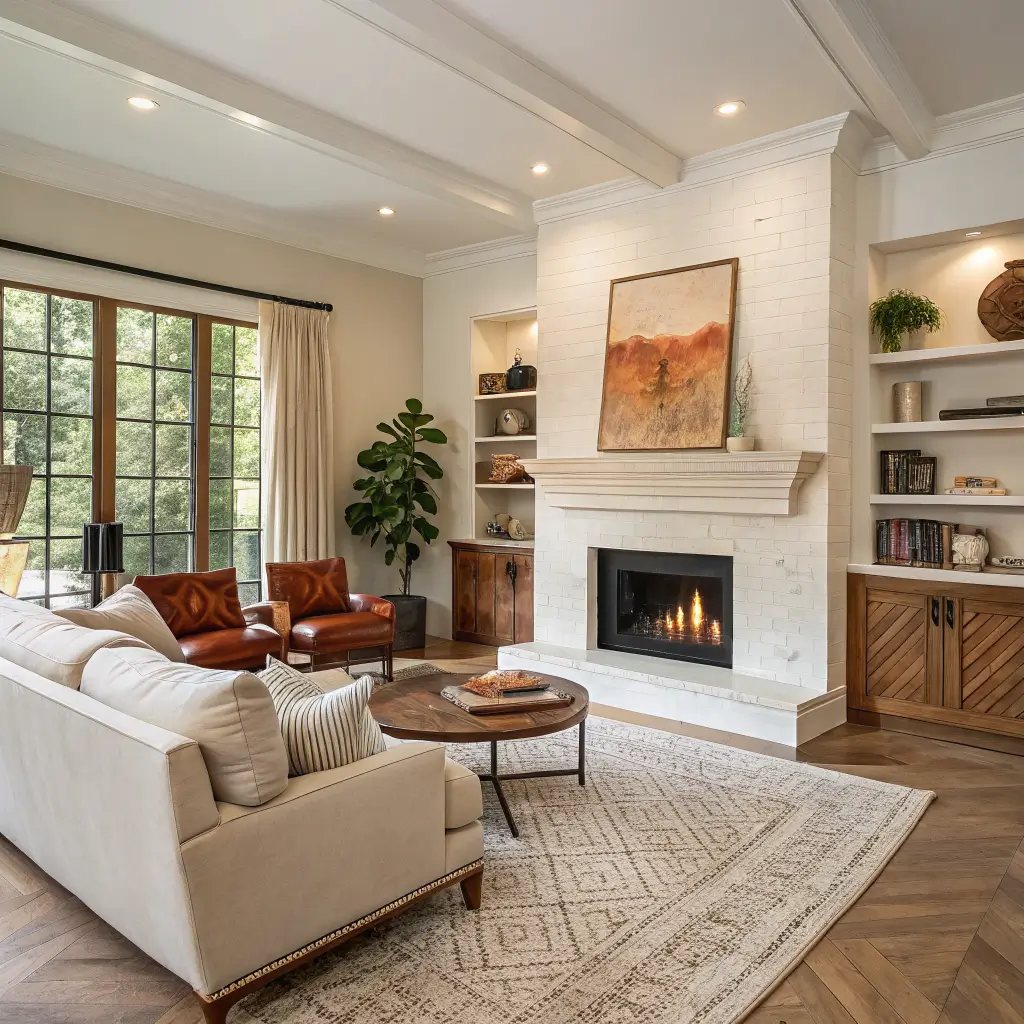
– Extend the surround to the ceiling. Plaster, stone veneer, or even vertical shiplap painted the same color as the wall. This is the single most effective move.
– Flank it with built-ins or open shelving to widen the visual footprint.
– Lean a large piece of art on the mantel — something 30 inches tall or more — and let it overlap the wall behind.
– Add vertical paneling or a contrasting paint block from floor to ceiling in the corner.
I helped my sister do the paint-block version in a rental — a warm taupe (Benjamin Moore Revere Pewter) painted in a tall rectangle behind her short white fireplace. Cost her $40 and it completely changed how the corner read.
Mistakes I See Constantly
– Furniture floating too far from the corner. The fireplace becomes background noise.
– Every other corner left empty. Makes the fireplace look like it landed there by accident.
– A cluttered mantel. Five small candles, three picture frames, a tiny plant, and a clock. Pick three things, max.
– No vertical element. A short fireplace with nothing tall near it looks stranded.
– Matching the surround to the floor. If you have oak floors and an oak mantel and a wood-tone TV stand, the room reads flat. Break it up with paint, plaster, or stone.
Easy Seasonal Updates
This is where corner fireplaces earn their keep — the mantel is built-in styling real estate.
– Spring/summer: olive or eucalyptus stems in a stoneware jug, a linen runner draped off one side, unlit white tapers
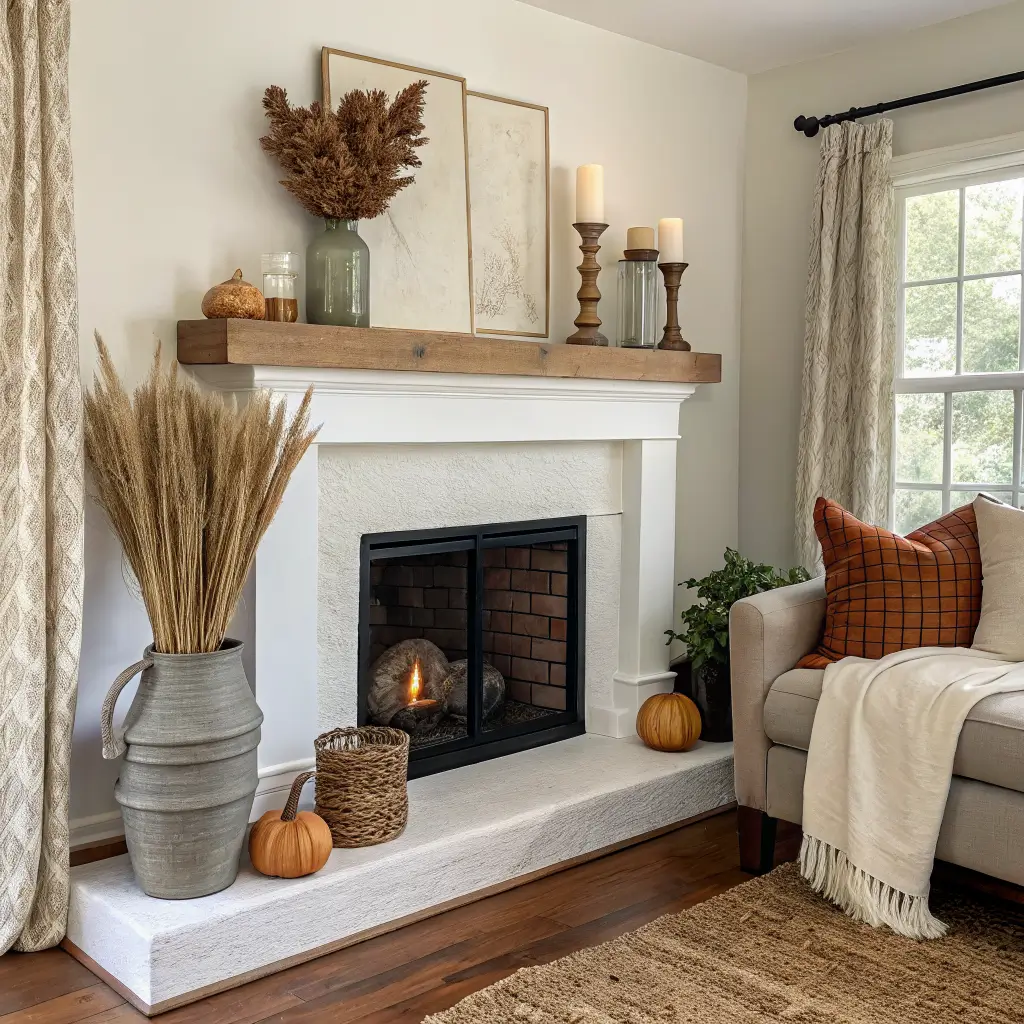
– Fall: dried wheat, a couple of small heirloom pumpkins (the sage-green ones, not orange), amber glass candleholders
– Winter: a loose cedar or fir garland (skip the tight, plastic ones), brass candlesticks, a single oversized pinecone in a bowl
– Year-round neutral: a leaning piece of abstract art, one chunky ceramic vase, two unlit candles
Swap pillow covers and throws on the seating at the same time and the whole room reads like you redecorated.
Budget Upgrades That Punch Above Their Weight
If you can’t do a full renovation:
– Paint the brick. Limewash for texture, or a flat warm white for a modern look. About $60 in materials.
– Replace the mantel. A 6-foot solid oak floating shelf runs $150–$300 and reads custom.
– Add peel-and-stick tile over an outdated tile surround. Around $100 for most fireplaces.
– Build a simple trim frame around the surround with primed pine and paint. Maybe $40 in lumber.
– Swap one piece of seating for two matching chairs angled toward the hearth. Even thrifted chairs reupholstered in a neutral linen will change the whole feel.
The corner fireplace I lived with for a year went from “the thing I’m ignoring” to “the reason people sit down when they walk in” after I moved the loveseat to a 30-degree angle, added a tall bookshelf to the right of the hearth, and put a brass floor lamp in the opposite corner. Total cost: a $90 thrifted bookshelf and a $60 lamp. That was the whole project.
Start with the layout. Style the mantel like you mean it. Fill the other corners. The fireplace was never the problem.
The right corner fireplace ideas turn an awkward angle into the reason people gather in a room. My friend Sarah angled her sofa toward the hearth instead of fighting it, and now her living room finally makes sense after five years of layout confusion. Work with the diagonal, not against it, and the fireplace becomes the feature instead of the flaw.
Conclusion
The corner fireplace ideas that worked for my friend came from leaning into the angle instead of fighting it. She built a bench that wrapped around the hearth, added cushions in a plaid that had faded to the color of old leaves, and hung a single shelf above the mantel with a clock that had stopped at 3:17. The room feels like a cabin now, not because of the fireplace, but because the corner became a destination instead of an obstacle.