What a Corner Nook Actually Is (and Who Should Bother)
A corner dining nook is what finally fixed the dead corner in my eat-in kitchen — the spot that held a sad little bistro table for two years and collected mail, charging cables, and one very unhappy pothos. If you’re staring at an awkward kitchen corner or a bay window that’s begging for seating, this is the setup that actually works without ripping into walls or hiring a carpenter.
Here’s everything I wish I’d known before I bought my first nook set, returned it, and bought the right one.
A corner dining nook is an L-shaped or wrap-around bench arrangement tucked into a corner, paired with a table and usually a backless bench or chair on the open side. Think of it as a built-in banquette’s freestanding cousin — same cozy look, none of the carpentry.
It’s the right move if you:
– Have a small kitchen or apartment and need to seat 4–6 in under 40 square feet
– Want a spot that doubles as homework station, laptop desk, and board-game HQ
– Like the built-in look but rent, or aren’t ready to commit to anything bolted to a wall
– Have a window or bay in the corner you’d love to actually sit at
It’s the wrong move if your corner has a baseboard heater that vents up (the bench will trap heat), or if the only corner you have is also your main walking path to the fridge.
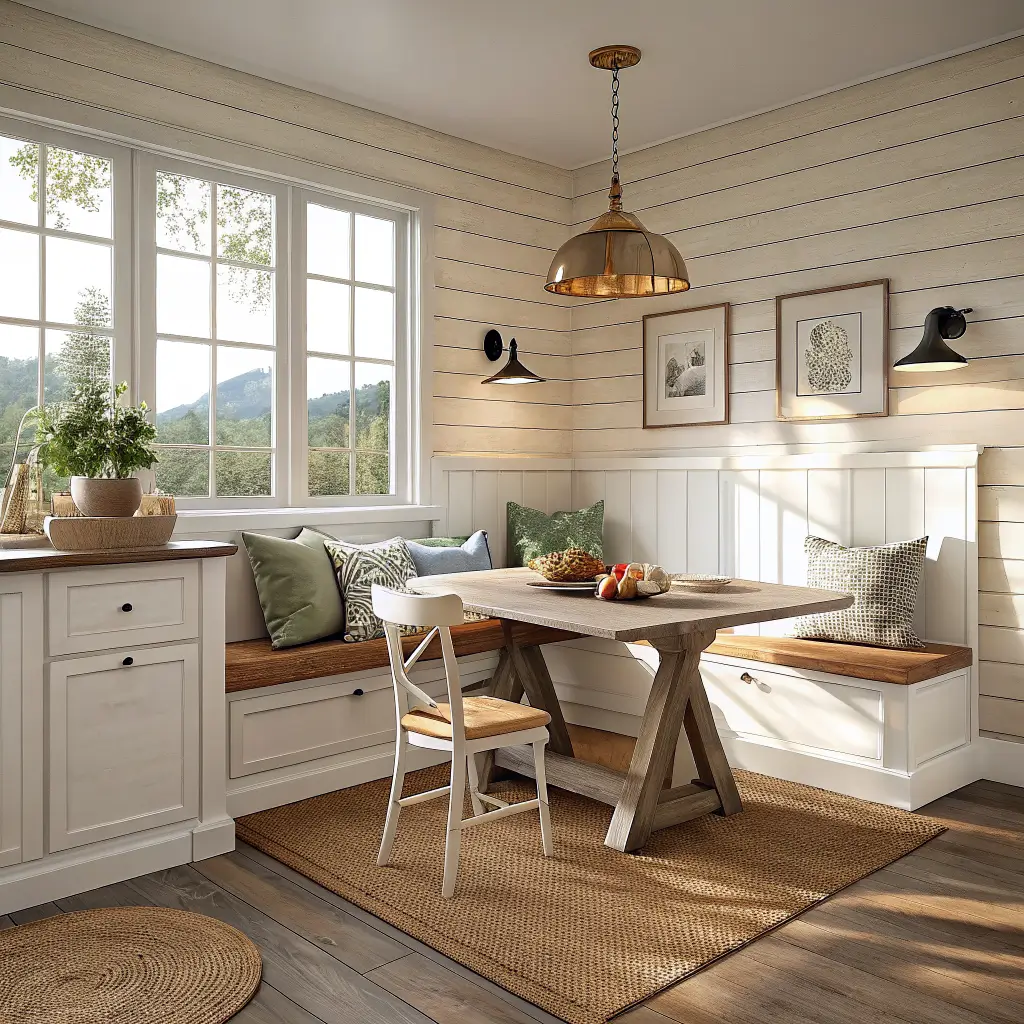
The Style Snapshot
Time: 1–3 hours to assemble a flat-pack set, plus another 1–2 hours for cushions, art, and lighting. Plan a full Saturday if you’re hanging a new pendant.
Skill level: Beginner to intermediate for a ready-made set. A built-in banquette with custom upholstery and wired sconces is a different animal — that’s a contractor-level project.
Footprint: Most freestanding sets land around 5′ x 6′. Give yourself at least 6′ x 6′ of clear floor so people can actually slide in without doing the crab-walk.
Use: Year-round. Refreshes seasonally with pillows and a runner.
Budget ranges, real numbers
– Budget ($250–$600): MDF or veneer sets from Target and Wayfair, often with lift-up storage benches. Farmhouse-leaning. Fine for a starter setup, but expect to replace in 3–5 years.
– Mid-range ($600–$1,100): Rubberwood or pine sets in two-tone finishes (white base + pecan top is everywhere right now). Ashley’s mid-century corner sets sit in the $500–$900 range with a corner bench, table, and extra bench included.
– High-end ($1,500–$3,500+): Amish-built solid oak, maple, or cherry. Built to outlast the house.
– Soft goods and decor: Cushions $15–$60 each. A pendant $60–$250. Rug, art, and runner together, budget around $150–$500.
The set I ended up keeping was a mid-range pine corner nook with storage benches, around $1,070. The first one I returned was a $329 MDF set from a big-box retailer — the corner connector was wobbly out of the box and the bench seats sagged within a month. Spend the extra money on the bench frame. It’s the part that takes the abuse.
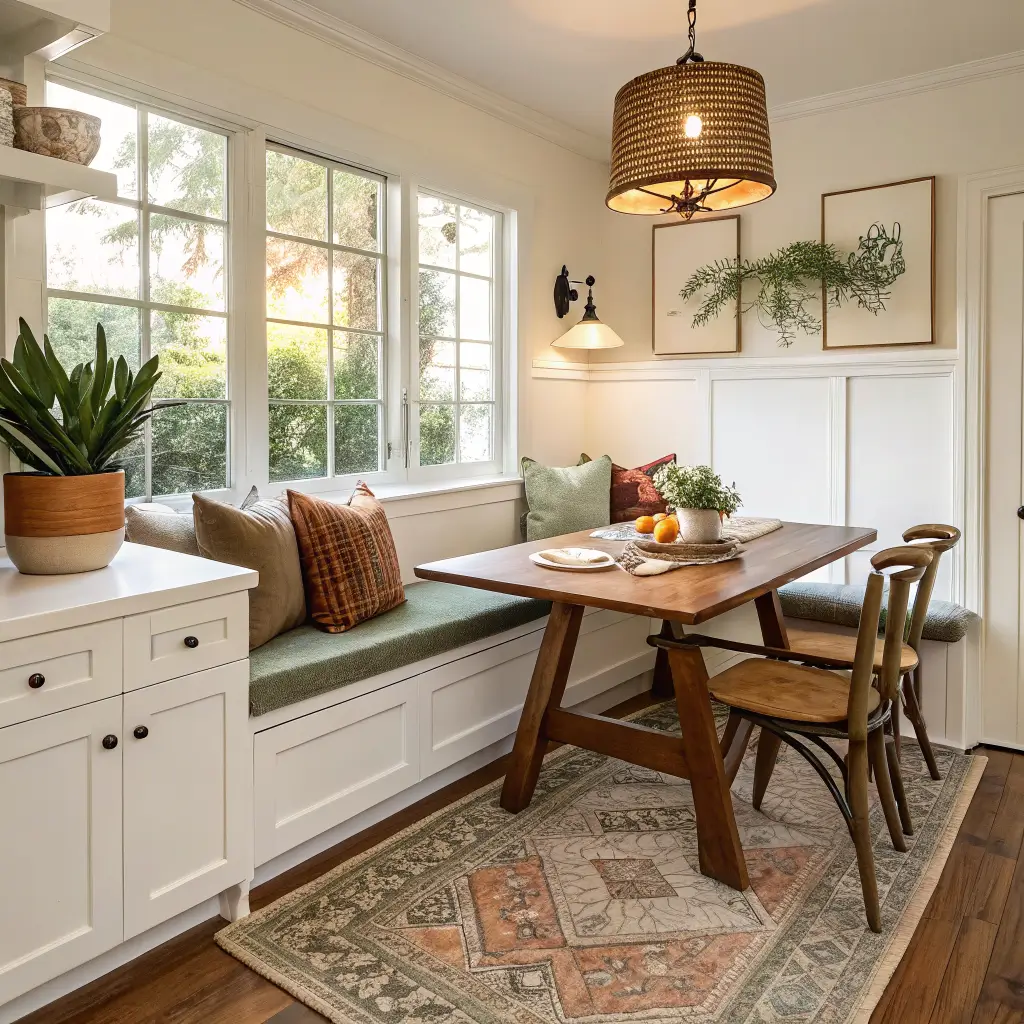
The Look: Four Styles That Actually Work in a Corner
Modern Farmhouse
White or black painted base, warm wood tabletop, X-back chair on the open side. Works under a black metal pendant. Pairs well with shiplap or beadboard if your kitchen leans that way.
Scandi / Modern
Light wood (oak or ash), clean square legs, soft greige cushions. Minimalist tabletop — one ceramic vase, done. Best in rooms with good natural light.
Mid-Century Modern
Tapered walnut legs, upholstered bench seats in a tight-weave fabric, a globe pendant or sputnik fixture overhead. Looks expensive even when it isn’t.
Faux Built-In
Any of the above, but pushed tight to the wall and styled with long lumbar pillows and a wall-mounted shelf above so it reads as custom. This is what I did, and people genuinely ask if a contractor built it.
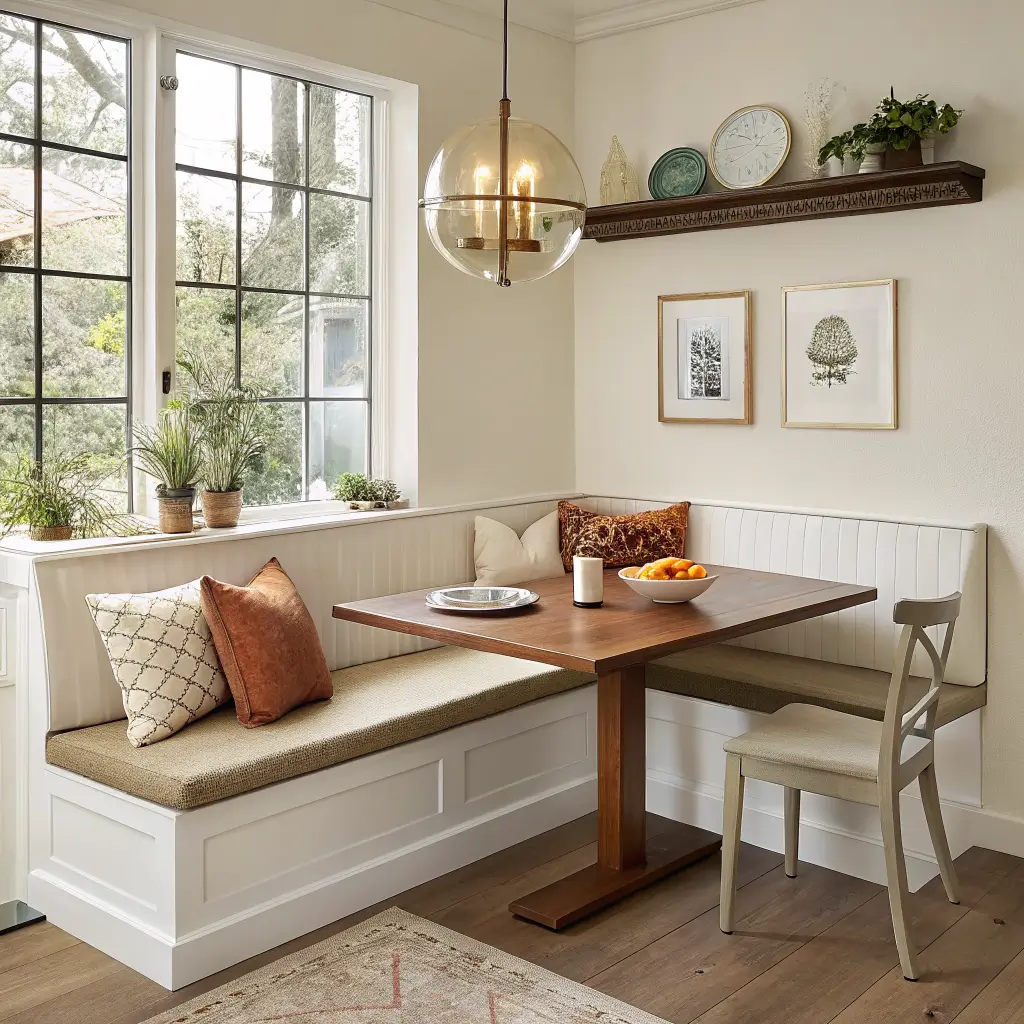
The Pieces That Make It Work
Hero pieces:
– Corner bench — typically around 64″ wide x 48″ deep with a 16–18″ seat height
– Long armless bench on one side, backless bench or chair on the open side
– Table at standard 30″ dining height, 27–36″ wide and 40–55″ long
Don’t skip:
– Seat cushions. Wood benches without cushions are punishment. Custom-cut 2–3″ foam with a washable cover is worth every dollar. I cheaped out at first with thin chair pads — nobody sat there.
– A rug under the whole footprint. A 5′ x 7′ indoor-outdoor rug anchors the nook and saves your floor from chair scrapes. Indoor-outdoor because crumbs.
– Overhead light centered on the table. Bottom of the pendant should sit 30–34″ above the tabletop — closer and people knock their heads, farther and you lose the intimacy.
– Throw pillows along the back — three to five, mix of solids and one pattern. 18–22″ square works on standard bench backs.
Storage benches are non-negotiable if you have kids or hobbies. Mine hold placemats, board games, a tablecloth I use twice a year, and the air fryer accessories I never use but won’t throw out.
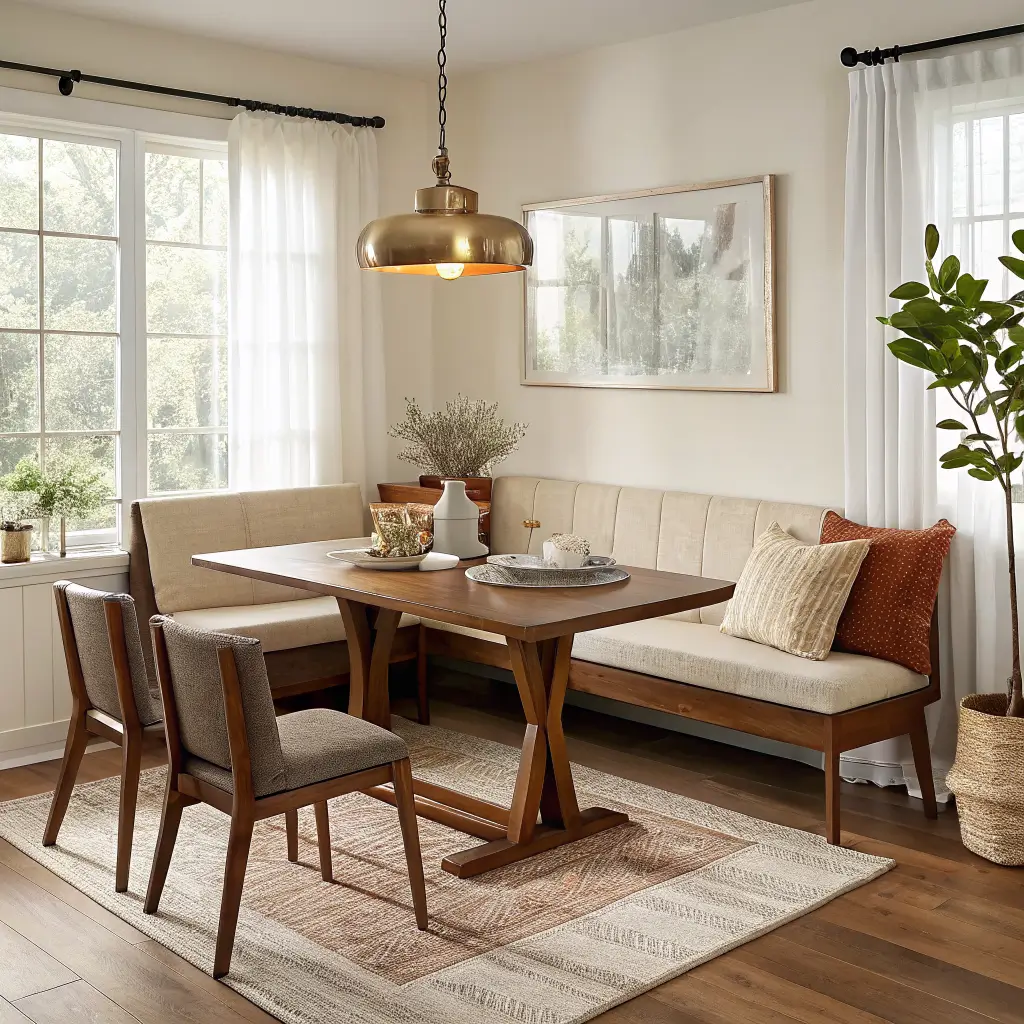
Putting It Together (in Order)
The order matters. I rearranged mine three times before I figured out the right sequence.
1. Rug down first, centered on the longer bench run.
2. Corner bench tight to the wall, leaving a small gap if there’s a baseboard heater or outlet.
3. Long bench and short bench connected, then test sit before locking anything in.
4. Table positioned 10–14″ from the bench edge. Less than 10″ and you can’t slide in. More than 14″ and you’re reaching for the salt.
5. Cushions on the seats before pillows — they set the color story.
6. Pillows along the back, biggest at the corners, smaller toward the middle.
7. Art hung 6–10″ above the bench back. One large piece over the long bench reads cleaner than a gallery wall in a tight space. I tried a four-print gallery first; it looked busy and crooked no matter how much I leveled it.
8. Pendant centered over the table, not over the bench, not over the rug. Over the table.
9. Tabletop last: runner or placemats, low centerpiece (under 8″ tall so people can see each other), small tray for daily items.
Color and Texture: The 60-30-10 Rule
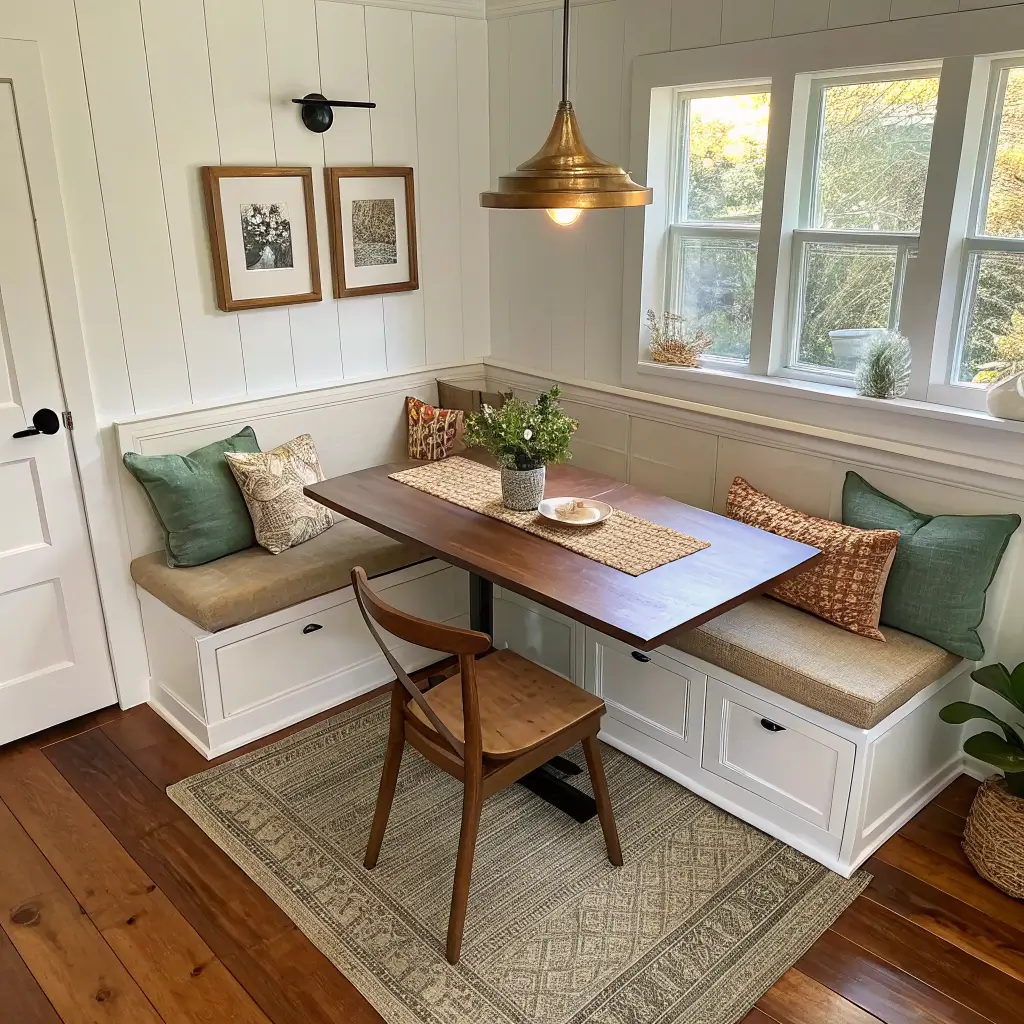
Sixty percent neutral base (the bench, table, walls), thirty percent supporting color (cushions, rug), ten percent accent (pillows, art, centerpiece). It sounds rigid but it’s what stops a small space from looking like a thrift store exploded.
My palette: cream bench, walnut tabletop, oatmeal seat cushions, two muted sage pillows, one terracotta lumbar, brass pendant. That’s it. Every season I swap the pillows and runner only.
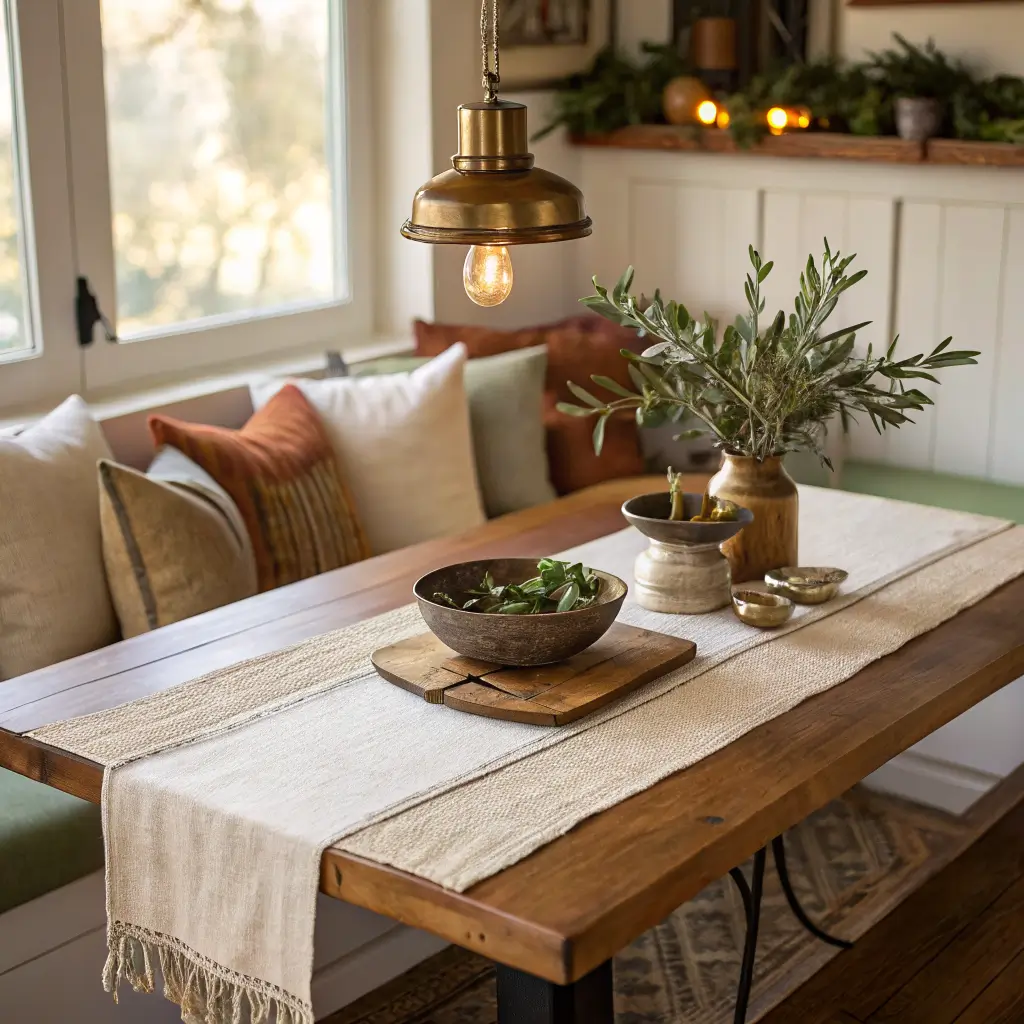
Layer three textures minimum: smooth wood, woven fabric, something soft (chunky knit throw, faux fur in winter, linen in summer). Without that contrast, a nook reads flat in photos and in person.
The Mistakes I See Constantly
– Buying a set that’s too big for the corner. Measure twice. A 6′ x 6′ clearance is the floor, not the ceiling.
– Pedestal table bases in tight nooks. Thick center columns murder your knees. Choose four slim legs or a trestle.
– Skipping cushions to save money. All-wood benches are why your guests stand at the counter instead.
– Oversized art. If your bench is 64″ long, your art should be 36–48″ wide. Bigger fights the architecture.
– Cold overhead lighting. Use warm-white bulbs (2700K) on a dimmer. Breakfast needs bright; dinner doesn’t.
– A centerpiece you have to move at every meal. It’s not a centerpiece, it’s clutter. Keep it under 8″ or make it removable in one hand.
Easy Refreshes Without Buying New Furniture
Seasonal pillow swaps:
– Spring: pale linen, one small floral
– Summer: navy stripe, a jute round placemat set
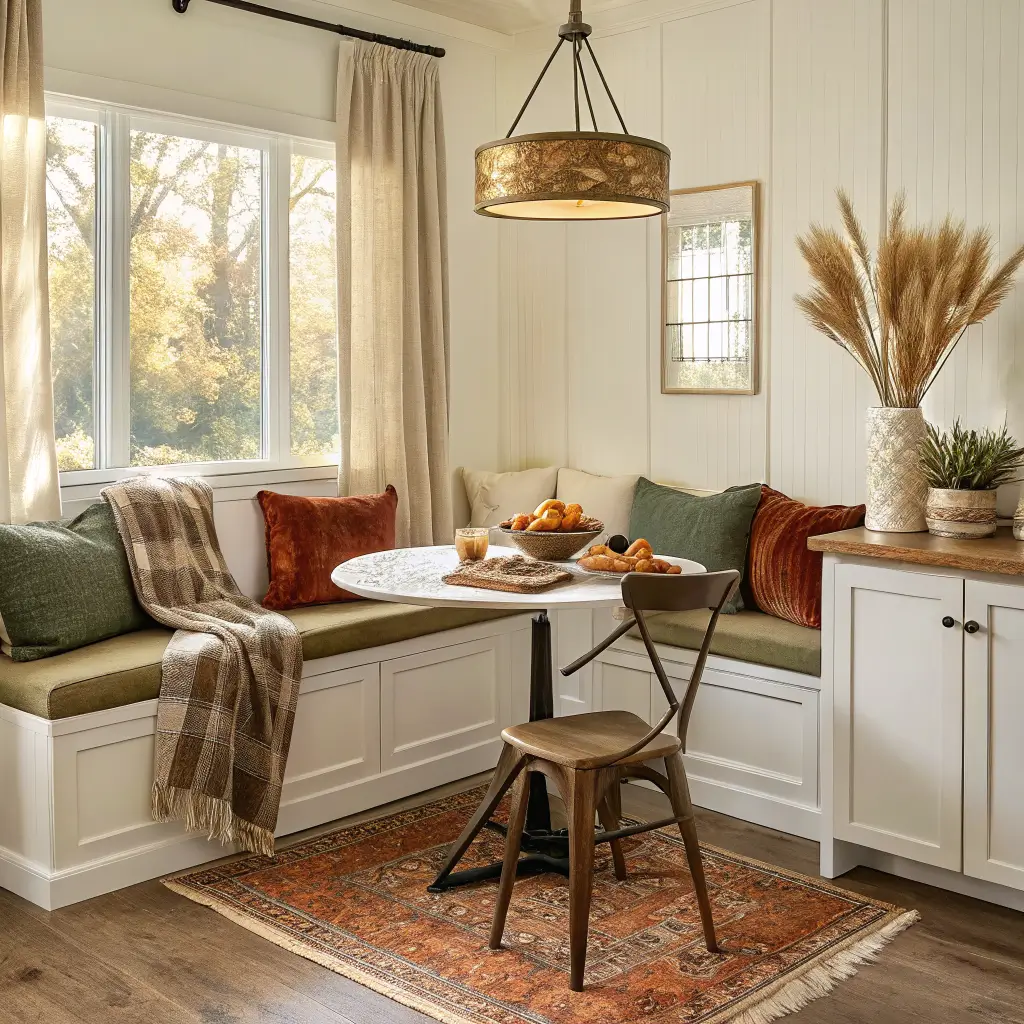
– Fall: rust velvet, a plaid throw folded on the corner bench
– Winter: chunky cream knit pillow, deep green lumbar, battery candles
Bigger refreshes under $150:
– Peel-and-stick wallpaper on the wall behind the bench (renters: yes, it actually comes off clean if you go slow)
– New pendant — this changes more than people expect
– A bench slipcover or new seat pad covers
Cross-style ideas if you get bored:
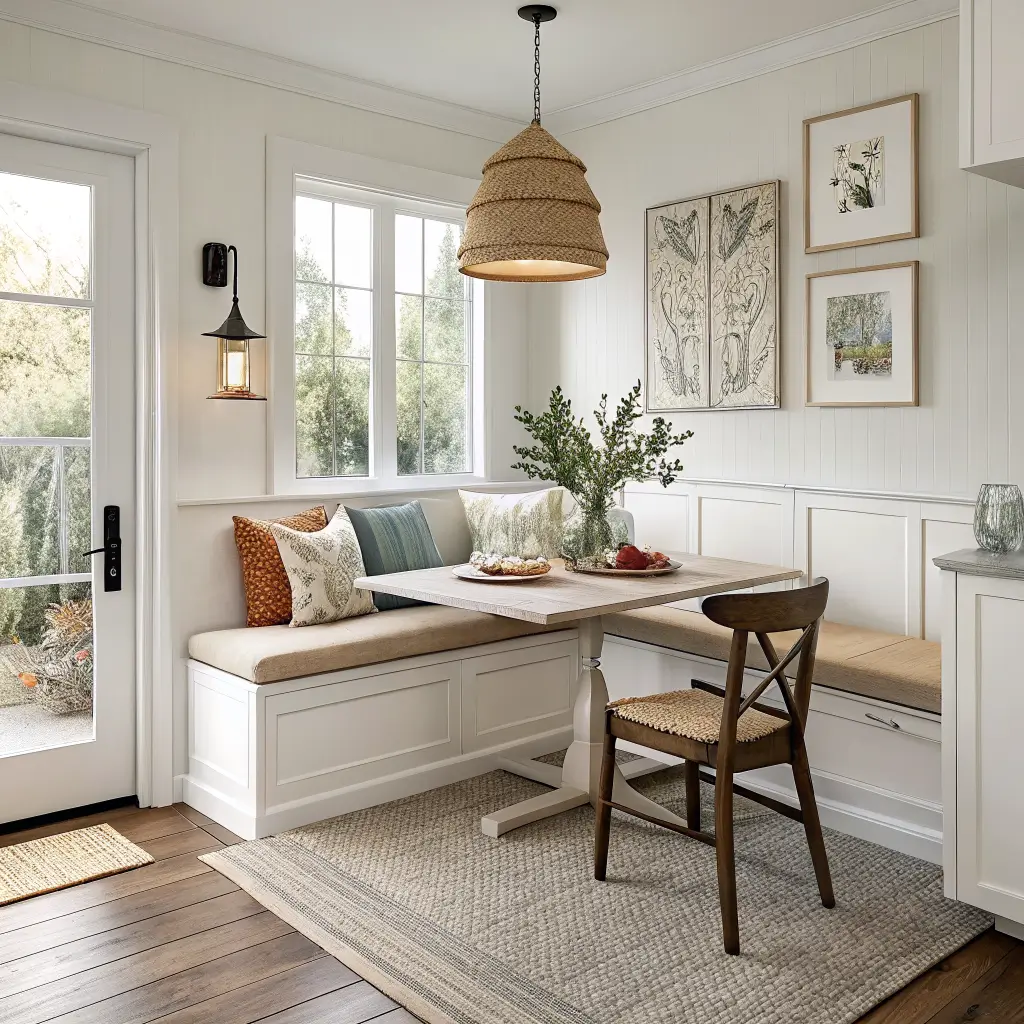
– Boho-coastal: white nook set, rattan placemats, terracotta pot with olive branches, indigo cushions
– Modern farmhouse meets industrial: same white base, but swap to a black iron pendant, black picture frames, a reclaimed-wood centerpiece tray
Quick Answers to the Stuff People Ask
Can a corner nook seat 6? Yes, if your bench run is at least 80″ on the long side and you add a chair on the open end. Comfortably six for dinner, tightly six for cards.
Built-in or freestanding? Freestanding if you rent, plan to move within five years, or aren’t 100% sure about the layout. Built-in if you own, have the budget for a carpenter, and know that corner is staying a dining spot forever.
Are the benches comfortable for long sits? Only with proper seat cushions and a long lumbar pillow against the back. A 3-hour board game on bare wood will end your relationship with the nook fast.
The right corner nook turns the most ignored part of a kitchen into the spot everyone gravitates toward. Mine gets used more than the dining table in the next room — for breakfast, work calls, my kid’s homework, and the occasional glass of wine at 4 p.m. that I won’t apologize for.
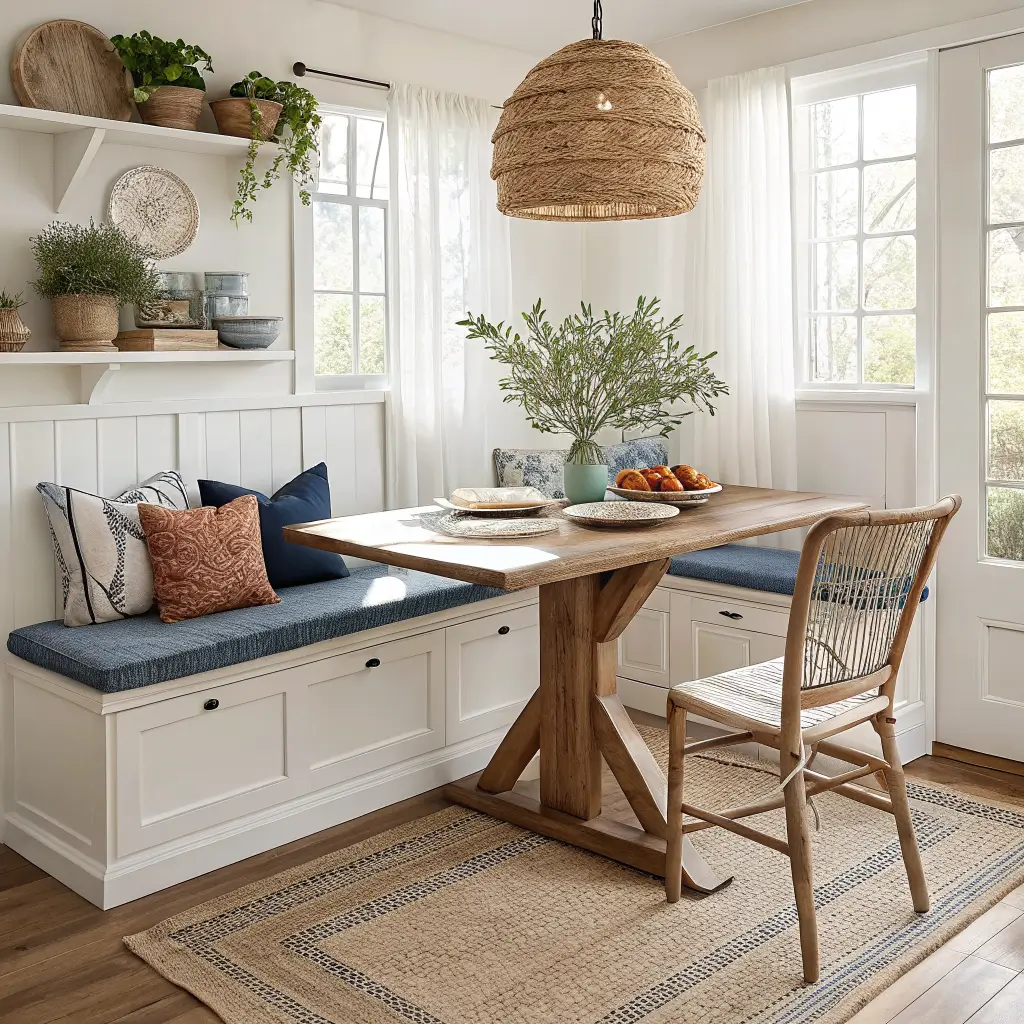
A corner dining nook works when it earns its keep as the spot you actually want to sit in, not just the place where the table fit. Our bench gets used for pancakes at 7 a.m. and laptop work at 2 p.m., and the cushions have the coffee stains to prove it.
Conclusion
The corner dining nook that felt right to me was in a kitchen where the owner had built a banquette into the corner, added a round table that seated four, and hung a pendant light that cast a warm pool over the center. The cushions were worn, the table had water rings from a thousand glasses, and the window looked at a brick wall. But every morning at seven, the owner sat there with tea and toast, and the corner felt like the most intentional place in the house.