Most coastal living room decor goes wrong the same way: too many anchors, a rope-wrapped lamp, a sign pointing to a beach you don’t live near.
I know because my first attempt had all three. The room read like a Cape Cod airport gift shop, and I spent the next year quietly undoing it.
What follows is the version I landed on after rearranging my own living room three times — a calmer, more grown-up take that still feels like sea air the second you walk in.
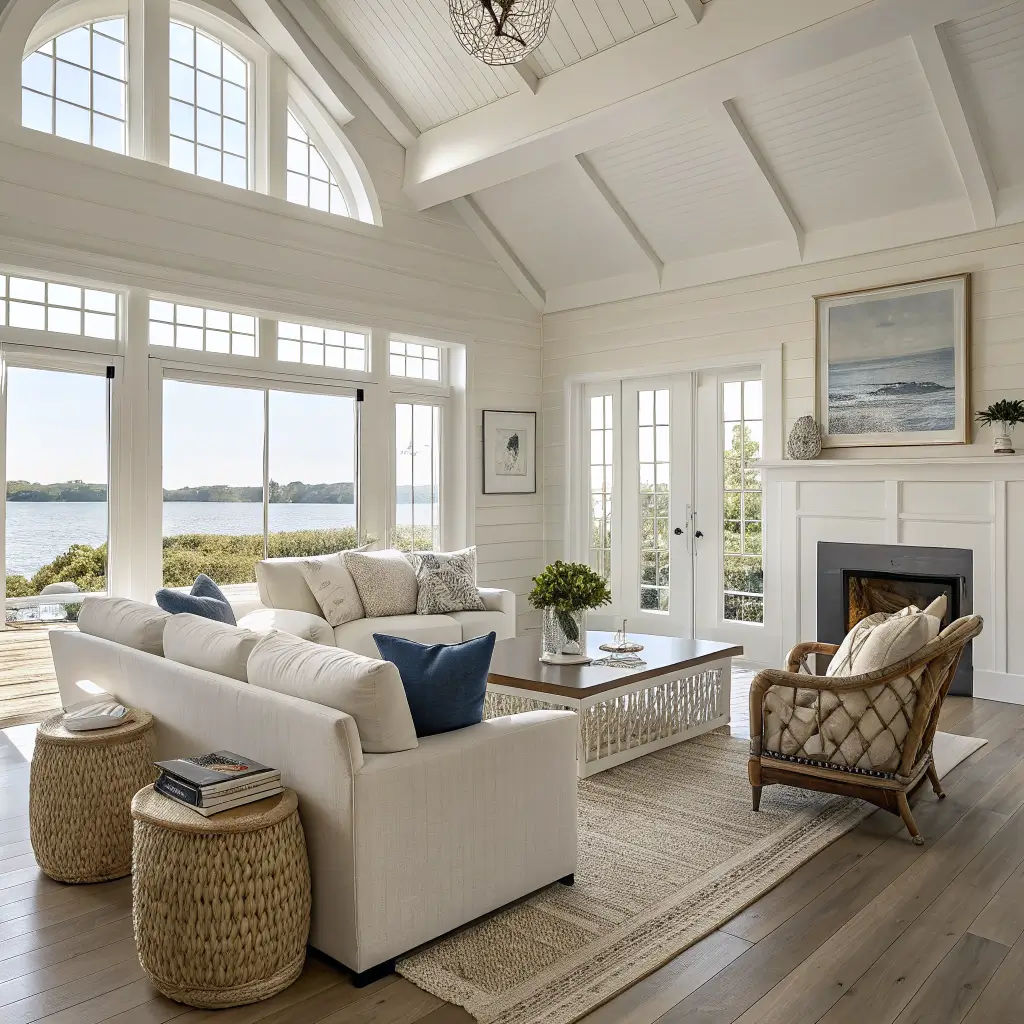
The Look: Modern Coastal, Not Nautical Theme Park
The style I’m describing is modern coastal — sometimes called elevated coastal. Light, airy, heavy on natural texture, with a restrained blue-and-white palette and zero literal beach motifs unless you really, really want one.
It works for:
– People who want a relaxed room that still looks pulled-together
– Families and pet owners (slipcovers wash, jute hides crumbs)
– Renters — almost everything here is textiles, furniture, and decor
– Inland homes that just want the vacation feeling
It works in a small 10′ x 12′ den or a 15′ x 20′ open-plan great room. You just scale the rug and seating accordingly.
Time and money, honestly:
– Weekend refresh (pillows, art, baskets, a new rug): $400–$900
– Full mid-range room with new sofa, lighting, and rug: $3,000–$7,000 over a few weekends
– Custom designer territory: $10,000+
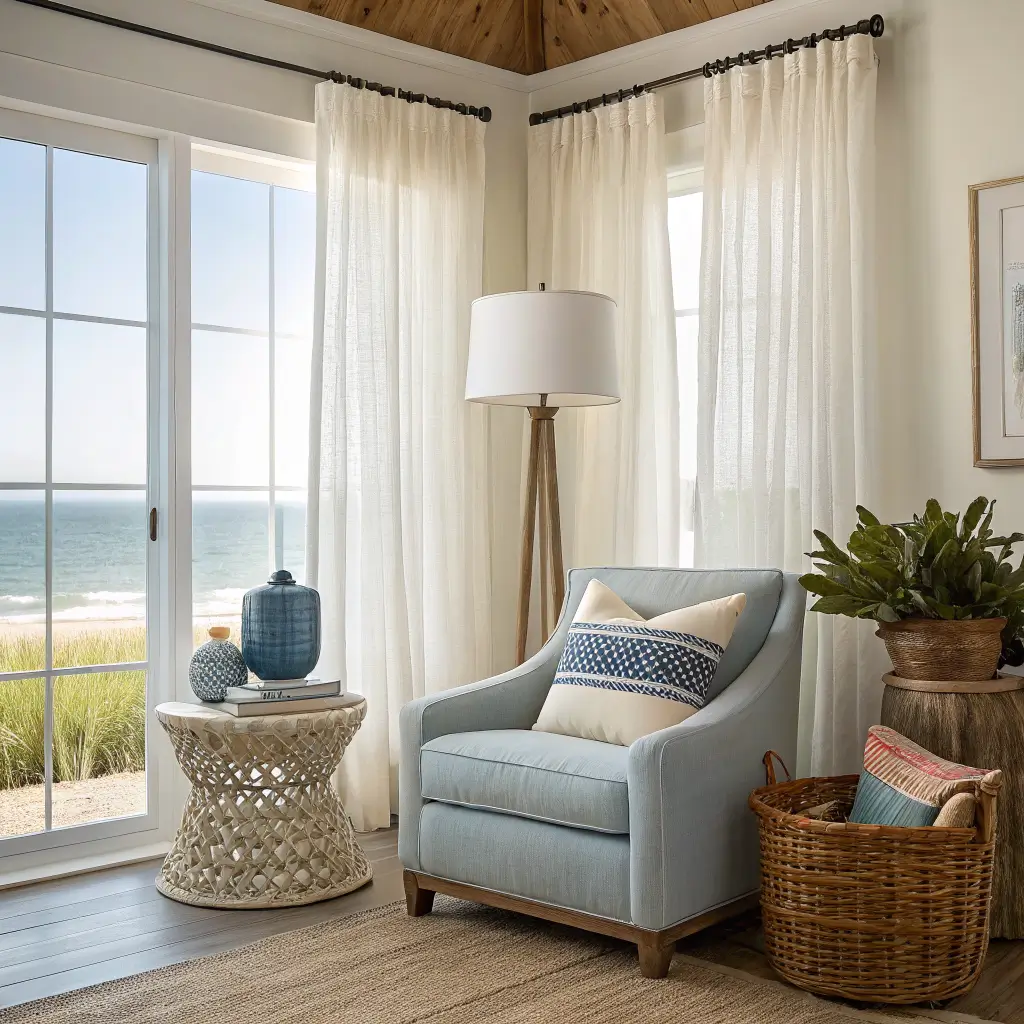
The Color Palette I’d Actually Use
Skip “beachy blue.” Be specific or you’ll end up with a room that looks like five different vacations.
Walls — pick one:
– Benjamin Moore Chantilly Lace — the cleanest soft white, no yellow
– Sherwin-Williams Pure White — slightly warmer, friendlier in north-facing rooms
– Benjamin Moore Pale Oak — warm greige if all-white feels cold to you
Blues that read coastal, not bathroom:
– BM Palladian Blue, Beach Glass, or Smoke (soft, sea-glass)
– BM Van Courtland Blue (deeper, moodier)
– SW Sea Salt or Lakeside
Accents: driftwood gray, seagrass green, a hit of soft coral if you want warmth.
The rule I follow is 60-30-10: 60% light neutrals (walls, sofa), 30% mid-tone wood and blue (rug, chairs, art), 10% dark anchors (black frames, iron hardware, a navy pillow). That last 10% is what separates “coastal” from “vanilla.”
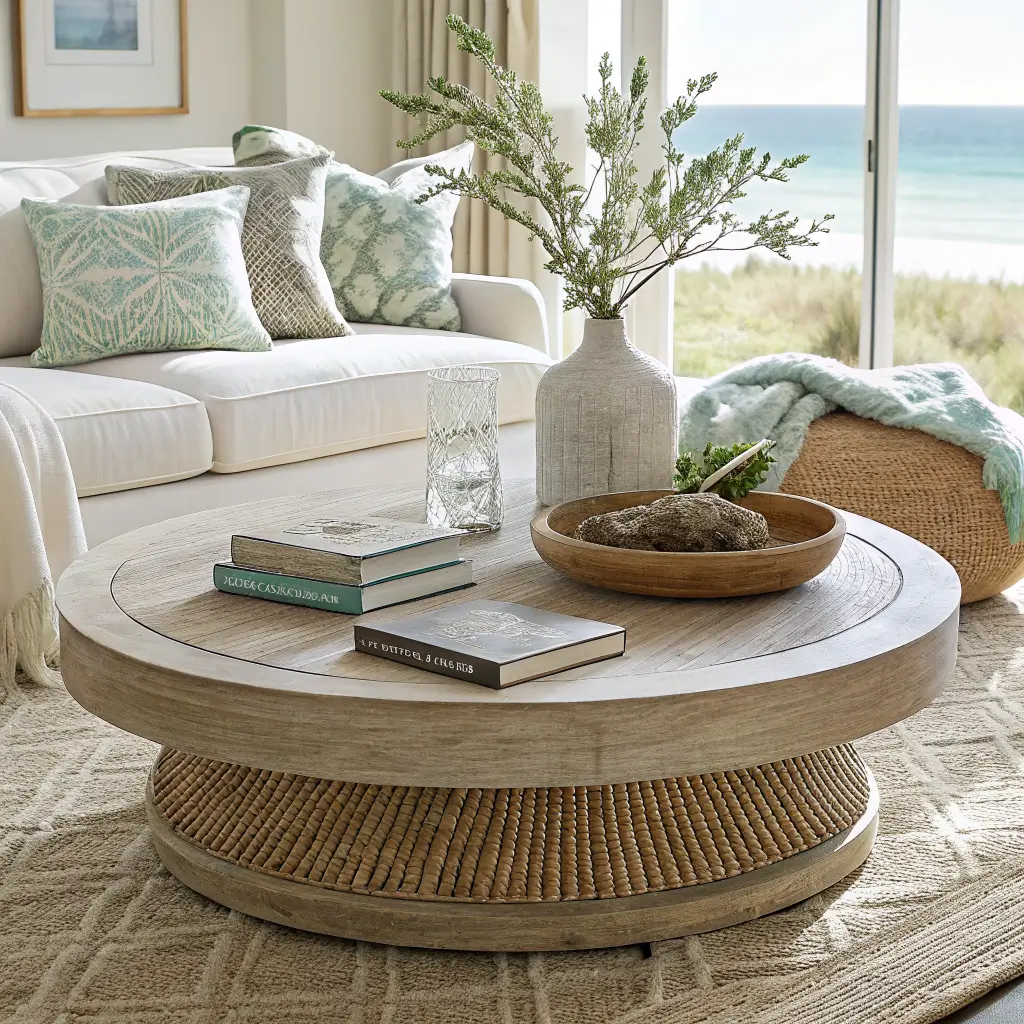
The Hero Pieces
These are the items that do the actual work. Get these right and the rest is easy.
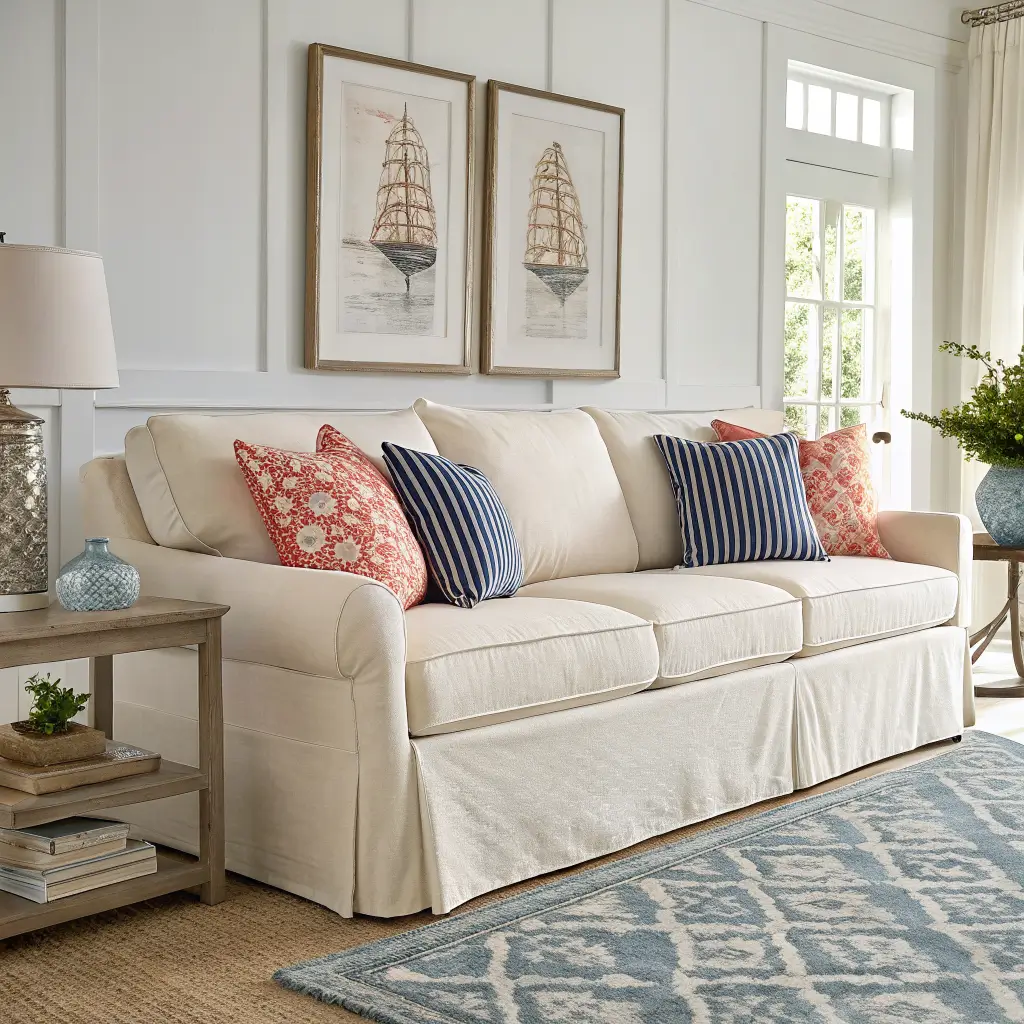
Slipcovered sofa in white, ivory, or pale linen
Performance fabric is non-negotiable if you have kids, dogs, or a habit of eating pasta on the couch. I have all three. My slipcover comes off and goes in the wash, which is the only reason a white sofa is allowed in my house.
Mid-range options run $1,200–$2,500 at places like Pottery Barn, Crate & Barrel, or Serena & Lily. Look for tailored slipcovers, not the baggy beach-house kind that always look unmade.
A natural-fiber rug
Jute, seagrass, or a sisal blend. For most living rooms you want 8′ x 10′ or 9′ x 12′ — small rooms can get away with 5′ x 7′. The rug needs to extend at least 6–8″ past the sides of the sofa, and ideally all the front legs of every seat sit on it.
Price range: $300–$700 for a real wool-jute blend in 8′ x 10′. Pure jute is cheaper (~$250) but sheds for the first month. Vacuum daily and it’ll calm down.
A note from regret: I bought a 5′ x 8′ rug for a 13′ x 16′ room because it was on sale. It looked like a postage stamp. The rug is the floor of the room — buy the size you need, not the size that’s discounted.
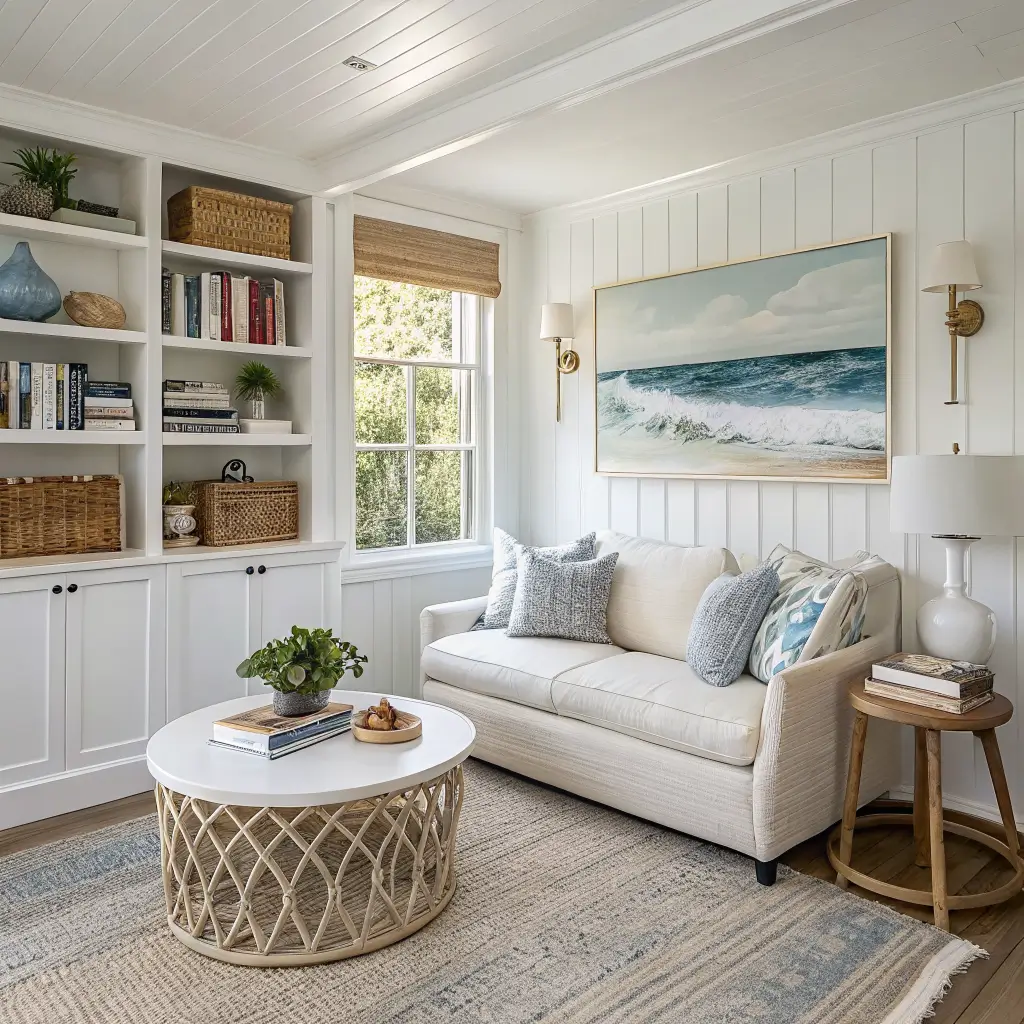
Light wood or rattan coffee table
White oak, light ash, or natural rattan. Round if you have kids or a tight pathway, rectangular if you’ve got a big sectional. A lower shelf is useful for baskets and books. $300–$900 for something solid.
Avoid espresso, dark walnut, anything heavy. It fights everything else in the room.
Accent chairs
One pair of rattan, cane, or light-wood chairs with linen cushions. $300–$800 each. These are where you can shop secondhand — I found a pair of vintage cane chairs on Facebook Marketplace for $90 and reupholstered the cushions in cream linen for another $60.
One big piece of art
Oversized matters. A 16″ x 20″ print over a 7-foot sofa looks like a postage stamp again. Go 24″ x 36″ minimum, 36″ x 48″ if the wall allows. Abstract ocean, a moody seascape photograph, or a large minimal landscape — not a watercolor of three sailboats.
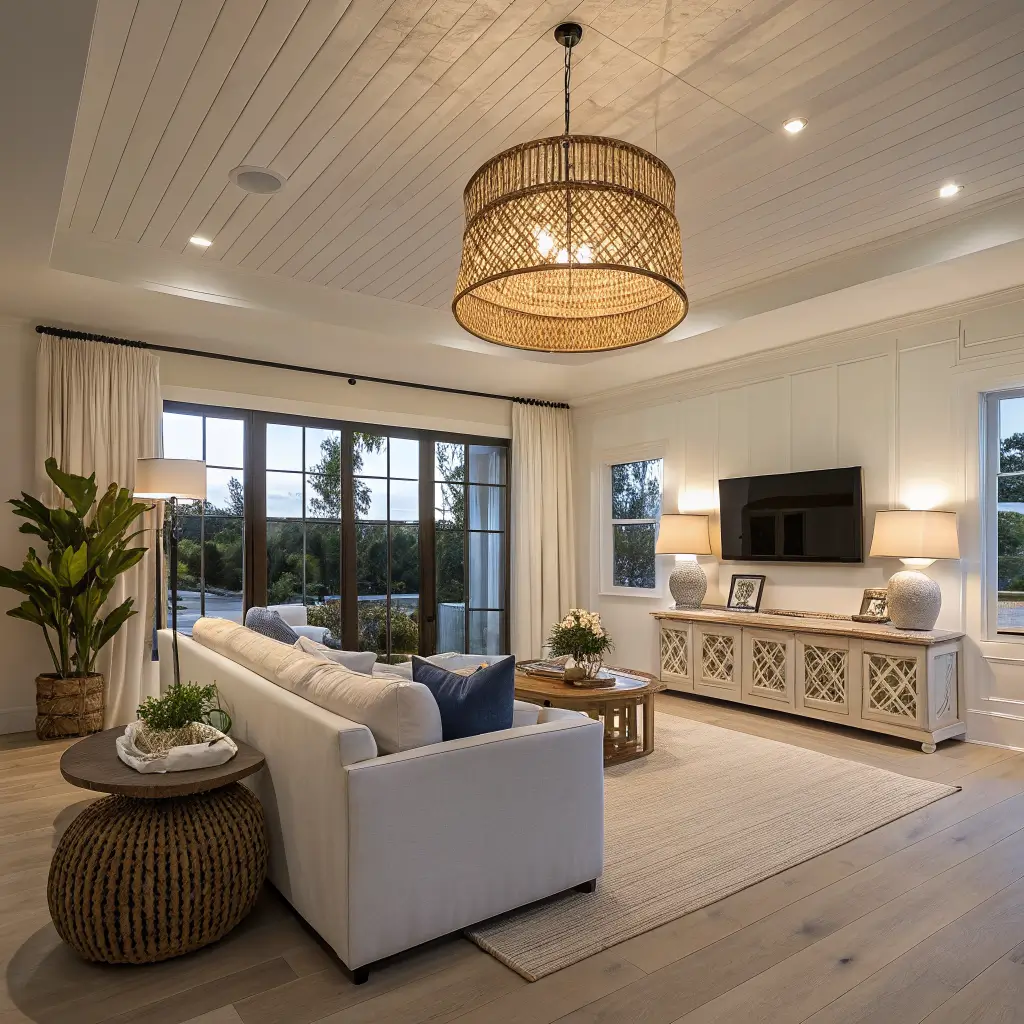
How To Layer It Without It Getting Busy
Coastal style lives or dies by texture. The color story is restrained on purpose, so the room reads through what you can feel, not just see.
Stack textures like this:
– Smooth walls (matte paint)
– Rough rug (jute, seagrass)
– Soft seating (linen, cotton slipcover)
– Woven accents (rattan, baskets, cane)
– A few patterned pillows
– One or two glass or ceramic moments
Pillow formula for the sofa:
– Two 22″ textured neutral pillows in the corners (chunky linen, slubby cotton)
– Two pillows in a real pattern — blue and white stripes are the workhorse here, or a soft block print
– One lumbar in a subtle coastal print or solid
Use down or down-alternative inserts. Polyester fiberfill inserts look sad and lumpy within a week.
Limit bold patterns to two. Usually stripes plus one organic print. More than that and it stops reading coastal and starts reading “I went to HomeGoods on a Saturday.”
Lighting — The Part Most People Skip
You can do everything right and the room will still feel off if the lighting is wrong. This was my biggest fix.
– Swap any cool/daylight bulbs for 2700–3000K warm white LEDs. Anything higher looks like an office.
– Hang curtain rods 8–12″ wider than the window on each side and several inches above the frame. The window appears bigger, more light comes in, the ceiling reads taller.
– Use white or off-white linen curtains, just kissing the floor or pooling slightly. Keep the panels off the glass when open.
– Add a woven rattan pendant or drum shade if your ceiling allows. $200–$600 at retail; cheaper if you watch West Elm sales.
– Two table lamps minimum — ceramic bases in white, blue, or reactive glazes with linen drum shades. Dark corners kill the airy feeling.
The Coffee Table and Other Surfaces
This is where people overdo it. The fix is a simple rule:
One tray plus two or three objects per surface. That’s it.
For my coffee table:
– A rectangular rattan tray
– Two stacked books (oversized, neutral covers — I use a Slim Aarons book and a vintage atlas)
– A small clear glass vase with a single olive branch
– One textural object — a piece of weathered driftwood or a chunky ceramic bowl
That’s the whole surface. The empty space is the point.
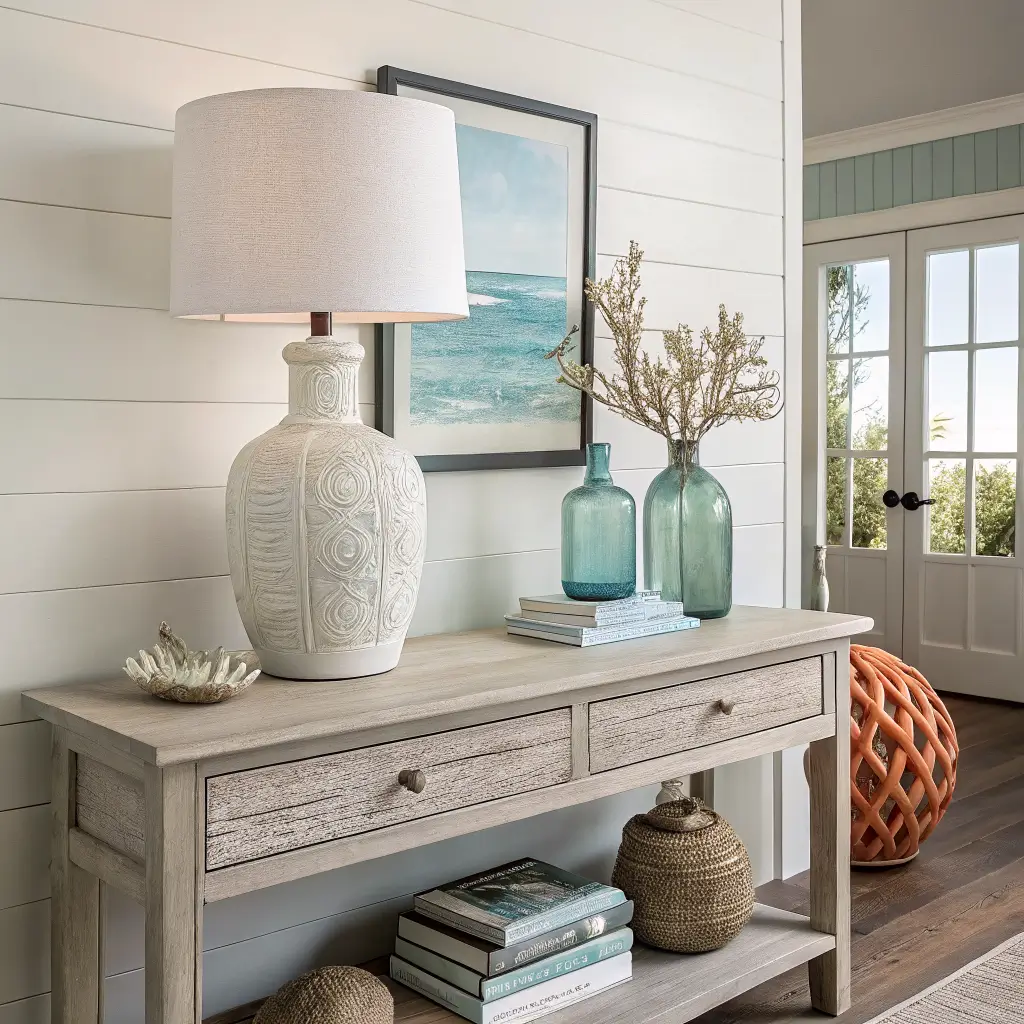
For the console behind the sofa or sideboard:
– One table lamp
– A small stack of books
– A driftwood piece or coral-shaped ceramic
– A trailing plant or olive tree branch in a vase
The Plant Question
Live plants that work without trying too hard:
– Snake plant — tolerates neglect, looks architectural
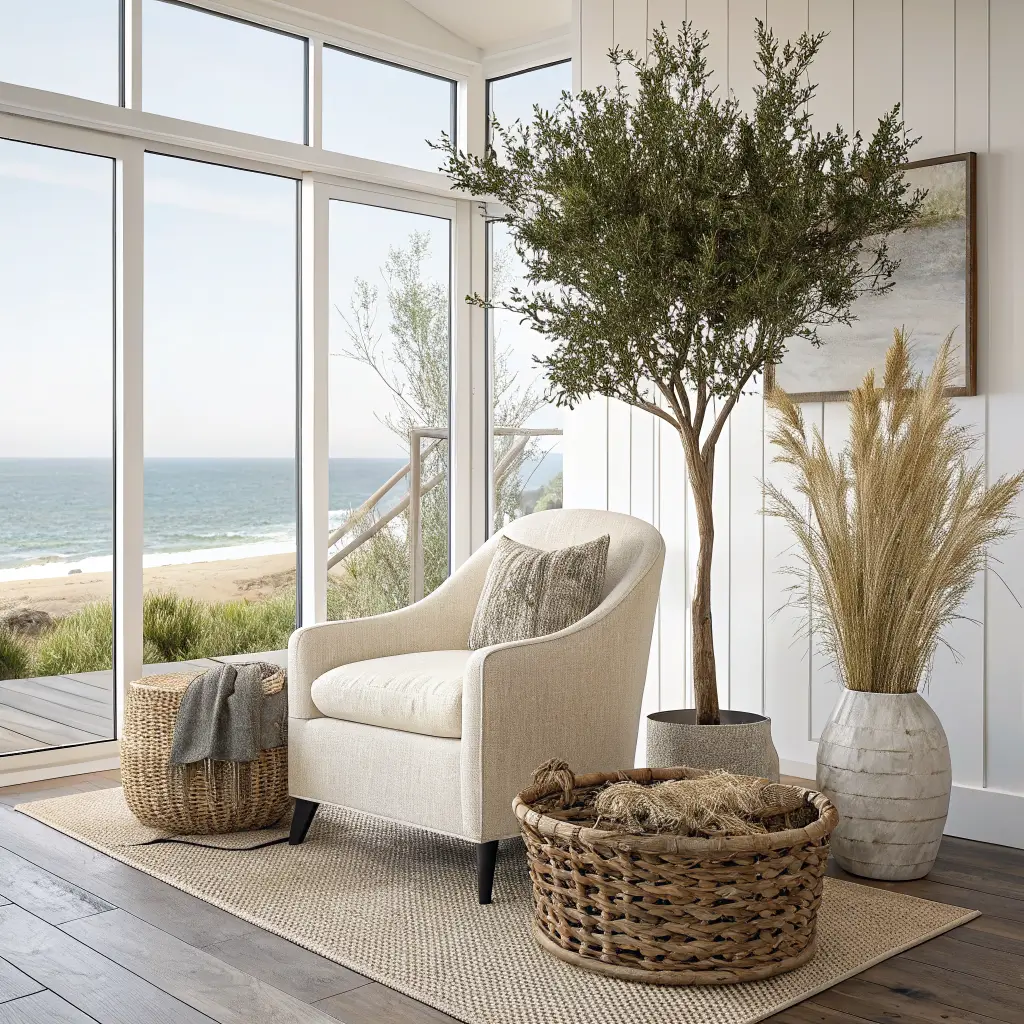
– Olive tree — the coastal plant of the moment for a reason; needs real sun
– Areca or kentia palm — actually beach-adjacent and surprisingly forgiving
– Pampas grass or dried eucalyptus in a tall glass bottle if you cannot keep things alive
Skip fiddle-leaf figs. They’re tropical, fussy, and overdone.
Common Mistakes I Made So You Don’t Have To
Too much theme. I had a glass jar of shells my kids collected, a rope-wrapped lamp, a “BEACH” sign, and a watercolor of a starfish. All in one room. I kept the shell jar. Everything else went.
All white, no contrast. White walls, white sofa, beige rug, beige pillows. It looked like a furniture showroom, not a home. Adding a navy blue striped pillow, black picture frames, and a darker wood side table fixed it overnight.
Heavy dark furniture left over from the last era. A brown leather club chair that I loved on its own was completely fighting the room. I moved it to my office. Sometimes the fix isn’t adding, it’s removing.
Cluttered surfaces. Six candles, four frames, three shells, a stack of mail. A single ceramic bowl and one taper candle reads more coastal than all of it combined.
Curtains hung tight to the window frame. Made the windows look small and the ceiling feel low. Re-hung them wide and high in an afternoon — biggest cheap-fix payoff of the whole project.
Where to Spend, Where to Save
Spend on:
– Sofa (you sit on it every day; cheap slipcovered sofas pill and sag)
– Rug if you’re going wool-blend; pure jute can be cheap
– Lighting — woven pendants make a room
– One large piece of real art
Save on:
– Pillow covers (Target, Etsy, HomeGoods — swap them seasonally for $20–$40 each)
– Accent decor and vases (thrift stores are full of perfect blue and clear glass)
– Baskets (HomeGoods, Marshalls — under $40 for good ones)
– Coffee table books (used bookstores)
Rental and Small-Space Adjustments
If you can’t paint or alter walls:
– Lean a large piece of art instead of hanging it
– Use peel-and-stick blue stripe wallpaper on the back of a bookcase for a coastal moment that comes off cleanly
– Skip the shiplap accent wall — it’s not worth your security deposit, and honestly, one accent wall is enough; the whole room shiplapped feels dated now
For small rooms (under 12′ x 14′):
– One sofa, one chair, not a sectional
– 5′ x 7′ or 6′ x 9′ rug
– Round coffee table (better traffic flow)
– Wall-mounted sconces instead of floor lamps
Seasonal Swaps Without Buying a Whole New Room
The base — sofa, rug, art, lamps — stays year-round. You change the small stuff.
Summer: lighter blue pillow covers, a striped cotton throw in a basket, fresh eucalyptus or hydrangeas, a clear glass bowl with sea glass.
Fall: swap in caramel and sandy taupe pillow covers, a rust or deep navy chunky throw, candlesticks in warm wood, branches instead of flowers.
Winter: ivory faux fur or wool throws layered on, a few lanterns with real candles, deeper navy accents. Coastal cabin, not Christmas-village.
Mixing Coastal With What You Already Have
You don’t have to commit to a single look. Two combinations that actually work:
Boho coastal: keep the coastal palette and natural fibers, add a block-print or kilim pillow, a layered second rug, and more hanging plants. Less white, more warm cream.
Scandi coastal: strip the styling back further. White walls, pale wood, almost no decor, two or three soft blue accents. Best if your house is already minimal.
The test for any new piece I bring in: does it support light, airy, natural, water-adjacent? If the answer is no, it goes in a different room. That single question has saved me from a lot of impulse buys at Target.
Conclusion
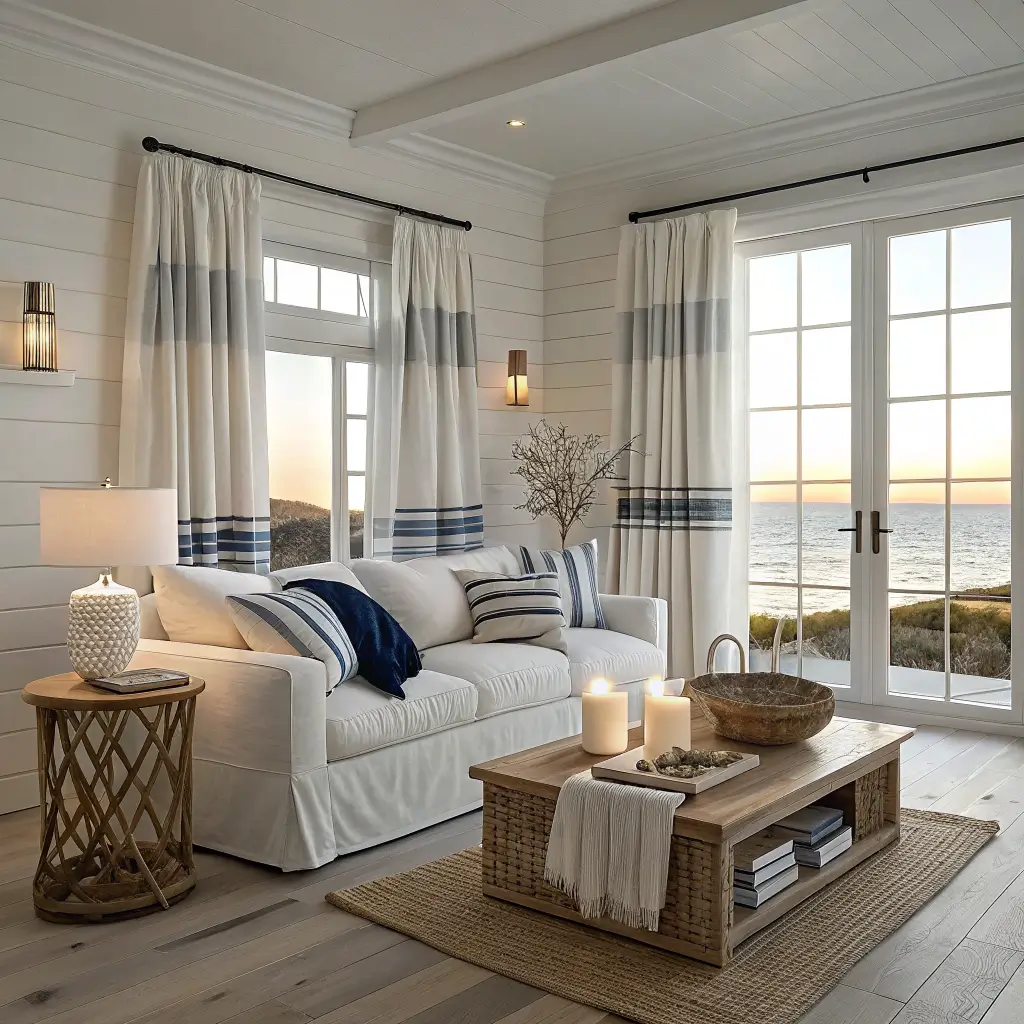
The coastal living room decor I aspire to has a slipcovered sofa in ivory linen, a coffee table made from reclaimed driftwood, and a single large painting of a harbor in fog. The owner has a rattan chair, a wool throw in navy, and a stack of books about sailing that she has actually read. There is no television. She says the view is enough, and on cloudy days, the painting is enough. That is the whole point — the room is for looking, not for performing.
More Decor Ideas to Explore
- Coastal Kitchen Décor That Doesn’t Look Like a Souvenir Shop: A Real Guide to Getting It Right
- Little Bathroom Ideas That Actually Work: Smart, Stylish Updates for Tight Spaces
- The Little Apartment Aesthetic: How to Style a Small Space That Feels Cozy, Cohesive, and Actually Yours
- Coastal Bathroom Decor: How to Get the Beach-House Look Without the Souvenir-Shop Vibe