Colorful Maximalist Decor: A Real-World Guide to Doing More-Is-More Without Looking Like a Hoarder
Colorful maximalist decor is the design style everyone wants to try and most people botch on the first attempt — usually because they confuse “a lot of stuff” with “a lot of intentional stuff.” I know because my first crack at it looked like a thrift store exploded onto a perfectly nice emerald velvet sofa. It took me about three rearrangements and one painful donation pile to figure out the difference.
This is the guide I wish I’d had then.
What Maximalism Actually Is (and Who Should Try It)
Maximalism isn’t clutter. It’s a curated, layered, color-saturated look that mixes vintage, contemporary, and personal collections into something that feels lived-in and specific to you. Think jewel tones stacked on patterned rugs, gallery walls climbing toward the ceiling, brass candlesticks next to a ceramic mushroom your sister made in 2009.
It works if you:
– Collect things — art, books, glassware, weird little objects from trips
– Find white walls and matching furniture sets actively depressing
– Want a room that photographs well but also feels like you live in it
– Are willing to edit (this is the part most people skip)
It does not work if you crave visual silence at the end of the day. Be honest with yourself there.
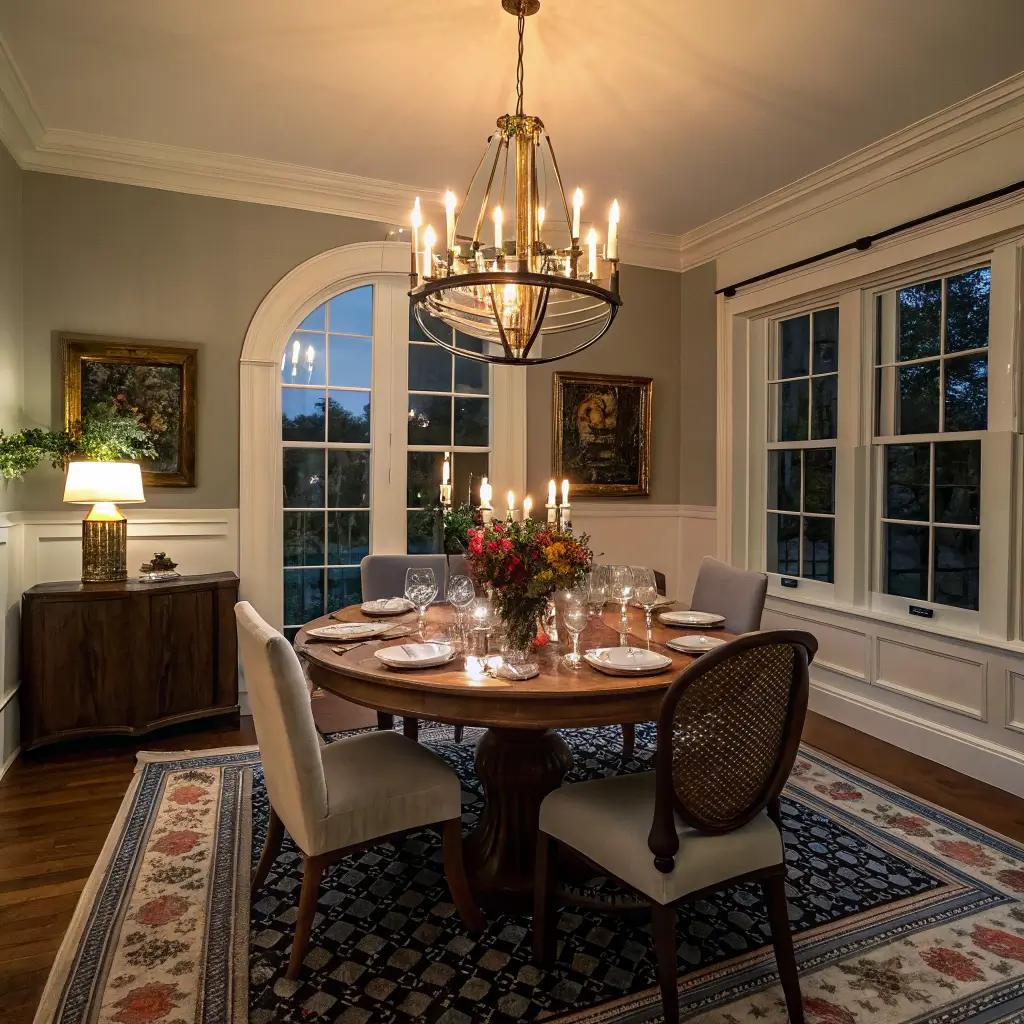
Best rooms for it: living rooms, bedrooms, dining rooms, and home offices. Kitchens and bathrooms can handle accents but get overwhelming fast.
Budget and Time: What This Actually Costs
I’ve done versions of this at three price points. Here’s the real breakdown.
Single-room refresh: one full weekend, 8–12 hours, if you already own the bones. Hanging a gallery wall alone took me about four hours because I’m a measure-twice person.
From-scratch makeover: 2–4 weekends, mostly because sourcing thrift and vintage takes patience. You can’t rush finding the right $12 lamp.
Budget tier ($300–$800):
– Peel-and-stick wallpaper: $40–$80 per roll (covers ~28–30 sq ft)
– Throw pillows from Target, IKEA, H&M Home: $15–$40 each
– Thrifted glassware, vases, frames: $3–$15 a piece
Mid-range ($1,000–$3,000):
– Velvet or bouclé sofa in a bold color: $800–$2,000
– Patterned area rug (5’×8′ to 8’×10′): $200–$600
– Original prints from Etsy artists: $40–$200 each
Higher end ($3,000+):
– Designer wallpaper or murals: $150–$400 per roll
– Custom upholstery: $60–$150/yard plus labor
Where I spend: the sofa and the rug. They anchor everything. Where I save: art (Etsy and thrifted frames), small accessories, and anything ceramic.
The Color and Material Vocabulary
You don’t need every color. Pick a lane.
Jewel tones — emerald, sapphire, ruby, amethyst. These feel grown-up and rich.
Candy brights — bubblegum pink, tangerine, chartreuse, cobalt, lemon yellow. More playful, more Y2K.
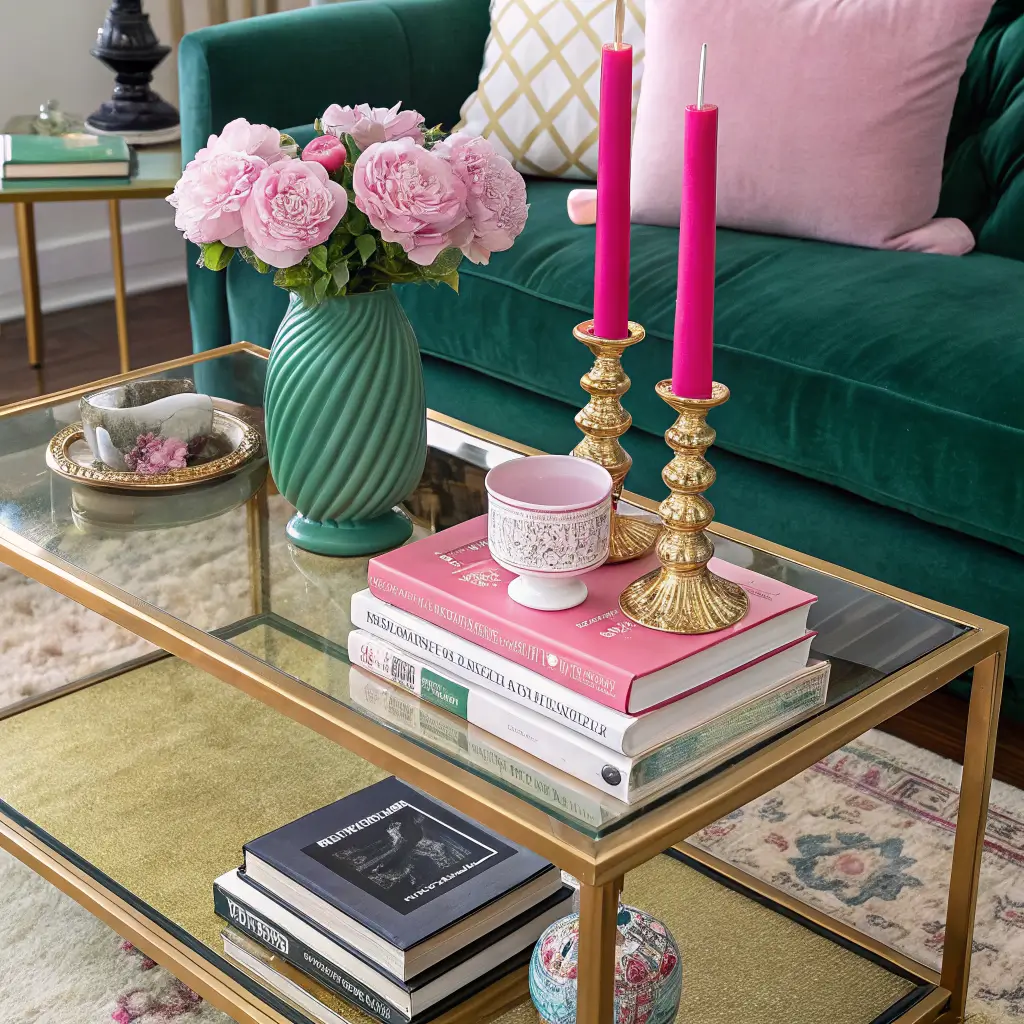
Neon accents — hot pink, electric blue, lime. Best used in small doses (a candle, a vase, one art piece) unless you want the room to vibrate.
Grounding neutrals — warm white, camel, walnut, and a hit of black. Black is the secret weapon. Without it, bright rooms float and feel unfinished.
Materials that pull their weight:
– Velvet and chenille on upholstery
– Bouclé on accent chairs and poufs
– Rattan and cane, painted or natural
– Lacquered or high-gloss side tables (they bounce color around)
– Brass and gold for warmth
– Pattern-heavy textiles: chintz, animal print, checkerboard, big florals
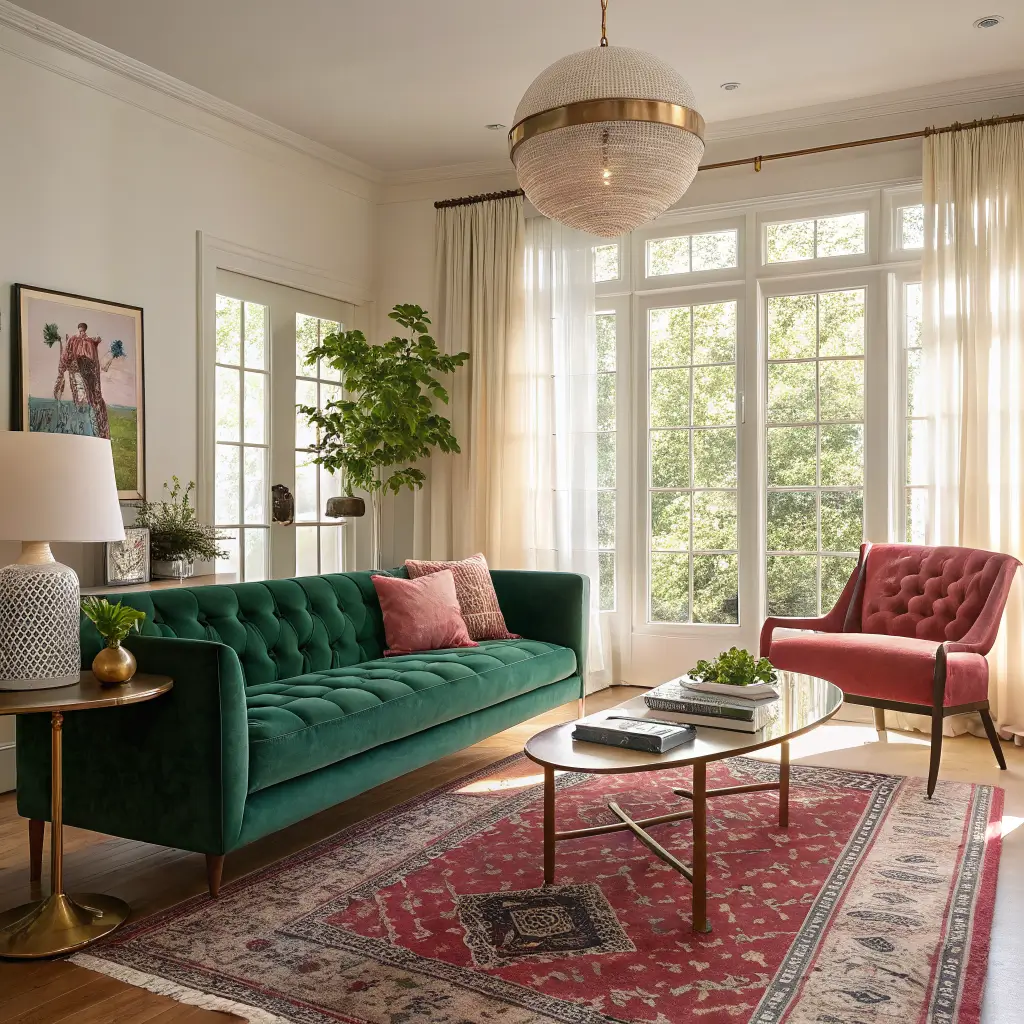
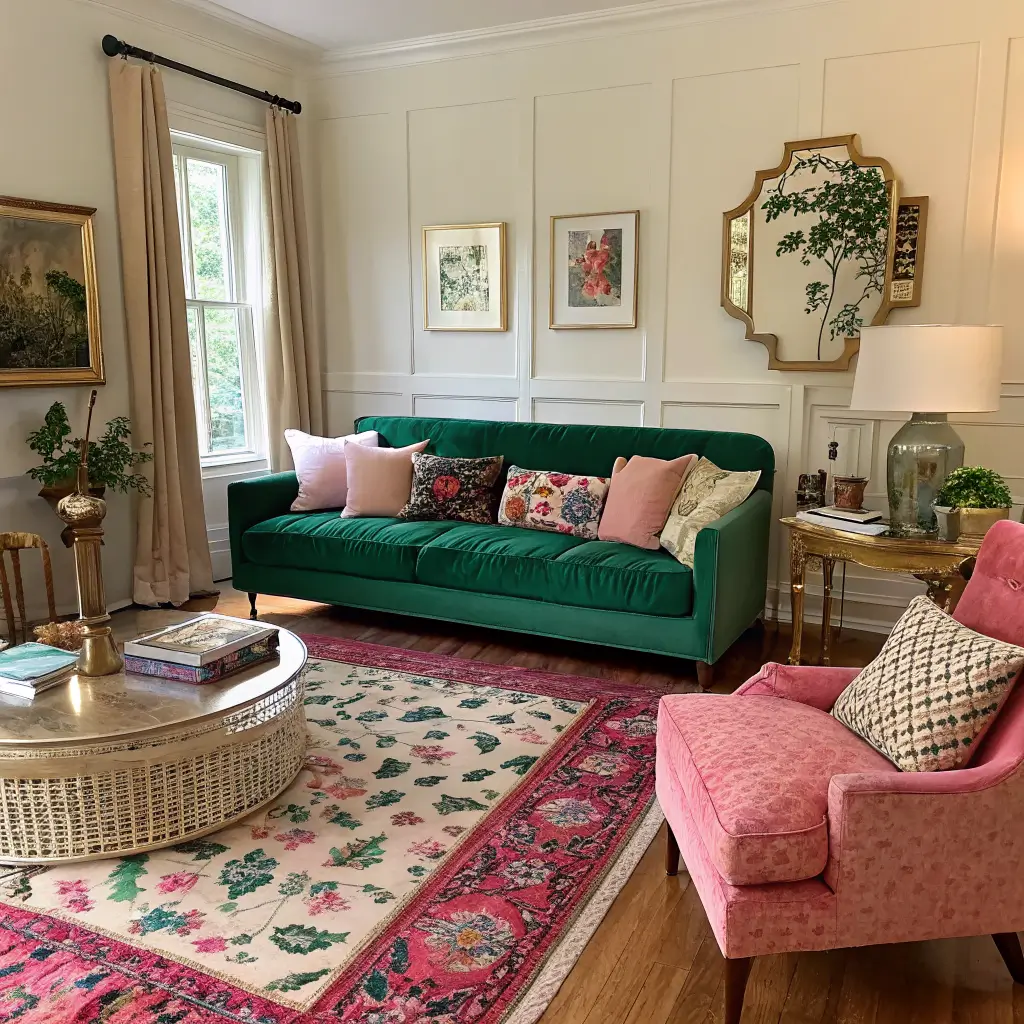
My living room runs emerald + hot pink + warm brass + black grounding, with cobalt as a stray accent. Five colors, repeated everywhere. That’s it.
The Pieces That Actually Build the Room
Hero pieces
The sofa or main chair. Mine is a a 84″ emerald velvet sofa I waited six months to buy on sale. If you’re nervous, a magenta or cobalt accent chair is a lower-stakes way in.
The rug. Go big or it’ll look like a bath mat. For most living rooms, an 8’×10′ is the minimum. Pattern matters more than material — a vintage Persian-style or oversized checkerboard does the heavy lifting visually.
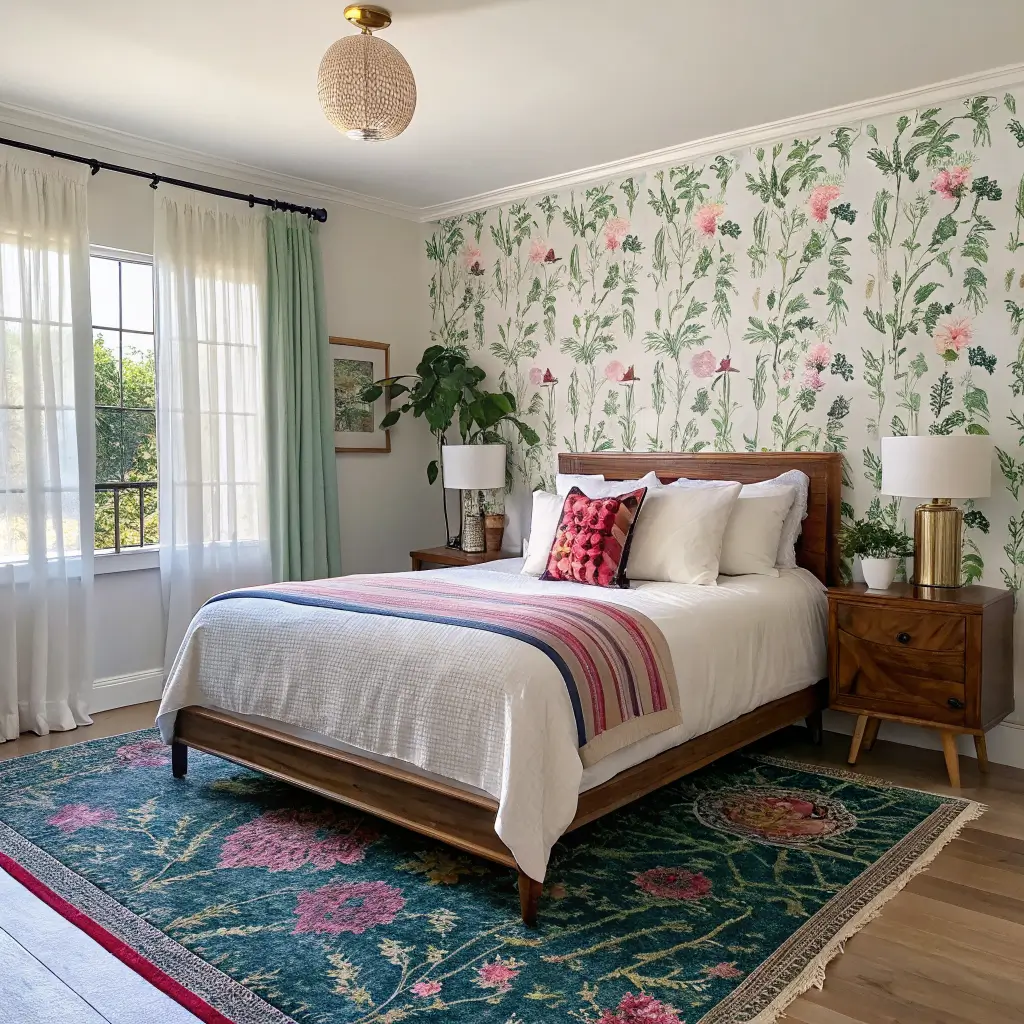
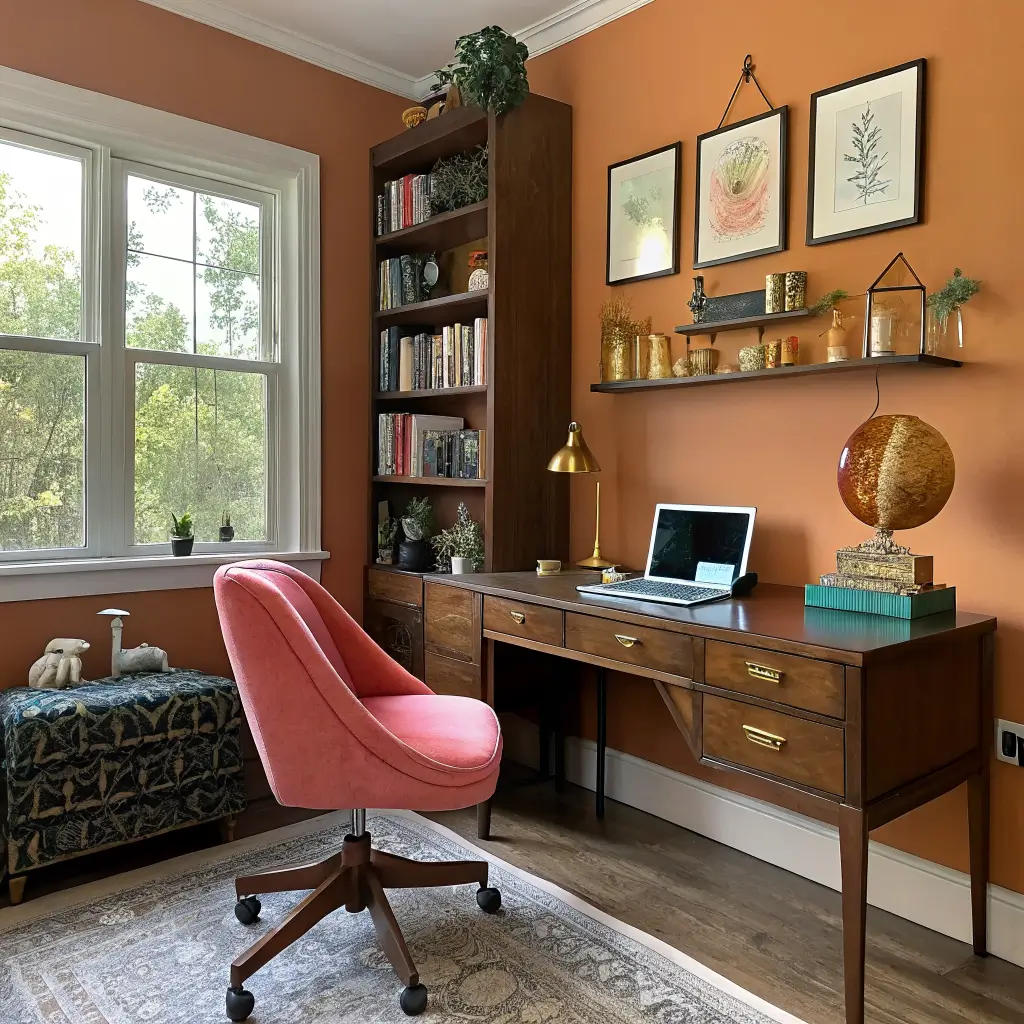
A wall treatment. Paint a focal wall in a saturated color (I’d pick a deep teal or burnt orange) or hang peel-and-stick wallpaper behind the sofa or bed. Skip eggshell — go satin or semi-gloss on bold paint colors. The sheen makes the color read richer.
Layering pieces
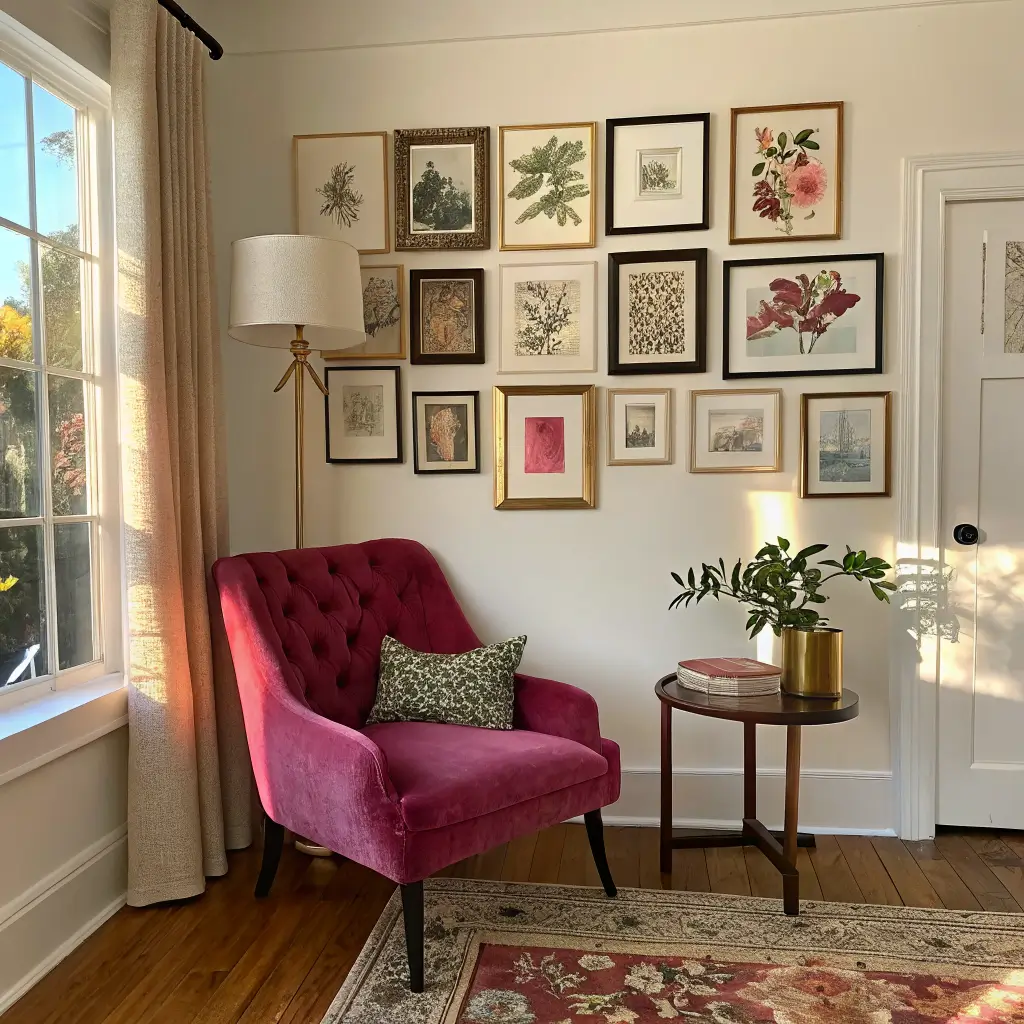
– Gallery wall art, mixed frames, salon-style
– Throw pillows in clashing patterns (yes, clashing — stripes + florals + animal print all work together if the colors connect)
– Open shelving stacked with books, ceramics, glassware, small sculptures
– Lighting: pleated lampshades, colored glass lamps, a neon sign if you’re feeling it
Signature accessories
– Vintage colored glassware (amber, pink, cobalt) — thrift stores are full of it for $4 a piece
– Sculptural candles (twisted, bubble shapes)
– Patterned trays on coffee tables
– A wavy or ornate mirror in a bright frame
How to Mix Patterns Without Making Yourself Dizzy
This is where most people freeze. The rule I use:
– One large-scale pattern (rug or wallpaper)
– One medium-scale pattern (curtains, quilt, or a big throw)
– Small-scale patterns scattered in pillows, art, ceramics
Repeat at least two colors across all three scales. That’s the thread that holds it together. A floral pillow and a striped pillow look chaotic alone — put them on a checkered throw that contains both colors and suddenly it’s deliberate.
Layout, Layering, and Flow
Walkways need 30–36 inches of clear space, even in a maximalist room. I learned this after stubbing my toe on a brass elephant for the third time.
Anchor the rug first. Sofa front legs on the rug, bed at least a third of the way onto it. Floating furniture on tiny rugs is the single most common mistake I see.
Pick one focal wall (behind the sofa, behind the bed) and load it up. Then step the intensity down on adjacent walls — fewer, smaller pieces, or just one big piece of art. If every wall screams, none of them do.
Leave breathing room. A bare patch of wall, a clean section of coffee table, a plain linen curtain next to a wild rug. Your eye needs a place to land.
Where to Spend vs. Save
Spend on:
– Sofa or main upholstered piece
– One big rug
– One serious piece of art you actually love
Save on:
– Smaller art (Etsy, thrifted with new frames)
– Glassware and ceramics (estate sales, Goodwill)
– Frames (spray paint them all the same color for instant cohesion)
– Lamps — thrift the base, replace the shade with a pleated or colored one for $25
The first sofa I bought was a $400 pink one from a fast-furniture site. The cushions sagged in eight months. The emerald velvet replacement cost four times as much and looks better every year. Lesson learned: cheap upholstery is the worst place to economize.
Common Mistakes I’ve Made So You Don’t Have To
Buying without a palette. I once came home with a mustard pillow, a turquoise vase, and a coral candle in the same trip. None of them spoke to each other. Pick 3–5 colors and write them in your phone. Check before you buy.
All-cotton everything. A room of smooth cotton looks weirdly flat no matter how colorful. Mix in velvet, bouclé, rattan, woven baskets, ribbed glass, a shaggy throw.
Going dark in a dark room. If your space has one small window facing north, painting it eggplant will tank the mood. Keep walls light and let the color come from movable pieces — art, textiles, lamps.
Mistaking clutter for maximalism. If you don’t love it, use it, or have a place for it, it’s not maximalism — it’s a pile. Edit twice a year.
Ignoring storage. Closed cabinets and storage ottomans are what let the visible stuff be visible. Hide the cables, the mail, the Amazon boxes.
Seasonal Swaps Without Redoing the Whole Room
The core scheme stays. You’re just rotating accents.
– Spring/summer: floral pillows, citrus candles, lighter throws, fresh flowers
– Fall: rust and marigold textiles, chunky knits, sculptural pumpkins (neon glass ones if you’re committed to the bit)
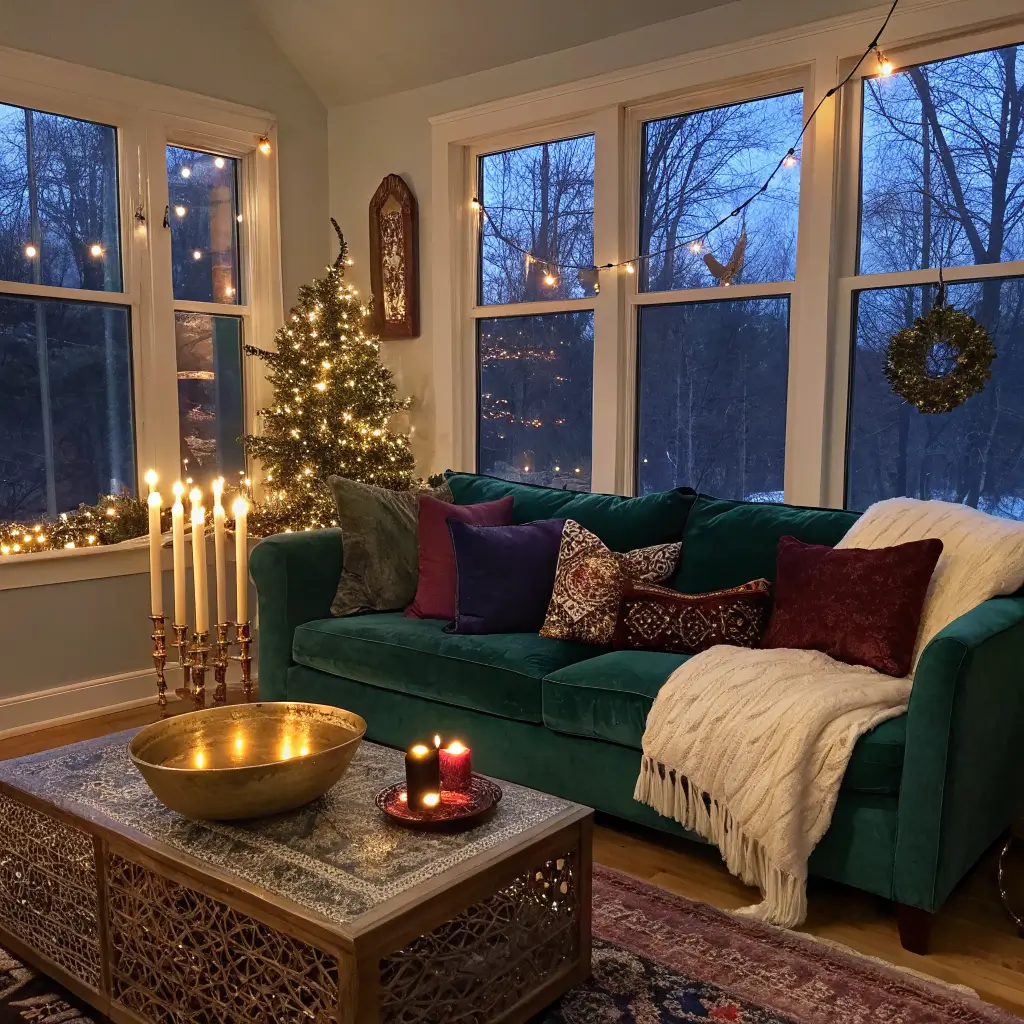
– Winter: more jewel tones, metallic ornaments piled in a bowl, candles everywhere, fairy lights
I keep a single under-bed bin of seasonal decor. When something new comes in, something old goes in the bin. That’s the rule that keeps the room from creeping into chaos.
Cross-Style Mashups That Actually Work
Boho + maximalist: rattan and macramé as the texture base, with bright patterned pillows and saturated art on top.
Mid-century + maximalist: keep the clean-lined walnut furniture, but layer a wild rug, neon art, and a color-blocked wall behind it. The structure of mid-century keeps the color from getting loose.
Grandmillennial maximalist: floral skirted sofas, pleated lampshades, chintz curtains, and then a modern abstract painting or a hot pink lamp to keep it from tipping into “grandmother’s parlor.”
A Last Honest Note on Editing
The single best thing I ever did for my maximalist living room was take 30% of the stuff out. Boxed it up, lived without it for a month, then put back only what I missed. The room got more colorful, more interesting, and easier to dust — all at once.
Maximalism rewards taste, not volume. Once you accept that, the whole thing gets fun.
Colorful maximalist decor is not about filling every inch, it is about curating a space that sparks joy every time you walk through the door. My entryway has a gallery wall with postcards from friends, a mirror framed in peeling gold paint, and a ceramic elephant I bought on impulse in Mexico City, and every guest asks about at least one piece. Collect what moves you, arrange it with intention, and the room will feel full in the best way.
Conclusion
The colorful maximalist decor that felt right to me was in a house where every wall was a different color, every shelf held a different collection, and every surface was covered with something that had a story. The owner had a wall of framed postcards, a cabinet of ceramic birds, and a sofa with seven pillows in seven patterns. It should have been chaos. Instead, it felt like a museum of a life well lived. That is maximalism — not excess, but abundance with intention.
More Decor Ideas to Explore
- The Modern Colorful Living Room: How to Do Bold Color Without It Looking Like a Toddler’s Playroom
- Backyard Deck Ideas: Transform Your Outdoor Space from Boring to Breathtaking
- Creating a Cozy Bedroom Fireplace: Your Ultimate Styling Guide
- 25 Easter Table Decorations to Spark Joy at Every Place Setting