Who This Style Actually Suits
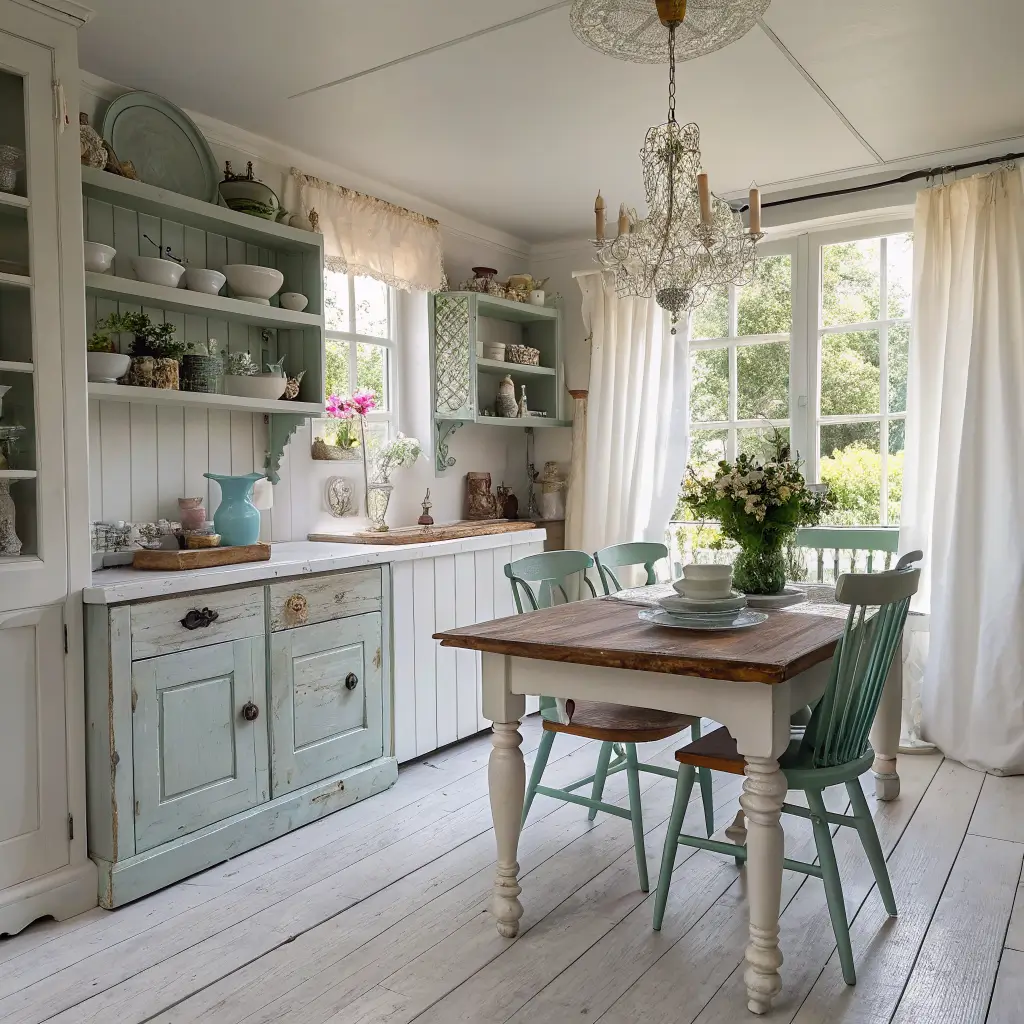
Shabby chic sits between cottage, French country, and light farmhouse. Faded florals, chippy paint, glass knobs, a chandelier where a boob light used to be. It leans feminine, but not saccharine if you keep the palette disciplined.
It’s for you if:
– You’d rather hunt Facebook Marketplace on a Saturday than order a matching set from West Elm
– You like a lived-in look and don’t panic when something gets scratched
– You’re working with a small budget and want the room to feel personal, not showroom
It’s not for you if glossy, streamlined, or symmetrical is what makes you happy. That’s a different article.
Time, Money, and Scope
Cosmetic refresh (paint, hardware, textiles, a light fixture, decor): 2–3 weekends.
Fuller makeover with upcycled furniture, open shelving, maybe a new island: 3–6 weeks working part-time.
Rough budget bands based on what I actually spent and what I’ve priced out since:
– Thrifted/DIY: $350–$1,000. Vintage table $80–$250, four mismatched wooden chairs $60–$150, one to two gallons of chalk paint $40–$80, two or three reclaimed wood shelves with brackets $80–$200, a vintage-style pendant $60–$200, and $75–$200 in jars, baskets, enamelware, and linens.
– Mid-range: $1,000–$3,000. A freestanding farmhouse table or island ($300–$800), a butcher-block worktop ($200–$600), a SMEG kettle or toaster ($150–$300 each), and a beadboard or floral wallpaper accent wall ($100–$300 in materials).
– Full remodel: $6,000–$15,000 for painted shaker cabinets with a distressed finish, plus $60–$120/sq ft for marble or composite counters, and $300–$1,000+ for a real crystal chandelier.
Space-wise: it works in an 8–10 ft galley if you keep it light and edit hard. It sings in a 120–250 sq ft eat-in kitchen where you’ve got room for a farmhouse table and a hutch.
Skill level: beginner for painting and shelving; intermediate if you want convincing distressing or beadboard.
The Color Foundation
Get this wrong and nothing else will save you. I know because I painted my first set of cabinets in a warm cream that read yellow next to my cool grey floor tile, and I lived with it for eight months before repainting.
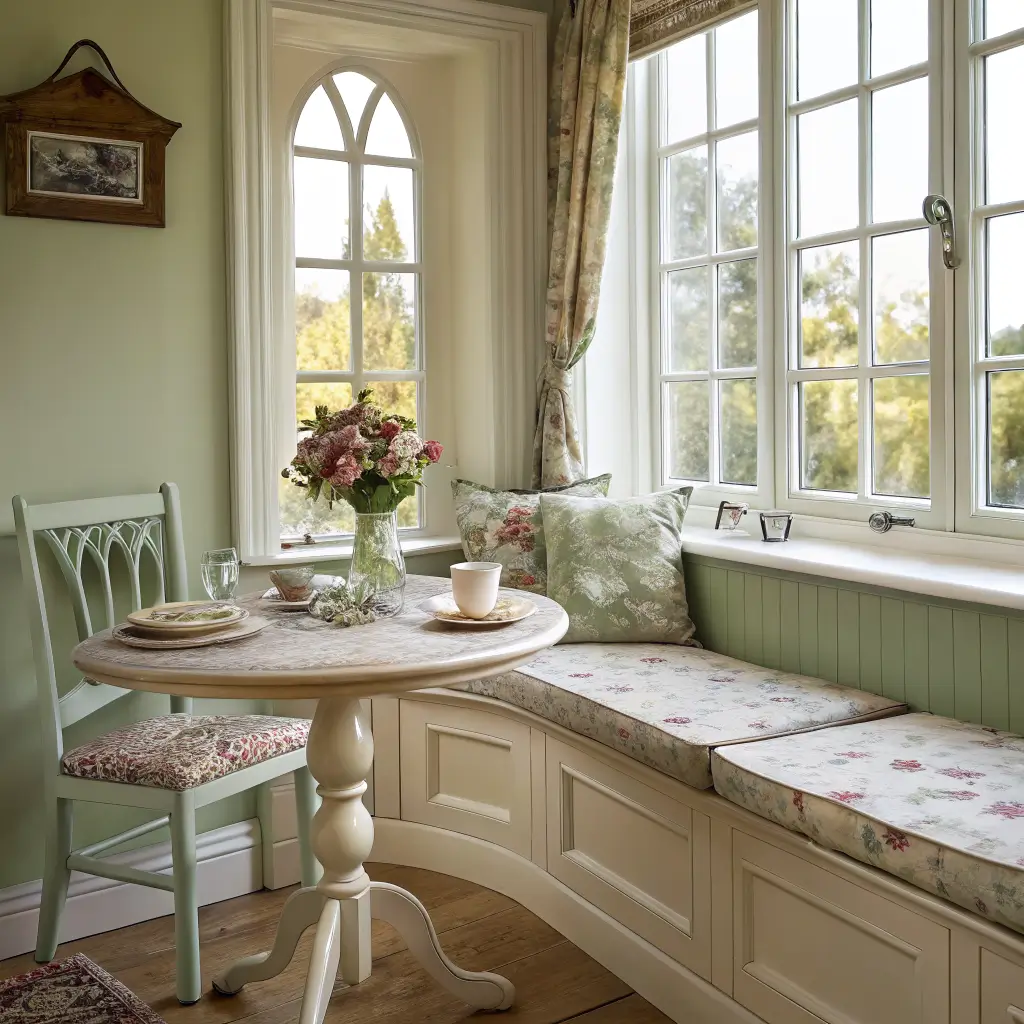
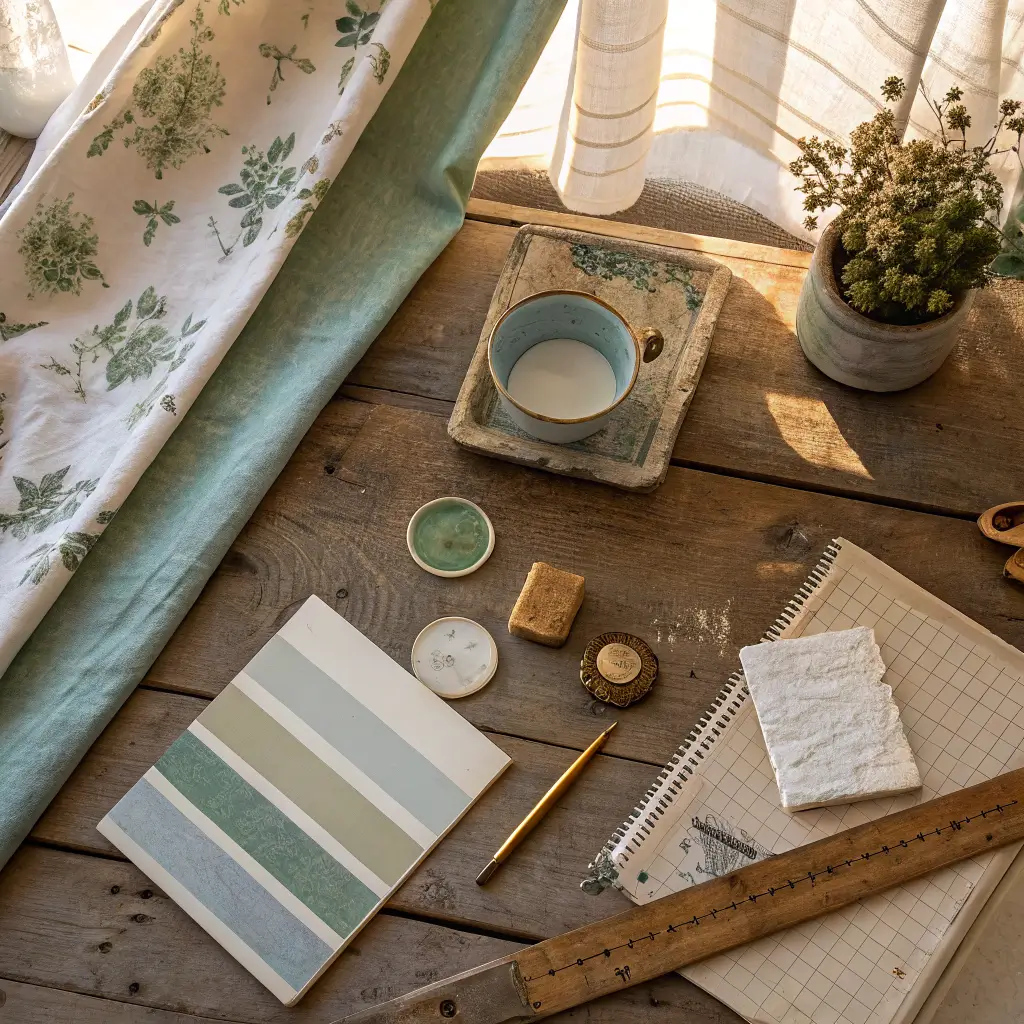
Base: soft white, antique white, cream, stone, or pale grey. One base for walls, one for cabinets, and they should be within a couple of shades of each other. Matte or eggshell finish — never satin, never gloss. Chalk paint on furniture pieces because it gives that powdery, timeworn surface without a topcoat looking plasticky.
Accents: blush, powder blue, sage, mint, primrose yellow, soft rose. Pick two or three and repeat them. Don’t use all six.
Deeper tones in tiny doses: charcoal, smoky blue, raspberry — think hardware, a single chair, a jug. Not a whole wall.
Test your whites against your floor and your natural light before committing. A cream that looks perfect at the paint store can go peach at 4 pm.
Hero Pieces That Do the Heavy Lifting
If you buy nothing else, buy or hunt down these:
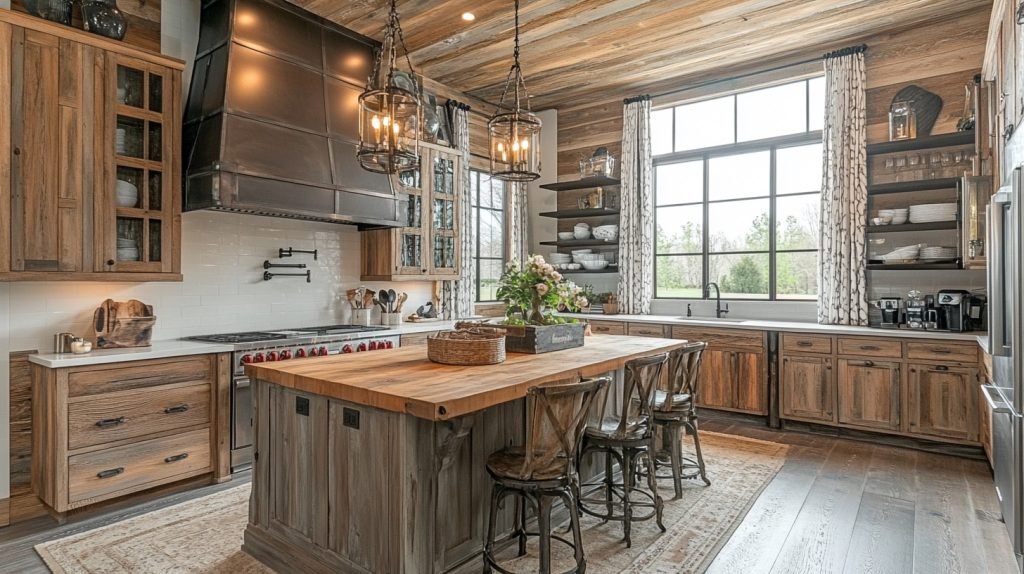
– A scrubbed farmhouse table, pine or oak, 5–7 ft long, turned legs or a plain trestle. Mine came from a barn sale for $140 with paint splatters on it I refused to sand out.
– Distressed painted cabinets in one of your base colors. If you can’t paint the fitted cabinets (rental), skip to the freestanding piece below.
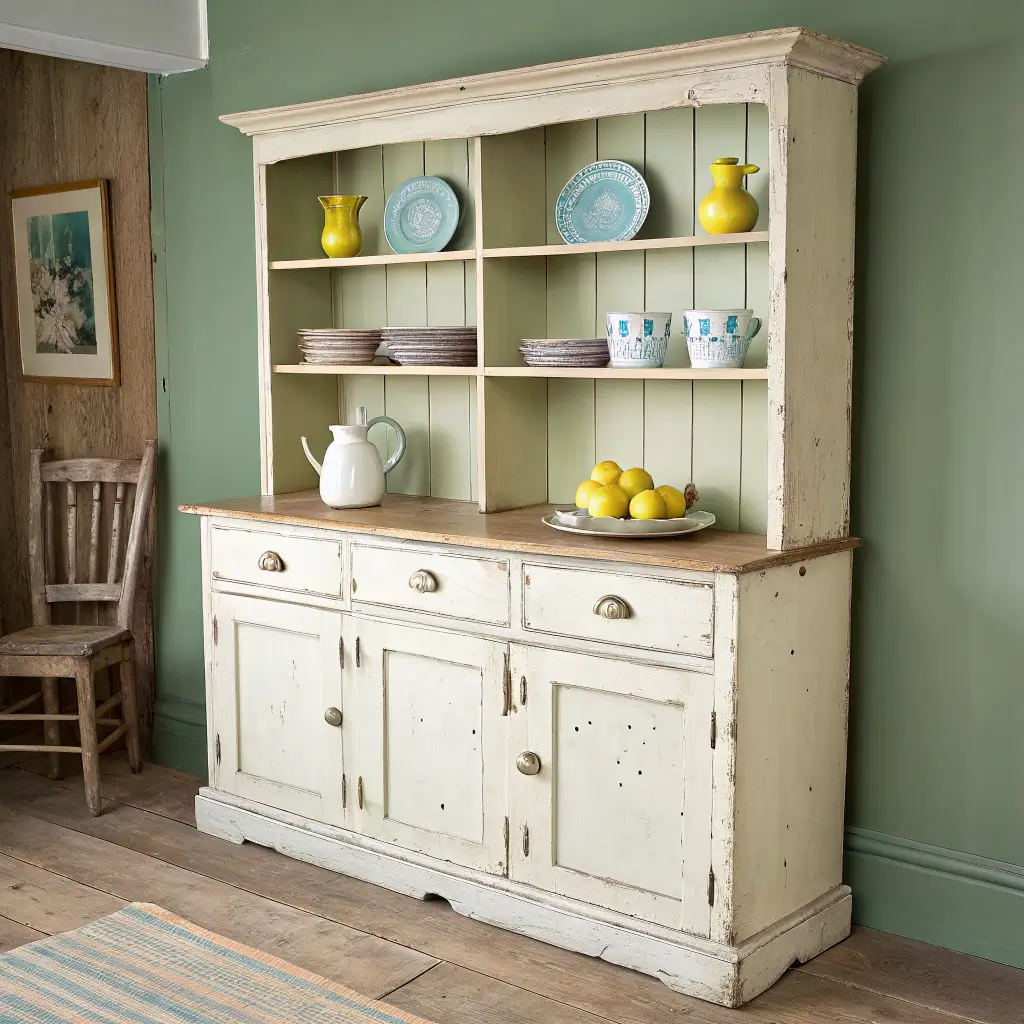
– A vintage hutch, Welsh dresser, or sideboard on the longest wall. This is your visual anchor and your dish storage.
– Two or three open shelves in reclaimed or painted wood, mounted above the counter or around a window.
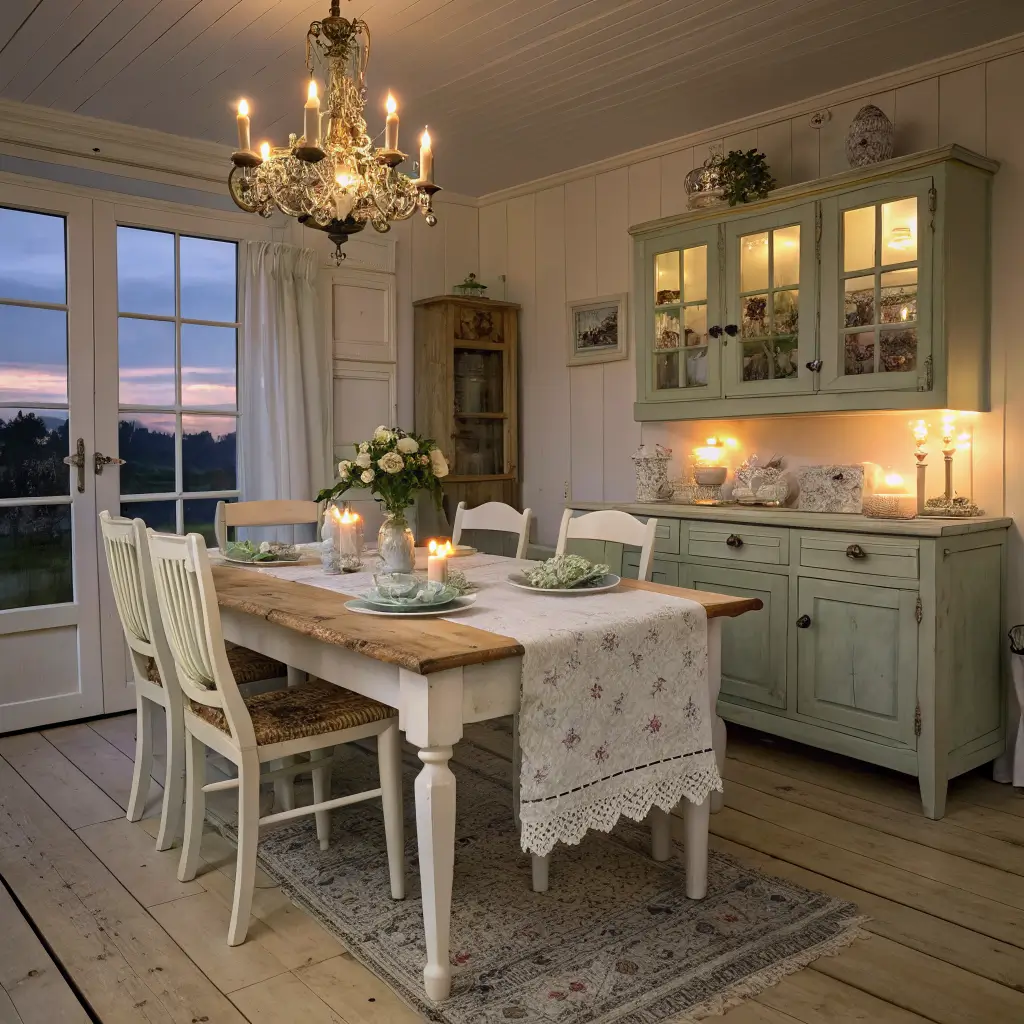
– One statement light — a small glass or crystal chandelier over the table, or an enamel pendant with an aged brass cap over the sink.
The hutch is the single piece that made my kitchen click. Before it, the room read as a bunch of nice pastel things in a normal kitchen. After it, the room had a center of gravity.
Hardware, Textiles, and the Small Stuff
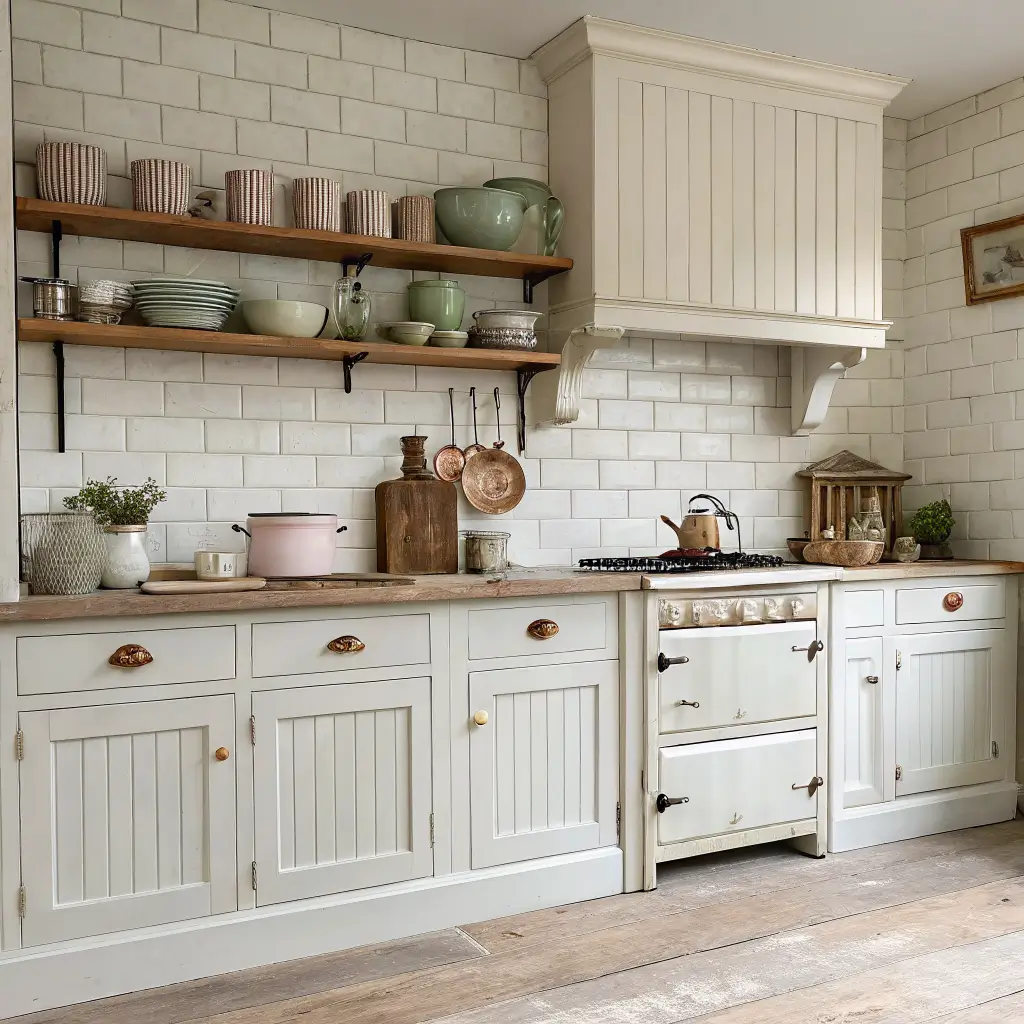
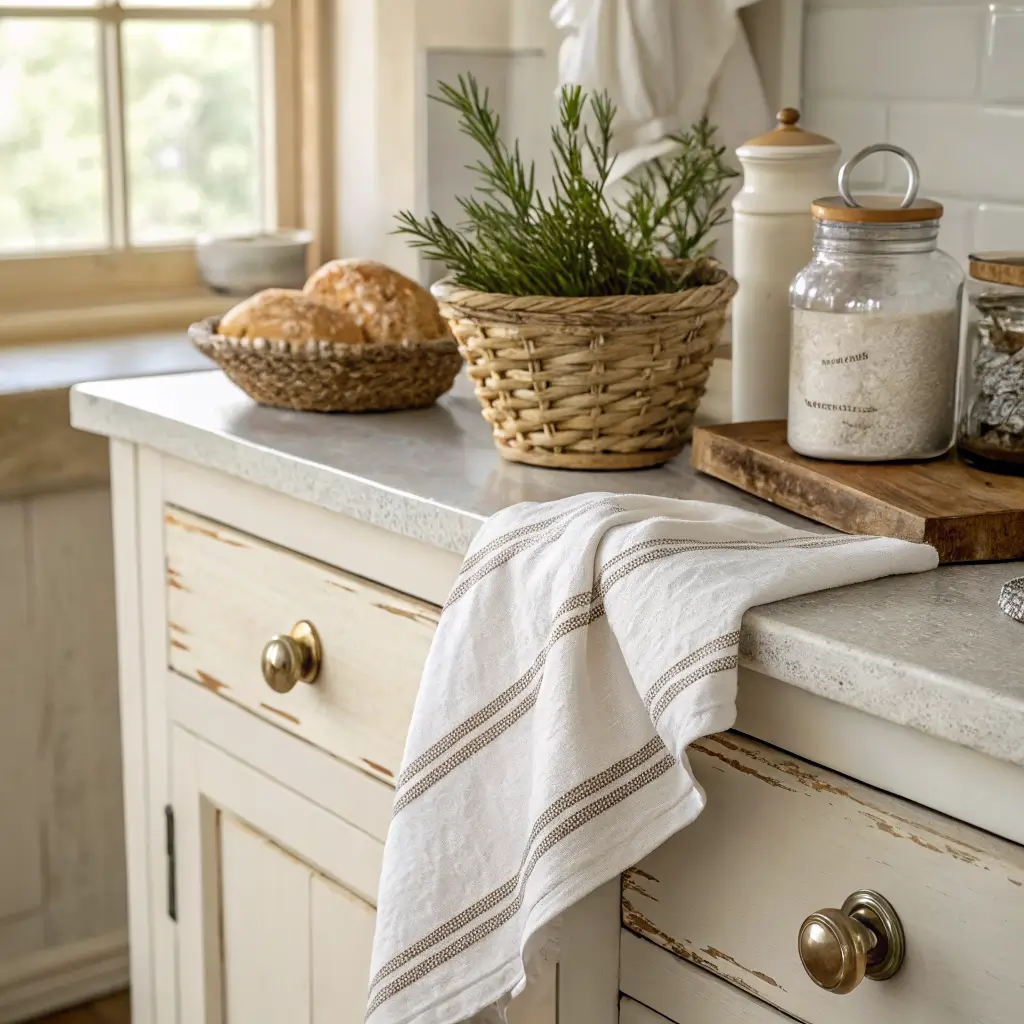
Hardware is the cheapest style upgrade you’ll ever make. Porcelain or milk glass knobs, aged brass or iron cup pulls, roughly $3–$10 each. Swapping every knob in a small kitchen ran me about $70 and did more than any single decor purchase.
For textiles, keep patterns small-scale and faded: ticking stripe, gingham, tiny florals, dotted swiss. Layer a lace runner over a plain linen cloth. Cushion tie-on pads for wooden chairs. Curtains in unlined cotton so light comes through.
For crockery on display, group by color family, not by set. A stack of white ironstone plates, a row of pastel mixing bowls, three pressed-glass tumblers, a cake stand. Leave breathing room on every shelf — I aim for about a third of the shelf to stay empty.
Glass jars for flour, sugar, pasta, rice. Woven baskets lined with linen for bread and produce. A copper pot or two hung from a rail if you have wall space.
How to Style It Without It Looking Like a Craft Fair
This is where most shabby chic kitchens go wrong. Too much stuff, arranged too evenly, no editing. Follow these:
Layer textures in every sightline. Wood, glass, metal, linen, ceramic. If a shelf is all ceramic, add a small wooden board or a glass jar.
Cluster, don’t scatter. Three teacups together beat one teacup on each of three shelves. Odd numbers, varied heights.
Keep countertops mostly clear. Decorate walls and shelves; leave surfaces for cooking. This is the tip I fought hardest and was most wrong about.
One focal point per sightline. The table with its chandelier. The hutch styled with dishes. The range wall with open shelves and hanging copper. Not all three competing.
Distressing goes where things actually get worn. Corners, edges around handles, the front lip of a drawer. Uniformly sanded surfaces read as fake — because they are. Build up two thin coats of paint and lightly rub back with a fine sanding sponge only where a hand would touch.
Handling the Modern Stuff You Can’t Get Rid Of
The microwave. The coffee maker. The dishwasher panel. You have three options:
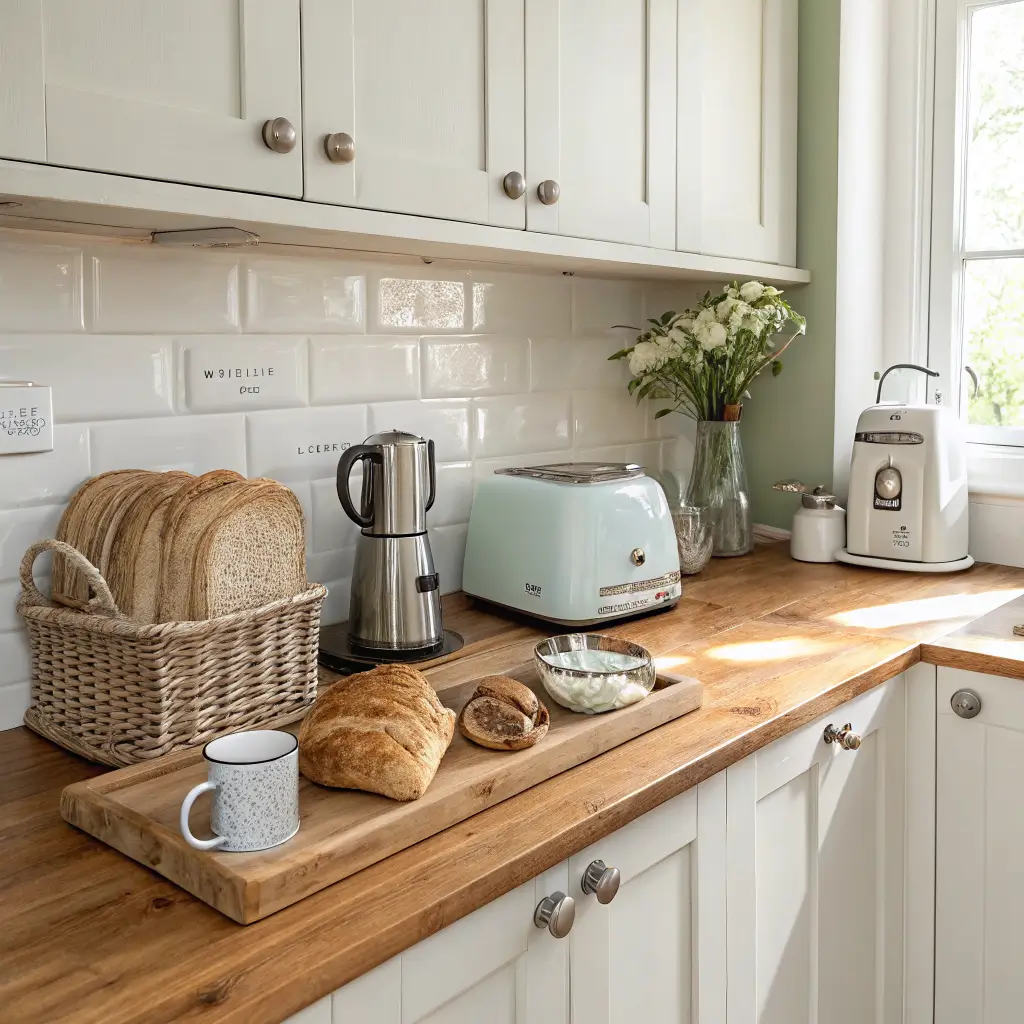
1. Retro-style replacements — a SMEG kettle in pastel blue, a cream-colored toaster. Works if you’re replacing anyway.
2. Neutral and grouped — cluster white or stainless appliances on a wooden tray so they read as one visual block instead of five loose objects.
3. Hide them — appliance garages, a linen curtain under an island shelf, cabinet doors closed.
For fitted cabinets you can’t replace, a beadboard panel glued to flat door fronts, plus new hardware, plus paint gets you 80% of the way there for under $200.
Where I’d Spend and Where I’d Save
Spend on:
– The table (you’ll eat at it every day for a decade)
– The light fixture over that table
– Cabinet hardware if you’re keeping the cabinets
– One good freestanding piece — hutch or island
Save on:
– Decor accessories. Thrift, estate sales, Marketplace. I’ve never paid more than $8 for a jug vase.
– Textiles — cotton and linen from fabric-remnant bins, hemmed on a machine or with iron-on hem tape
– Open shelving. Reclaimed pine boards and simple iron brackets from a hardware store cost me about $30 per shelf
Skip entirely:
– Anything sold as “shabby chic” that arrived pre-distressed at retail markup. It looks like what it is.
– Vinyl “wood look” anything. The material matters here.
Mistakes I Made So You Don’t Have To
I overbought pastels. I had blush towels, mint canisters, blue jars, and yellow flowers on the table all at once. It looked like an Easter aisle. Pick two accent colors and be strict.
I distressed too aggressively. My first cabinet door had wood showing through in the middle of a flat panel, which no piece of furniture would ever wear that way. I repainted and started over, keeping the wear to edges and the area right around the knob.
I let the shelves get crowded. Every thrift find went up. Within a month it looked chaotic. Now I keep a small bin in the pantry with “off-duty” decor and rotate seasonally.
I ignored the fixed elements. My original stainless dishwasher and black stove fought the softness. A magnetic dishwasher panel cover in white ($40) and a cast-iron kettle sitting on the stovetop broke up the black enough to calm the whole room.
Seasonal Swaps That Cost Almost Nothing
– Spring: fresh tulips or grocery-store ranunculus in a pressed-glass jug, floral runner, pastel tea towels
– Summer: linen everything, herbs in terracotta pots on the sill, a bowl of lemons or stone fruit
– Autumn: copper pots out on display, muted florals, dried hydrangea, heavier woven runners
– Winter: candles in glass holders, fairy lights along the top of the hutch, evergreen sprigs in a white pitcher
Keep the base of the room constant. Swap only the textiles and the centerpiece.
Cross-Style Variations if Pure Shabby Chic Feels Too Sweet
– Farmhouse-leaning: more wood tones, black iron hardware, keep cabinets and textiles soft. This is where I’ve ended up.
– Coastal: trade blush and yellow for aqua and sea glass, add weathered driftwood, keep the florals subtler.
– Boho: more woven textures, a jute rug, macrame plant hangers, houseplants beyond just herbs.
Quick Answers to Things People Ask Me
Is shabby chic outdated? No, but the mid-2010s peak version — pink everything, chalkboard signs, “Live Laugh Love” — is. The current version is quieter, more European, closer to French country. Fewer words on the walls, more real vintage.
Can I do this in a rental? Yes, and it’s arguably easier. Freestanding hutch, open shelves on Command strips or renter-safe anchors, painted furniture instead of painted cabinets, curtains instead of hardware changes. You can walk away with all of it.
How do I make modern cabinets look shabby chic without replacing them? Chalk paint over lightly sanded doors, new porcelain or glass knobs, beadboard panels on flat fronts if you want extra texture, and softening everything else around them with textiles and vintage decor. The cabinets stop being the loudest thing in the room.
Start with the paint and the light fixture. Everything else follows.
More Decor Ideas to Explore
- 29 Irresistible Apartment Aesthetic Cozy Ideas That Will Make Your Space Feel Like Home
- 16 Fire Pit Ideas Backyard on a Budget That Make Summer Nights Better
- 27 Fall Bathroom Decor Ideas That Make a Small Room Feel Like Autumn
- 27 Stunning Calming Office Decor Ideas That Will Transform Your Workspace Into A Peaceful Productivity Haven