The Beachy Living Room: How to Get the Look Without It Feeling Like a Souvenir Shop
A beachy living room should make you exhale the second you walk in — not make you wonder if a wooden seagull is staring at you. That’s the line most people get wrong. I spent two years course-correcting my own living room (a north-facing rental, no ocean in sight, in a city two hours from any real coastline), and the version that finally clicked had almost nothing literal in it. No starfish. No rope-wrapped jars. Just light, texture, and a palette borrowed from a foggy morning at the shore.
Here’s how to build it, what to actually buy, and the stuff I’d skip.
What This Style Actually Is (and Who It’s For)
Modern coastal is relaxed, light, and texture-driven. The mood comes from materials — linen, jute, bleached wood, cane — and a palette pulled from sand, sea glass, and weathered driftwood. Forget the navy-and-white nautical thing your aunt did in 2008. That version is over.
This look works for:
– Renters who want a vacation feeling without renovating
– Families that need durable, washable fabrics
– Landlocked apartments where you want lightness, not literal beach references
– Open-plan rooms where a jute rug can zone the living area
It scales from a 10’×12′ apartment up to a 15’×20’+ great room. In narrow rooms, lean on vertical art and slim-profile furniture to keep things breathing.
Skill level: Beginner for styling. Intermediate if you’re painting walls or building a gallery wall from scratch.
The Palette: Specific Colors That Actually Work
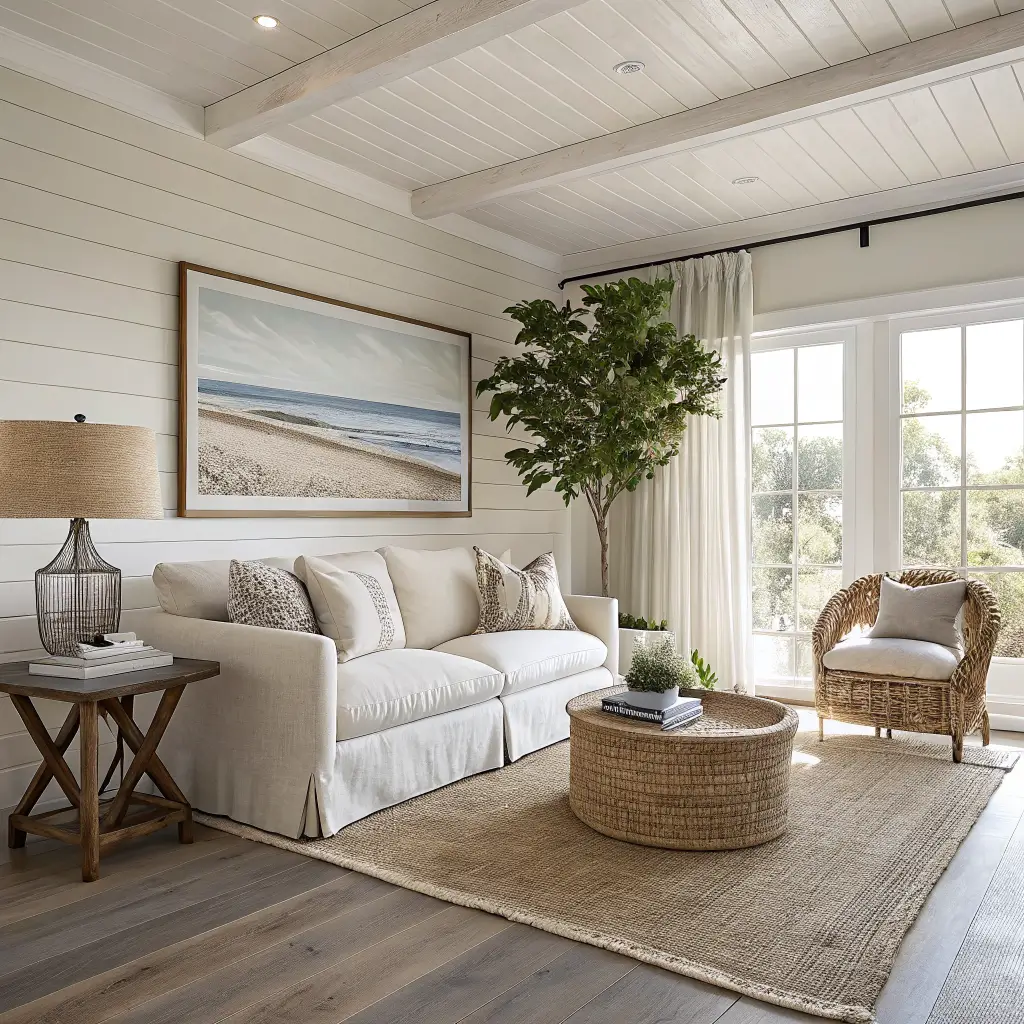
The biggest mistake people make is picking “beachy blue” off a color wheel. The blues that look right are dusty, muted, and slightly green or gray — never primary.
Wall paint I’d recommend (or have used):
– Benjamin Moore Swiss Coffee — warm white, doesn’t go yellow
– Benjamin Moore Chantilly Lace — cooler, cleaner white for bright rooms
– Sherwin-Williams Alabaster — creamy, forgiving, my pick for north-facing rooms
For accents, build around sand, oatmeal, and greige with one or two of these sea tones layered in: sea glass, dusty blue, slate. If you want depth, anchor it with a single deeper color — navy on one lampshade, a charcoal pillow, a black picture frame. Without that one dark note, the whole room reads flat.
I’d cap accent colors at three. Mine are warm white, oat, and a soft slate blue. That’s it.
The Hero Pieces (Where to Spend)
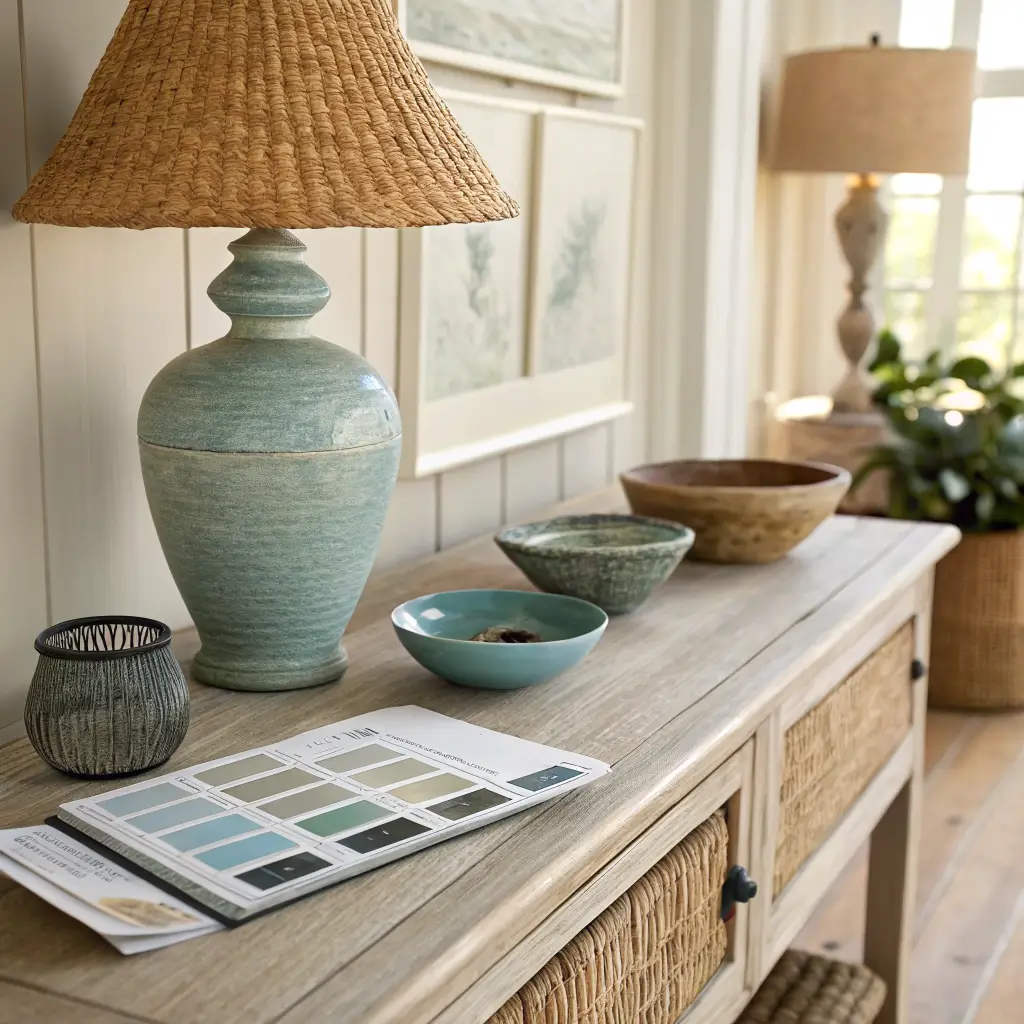
If you only buy three things right, make it these.
1. The Sofa
A light, slipcovered or linen-look sofa is the entire foundation. Off-white, beige, or pale gray. Avoid dark brown leather — it fights everything else you’re about to do.
– Budget: $400–$800 at IKEA, Target, Wayfair
– Mid-range: $900–$1,800 (Article’s Ceni in oatmeal is a workhorse; West Elm’s Harmony in performance linen if you have kids)
– High-end: $2,000–$4,000+ for custom slipcovered
A real warning from experience: I bought a $600 sofa in a chunky boucle the first time around. Beautiful in the photos. In real life it pilled within four months and held cat hair like Velcro. Get performance fabric if anyone in your house exists.
For apartments, an 80–90″ three-seater is the right scale. For family rooms, a deep-seat sectional pulls its weight.
2. The Rug
A jute, sisal, or seagrass rug at 8’×10′ or 9’×12′ grounds everything. Jute is softer underfoot than sisal; sisal is more durable. If you have kids and pets, layer a thin cotton flatweave over the jute — easier to wash, kinder to bare feet.
– Budget: $120–$250 (Rugs USA, IKEA)
– Mid-range: $300–$600 (Loloi, Pottery Barn)
Pet-and-kid pick: a low-pile washable cotton flatweave in oatmeal. Jute looks great but sheds and stains.
3. The Coffee Table
Light oak, whitewashed wood, or a round rattan drum. 36–48″ long for rectangular, 30–36″ diameter for round. Budget $150–$300, mid-range $350–$700.
The Supporting Cast
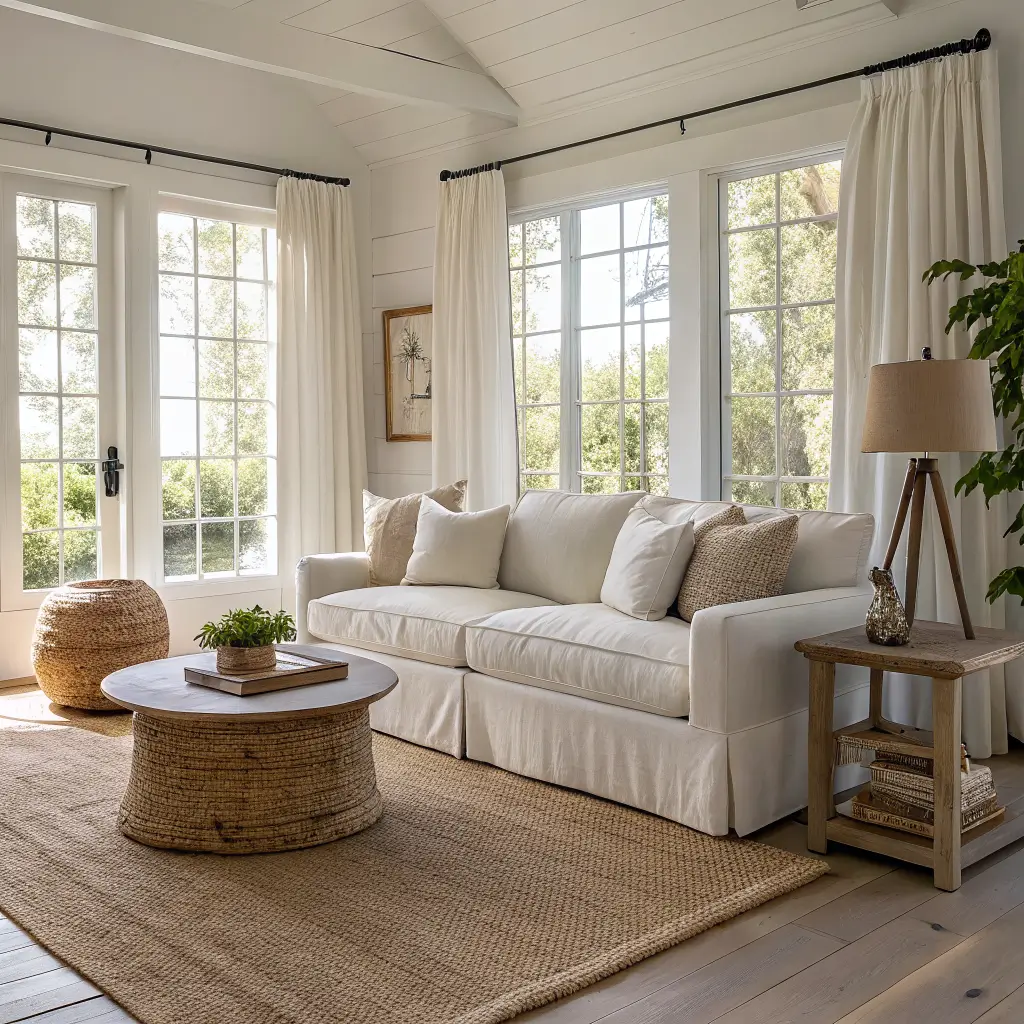
– Accent chairs: Rattan lounge, cane-back, or a slipcovered swivel. $200–$700 each.
– Side tables: Rattan pedestals, white ceramic garden stools, or chunky wood stumps. Mix two different ones rather than buying a matched pair.
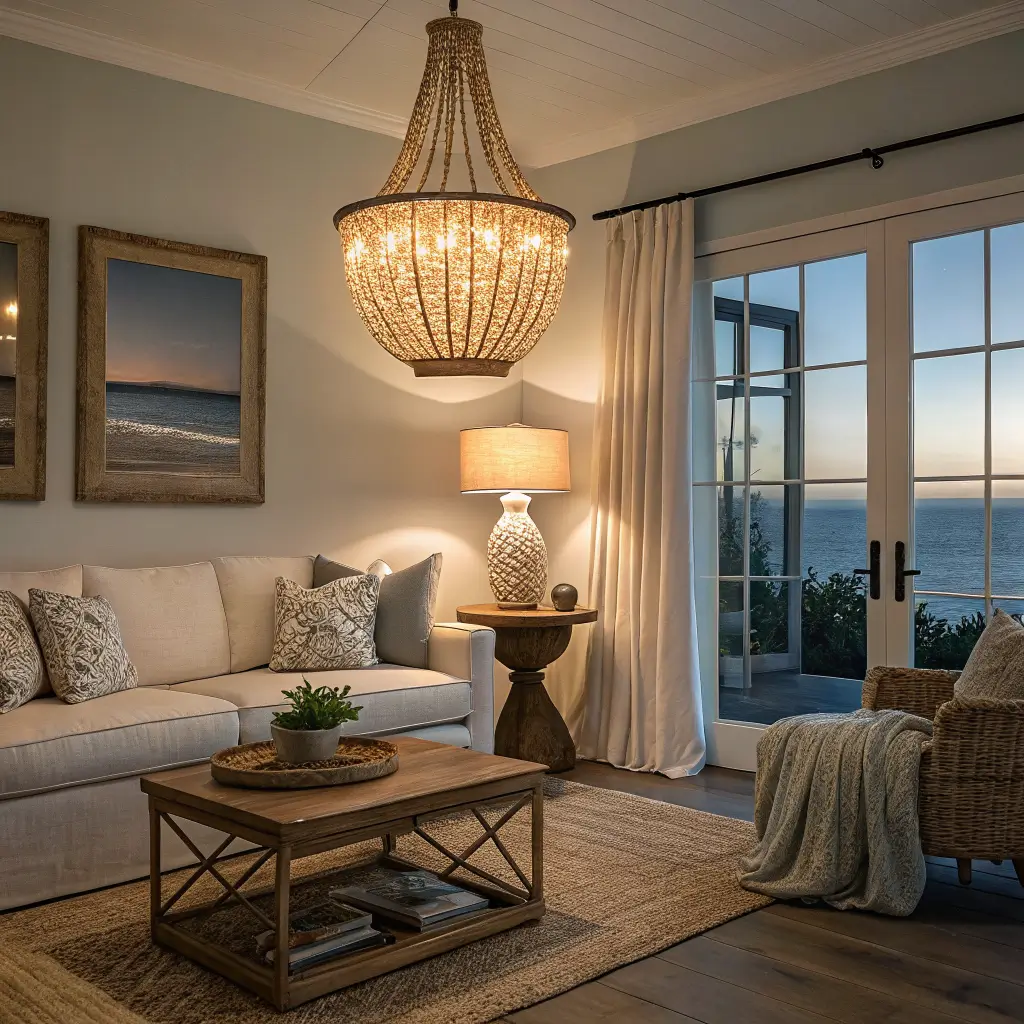
– Lamps: Ceramic bases, woven rattan shades, or rope-wrapped. $50–$150 each. Aim for two table lamps and one floor lamp minimum.
– Pillows: Linen and cotton, $20–$60 each. Mostly solids in textured neutrals. One or two patterned — stripes or a subtle block print.
– Throws: $30–$100. One waffle cotton, one chunkier knit for cooler months.
– Baskets: Seagrass, for blankets and the inevitable pile of kid stuff.
Layout and Layering: The Order That Matters
Mess this order up and you’ll rearrange four times. I know because I did.
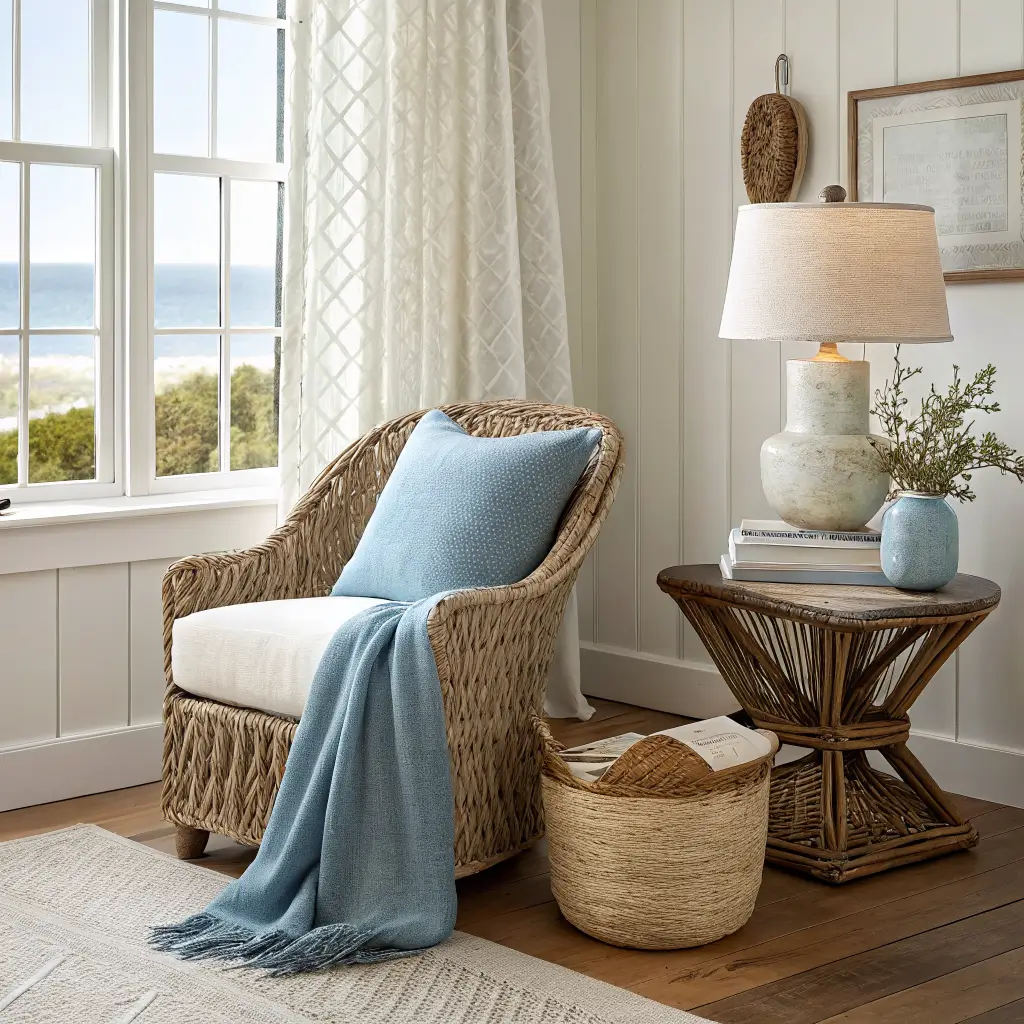
1. Rug first. Always. Sofa front legs should sit on it.
2. Sofa centered on the rug. In small rooms, float it against the longest wall.
3. Coffee table 16–18″ from the sofa edge. Closer and you bruise your shins; farther and you can’t reach your coffee.
4. Side tables within arm’s reach of every seat.
5. Lamps next, before any decor. Light shapes the room.
6. Soft layers: Two larger neutral pillows on the sofa, then 2–4 smaller patterned or colored ones in front. One throw, casually folded — not draped like a furniture showroom.
7. Surfaces: Coffee table gets a tray, two or three books, a small plant, one sculptural object. That’s it.
8. Walls last. Hang the main piece at eye level — center of the art roughly 57–60″ from the floor.
Curtain rule that changes everything: mount curtain rods 4–6″ above the window frame and 6–10″ wider on each side. Cheap curtains hung high look expensive; expensive curtains hung at the frame look cheap.
Texture Is the Whole Trick
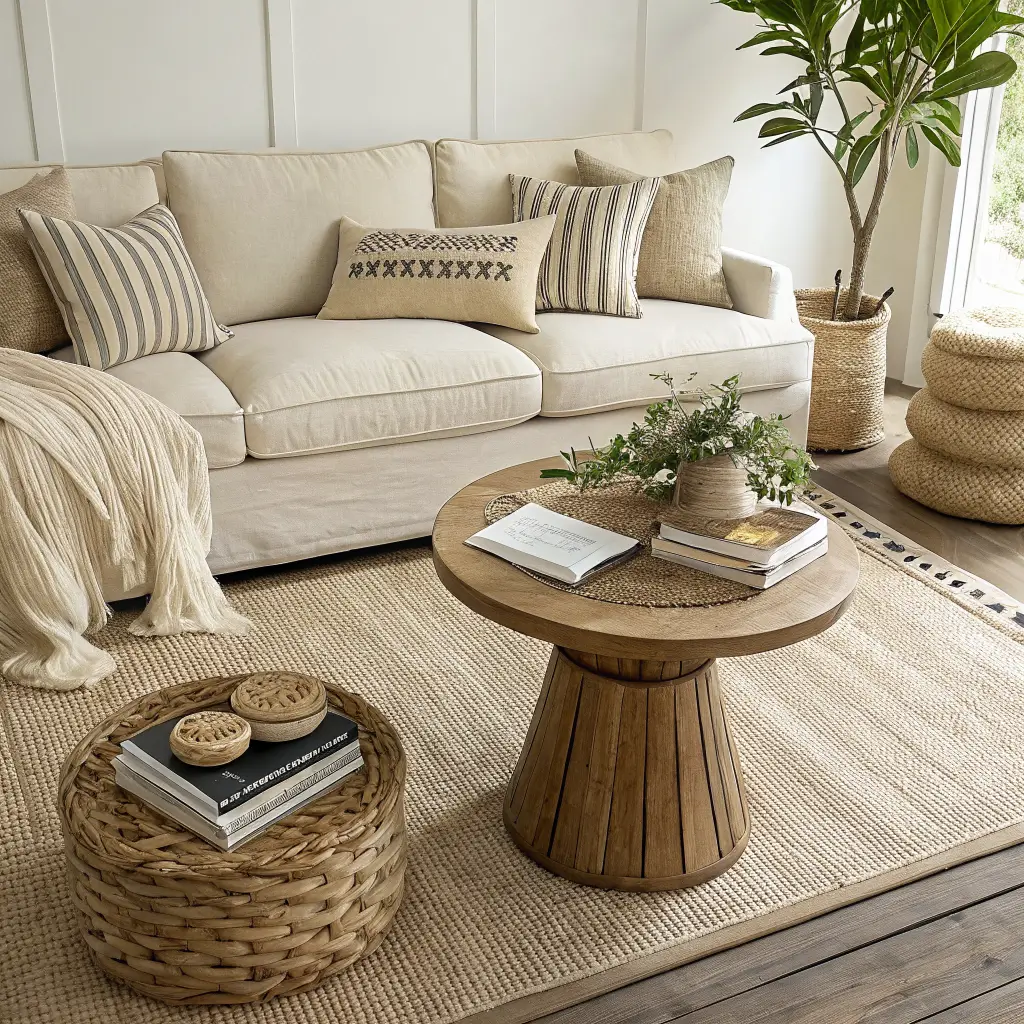
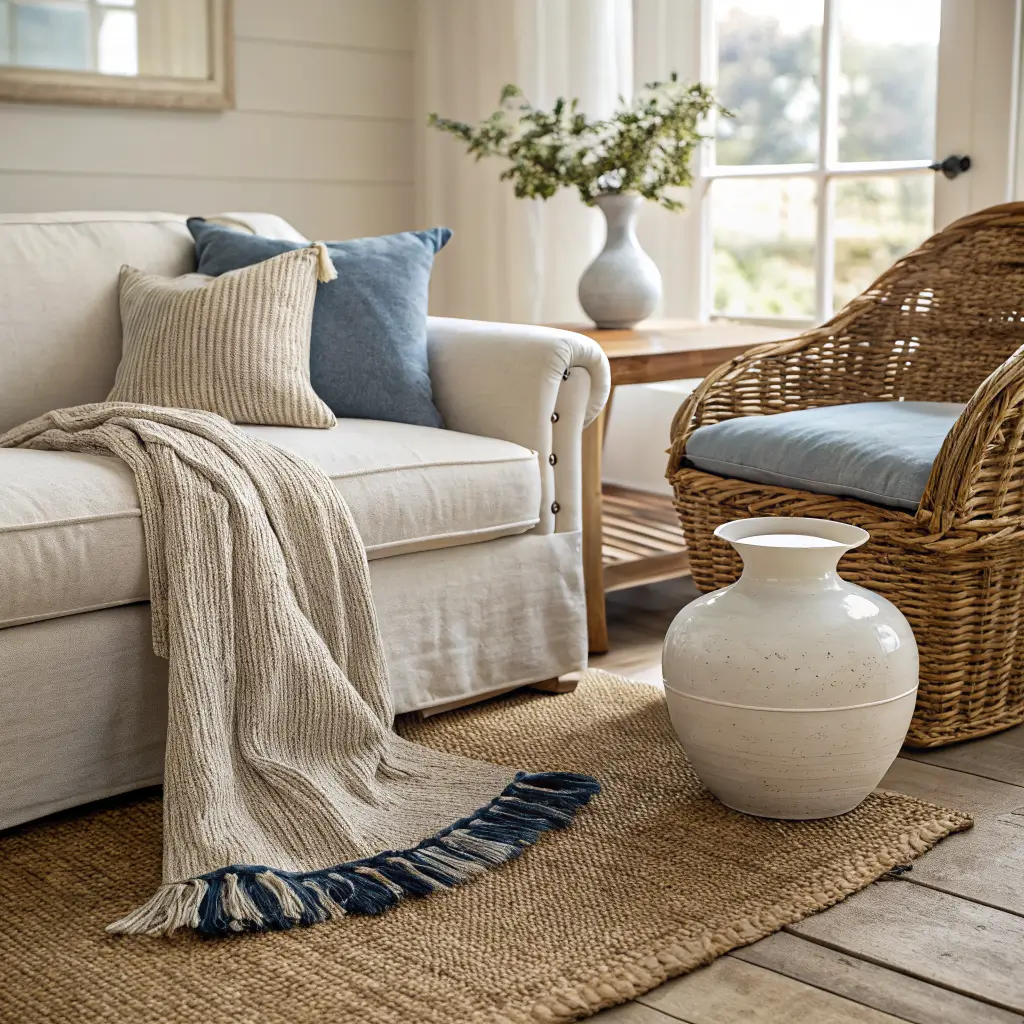
A beachy room sings when you stack four or five textures in the same neutral palette. My current setup, as an example:
– Smooth linen sofa
– Chunky jute rug
– Woven rattan armchair
– Soft cotton waffle throw
– A nubby slate-blue pillow
– A glazed white ceramic vase
Same color family, six different surfaces to touch. That’s the goal. If your room photographs well but feels flat in person, you don’t have enough texture variation.
Greenery (the One Place to Get Specific)
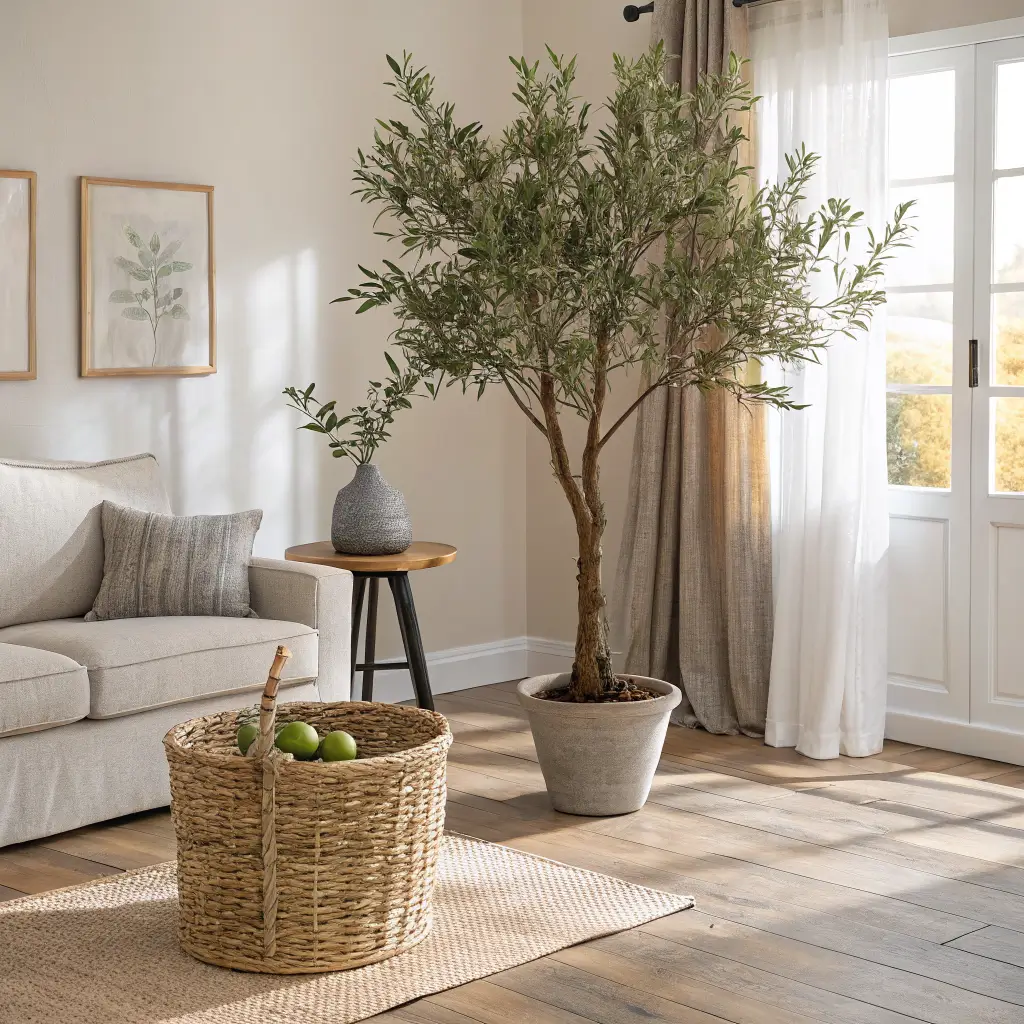
“Add some plants” is useless advice. Here’s what I’d actually put where:
– Empty corner past the sofa: a 4–5 ft fiddle-leaf fig or olive tree in a woven seagrass basket
– Console or sideboard: a long branch of eucalyptus or pampas in a tall stoneware vase
– Coffee table: something small — a trailing pothos or a single olive sprig in a bud vase
If you can’t keep plants alive, faux olive trees from Afloral or Pottery Barn read real from six feet away. Faux fiddle-leafs almost never do — skip those.
The Beachy Things I Will Not Buy
– Anchor anything
– Rope-wrapped vases
– “Beach This Way” signs
– Reclaimed wood letter signs that spell BEACH or SEA
– Plastic starfish in any context
– Mason jars filled with sand
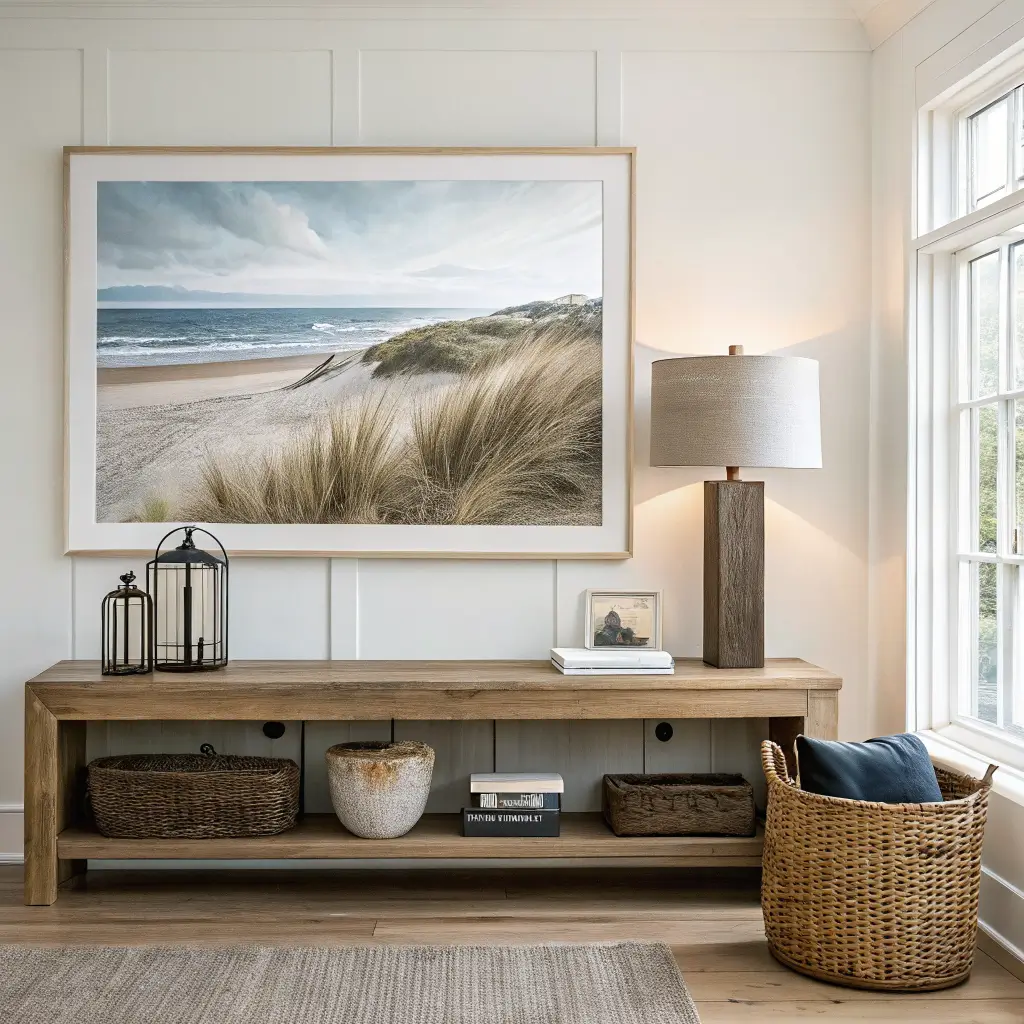
If you want to reference the ocean, do it with a single large abstract piece — a dune photograph, a quiet seascape, an abstract in blues and sands — instead of fifteen small trinkets. One big move beats twenty small ones, every time.
Lighting: The Thing Most People Botch
Overhead lighting on full blast kills this style instantly. You need layers.
– Two table lamps minimum
– One floor lamp in a darker corner
– Bulbs at 2700K (warm white). Never daylight bulbs. Never.
– A dimmer on the overhead if you have one
– Bonus: a small picture light over your main artwork
A rattan or beaded chandelier over the seating area is the one piece of “coastal lighting” worth buying. Serena & Lily makes the iconic version; Wayfair and Amazon have lookalikes for a quarter of the price.
Real Budget Breakdowns
Minimal refresh: $250–$600
New pillow covers ($10–$30 each), one throw, a couple of prints, a basket, one plant. Keep your existing sofa and rug.
Mid-range full room: $1,500–$3,500
New sofa in oatmeal, jute rug, coffee table, two lamps, art, pillows, plants.
High-end: $4,000–$8,000+
Custom slipcovered sofa, designer rug, brass accents, real ceramic and stone pieces.
Common Mistakes I See Constantly
– Theme overload. Choose one or two ocean references for the whole room, not one per surface.
– All beige, no contrast. Add a black frame, a charcoal lamp base, a navy pillow. Without it, the room reads washed-out, not airy.
– Too many small things on the coffee table. Group in odd numbers, use a tray to contain them.
– Heavy dark furniture left in place. A dark wood console fights the whole palette. Either lime-wash it, paint it, or move it to another room.
– Matching everything. Two matching side tables, matching lamps, matching frames — it reads catalog, not curated.
Seasonal Swaps
Same bones, different mood.
– Summer: brighter aqua pillows, a striped Turkish towel over the chair arm, more greenery
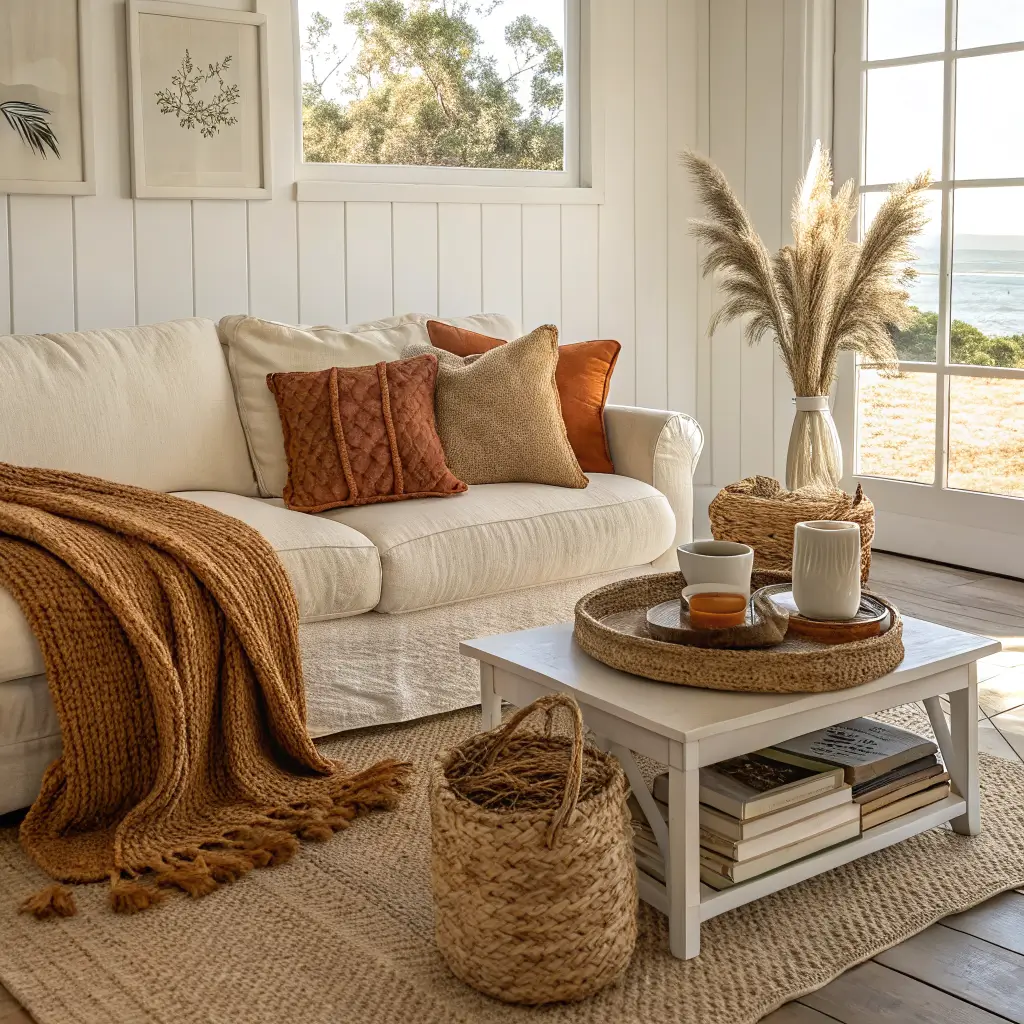
– Fall: swap in rust, terracotta, and caramel pillow covers; add a chunky cream knit throw
– Winter: frosted glass candles, eucalyptus branches, a sheepskin on one chair
– Holidays: driftwood and eucalyptus garland, white string lights, glass ornaments in a wooden bowl — skip the red and green
Swap pillow covers, not whole pillows. Covers run $10–$30 and store flat.
Cross-Style Variations
If you already lean another direction, you can blend.
– Boho coastal: add a macrame wall hanging, kilim pillows in muted earth tones, more plants
– Scandi coastal: cleaner lines, black accents, less ornament, light oak everywhere
– Coastal luxe: brushed brass lamps, a travertine side table, a linen-blend or boucle accent chair
The Test Before You Buy Anything Else
Before any new purchase, ask three questions:
1. Is it in the palette (warm white, sand, sea tone, one accent)?
2. Is it a natural material or does it read light?
3. Is it in scale with what’s already there?
If it fails any one of them, put it back. The fastest way to wreck a beachy room is one impulse buy that doesn’t fit — a dark walnut bookshelf, a synthetic shag rug, a poppy-red throw on sale. I’ve made all three of those mistakes. The bookshelf is now in the garage.
The version of this room that finally worked for me wasn’t the most expensive iteration — it was the one where I stopped trying to look like a magazine and just kept choosing things in the same three colors that felt good to touch. That’s really the whole assignment.
The beachy living room I actually want to spend time in is the one with the worn jute rug and the sofa cover that has been washed so many times it is almost soft. That lived-in quality is what makes the space feel genuine instead of staged.
Conclusion
The beachy living room that felt like home had a sofa with slipcovers that had been bleached by sun and salt until they were almost white, a coffee table made from a door found in a shipyard, and a porch that opened directly into the space so you could not tell where inside ended and outside began. The owner said she had never decorated it. She had just collected things that could survive the damp and left them where they landed.
More Decor Ideas to Explore
- The Beachy Bathroom Guide: How to Get the Coastal Look Without It Feeling Like a Gift Shop
- Rustic Coastal Decor: How to Get the Look Without It Feeling Like a Beach Gift Shop
- Moody Coastal Decor: How to Get the Dark, Atmospheric Beach-House Look Without the Nautical Cheese
- Little Apartment Decor: How to Make 350–650 Square Feet Actually Feel Like Home