The Look, and Who It’s For
Little apartment decor is mostly a math problem dressed up as a style problem. You’ve got one room (or close to it), a sofa that’s probably too big, a landlord who won’t let you paint, and a Pinterest board full of lofts that have 14-foot ceilings and zero relevance to your life. I’ve decorated three small apartments in the last decade, including a 410-square-foot studio in a building from 1923 with one north-facing window and radiators in inconvenient places. I learned most of this the hard way.
Here’s what actually works.
The version of small-apartment style that holds up right now is a warm, pared-back neutral base with two or three textures doing the heavy lifting. Think Scandi bones, a little boho softness, and the “quiet luxury on a budget” idea that’s been everywhere on TikTok — fewer pieces, but the ones you have look intentional.
This works for renters, first apartments, students, remote workers in studios, and anyone who downsized and is staring at a pile of furniture that no longer fits. If your space is between 250 and 700 square feet, with a living area roughly 9×11 to 12×15, you’re in the right zone.
Core palette I keep coming back to:
– Walls and big pieces: warm whites like Benjamin Moore Swiss Coffee or Chantilly Lace, or off-the-rack greige and mushroom beige
– Mid-tones: light oak, birch, natural rattan, jute
– Accents (pick 2, not 5): dusty blue, sage, terracotta, muted rust, or ink navy
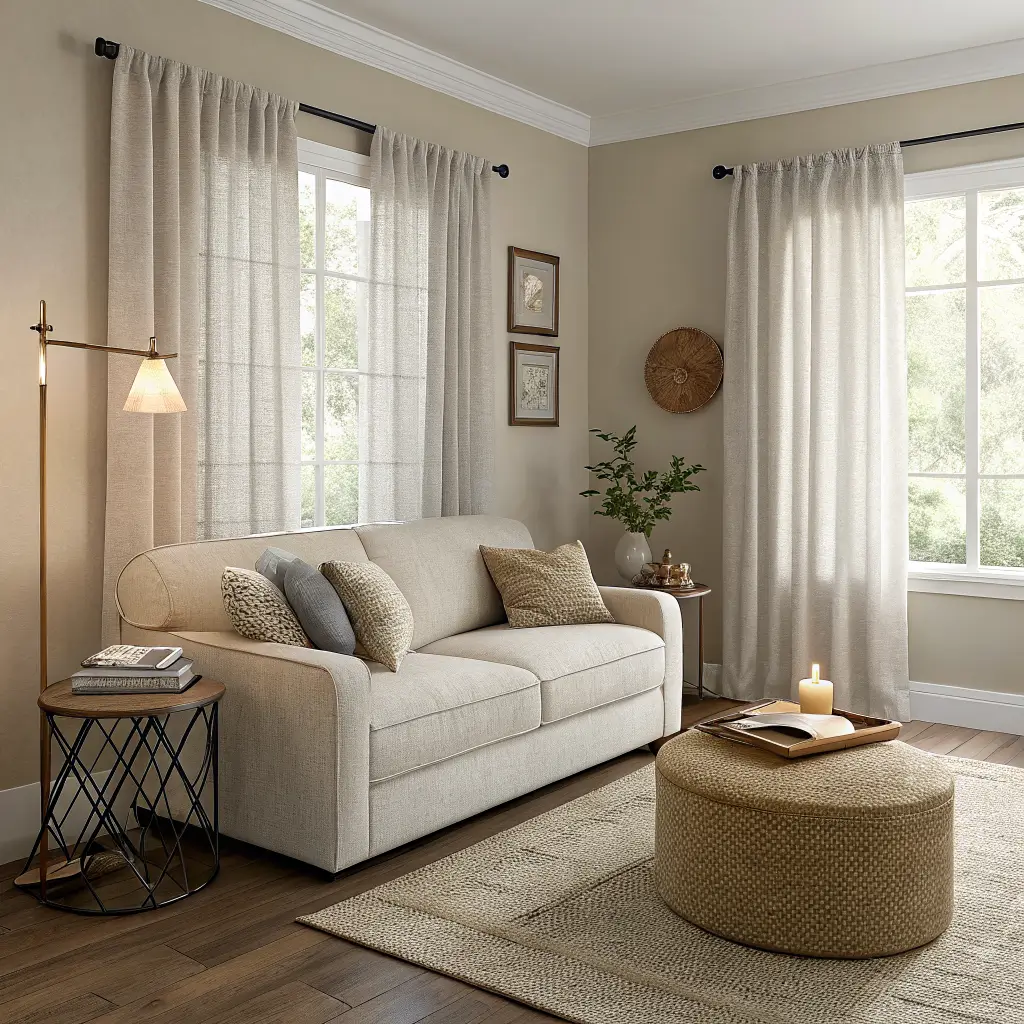
Materials I’d actually buy: bouclé or textured weave on the sofa, linen-look curtains, a flatweave or jute rug, and black or brushed brass metal for lamps and hardware. Skip high-gloss anything. It reads cheap in small rooms because there’s nowhere for the shine to hide.

What It Costs
Here’s the honest range, based on what I’ve spent and what current pricing looks like:
– Budget makeover (IKEA, Target, Amazon, Walmart): $600–$1,200 for the core pieces
– Mid-range (Article, West Elm sale section, CB2, Urban Outfitters Home): $1,500–$3,000 for a one-bedroom refresh
– Refresh only (textiles, lighting, art, plants): $200–$500
Rough per-piece numbers I’d plan around:
– Compact sofa or loveseat: $250–$600
– Storage ottoman or nesting coffee tables: $80–$200
– 5×7 or 6×9 rug: $80–$300
– Wall or ladder shelving: $40–$150 per unit
– Floor lamp plus one or two table lamps: $80–$200 total
– Peel-and-stick wallpaper: $30–$80 per roll (covers about 28–30 sq ft)
Where to spend: the sofa, the rug, and the lighting. Where to save: side tables, shelving, art frames, anything textile that you’ll swap seasonally.
Setup Time
Plan one to two weekends to assemble and place the furniture, plus a handful of evenings to handle wall stuff, styling, and the inevitable rearranging. I usually move the sofa three times before I’m happy. Build that into your expectations.
The Hero Pieces That Actually Make a Small Place Work
A correctly-sized sofa
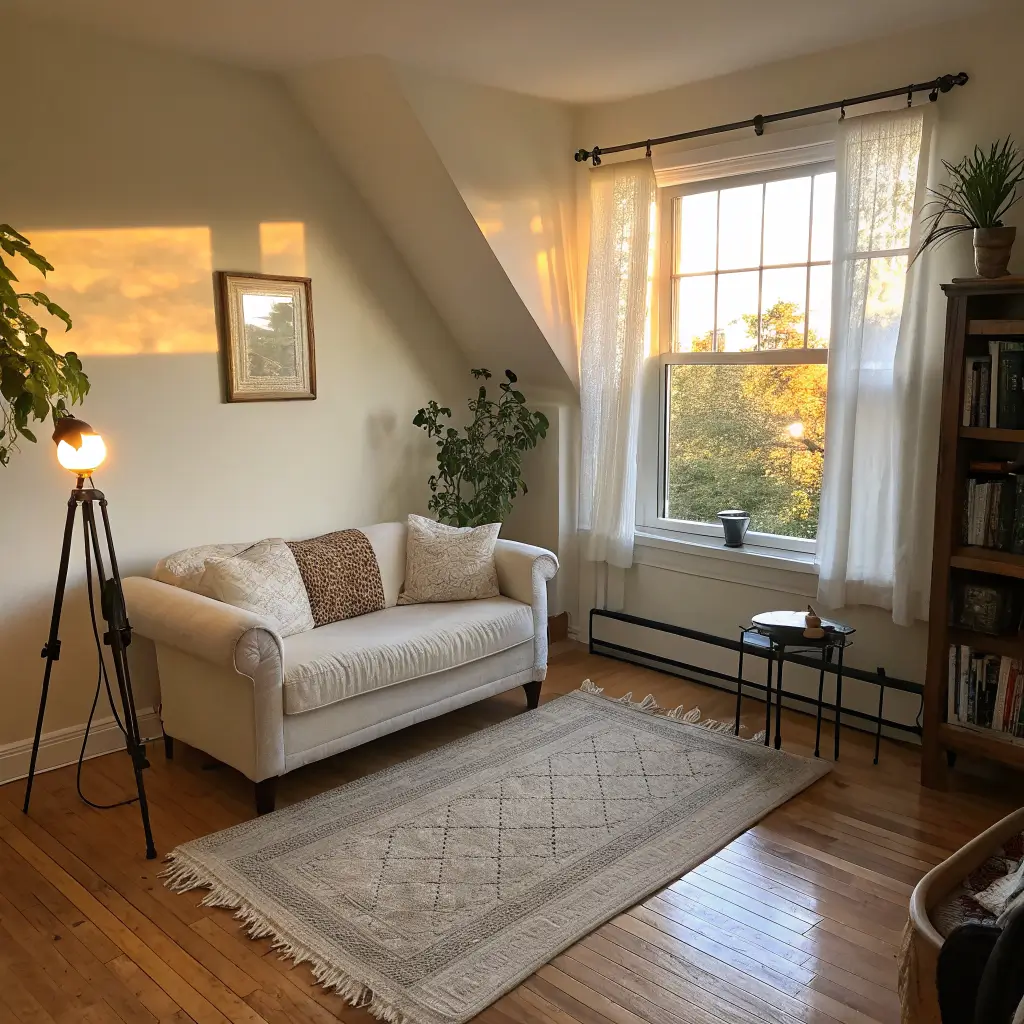
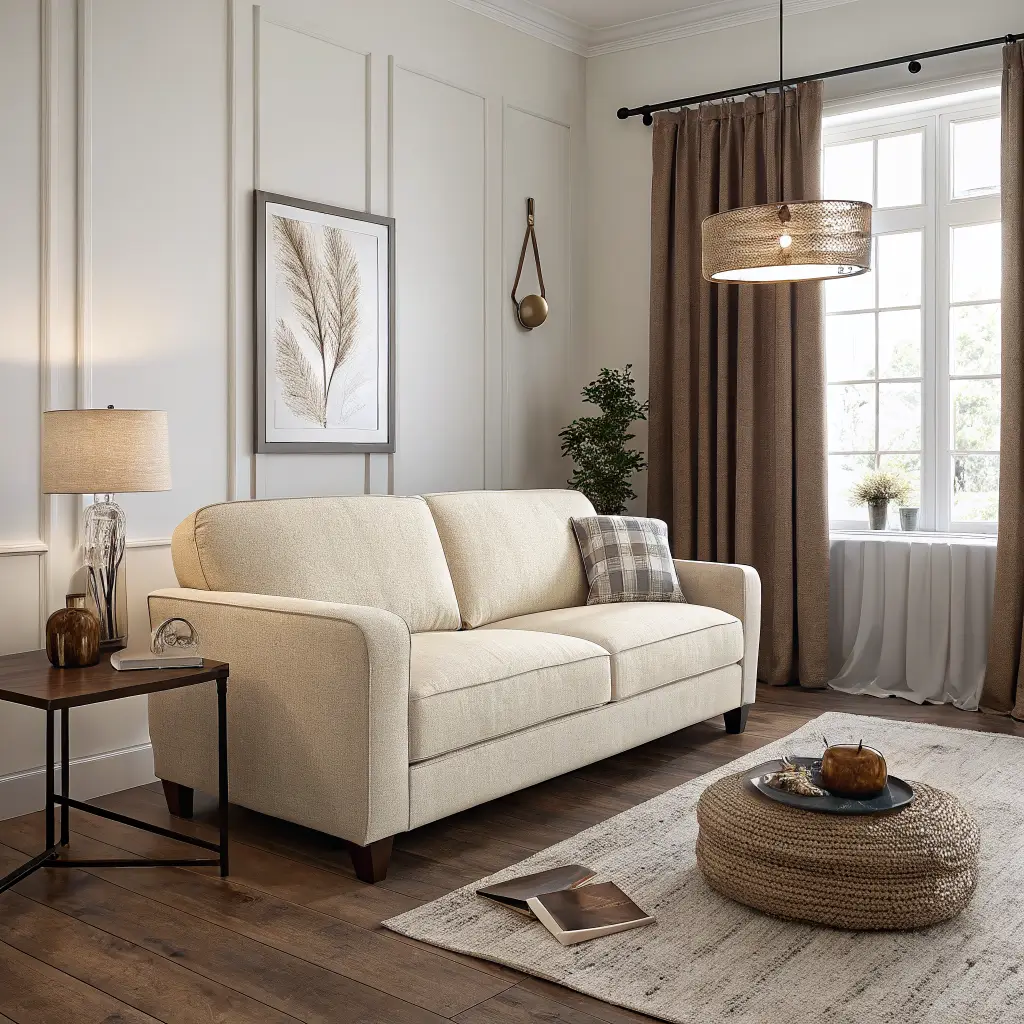
This is the single biggest mistake I see. People buy an 84-inch sofa for a 10-foot wall and then wonder why nothing else fits. For most small apartments, you want:
– Depth: 30–36 inches
– Width: 60–75 inches
– Tight back (not loose pillows that need fluffing forever), low or no arms, raised on legs so you see floor underneath
Floor visibility matters more than people think. A skirted sofa that sits flush to the rug eats up the room visually. Legs make the same footprint feel half the size.
A coffee table that’s also storage
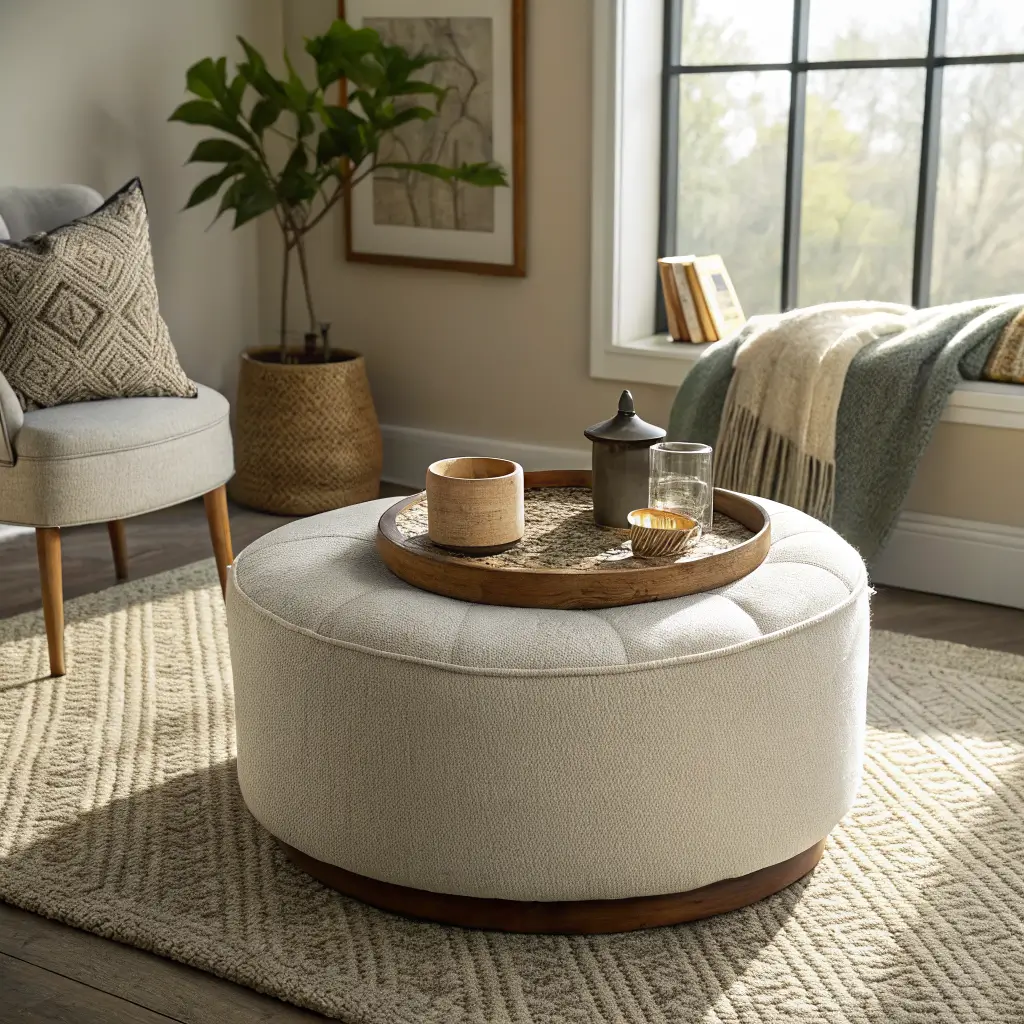
I had a beautiful solid-oak coffee table for two years that did nothing except hold a candle. I sold it and replaced it with a 34-inch lidded ottoman in cream bouclé that holds every blanket I own, and the room immediately functioned better. Either a lift-top coffee table (doubles as a laptop desk), a trunk style with interior storage, or a big upholstered ottoman with a tray on top. Round or oval is better in narrow rooms — you’ll bash your shins less and the circulation reads cleaner.
A real dining solution, even if it’s tiny
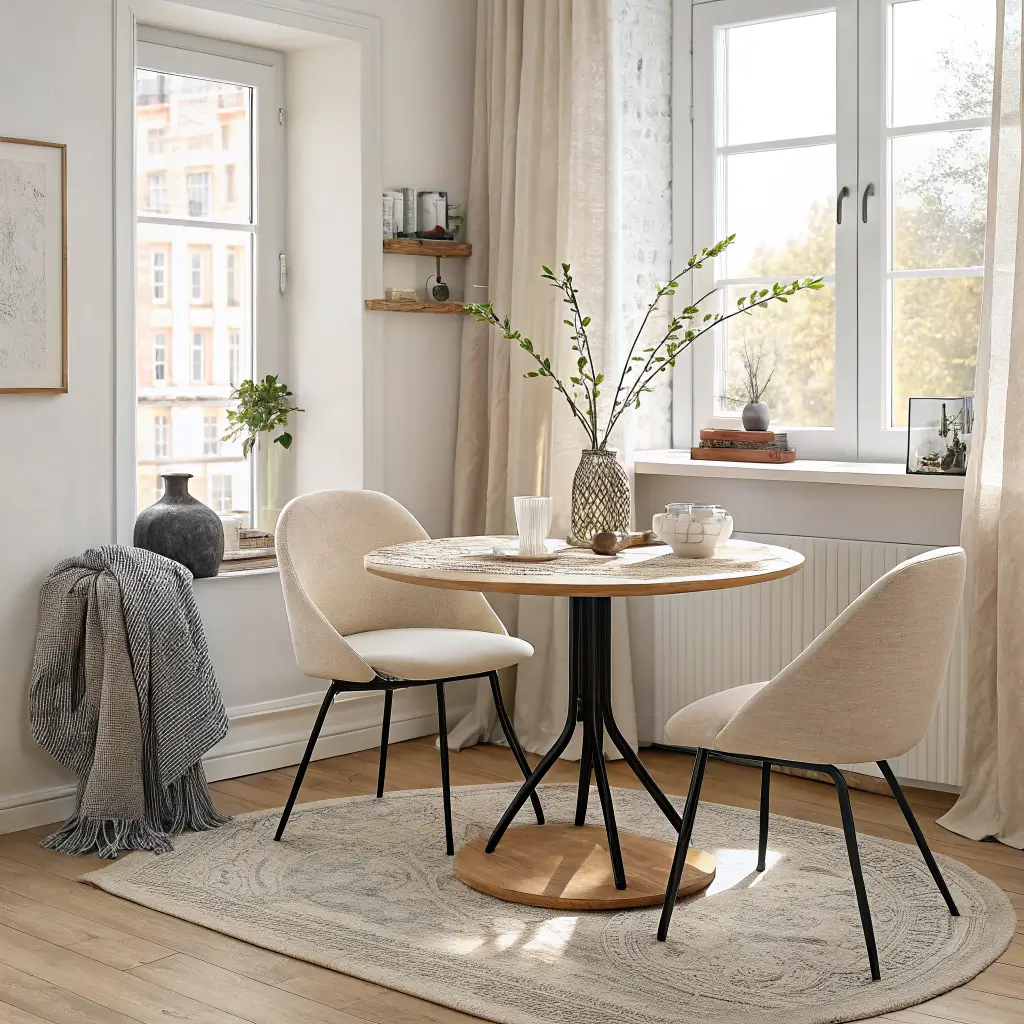
A 30–36" round pedestal table takes up less visual space than a square or rectangle of the same area because there are no corners jutting into walkways. Drop-leaf or wall-mounted fold-down tables work for studios where every inch counts.
A slim media console, raised on legs
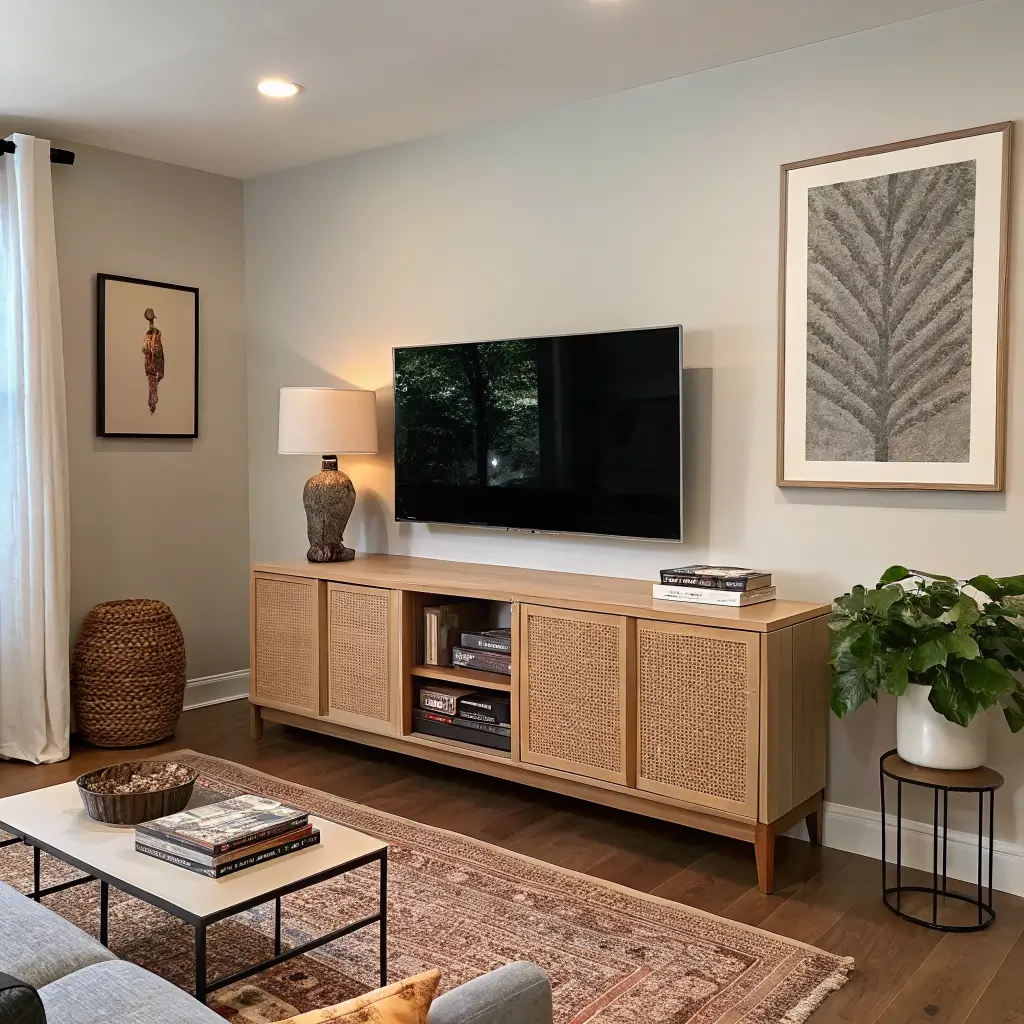
Depth of 12–16 inches, ideally wall-mounted or on legs. Closed storage is non-negotiable — open shelving full of cable boxes and routers looks like clutter no matter how you style it.
The Storage and Vertical Stuff Nobody Tells You About
In a small place, the walls are your real square footage. If you’re not using vertical space, you’re working with maybe 60% of what you have.
What actually helps:
– Narrow bookcases (8–12" deep) instead of standard 16"
– Ladder shelves lean against the wall and don’t always require anchoring (check weight)
– Over-the-toilet cabinets in bathrooms — non-negotiable in most rentals
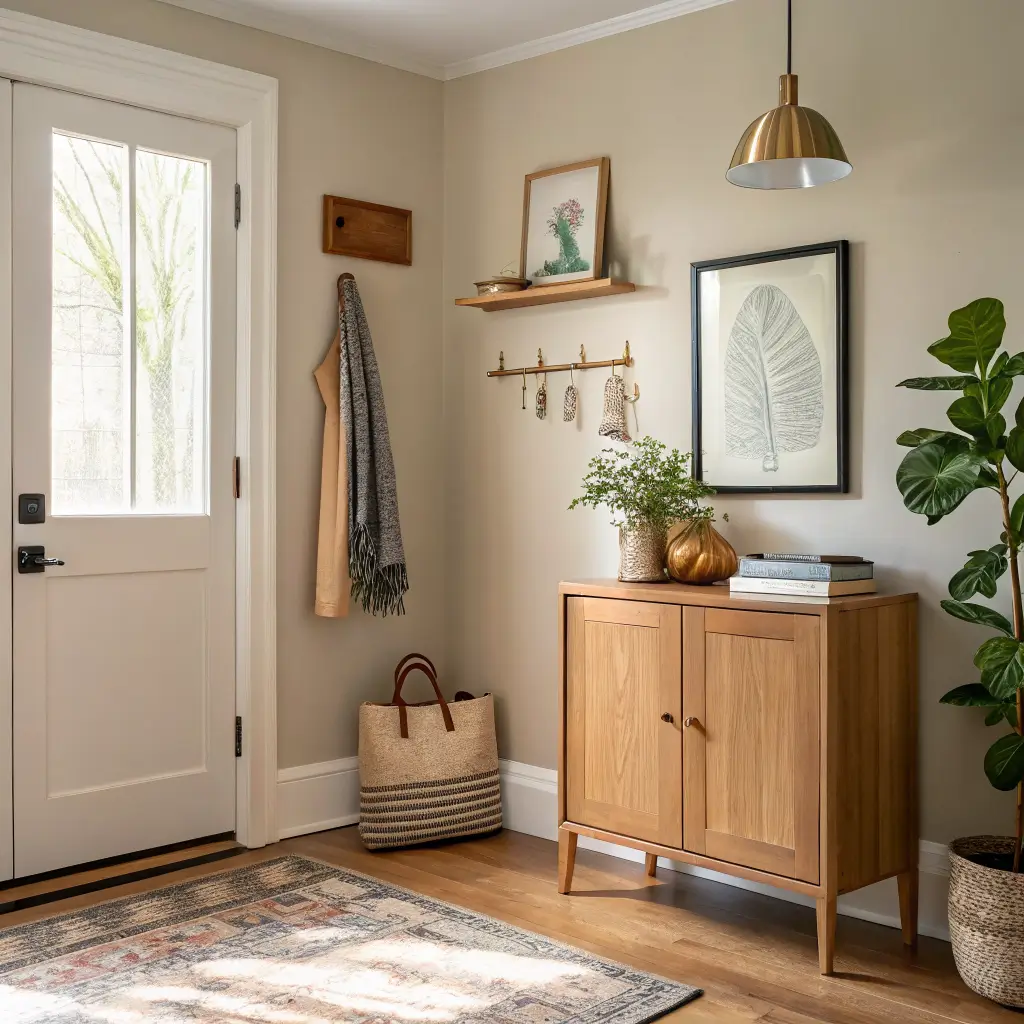
– Floating ledge shelves at the entryway for keys, mail, a small lamp
– Slim shoe cabinets (7–8" deep) that look like a console
– Tension rods inside cabinets and under sinks
– Over-the-door hooks and back-of-door organizers
For my current entryway, which is basically a 3-foot patch of floor inside the door, I have a ledge shelf at eye height, three brass hooks below it, and a 7-inch-deep shoe cabinet underneath. That’s it. It works because nothing competes for floor space.
The Light Trick
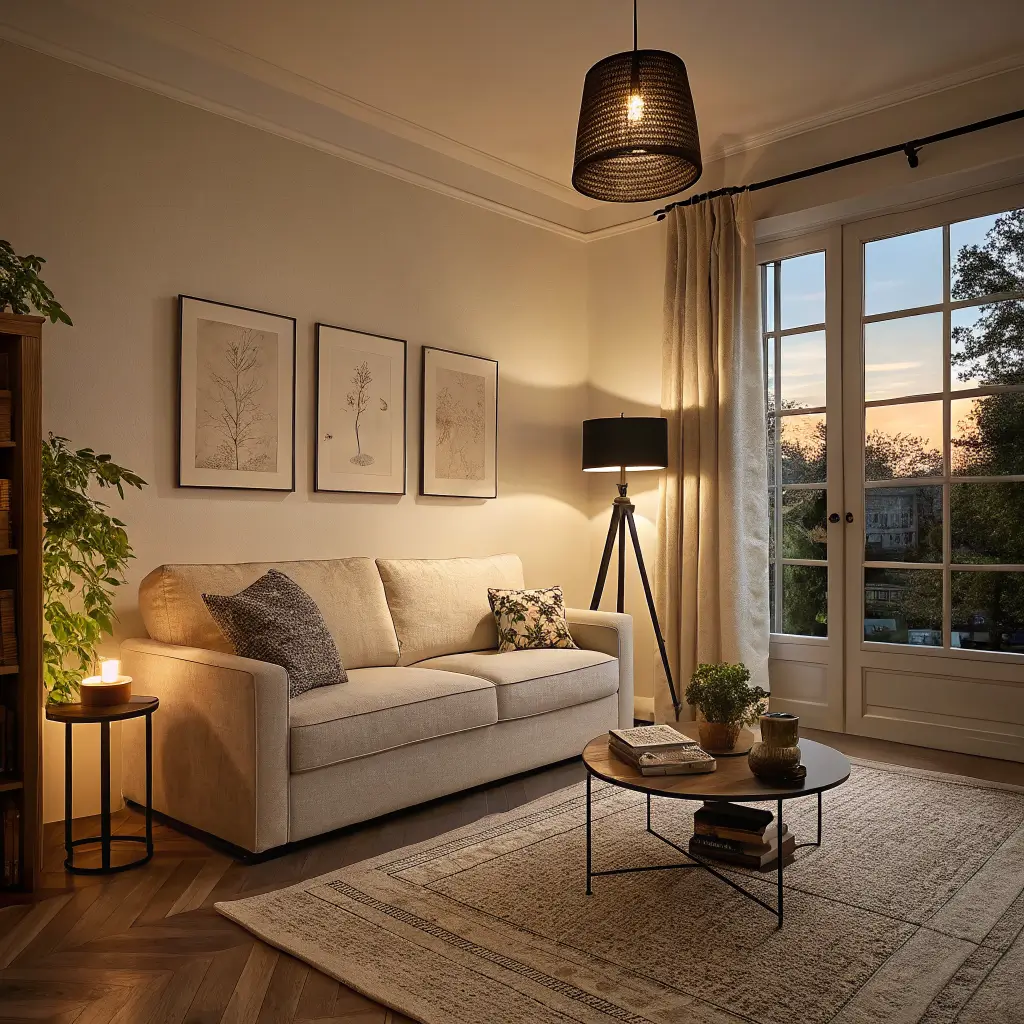
Small dim apartments need layered lighting, not one brighter bulb in the ceiling. Aim for three sources minimum per zone:
– One floor lamp (arc or tripod) near the sofa
– One or two table lamps at lower heights
– Task lighting wherever you work or read
– Plug-in wall sconces if your overhead light is harsh and you can’t hardwire
Plug-in sconces are the best renter hack I’ve found. You get the look of installed lighting with a cord you can tuck behind the sofa or hide with a cord cover painted to match the wall.
For bulbs: warm white, 2700K–3000K, nothing cooler. Cool light in a small space at night feels like a dentist’s office.
How I’d Actually Set It Up, in Order
This is the sequence that’s saved me from doing things twice.
1. Tape it out before you buy. Painter’s tape on the floor to mark the sofa, table, and bed footprints. Walk the paths. Sit on the floor where the sofa will go. Do this before anything ships.
2. Place big pieces first. Sofa against the longest wall, or floating with its back defining the lounge zone if you’re in a studio. Bed positioned so you have at least 24–30 inches of walking space on at least one side, with the headboard on the solid wall furthest from the door if you have a choice.
3. Anchor with the rug. Largest size that fits. Front legs of the sofa should sit on the rug — not floating off it in space. For the bed, the rug goes under the bottom two-thirds. A 5×7 in a living area is usually the minimum; a 6×9 is better in anything over 11 feet wide.
4. Hang curtains high and wide. Rod a few inches below the ceiling, extending 4–6 inches past each side of the window frame. This single move makes ceilings feel taller and windows feel bigger than they are. Use floor-length panels in a linen-look fabric.
5. Fill corners with vertical pieces. A 4-foot olive tree or faux fiddle-leaf, a tall floor lamp, a ladder shelf. Empty corners read as dead space; bulky furniture in corners reads as crowded. Tall and skinny is the answer.
6. Style the surfaces. Coffee table: a small stack of books, a candle or low plant, one decorative object on a tray. Open shelves: alternate vertical and horizontal book stacks, mix in plants and one or two personal objects, and leave gaps. Empty shelf space (sometimes called negative space — the visual breathing room around objects) is what keeps a styled shelf from looking like a junk drawer.
7. Hang a big mirror. Either a 30–36" round or a 65–72" leaner. Place it opposite or adjacent to your main window so it bounces light back into the room. This is the cheapest way to make a dark apartment feel twice as bright.
Color, Contrast, and a Rule That Actually Works
The 70/20/10 split is the one I keep using:
– 70% light neutral — walls, sofa, curtains, the big rug
– 20% mid-tone — wood furniture, secondary rug, larger ceramics
– 10% accent — pillows, art, smaller objects, throws
In a dim or tiny apartment, keep your big pieces light and put any deep colors into the small stuff. I tried a forest-green sofa in my second apartment and it ate the whole room — looked great in the showroom, swallowed all the light by week two.
The Mistakes I See Constantly
– Rug too small. A 4×6 in a living room is almost always wrong. Buy bigger than feels right.
– Art too small. A single 11×14 frame on a 10-foot wall looks like a postage stamp. Go big, or group pieces with consistent frame color for a gallery wall.
– Tall solid furniture blocking the window. Bookcases belong on side walls. Windows stay clear.
– Trying to fit a full living room AND a separate dining set AND a desk. Pick the two you actually use. Combine functions on the third.
– No zones in a studio. Without a rug, a shelf, or a curtain creating divisions, the whole place reads as one cluttered room. Use a 6-foot open bookcase or a curtain track to separate the bed from the lounge area without killing the light.
– Drilling in a rental that doesn’t allow it. Removable adhesive hooks (the heavy-duty ones rated 7–16 lbs), tension rods, peel-and-stick everything.
Renter-Friendly Moves That Look Built-In
A few specific things that have worked for me without losing a security deposit:
– Peel-and-stick wallpaper on one accent wall (behind the bed or sofa). A roll covers 28–30 sq ft. Apply with a smoother, take it slow, work in vertical strips.
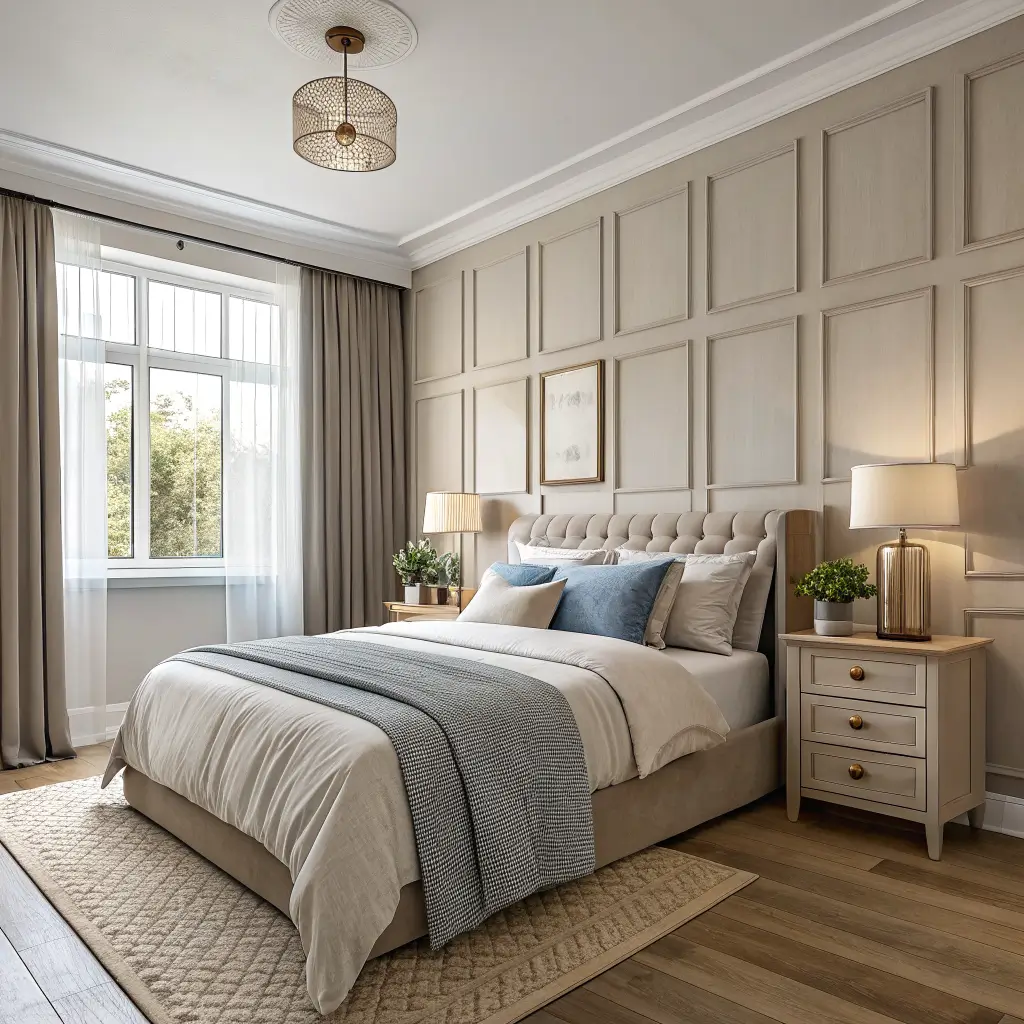
– Peel-and-stick molding strips to create the look of picture-frame paneling on a flat wall. Box shapes, evenly spaced, painted to match the wall once installed (use a primer-friendly removable formula).
– Stick-on tile backsplash in rental kitchens — works on smooth tile or laminate, comes off with heat.
– Contact paper on dated countertops if you’re brave. Marble-look has gotten convincing.
Keeping It From Going Stale
For seasonal swaps, don’t replace pillows — replace pillow covers. I keep one set of 20" inserts and rotate covers between linen in spring, a chunky knit in fall, and a cream bouclé I use most of the year. Same approach with throws and a single vase that rotates between dried grasses, eucalyptus, and seasonal stems.
For longer-term evolution: upgrade one hero piece a year. Sell or donate the one it’s replacing the same week, before you have a chance to keep it "just in case." Small apartments punish indecision.
If you want to bend the style without throwing it out:
– Scandi + Japandi: lower furniture, warmer wood, more negative space, off-white and taupe textiles
– Boho + Coastal: light base, woven textures, sea-glass blue and sand accents, one or two global textiles
– Modern + Vintage: keep the sofa and lighting modern, add one real vintage piece — a wood dresser, an old mirror, a 70s pottery lamp — so the room has a story instead of looking like one delivery from a catalog
The vintage piece is what most small apartments are missing. A clean Scandi-ish room with a chipped, mid-century walnut side table from a thrift store reads as personal. The same room with another matching IKEA cube reads as a hotel. Spend a Saturday at an estate sale before you finish furnishing. You’ll thank yourself.
Conclusion
The little apartment decor that felt like home to me was a three-hundred-fifty square foot studio with a platform bed, a small sofa, and a single window that looked at a tree. The owner had painted the walls a warm white, added a rug in a geometric pattern, and hung a single photograph of the ocean above the bed. The room felt like a hug, not a handshake, because she had chosen every piece to make the space feel held.
More Decor Ideas to Explore
- Little Apartment Ideas: A Real Guide to Decorating 350–700 Sq Ft (Renter-Friendly, Budget-Aware)
- The Colorful Powder Room: How to Pull Off a Bold Half Bath Without Regretting It
- Tiny Living Room Ideas: A Real Guide for Spaces Under 150 Square Feet
- Tiny Laundry Room Ideas: A Real Plan for Closets, Alcoves, and Awkward Corners