What This Style Looks Like and Who It’s For
I call my approach
It works for:
– Renters who can’t paint or drill freely
– First apartments and grad-school budgets
– Couples sharing a studio who need a sleep zone that doesn’t feel like a bed shoved in the corner
– Anyone working from home in their living room
The footprint I’m writing for is
– A weekend refresh (rearranging, swapping textiles, adding lamps): 8–12 hours,
– A bigger overhaul with a new sofa, paint, shelving: 2–3 weekends,
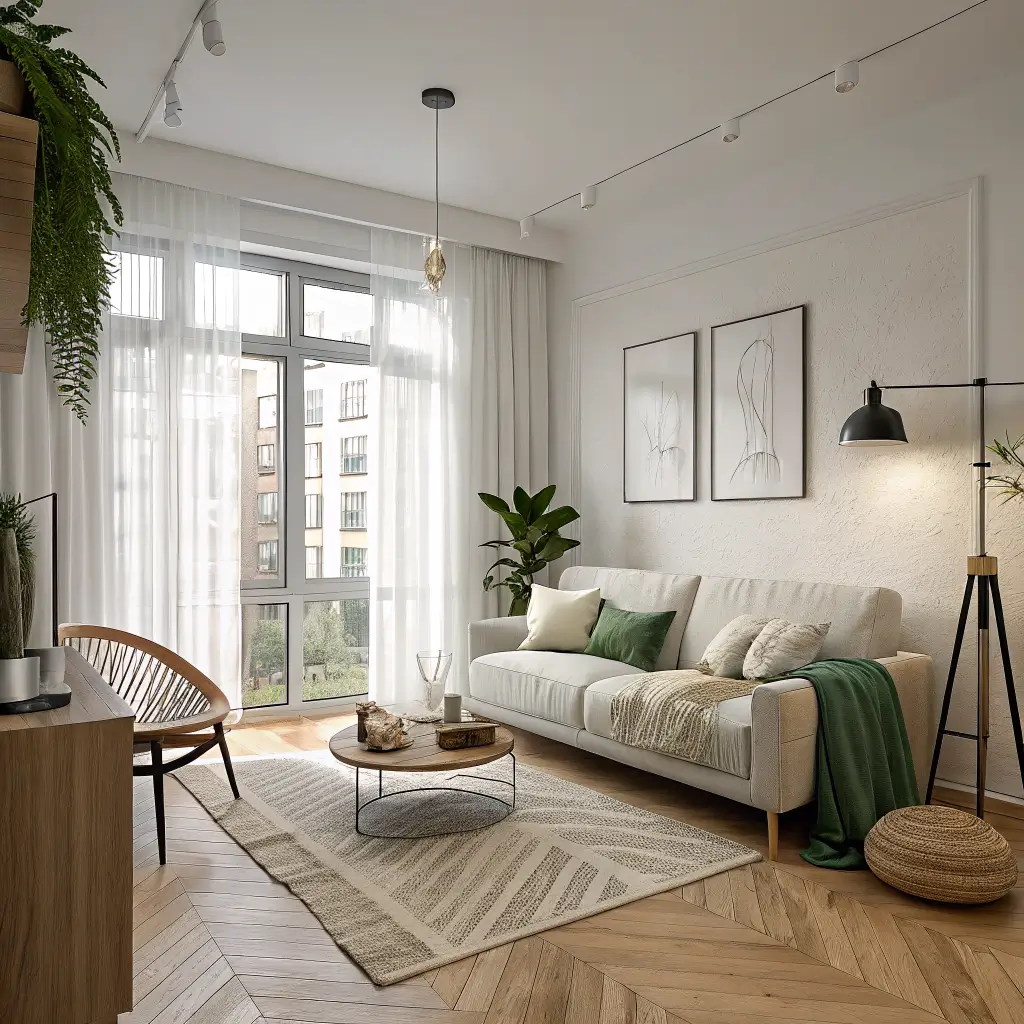
The Palette and Materials That Make Small Spaces Feel Bigger
The single biggest lesson: keep the big surfaces quiet, then layer warmth on top. Busy patterns on a sofa in a 12×14 room will make the walls feel three feet closer.
– Soft whites like Benjamin Moore Chantilly Lace or Behr Swiss Coffee on walls
– Warm greige (Accessible Beige or Revere Pewter) when the light is cold
– Oat, sand, and bone for upholstery and rugs
– Sage green, soft blue-gray, or muted terracotta in pillows and ceramics
– One deeper hit — ink blue or forest green — on a single chair or a large piece of art
– Light oak, birch, or ash for anything wood
– Linen, cotton, wool, and jute for textiles
– Rattan or cane for a chair or side table (adds warmth without bulk)
–
Mixing metals in a small space is where things start looking accidental. I picked brass and replaced every silver-toned lamp base over six months.
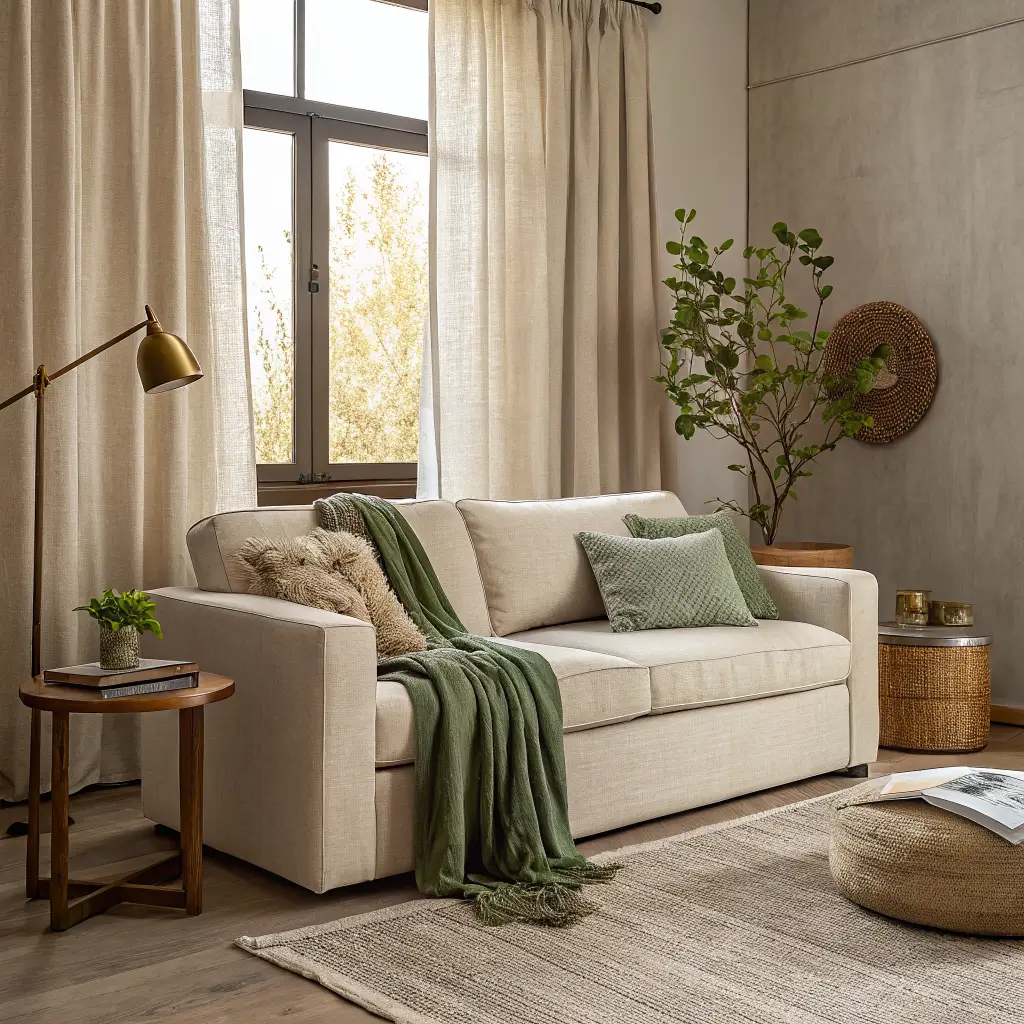
The Hero Pieces That Do the Heavy Lifting
In a small apartment, every piece has to earn its square footage. These are the ones that matter most.
The Sofa
If your living room is 11–14 feet wide, look at sofas in the
–
–
– Neutral, tight-weave fabric
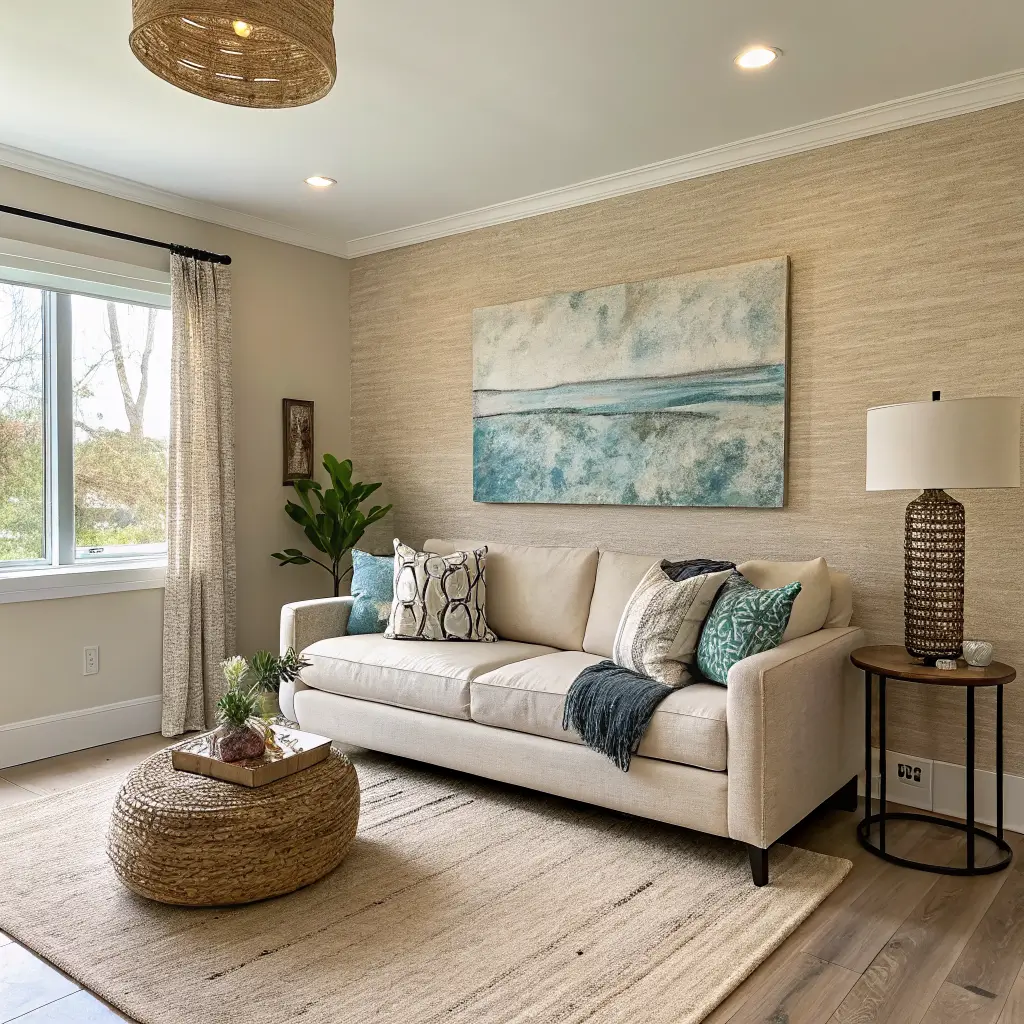
I had a tufted, skirted sofa in my first place. It ate the room. Replaced it with a 76″ oat-colored sofa on tapered wood legs and the apartment immediately looked twice the size. IKEA’s LINANÄS and VIMLE are solid budget picks; the FRIHETEN is the storage/sleeper workhorse if you have overnight guests. Article makes nice 72–80″ sofas around the $1,000–$1,400 mark.
The Coffee Table
Skip the chunky square coffee table. Better options:
–
–
– A round or oval table — softer sightlines, easier to walk around
Aim for 30–36″ long and 18–20″ deep.
Storage Console or Media Unit
Low (15–20″ deep), with a mix of closed doors and open shelves. It’s your TV stand, your linen closet, and your bar.
A Dining Solution That Doesn’t Hog the Floor
This is where I see people give up and eat on the couch forever. Options that work:
– A
– A
– A narrow
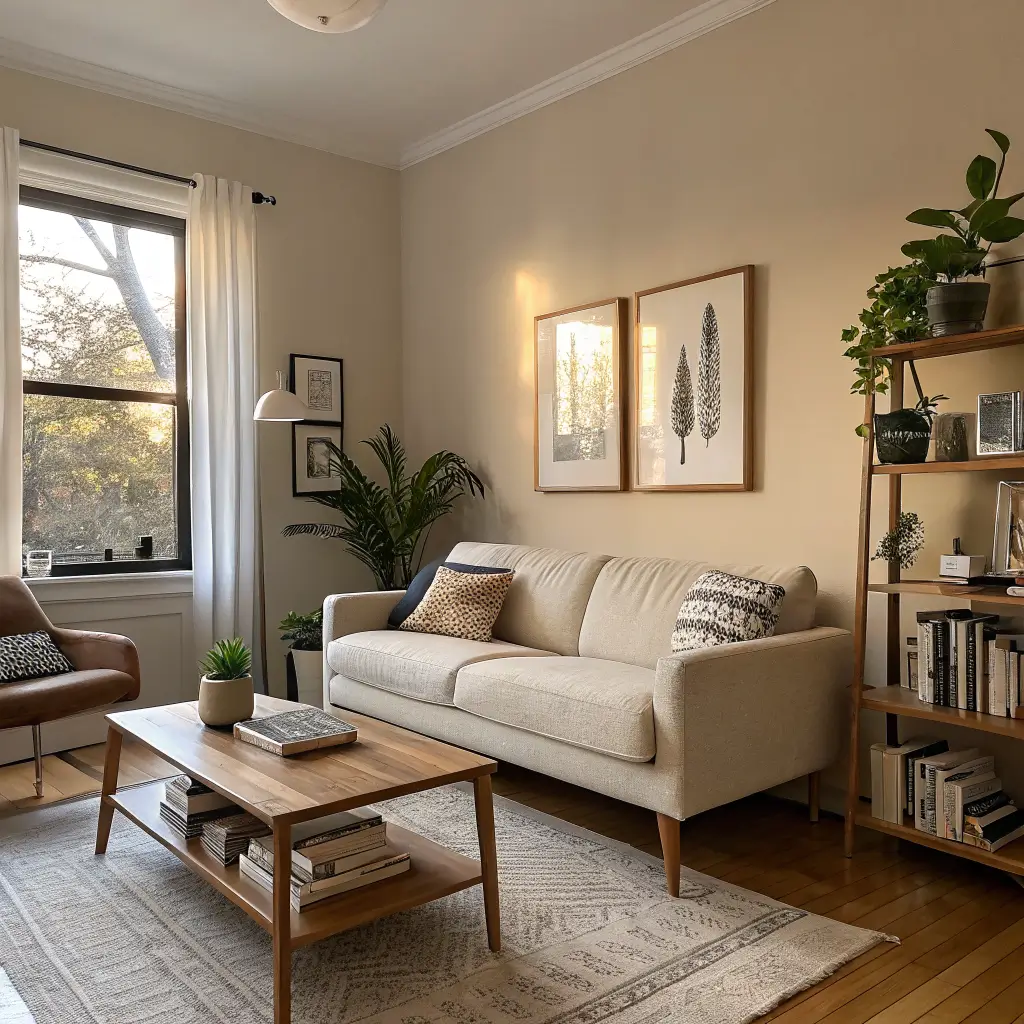
Storage That Doesn’t Look Like Storage
Studios live and die by storage. The pieces I’d buy first:
–
–
– A
–
– A
The one that surprised me: a slim shoe cabinet by the door (IKEA TRONES, about $40 for a set of three). It holds shoes, mail, keys, dog leash, and the top doubles as a landing pad.
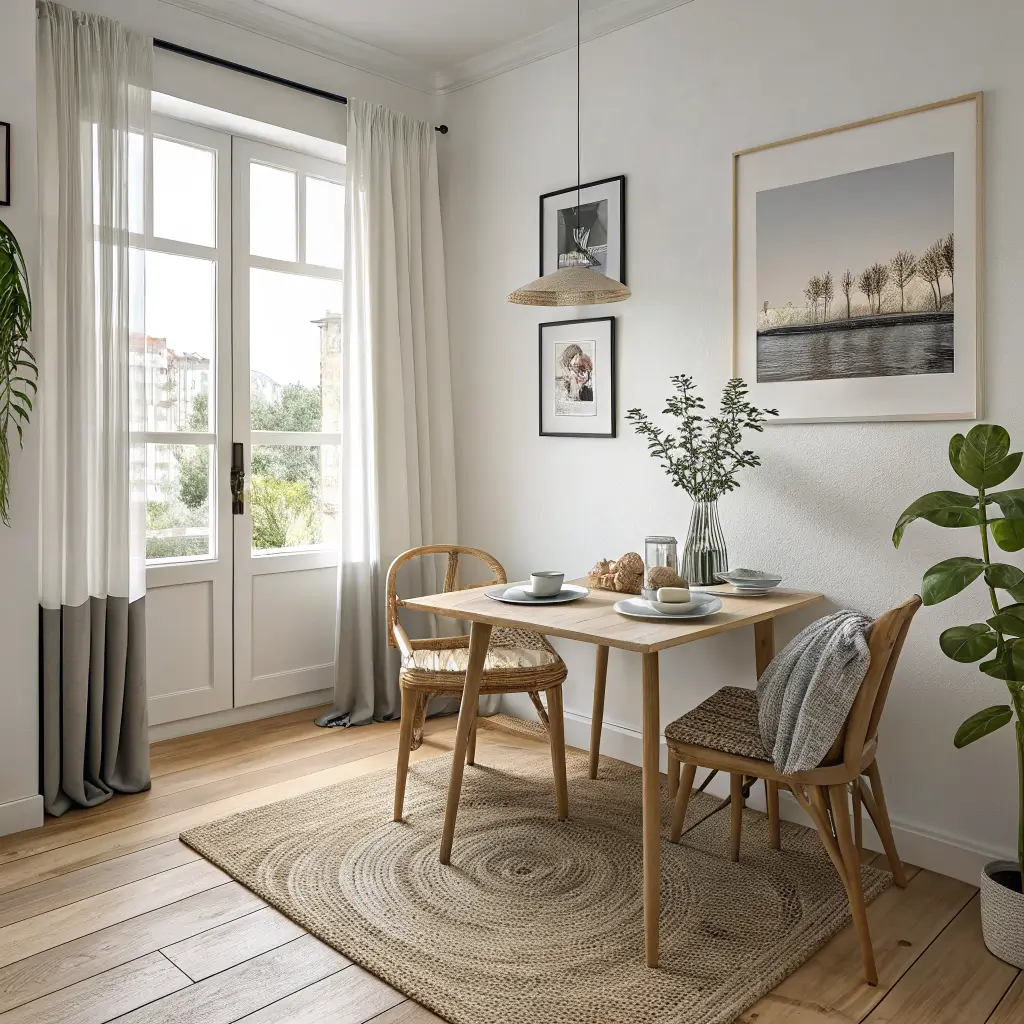
How to Actually Lay It Out
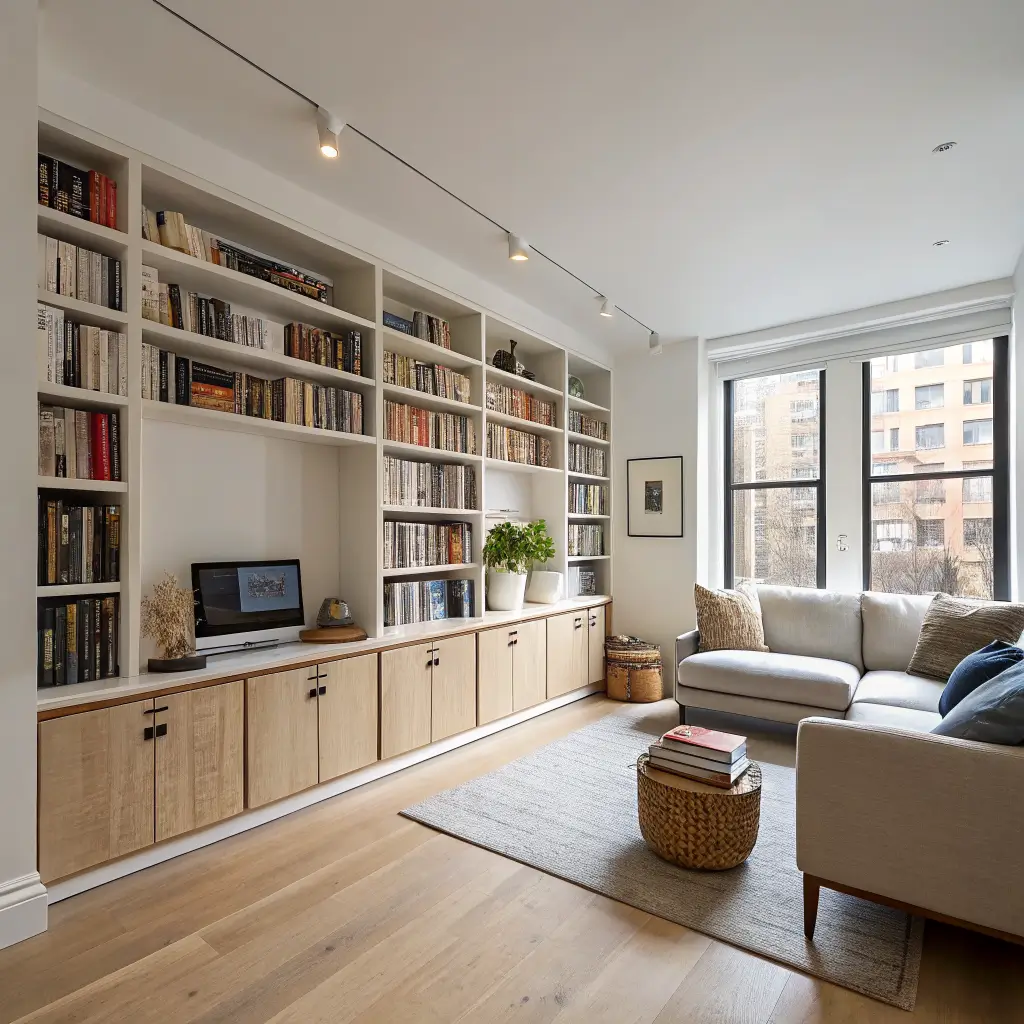
This is where most small apartments go wrong. Pushing everything against the walls does not make a room feel bigger — it makes it feel like a waiting room with a void in the middle.
If you want a real divider, a
Lighting (The Cheapest Way to Make a Place Feel Expensive)
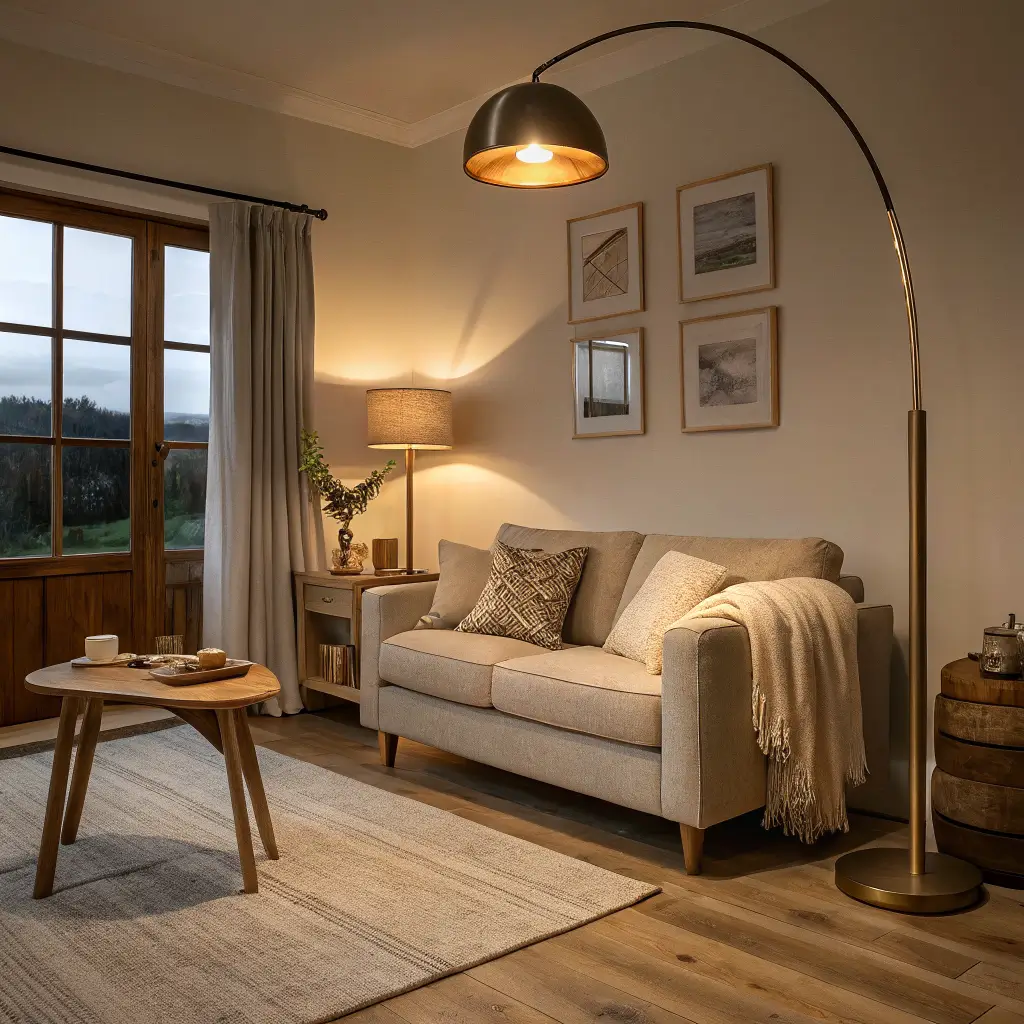
If I had $200 and a sad apartment, I’d spend all of it on lighting before buying a single throw pillow.
– One
– A
– A
Plug-in sconces are the rental hack of the decade. Hudson Valley and West Elm make nice ones; Amazon has decent dupes for $30–$60. No drilling needed if you mount with adhesive hooks.
Overhead lighting alone makes every small apartment look like a leasing office. Don’t do it.
Layering Texture Without Making It Busy
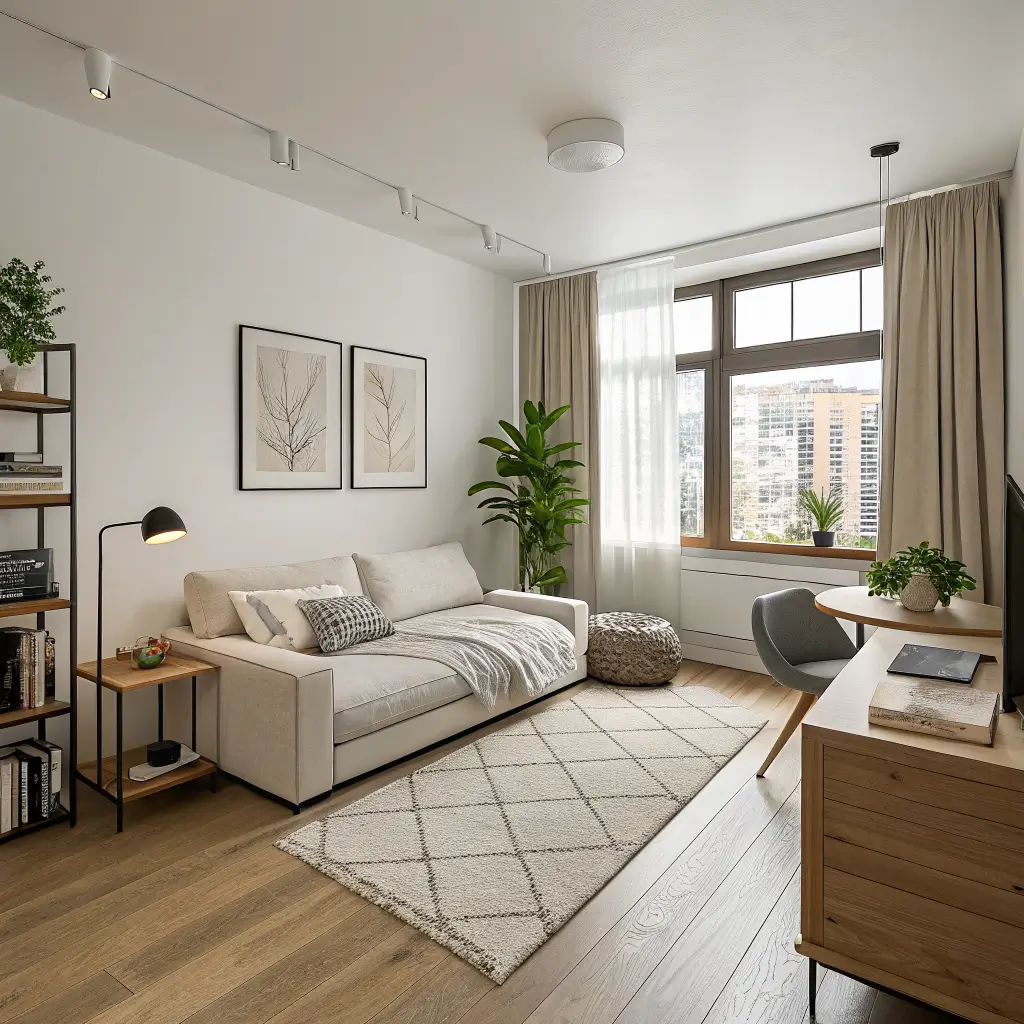
The 60/30/10 rule has actually held up for me:
–
–
–
Then I layer three texture types: something
Patterns stay small — pillows and one piece of art, not the sofa or rug.
Walls and Art
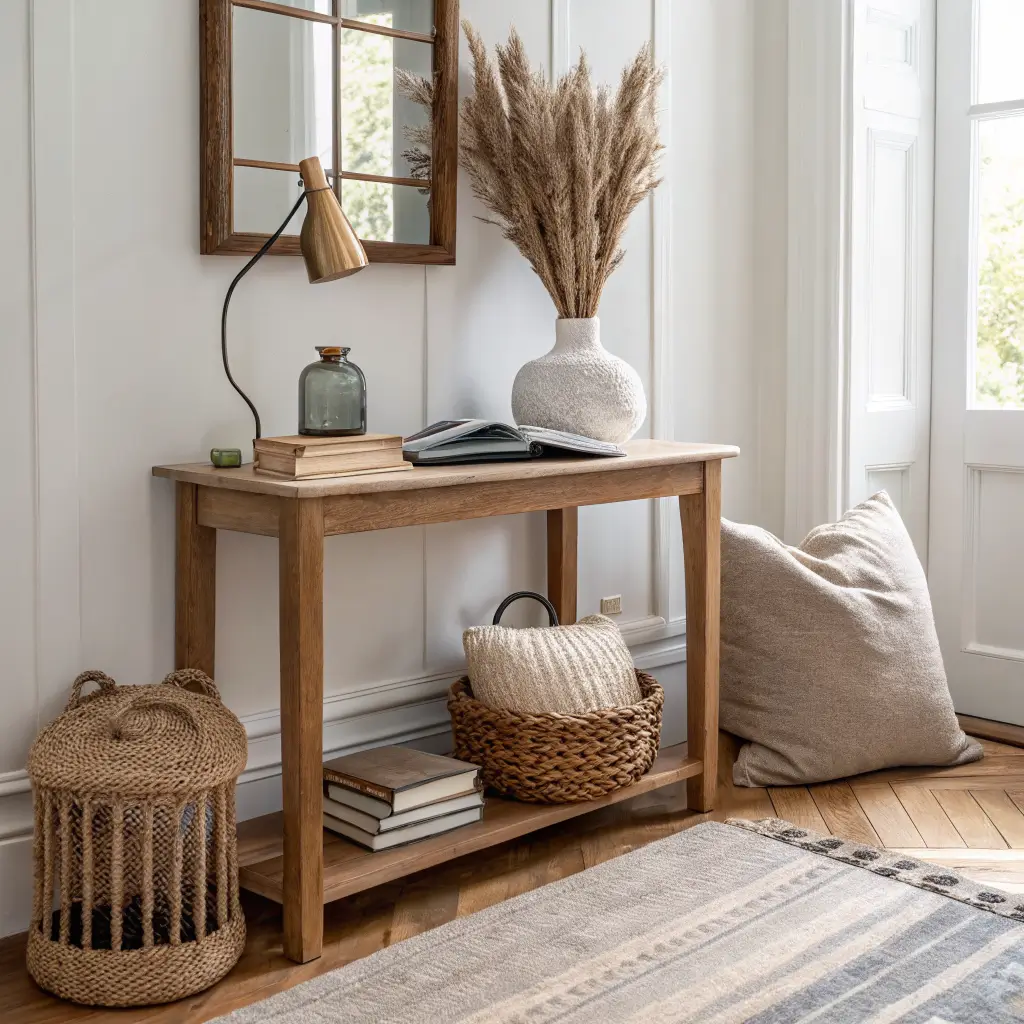
Eye level for art means the center sits
Two approaches that both work:
–
–
Peel-and-stick wallpaper on one accent wall (behind the bed or sofa) is renter-friendly and a real change. Tempaper and Chasing Paper hold up; I had one wall in muted terracotta grasscloth print for two years with no damage to the wall when I peeled it off.
Where to Spend vs. Save
– The sofa (you sit on it daily for years)
– A rug big enough to fit the front legs of the sofa and chair — undersized rugs ruin everything
– Lighting
– Coffee tables (Facebook Marketplace, thrift)
– Side tables and nightstands
– Art (print shops, digital downloads, framed at Michael’s with a coupon)
– Pillow covers (Etsy linen covers are $20–$40; you reuse the inserts)
The 6×9 wool rug I thrifted for $80 is still the best decor decision I’ve made. The $400 accent chair I bought because it was on sale and I “needed” a chair? Sold it a year later. Don’t buy furniture you don’t have a specific spot for.
Mistakes I Made (So You Don’t Have To)
–
–
–
–
–
Fitting in a Home Office Without a Second Room
A few setups that actually work:
–
–
–
– A
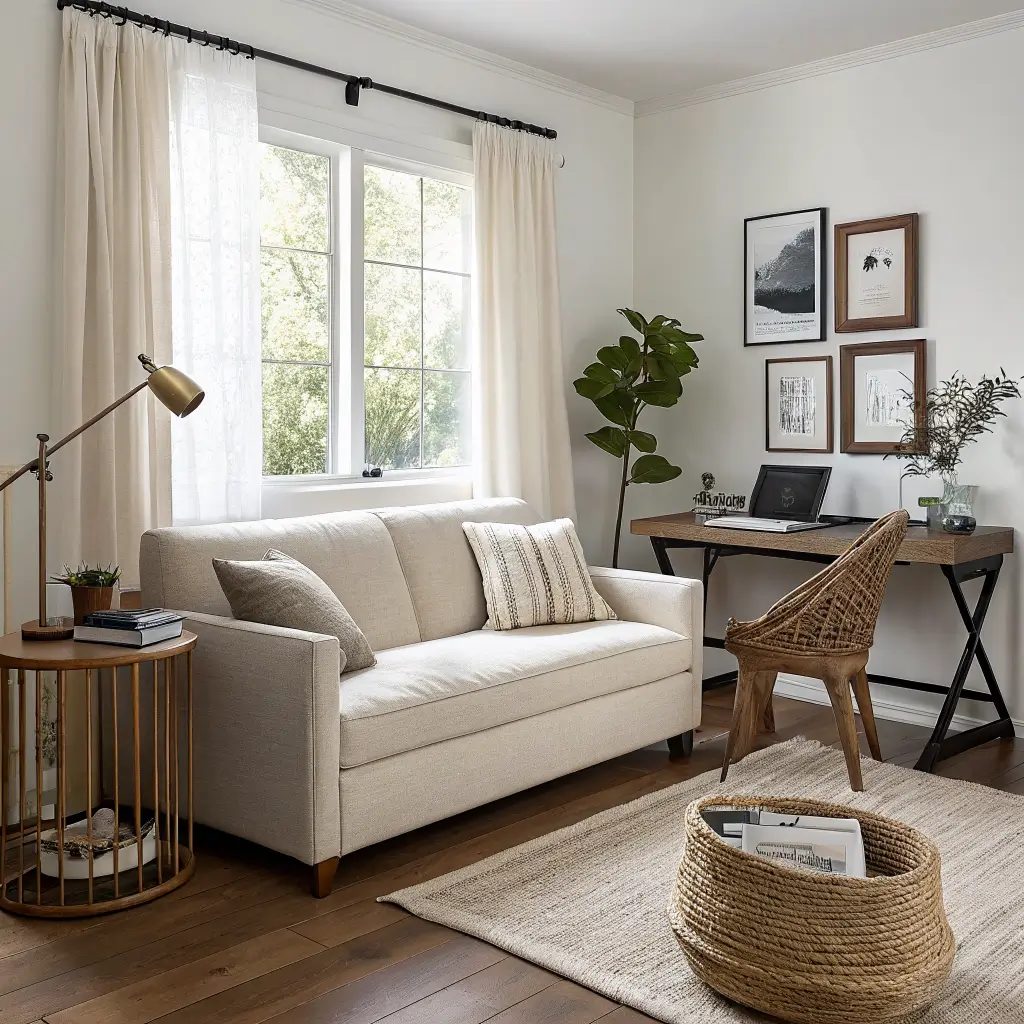
I worked from a 36″ desk tucked behind my sofa for over a year. A small task lamp, a plant, and a basket for cords under the desk kept it from looking like an office invading the living room.
Seasonal Swaps That Don’t Cost Much
I don’t redecorate for seasons, but I rotate small things:
–
–
Pillow covers (with zippers, same insert sizes) make this $50 instead of $300. Same for art if you frame digital prints and just swap the paper.
Plants, Honestly
If you have a north-facing window, don’t fight it — buy a ZZ plant, a snake plant, and a pothos and call it done. They handle low light, irregular watering, and small apartments. A 4-foot tall snake plant in a corner you couldn’t figure out what to do with will solve that corner.
Faux plants have gotten better. Afloral and Pottery Barn make believable stems. The fake fiddle-leaf figs from Amazon under $80 still look like fake fiddle-leaf figs from Amazon — skip those.
Keeping It Consistent Over Time
Pick a direction and stop second-guessing. I keep a note on my phone with my color palette and the wood/metal finishes I’ve committed to. Before I buy anything, I check it against the list. This has saved me from a lot of impulse purchases that would have clashed once they got home.
Three or four main colors across the whole apartment. One metal finish. Two wood tones max. A space that looks pulled together is almost always a space where someone made and held those decisions.
Start with the layout, get the lighting right, then layer in the rest slowly. A small apartment doesn’t need more stuff — it needs the right stuff in the right places, and a little restraint.
Conclusion
The little apartment ideas that worked for my friend came from a three-hundred-fifty square foot rental with a Murphy bed, a small table for two, and a single window that looked at a brick wall. She had painted the walls white, added a rug that defined the living area, and hung a single piece of art that she had found at a flea market. The room felt like her, not like a magazine, because every object had a story.
More Decor Ideas to Explore
- Little Living Room Ideas That Actually Work in a Tight Footprint
- Little Bathroom Ideas That Actually Work: Smart, Stylish Updates for Tight Spaces
- The Tiny Kitchen Playbook: How to Style, Store, and Survive in Under 120 Square Feet
- Boho Coastal Decor: A Real Guide to Getting the Layered, Beachy Look Right