The Look, and Who It’s For
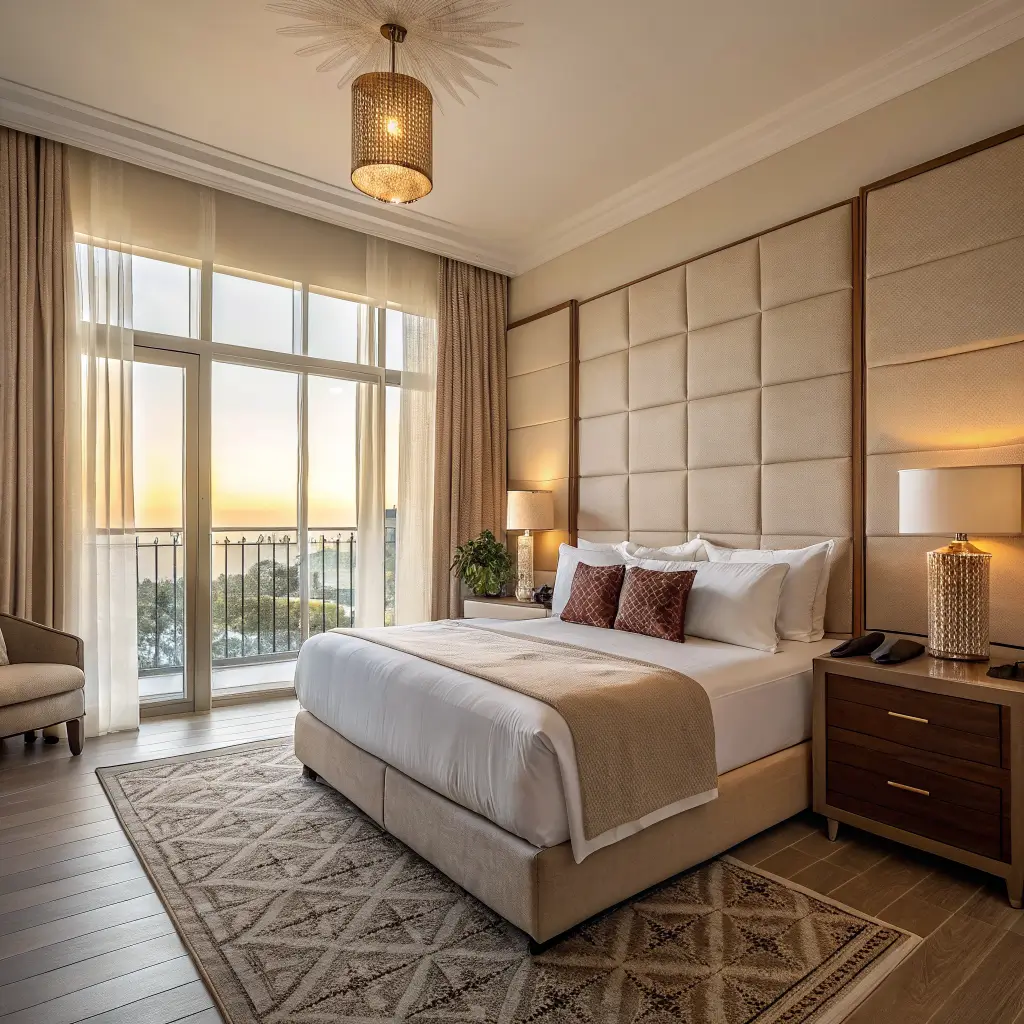
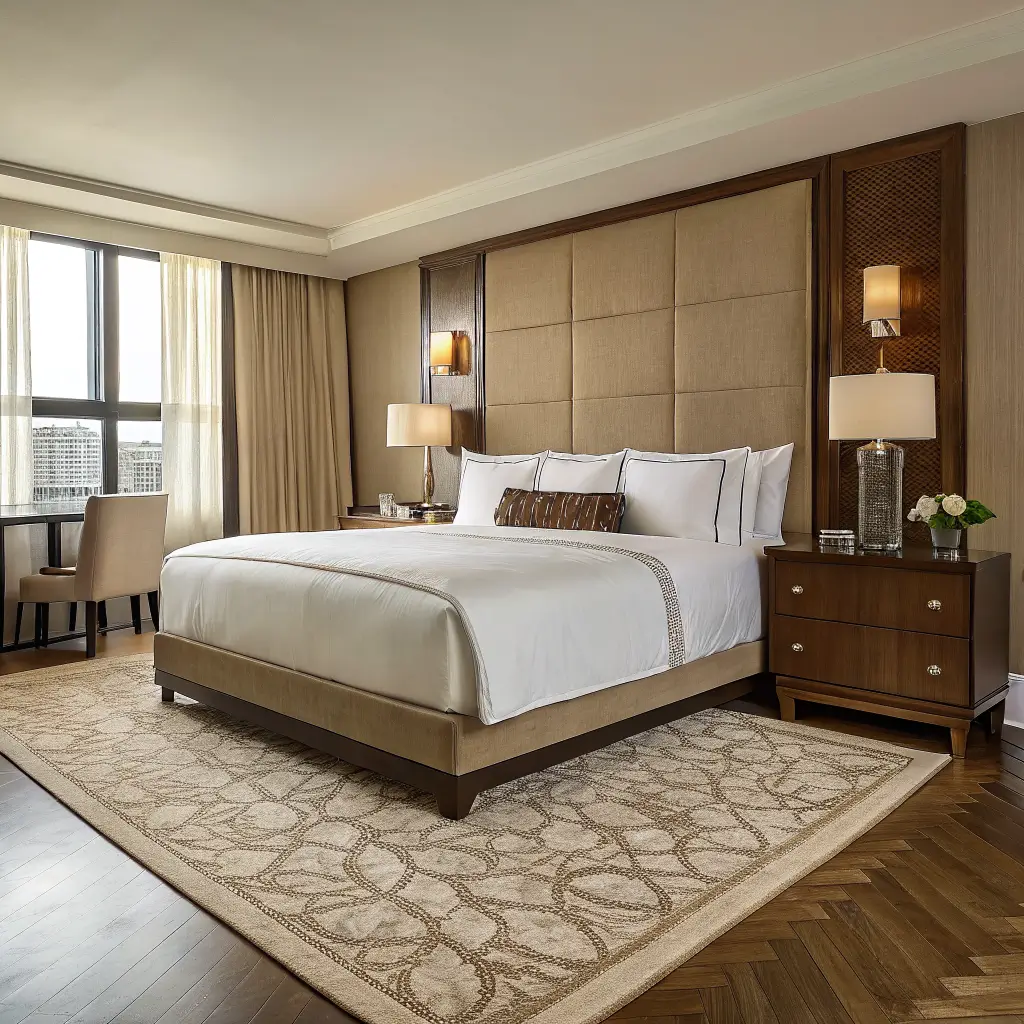
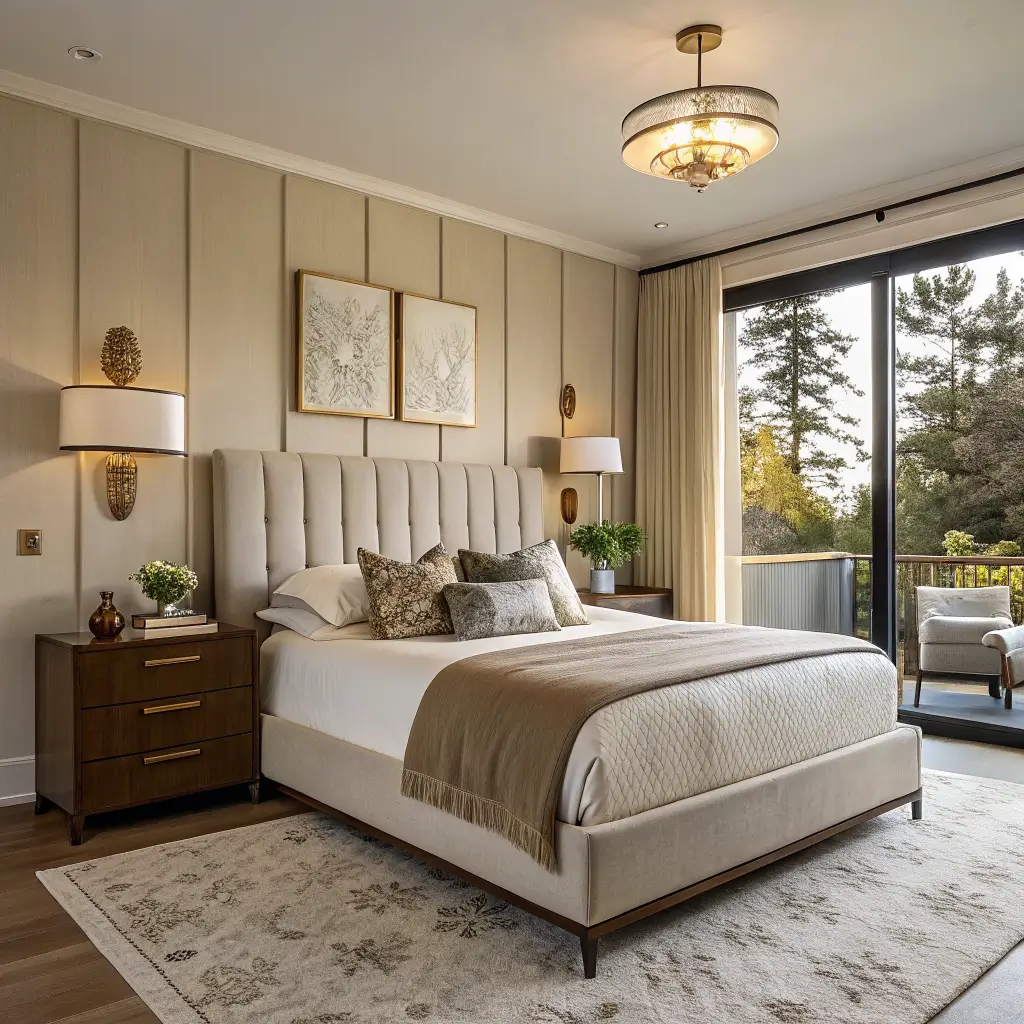
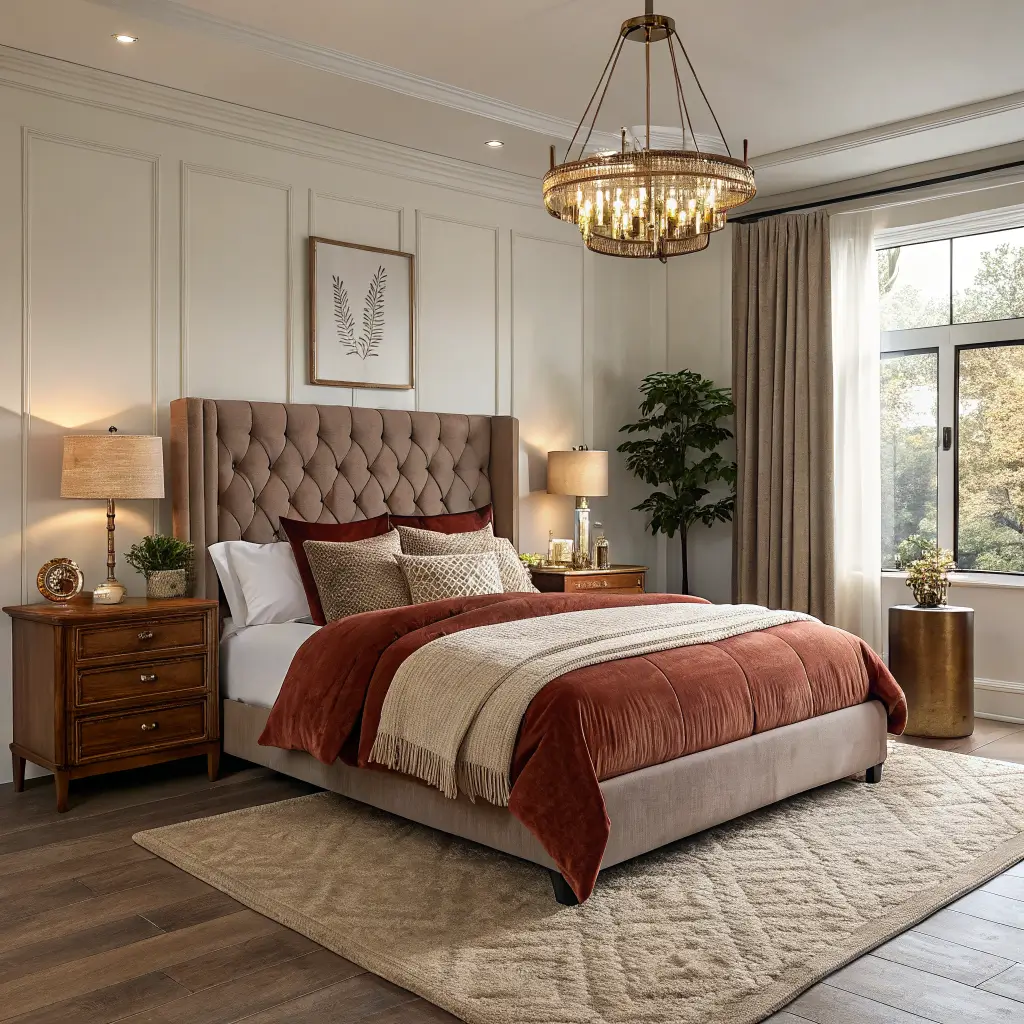
Think modern hotel suite with warmth: a tall upholstered headboard, layered bedding that looks turned-down by housekeeping, two matching nightstands, a real overhead fixture (not a builder-grade nipple light), and floor-length drapes. Neutrals do most of the work. One or two deeper tones — navy, chocolate, muted burgundy — keep it from going flat.
This look is for people who want the bedroom to feel separate from the rest of life. If you work from home, sleep poorly, or share a house with kids and noise, this is the room where you reclaim some quiet. It’s also the smartest room to invest in for resale — buyers tour primary suites slowly.
It works best in:
– A primary bedroom of at least 12’×14′ (you need room for a king, two nightstands, and a bench without bumping into anything)
– Guest rooms you want to feel like a small hotel
– Studios where the bed is the visual centerpiece anyway
What It Costs (Real Numbers)
Entry-level hotel-luxe: $1,500–$3,000. You can absolutely pull this off here if you’re patient and willing to mix sources.
– Upholstered queen bed frame: $400–$900 (Wayfair and IKEA have decent ones; CB2 if you catch a sale)
– Cotton percale or sateen sheet set, 300–400 thread count: $80–$200
– Duvet insert plus cover: $150–$350
– Two nightstands: $200–$600 for the pair
– 8’×10′ rug: $250–$600
– Two table lamps: $150–$300
Mid-range: $4,000–$10,000. This is where it really starts to look the part.
– Upholstered king with a tall statement headboard: $1,000–$2,500
– Quality hybrid or memory foam mattress: $1,000–$2,000
– Solid wood or marble-topped nightstands: $500–$1,500 a pair
– A real chandelier or pendant: $500–$2,000
– Wool or hand-knotted 9’×12′ rug: $800–$2,500
– Custom or semi-custom blackout drapes: $600–$1,500 per window
Designer territory: $15,000+. Custom millwork, a paneled or upholstered headboard wall, bespoke rug, original art.
Skill-wise, the styling is beginner-friendly. Hardwiring a new chandelier or installing wall paneling is intermediate to advanced — hire an electrician if you’re swapping a light fixture and you’re not sure which wire is which.
The Pieces That Actually Matter
If you only get five things right, get these.
1. A tall upholstered headboard.
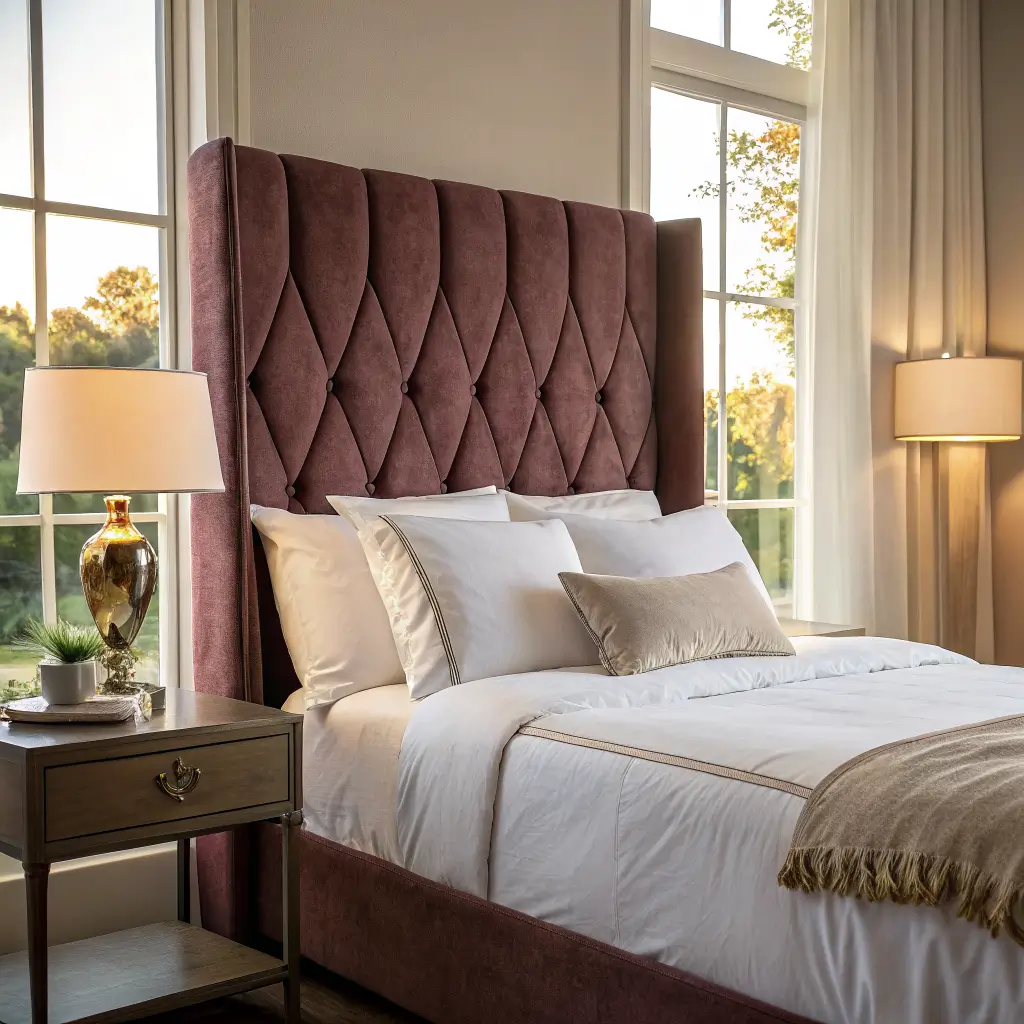
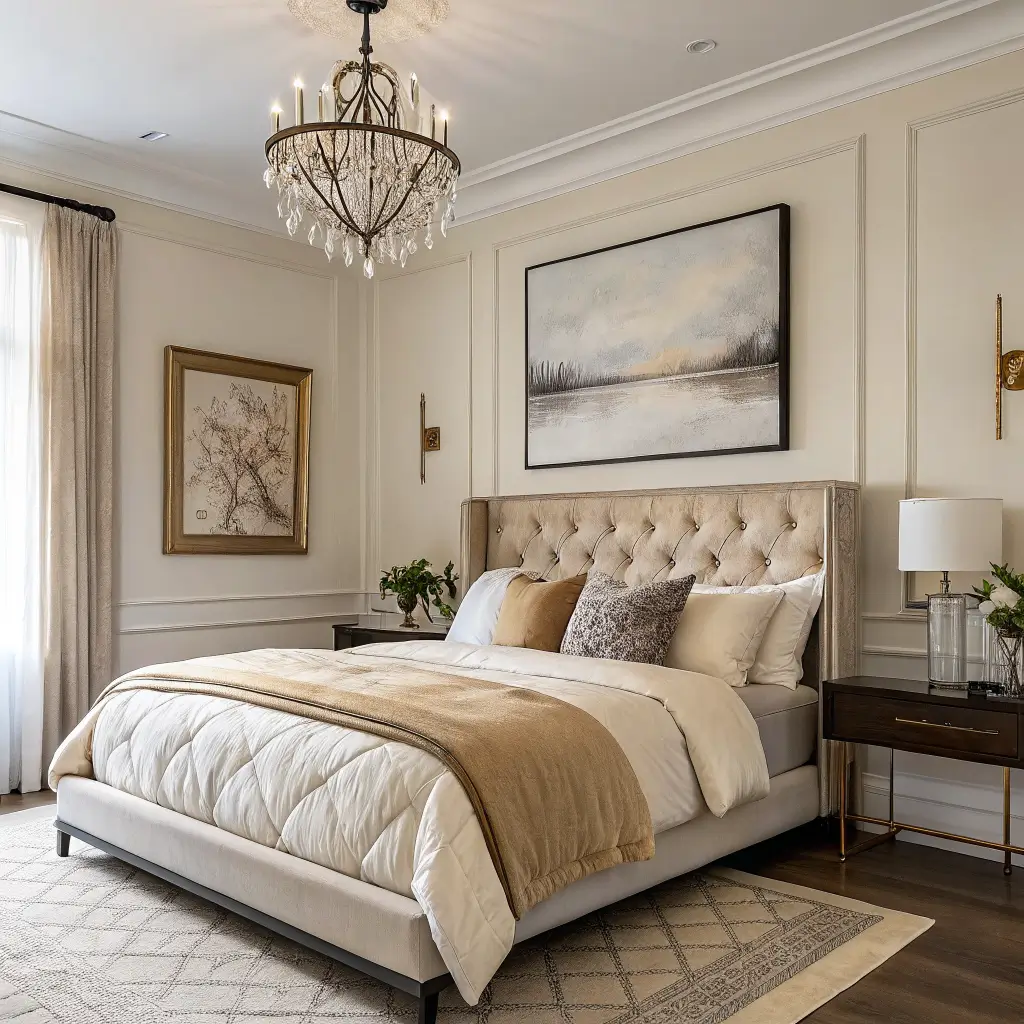
This is the single biggest visual upgrade in any bedroom. I’m talking 54 to 72 inches tall, in velvet, performance linen, or bouclé. Channel-tufted, vertical-panel, or a soft wingback all read expensive. The short, stubby headboard attached to most cheap bed frames is what makes rooms look like dorms. Expect $800–$2,500 for something good.
I bought a low platform bed with no headboard when I moved into my current place because it photographed well on a website. The room looked unfinished for nine months. Replacing it with a 60-inch channel-tufted headboard in oat-colored linen did more than the rug, the lamps, and the art combined.
2. Layered bedding, hotel-style.
The formula:
– Fitted sheet, then a flat sheet (yes, even if you don’t use it — it lets you fold the duvet back)
– Down or down-alternative insert in a washed cotton or linen duvet cover
– Two Euro shams (26″×26″) propped against the headboard
– Two standard or king sleeping pillows in front of the Euros
– One or two decorative cushions in front of those — bouclé, velvet, or a subtle pattern
– A folded throw across the foot
That’s it. The Euro shams are the move most people skip, and it’s why their beds look flat.
3. Two matching nightstands, properly sized.
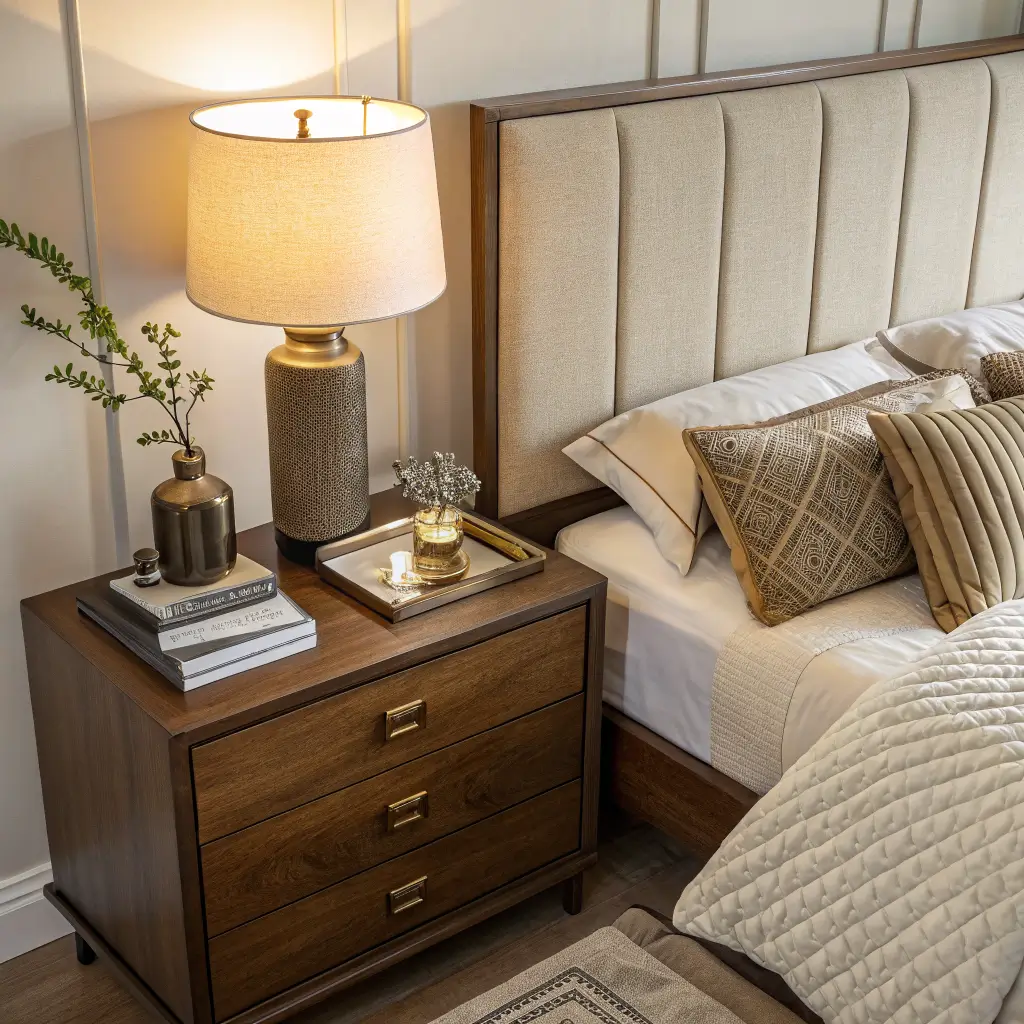
Tops should sit roughly level with the top of your mattress — 24 to 30 inches high, 20 to 28 inches wide. Symmetry is what reads as intentional. One nightstand and a stack of books on the other side is the look of someone who hasn’t finished moving in.
4. Three layers of light.
Ambient (overhead), task (bedside lamps or sconces), accent (something low and soft — an LED strip behind the headboard, a small lamp on the dresser, candles). All on warm-white bulbs, 2700K to 3000K. Put the overhead on a dimmer. This single change — dimmer plus warm bulbs — is the cheapest luxury upgrade in the entire room.
5. A rug that’s actually big enough.
For a queen, 8’×10′ minimum. For a king, 9’×12′. The rug should extend 18 to 24 inches past the sides of the bed so your feet land on softness when you get up. Smaller rugs floating in front of the bed are the most common mistake I see in real homes. Plush wool or a wool-viscose blend feels best underfoot; a high-pile synthetic works on a budget.
How to Actually Put It Together
Order matters. Do it like this:
Step 1: Paint and prep first.
If you’re going to repaint, do it before anything else is in the room. Warm white, stone, greige, mushroom, or taupe for soft schemes. If you want drama, charcoal or chocolate brown on the bed wall only — full dark rooms can feel like a cave unless you’ve got serious lighting.
Step 2: Lay the rug, then place the bed.
Bed sits on the top two-thirds of the rug. Headboard centered on the focal wall — ideally the wall opposite the door or the one with the best sight line.
Step 3: Nightstands and lamps.
Equidistant from the bed, lamps roughly the same height, shades aligned.
Step 4: Dress the bed
in the order above. Fold the duvet back about a quarter of the way so the sheet shows. That single fold is what makes the bed look hotel-styled instead of just made.
Step 5: Hang the chandelier.
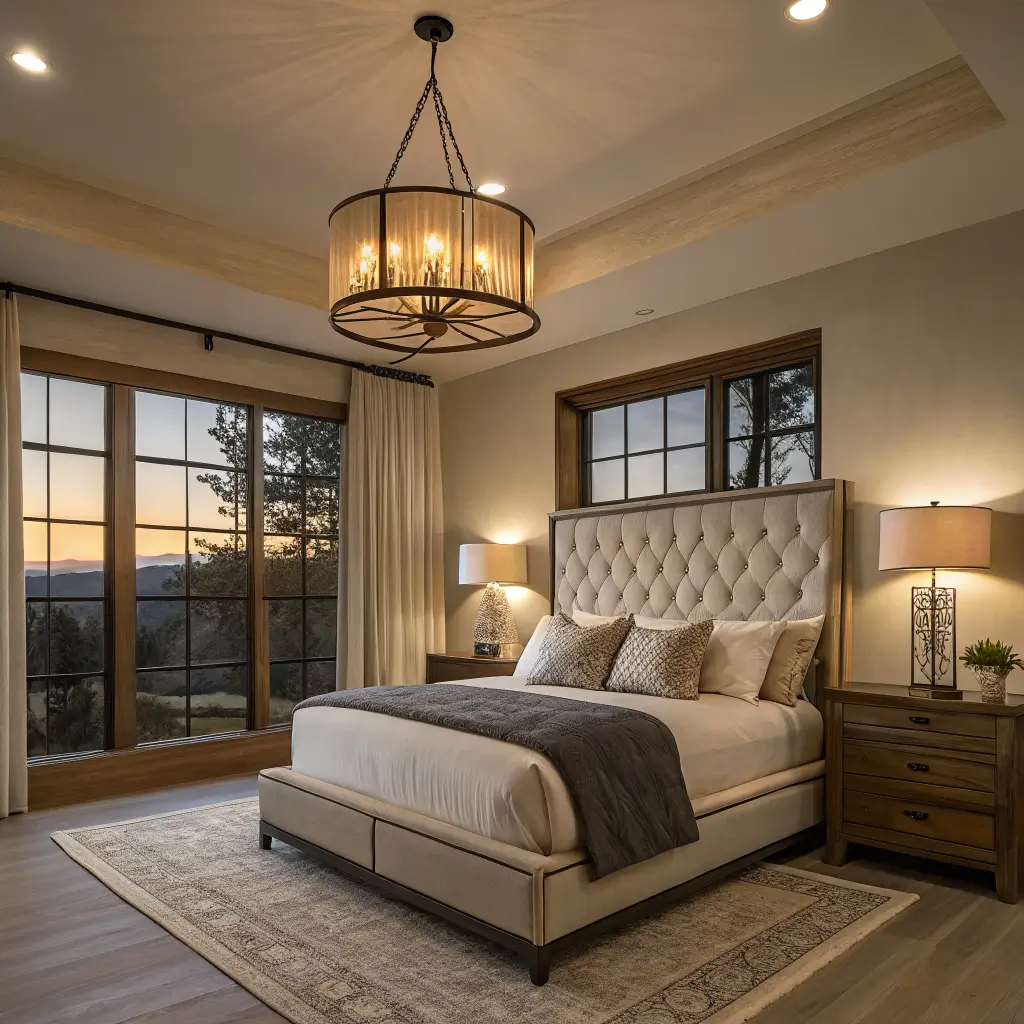
Centered over the bed (not the center of the room — over the bed). Bottom of the fixture should clear about 7 feet from the floor, more if your ceilings are tall.
Step 6: Drapes.
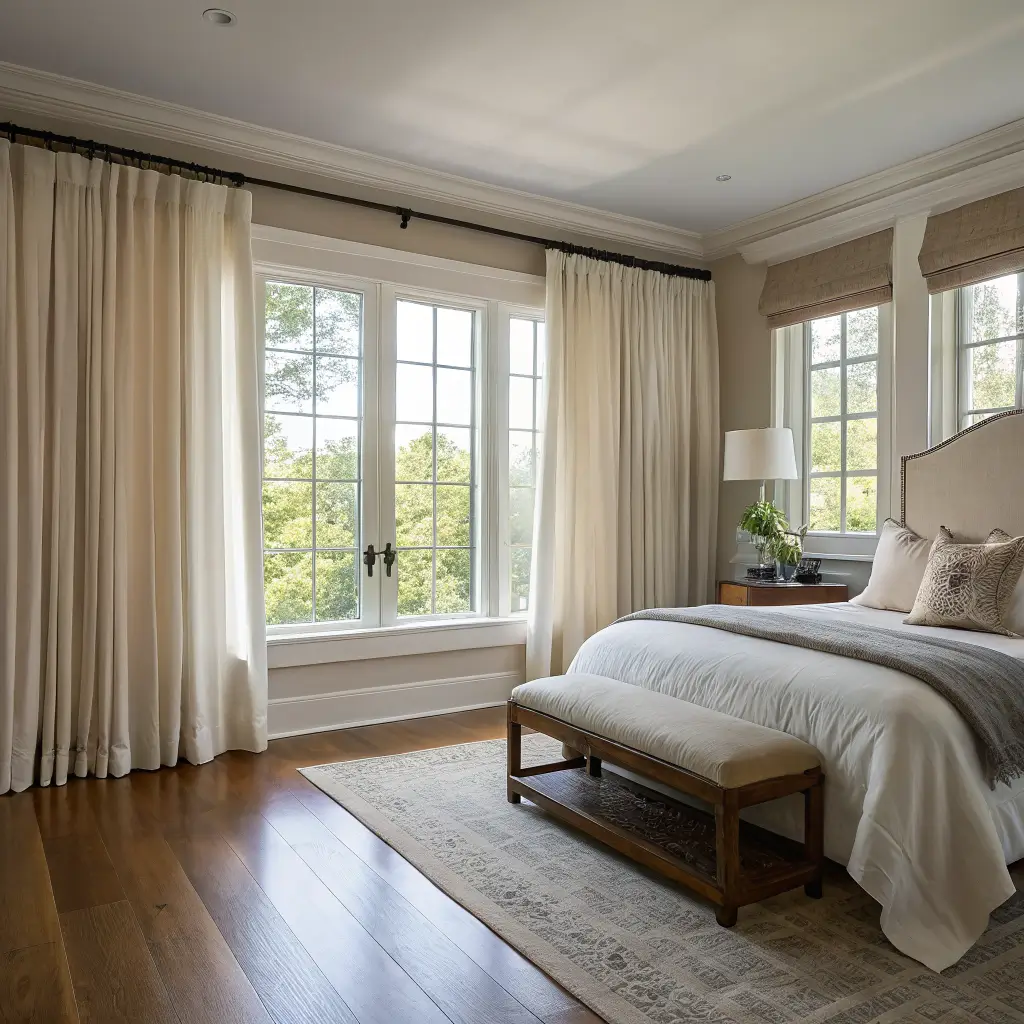
Mount the rod 6 to 12 inches above the window frame and extend it 6 to 10 inches past each side. Panels should kiss the floor or break by about half an inch. Short curtains kill the whole effect — they make ceilings look lower and the room look cheaper than it is.
Step 7: Art and styling.
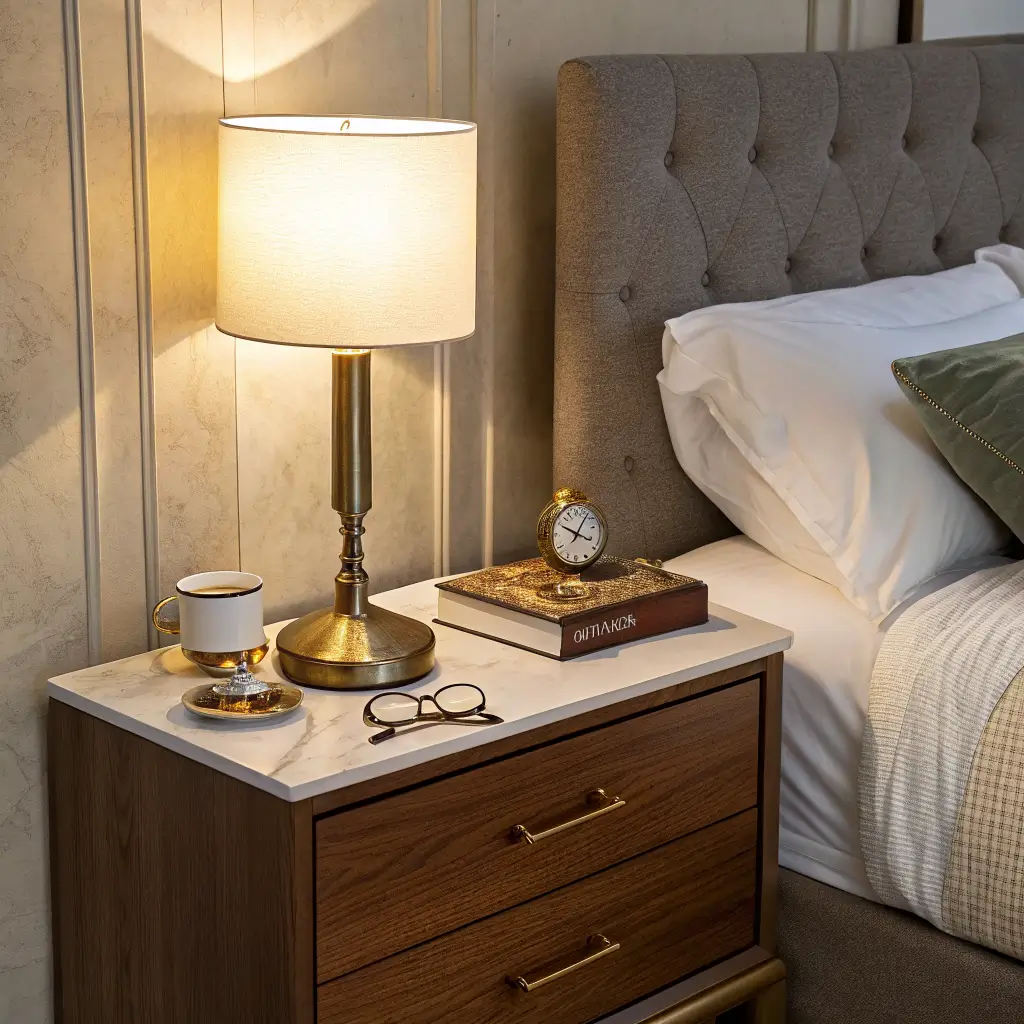
One or two big pieces over the bed, not a gallery wall of small frames. On nightstands: lamp, small tray, a book, one object. That’s it.
Color and Texture, Without Overthinking It
The proportion I use:
– 60–70% soft neutrals (walls, bedding, rug, drapes)
– 20–30% deeper accent tones (headboard, throw, art, an accent chair)
– 5–10% metallics (lamp bases, hardware, frames)
Pick one metal and mostly stick with it. Brushed brass and blackened bronze both work. Mixing is fine if you’re deliberate — I have brass lamps and a black iron bed frame, and it reads intentional because there’s nothing in between. What doesn’t work is brass, chrome, nickel, and bronze all fighting in one room.
For texture, layer three categories:
– Smooth — cotton sheets, lacquered surfaces, glass
– Nubby — bouclé, linen, woven baskets
– Plush — velvet, faux fur, wool
A room with only smooth surfaces looks sterile. A room with only plush looks like a costume.
Where to Spend, Where to Save
Spend on:
– The mattress (you’re on it a third of your life)
– The headboard (it’s the focal point)
– One real light fixture
– Drapes — custom or semi-custom in proper length
Save on:
– Sheets (Target’s Casaluna and Costco’s Kirkland 100% cotton sets are genuinely good for $40–$80)
– Throw pillows (HomeGoods, sales)
– Art — a large framed print from Juniper Print Shop or Etsy in a good frame beats a small original
– Nightstands — IKEA hacked with new brass hardware looks shockingly upscale
The hardware swap is my favorite cheap trick. I bought two IKEA Hemnes nightstands for around $130 each and replaced the knobs with $8 brushed brass pulls from a small Etsy shop. They look like $400 pieces.
Mistakes I’ve Made (So You Don’t Have To)
– Rug too small. My first attempt had a 5’×7′ in front of the bed. It looked like a bath mat. Size up.
– Too many small frames over the bed. I had a six-frame gallery wall that looked busy and slightly crooked forever. Replaced it with one 40″×60″ piece and the room calmed down immediately.
– Cool-white bulbs. I bought 5000K “daylight” LEDs because they were on sale. The room looked like a dentist’s office. Switched to 2700K and it was a different space that night.
– Bare windows for “minimalism.” It just looked unfinished. Drapes fixed it.
– Mixing four styles. I had a farmhouse dresser, a glam mirror, a boho rug, and a modern bed all at once. Pick one main style and one supporting influence. That’s the limit.
Easy Updates That Don’t Cost Much
If the bones are in place, you can refresh the room twice a year for under $150:
– Spring/summer: lighter linen duvet cover, washed cotton pillow covers in cream and pale sage, a lighter throw, a small olive branch arrangement
– Fall/winter: swap to a heavier duvet cover in a deeper tone (rust, forest, blackberry), chunky knit throw, a bouclé Euro sham, a candle in something warm like sandalwood or fig
For bigger refreshes without a full redo:
– New lamp shades in pleated linen — instant upgrade
– Peel-and-stick wood paneling on the bed wall (a weekend project, $200–$400)
– New brass hardware on existing furniture
– A different rug — same size, different texture
If Your Room Is Small
A 10’×11′ bedroom can still feel luxurious. The rules shift slightly:
– Queen bed, not king
– Wall-mounted sconces instead of bedside lamps to free up the nightstand
– Floor-to-ceiling drapes mounted high to trick the eye
– One large art piece, no gallery wall
– A small bench at the foot of the bed only if you have at least 30 inches of walkway behind it; otherwise skip it
The instinct in small rooms is to use small furniture. Don’t. A proper-sized headboard and one statement piece will make a small room feel more expensive than a bunch of dainty stuff scaled down.
The room I love now isn’t the most expensive version of any of this. It’s the one where I finally got the proportions right — tall headboard, big rug, drapes to the floor, warm light, one good piece of art. Everything else is just bedding.
The most comfortable of the luxurious bedrooms I have stayed in had a slightly worn linen duvet and a reading light that actually reached the pillow without me stretching. Those practical details matter more than any thread count ever could.
Conclusion
The luxurious bedroom that felt like a hotel suite to me had white linen sheets, a duvet so thick it felt like a cloud, and blackout curtains that turned the room into a cave at noon. The owner had added a single armchair in velvet, a reading light that cast a warm pool over the pages, and nothing else. She said luxury was the ability to sleep until you woke up naturally, and the room was designed to make that possible.
More Decor Ideas to Explore
- The Modern Luxury Living Room: How I Styled Mine to Look Expensive Without Looking Staged
- Tiny Bedroom Design: How to Style a Small-Space Bedroom That Actually Feels Calm
- Moody Coastal Decor: How to Get the Dark, Atmospheric Beach-House Look Without the Nautical Cheese
- 22 Nautical Bedroom Ideas That Feel Like a Coastal Morning