Tiny Bedroom Design: How to Style a Small-Space Bedroom That Actually Feels Calm
If your tiny bedroom feels cramped, dark, or weirdly cluttered no matter how much you tidy, the problem usually isn’t the size — it’s the layout, the lighting, and the number of small objects fighting for attention. I’ve decorated three sub-100-square-foot bedrooms in old city apartments, including one box room so narrow I could touch both walls with my arms out. Here’s what actually worked, what I wasted money on, and how I’d do it again from scratch.
The Look: Light, Layered, and Quiet
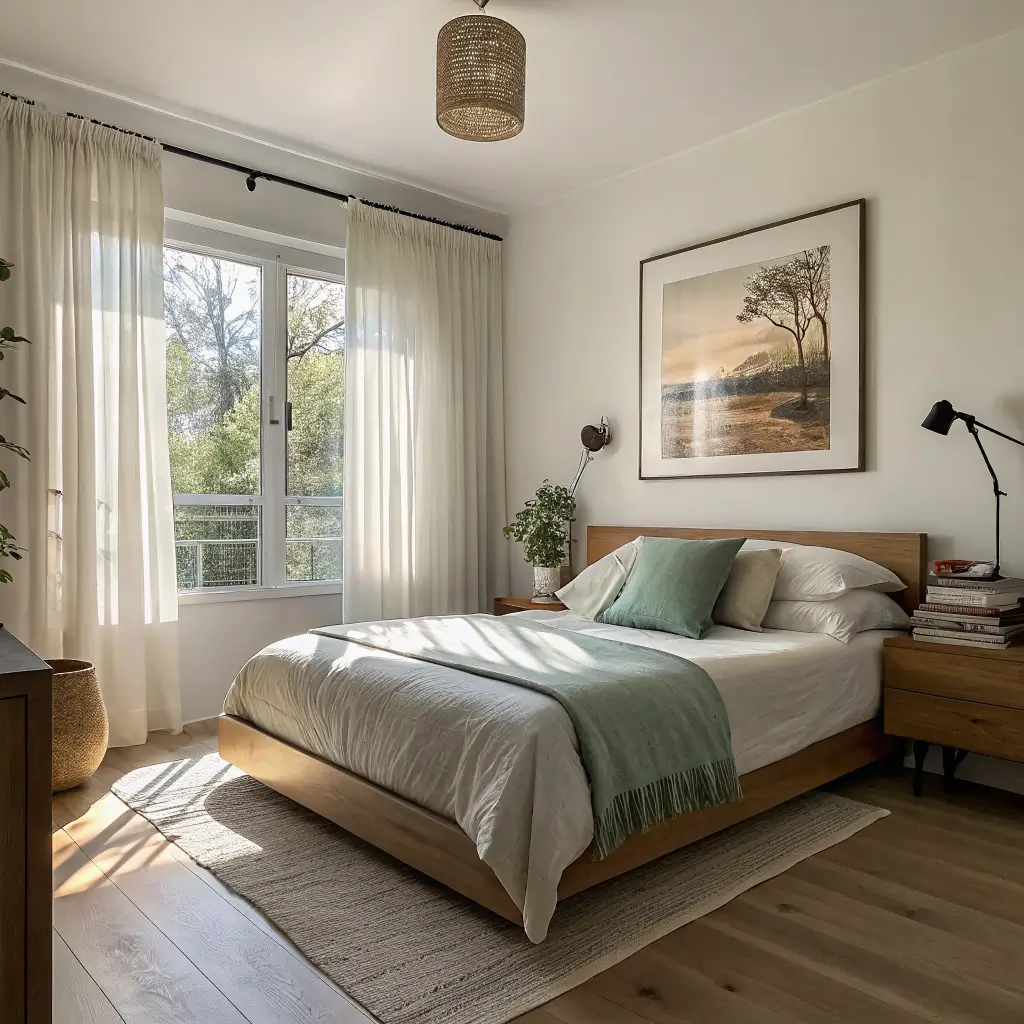
The style I keep coming back to in small bedrooms is a hybrid of Scandinavian minimalism with softer, warmer touches — think pale oak, stonewashed linen, a single sage-green pillow, one big piece of art over the bed. Some people call the warmer version Japandi. Whatever the label, the point is the same: few pieces, generous proportions, calm palette.
It works for:
– Studio dwellers and renters with a “bedroom” that’s really an alcove
– Students in shared flats with one small room to control
– Spare rooms doing double duty as a guest room or office
– Anyone who wants their bedroom to feel like a quiet hotel suite instead of a storage unit with a mattress
It shines in box rooms, narrow Victorian back bedrooms, and attics with sloped ceilings (where low furniture and wall sconces are non-negotiable).
Realistic Budget: What Things Actually Cost
I’ve done this on three different budgets. Here’s what’s honest:
Budget refresh — $350 to $800
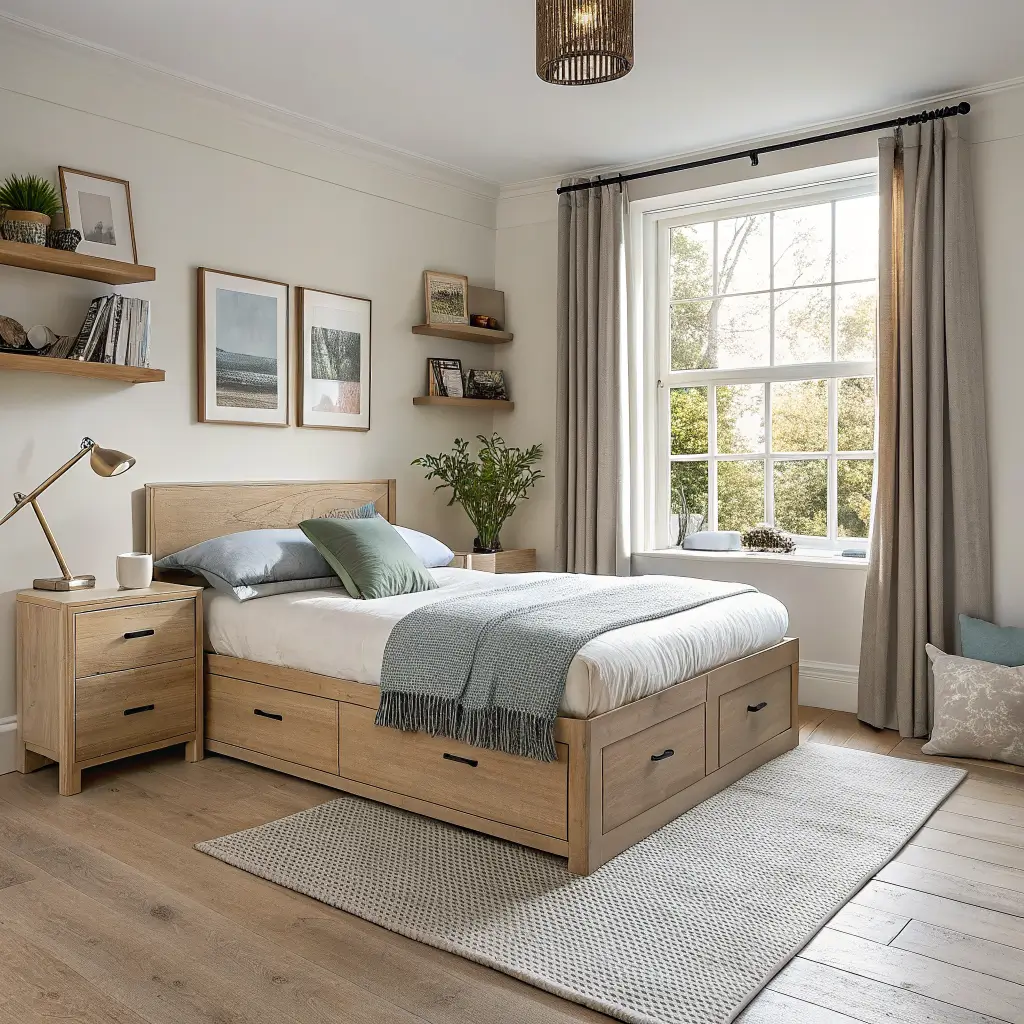
– IKEA BRIMNES bed with four storage drawers: around $350
– LACK wall shelves as floating nightstands: $20–$35 each
– Blackout curtains: $40–$100 a pair
– Plug-in sconces or LED strip: $20–$70
Midrange — $800 to $2,000
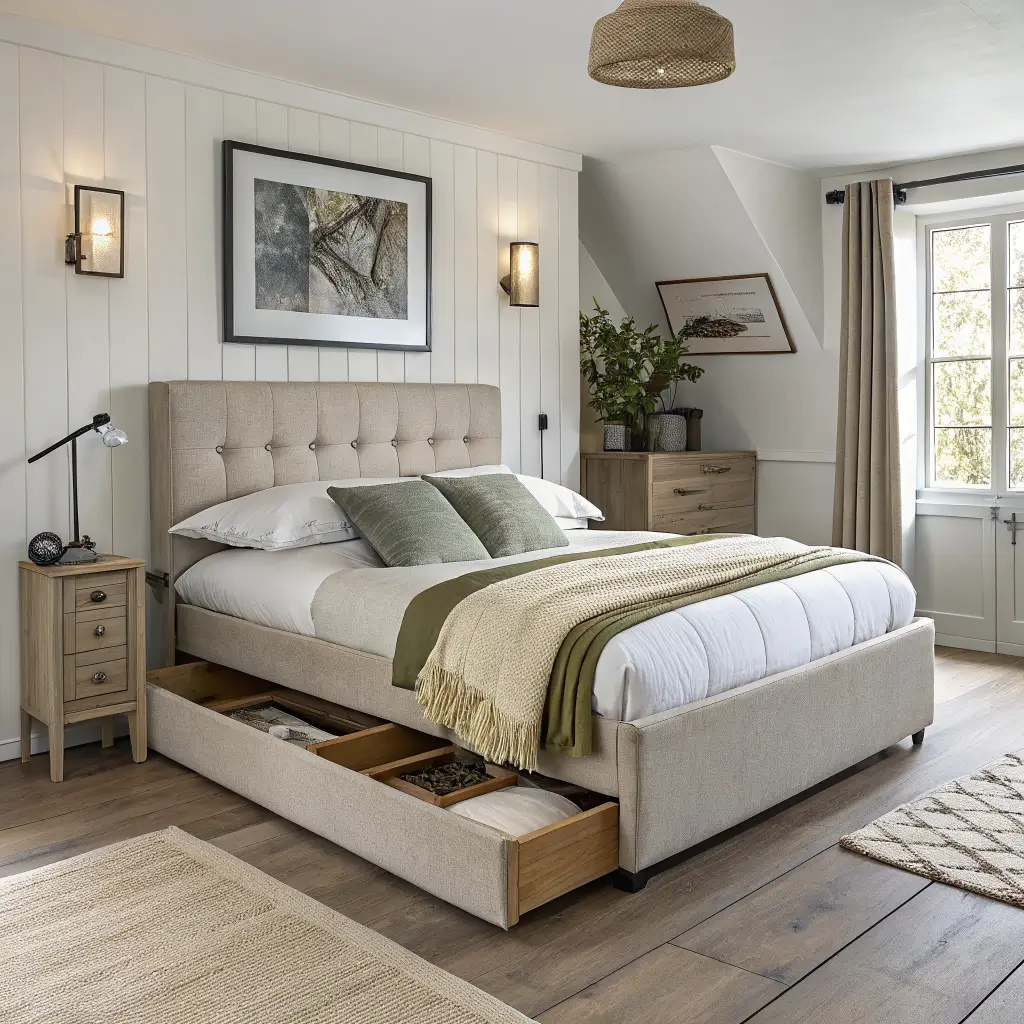
– Upholstered storage bed or gas-lift ottoman bed (queen): $500–$1,200
– Semi-custom reach-in closet system: $300–$800
– 5×8 low-pile rug: $120–$300
Higher end — $2,000+
– Built-in wardrobes or a Murphy bed with install: $1,500–$4,000+
My first tiny bedroom was the $400 version. My current one is closer to $1,800, mostly because I splurged on a lift-up storage bed and a PAX wardrobe with sliding doors. Both earned it back in floor space.
The Hero Piece: Pick the Right Bed Before Anything Else
The bed is 70% of the room. Get it wrong and nothing else saves you.
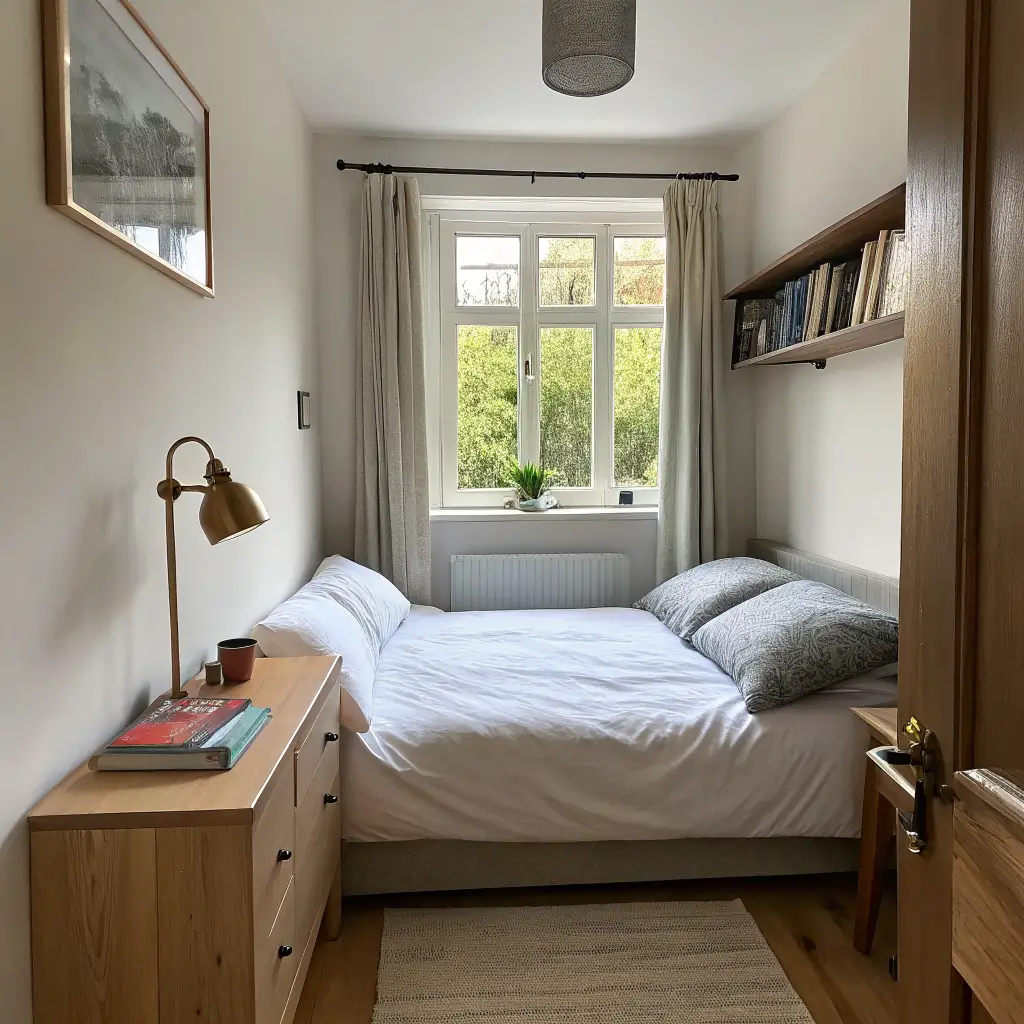
Drop a size if your room is under 9 feet wide. I tried to fit a queen into a 9×9 bedroom once and spent eight months sidling around it like a crab. A full/double (or a compact European double at 120 cm) leaves room for actual nightstands and a walking path. You won’t miss the extra width as much as you think.
For storage, you’ve got two real options:
– Drawer beds (like the BRIMNES): easier to access daily, but you need clearance on the sides to pull drawers out
– Lift-up ottoman beds: the whole mattress hinges up on gas struts, giving you a giant single cavity underneath — best for bedding, off-season clothes, suitcases
I have the lift-up now and it replaced an entire dresser. Worth every cent.
Keep the headboard slim — 3 to 4 inches deep, max. A puffy upholstered headboard eats length you don’t have.
Bedside Solutions When There’s No Room for Nightstands
Standard nightstands are usually 18–22 inches deep. In a tiny bedroom, that’s a lot.
What I’d use instead:
– A narrow nightstand 10–14 inches deep (Urbio, Hay, or any IKEA NORDLI-style sliver)
– A floating shelf mounted at mattress height — about $25 and freed up a square foot of floor in my last place
– The windowsill, if the bed sits under a window. I put a small ceramic lamp and a book on mine and never looked back
– A wall-mounted swing-arm sconce instead of a table lamp, so the surface only has to hold a glass of water
Wardrobes and Clothes Storage
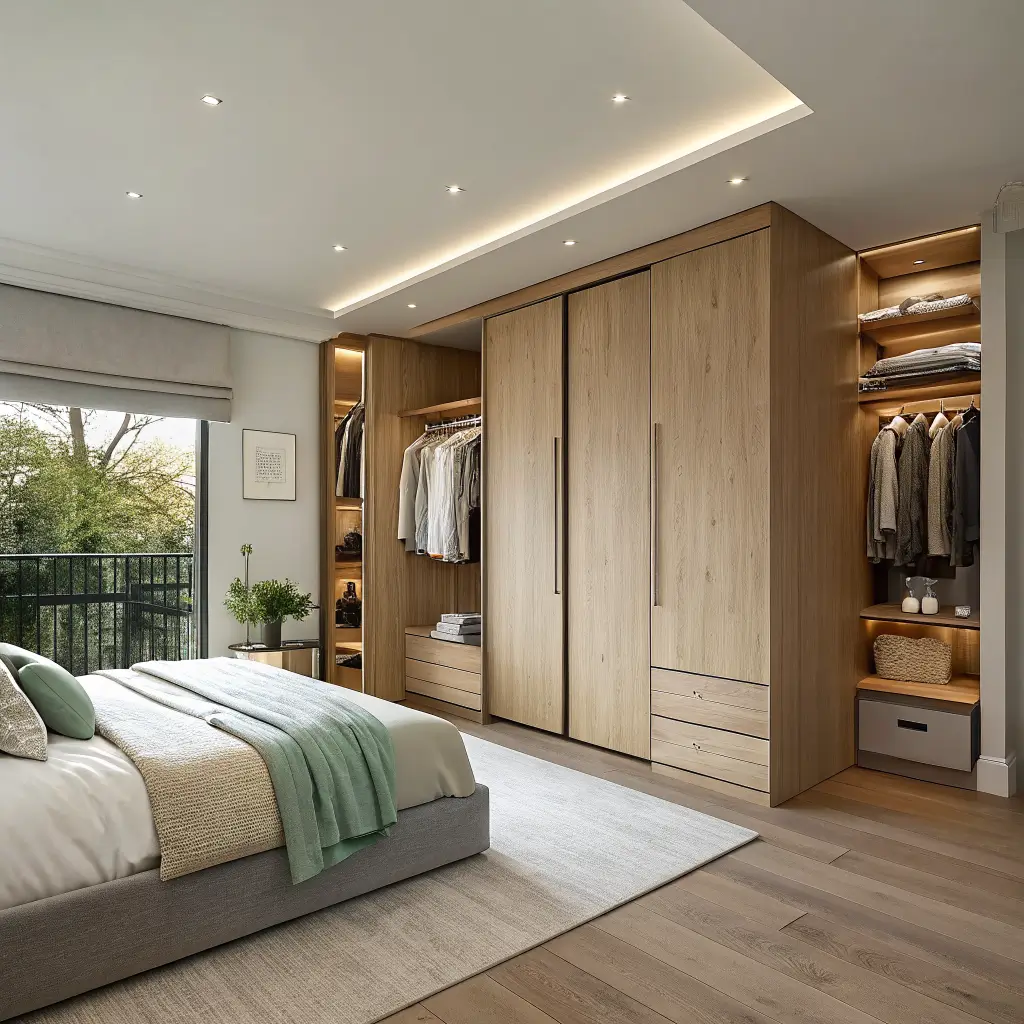
This is where small bedrooms collapse. If you can fit a full-height wardrobe, do it — a PAX-style unit that runs floor to ceiling looks more like a wall than furniture. Pick sliding or flush doors, not ones that swing wide into your tiny floor space.
If a wardrobe genuinely won’t fit:
– Use a storage bed plus an open clothing rail (30–36 inches wide) along the shortest wall
– Add closed fabric storage boxes on top of the rail — what looks chaotic on an open rail is the visible clutter, not the clothes themselves
– Mount hooks behind the door for tomorrow’s outfit and bags
– Get flat under-bed boxes on wheels for shoes and off-season knits
I lived with an open rail for two years. It only looked good when I put matching gray storage boxes on top to hide the lumpy folded sweaters.
Lighting: Stop Relying on One Overhead Bulb
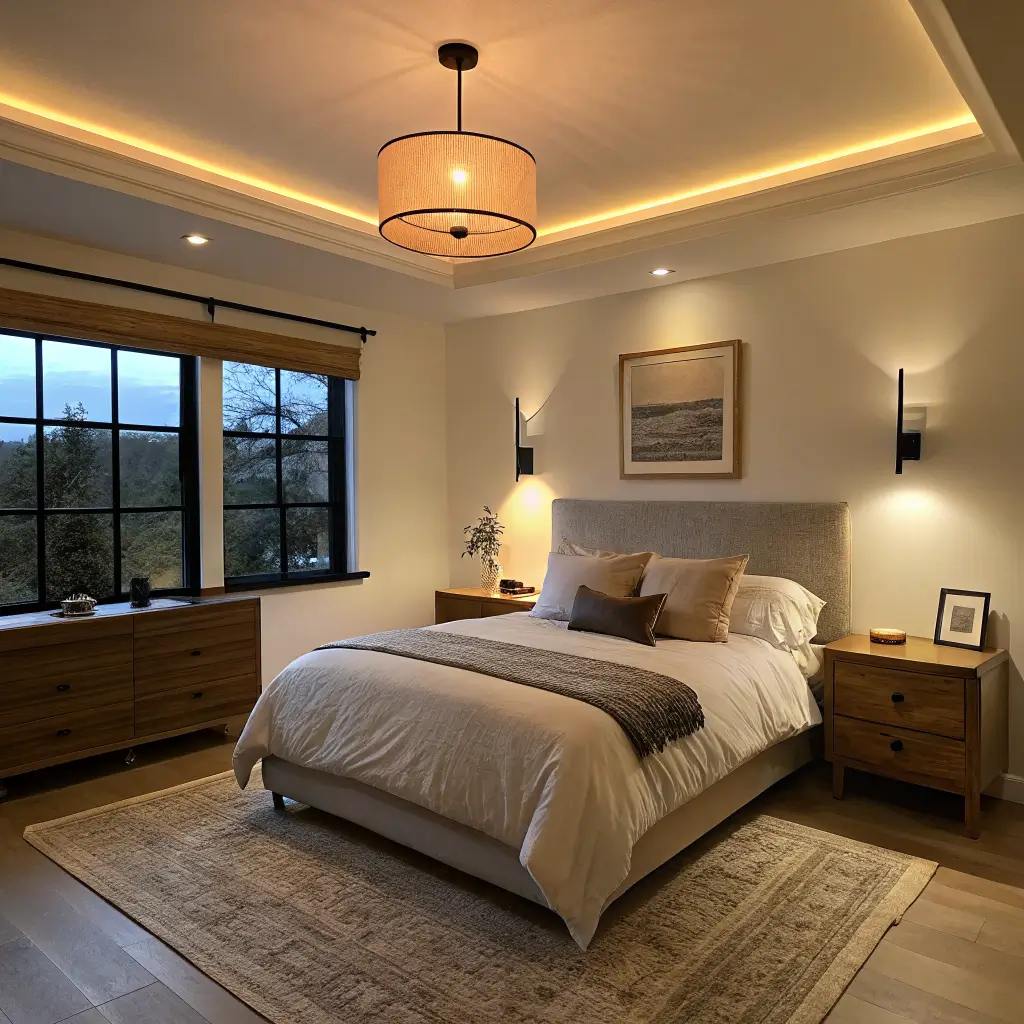
A single ceiling light is what makes a small dark bedroom feel like a budget motel. You want three sources of light, minimum, all warm white (2700–3000K).
– Overhead: a semi-flush mount if your ceiling is under 8 feet. Skip pendants that hang down
– Bedside: wall-mounted sconces freed up my nightstand entirely. A plug-in pair runs $60–$120
– Ambient: an LED strip tucked behind the headboard or under the bed frame. About $20 and it makes the room feel twice as expensive at night
In windowless or north-facing rooms, swap your bulbs to higher lumens (800+) and add a small lamp on a dresser or shelf for a third corner of light. Corners that stay dark make a room feel smaller.
Mirrors and Windows: The Two Biggest Visual Tricks
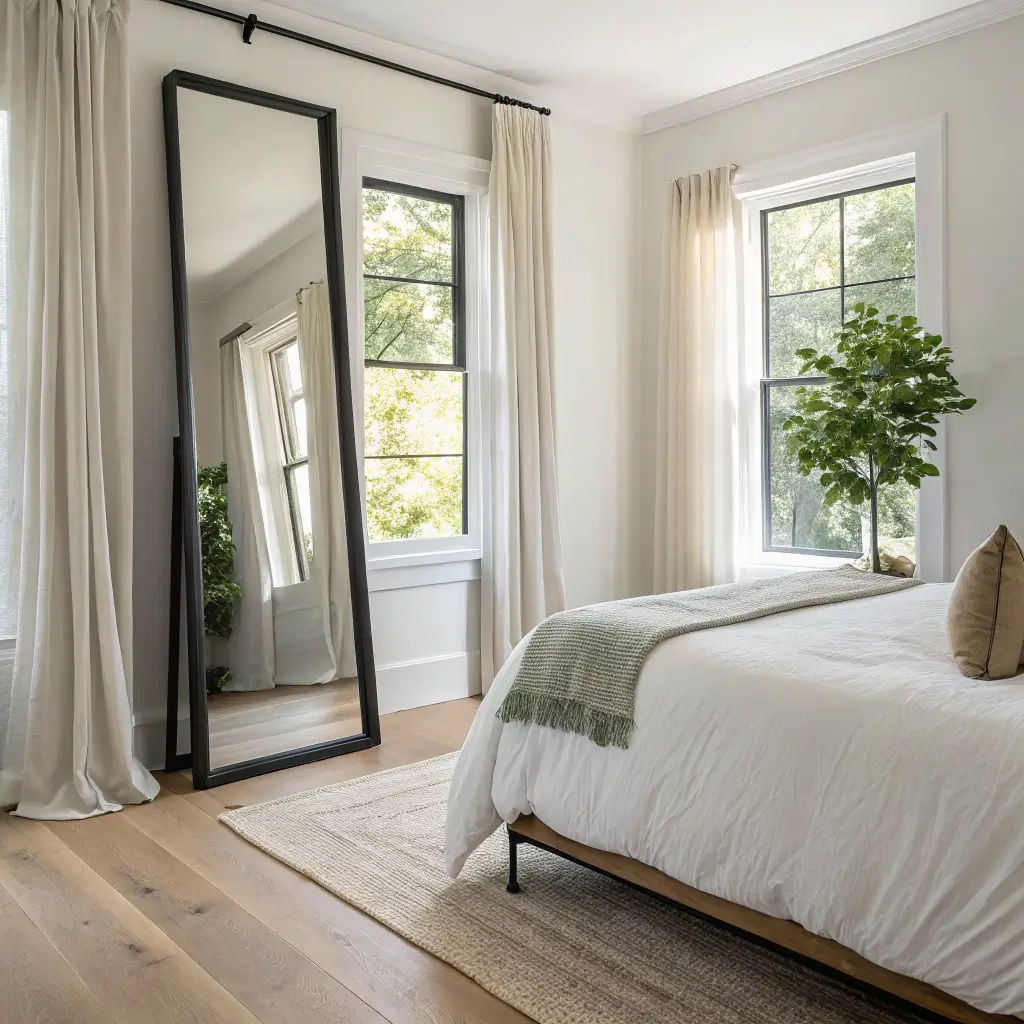
Mount or lean a mirror at least 60 inches tall, ideally opposite or next to the window. I have a $90 floor mirror from an online seconds shop propped on the wall across from my window — it doubles the daylight and visually adds about three feet of depth.
For windows: hang the curtain rod 4 to 6 inches above the frame and at least 6 inches wider on each side. Floor-length panels, not anything that stops at the sill. This single change made my last bedroom look like the ceiling jumped up a foot. Layer sheer linen with a blackout roller behind it if you need real darkness.
Color and Materials That Actually Open Up the Room
Walls: a warm white (think Swiss Coffee, Benjamin Moore White Dove, or Farrow & Ball Wimborne White) in a matte finish to kill glare. Soft beige, greige, or pale taupe also work if pure white feels clinical.
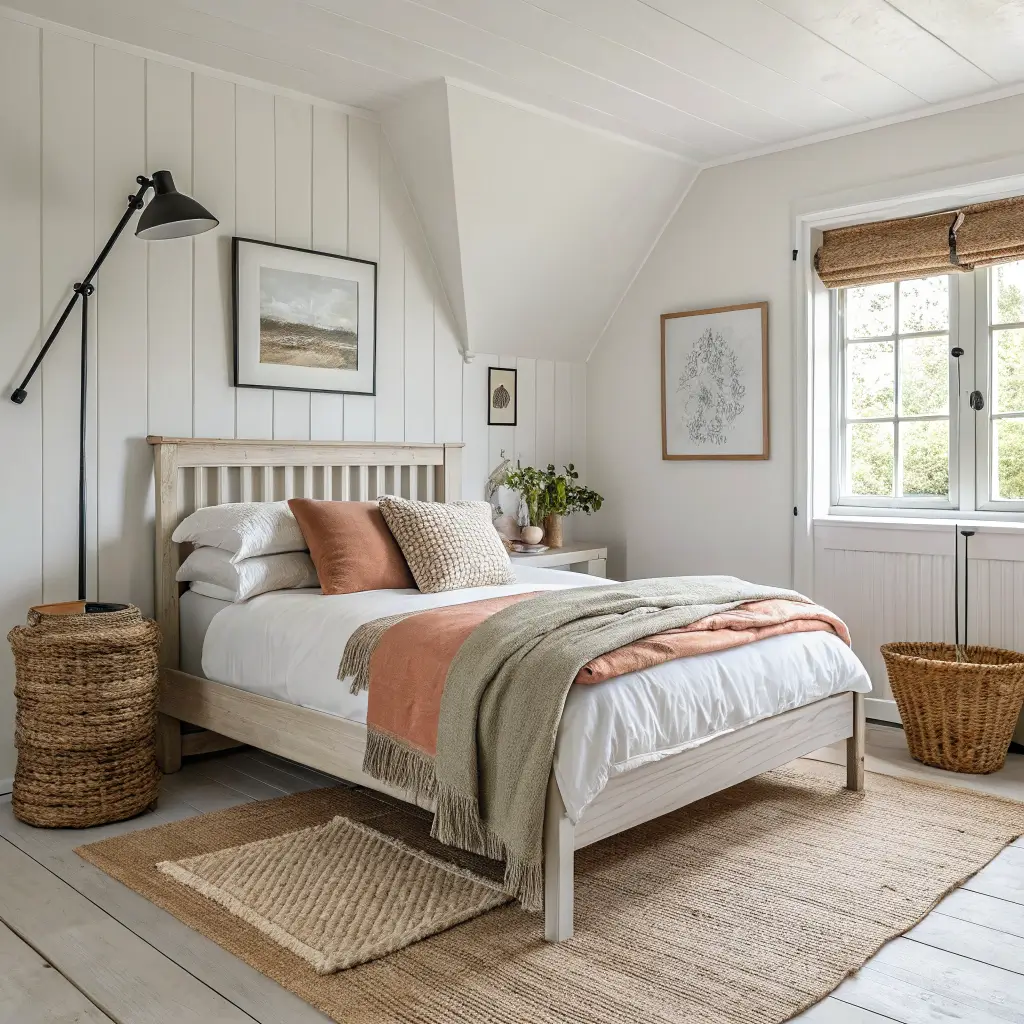
Accents — and I mean accents, not whole walls of color — in muted terracotta, sage green, dusty blue, or charcoal. Use them in pillows, a lampshade, the mat of a framed print.
A single black metal object (a slim floor lamp, a picture frame, sconce arms) anchors the room without shrinking it. Don’t skip this. An all-pale room with no dark notes reads flat.
Materials I’d reach for:
– Pale oak, birch, or ash for wood
– Stonewashed linen bedding in off-white or oatmeal
– A low-pile wool or jute rug, slightly wider than the bed
– One rattan or woven basket for texture
– Brushed brass or matte black hardware — pick one, not both
The Accent Wall Question
Painting one wall behind the bed in a muted color (warm greige, sage, soft clay) gives the room a focal point without making it feel boxed in. Avoid painting the far wall dark in a long narrow room — it pulls the wall toward you and makes the room feel shorter.
Renters: peel-and-stick wallpaper in a subtle wide stripe or textured linen print does the same job for $40–$80 a roll and peels off cleanly.
Layout: Step by Step
Here’s the order I’d do it in, every time:
1. Strip the room. Everything out. You can’t plan around clutter.
2. Measure. Floor, ceiling height, window placement, radiators, door swings. Sketch it on paper.
3. Place the bed first. Usually centered on the longest wall, or tucked under the window in ultra-tight rooms. Leave at least 24–30 inches of walking clearance on one side.
4. Decide the wardrobe wall. Short wall or recess if possible. Full-height units only.
5. Mount sconces at 50–60 inches from the floor on either side of the bed.
6. Lay the rug so it extends past the lower two-thirds of the bed and a foot beyond on each side.
7. Make the bed simply: white or oatmeal duvet, two sleeping pillows, one or two accent cushions, a throw folded at the foot. That’s it.
8. Hang one large piece of art above the headboard. Not a gallery wall — one statement piece, roughly two-thirds the width of the bed.
9. Add a mirror opposite the window.
10. Style with restraint: a tray on the nightstand, one plant, a stack of two books. Done.
The Plant and One Sculptural Object Rule
One snake plant, pothos, or a small olive tree in a slim planter softens a corner without taking real estate. Skip the row of tiny succulents on the windowsill — small repeated objects read as clutter in a small room. One bigger plant beats five little ones.
Same principle for decor: one sculptural lamp or one oversized vase will do more than a shelf of trinkets. I learned this the hard way after styling my first tiny bedroom with about fourteen small ceramics on a floating shelf. It looked like a thrift store window.
Mistakes I’ve Made (So You Don’t Have To)
– Buying a queen bed for a 9-foot-wide room. I couldn’t open the closet door.
– Three small pieces of furniture instead of one big one. A skinny dresser, a side chair, and a stool ate more floor than a single tall wardrobe would have.
– A dark navy accent wall in a north-facing room with one small window. Looked moody on Pinterest. Looked like a cave in real life. Repainted within six weeks.
– Open shelving stuffed with books at eye level. Visually it shouted at me every time I walked in. I swapped it for two closed cabinets and the room exhaled.
– A single harsh overhead bulb for a full year. Fixed it with $80 of sconces and an LED strip. Should have done it on day one.
Keeping It from Drifting Back into Chaos
The hardest part of a small bedroom isn’t setting it up — it’s keeping it from creeping back into clutter.
A few rules I follow:
– Surfaces stay at least half empty. If a new object lands on the nightstand, something else has to leave
– One palette, one wood tone (or one wood plus one deliberate contrast like black metal)
– Matching boxes inside any open storage. The “visible clutter” is what makes a room look messy, not the stuff hidden inside boxes
– Before buying anything new, ask: does it replace something, or just add to the pile?
Easy Seasonal Updates Without Replacing Furniture
– Swap pillow covers and the throw: linen and dusty rose for spring, chunky cream knits and rust for winter
– Change the print in one frame above the bed — costs $15 and resets the whole room
– Rotate a single foliage stem in a vase: eucalyptus in winter, dried grasses in autumn
Cross-Style Variations
The same skeleton — light walls, full-height storage, one big bed, one big art piece, three light sources — works in several directions:
– Boho lean: add a jute rug, one woven pendant shade, a textured throw. Keep walls and furniture quiet.
– Coastal lean: soft blue accents, striped linen bedding, light oak, one framed seascape.
– Japandi lean: lower bed frame, more natural wood, almost no accessories, a single ceramic vessel.
The bones don’t change. The accents do.
If I were starting tomorrow with a 9×9 room and $700, I’d buy the storage bed, two plug-in sconces, a 65-inch leaning mirror, a low-pile oatmeal rug, and one oversized framed print — and spend nothing else until I’d lived with it for a month. Small rooms reward patience more than shopping.
Conclusion
The tiny bedroom that felt calm to me was a small-space room with a platform bed, a single nightstand, and a window that looked at a garden. The owner had painted the walls a warm white, added a linen duvet, and hung a single piece of art above the bed. The room felt like a breath, not a sigh, because she had removed everything that did not belong and kept only what mattered.
More Decor Ideas to Explore
- The Tiny Kitchen Playbook: How to Style, Store, and Survive in Under 120 Square Feet
- French Coastal Decor: A Real Guide to Getting the Look Without the Beach-House Clichés
- How to Decorate a Luxurious Bedroom That Actually Feels Like a Five-Star Suite (Not a Showroom)
- Tiny Living Room Ideas: A Real Guide for Spaces Under 150 Square Feet