The Look, and Who It’s Actually For
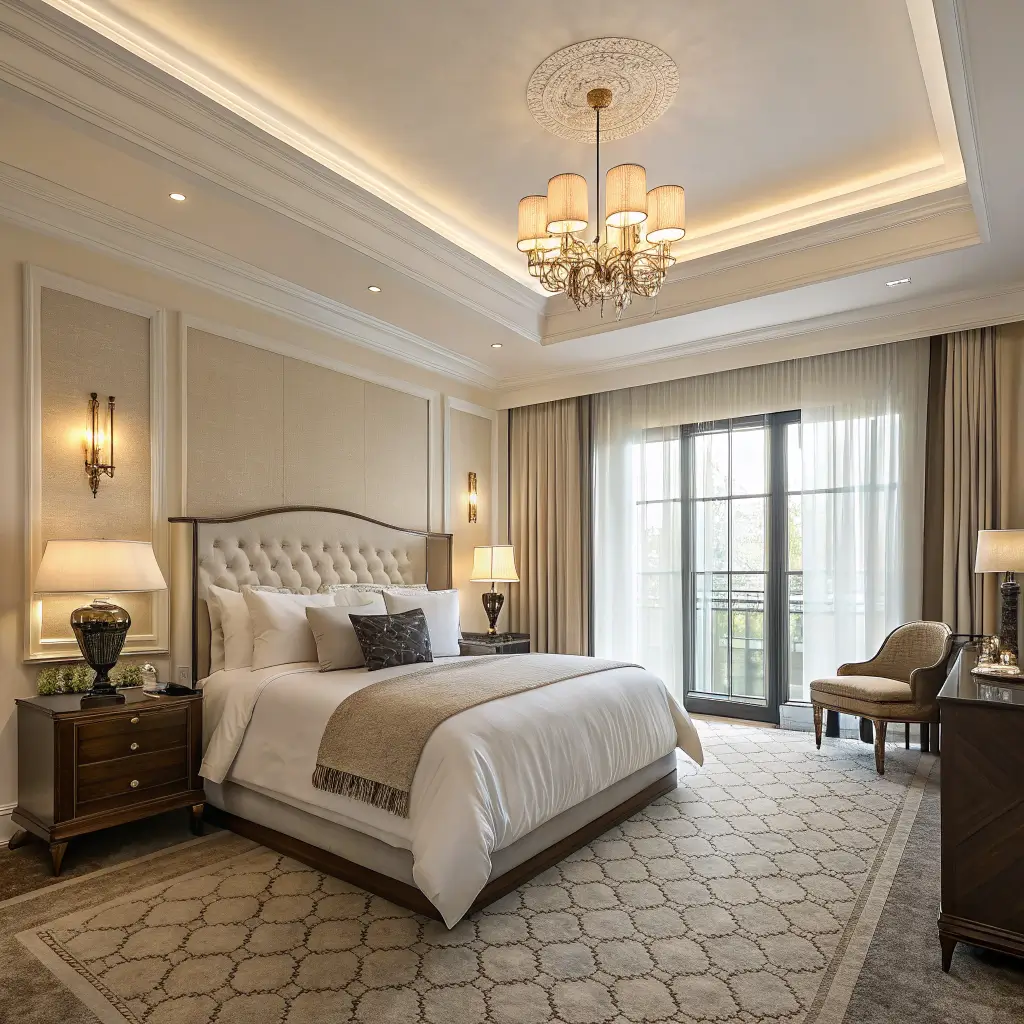
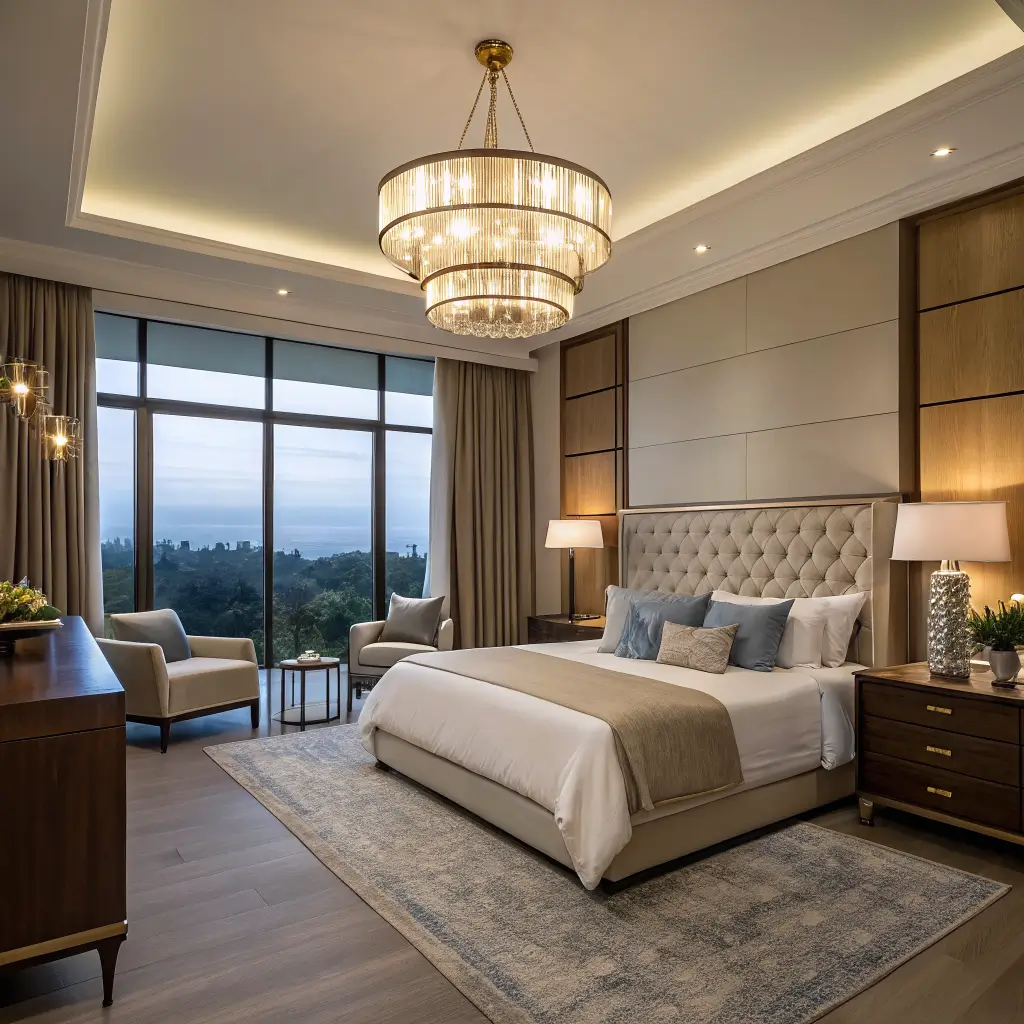
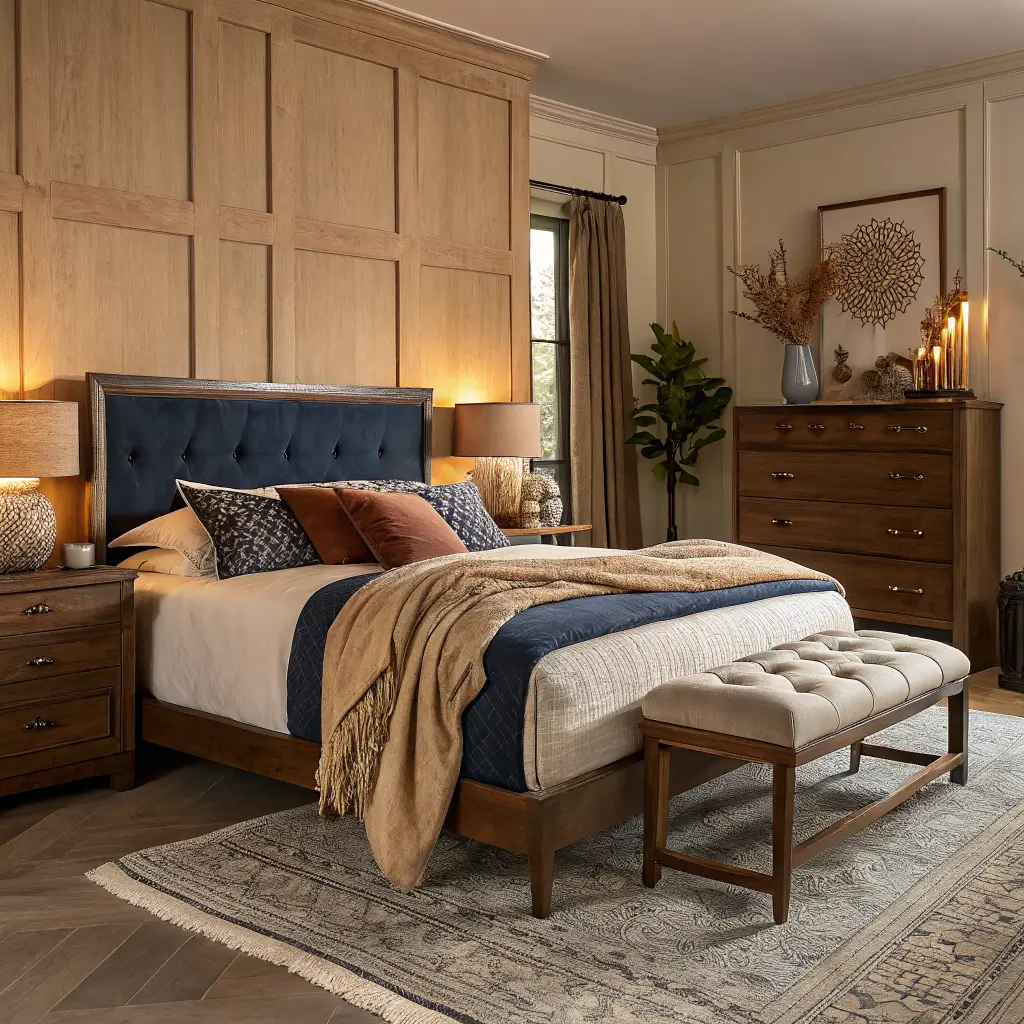
Think hotel suite at a property you’d remember: warm neutral walls, a tall upholstered headboard, lamps with real weight, drapes that pool slightly on the floor, bedding you want to face-plant into. The umbrella term is modern luxury, but you can push it toward modern classic (more wood, restrained lines), minimalist luxury (less stuff, better stuff), or contemporary glam (more brass, velvet, mirror).
It works best for:
– Couples who want a calm, adult room — not a kid-coded “primary suite”
– Light sleepers (blackout drapes are non-negotiable, more on that below)
– Guest rooms where you want people to text you about the bed the next morning
– Studio apartments where the bed needs to anchor the whole space
It works in any size room, but the layered look — rug, bench, reading chair, real bedside lamps — breathes easiest in around 120–200 sq ft for a queen and 180–300 sq ft for a king.
What It Costs (Realistic Numbers)
I’ll spare you the “it depends” answer. Here’s roughly what I’ve spent and seen others spend:
Entry “hotel luxe” build: $1,500–$3,000
– Upholstered queen bed: $400–$900 (Wayfair, IKEA, Article sales)
– Mid-range hybrid mattress: $400–$800 (Nectar, Casper)
– Cotton sheet set, 300–400 thread count: $60–$150
– Duvet insert + cover: $120–$300
– Pair of nightstands: $300–$600 total
– 8’×10′ synthetic or low-pile rug: $200–$500
– Pair of table lamps: $120–$300
Mid-range “design magazine” build: $5,000–$15,000
– Upholstered king bed: $1,000–$3,000
– Saatva or Stearns & Foster mattress: $1,000–$2,500
– Egyptian cotton or European linen bedding: $400–$1,000
– Solid wood nightstands: $800–$2,000 a pair
– 9’×12′ wool rug: $800–$2,000
– Chandelier or statement pendant: $500–$2,000
– Lined blackout drapes with proper hardware: $400–$1,500 per wall
High-end / bespoke: $20,000+ — custom bed, built-in closets, Frette or Matouk linens, designer lighting, made-to-measure drapery.
Time-wise: a textile-and-lighting refresh takes a weekend. A full redo with paint, furniture lead times, and an electrician for the chandelier is 2–6 weeks realistically.
The Pieces That Actually Carry the Room
If you only get five things right, get these right.
1. The bed and headboard
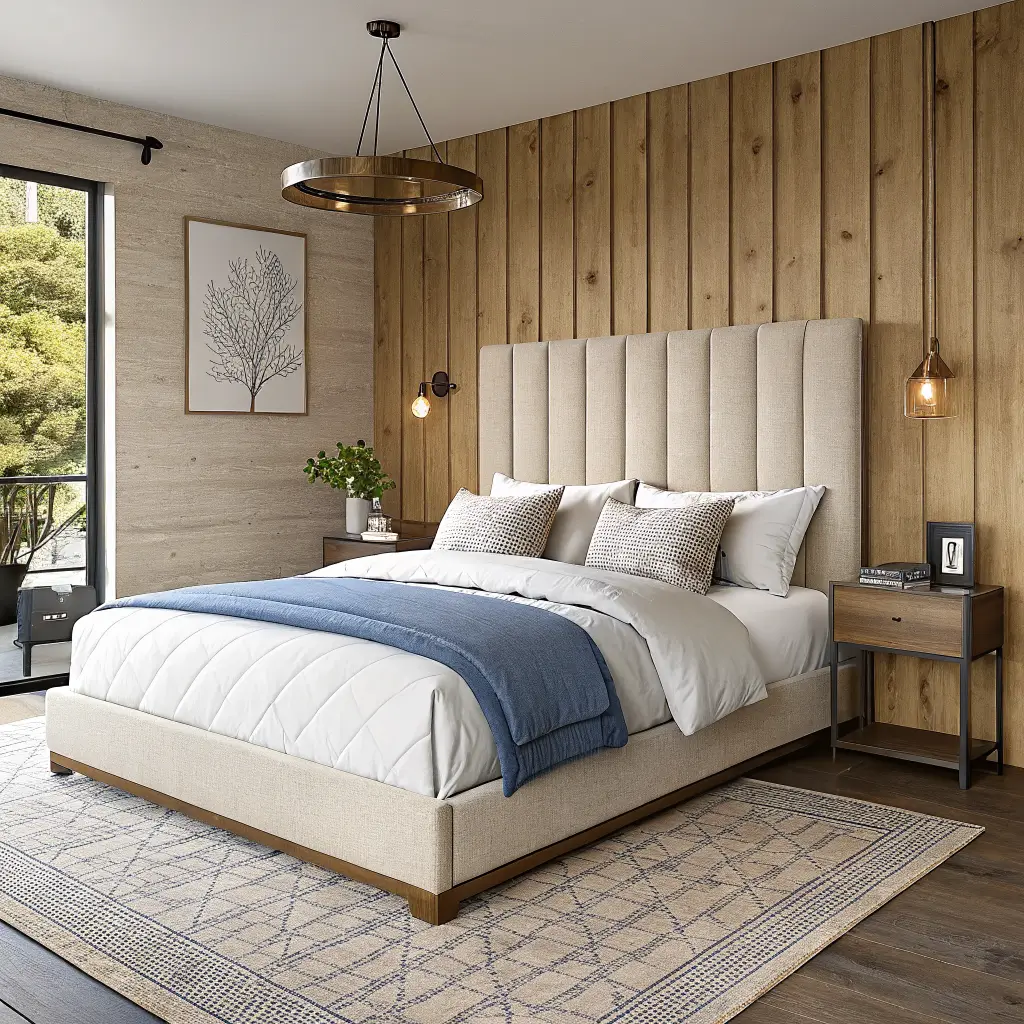
This is the focal point. Don’t cheap out on the silhouette. I’d take a tall upholstered headboard — 60–70 inches high — in a quiet color (oatmeal, mushroom, deep olive, ink) over anything tufted-and-glossy. Channel tufting, a clean wingback, or a flat panel in bouclé all read expensive without trying.
Mattress thickness matters for the look as much as the sleep. Go for 10–14 inches. A skinny mattress on a tall bed frame ruins the proportions.
2. The bedding
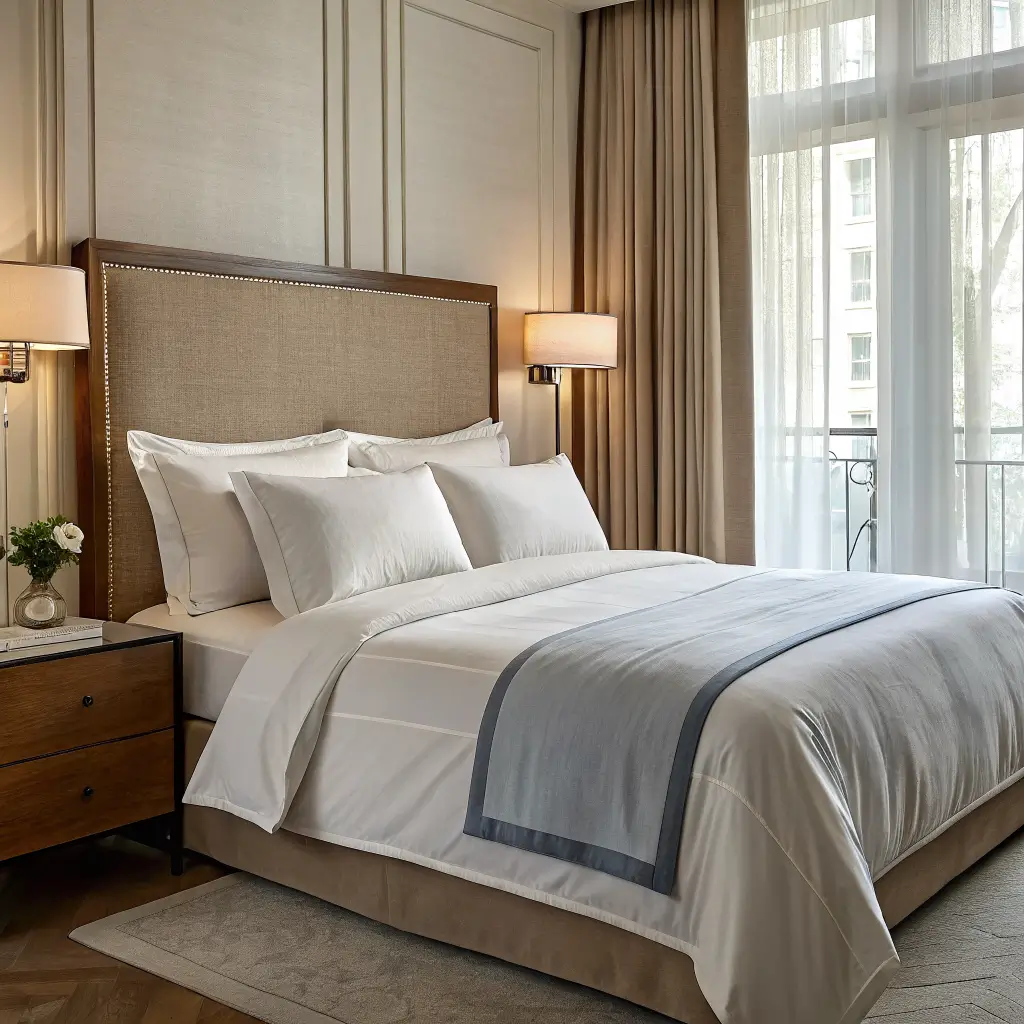
This is where hotel-feel lives or dies. My setup, after a lot of failed sheet experiments:
– Percale sheets if you like cool and crisp, sateen if you like smooth and silky. 300–400 thread count percale beats 1000 thread count anything from a discount store. The 1000-count microfiber sheets I bought in 2019 pilled in two months.
– A down or down-alternative duvet with a washed cotton or linen cover
– Four sleeping pillows, two 26″×26″ Euro shams, and one lumbar. That’s it. The pile of twelve decorative pillows look isn’t luxurious — it’s exhausting.
– One folded throw at the foot. Heavier knit or mohair in winter, a flat woven cotton in summer.
3. Nightstands
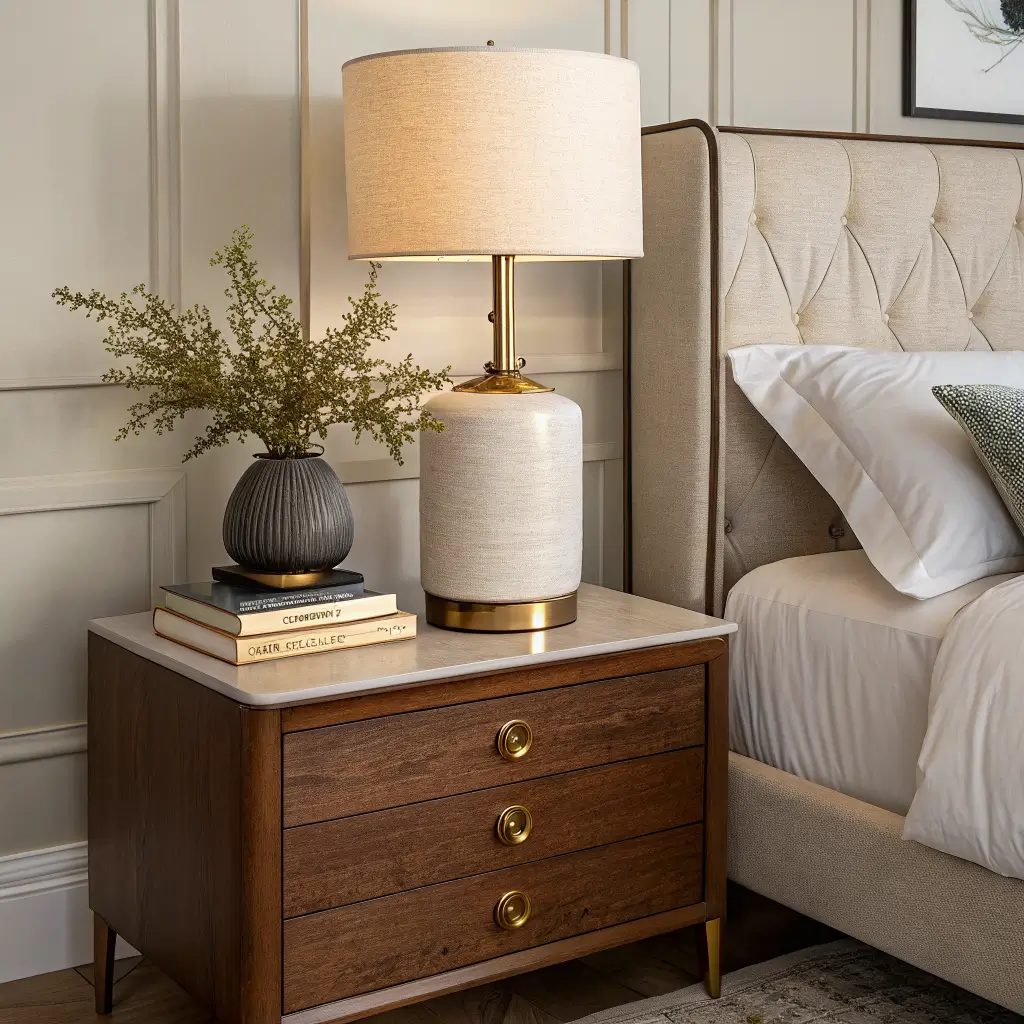
Match them. I know designers love the “deliberately mismatched” look — it almost never works in a bedroom and usually looks like you couldn’t find a pair. Top of nightstand should sit roughly level with the top of your mattress, which usually means 24–28 inches tall. Drawers, not open shelves, unless you’re disciplined about clutter (I’m not).
4. Lighting — and please, more than one source
The number one thing that makes a bedroom feel cheap is a single bright overhead light. You want at least three light sources at different heights:
– Ceiling fixture — a chandelier, fabric drum, or sculptural pendant. Rough sizing rule: add your room’s length and width in feet, and that number in inches is roughly your fixture diameter. A 12×14 room wants something around 26 inches across.
– Bedside lamps or sconces — 24–28 inches tall for a standard bed height. Sconces save nightstand space and look custom; lamps are easier if you’re renting.
– A third source — a floor lamp by a chair, a picture light over art, or LED strip behind the headboard.
Every bulb should be 2700K (warm white). Every switch should be on a dimmer. Non-negotiable. This single change makes more difference than a $2,000 chandelier on a wall switch.
5. Drapes (this is the one most people get wrong)
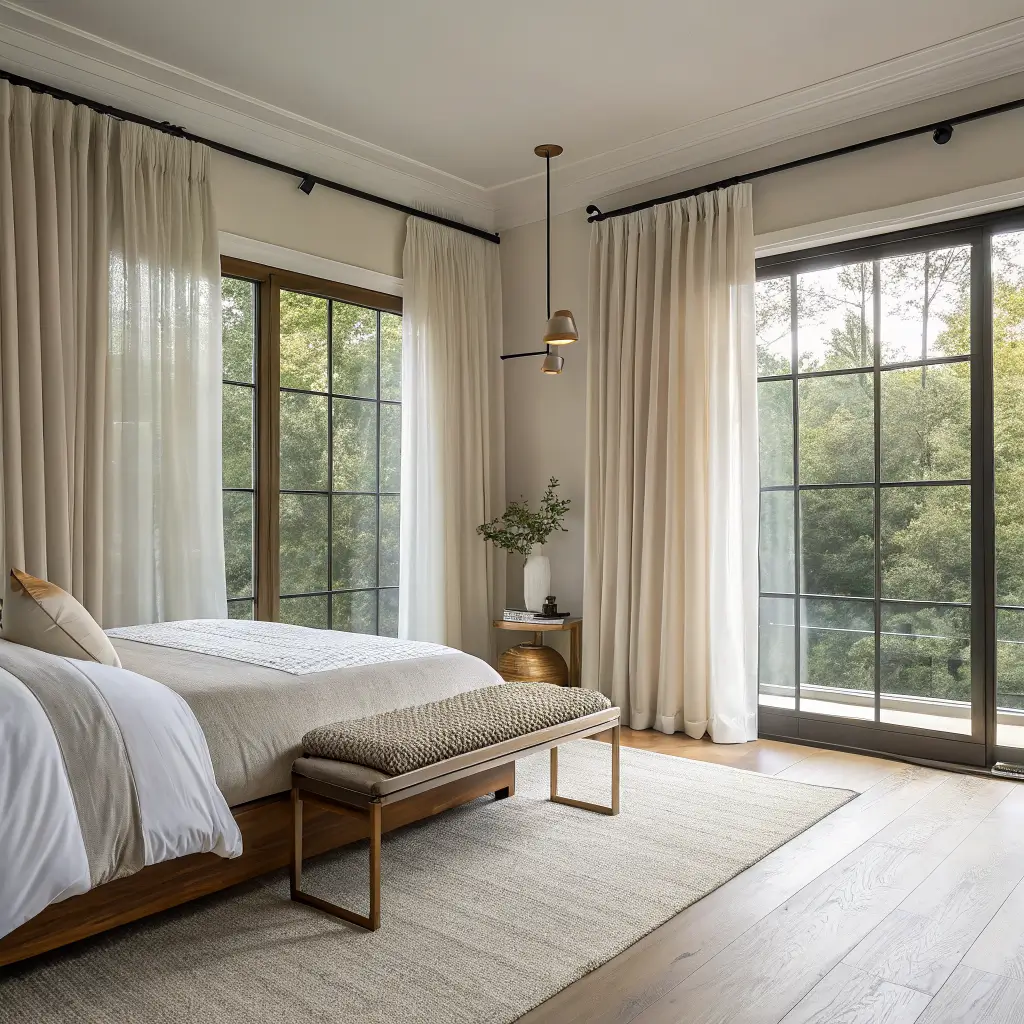
Curtain rods belong 4–8 inches below the ceiling, not just above the window frame. Extend the rod 8–12 inches past each side of the window so the panels stack off the glass when open. Panels should kiss the floor or break by half an inch — never float three inches above it. This single fix makes a $200 set of curtains look custom.
Double layer: sheer linen on the inside rod, blackout drapes on the outside. The sheers diffuse daylight; the blackouts let you sleep until 9 on a Sunday.
6. The rug
The most common mistake I see: rug too small. A 5×7 in front of a king bed looks like a bath mat.
– Queen bed: 8’×10′ minimum
– King bed: 9’×12′
The rug should extend at least 18–24 inches beyond the sides of the bed. Place it so the top third (under the nightstands) sits on hardwood and the bottom two-thirds extends under the bed. Wool or wool blend if you can swing it — the difference in how it ages versus a synthetic is real.
Color: The 60-30-10 That Actually Works Here
– 60% base neutrals — warm white, greige, taupe, mushroom, soft charcoal. Walls and big furniture.
– 30% secondary tones — your wood, your mid-tone upholstery, your rug.
– 10% accent — pillows, art, a throw, maybe an upholstered bench.
Current accent colors I’d actually use: ink blue, emerald, sage, dusty rose, soft terracotta. I’d skip mustard yellow and any saturated jewel tone in volume — they read trendy now and dated in two years.
Metals: pick one primary (brushed brass is my pick) and one supporting (matte black or blackened bronze). Mixing three or four metals reads as indecisive, not eclectic.
How I’d Actually Build the Room, In Order
1. Paint walls first. My pick for a warm neutral that doesn’t go yellow: Benjamin Moore Pale Oak in eggshell finish.
2. Lay the rug.
3. Place the bed centered on the main wall (not jammed in a corner unless the room is genuinely tiny). Leave 24–30 inches of walking room on each side.
4. Position nightstands and install sconces or set up lamps. Symmetry here. Always.
5. Get the ceiling fixture and dimmer wired.
6. Hang drapes high and wide.
7. Make the bed properly: mattress protector, fitted sheet, flat sheet with hospital corners, duvet folded down to mid-bed, sleeping pillows flat against the headboard, Euros stood up in front, lumbar in front of those.
8. Hang art. One oversized piece above the bed is easier to get right than a gallery wall. It should be at least two-thirds the width of the headboard.
9. Style nightstands: a lamp, a small stack of books, one object (ceramic vessel, small vase, candle). That’s it. Keep about a third of every surface empty.
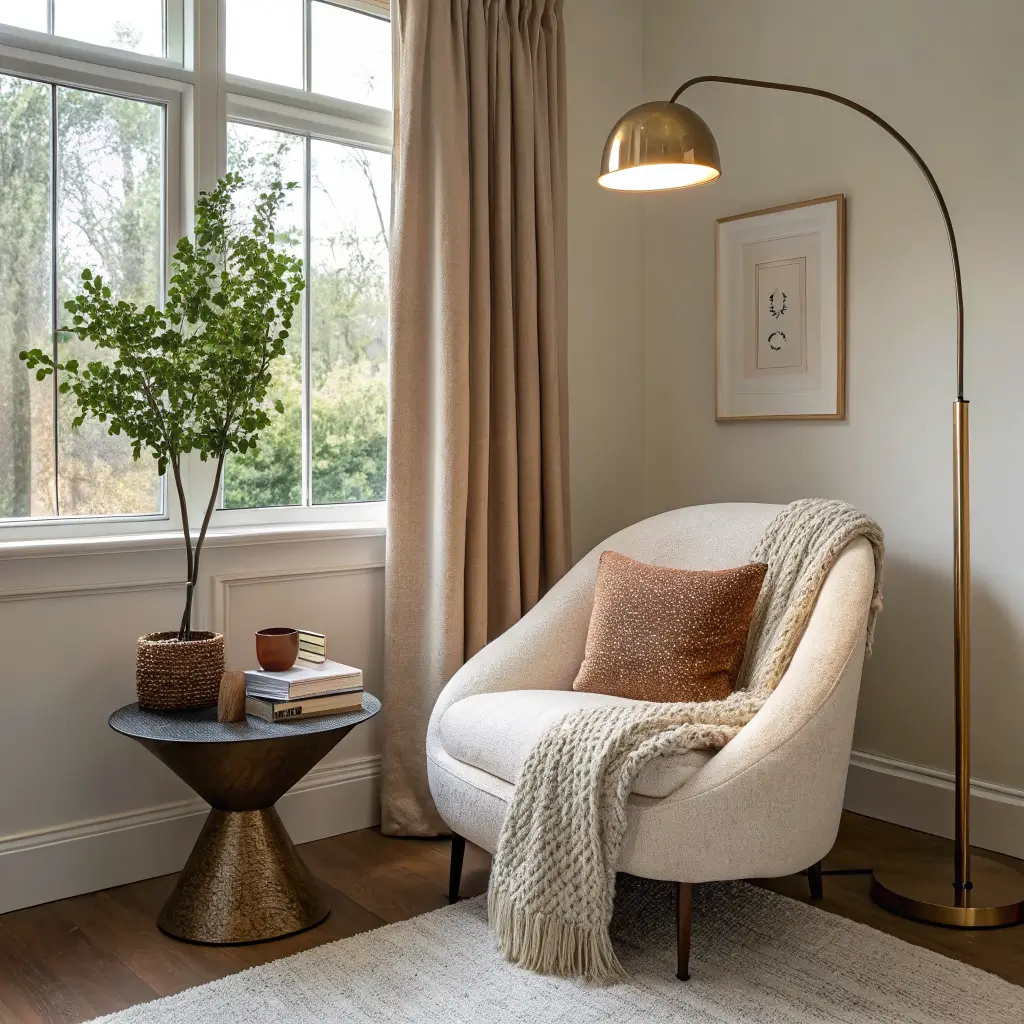
10. If there’s room, add a bench at the foot (48–60 inches wide) or a reading chair with a small side table and floor lamp.
The Mistakes I’ve Personally Made
The corner-bed thing. My first apartment, I jammed the queen into the corner to “save space.” It saved nothing, killed symmetry, and made one side of the bed impossible to make. Center it on a wall.
The 14-pillow pile. I had so many decorative pillows my partner started sleeping with two of them on the floor permanently. Cap it at three decorative pieces beyond your sleeping pillows.
Buying the matching bedroom set. The five-piece set from the showroom — bed, two nightstands, dresser, mirror — all in the same finish, same hardware, same wood grain. It looks like a hotel chain. Get the bed from one place, the nightstands as a pair from another, and a dresser with a different but compatible finish.
Trusting one ceiling light. Lived with a single flush mount for a year and could not figure out why the room never felt right at night. Added two table lamps and a floor lamp by the chair, swapped all bulbs to 2700K, put everything on dimmers. It became a different room.
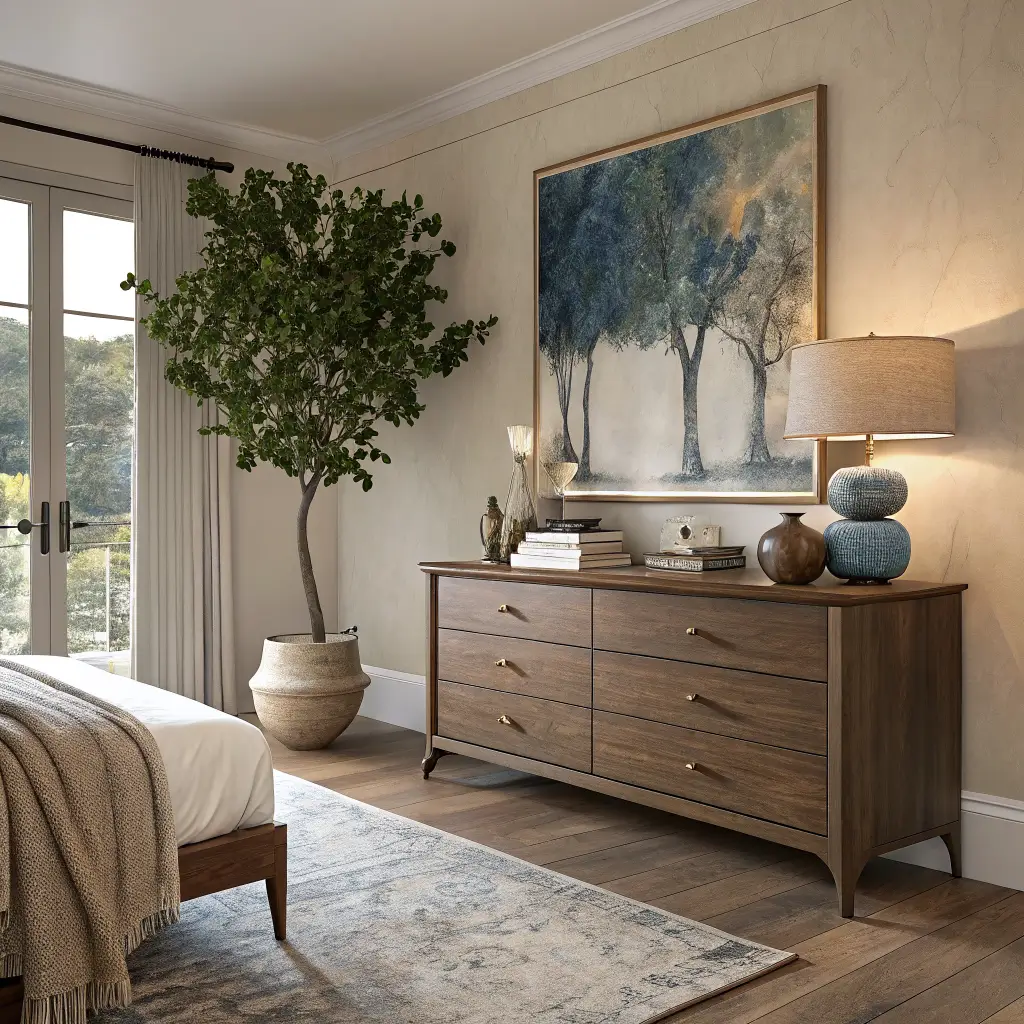
A thrift find that saved the whole thing: a solid walnut Danish dresser, $140 at an estate sale, dating to roughly the 1960s. Replacing the original drawer pulls with $4 brushed brass knobs from a hardware store made it look like a $2,000 piece. Hardware swaps are the single highest ROI move in this entire room.
Keeping It Fresh Without Redecorating
Seasonal swaps that actually matter:
– Pillow covers and throws: velvet, bouclé, and mohair from October through March; washed linen and lightweight cotton April through September
– Duvet cover swap to shift the whole color story without buying a new insert
– Candles: fig and tobacco in winter, neroli or vetiver in summer
Cheap upgrades that look expensive:
– New brass or matte black drawer pulls ($30–$80 total)
– New lampshades, keep the bases (linen drum shades, around $40 each, transform a builder-grade lamp)
– A linen bed skirt to hide a basic frame
– One large potted plant in the empty corner — an olive tree or fiddle-leaf around 5–6 feet tall changes the whole feel
The rule I use when I’m tempted to buy something new: does it match the three words I’d use to describe this room? Mine are calm, warm, considered. If a thing doesn’t fit all three, it doesn’t come in.
That’s the whole game. Fewer things, better proportioned, properly lit, and laid out with some symmetry. The room does the rest.
Conclusion
The luxurious bedroom that felt like a five-star suite to me had white linen sheets, a duvet so thick it felt like a cloud, and blackout curtains that turned the room into a cave at noon. The owner had added a single armchair in velvet, a reading light that cast a warm pool over the pages, and nothing else. She said luxury was the ability to sleep until you woke up naturally, and the room was designed to make that possible.
More Decor Ideas to Explore
- The Luxurious Living Room: How to Build One That Actually Feels Expensive (Not Just Looks It)
- The Beachy Boho Bedroom: How to Get the Look Without It Feeling Like a Hotel Gift Shop
- Little Bedroom Ideas: How to Maximize a Small Bedroom Without Making It Feel Like a Closet
- The Coastal Home Office That Doesn’t Look Like a Beach Rental: A Real Setup Guide