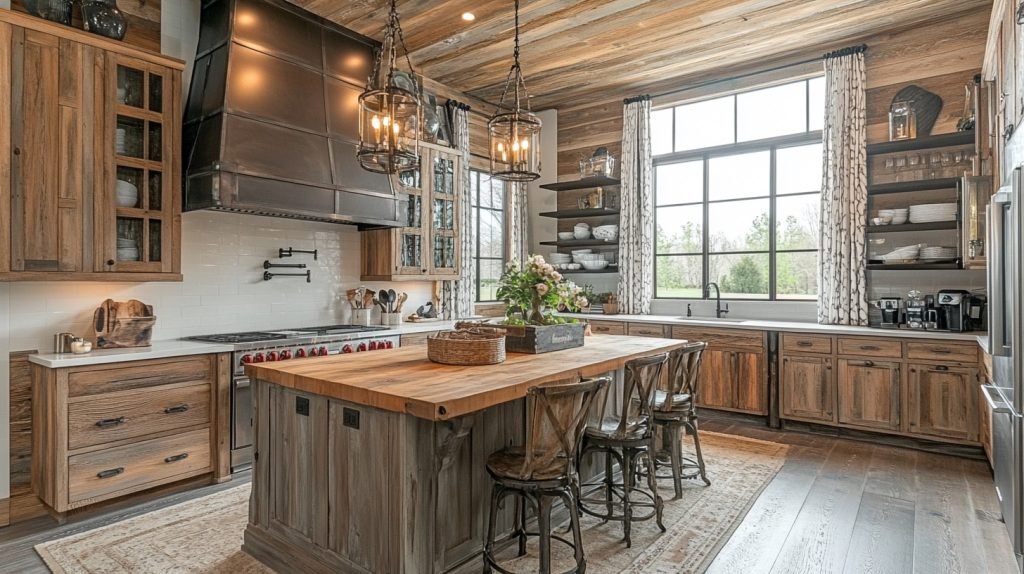
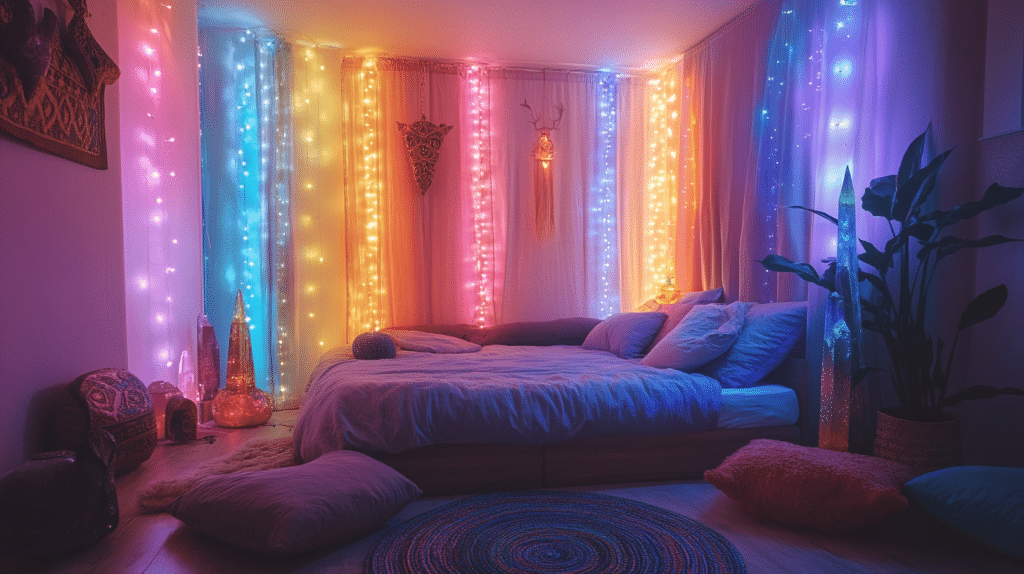
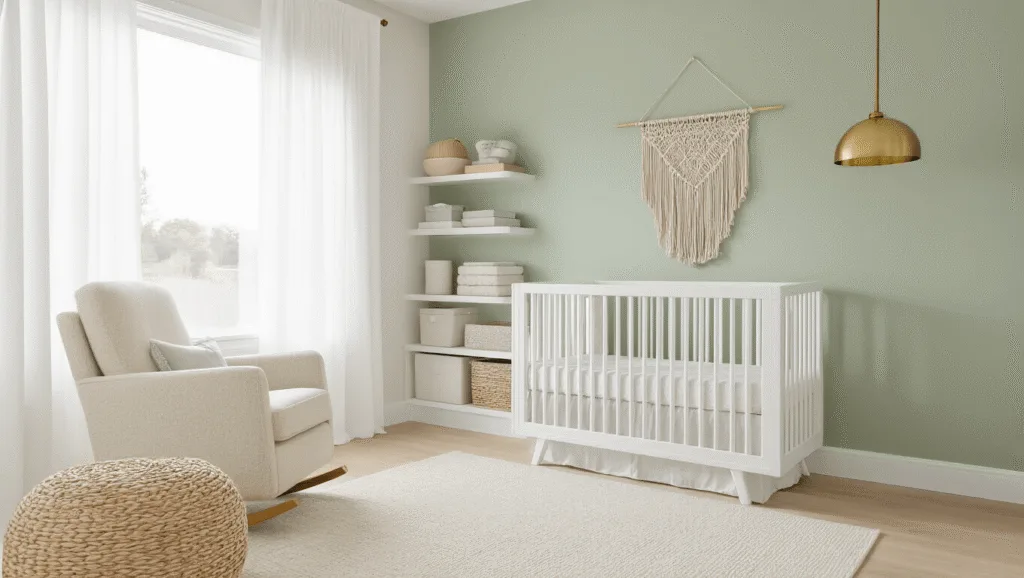
The Look I Aim For — and Who It Suits
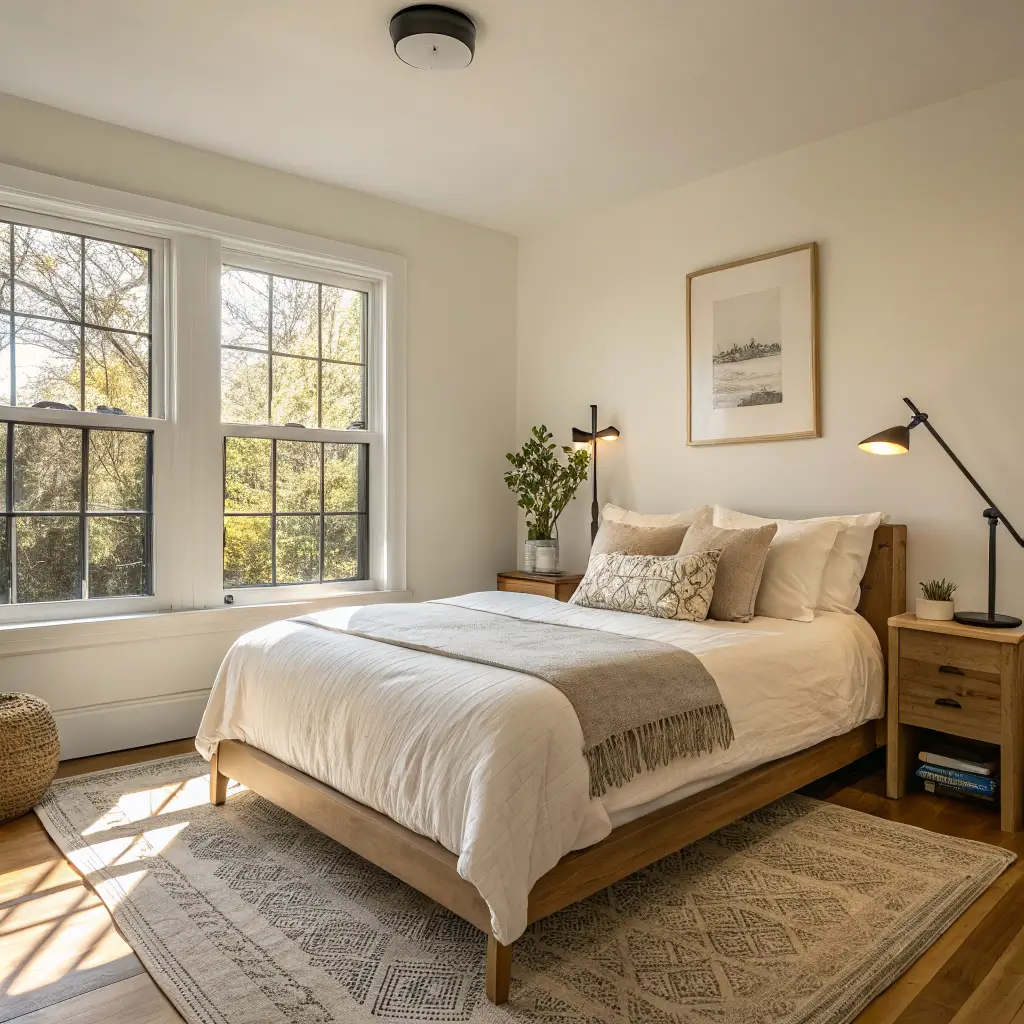
I call it small-space smart: clean lines and low visual clutter, warmed up with linen, wood, and one or two real plants. Think Scandi bones with a few boho touches so it doesn’t feel like a dentist’s waiting room.
It works for:
– Renters in city apartments with one usable bedroom wall
– Box rooms, guest rooms, and kids’ rooms that have to store everything
– Attic and sloped-ceiling rooms where every inch counts
– Anyone working from the bedroom and needing a desk to coexist with a bed
The through-line is the same whether you go modern, cottage, or a tiny maximalist jewel-box: the layout has to earn its keep before any decor goes up.
Quick Snapshot: Time, Cost, and Skill
Time:
– Refresh weekend (declutter, swap bedding and curtains, rehang art): 3–6 hours
– Bigger update with paint, wall shelves, new bed: 1–2 days
Cost:
– Budget refresh ($150–$400): IKEA platform storage bed ($149–$299), basic wall shelves ($20–$60 each), white duvet set ($40–$120), linen-look curtains ($30–$80/pair).
– Mid-range ($400–$1,200): Upholstered storage bed ($350–$800), narrow PAX-style wardrobe ($200–$600), 5′ x 8′ rug ($100–$300), sconces ($50–$200).
– Higher-end ($1,200–$3,000+): Built-in wardrobes or a bed niche ($800–$2,000+), good wallpaper ($80–$200+/roll), custom roman shades or full drapery ($200–$600/window).
Best for rooms under ~120 sq ft — 8′ x 10′, 9′ x 11′, narrow attic rooms.
Skill level: Beginner for bedding, curtains, and art. Intermediate for shelf and sconce mounting, painting, and assembling a PAX. Call a pro for built-ins, electrical, or anything structural.

The Bed: Get This Wrong and Nothing Else Saves You
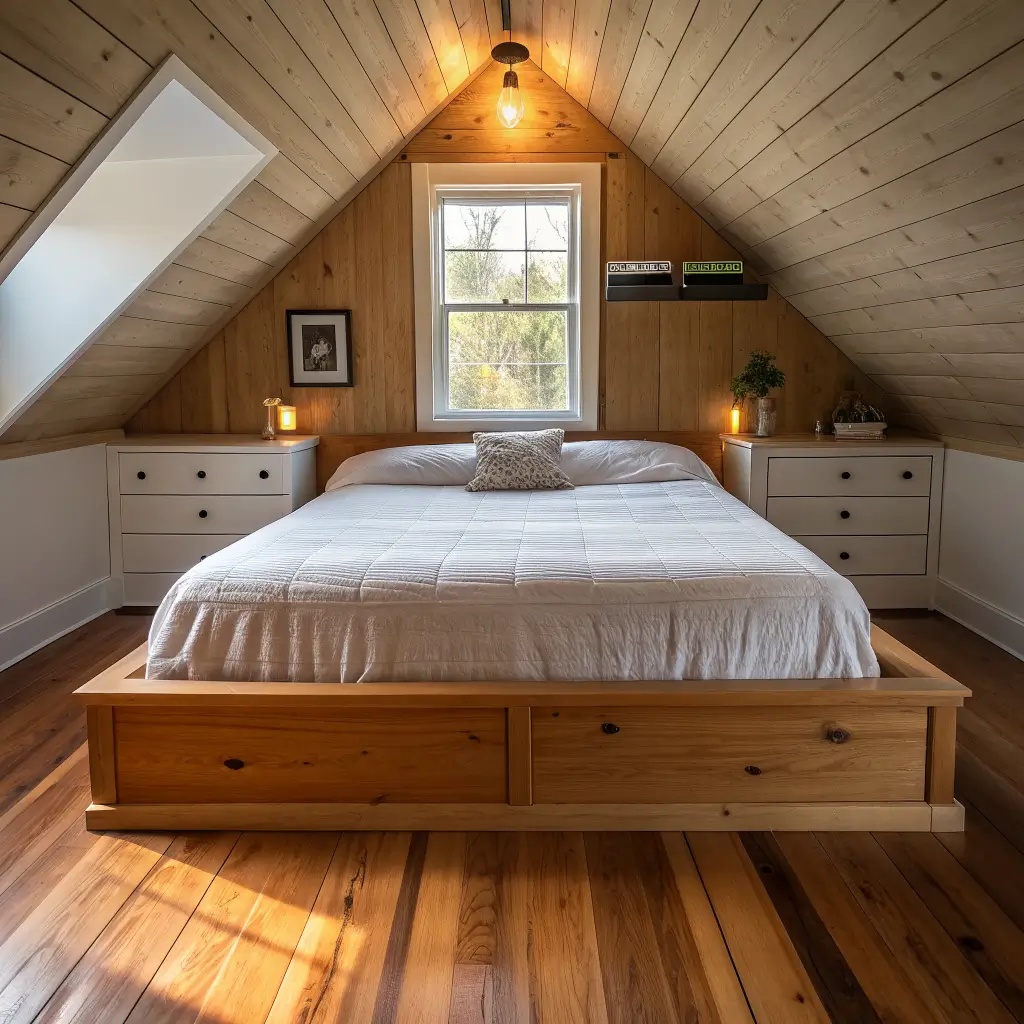
The bed is 60–70% of what you see when you walk in. In a small room I will not buy:
– A bed frame taller than about 14 inches at the deck
– A footboard
– A chunky upholstered headboard deeper than 4 inches
What I will buy: a low-profile platform bed with built-in drawers or a lift-up storage base, plus a 3-inch low-profile box spring if I need one. Lowering the mattress by even 4 inches makes the ceiling look taller — I noticed this immediately when I swapped a standard 9″ box spring for a 3″ one in my last apartment.
For the headboard, I like a slim upholstered headboard or a wall-mounted one. My current one is a plain oat-linen wall-hung panel about 2 inches thick. It reads as a bed, not a piece of architecture.
Downsize if you have to. A queen in a room under 100 sq ft can work, but if the only way to get there is squeezing past the bed sideways, go double. I know that’s not what anyone wants to hear.
Bedside: Skip the Nightstand If You Have To
Standard nightstands are 18–22 inches deep. In a tight room, that’s eating walking space.
Better moves:
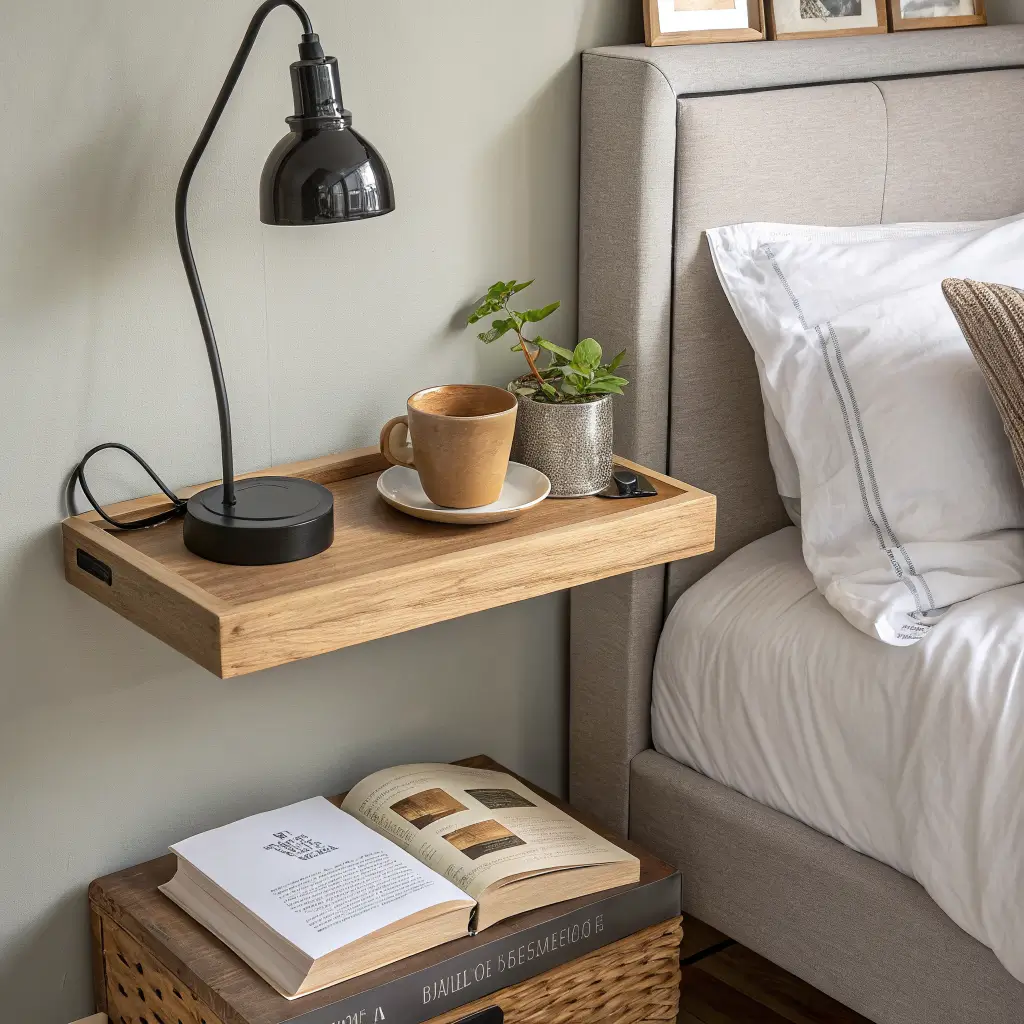
– Floating bedside shelves, 10–16 inches wide, mounted at mattress-top height
– Narrow nightstands, 10–14 inches deep (IKEA’s NORDLI and the slim cane-front nightstands at Target both work)
– Wall sconces or plug-in swing-arm lamps instead of table lamps so the shelf only has to hold a book and a glass of water
I’d put the cord-cover trick here: a $6 white plastic cord channel from a hardware store, painted to match the wall, hides a plug-in sconce cord and makes it look hardwired. I’ve done this in two rentals.
Storage: Build Up, Not Out
The single biggest mistake people make in small bedrooms is buying wide, low dressers. They eat floor space and leave the top three feet of wall empty.
What I do instead:
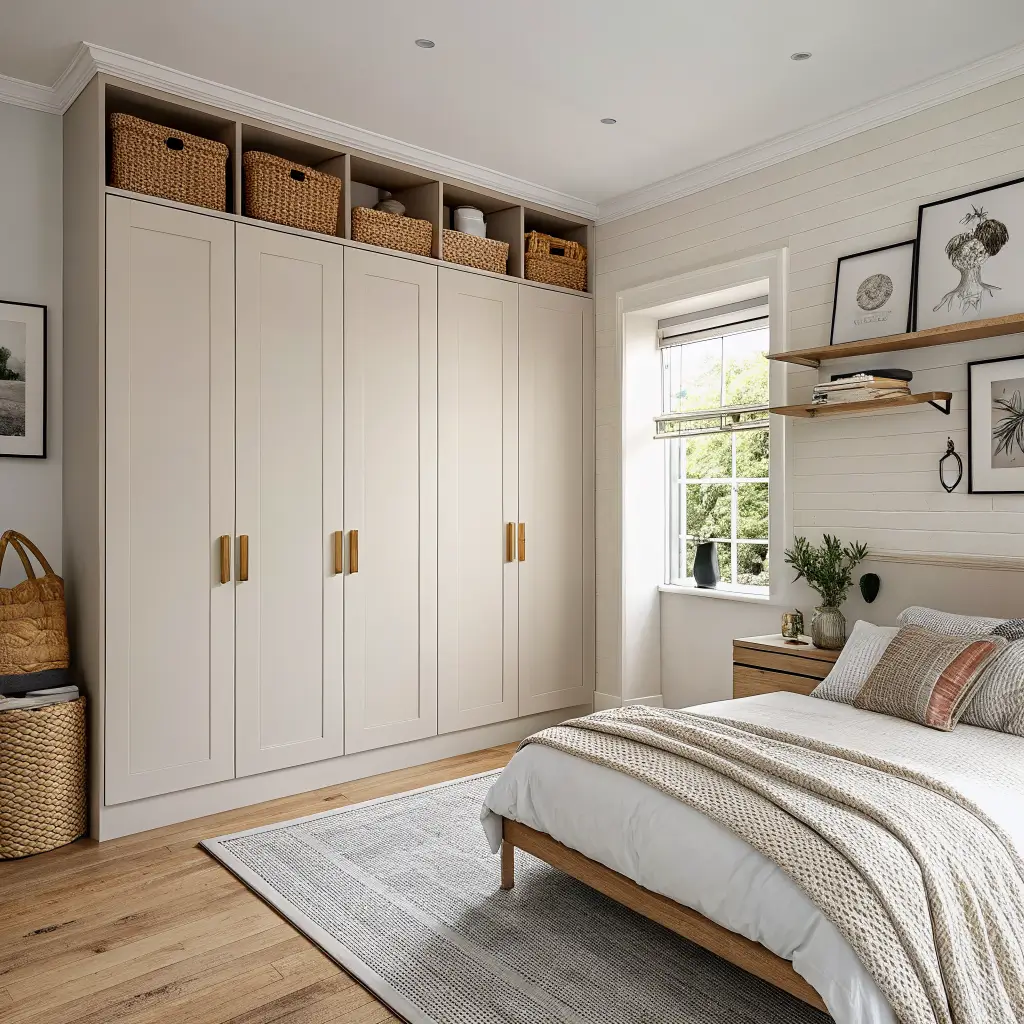
– One tall wardrobe, 7–8 feet high, on the wall with the least natural light. A basic PAX configuration runs $300–$600 depending on doors.
– Underbed storage — drawers in the frame, or wheeled boxes/zip bags if your frame is open underneath
– Picture ledges or shelves above the headboard (leave at least 12 inches of clearance from the top of the mattress so sitting up doesn’t feel like a guillotine)
– Over-door hooks for robes, bags, and the cardigan you wear every day
Rule of thumb: if a piece of furniture isn’t using its vertical space, replace it with something that does.
Windows, Curtains, and the Mistake Everyone Makes
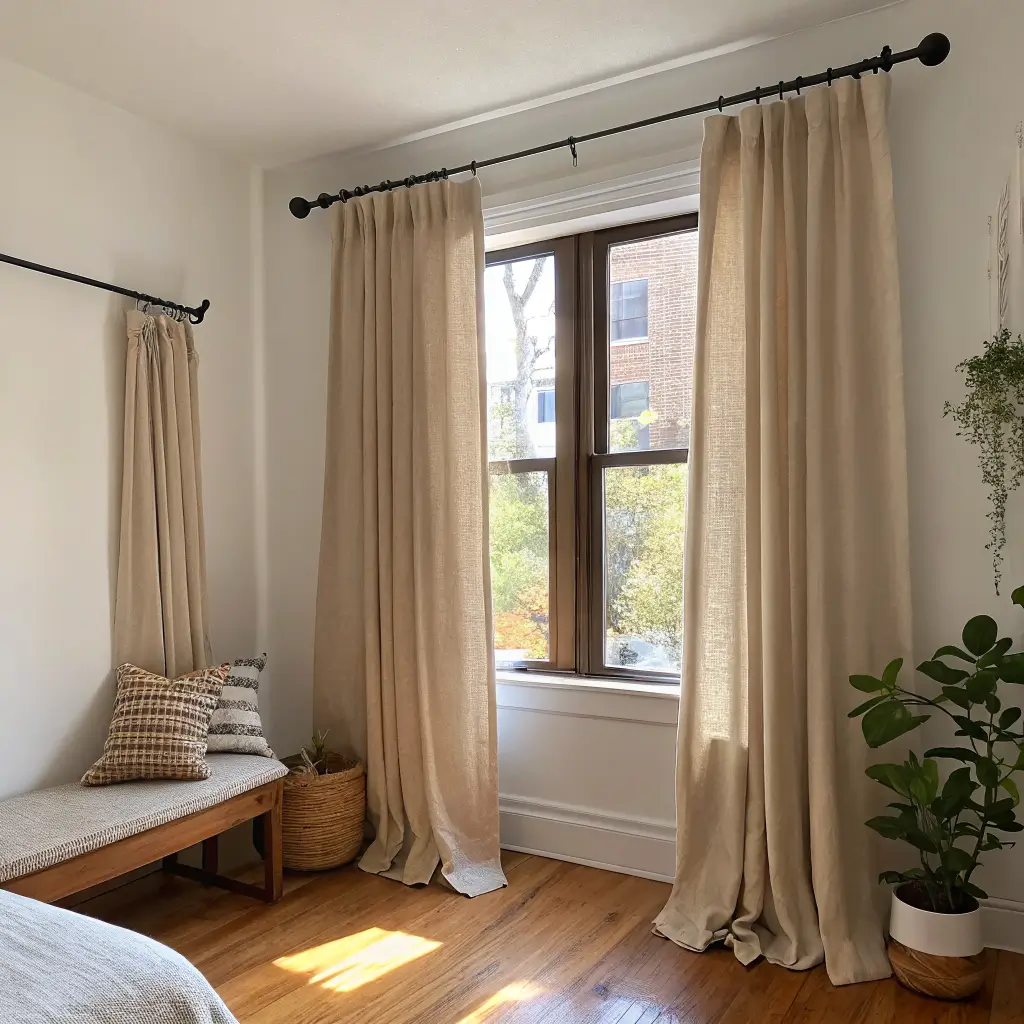
This is the one that changes a room more than people expect. Curtain rods hung right above the window frame, with curtains ending two inches above the floor, will make any small bedroom feel squashed.
What to do instead:
– Mount the rod 2–4 inches below the ceiling, or right at crown molding
– Extend it 6–10 inches past the window on each side
– Let the curtains kiss the floor — no floods, no high-waters
If curtains would crowd a corner (you have a wardrobe right next to the window, say), use a roman shade mounted inside the frame instead. Cleaner, no fabric bulk.
Light and Mirrors
A single overhead light makes a small room feel like a hotel hallway. You need at least three sources:
1. Overhead (flush mount if your ceilings are under 9 feet)
2. Bedside (sconces or small lamps)
3. A third soft source — a small dresser lamp, a clip light, or even battery taper candles for evenings
Use 2700K warm white bulbs. Cool white belongs in a kitchen.
For mirrors, hang one opposite or next to the window so it bounces daylight back into the room. A leaning floor mirror works if you don’t have wall space; mirrored wardrobe doors are the heavy-hitter move if you’re already replacing closet doors.
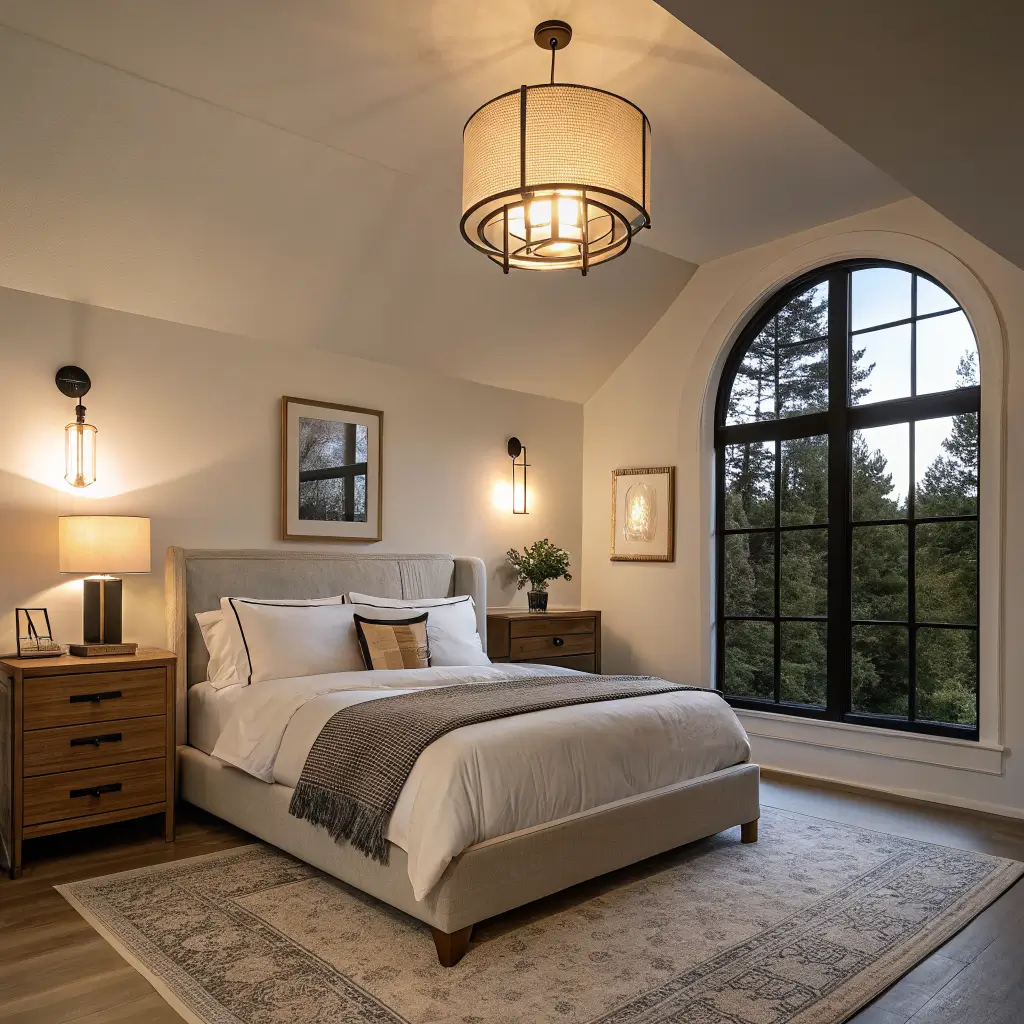
Color: Pick a Side
The research I trust on this is consistent and matches what I’ve seen in my own rooms: either go very light or very dark. Mid-tone walls will shrink the room.
What I’d actually pick:
– Light route: warm white (Benjamin Moore White Dove), soft greige (Sherwin-Williams Agreeable Gray), or a pale pistachio if you want personality
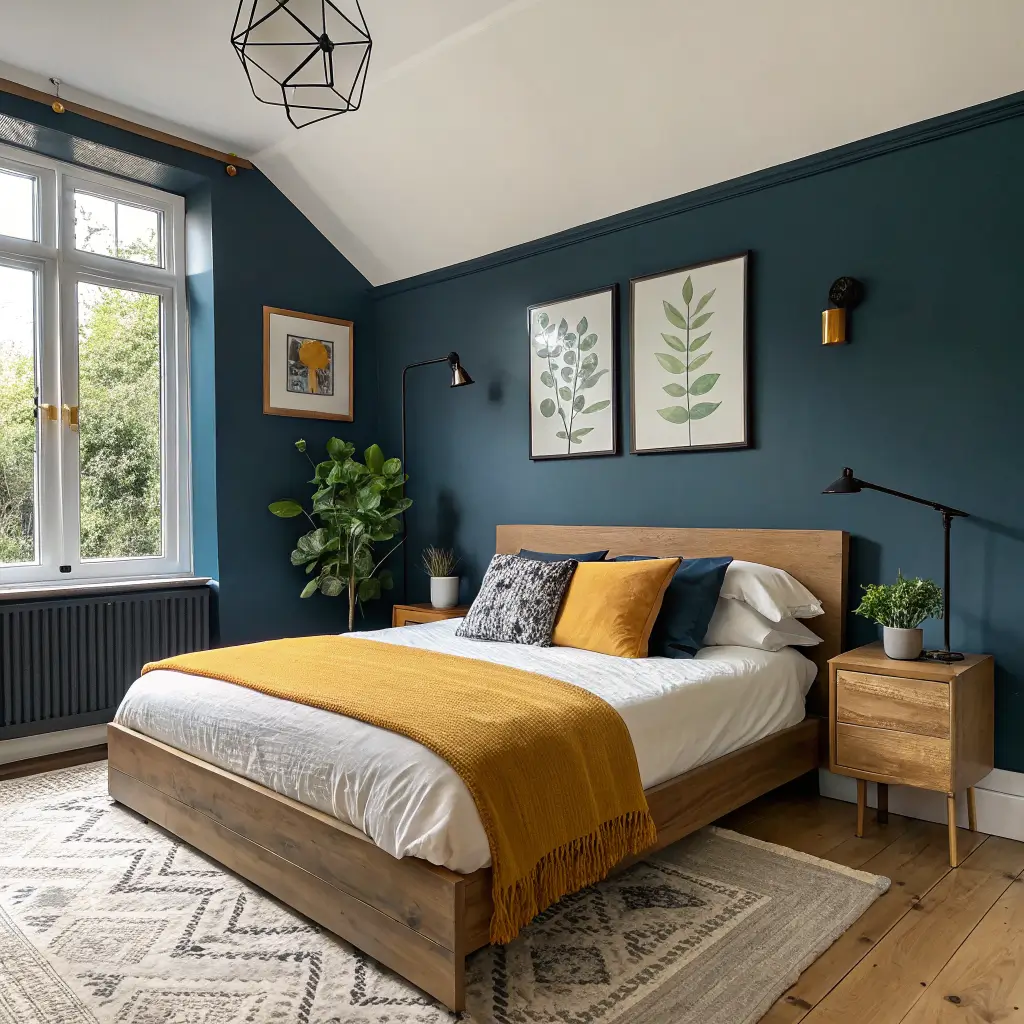
– Dark cocoon route: Farrow & Ball Hague Blue, Studio Green, or an inky near-black like Railings — paint the ceiling and trim the same color and it’ll feel deliberate, not gloomy
I painted my box room Hague Blue, including the ceiling, and it felt bigger, not smaller, because the corners blurred away. Counterintuitive but it works.
Avoid: muddy beiges, dusty mid-toned blues, and any color you can’t commit to fully.
Ground the palette with small hits of black — a black lamp base, black picture frames, black drawer pulls. Then pick one accent color and repeat it three times: a pillow, an art print, a small vase. That’s it.
Textiles and the “One Hero Pattern” Rule
Base layer: white or oat bedding with visible texture — washed linen, waffle cotton, or a subtle stripe. Boring on its own, perfect as a backdrop.
Then pick one hero pattern: a patterned duvet, a bold rug, a wallpaper, or a printed roman shade. Just one. Everything else stays tone-on-tone or solid.
For pillows: 2–4 large ones, not eight small ones. Two 22″ euros against the headboard, one 20″ lumbar in front. Done.
For the rug: it has to be at least the width of the bed and extend 18–24 inches past the sides and foot. A 5′ x 8′ rug under a full bed, a 6′ x 9′ under a queen. Anything smaller looks like a postage stamp.
Art and Walls
Hang art tall and vertical to pull the eye up. A single 24″ x 36″ print above the bed beats three small ones. If you want a gallery wall, take it close to the ceiling — leave only 4–6 inches of bare wall at the top.
In a really small room, the most surprising move is to wrap the whole space in one pattern — same wallpaper on all four walls and sometimes the ceiling too. It removes the corners visually and makes the room feel intentional rather than tiny.
Step-by-Step: How I’d Actually Set It Up
1. Empty the room. Everything out. You can’t plan around the dresser you’re about to get rid of.
2. Measure the room, ceiling height, window heights, and door swing. Tape out the bed footprint on the floor.
3. Paint and prep walls before anything else moves in. Patch, prime, paint ceiling and walls.
4. Mount the curtain rod high and wide while the room is still empty.
5. Place the bed first. Headboard usually on the shortest wall opposite the door. In a long, narrow room, position the bed perpendicular to break up the bowling-alley feel.
6. Set the tall wardrobe on the dimmest wall.
7. Mount sconces and shelves. Sconces around 50–60 inches off the floor, just past the edge of the mattress.
8. Lay the rug. Two-thirds of it should be under the bed.
9. Make the bed, hang one big piece of art, place the mirror.
10. Walk in from the doorway. Whatever feels visually heavy, move or remove.
Common Mistakes (I Have Made All of These)
– A king bed in a 10′ x 11′ room. I tried this in my second apartment. You can’t open the closet without crawling. Downsize.
– Curtains hung two inches above the window. Fixes more than paint sometimes does.
– A “reading chair” that becomes the laundry chair. If you don’t read in it, it’s not a reading chair.
– Wall-to-wall storage at waist height. The top half of the room is wasted. Go tall and skinny.
– One overhead bulb doing all the work. Add at least two more light sources.
– Seven competing patterns. Pick one hero, then stop.
Keep It Fresh Without Redoing the Room
Once the bones are right, updates should be cheap and fast.
Seasonal swaps:
– Summer: linen duvet cover, cotton throw, a stem of eucalyptus
– Winter: flannel sheets, chunky knit blanket at the foot, candles on the dresser
Budget refreshes that punch above their weight:
– Spray-paint old lamp bases matte black or brass
– New lampshades (often more impact than new lamps)
– Replace art prints — Etsy printables plus a $20 frame
– Rearrange: even just moving the bed to a different wall can reset the room
Style shifts using the same bones:
– Boho-Scandi: add a jute rug, a cane nightstand, a trailing pothos
– Modern coastal: cool whites, a navy stripe pillow, oak tones
– Tiny maximalist: one bold wallpaper, dark trim, gold-framed art stacked tall
The little bedroom I’m sitting in right now is 9′ x 11′. It has a queen bed, a 7-foot wardrobe, a tiny vintage desk that doubles as a vanity, and one fiddle leaf in the corner by the window. It took me three rearrangements and one returned dresser to get here. The version that finally worked was the one where I stopped trying to fit a “normal” bedroom into the room and started designing around the size it actually was.
That’s the whole trick.
Conclusion
The little bedroom ideas that worked for me came from a small bedroom that was not quite a closet. I bought a bed with drawers underneath, hung a shelf above the headboard for books, and added a mirror that reflected the window. The walls were white, the bedding was light gray, and the only color was a single plant on the windowsill. The room felt like a nest, not a cage, because every inch had a purpose.
More Decor Ideas to Explore
- Little Kitchen Ideas That Actually Work in 40–120 Square Feet
- The Complete Guide to Luxurious Bathrooms: What Actually Makes a Bathroom Feel High-End
- Coastal Eclectic Decor: How to Get the Collected Beach-House Look Without the Gift-Shop Vibe
- The Coastal Farmhouse Look, Done Right: A Real Guide to Beachy Farmhouse Decor That Doesn’t Feel Like a Theme Park