The Coastal Farmhouse Look, Done Right: A Real Guide to Beachy Farmhouse Decor That Doesn’t Feel Like a Theme Park
Coastal farmhouse decor goes sideways the minute you add one too many starfish. I learned that the hard way after a Target run in 2021 left my mantel looking like a souvenir shop in Cape May. The fix wasn’t more stuff — it was less, better, and arranged with some restraint.
If you want the airy, lived-in feel of a beach cottage with the warmth and structure of farmhouse style — without the rope-and-anchor cliché — here’s how I actually pull it off in my own house.
What Beachy Farmhouse Actually Is (and Who It Suits)
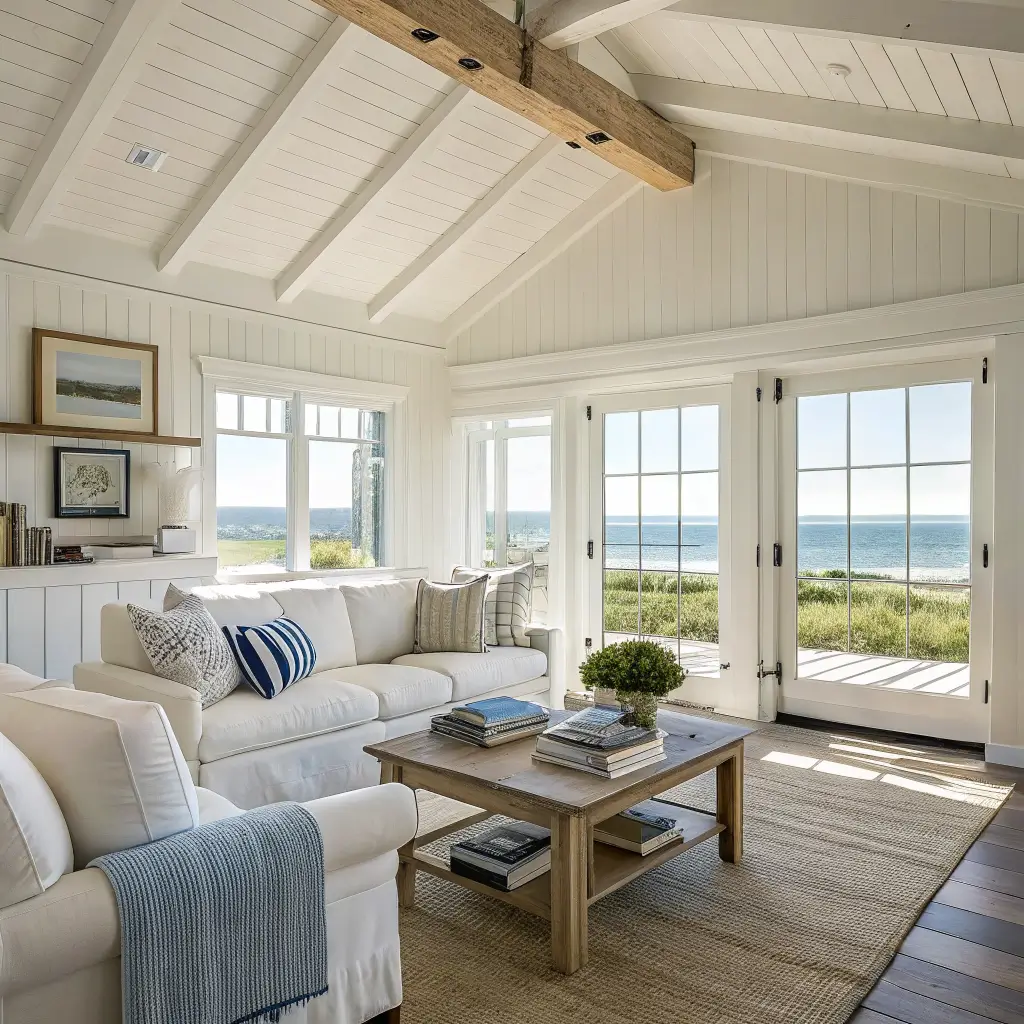
Strip it down and the style is two things layered together: the weathered woods, slipcovers, and utilitarian bones of farmhouse, plus the pale palette, woven textures, and breeziness of a beach cottage. The result reads relaxed and curated. Not rustic. Not nautical. Somewhere in between.
It works for people who:
– Like farmhouse but find it too dark, too “Live Laugh Love”
– Want a coastal feel without bright turquoise and shell wreaths
– Have kids, dogs, or sandy feet and need fabrics that can take it
– Prefer fewer, better pieces to maximalist shelves
I’ve done this style in a 220-square-foot rental living room and again in a 480-square-foot open-concept main floor. It scales. What it needs is light — natural if you have it, layered lamps if you don’t.
Time and Money: What This Actually Costs
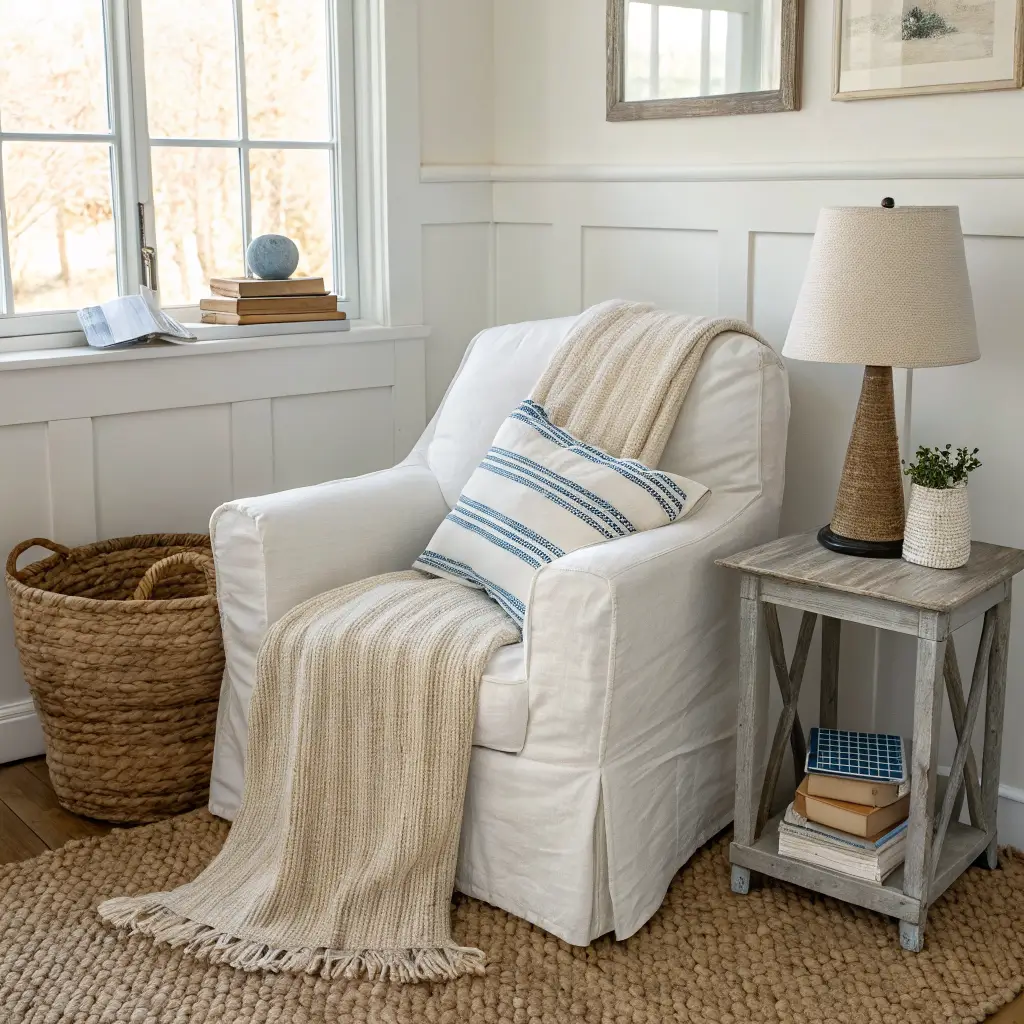
A weekend refresh (paint, pillows, a rug, a few accents): $400–$1,000. Paint runs $45–$80 a gallon for the warm whites I use. A solid 8×10 jute rug is $150–$350. Pillow covers, $20–$60 each.
A full room redo (sofa, rug, lighting, coffee table, decor): $1,500–$4,000. A slipcovered sofa lands in the $900–$2,000 range. A whitewashed wood coffee table, $250–$700. A woven rattan pendant, $150–$600.
Whole main floor with custom pieces: $6,000–$20,000+ once you add a sectional, a real wool rug, dining set, and built-ins.
Plan 3–6 weeks for anything bigger than a refresh. Sofas and rugs ship slowly, and the woven pendants always seem to backorder.
The Color Palette I Actually Use
The mistake most people make is reaching for “coastal blue” and ending up with a swimming pool. I keep the palette quiet.
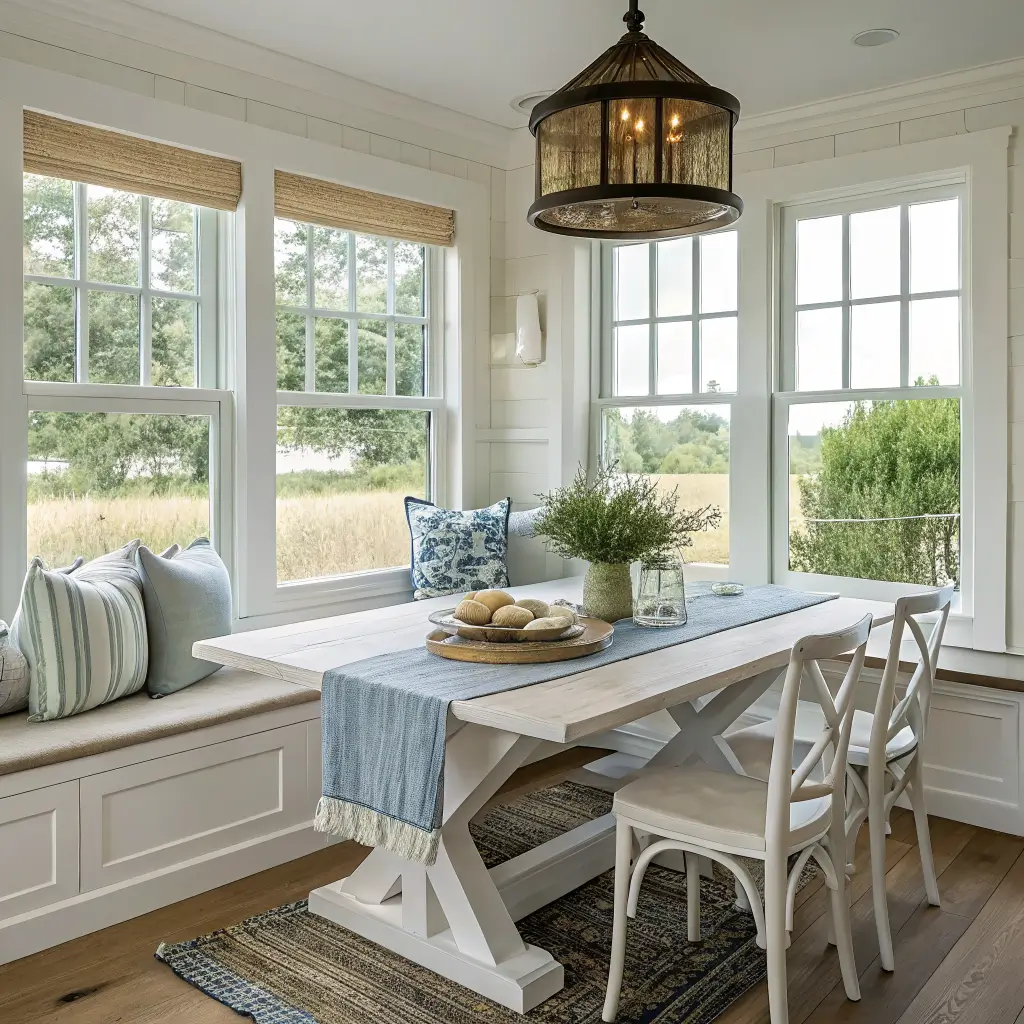
Walls: a warm white. I’ve used Benjamin Moore Swiss Coffee in two homes and Sherwin-Williams Alabaster in another. Both read creamy without going yellow. Skip cool whites — they fight the wood tones.
Accents:
– Blues: sea glass, foggy gray-blue, hazy denim. Navy only in small doses (a pillow, a lamp base).
– Greens: seafoam, muted sage. Think dried beach grass, not Kelly green.
– Neutrals: sand, oat, driftwood gray, warm greige.
Stripes are the pattern workhorse here — blue/white, gray/white, sand/white. Use them on pillows and throws. Florals will pull you toward English cottage, which is a different style entirely.

The Materials That Make It Work
This is where the look lives or dies. Get the textures right and the rest falls into place.
– Woods: whitewashed oak, weathered pine, driftwood tones. One reclaimed beam or vintage trunk is plenty.
– Woven fibers: jute, sisal, and seagrass for rugs; rattan and wicker for baskets and chairs.
– Textiles: washed linen, cotton, chunky knit throws. Crumpled linen bedding is the bedroom move.
– Metals: black or oil-rubbed bronze for hardware (the farmhouse edge), brushed brass or pewter in lighting (the warmth).
– Coastal hints: rope, sea-glass-colored bottles, driftwood, the occasional shell or piece of faux coral.
The Hero Pieces
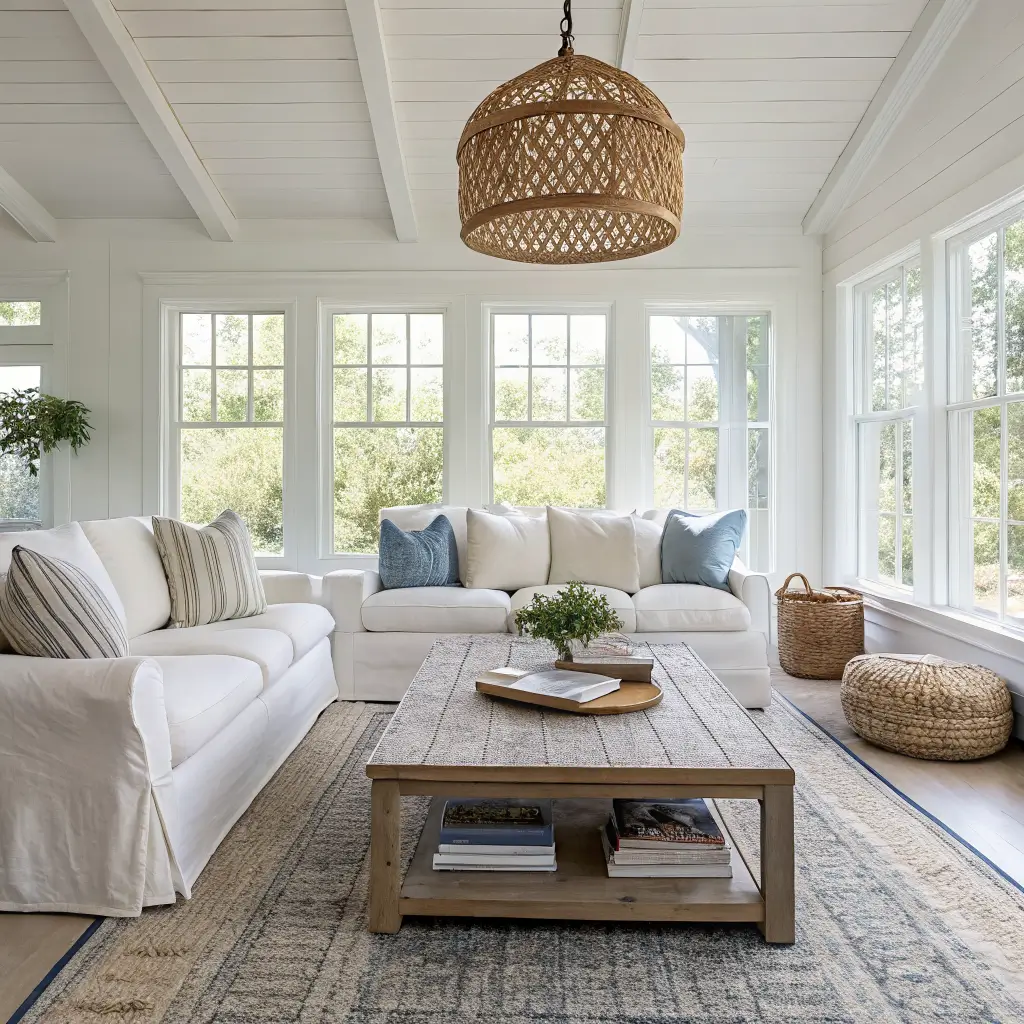
You can spend on accessories all day and still not get the look without these four anchors:
Slipcovered sofa, 84–96 inches, ivory or linen. A bench cushion looks cleaner than three separate cushions. Get it in a performance fabric if anything in your house sheds, spills, or has sticky hands. $900–$2,500.
Jute or seagrass rug as your base layer. 8×10 minimum under a living room sofa, 9×12 if your seating floats. $150–$700. I layer a softer flatweave or vintage Turkish rug on top in winter for warmth and pattern — pull it off in summer for the bare jute look.
A farmhouse dining table with a beachy twist. Trestle or pedestal base, whitewashed or natural wood top, 72–96 inches. $600–$2,000. Pair it with cross-back chairs ($100–$250 each) or mix in a bench on one side to keep it casual.
One oversized woven light fixture. This is the piece that pulls the whole style together. A rattan chandelier or woven lantern pendant over the dining table or kitchen island, $200–$800. Skip the small ones — coastal farmhouse lighting wants scale.
How I Put a Room Together
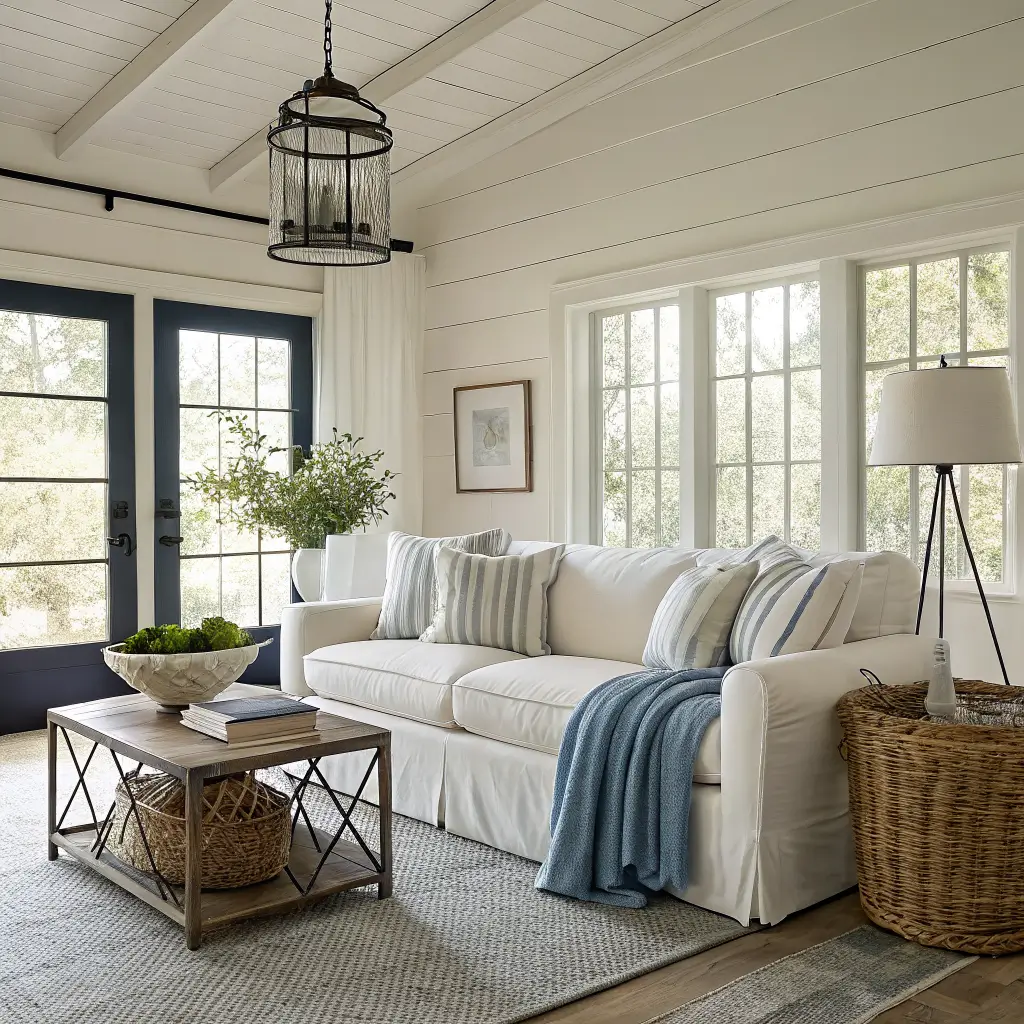
The order matters. I’ve redone my living room three times and the times it didn’t work were the times I started with accessories.
1. Paint first. Walls in the warm white. If your floors are dark and yellow-toned, that fights the style — a pale stain or even painted floors in soft gray-white changes everything.
2. Big furniture in. Sofa facing the light or fireplace, not the TV if you can help it. Coffee table with clean lines.
3. Layer the rugs. Jute first, then a softer rug on top 6–12 inches smaller on each side so the jute borders show.
4. Lighting hierarchy. Overhead woven fixture, then table lamps with ceramic or wood bases and linen shades, then a sconce if you can swing it. Three sources of light minimum per room.
5. Textiles. Four to eight pillows on the sofa, no more than three colors total. One oatmeal knit throw, one striped throw. Done.
6. Curate the surfaces. Trays, books, a wood bowl, one bottle of sea glass blue glass, a small plant. Group in threes and fives, mix heights.
7. Remove 10–20%. This step is non-negotiable. Step back, take a phone photo (the camera shows clutter your eye stops seeing), and pull pieces until it breathes.
The Rule I Live By: Two Coastal Items Per Room
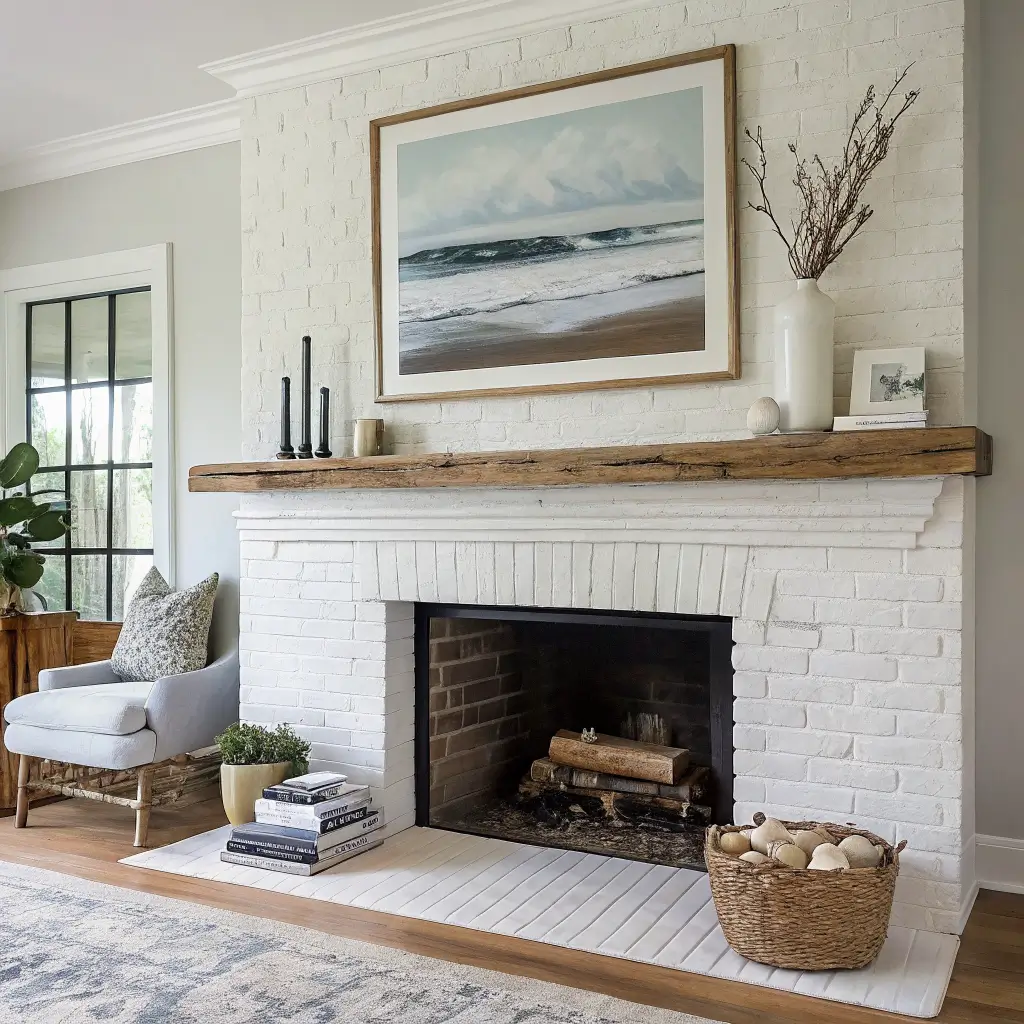
This is the single guideline that keeps the style from tipping into souvenir shop. Limit overt nautical or beachy objects to one or two per room. A bowl of shells on the coffee table and a single piece of driftwood on the mantel is plenty. Add a third and you’re at theme-party territory.
For art, I go abstract seascape or soft landscape print over anything with a literal lighthouse, anchor, or “BEACH →” arrow sign. A muted oil-style ocean horizon does more work than ten shell shadowboxes.
Where to Spend, Where to Save
Spend on:
– The sofa. A cheap slipcovered sofa pills, sags, and reads sad within a year.
– The base rug if it’s wool. Jute is fine cheap, but a soft top rug in real wool is worth it.
– The overhead light fixture. It’s the focal point.
Save on:
– Pillow covers. I buy linen and stripe covers from Amazon and TJ Maxx for $15–$30 and swap inserts.
– Baskets. HomeGoods and thrift stores are full of them, $10–$40.
– Coastal accents. The shells should be ones you actually picked up at a beach. The driftwood too. Free is better than $45 at West Elm and looks more authentic anyway.
– Art. A large abstract print from Etsy in a thrifted frame beats a small gallery piece for impact.
Mistakes I Made So You Don’t Have To
Going too rustic. My first attempt leaned full farmhouse — distressed wood everywhere, a galvanized metal star above the TV, barn-red plaid. It felt heavy and dim. The fix was painting the dark console white, swapping the plaid for stripes, and getting rid of the metal star entirely.
Too much white, no contrast. Second attempt overcorrected. All white walls, white slipcover, white pottery, oatmeal rug. It looked washed out and a little sad. I added black window frames (cheap stick-on trim, surprisingly convincing), a black iron lantern pendant, and a dark abstract print. Suddenly the room had bones.
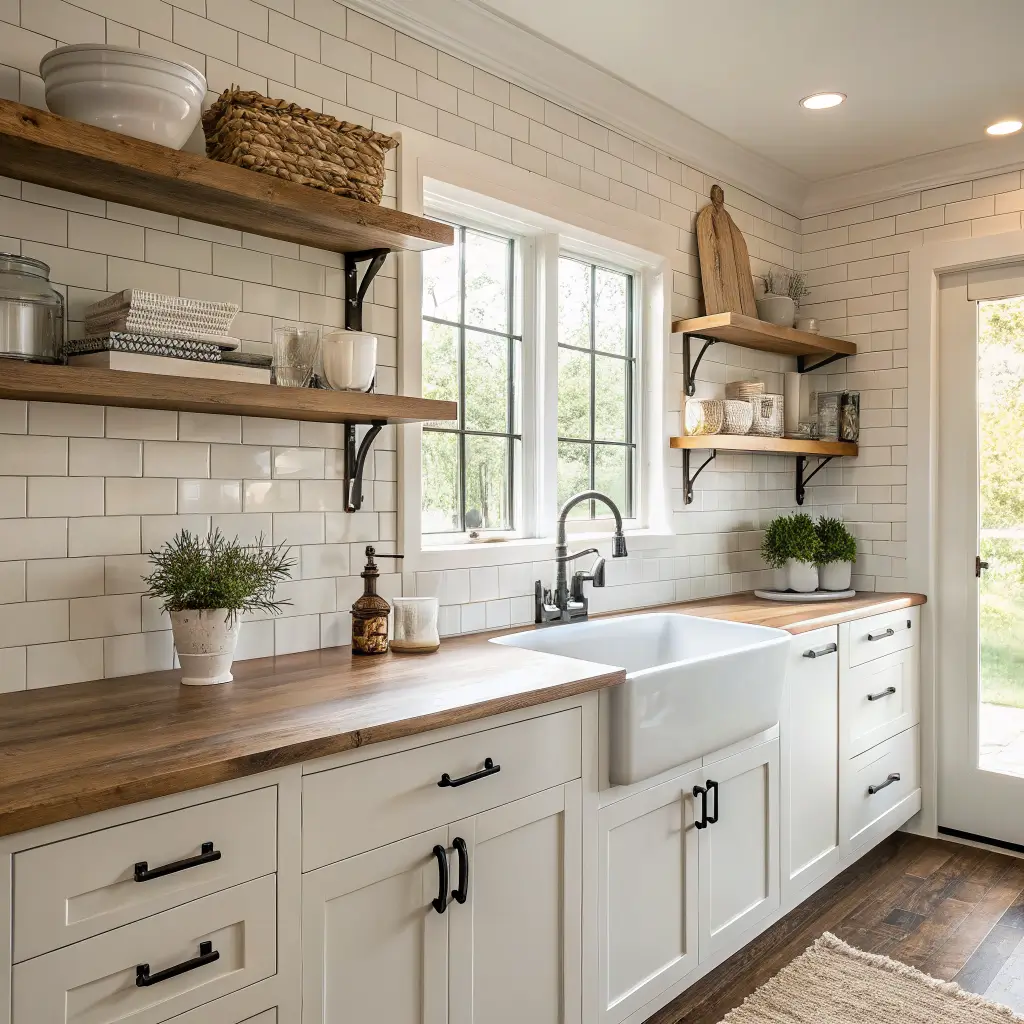
Crowded shelves. Open shelves in my kitchen ended up looking like a flea market booth. I edited down to vintage books stacked horizontally, one ironstone pitcher, two wood bowls, and a single trailing pothos. Better.
Fussy fabrics in a family room. Linen looks great. Pure linen with a toddler and a beagle looks great for about eleven days. Performance linen blends and washable slipcovers are non-negotiable in real life.
Room-by-Room Notes
Living room: the main stage. Slipcovered sofa, jute base rug, woven pendant or large lantern, mantel as focal point with one piece of art and one coastal accent.
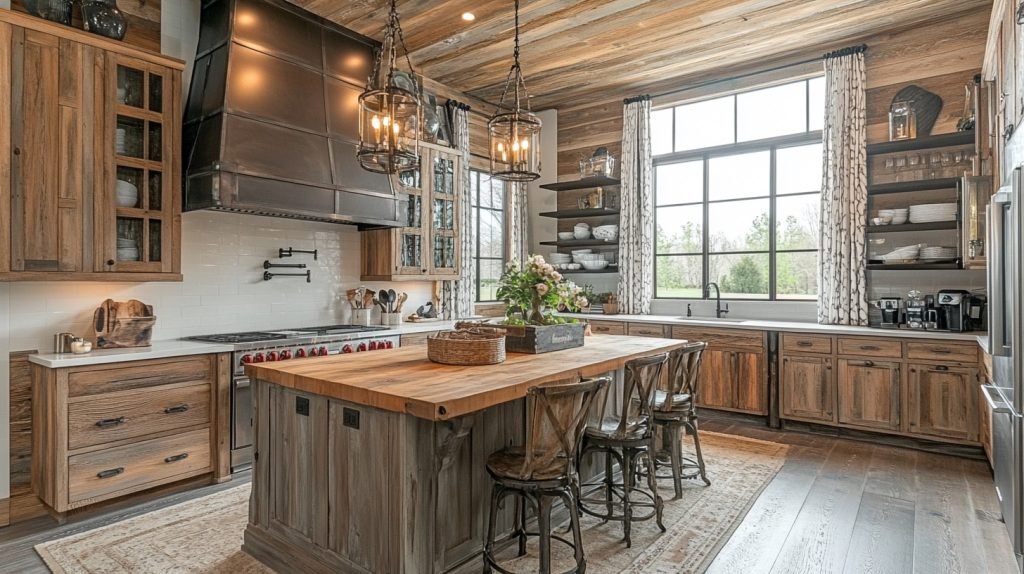
Kitchen and dining: shaker cabinets in soft white, black hardware, mixed wood open shelving, a long farmhouse table with woven or cross-back chairs, the big rattan pendant overhead.
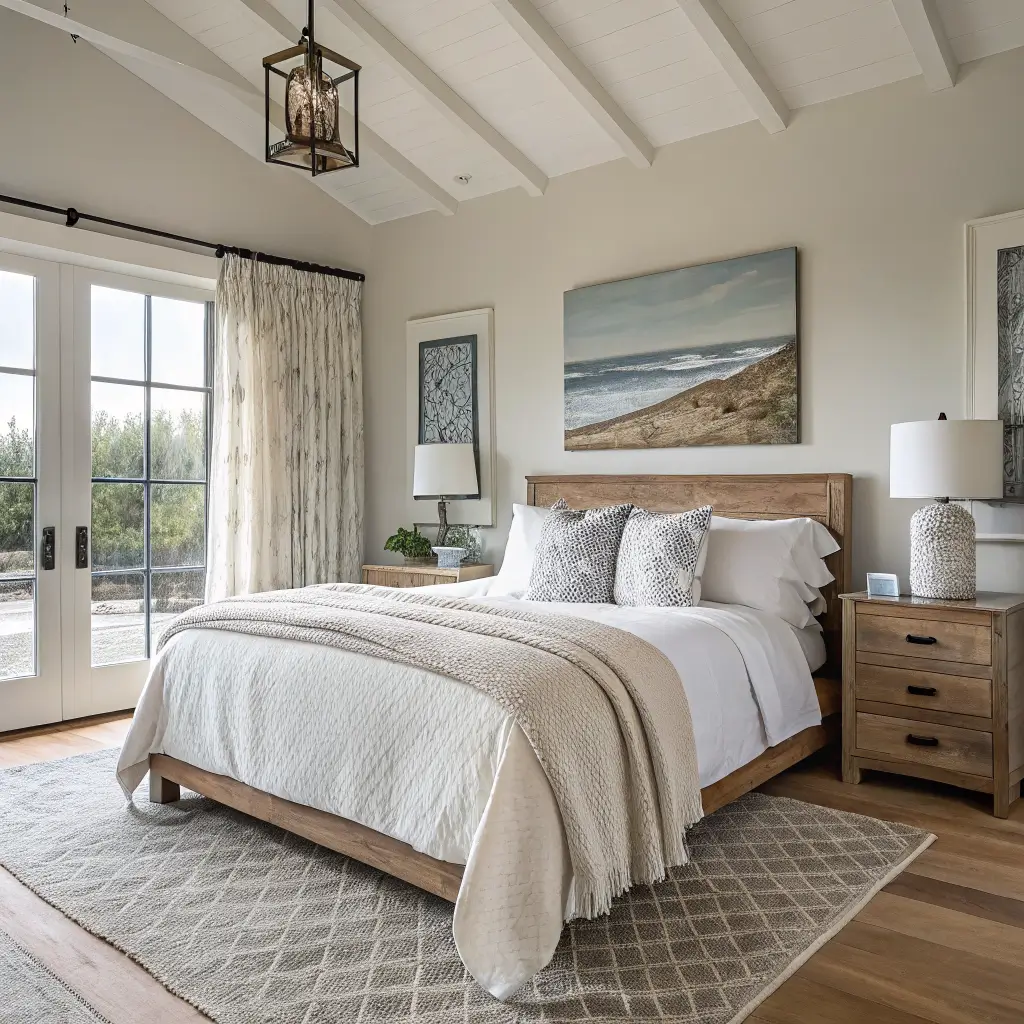
Bedroom: keep it quiet. Simple wood bed frame, crumpled linen bedding in white or oat, one layered throw, one piece of calm art above the bed. Resist the urge to add seashells. The bedroom is where coastal farmhouse should feel almost monastic.
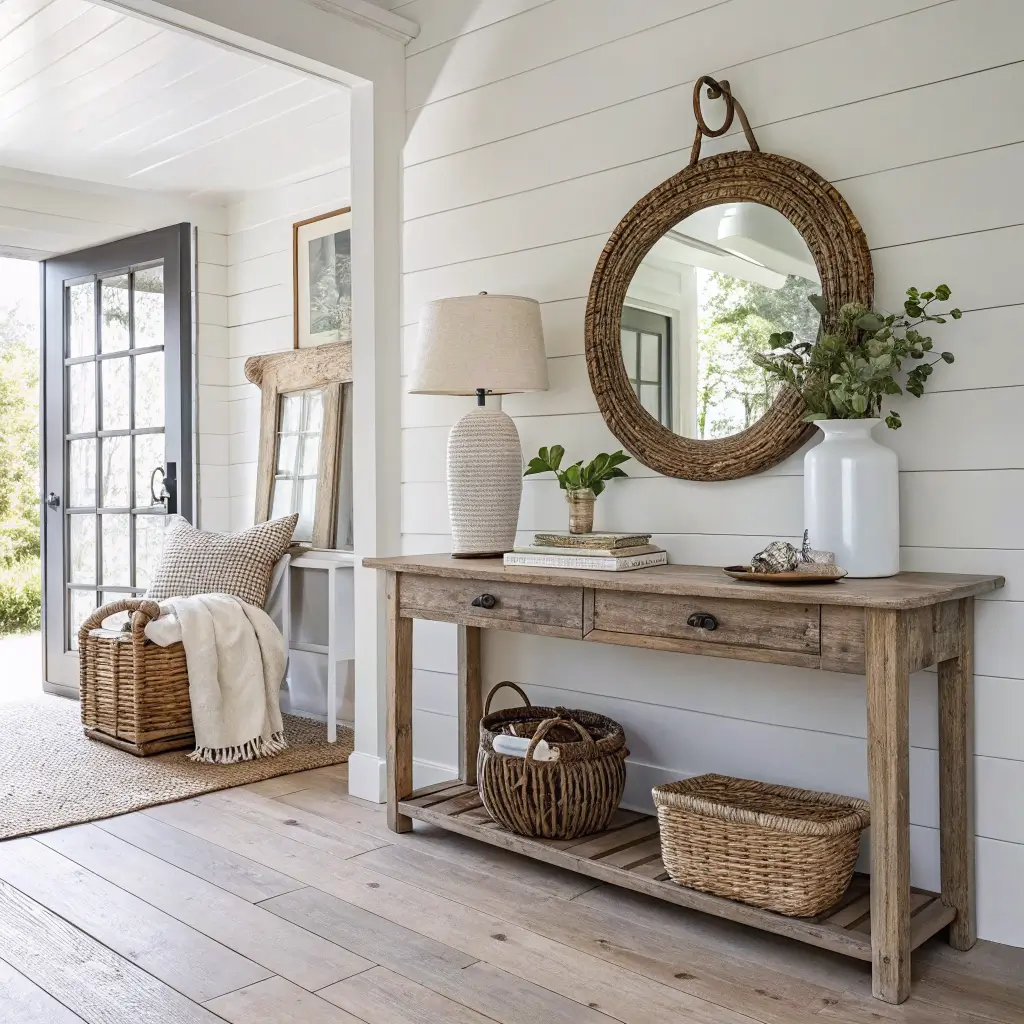
Entryway: weathered console, woven basket below for shoes, a round mirror, one ceramic lamp. Hooks if you’ve got the wall for them.
Bathroom: white subway tile with warm gray grout (not bright white grout — it ages badly and looks stark), a teak bath mat, a woven hamper, linen shower curtain.
Seasonal Swaps That Take Twenty Minutes
The base stays the same year-round. What rotates is small.
– Spring/summer: sea glass and white pillow covers, a glass vase of beach grass or eucalyptus, striped Turkish towels rolled in a basket by the door.
– Fall/winter: swap to camel and rust pillow covers, add a wool or faux-fur throw, lean harder on candlelight, bring in darker woven textures like a brown rattan tray.
I keep off-season pillow covers and throws in a labeled basket in the linen closet. Five minutes per swap, no shopping required.
How to Keep It Looking Right Over Time
The style drifts if you don’t check yourself. Every time I bring something new in, I run it through three questions: does the color fit my palette, does the material fit my existing textures, and does it feel relaxed rather than formal? If it fails one, it doesn’t come in.
Edit your accessories every few months. Use closed storage — buffets, baskets, a TV console with doors — for the everyday mess. Open surfaces are for the curated few.
And keep the coastal stuff honest. The best piece in my living room is a chunk of driftwood my daughter found on a beach in Maine. It cost nothing and it’s the one thing I’d grab in a fire.
The beachy farmhouse style in my home works because I let the wood and linen do the talking instead of adding more decor.
Conclusion
The beachy farmhouse that felt right to me was in a kitchen where the table was a reclaimed barn door, the chairs were painted the palest blue, and the centerpiece was a galvanized bucket of hydrangeas cut from the yard. The owner wore an apron that had been washed so many times it felt like linen, and there was always flour on the counter because she baked on Saturdays. That is the style — not staged, but lived.