Coastal Eclectic Decor: How to Get the Collected Beach-House Look Without the Gift-Shop Vibe
Coastal eclectic decor is what you want when standard beach-house styling feels too matchy and a little dated, but you still love the airy palette and the pull of the ocean. The trick is mixing eras and sources — a rattan chair you found on Marketplace, a linen sofa, a weird old barometer from an estate sale, one good landscape painting — so the room reads “person who travels and reads” instead of “rented this house for a week in July.”
I redid my own living room this way last spring after living with a too-themed setup for three years. The shell-shaped throw pillows had to go. So did the framed sign that said “BEACH” in driftwood letters. Below is exactly how I’d build it now if I were starting over.
What This Look Is and Who It’s For
Coastal eclectic is a hybrid. You keep the seaside palette and natural materials of classic coastal, then mix in vintage finds, art from different periods, and textures that don’t all belong to the same catalog. It overlaps with boho coastal (more pattern and plants), modern coastal (cleaner lines, more breathing room), and collected vintage styling.
It’s right for you if:
– You like beach-inspired calm but hate themed rooms
– You collect things — books, ceramics, weird objects from trips
– You want a look you can build over time, not order in one cart
– You rent or own a small-to-medium space and need it to feel layered without being cramped
Where it works best: living rooms, bedrooms, sunrooms, entryways, bathrooms, dining rooms, and covered porches. It’s strong year-round, with seasonal shifts handled through textiles.
Time and budget reality check: A pillow-rug-art-and-accessories refresh runs about $150–$500 and takes a weekend. A fuller room — new rug, lighting, an occasional chair, wall pieces — lands around $800–$3,000+ and is better built across a few months so you can hunt for the good vintage bits instead of panic-buying.
Skill level is beginner to intermediate. The hardest part isn’t physical. It’s editing.
The Palette and Materials That Make It Work
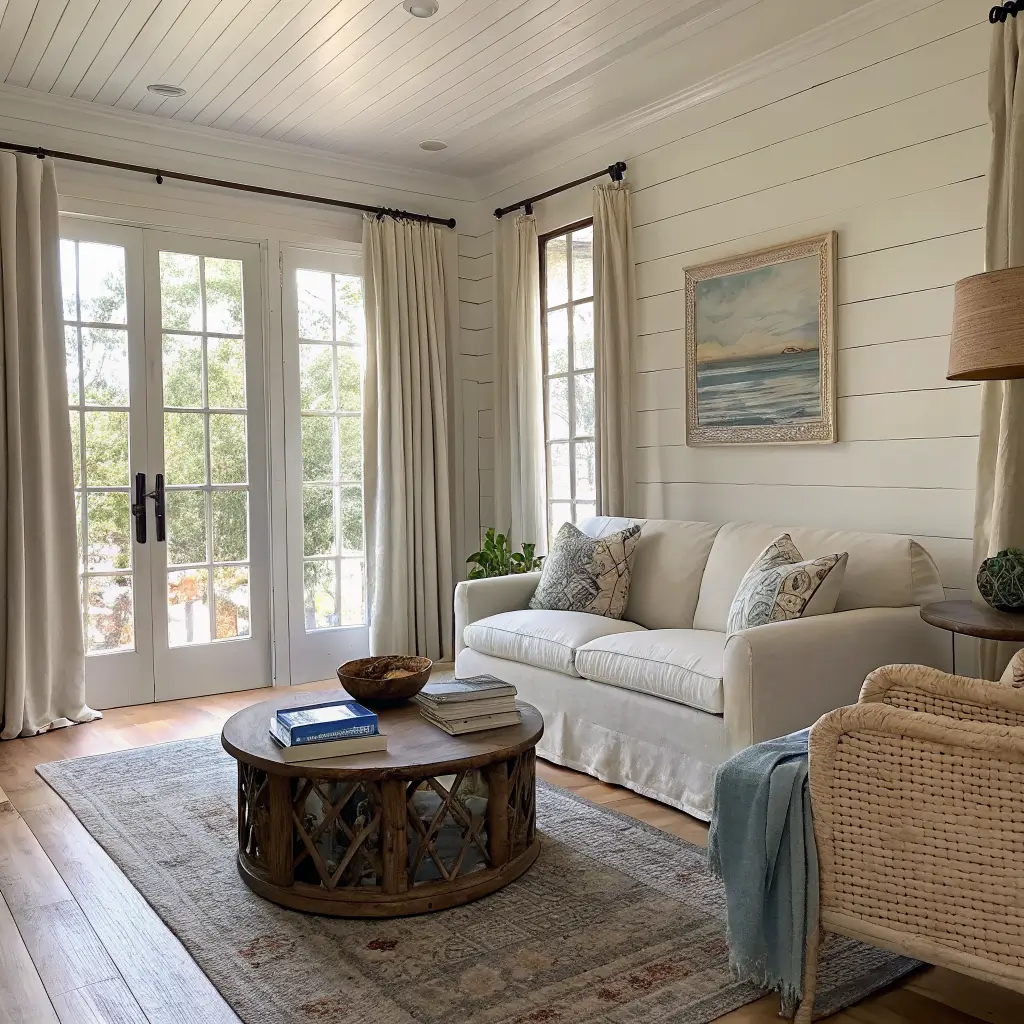
Keep your main palette in whites, creams, beige, sand, and driftwood gray, with soft blue or seafoam as a quiet through-line. Save the louder colors — navy, muted teal, terracotta, coral, mustard — for accents only. One throw, one vase, one painting. Not all three on the same console.
Materials to repeat:
– Rattan, wicker, and bamboo for chairs, pendants, or baskets
– Jute and seagrass for rugs
– Driftwood and weathered woods for tables, frames, and small objects
– Linen and cotton for upholstery, slipcovers, curtains, and pillows
– Glass and ceramic for lamps and vases
– Rope and brass in small doses, for hardware and detail
The rule I follow: repeat each material at least twice in the room, but not more than three times. Rattan in a chair and a pendant — yes. Rattan in a chair, pendant, side table, basket, and tray — now it’s a Pier 1.
Hero Pieces: What to Actually Buy
These are the anchors. Spend here.
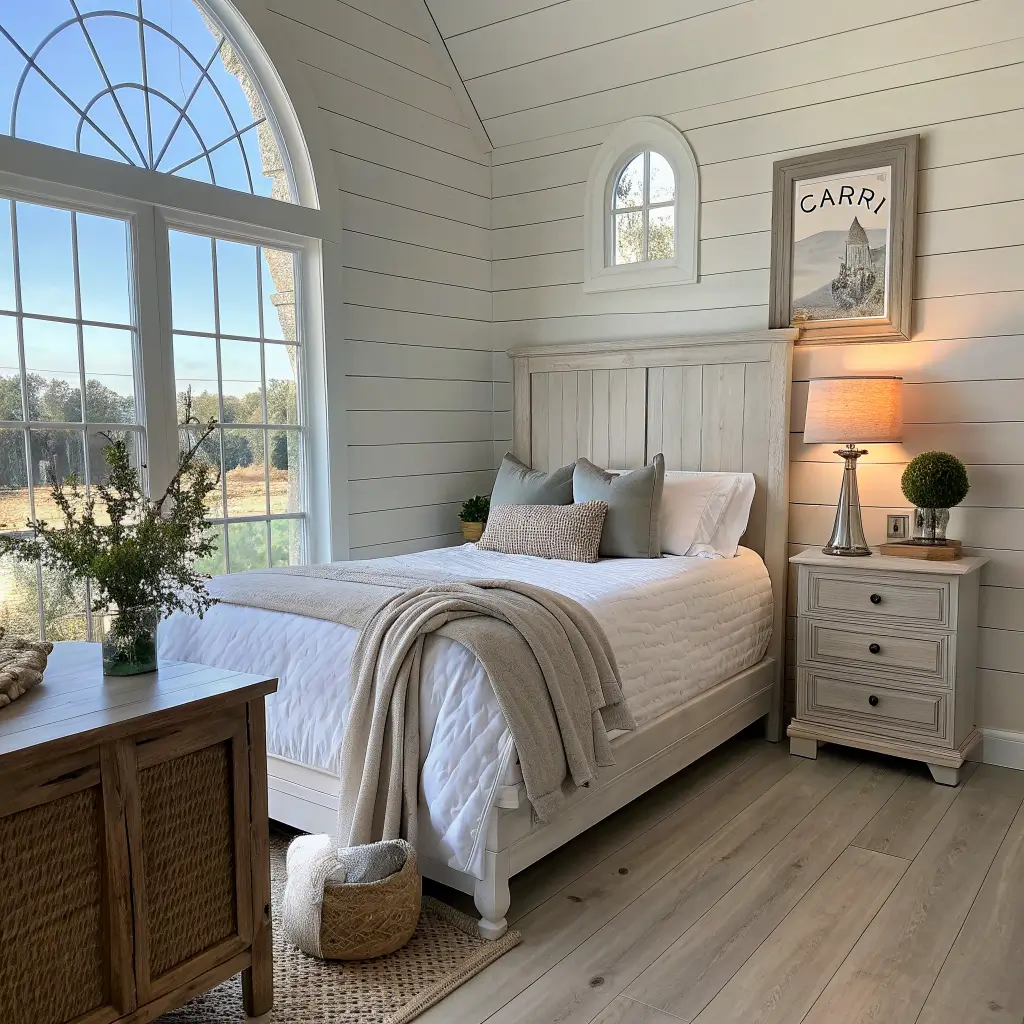
– A neutral upholstered sofa in linen, cotton, or a washable slipcover. White, oatmeal, or sand. Skip the bold prints.
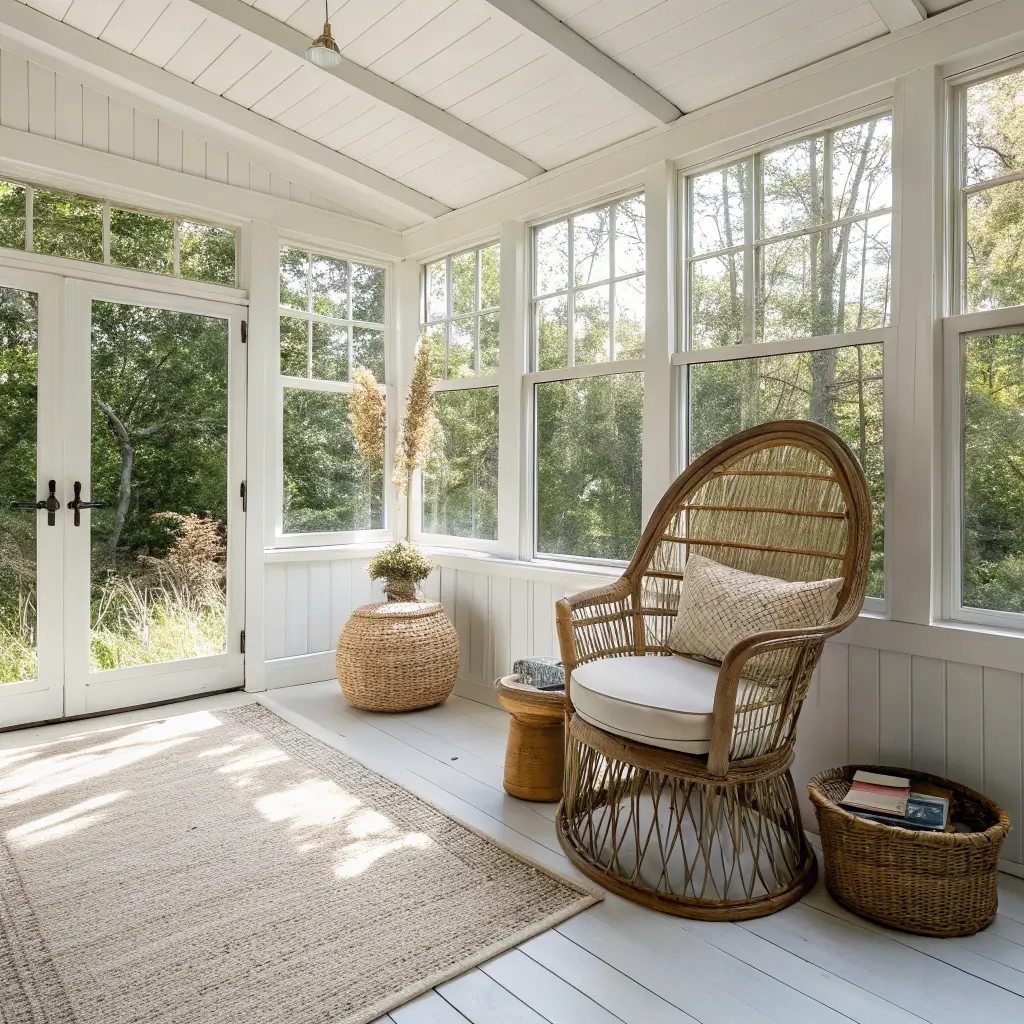
– One rattan or wicker accent chair. This is your character piece. Vintage is better than new — sturdier and cheaper if you’re patient on Marketplace.
– A natural-fiber rug, jute or seagrass, in the largest size your room can handle. Expect $80–$400+ depending on size.
– A light-wood or driftwood-finish coffee table or console. Round shapes soften the room if everything else is rectangular.
I bought a new sisal rug from a big-box site for my first attempt and returned it — too scratchy underfoot for a room with a sofa you actually sit on. A flat-weave jute with a cotton backing was the fix. Worth the extra $90.
The Supporting Cast
This is where coastal eclectic earns the “eclectic” half. Mix sources.
– Linen pillow covers in solids, subtle stripes, and one organic pattern. About $20–$60 each. Three to five on a sofa, varied sizes.
– A cotton or gauze throw draped over one arm, not folded perfectly
– Ceramic vases in different heights and finishes — matte, glazed, raw
– Glass lamp bases with linen shades, plus a brass or aged-metal lamp somewhere else for contrast
– Baskets for storage and texture, ideally one large floor basket near the sofa
– Framed coastal art, $30–$200+. Aim for one real landscape or seascape, not a set of three identical prints
– One or two vintage finds: an old brass compass, a porthole mirror, a salvaged boat cleat used as a bookend, a 1970s travel poster from Maine or Capri, a chipped ceramic float
The vintage layer is what keeps the room from looking like a furniture-store vignette. Hunt at estate sales, flea markets, Etsy, eBay, Facebook Marketplace, and antique malls. My favorite piece in my own living room is a $14 brass ship’s barometer I found at a church sale. It does nothing. It looks great.
How to Put It Together, Step by Step
Step 1: Strip the room. Pull everything off surfaces and walls. Get rid of the obvious offenders: anchor plaques, cartoon fish art, lighthouse figurines, beach-word signs, anything with a starfish glued to it. If you’re not sure, it goes in a box for a week. If you don’t miss it, donate it.
Step 2: Lay the rug and place the big furniture. Sofa, chair, coffee table. Leave at least 18 inches between the sofa and coffee table so people can actually move.
Step 3: Soften with textiles. Pillows, throw, curtains in linen or cotton. Curtains should hang from just below the ceiling to the floor — short curtains kill the airy feeling instantly.
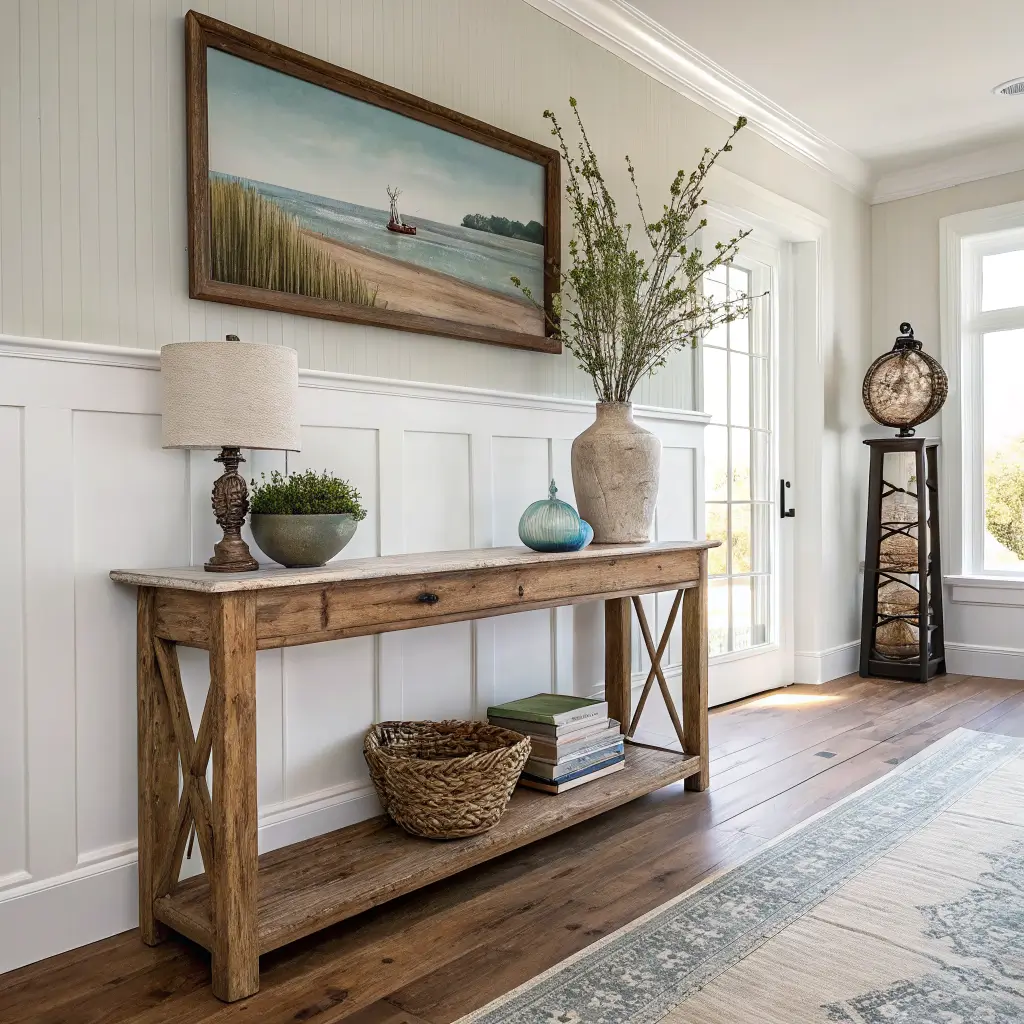
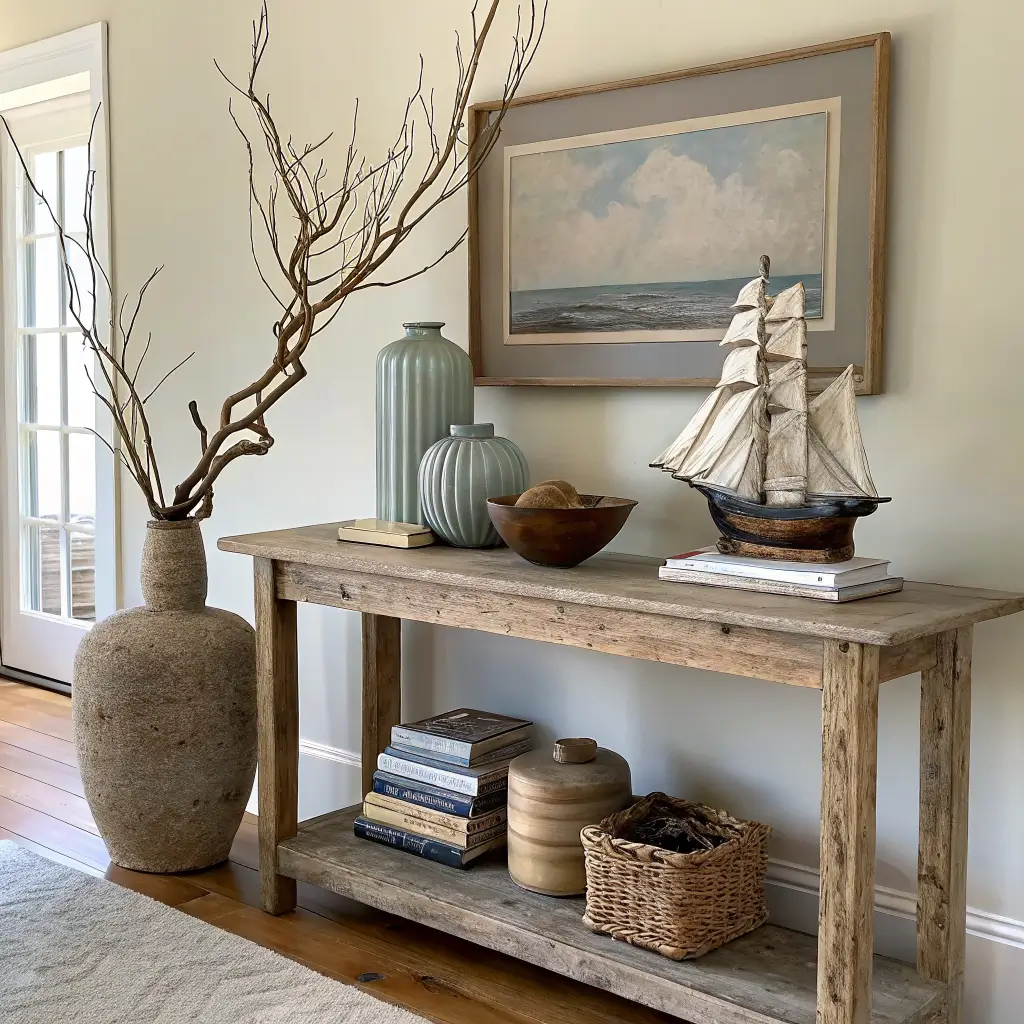
Step 4: Add one vintage or artisan object per surface. One. Not three. A bowl with a piece of coral on the coffee table. A vase with olive branches on the console. A stack of two books with a small ceramic on the side table.
Step 5: Hang the art. One large landscape or oversized mirror over the sofa, centered, with the bottom edge about 8–10 inches above the back cushion. Resist the gallery wall urge here — it fights the calm.
Step 6: Layer the lighting. Overhead light is rarely enough. Add a table lamp, a floor lamp, maybe a sconce. Use warm bulbs in the 2700K–3000K range. Anything cooler reads like a dentist’s office.
Where to Spend vs. Where to Save
Spend on:
– The sofa (you sit on it every day)
– The rug (size and quality show)
– One good art piece
– Lighting — cheap lamps look cheap
Save on:
– Pillow covers (swap seasonally from HomeGoods, Etsy, or H&M Home)
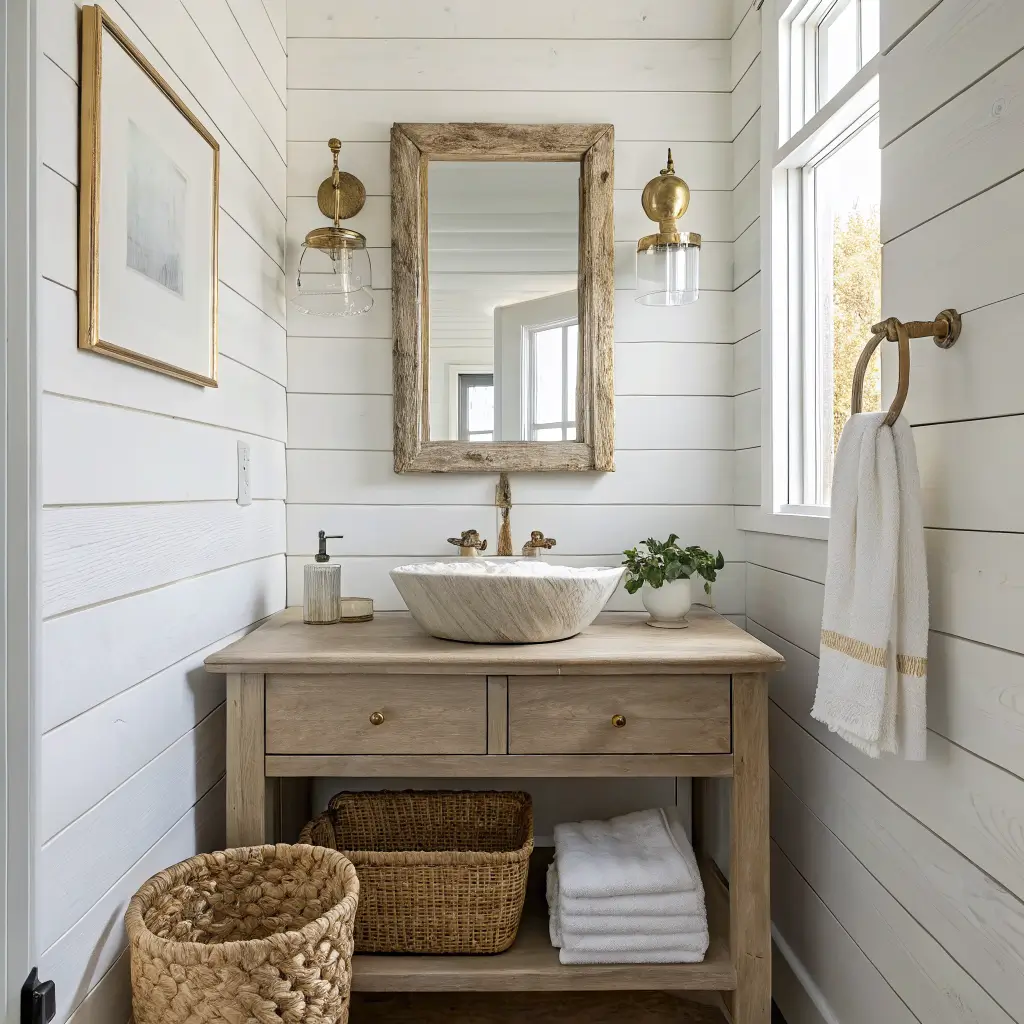
– Vases and small ceramics (thrift them)
– Baskets (TJ Maxx and Marshalls run $15–$40)
– Anything you can find used — rattan furniture, frames, mirrors, side tables
Common Mistakes I’ve Watched People (and Myself) Make
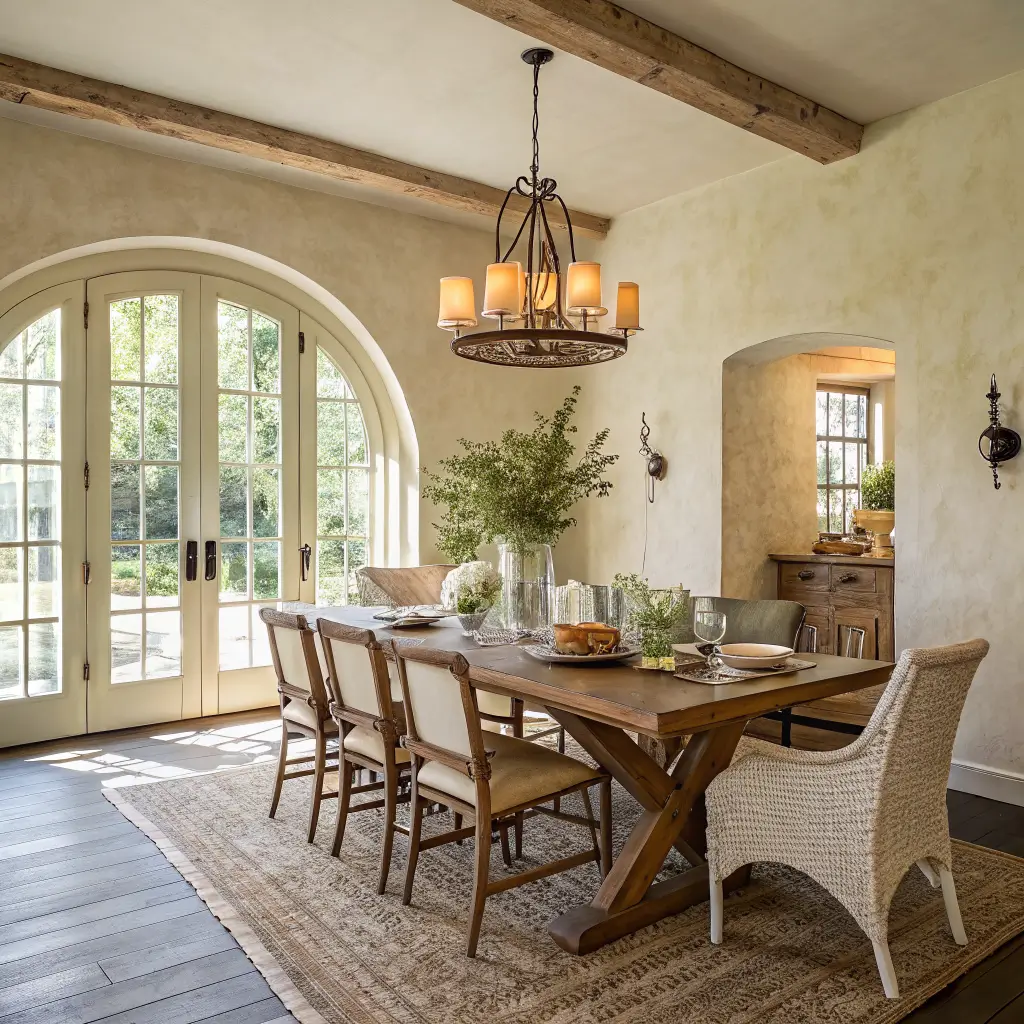
– Going too literal. If a stranger could guess your decor theme from the doorway, it’s too much. One nautical reference per zone, max.
– Buying everything new at once. A room of brand-new matching pieces reads like a showroom. Stagger purchases. Let the vintage finds happen on their own timeline.
– Choosing small over large. Five tiny shells in a row look like clutter. One large clam shell on a stack of books looks intentional.
– Ignoring climate and context. Palm-print wallpaper in a Vermont farmhouse feels off. Lean New England — driftwood, linen, navy, weathered wood — if you’re not actually near the tropics.
– Cluttering every surface. Coastal style depends on breathing room. Leave parts of the coffee table empty. Leave wall space around the art.
Styling the Collected Bits Without Making a Mess
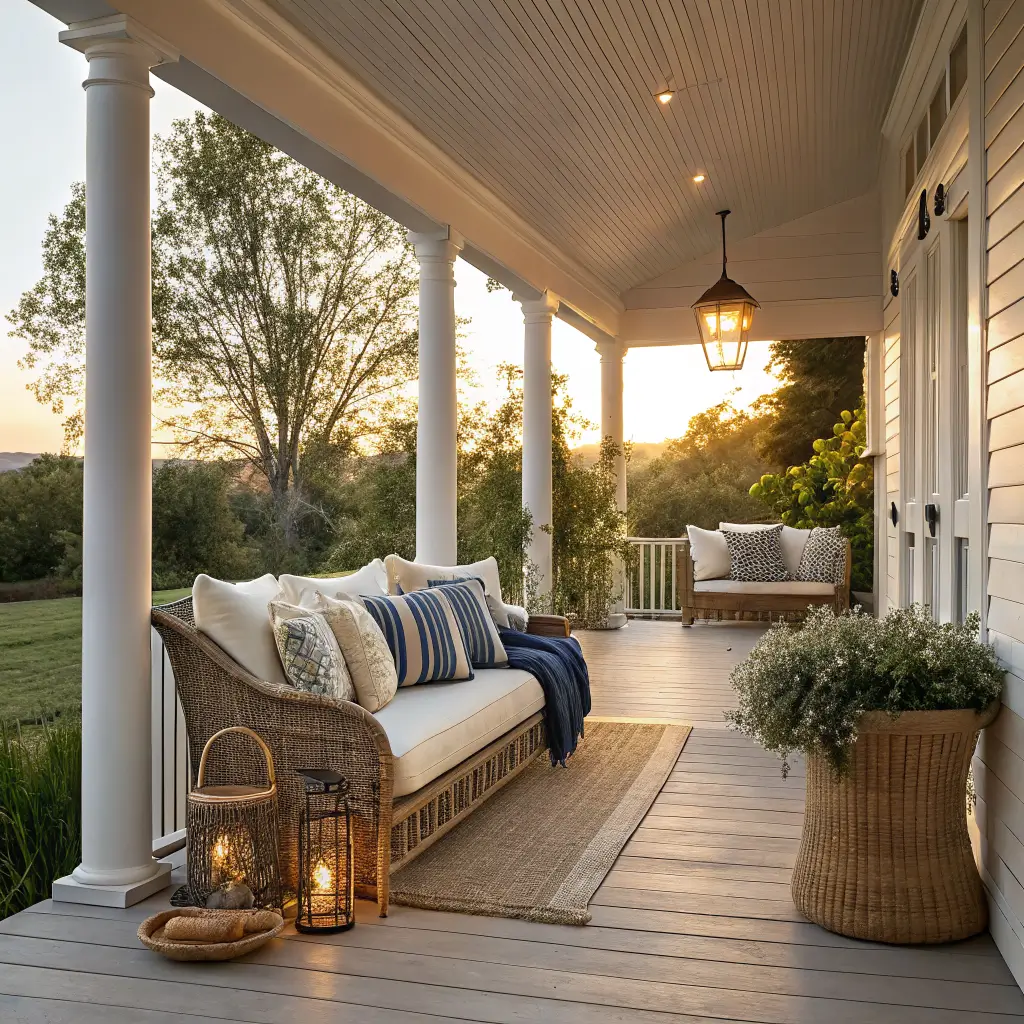
Group, don’t scatter. If you’ve got shells and sea glass from trips, put them in one clear glass jar or a single shallow bowl on a tray. Done. Resist the urge to set them out individually across three shelves.
For a vignette on a console or shelf, use the rule of varying heights: one tall (a vase with branches), one medium (a stack of books with a small object on top), one low (a bowl or a small framed photo). Odd numbers look more natural than even.
Conclusion
The coastal eclectic decor I love most is in a house where the owner has paired a Victorian velvet sofa with a rattan coffee table, hung a oil painting of a shipwreck next to a poster from a surf competition, and filled the shelves with books about maritime history and ceramic vases she found at a flea market. Nothing matches, but everything belongs, because everything came from the water or from someone who loved it. That is eclectic — not random, but personal.