Who This Style Is For
Modern bedroom design works if you want a hotel-feeling room that’s easy to keep tidy and doesn’t lock you into a trend that’ll look dated in two years. It’s the right call if you’re:
– An apartment dweller who wants the room to feel bigger than it is
– A renter who can’t repaint or drill into everything
– A homeowner pulling a dated primary suite into something calmer
– Anyone who genuinely hates dusting around tchotchkes
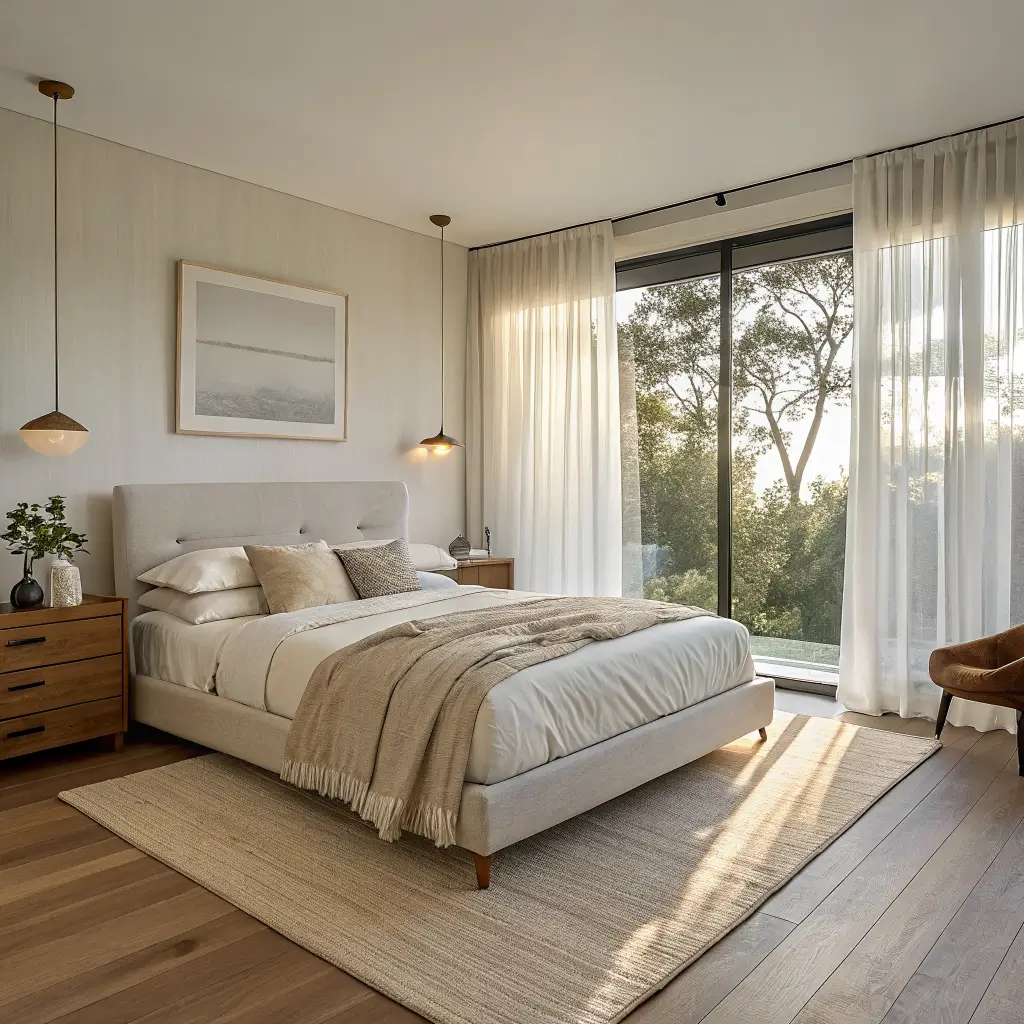
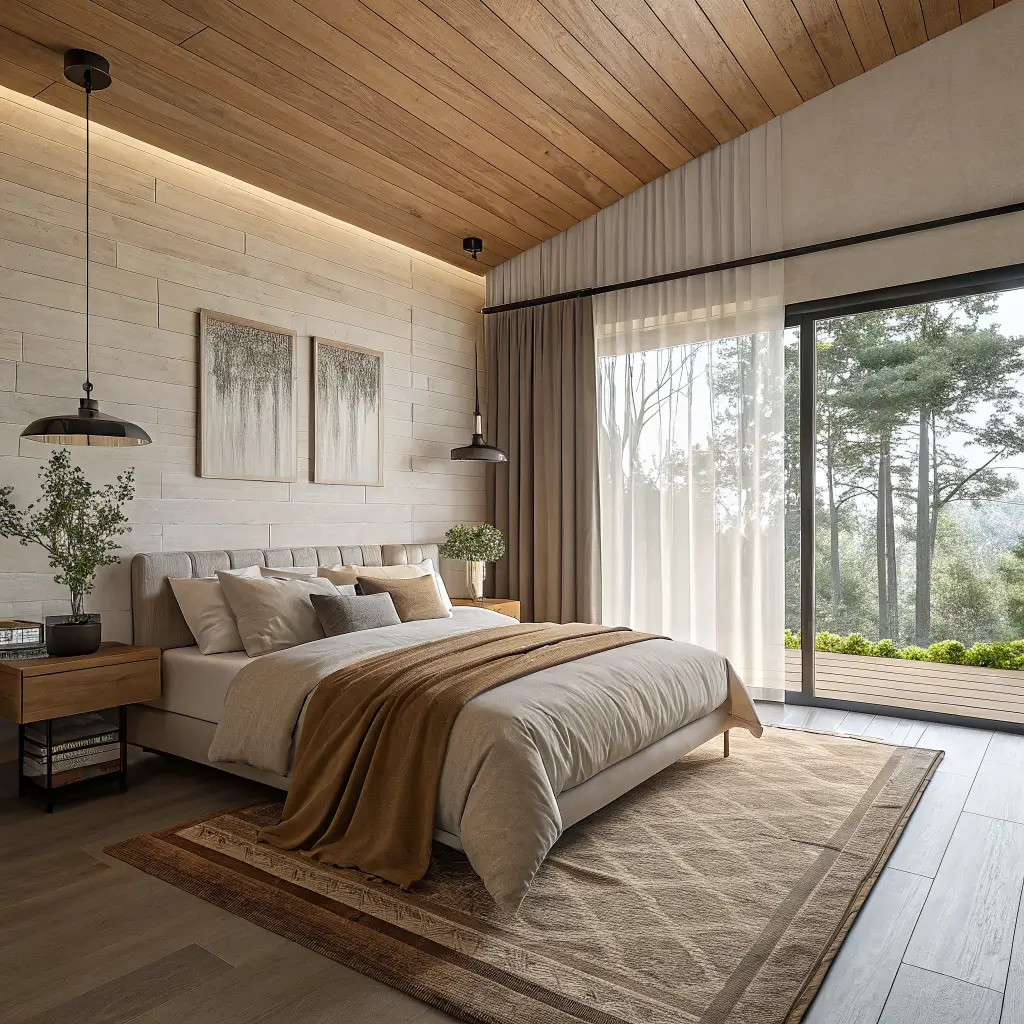
The look pulls from soft minimalism, Scandi, and Japandi — neutral base, warm woods, layered textures, and almost no visual clutter. Think “expensive Airbnb” rather than “concrete loft.”
Time, Budget, and What You’re Actually Signing Up For
Light refresh (paint, bedding, lamps, a rug, some art): one to two weekends. This is the most common project and gets you 70% of the look.
Full overhaul (new bed, wardrobe, lighting, the works): two to four weeks once you factor in delivery times. Furniture from Article and West Elm routinely takes 3–6 weeks. Plan for it.
Realistic Budget Tiers
Budget build ($1,200–$3,000) — IKEA, Target, Wayfair, Amazon:
– Platform bed (queen): $150–$400
– Mattress: $300–$900
– Two nightstands: $80–$250 each
– Dresser: $200–$600
– 8’×10′ rug: $150–$450
– Bedding: $80–$200
– Lighting (ceiling + two lamps): $150–$400
– Art, plants, accessories: $150–$400
Mid-range ($5,000–$12,000) — West Elm, CB2, Article, Crate & Barrel:
– Upholstered bed with statement headboard: $800–$2,000
– Mattress: $800–$1,800
– Nightstands: $250–$600 each
– Dresser: $800–$1,800
– Fitted wardrobe (PAX with custom fronts works well here): $1,500–$4,000
– Designer pendant + sconces: $400–$1,200
Investment suite ($15,000–$40,000+) — custom joinery, integrated lighting, automated blinds, the works.
The room sizes this works in: 100–150 sq ft for a tight urban bedroom with a queen and wall-to-wall wardrobe; 150–250 sq ft for a standard primary with a reading nook; 250+ if you’ve got a sitting area.
The Color Palette That Doesn’t Look Cold
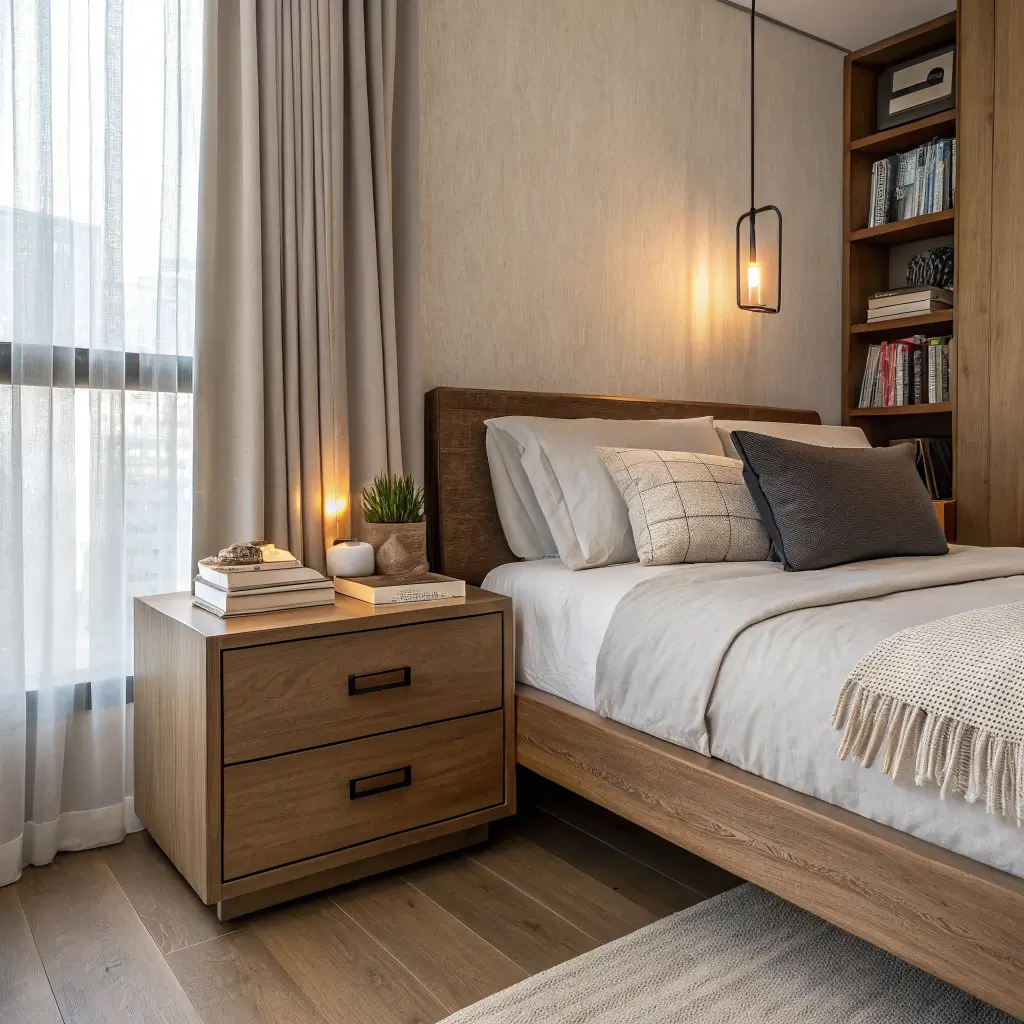
This is where my first attempt fell apart. Pure white + gray reads sterile. The modern bedrooms that actually feel good to sleep in lean warm.
Base (60%): warm white, creamy beige, warm taupe, or a soft greige. I painted my walls Benjamin Moore White Dove and it changed the whole room — it’s white but with enough yellow in it to feel like late afternoon light.
Secondary (30%): light oak, ash, or walnut. One wood tone, not three. If you have a walnut bed, don’t bring in red-toned cherry nightstands. They’ll fight.
Accent (10%): rust, caramel, olive, sage, muted burgundy, or charcoal. This is your throw pillow and art territory. Pick one or two and commit.
For metals: matte black, brushed brass, or bronze. Pick one as your dominant and use the others sparingly. Mixing chrome in here will tank the whole look.
The Hero Pieces
The Bed and Headboard
This is 60% of the visual weight in the room. Don’t cheap out on the headboard if you can help it.
What’s working right now:
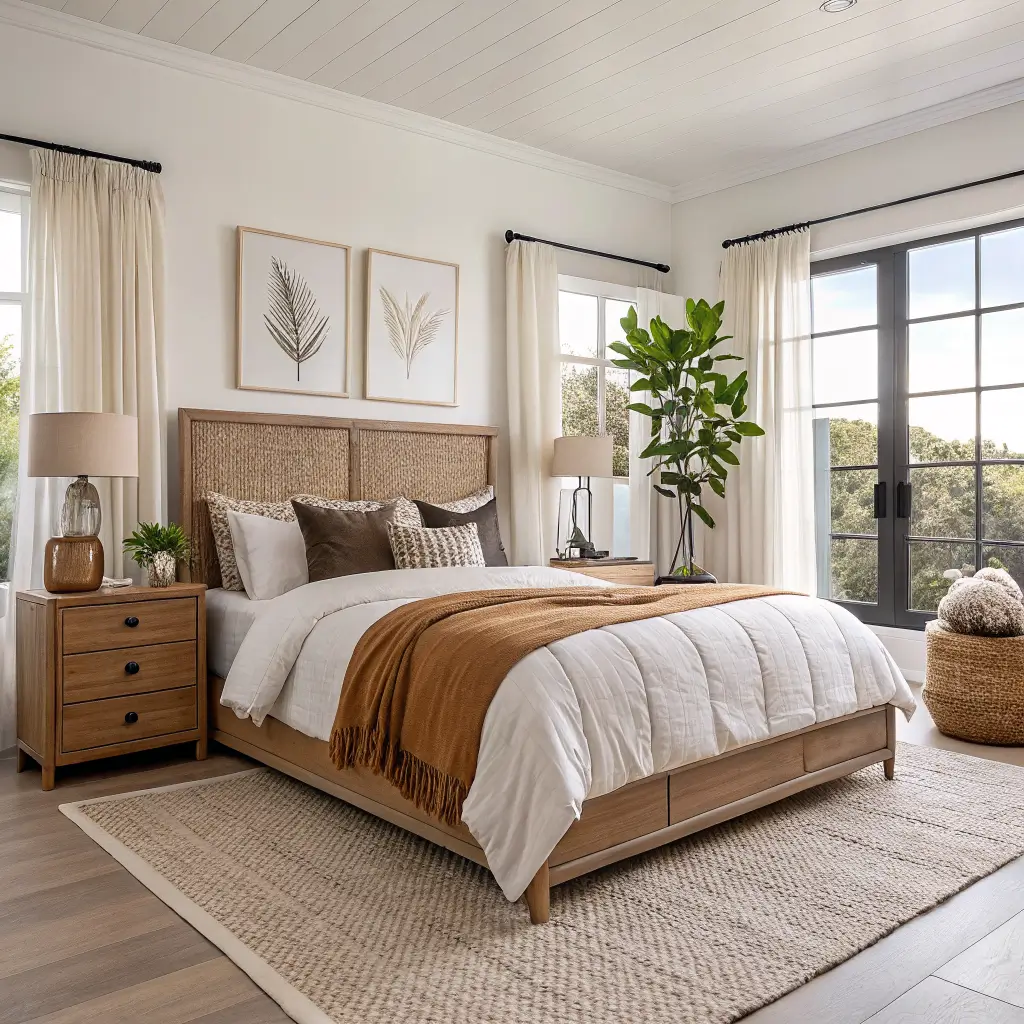
– Oversized upholstered headboards in linen or bouclé
– Fluted or slat wood in light oak or walnut
– Low-profile platform frames that don’t eat visual space
A queen mattress is 60″×80″. The frame footprint runs around 65–68″ wide and 85–90″ long. Measure your wall before you fall in love with anything wider than 72″ — I learned this when a beautiful 78″ headboard arrived and I had exactly 1.5 inches of clearance on each side. It looked crammed.
Wardrobes and Storage
If you have a closet, leave it. If you don’t, IKEA PAX with custom doors from Semihandmade or Norse Interiors is the single best bang-for-buck move in modern bedroom design. You get a built-in look for $1,500–$3,000 instead of $8,000+ custom.
Push-to-open or slim integrated handles. No big knobs.
Lighting
The biggest mistake people make: one overhead light, cool-toned, on a single switch. Brutal.
You need three layers:
1. Ceiling fixture — a drum shade, linear pendant, or sculptural fixture. Skip the boob light.
2. Bedside lighting — matching table lamps for a calmer look, or wall sconces at 48–60″ from the floor if you want clear nightstand surfaces. Sconces changed my life because my nightstands are tiny.
3. A third source — floor lamp by a chair, dresser lamp, or LED strip behind the headboard for ambient glow.
Bulbs: 2700K warm white. Always. Dimmers if you can swing it.
How to Put the Room Together
Layout
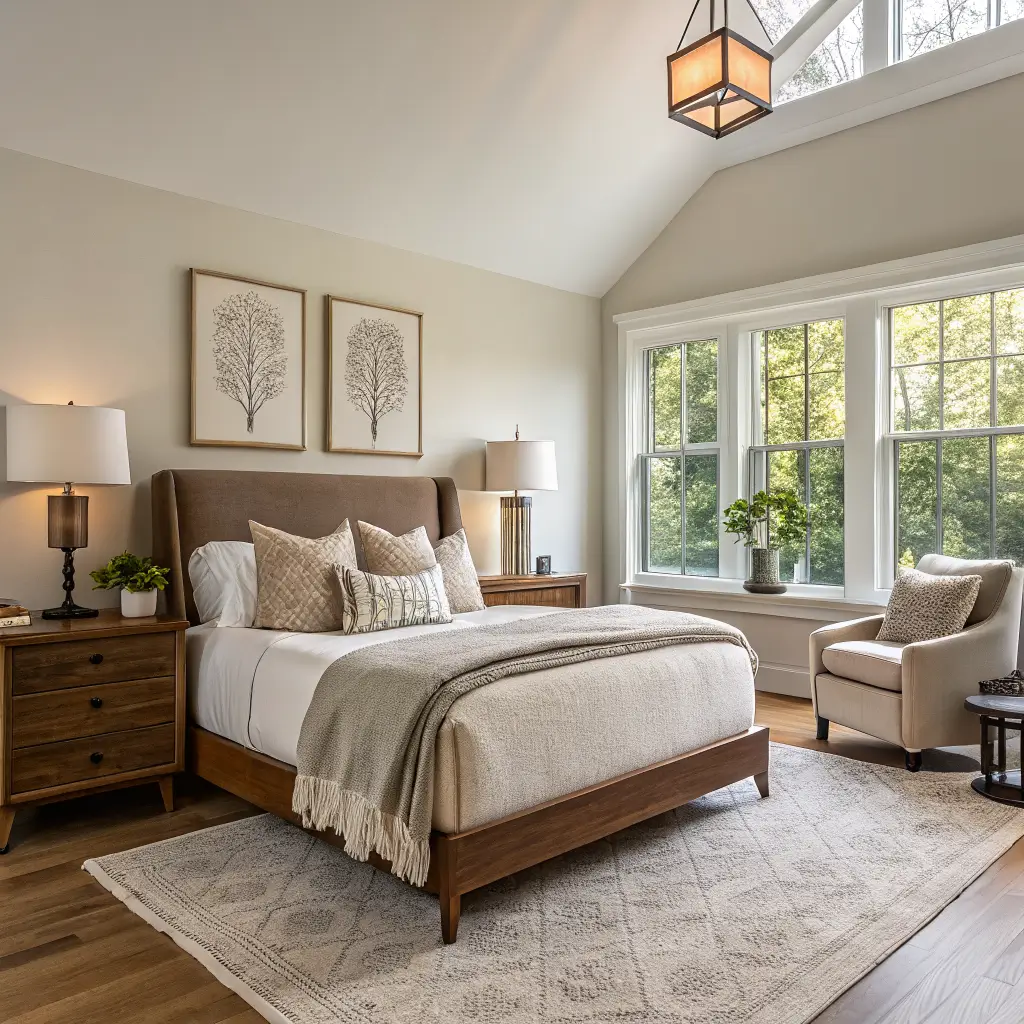
Bed against a solid wall. Not under a window if you can avoid it, and not directly in line with the door — visible from it, but not bullseye-centered on it. You want 24–28″ of walking space on both sides of the bed.
Before buying anything, tape the footprint on the floor with painter’s tape. Walk around it. This sounds obsessive. Do it anyway. I once ordered a chaise that fit on paper and physically blocked the dresser drawers from opening.
The Rug
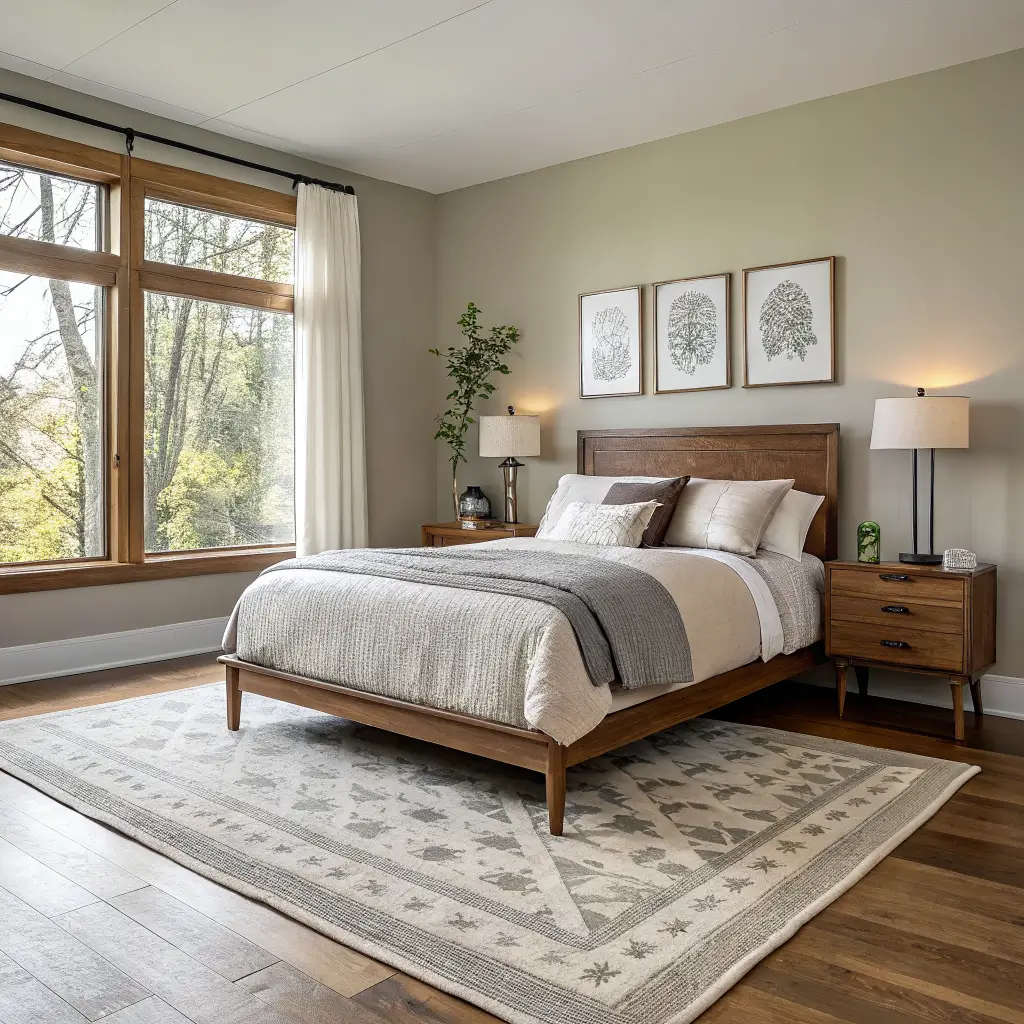
Under a queen, use an 8’×10′ rug placed so it starts about a third of the way down the bed and extends 18–24″ past the sides and foot. A 5’×7′ shoved under the nightstands looks like a postage stamp. This is the most common bedroom rug mistake.
Wool blend, low-pile modern pattern, or a flatweave layered over jute if you want texture.
Dressing the Bed (Hotel Method)
In order:
– Fitted sheet (cotton percale or linen, no microfiber)
– Flat sheet, folded down at the top
– Duvet pulled up, folded back about a third
– Two sleeping pillows behind two Euro shams (26″×26″)
– One or two lumbar or smaller decorative pillows in front
– Knit or linen throw across the foot, draped, not folded
Five pillow stacks tall. That’s the cap. More than that and you’re just performing.
Curtains
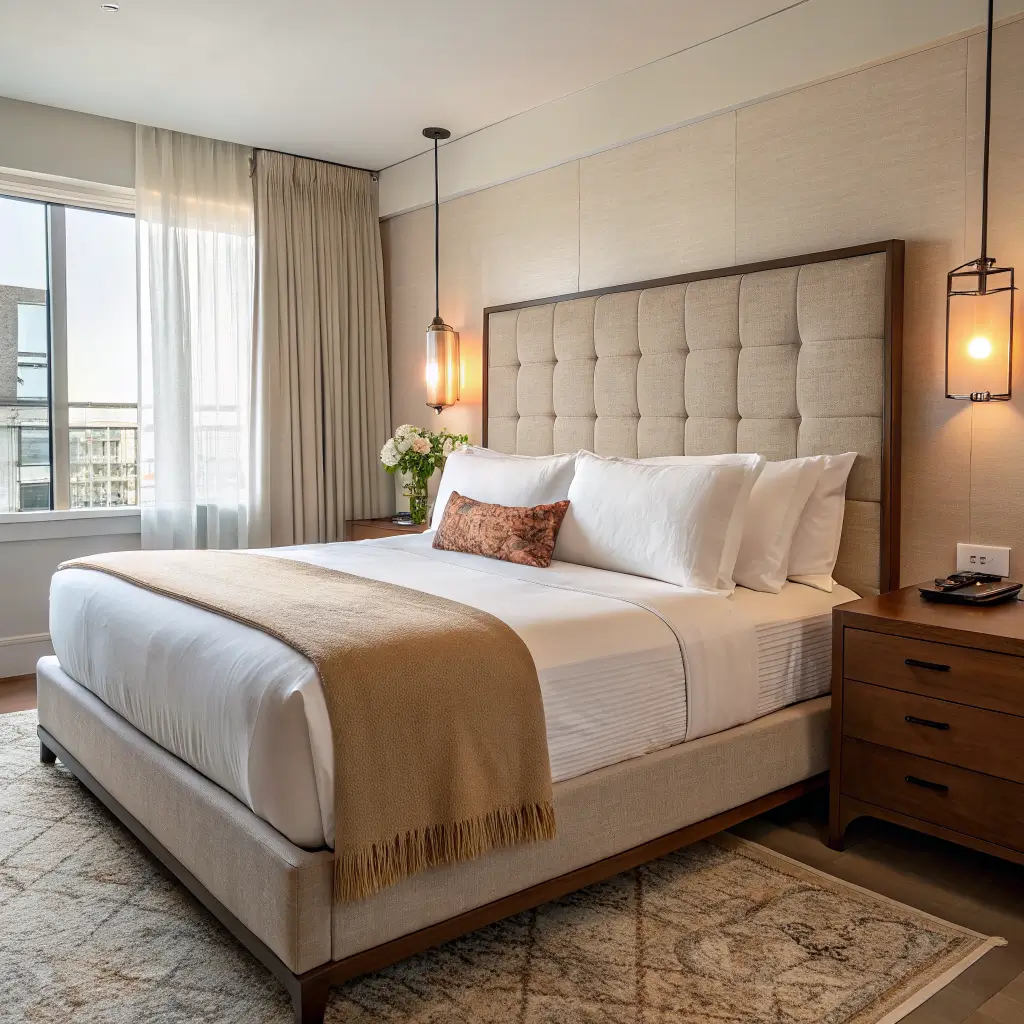
Hang the rod close to the ceiling, not at the window frame, and extend it 6–12″ wider than the window on each side. This makes ceilings look taller and windows look bigger. Light-filtering linen for day, blackout layer behind for sleep.
Surfaces
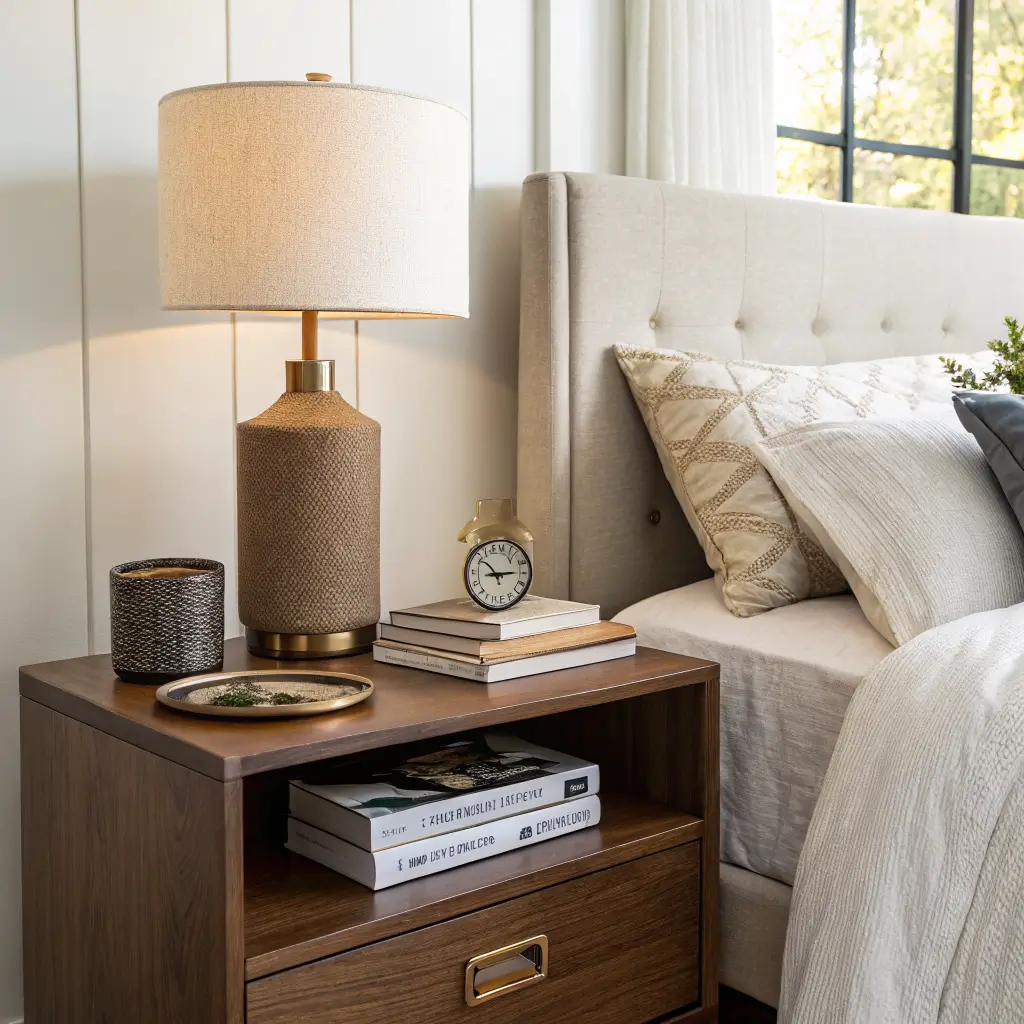
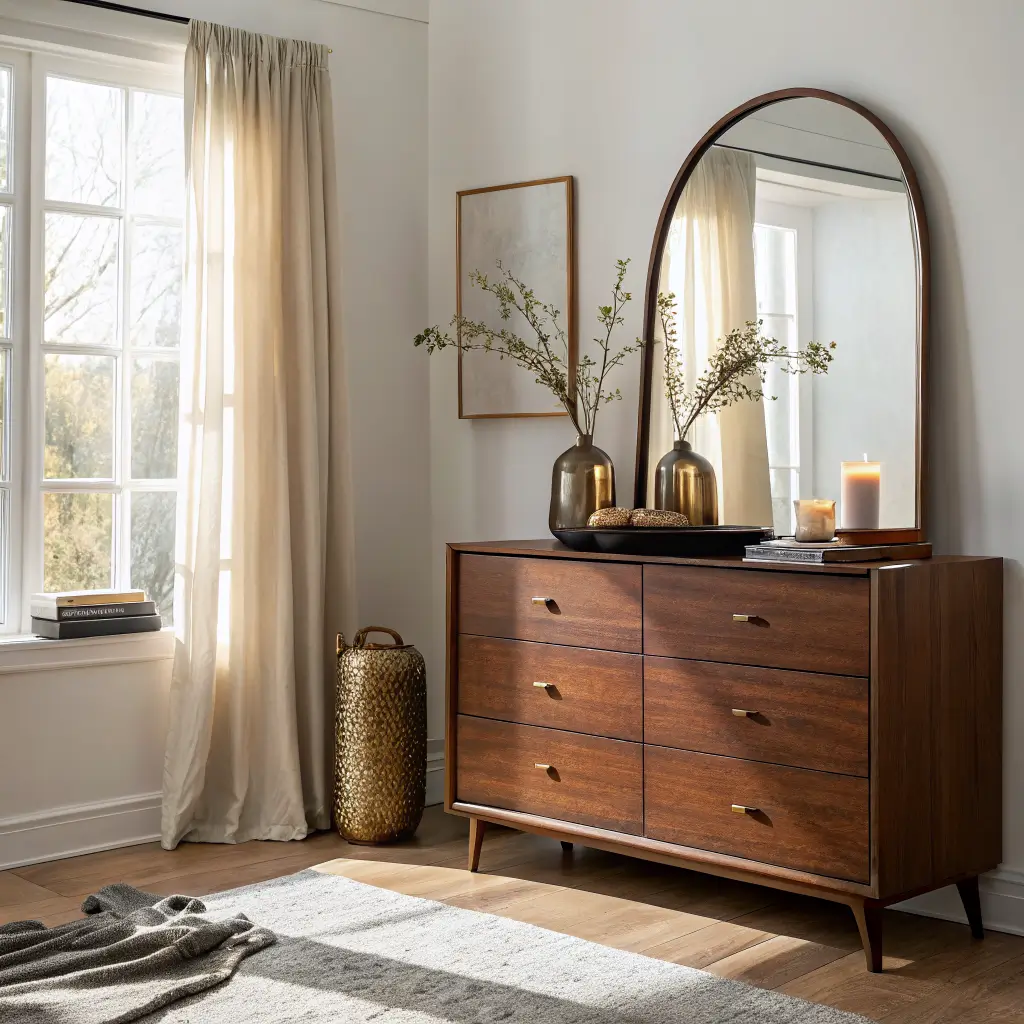
Three to five items per surface, max. On a nightstand: lamp (or nothing if you have sconces), small stack of books, a candle or small ceramic, a tray for jewelry/glasses. That’s it. The dresser top gets a mirror leaning against the wall, a tray, and one tall vase or lamp.
Where to Spend, Where to Save
Spend on:
– Mattress. You sleep on it every night. $800–$1,500 range gets you something genuinely good.
– Sheets. Cotton percale or linen. The cheap microfiber sheets are why your bedroom feels off — they pill, they shine weirdly under lamplight, and they sleep hot.
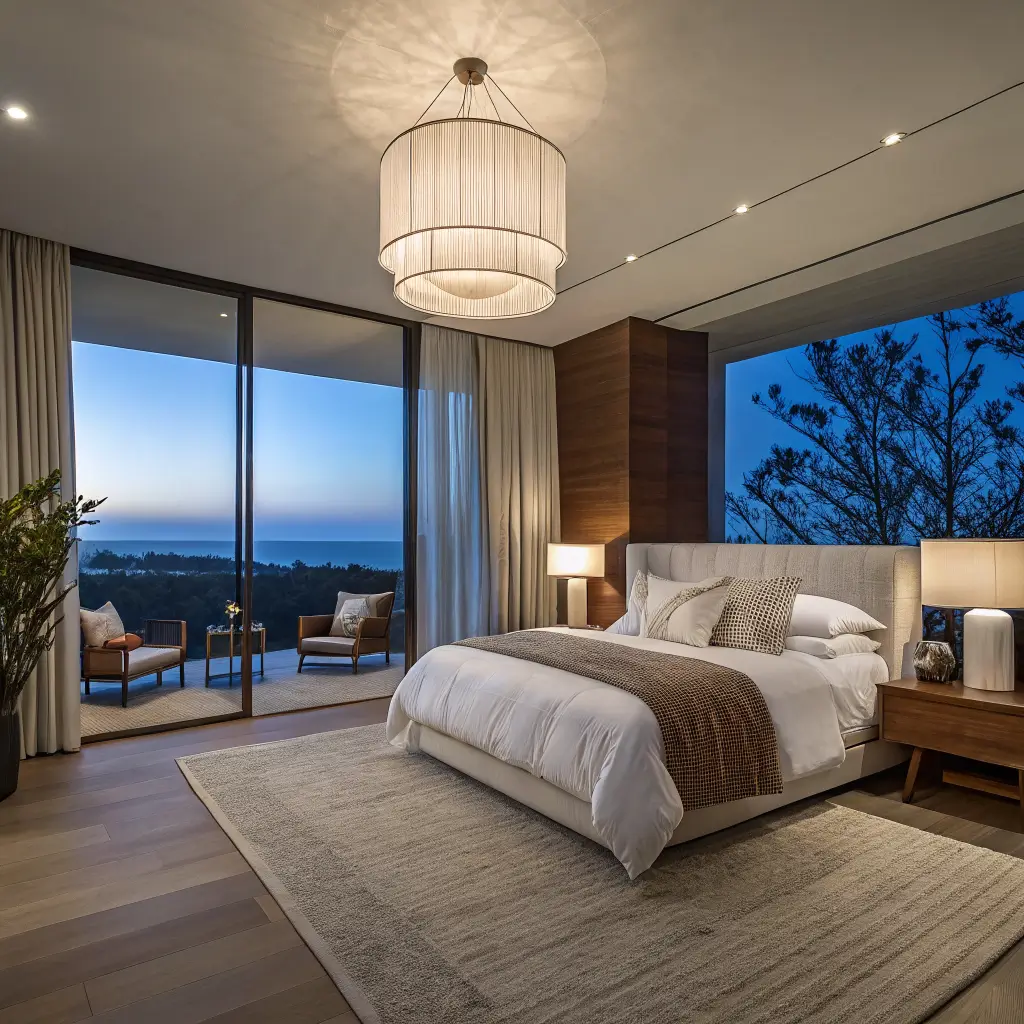
– One lighting piece. Whichever you see most — usually the ceiling fixture or sconces.
Save on:
– Dresser and nightstands. IKEA Malm or Hemnes, refinished with new pulls, looks far more expensive than it is.
– Art. Etsy printable downloads + a $40 frame from Amazon. Nobody can tell.
– Plants. Don’t buy a $200 fiddle leaf fig. Buy a smaller one for $40 and let it grow.
The Mistakes I See Constantly
Too many wood tones. Bed, nightstands, dresser, and floor in four different woods. Pick one or two and repeat them.
Cushion overload. Eight throw pillows on a queen. You’re going to throw them on the floor every night and you know it.
Underscaled rug. Already covered. It’s so common it deserves another mention.
No storage planning. Open shelving everywhere, then real life happens and the shelves fill with chargers and lip balm. Choose nightstands with drawers. Fit your wardrobe with internal organizers.
One bright cool-toned ceiling light. Already covered. Also deserves another mention.
Decor in odd places. A tiny framed print floating alone above a king bed. Art above the bed should be roughly two-thirds the width of the headboard, hung 6–10″ above it.
Seasonal Swaps That Actually Make a Difference
The base of a modern bedroom is built to stay. You change three things by season:
Winter: chunky wool throw, heavier duvet, swap in rust/burgundy/forest cushions, add a candle on the dresser.
Summer: light gauze throw, lighter percale duvet cover, sage or soft sky-blue cushions, more visible greenery, pull the curtains fully open during the day.
That’s it. Don’t redecorate. Just swap textiles.
The One Personal Rule I’d Add
After you finish styling, leave the room for an hour. Come back and walk in like you’ve never seen it. Anything your eye snags on — a cord, a lopsided pillow, a too-small piece of art, a bottle on the nightstand — fix it or remove it. Modern bedrooms live or die on what you take out, not what you put in.
That’s what makes the difference between a room that looks modern in photos and one that actually feels good to wake up in.
Conclusion
The modern bedroom interior that helped me sleep better had white walls, a low platform bed in walnut, and a single pendant light that cast a warm pool over the nightstand. The only decoration was a framed photograph of a tree in winter, and the only texture was a wool throw at the foot of the bed. The room felt like a hotel in the best way — clean, calm, and completely without demands.
More Decor Ideas to Explore
- The Beachy Apartment Look That Doesn’t Feel Like a Theme Park: My Real Playbook
- The Colorful Kids Room That Doesn’t Look Like a Cartoon Threw Up: A Real Parent’s Guide
- Modern Luxury Bathroom: How to Get the Spa-Like Primary Bath Without It Feeling Like a Hotel Lobby
- Little Kitchen Ideas That Actually Work in 40–120 Square Feet