Who This Look Is For
If you live in a small city apartment and want it to feel like the kind of place you’d rent for a long weekend in Rhode Island, this is the style. It works in a 400-square-foot studio. It works in a 1,100-square-foot two-bedroom. It’s especially good for renters because most of the heavy lifting happens through textiles, art, and styling — not paint or built-ins.
It suits you if:
– You like minimalism but find pure Scandi cold
– You have pets or kids and need washable everything
– You’re far from the ocean and want the feeling, not the souvenirs
– You want something that looks intentional in every season, not just July
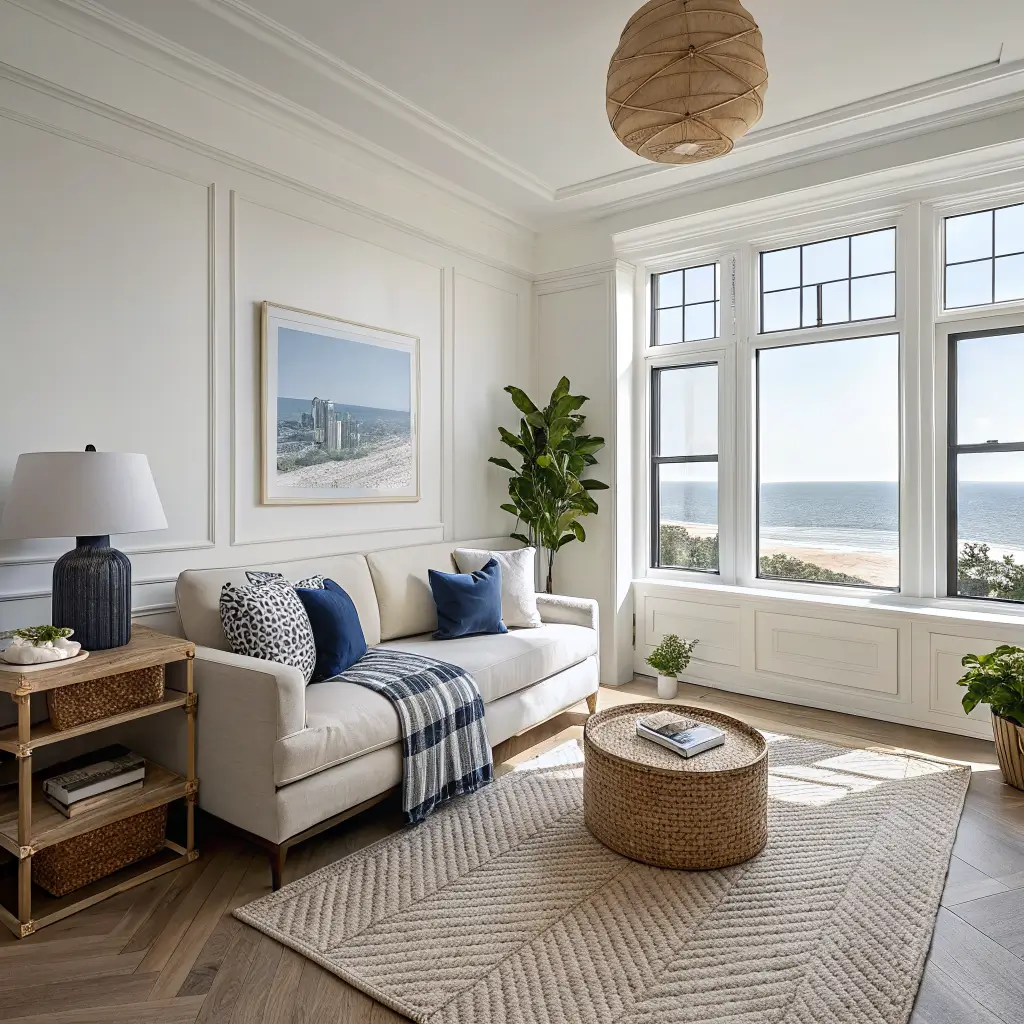
The Palette I Actually Use
I keep it to about five tones, repeated everywhere. The whole point of a beachy apartment is restraint — the second you add a sixth color, it starts to look busy.
– Warm white on walls (Benjamin Moore Swiss Coffee is the one I keep coming back to)
– Oatmeal and sandy beige for the big upholstered pieces
– Driftwood gray in wood tones and a secondary throw or two
– Soft, slightly muted blue — think faded denim, not Caribbean pool
– Black or charcoal in tiny doses (picture frames, a lamp base) so the room reads adult
That last one is the thing nobody tells you. A little black is what stops the room from looking like a nursery.
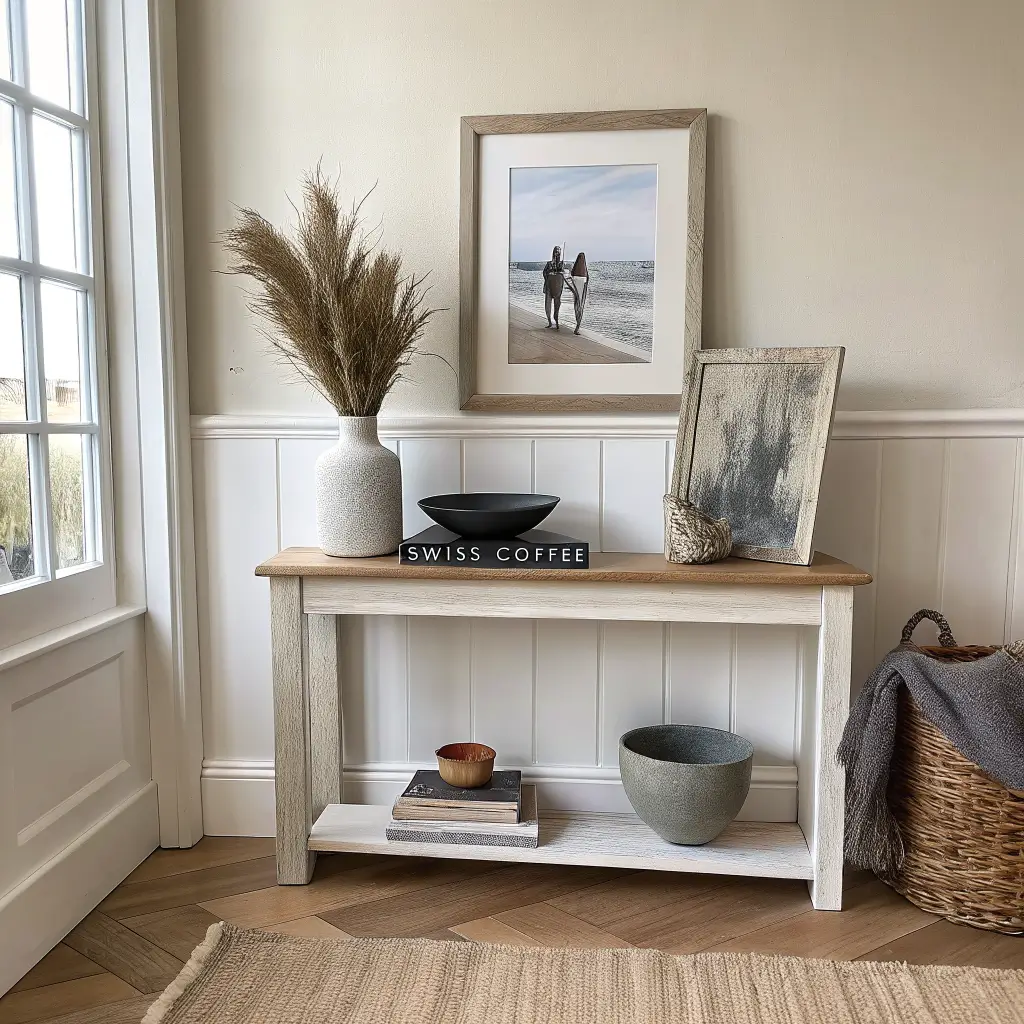
The Hero Pieces, In Order of What I’d Buy First
If I had to start over with an empty room and a budget, this is the order.
1. A light, slipcovered sofa
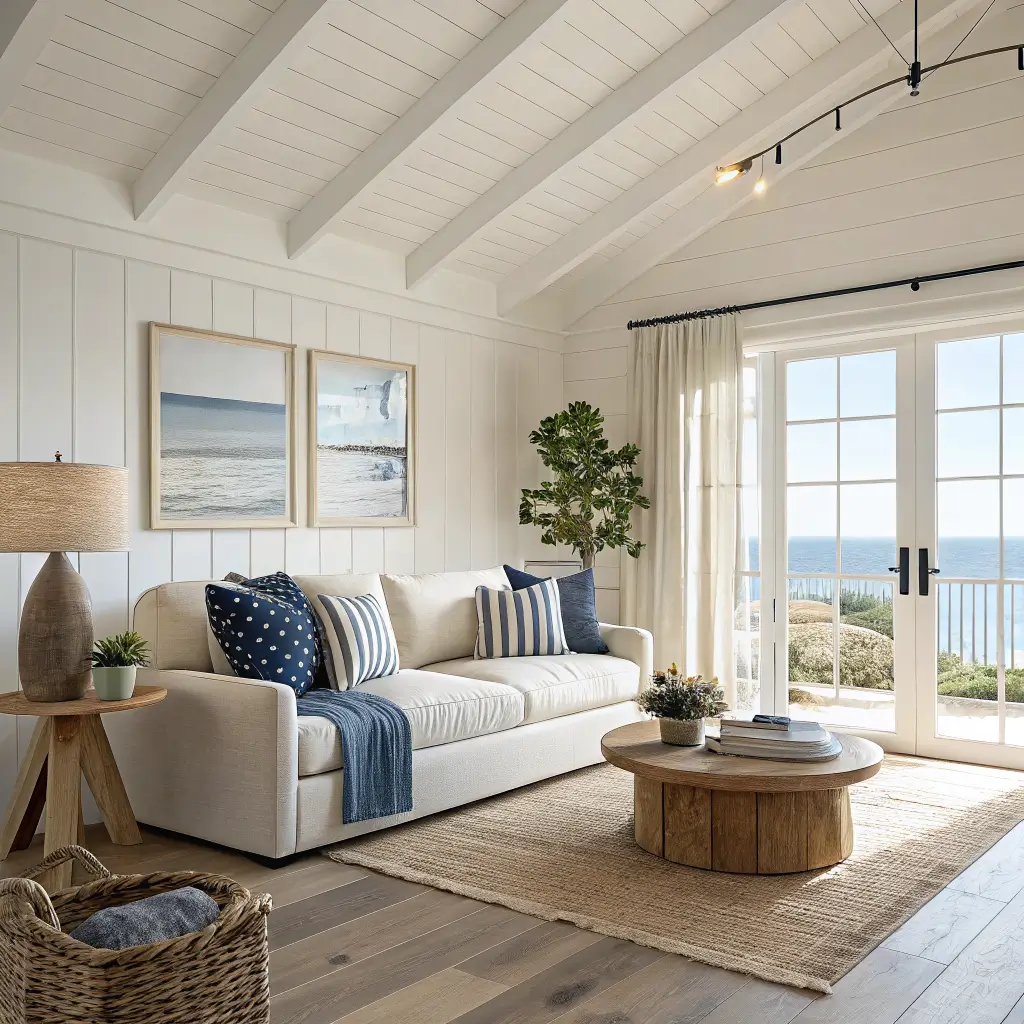
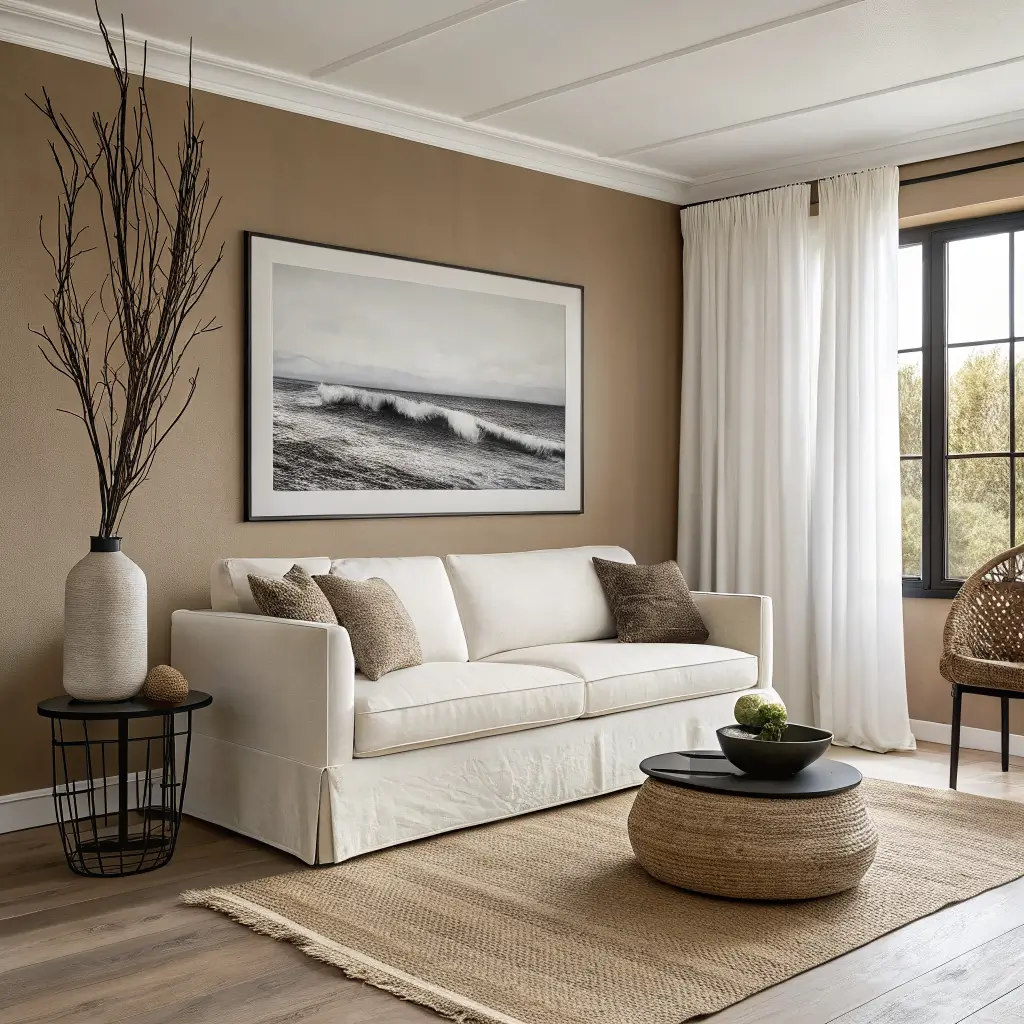
The single most important purchase. Mine is a beige cotton slipcover, 84 inches, and the covers come off and go in the washing machine. I’ve washed them probably a dozen times. Look at IKEA’s slipcovered options ($500–$1,000) if you’re on a budget, or go custom around $1,500–$3,500 if you can.
Size rule of thumb: 70–80″ for small apartments, 80–90″ for standard living rooms. Anything wider eats the room.
2. A natural fiber rug
Jute or seagrass, 5×7 in a studio, 8×10 if your living room can take it. Front legs of the sofa and chairs should sit on the rug — if they don’t, the rug is too small. This is the #1 thing people get wrong.
If jute feels too scratchy underfoot (it does — be honest with yourself), layer a softer cotton flatweave on top. I have a thin cream cotton rug over the jute and it’s the best of both.
3. Curtains, hung correctly
Linen or linen-blend, white or pale sand, hung 6–10 inches above the window frame and extended 4–8 inches past the sides. They should kiss the floor, not float six inches above it. Floating curtains are the surest sign that someone bought the wrong length and didn’t want to return them.
IKEA’s linen-look panels run $30–$60 and look more expensive than they are. Real linen drapes are $150–$400 a pair and feel substantially better in your hands, but nobody walking into your apartment will be able to tell from across the room.
4. A light wood coffee table
Solid pine, light oak, or whitewashed. Round or oval if your space is tight — sharp corners eat visual space and shins. About 18 inches high, 36–48 inches long.
5. One woven accent piece
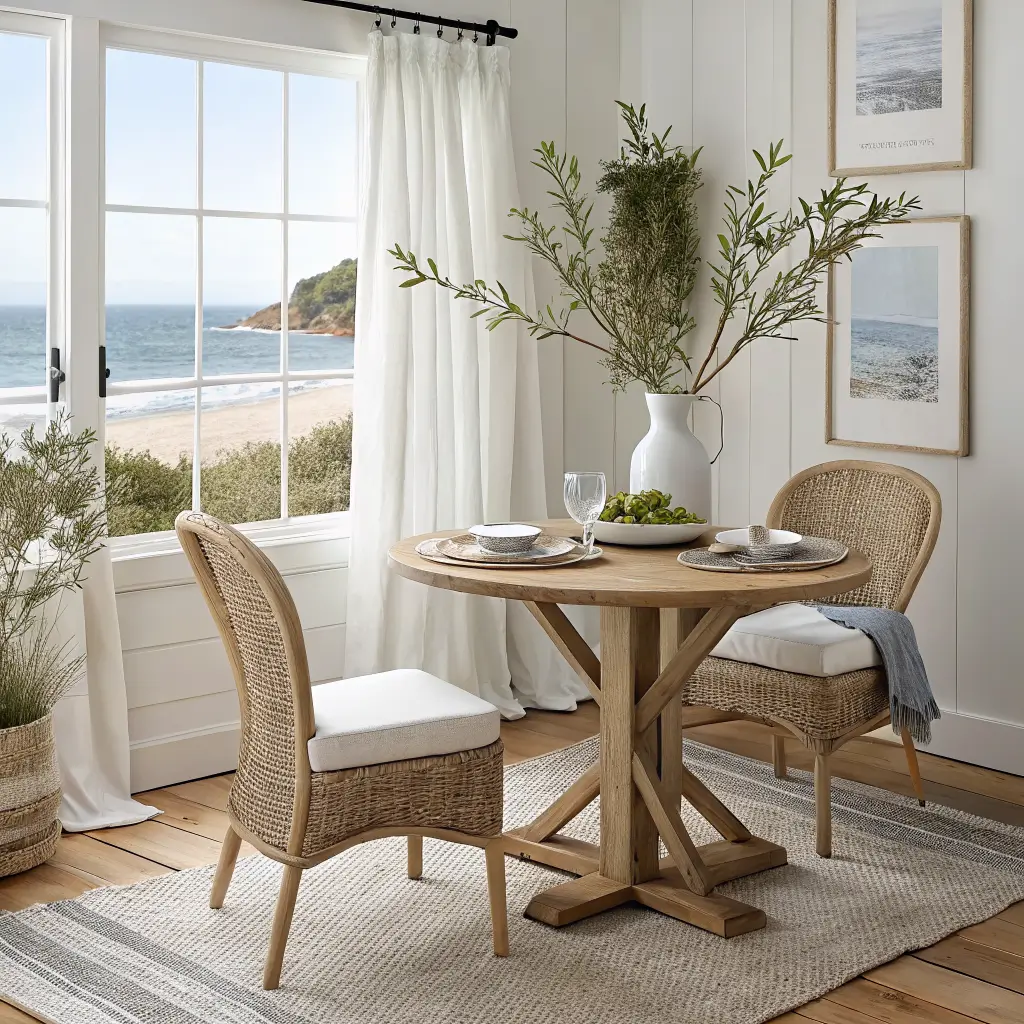
A rattan armchair, a wicker pendant, or a big seagrass basket in the corner. One. Not all three at the start. Rattan everywhere is its own kind of theme-y.
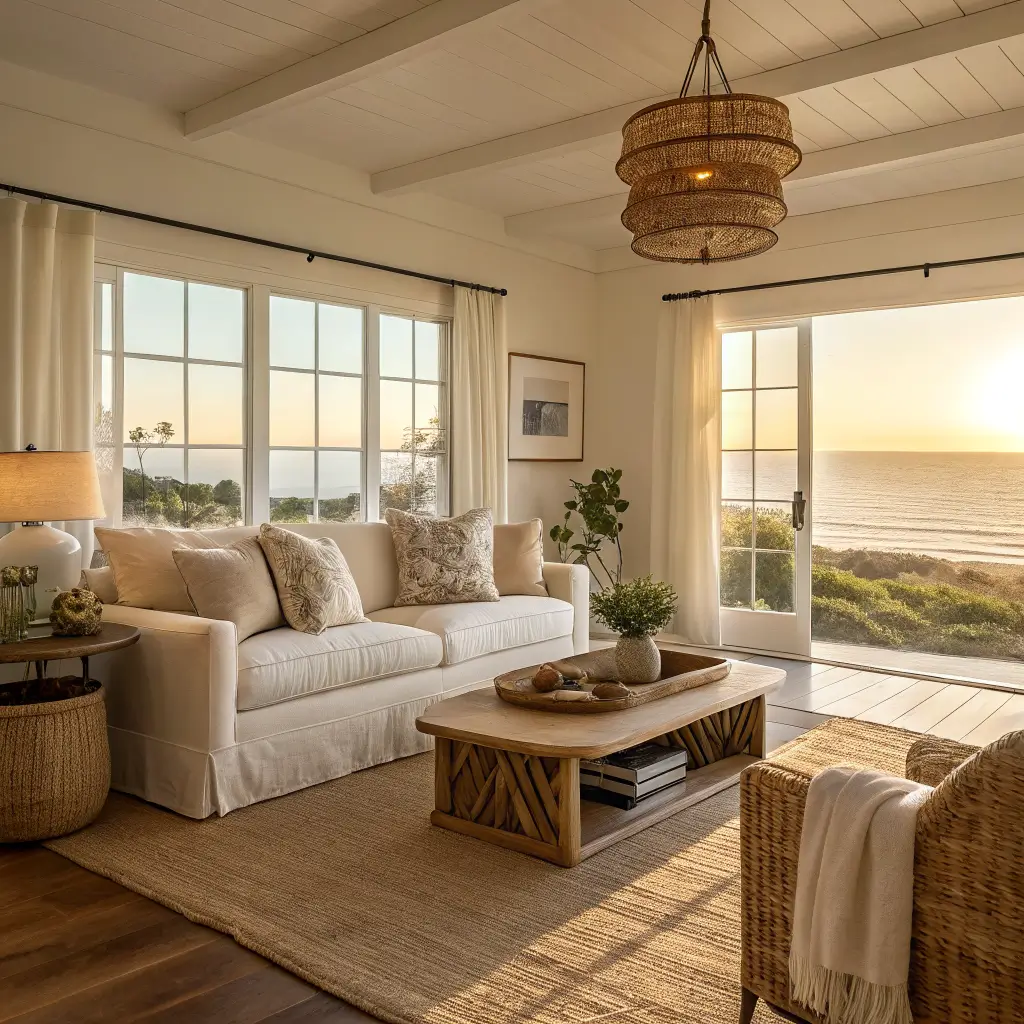
How To Layer Textures Without It Getting Muddy
Pick three or four core textures and repeat them. Mine are:
– Linen (sofa cover, curtains, a few pillows)
– Jute (rug, a coffee table tray)
– Rattan (a floor basket and a pendant)
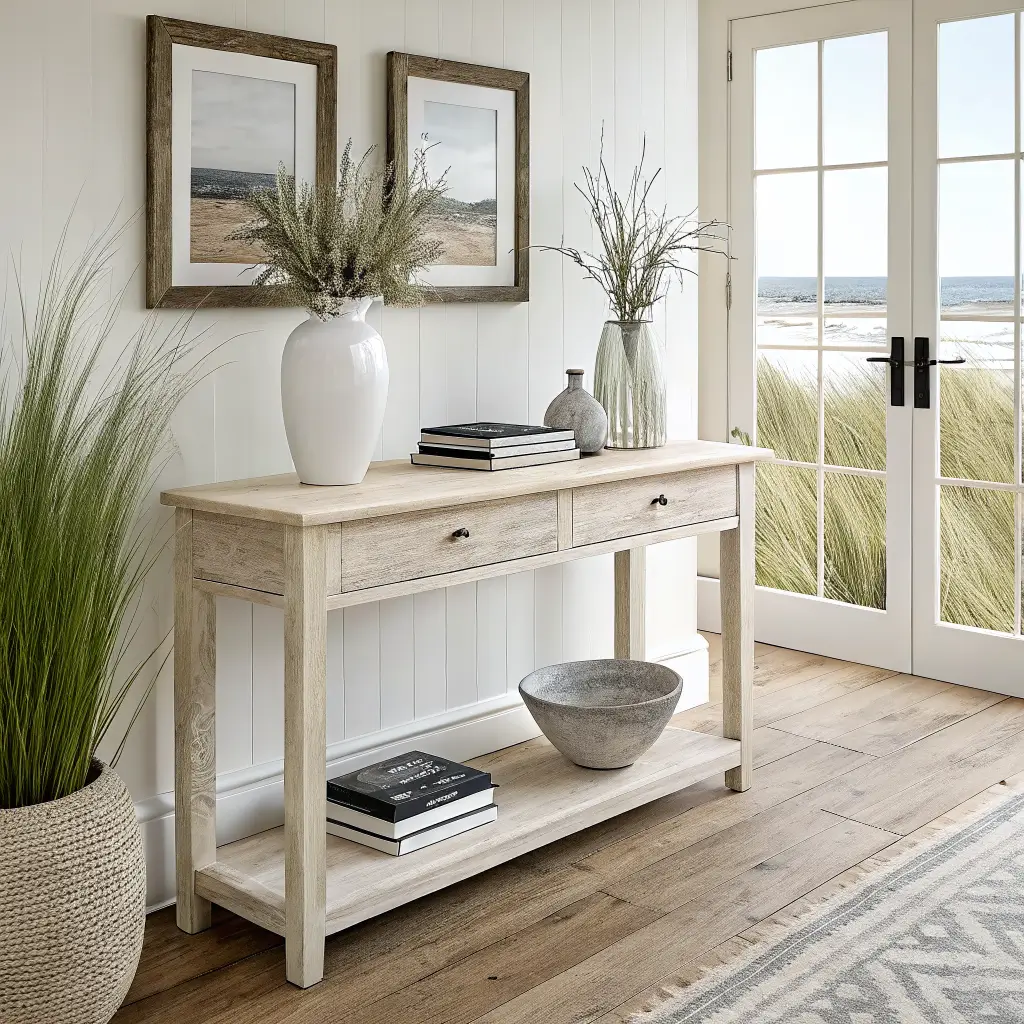
– Smooth ceramic (a couple of matte white vases)
That’s it. Every object in the room is some version of those four. The repetition is what makes the space feel designed instead of accumulated.
For pattern, I use the rule of one hero, two quiet. One pillow with a real pattern — for me it’s a navy and cream stripe, about 22 inches square. Then two or three pillows in solids or barely-there textures around it.
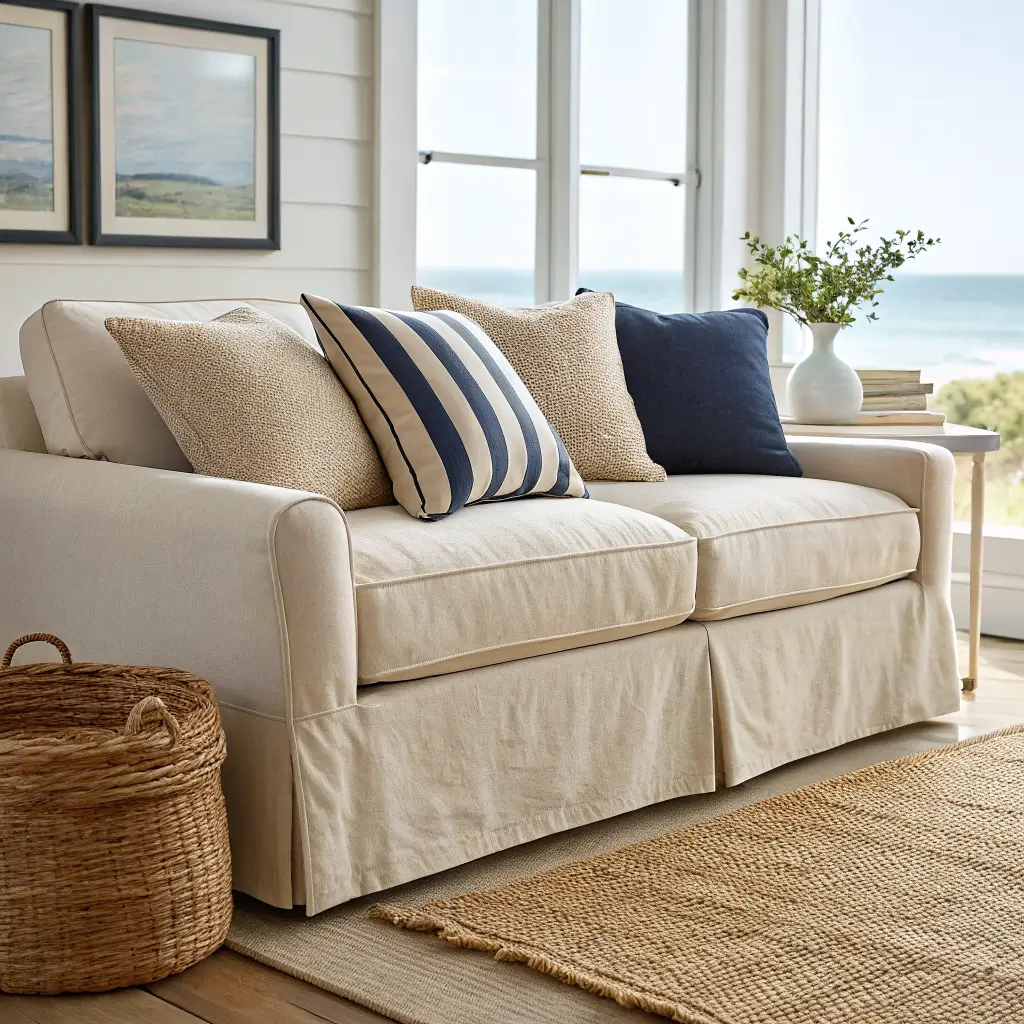
The 60-30-10 Color Split
This is the only “rule” I actually follow:
– 60% neutrals — walls, sofa, rug, curtains
– 30% blues and sea tones — pillows, throws, art, a secondary rug
– 10% accents — black picture frames, a brass lamp, one terracotta pot
If your apartment feels off and you can’t say why, count up your color. You’re almost certainly over on the 10%.
Where I’d Spend vs. Save
Spend on:
– The sofa (you sit on it daily and a bad one announces itself)
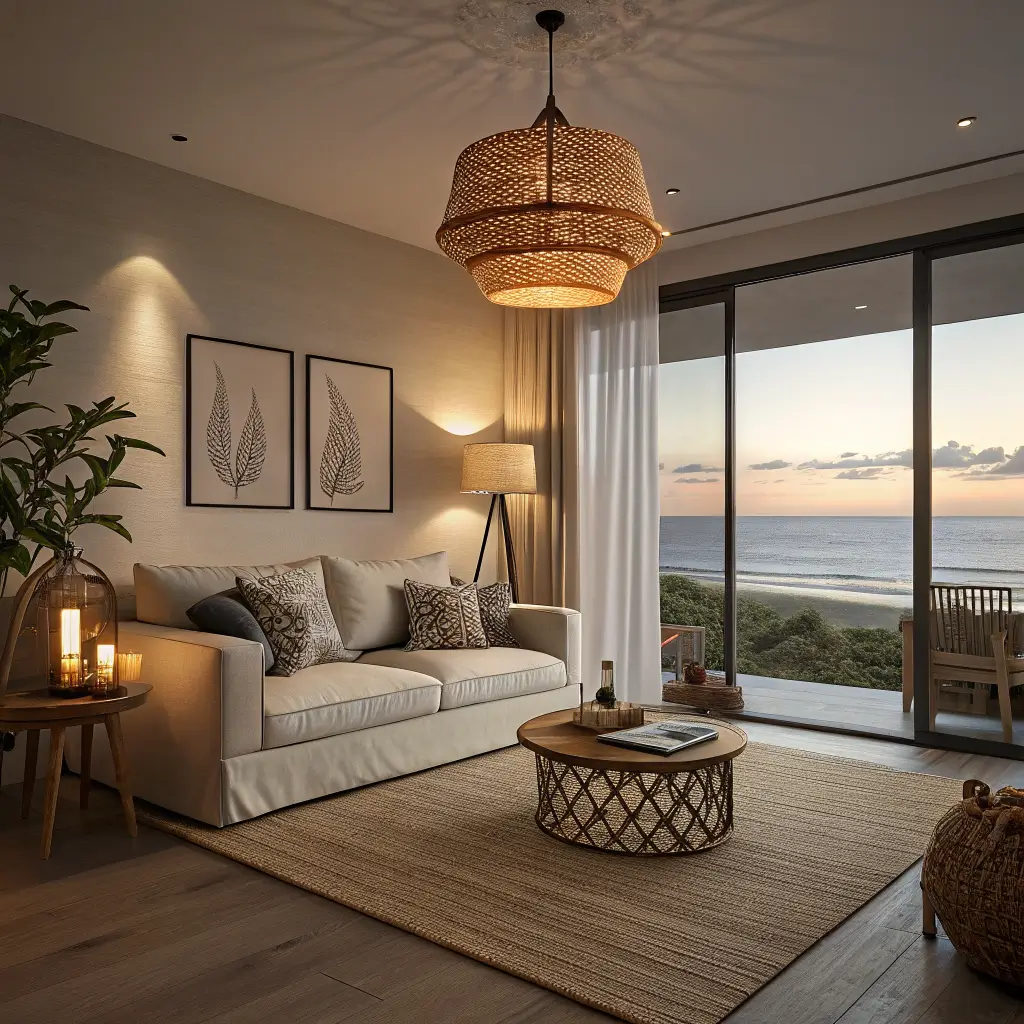
– Lighting — a good rattan pendant or a real linen-shaded floor lamp changes a room more than any throw pillow
– One piece of art big enough to actually anchor the wall above the sofa (minimum 2/3 the width of the sofa)
Save on:
– Pillow covers — Target, H&M Home, Amazon. $20–$40 each and you’ll swap them in two years anyway
– Vases and tabletop ceramics — thrift stores are full of matte white pottery that costs $3
– Baskets — the IKEA seagrass ones are $15 and look identical to the $80 ones at Serena & Lily
I bought a $240 rattan side table from a trendy direct-to-consumer brand two years ago and immediately regretted it because the IKEA version was $59 and structurally identical. Learn from me.
The Mistakes I Made (So You Don’t Have To)
Too much blue. My first attempt had a navy rug, two blue pillows, blue art, a blue throw, and blue glass on the shelves. It looked like a kid’s beach-themed bedroom. Pull most of the blue into accents and let neutrals carry the room.
Too literal. Anchors, ship wheels, “BEACH” signs, rope-wrapped anything. One small driftwood piece on a shelf and a framed black-and-white photo of waves does more than ten themed objects.
Cluttered surfaces. I follow a 1-2-3 rule: no more than three objects per surface, varied in height, with at least half the surface left empty. Negative space — meaning the empty parts — is what makes a room feel calm instead of crowded.
Only overhead lighting. Beachy apartments need warm, low light. Minimum three sources in the living room: a floor lamp, a table lamp, and something soft like a candle or string lights. Use 2700K bulbs. Never the blue-white ones.
Heavy dark furniture you’re afraid to replace. If you have a big dark sofa or a black media console, don’t try to fix everything at once. Start with the rug and curtains. Those two changes alone shifted my room more than any furniture swap.
Easy Seasonal Swaps
The whole point of a neutral base is that small swaps shift the mood without redecorating.
Spring/summer:
– Swap to brighter blue pillow covers and a lightweight gauze throw
– Fresh greenery in a clear glass vase (eucalyptus, olive branches)
– One palm-print pillow, max — any more reads like a hotel lobby
Fall/winter:
– Bring in a charcoal or camel waffle throw
– Swap the gauze for a chunkier knit
– Light a candle in something like fig or cedar instead of sea salt
– Add a small woven pumpkin if you must, but resist the urge to go full autumn — the beachy bones should still show
Cross-Style Variations
Boho coastal: Add macramé, a terracotta vase or two, and a global-pattern rug layered over the jute. Keep the color palette beachy but let the textures get a little wilder.
Scandi coastal: Strip back to fewer, larger objects. More black accents. Light oak everywhere. Almost no pattern. This is what I’d do in a really small studio because it photographs cleaner.
Modern coastal: Sleeker furniture silhouettes, brushed nickel or matte black hardware, graphic black-and-white photography instead of soft watercolor seascapes.
If You Only Do Three Things This Weekend
You don’t need the whole list to make a real difference. The three changes that moved the needle most in my apartment, in order:
1. Rehung the curtains 8 inches higher and swapped them for linen
2. Put a jute rug under the sofa, sized properly
3. Replaced every pillow cover with linen, cotton, and one striped hero
That was a Saturday afternoon and maybe $200. The room looked like a different apartment by Sunday night.
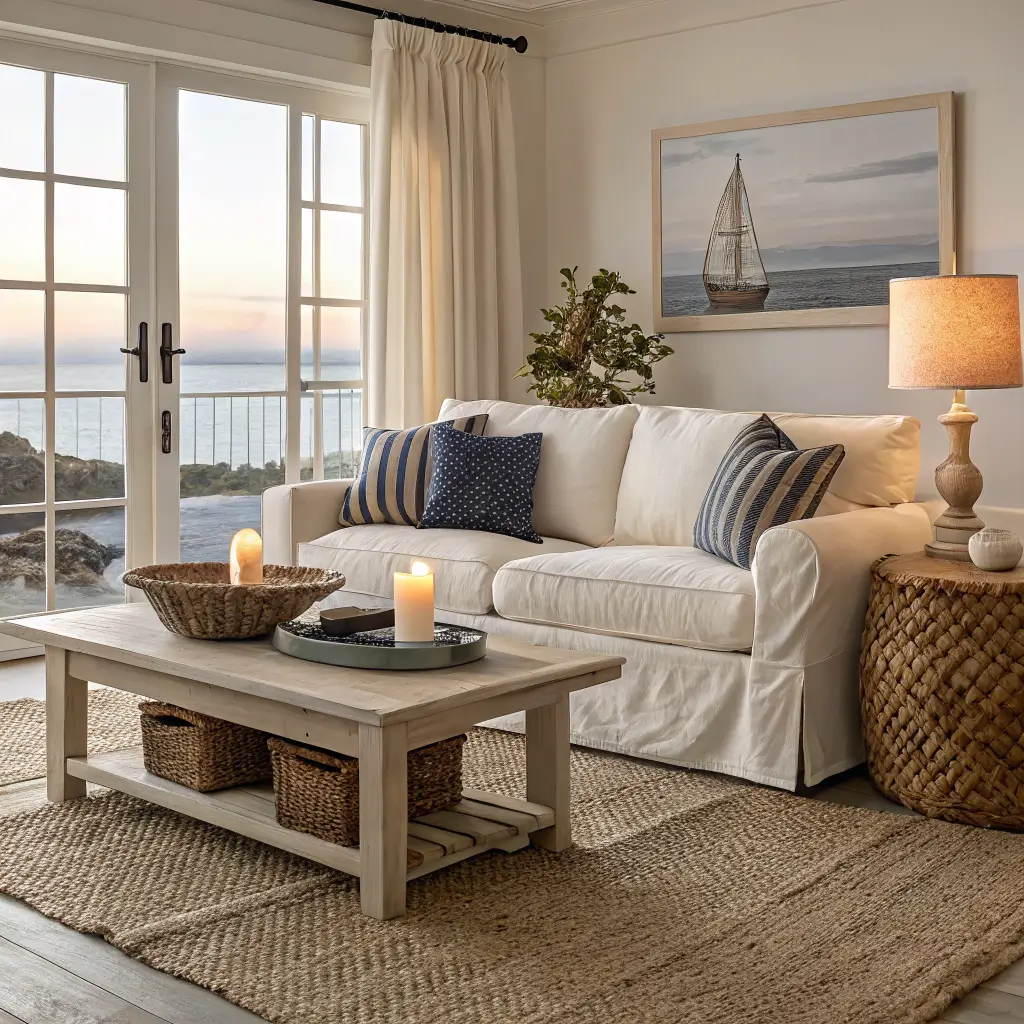
When I first moved into my current place, I thought a beachy apartment meant buying every seashell-shaped object I could find. It took me about two months to realize the look works best when you strip things back to linen, jute, and a single muted blue pillow.
Conclusion
The beachy apartment that worked for my friend was a studio with white walls, a jute rug, and a single framed photograph of the ocean she had taken herself. She had added a ceramic bowl of shells on the coffee table, a stack of books about sailing, and a lamp with a base that looked like driftwood. The room felt like the coast because the objects had come from the coast, not because they had been bought to look like it.
More Decor Ideas to Explore
- The Coastal Farmhouse Look, Done Right: A Real Guide to Beachy Farmhouse Decor That Doesn’t Feel Like a Theme Park
- Very Tiny Bathroom Ideas: How to Style a Micro Bath That Actually Works
- Coastal Living Room Decor That Doesn’t Look Like a Gift Shop: A Modern, Rental-Friendly Guide
- Coastal Minimalist Decor: A Real Guide to Getting the Light, Calm Beach-House Look (Without the Seashell Clichés)