What “Luxurious” Actually Means (And Who This Is For)
Luxurious bathrooms aren’t about throwing money at marble and hoping it reads as expensive. I learned that the hard way after my first remodel, where I spent four figures on a veiny Calacatta vanity top and then wrecked the whole effect with a builder-grade mirror and a plastic soap pump. The bathroom looked confused. Not luxe — just busy.
If you’ve been staring at your bathroom thinking something feels off and I don’t know how to fix it, or you’re about to drop real money on a remodel and want to make sure the result feels like a hotel suite instead of a showroom, this is the guide I wish I’d had.
A luxury bathroom is a daily-use spa. You walk in, the floor is warm, the lighting is soft, the surfaces are quiet and tactile, and nothing on the counter screams at you. That’s it. Whether you get there with $5,000 or $80,000 depends on how much you’re changing structurally.
Here’s the realistic breakdown:
– Cosmetic refresh (fixtures, lighting, mirror, textiles, paint): $3,000–$10,000, done in 1–3 days. Beginner-to-intermediate DIY.
– Mid-range upgrade (new vanity, lighting, faucets, partial tile): $25,000–$60,000, 1–3 weeks.
– Full spa-level remodel (freestanding tub, custom shower, heated floors, smart toilet): $75,000–$150,000+, 4–10+ weeks with permits.
A primary bath needs roughly 70–120 sq ft to feel genuinely luxurious without crowding. For a wet-room layout with a freestanding tub plus a walk-in shower in the same waterproofed zone, I’d push for 90–150 sq ft minimum. Anything tighter and you’re forcing it.
This works in three places: your primary bath (where most of the budget should go), guest baths scaled down, and powder rooms, which actually take to luxury better than people expect because they’re small and you can blow the budget on one statement vanity and a great light.
The Design Identity: Pick One Lane
The biggest mistake I see — and made — is trying to blend three styles. Pick one and commit.
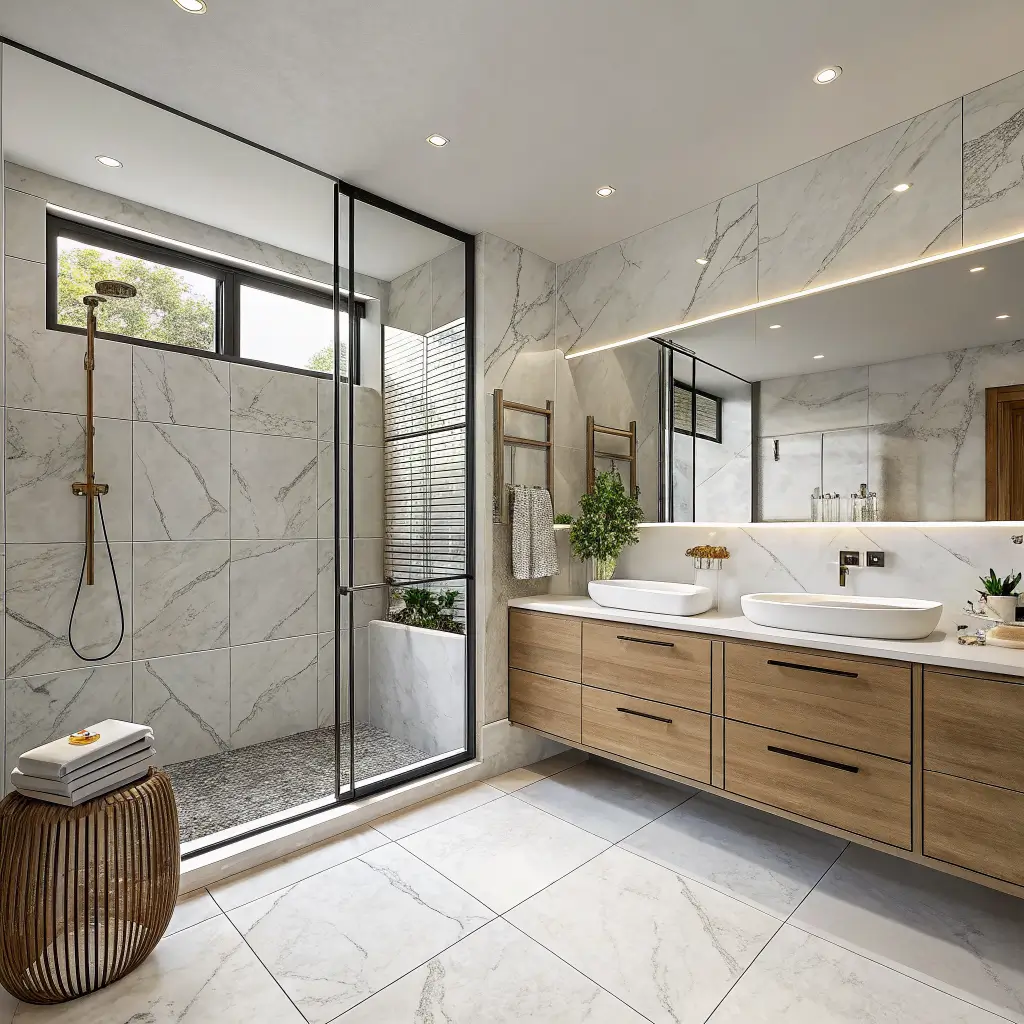
Modern Minimalist. Floating vanity, frameless glass, flat-front cabinetry, hidden lighting in coves and under counters. Palette stays in warm whites and greiges. This is the “Aman hotel” look.
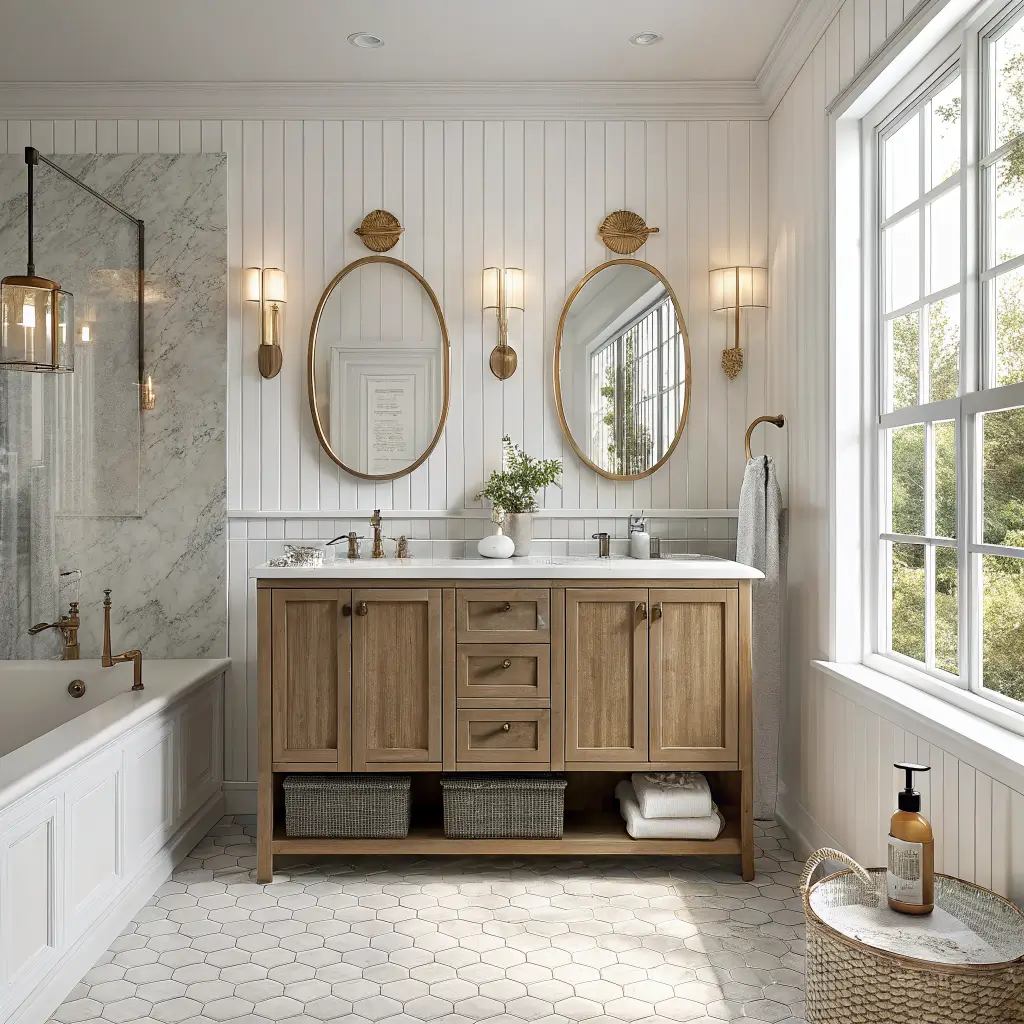
Contemporary Classic. Marble or marble-look porcelain, paneling or fluted millwork, brushed brass hardware, more visible architectural detail. Think modern Parisian.
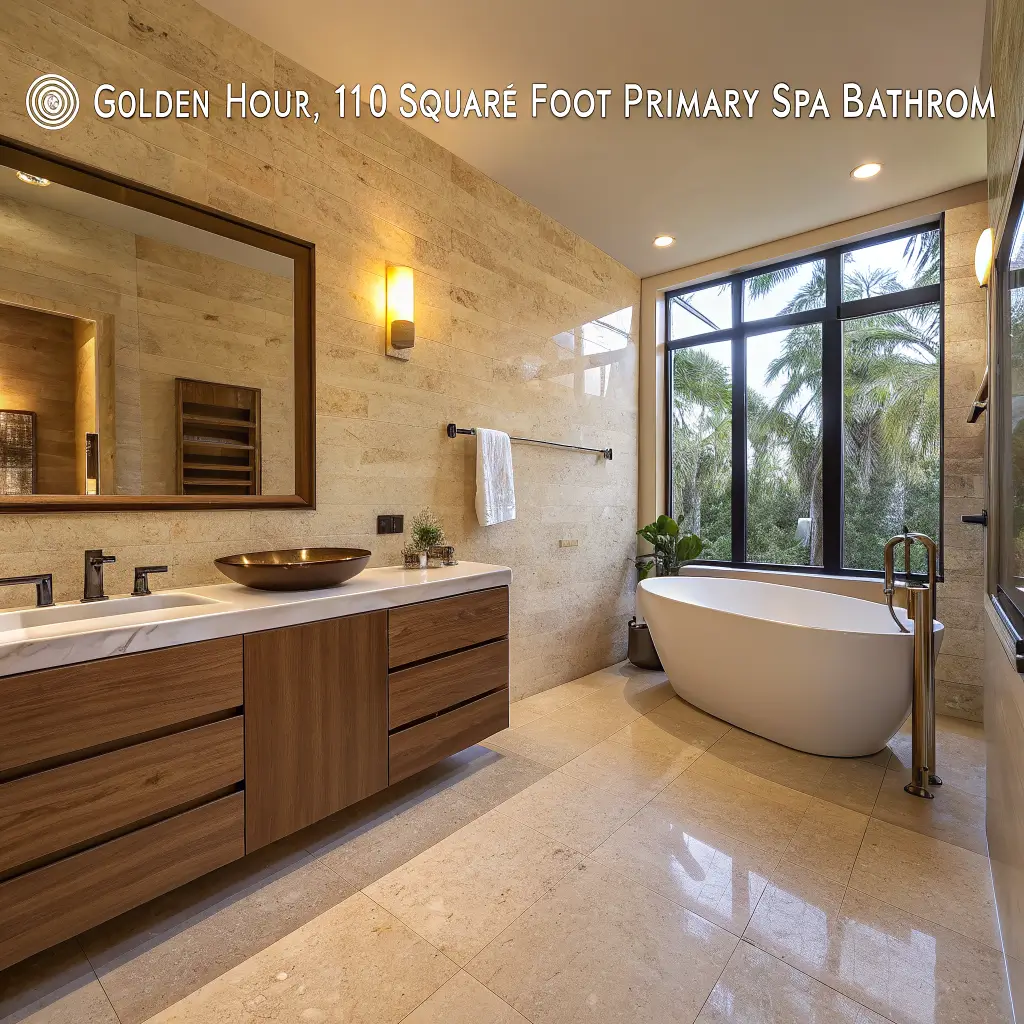
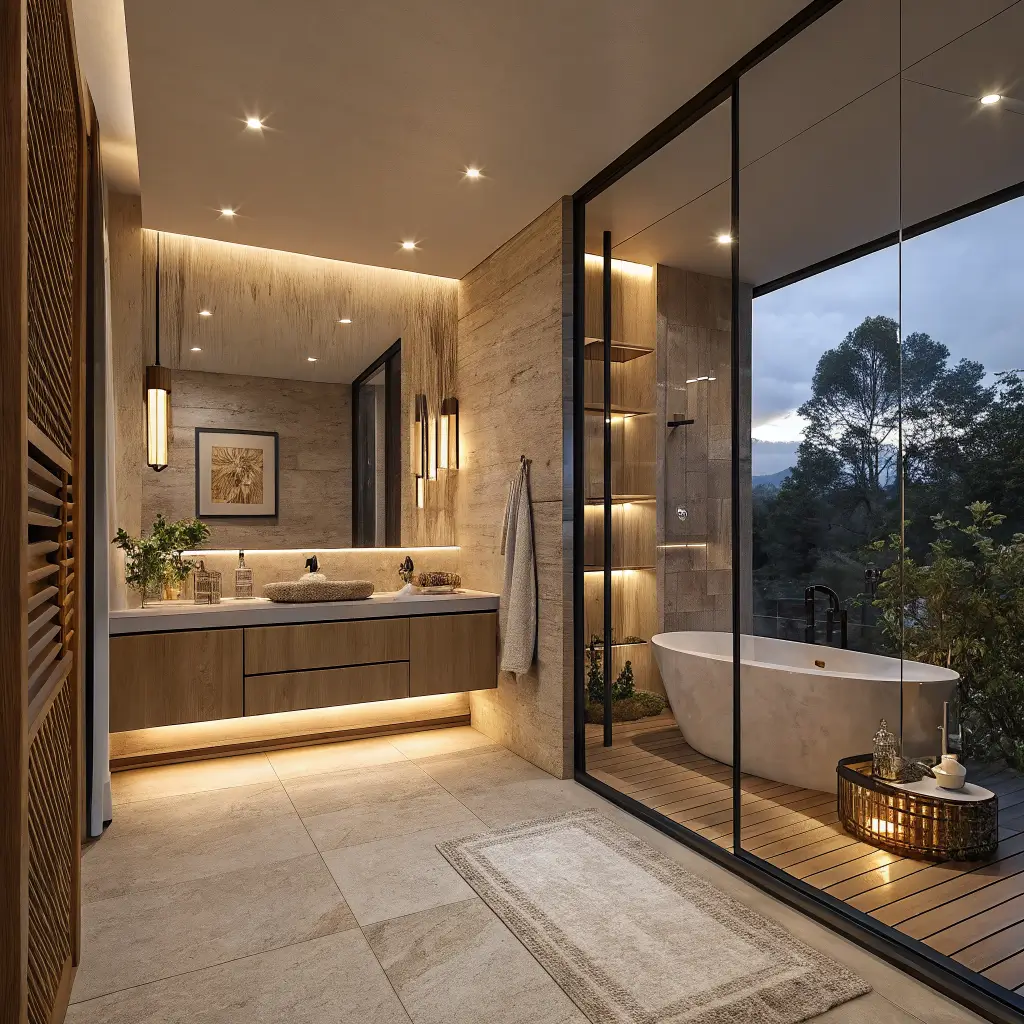
Organic Spa. Travertine or limestone, rift-cut oak vanity, plaster walls, warm earth tones, real plants. Reads natural and quiet.
I went organic spa in my own bathroom after bouncing between the first two for months. Once I committed, the decisions got easier. Every product I considered after that had to pass one question: does this belong in a Japanese ryokan?
Colors That Read Expensive
– Warm whites (alabaster, soft ivory) on walls and large surfaces
– Greige and taupe for tile and stone, especially with subtle veining
– Charcoal, ink black, or espresso for vanities and accent walls — contrast keeps “all white” from going sterile
– Muted green or blue-gray as a single accent (cabinetry or one tile run)
What kills the look: cool white next to warm cream, or bright pure white grout against off-white tile. Stay in one temperature family.
Materials That Pull Their Weight
– Large-format porcelain or stone slabs on floors and walls — fewer grout lines instantly read as high-end
– Natural stone (Calacatta, Carrara, limestone, travertine) where you can afford it; premium porcelain slabs that mimic stone where you can’t
– Brushed brass, polished nickel, or matte black fixtures — pick one as your hero finish
– Rift-cut oak or walnut for vanities; fluted wood fronts if you want texture
– Frameless glass for showers and partitions
The Pieces That Actually Matter
Hero Pieces (Pick Your Focal Point)
You get one focal point. One. This is the rule I break most often and regret every time.
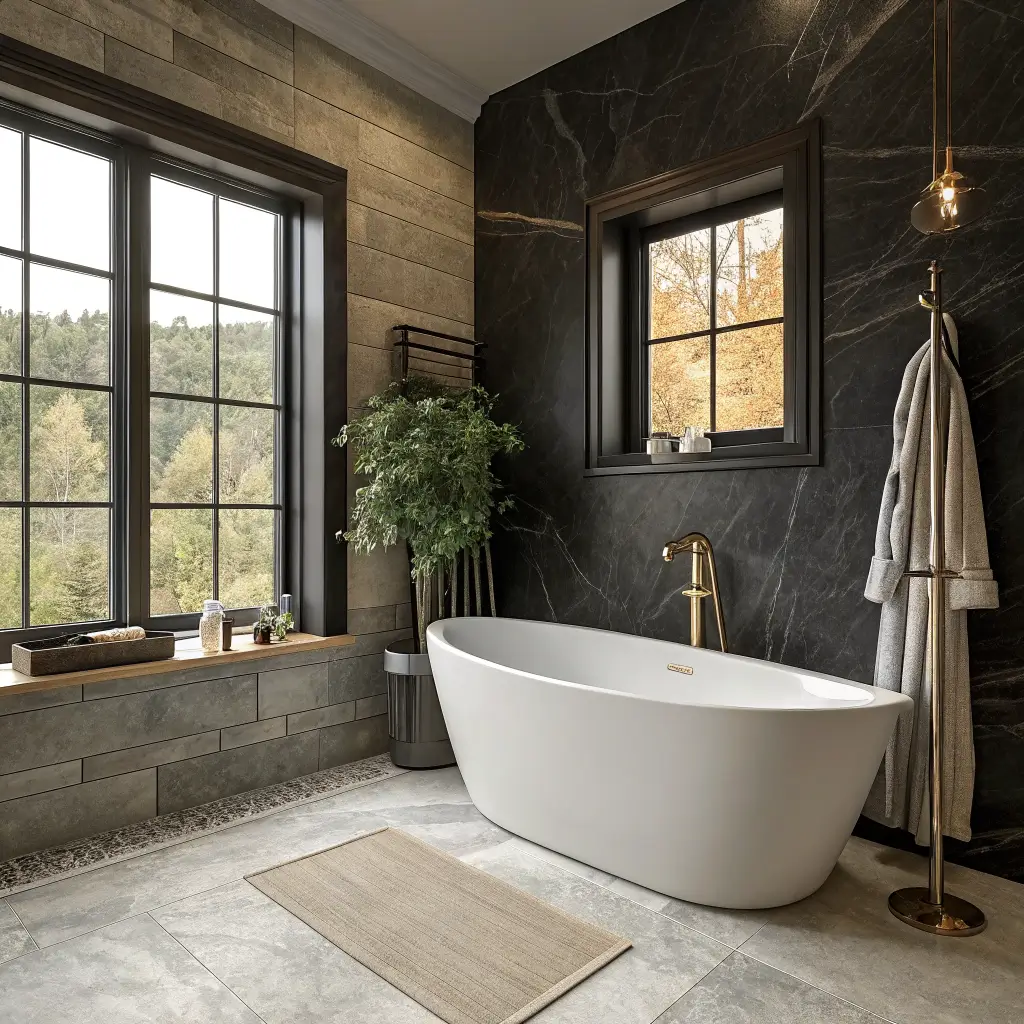
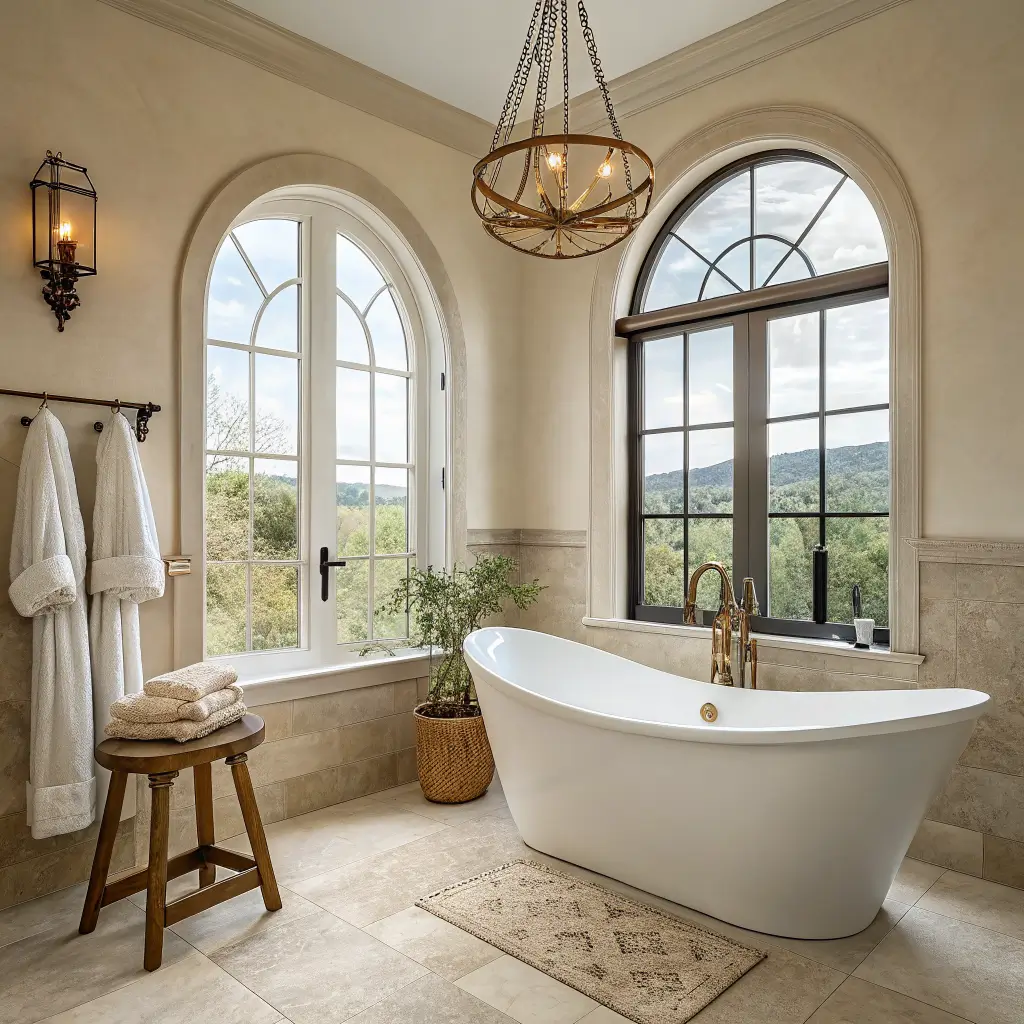
Freestanding soaking tub. Sculptural oval or slipper shape, ideally near a window or under a pendant. Designer tubs run $1,500–$7,000. Worth it if you actually soak; a waste if you don’t. I take maybe eight baths a year, and I still ordered the tub because the room demanded that focal point — but I’m honest about it.
Walk-in or double shower. Linear drain so the floor stays uninterrupted. Ceiling-mounted rain head centered, hand shower on a slide bar, controls reachable from outside the spray. Body sprays if you have the budget and the wall depth. Built out, expect $8,000–$25,000+.
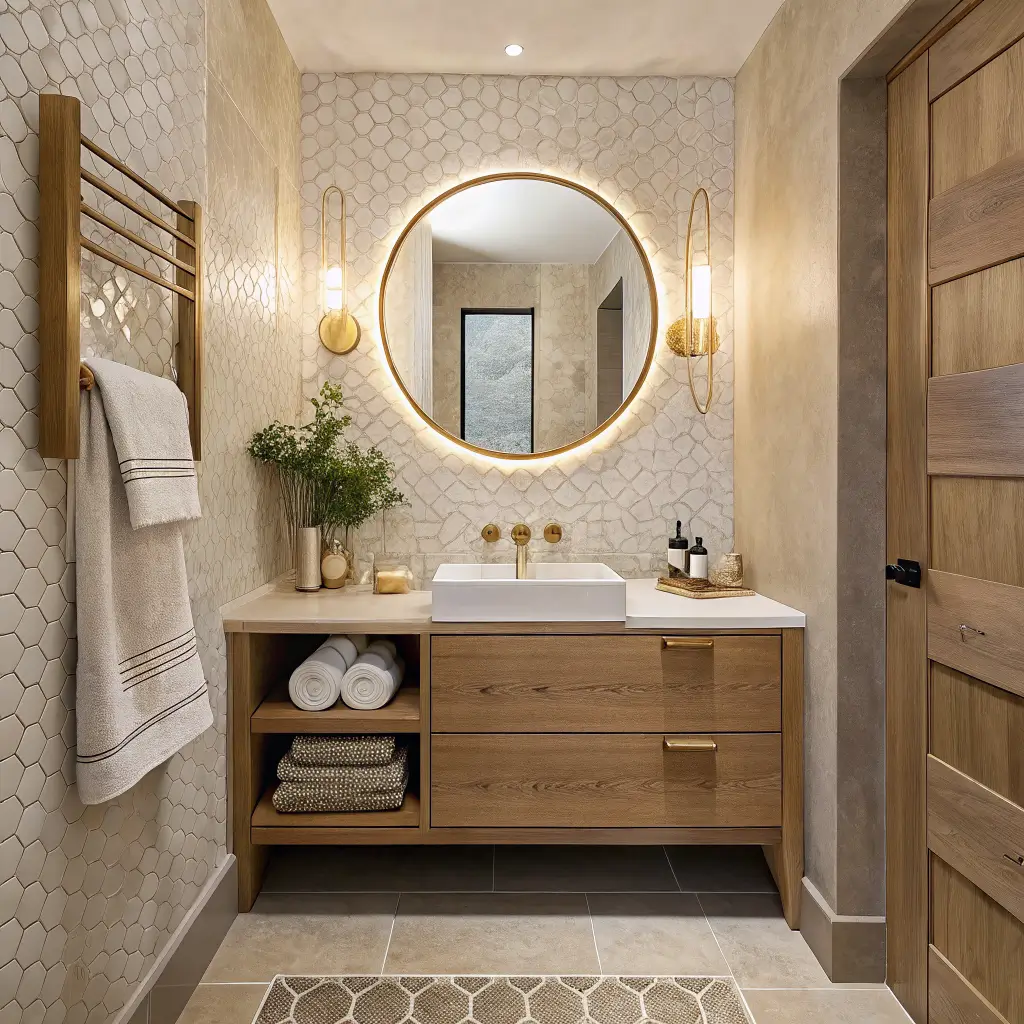
Custom or floating vanity. Double sink for a primary bath, slab or fluted front, waterfall stone edge if you want drama. The vanity is often the smartest place to spend if you have to pick.
The Supporting Cast
– LED-backlit mirror with defogger and dimmer ($300–$1,200). This single swap upgraded my old bathroom more than the new tile did.
– Statement lighting: linear sconces flanking the mirror at face height (not above — that’s what casts the under-eye shadows everyone hates), recessed ambient overhead, and an accent pendant or chandelier over the tub if code allows.
– Towel warmer — wall-mounted hardwired, or a freestanding plug-in around $200 if you’re not ready to open walls.
– Smart toilet ($1,500–$7,000+) with heated seat, bidet, night light. The night light alone is reason enough.
– Heated floors at roughly $10–$20/sq ft for electric radiant, plus labor. Do it under the main circulation path and in front of the vanity. You don’t need it under the tub.
Textiles and the Small Stuff
– Turkish cotton towels in white or warm neutrals, weight around 600 gsm. Skip the colored embroidery.
– Wool flatweave bath mat with a non-slip pad. Cotton mats look cheap fast.
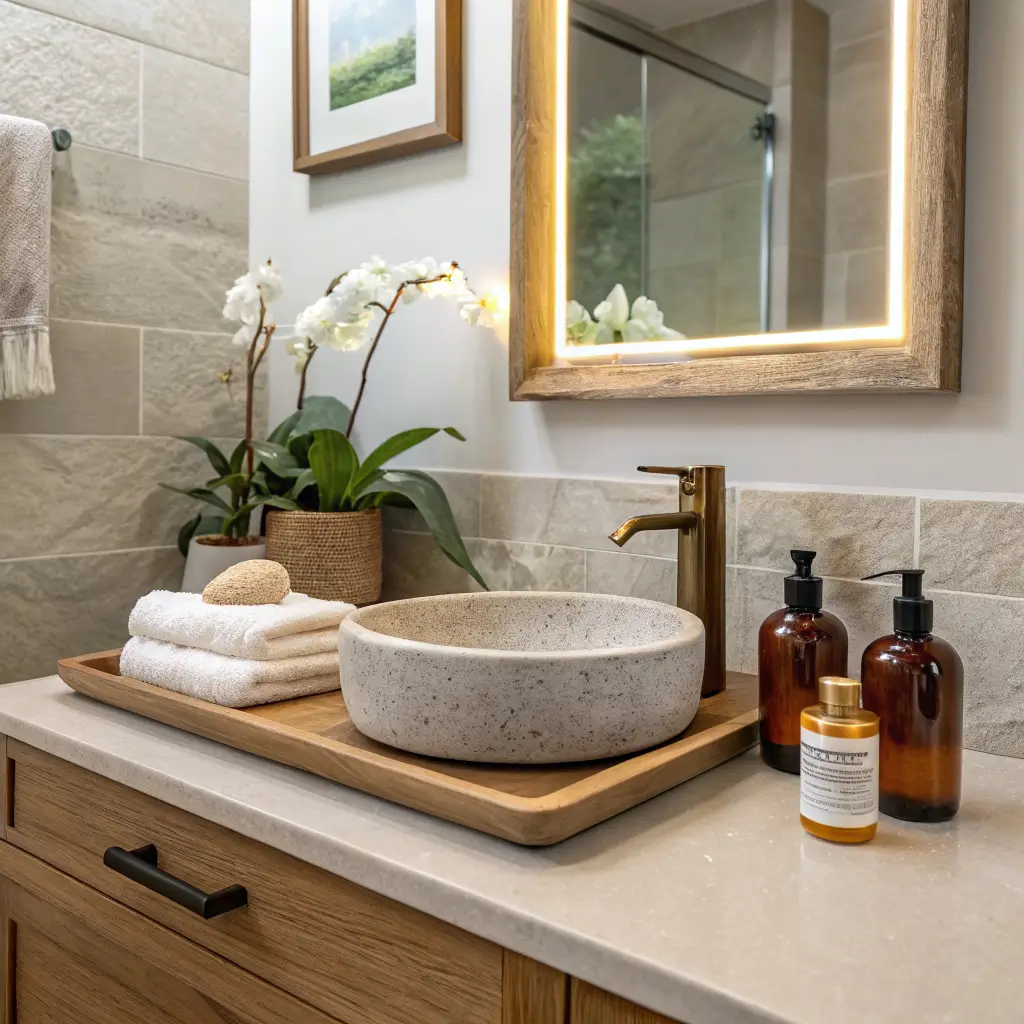
– One tray on the counter holding daily essentials. Everything else goes in a drawer.
– Decant the ugly bottles. I bought six matte amber pump bottles for about $40 total, refilled them with my actual soap and lotion, and the counter went from chaotic to calm in twenty minutes.
How to Put It Together
Start With the Architectural Base
Floor, wall tile, shower glass. These are decisions you live with for fifteen years, so go quieter than you think. Bold goes on the things you can swap.
Large-format tile (think 24×48 or larger) costs more in material and labor but saves you from a grid of grout lines that ages the room instantly.
Then Set the Lighting in Layers
Three layers, minimum:
1. Ambient — recessed cans on a dimmer, spaced for even fill, not aimed at the mirror
2. Task — sconces beside the mirror at roughly 60–66″ off the floor, with a bulb output around 75–100W equivalent
3. Accent — LED strips under a floating vanity, inside a niche, or in a cove
Put everything on dimmers. Evening mode in a luxury bathroom is maybe 15% brightness with the accent layer doing most of the work. Without dimmers, you have a dentist’s office.
Style the Surfaces Last
– A tray with daily essentials
– One sculptural object (a stone vessel, a small ceramic piece)
– One living thing — eucalyptus bundle in the shower, a pothos on a ledge, an orchid on the vanity
– Art in a moisture-safe frame, hung where steam won’t hit it directly
Where to Spend and Where to Save
Spend on:
– Tile and stone (you can’t fake this well)
– The vanity
– Plumbing fixtures — cheap faucets feel cheap every time you touch them
– Shower glass (frameless, low-iron if you can swing it)
– Lighting
Save on:
– The toilet, unless you’re going smart
– The mirror — a good IKEA or Wayfair LED mirror looks identical to a $1,500 one
– Accessories and trays (HomeGoods, thrift stores, estate sales)
– Paint — Benjamin Moore Simply White or Sherwin Williams Alabaster in eggshell or satin finish costs the same as anything else and looks expensive
I found a solid travertine soap dish at an estate sale for $6 that gets more compliments than my $400 faucet. Spend smart, not everywhere.
Mistakes I’ve Made (So You Don’t Have To)
Combining too many statement materials. Veiny marble floor + patterned shower tile + colored vanity + brass-and-glass chandelier = visual chaos. One hero surface, the rest quiet.
Mixing metals randomly. Matching all your metals reads safe and a little dated. Mixing two intentionally — say, matte black mirror frame with brushed brass faucets — reads designed. Mixing three or more reads like you forgot what you ordered.
Mounting lights above the mirror only. Top-down light puts shadows under your eyes and nose. Vertical lights flanking the mirror are the fix, every time.
Not planning storage. Luxury materials with shampoo bottles on the floor of the shower isn’t luxury. Build in a tall niche (12″x36″ minimum), put outlets inside a vanity drawer for the toothbrush charger and hair tools, and include a tall cabinet for towels and bulk supplies.
Forgetting ventilation. A quiet, high-CFM exhaust fan (think Panasonic WhisperCeiling, around 1.0 sone or less) protects everything you just spent money on. Steam destroys paint, warps wood, and stains stone. Run it for 20 minutes after every shower, on a timer switch.
Crowding the walkways. Aim for 36″ minimum in main circulation paths. A massive vanity that forces you to sidestep past the toilet will undo every other good decision.
Easy Swaps If You’re Not Remodeling
If a full remodel isn’t happening, here’s the order I’d attack a cosmetic refresh:
1. Swap the mirror for an LED-backlit one with a defogger
2. Replace the vanity light with vertical sconces (or one long linear sconce if your wiring is centered)
3. Change the faucet and shower trim to a single new finish — brushed brass or matte black
4. Replace cabinet hardware in the same finish
5. New towels and bath mat in one color story
6. Decant your products into matching bottles
7. Add one plant that handles humidity (pothos, fern, orchid)
8. Plug-in towel warmer by the shower
That’s a weekend of work and somewhere between $1,500 and $4,000, depending on the mirror and faucet. The bathroom will feel like a different room.
Seasonal Refreshes That Actually Read
Keep the bones the same; rotate the soft stuff.
– Winter: heavier waffle robe on a hook, a wool throw on the bench, amber or cedar candle, eucalyptus in the shower
– Spring: lighter linen towels, branches of cherry or magnolia in a stone vase
– Summer: citrus or fig scent, a single white orchid
– Fall: swap to a warmer towel color (clay, sand), fig and tobacco candle
No need to redecorate. Three things: scent, one plant or branch, towel weight.
A Few Common Questions
Is a freestanding tub worth it if I mostly shower? Only if you want it as the visual anchor of the room. As a functional bath, no — get a better shower instead.
Walk-in shower or tub? In a primary bath under 100 sq ft with only one bathing fixture possible, I’d take the better shower every time. Resale-wise, having at least one tub in the house matters; in this bathroom specifically, it doesn’t.
Are heated floors worth it? Yes, in cold climates. The first February morning sells you on it permanently. Skip it if you live somewhere the floor is already 70°F in winter.
What makes a bathroom look expensive on a small budget? Large-format tile (fewer grout lines), one good light fixture, a real mirror, matching metals, decanted products, and ruthless decluttering. In that order.
The bathroom I have now took three rearrangements of the vanity styling, two mirror returns, and one paint redo (the first white was too cold against the travertine) before it felt right. Luxury isn’t a single purchase. It’s the absence of every wrong thing.
Conclusion
The luxurious bathroom that felt truly luxurious to me had a deep soaking tub, a window that opened onto a private garden, and a single thick towel that was the only towel in the room. The owner had no products on display, no art on the walls, no candles. She said luxury was the absence of clutter, not the presence of objects. I soaked in that tub for an hour and did not check my phone once.
More Decor Ideas to Explore
- What Actually Makes a Kitchen Look Luxurious (And What I’d Skip)
- The Colorful Kids Room That Doesn’t Look Like a Cartoon Threw Up: A Real Parent’s Guide
- The Beachy Living Room: How to Get the Look Without It Feeling Like a Souvenir Shop
- Little Bathroom Ideas That Actually Work: Smart, Stylish Updates for Tight Spaces