The Look and Who It’s For
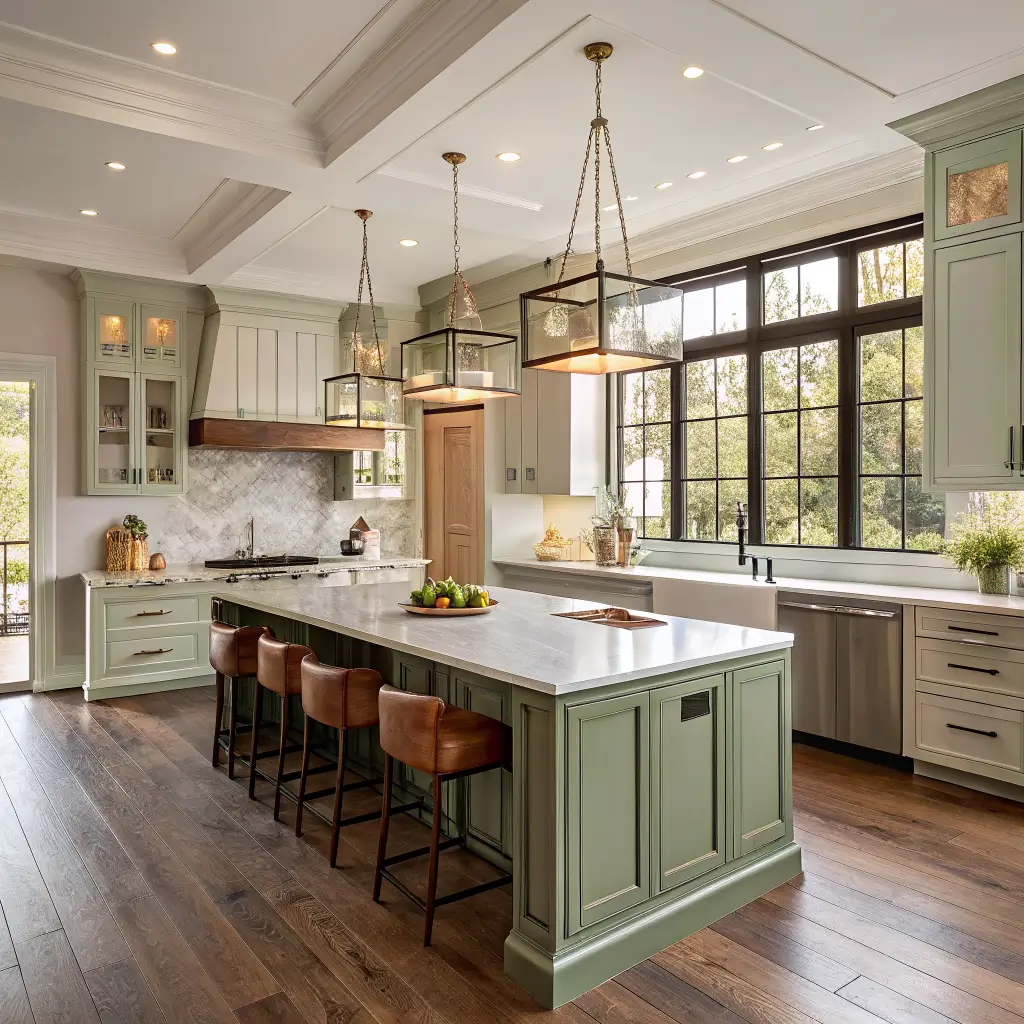
Modern luxury, the way it’s being done now, borrows from contemporary, transitional, minimalist, and even a little Hollywood Regency. The defining shift from five years ago: color is back, all-white is out, and warmth matters as much as polish.
This style suits you if:
– You actually cook and entertain, and want the room to perform
– You want one statement room in the house and the kitchen is it
– You like clean lines but hate spaces that feel like a showroom
– You’d rather have fewer, better objects than a lot of decor
It works in any size kitchen, but it sings in a medium-to-large layout with room for an island, a full-height backsplash, and a coffee or beverage zone.
Budget, Timeline, and What You’re Actually Signing Up For
Cosmetic styling — new hardware, lighting, stools, counter accessories — takes 1 to 3 days and can be done for a few thousand dollars. A real high-end remodel with custom cabinets, slab stone, and pro-grade appliances runs 8 to 16+ weeks and lands somewhere between $25,000 and $250,000+ depending on how far you go.
Rough breakdown of where the money goes in a true luxury remodel:
– Cabinetry: 30–40% of the budget
– Appliances: 15–25%
– Countertops and backsplash stone: 10–20%
– Lighting and hardware: 5–10%
– Plumbing fixtures, flooring, labor: the rest
The biggest mistake I see (and made): spreading the budget evenly. Don’t. Pick your hero and concentrate spending there.
The Hierarchy: Island First, Hood Second, Lighting Third
If you remember nothing else, remember the order. Luxury kitchens get built around a clear focal hierarchy. Island, range hood, lighting — in that order.
The island
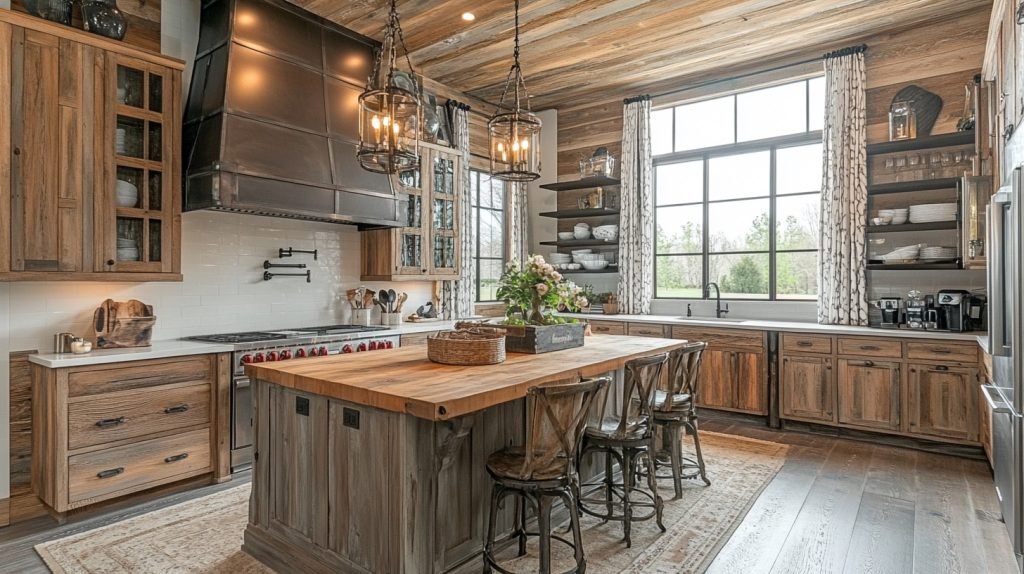
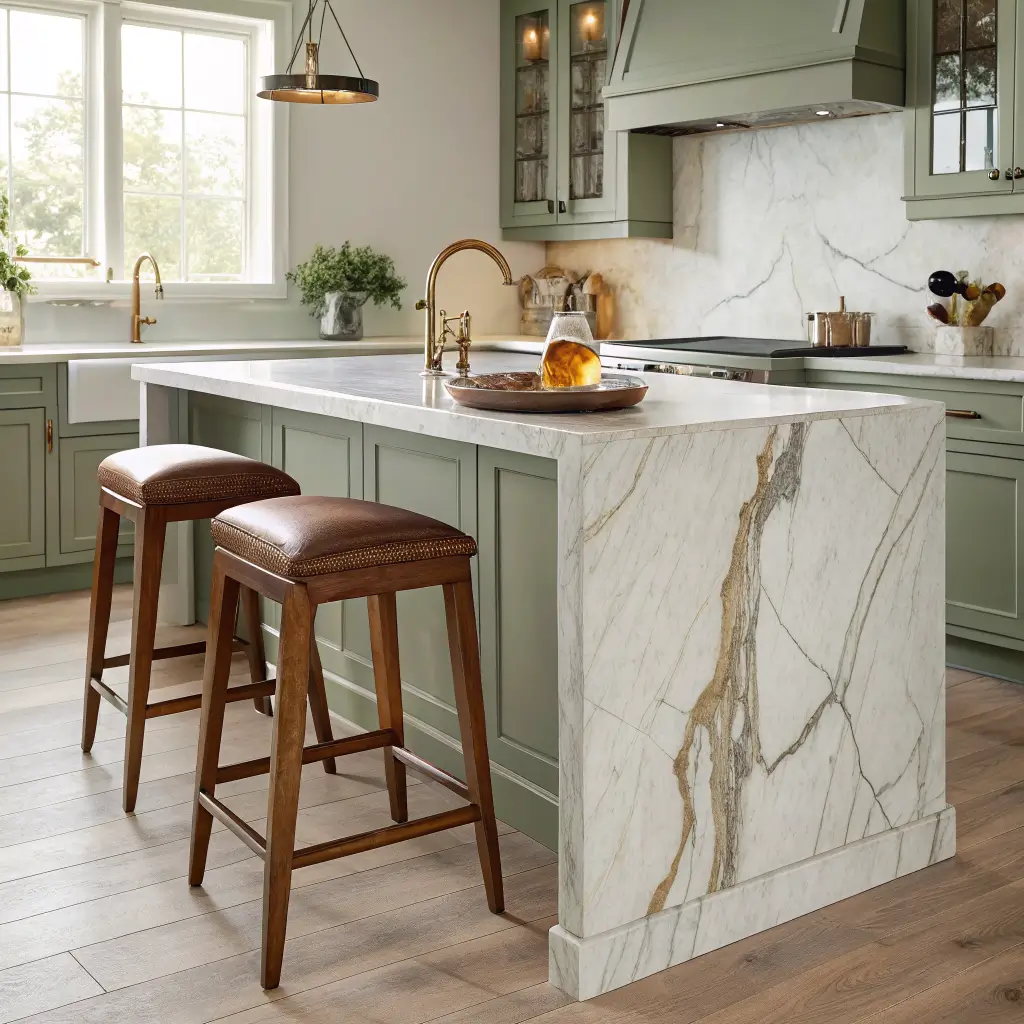
This is the room’s center of gravity. A good luxury island is oversized on purpose, often with a waterfall edge in marble or quartzite so the stone wraps down the sides. Double islands are having a moment in higher-end homes — one for prep, one for seating — but a single oversized island with banquette seating at one end gets you 80% of the impact.
If you can splurge anywhere, splurge here. A slab of dramatic quartzite (think Taj Mahal, Calacatta Macaubas, or a moody Patagonia) on a 9-foot island will do more for the room than any other single decision.
The range hood
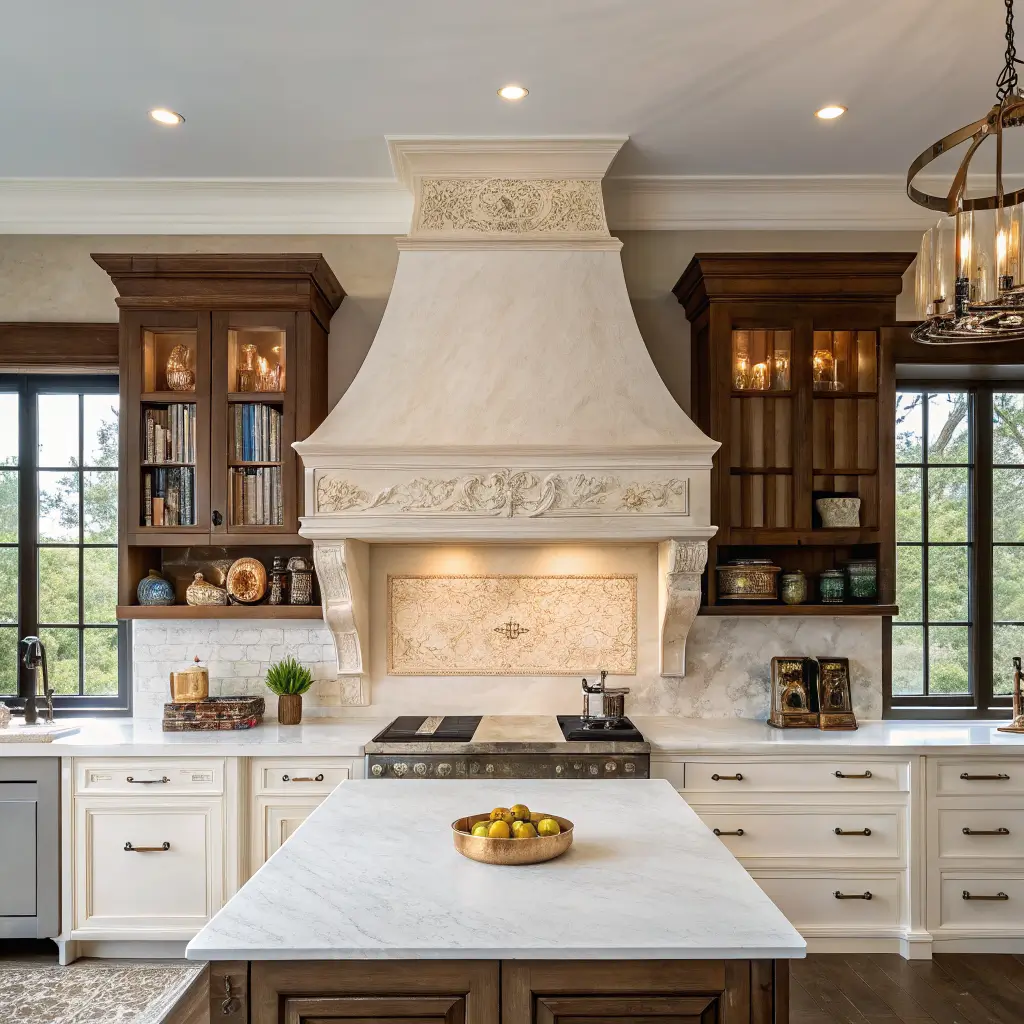
This is the second-biggest “luxury tell.” A custom plaster hood, a stone-clad hood, or a wood hood with brass strapping reads as designed in a way a basic stainless box never will. Even in a smaller kitchen, a plaster hood costs maybe $1,500–$3,500 to have built and finished and it changes everything.
The lighting
Three layers, no exceptions:
– Pendants or a chandelier over the island — go bigger than you think. For a 7-foot island, two pendants 28–32 inches in diameter, or three at 16–20 inches.
– Under-cabinet lighting on a separate switch
– One decorative sconce or fixture somewhere unexpected — over the sink, flanking the hood, or above open shelving
Undersized lighting is the single most common reason a renovated kitchen still looks builder-grade.
Color, Materials, and the Green Kitchen Question
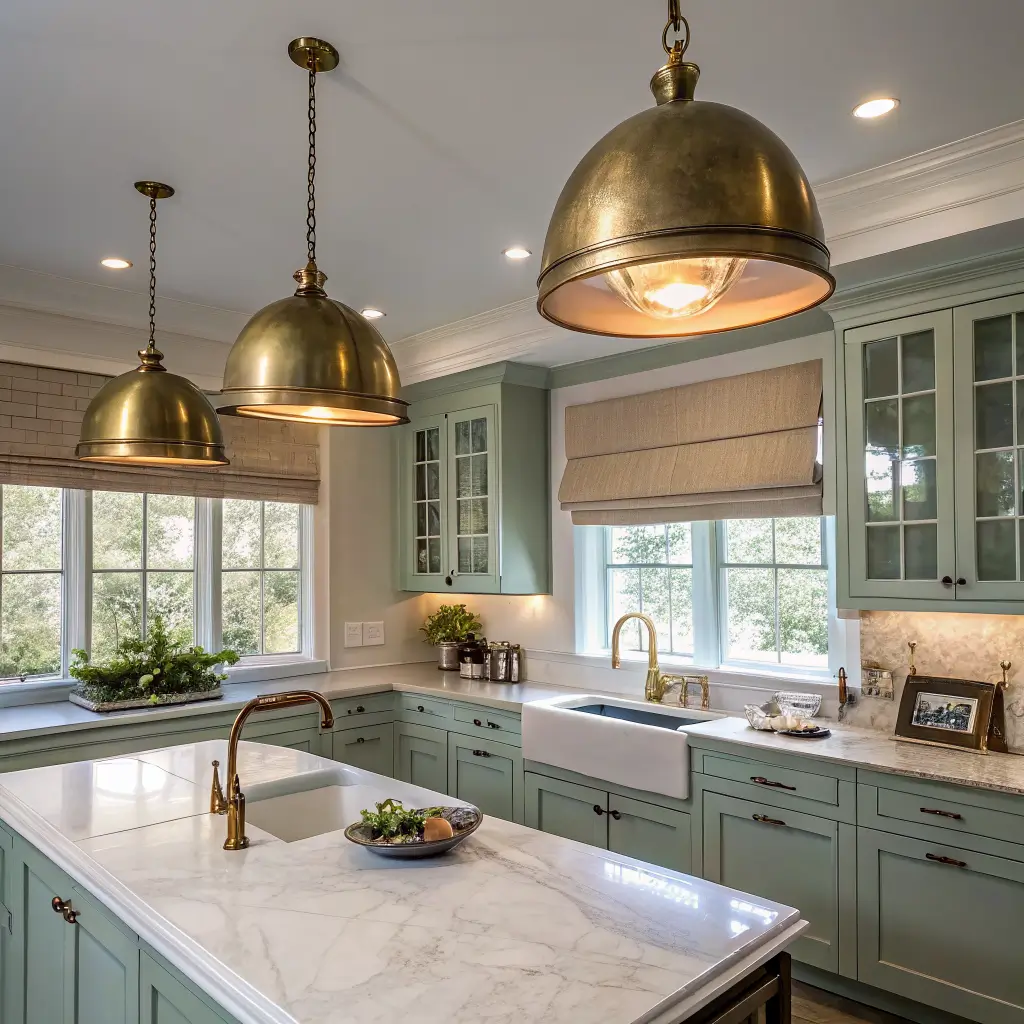
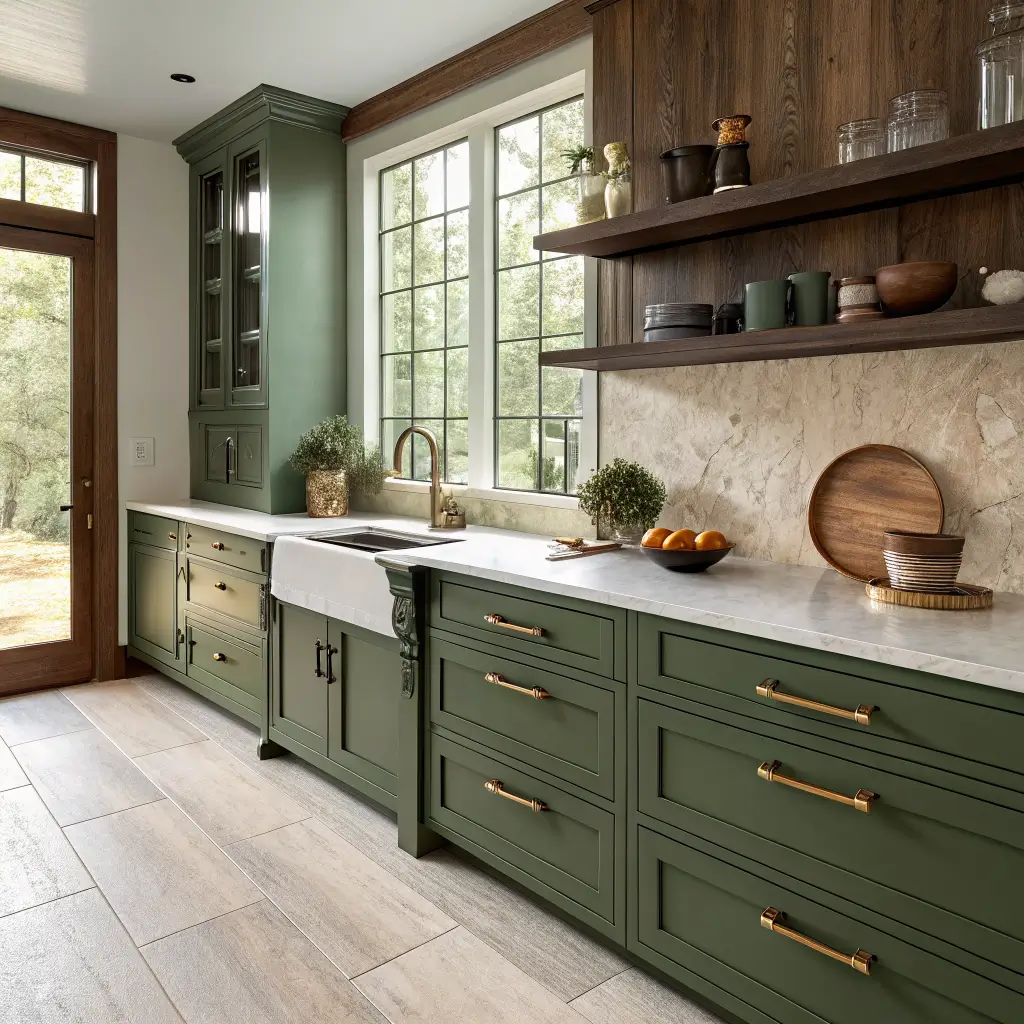
Yes, green kitchens are still in. They’re not a trend at this point — they’re the new neutral. Sage, olive, deep forest, and muddy avocado are all showing up in high-end work, and they age better than the all-white kitchens that defined the 2010s.
My palette rules:
– 2 to 3 major colors max, plus one metal
– One hero material that everything else supports
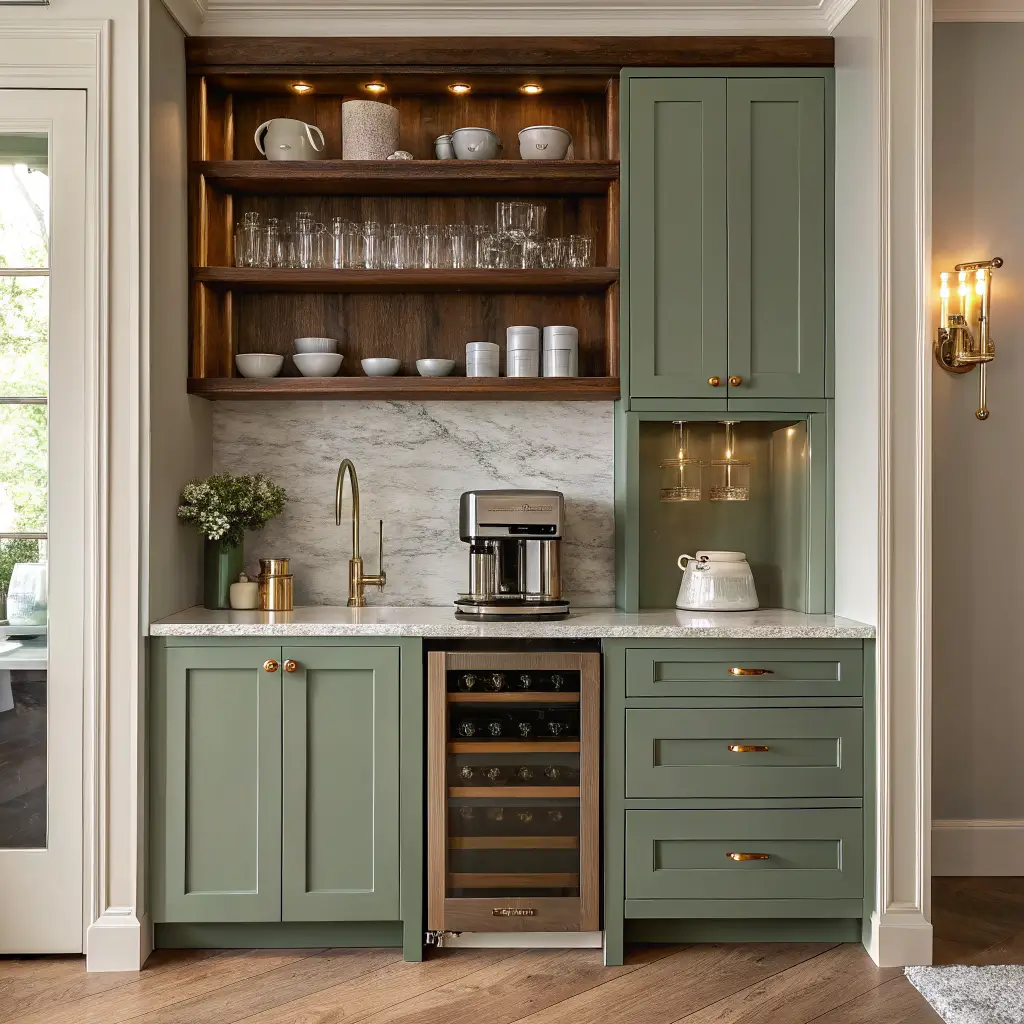
– Warm and cool finishes balanced together — green cabinets need brass and walnut to feel collected, not cold
Materials worth knowing:
– Quartzite — my pick over marble for counters; nearly as beautiful, dramatically more durable, doesn’t etch from lemon juice
– Marble — best saved for the backsplash or island waterfall where it won’t get hammered
– Quartz — fine for perimeter counters, especially the newer veined options
– Antique brass — softer than polished, ages well, doesn’t fingerprint like polished brass
– Walnut — the wood that reads expensive in cabinetry, shelving, and cutting boards
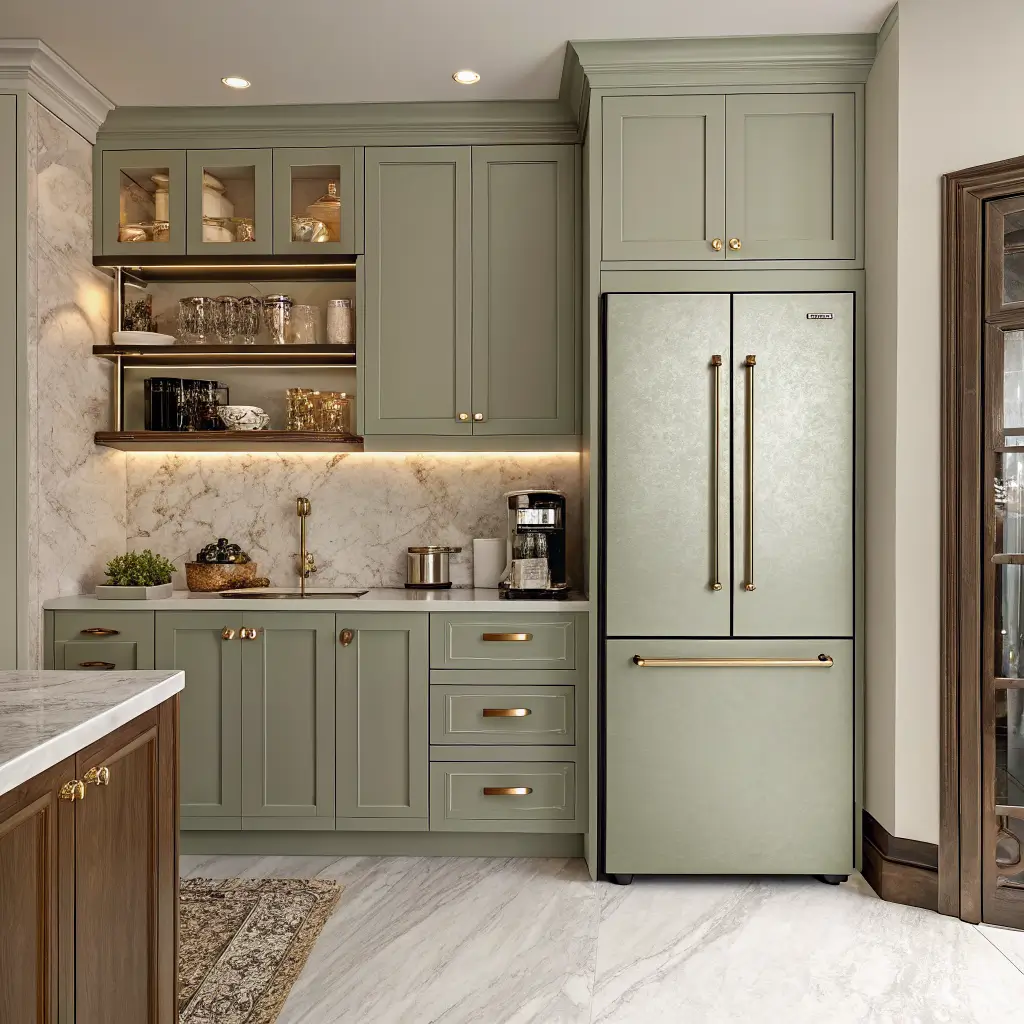
A combo I’ve put in two kitchens now and would do again: muted sage inset cabinets, unlacquered brass hardware, honed quartzite counters, walnut open shelves, and a plaster hood. It looks expensive because the materials are doing the work, not the accessories.
The Details That Read as High-End
Beyond the big three, these are the moves that separate a nice kitchen from a luxurious one:
– Inset cabinet doors rather than overlay — the cabinet face frame shows, and it reads custom
– Full-height backsplash in slab stone behind the range, not a 4-inch strip
– Panel-ready refrigerator and dishwasher so the cabinetry runs uninterrupted
– An appliance garage — a cabinet with a lift door or pocket door that hides the toaster, coffee maker, and stand mixer
– A dedicated beverage or coffee zone with a built-in espresso machine, glassware shelf, and small undercounter fridge
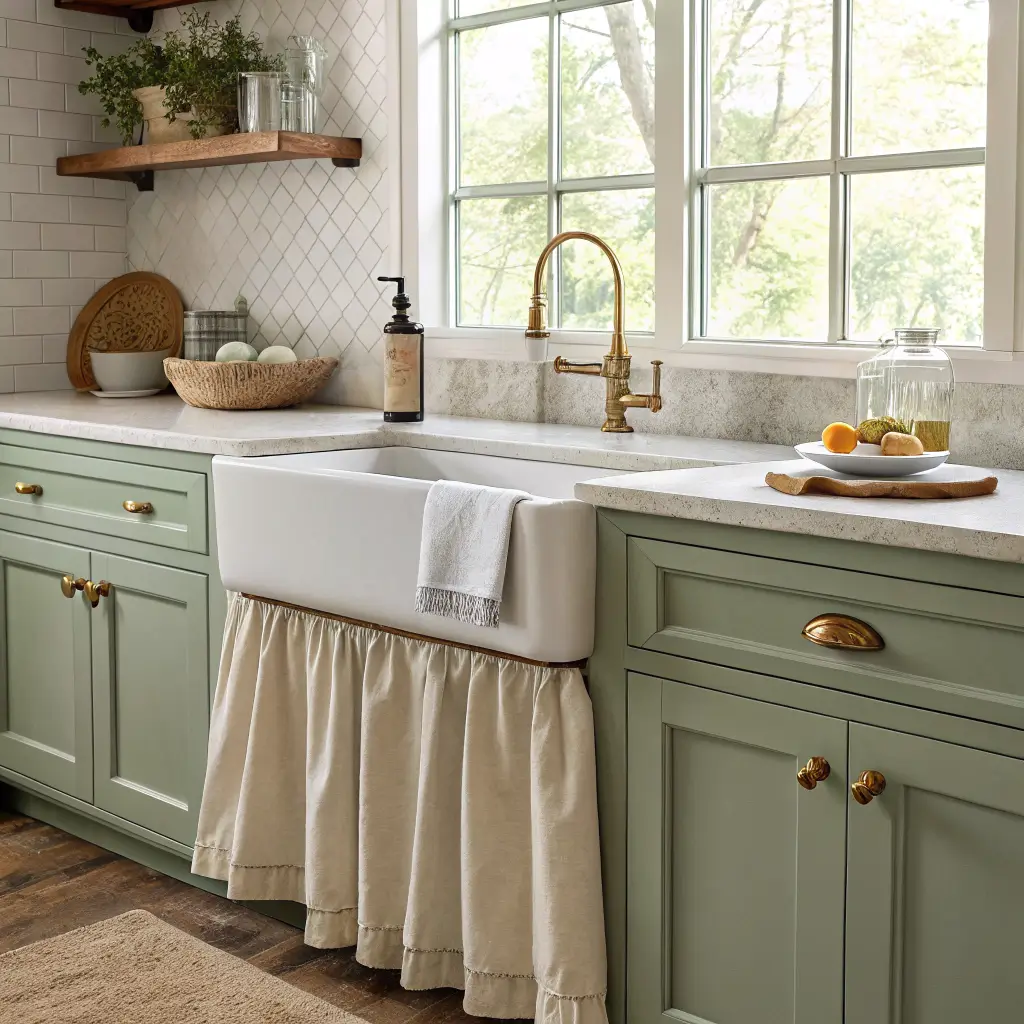
– Skirted sink front or undersink curtain in linen — softens the architecture, reads as collected
– Upholstered or leather counter stools instead of metal
– Roman shades in unlined linen over the sink window
The undersink curtain is the kind of small move that confuses people the first time they see it, and then they want it.
How to Style the Counters Without Cluttering Them
Once the bones are in, this is where it goes sideways. Most “luxury kitchen” Pinterest images look effortless and contain about six visible objects total. That’s the trick.
Style in zones, one cluster per zone:
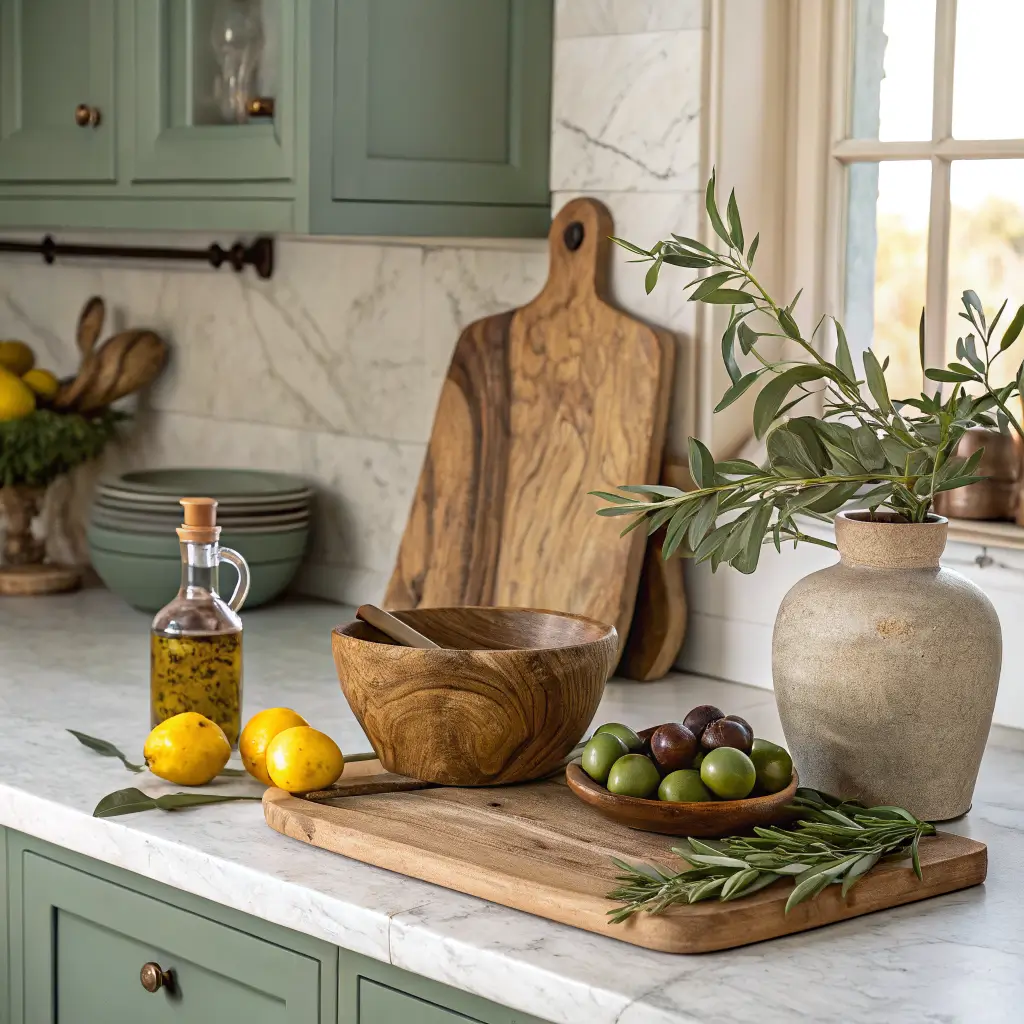
– Prep zone: a thick wood cutting board leaned against the backsplash, a stoneware crock with wooden utensils, a single olive oil bottle
– Coffee zone: machine, a small stack of ceramic mugs, one linen tea towel
– Display zone: a footed wood bowl with citrus or stone fruit, one ceramic vase with olive branches or eucalyptus
– Sink zone: a low ceramic dish for sponges (no plastic bottles on display — decant soap into amber or clear glass)
Everything else goes away. Toaster in the garage. Paper towels in a drawer holder. Magnets off the fridge.
Where to Spend, Where to Save
Spend on:
– Counters and backsplash stone (this is forever)
– Cabinetry construction and door style
– The range hood
– Island pendants
Save on:
– Perimeter cabinet finish (paint it; even mid-grade boxes look custom in the right color)
– The faucet — there are $300 faucets that look like $1,200 ones
– Counter styling objects — thrift stores and estate sales are full of wood boards, brass trays, and ceramic vessels
– Barstools — wait for the sale; West Elm, CB2, and McGee & Co. all run 20–30% off several times a year
My favorite thrift score: a hand-carved olive wood bread board, $8 at an estate sale, that lives propped against my backsplash and gets photographed more than anything else I own.
The Mistakes I See Constantly
– All-white everything. Reads as 2015. Add wood, color, or a darker island.
– Too many hero materials. Pick one. A marble backsplash, a green island, AND brass everywhere AND a statement hood is too loud.
– Cluttered counters. No amount of slab marble survives a row of vitamin bottles and a knife block.
– Underscaled lighting. A 12-inch pendant over a 9-foot island looks lost.
– Mismatched metals done badly. Mixing is fine — brass with blackened steel works — but pick a dominant metal (60%) and a secondary (40%), don’t go 33/33/33.
– Open shelving everywhere. Limit it to one wall or one section. Closed storage is what keeps the room calm.
Keeping It Fresh Without Redecorating
Once the kitchen is set, seasonal updates should be small:
– Swap the bowl of lemons for pomegranates in fall, or branches in winter
– Change tea towels from white linen to a warmer stripe
– Move the stems — olive branches in summer, eucalyptus in fall, paperwhites in winter, forsythia in spring
– Rotate cookbooks on display
Don’t repaint, don’t re-hardware, don’t restyle the whole counter. The base should stay still.
Budget-Only Version: The 1-Weekend Upgrade
If a remodel isn’t happening, here’s the order I’d attack a tired kitchen in for the biggest visible difference:
1. Replace the cabinet hardware in unlacquered or antique brass (~$5–$15 per piece)
2. Swap the faucet for something with presence — bridge faucets and articulated arms read expensive
3. Change the pendant lights over the island or sink
4. New counter stools — upholstered or wood, not chrome
5. Clear the counters down to four objects per zone
6. Add one piece of art or a leaned mirror somewhere unexpected
7. Linen Roman shade over the window
That list, done well, can take a beige builder kitchen to something that reads as designed for under $2,500.
The luxurious kitchen people remember isn’t the one with the most expensive appliances. It’s the one where the island stone stops you, the lighting is the right size, and the counters are quiet enough to let both things be seen.
Conclusion
The luxurious kitchen that felt truly high-end to me had no marble island, no professional range, no wine fridge. It had a window above the sink that looked at an oak tree, a counter made of reclaimed wood from a barn, and a single pendant light that cast a warm pool of light over the table. The owner said she had spent the budget on the view and the materials, and skipped everything that plugged in. The room felt expensive because it felt permanent, not because it felt new.