Coastal Decor That Doesn’t Look Like a Gift Shop: A Room-by-Room Guide to the Elevated Look
If you’ve searched “coastal decor” and recoiled at rope-wrapped lamps and starfish pillows, same. The version of coastal I’m writing about here is the calm, light-filled, slightly tailored one — closer to a quiet beach rental in Maine than a Jimmy Buffett bar. No anchors. No “Gone to the Beach” signs. I promise.
I’ve been styling my own living room in this direction for about three years now, and I got it wrong twice before I got it right. The first version was too blue. The second was too beige. What follows is what actually worked.
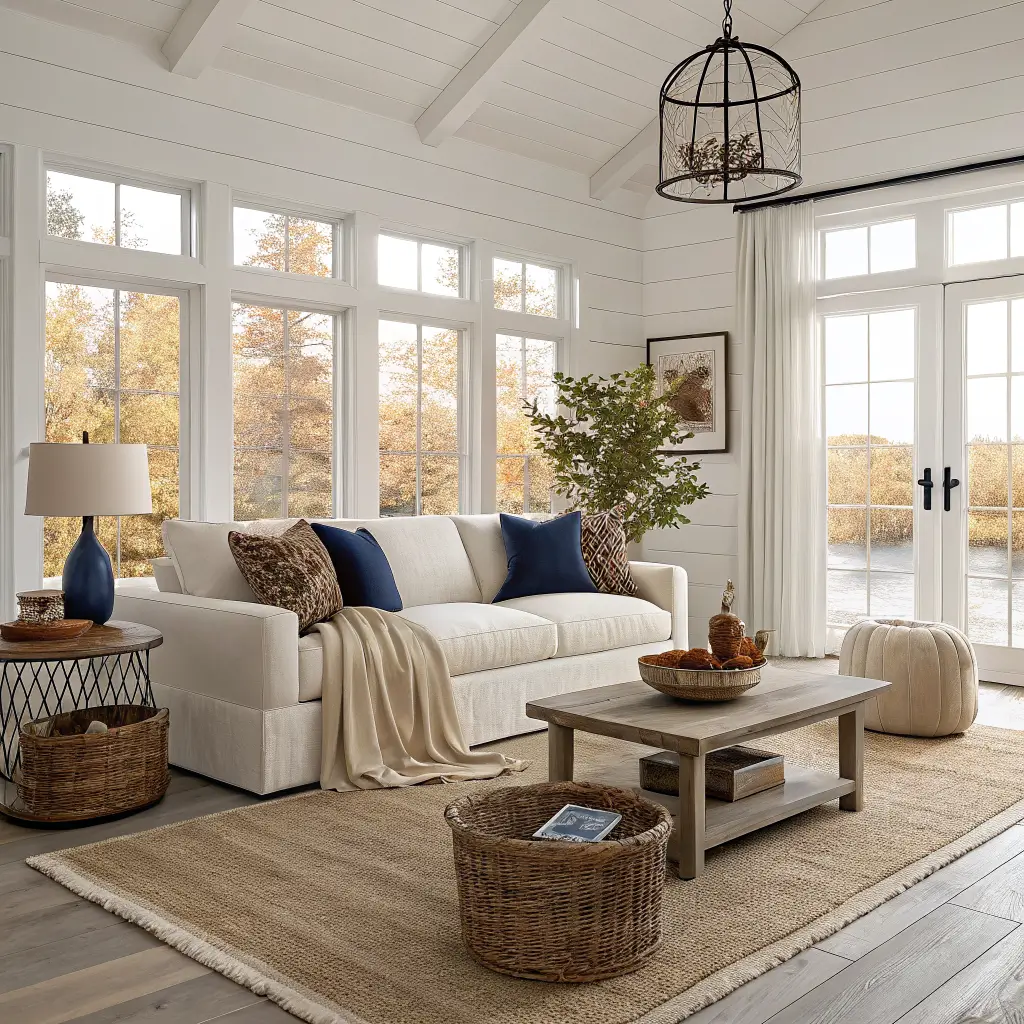
What Coastal Decor Actually Is (And Who It’s For)
Coastal style is built on three ideas: light, natural texture, and a restrained palette. That’s it. The reason it gets botched is that people add a fourth — “beach stuff” — and the whole thing tips into novelty.
This look suits you if:
– You want a room that feels calm the second you walk in
– You prefer clean-lined furniture to carved or ornate pieces
– You like blue, but not as the main event
– You’re working with a small or medium room with decent daylight
It scales up to bigger living rooms too, but the smaller the space, the more this style pays off, because it’s designed to make rooms feel airier than they are.
The difference between nautical and coastal: nautical is themed (red, navy, white, ropes, anchors, ship wheels). Coastal is atmospheric — it suggests the coast through light and material, not props.
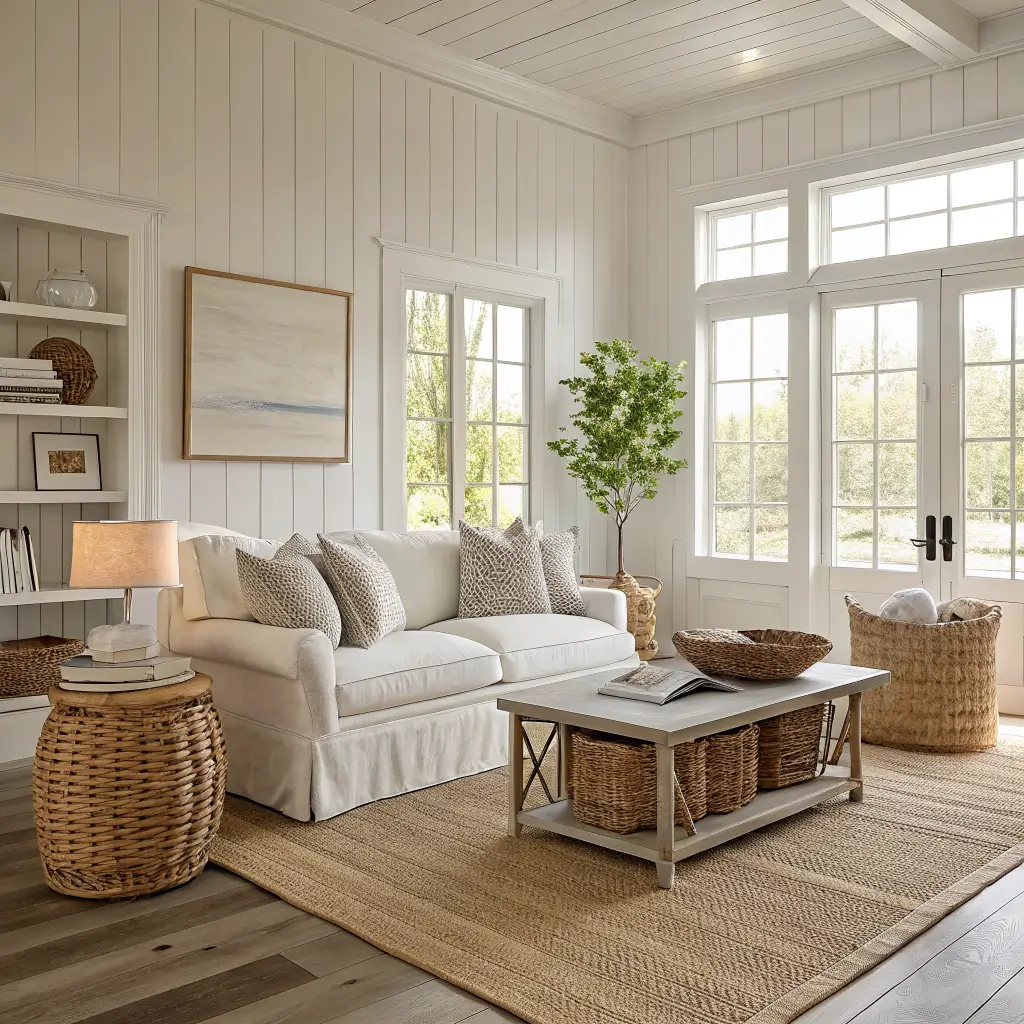
Budget and Timeline: What This Actually Costs
A full weekend gets you a styled room if the furniture is already in place. A textile-and-accessory refresh — pillows, throws, baskets, a few pieces of wall art — takes a day or two.
Rough numbers from my own receipts and recent shopping:
– Light refresh (pillows, throws, baskets, small wall pieces): $150–$500
– Full room update (rug, lamps, slipcovered seating, art, curtains): $800–$3,500+
– Adding shiplap or vertical paneling to a feature wall: add a few hundred in materials, plus a weekend
The single best money I spent was on a 8×10 jute rug (about $300). The worst was a set of “coastal” throw pillows covered in stitched seashells. They lasted a month before I gave them to my sister, who has more patience for whimsy than I do.
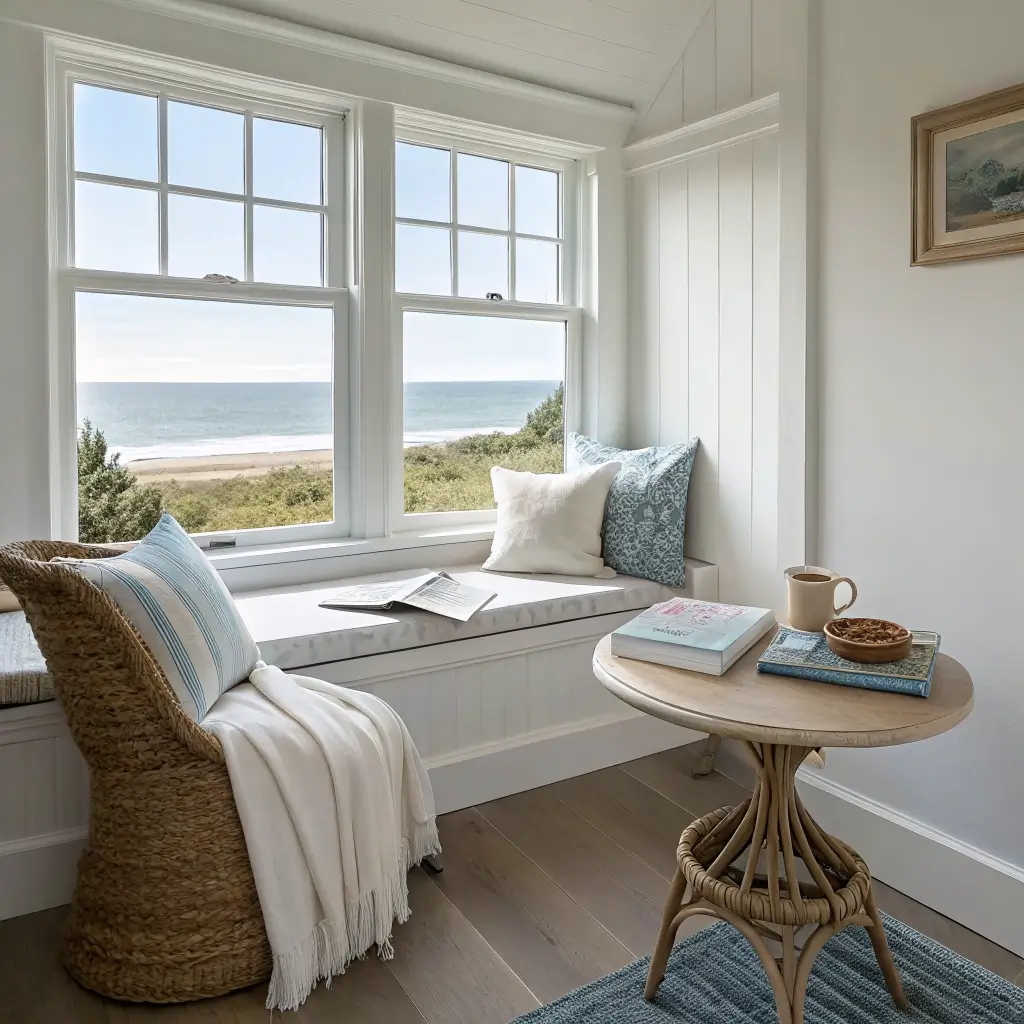
The Color Palette That Makes or Breaks It
Coastal lives or dies on paint. Get the walls right and the rest is easy.
Whites and off-whites I’d actually use:
– Benjamin Moore Chantilly Lace (clean, cool)
– Benjamin Moore Simply White (warmer, more forgiving in low light)
– Benjamin Moore White Heron
– Benjamin Moore Pale Oak (a hair warmer, reads almost-greige)
– Sherwin-Williams Snowbound
– Sherwin-Williams Pure White
Blues worth considering:
– Benjamin Moore Boothbay Gray (my pick — gray-blue, never cartoonish)
– Benjamin Moore Van Courtland Blue
– Benjamin Moore Beach Glass
– Benjamin Moore Palladian Blue
– Sherwin-Williams Sea Salt (more green than blue, gorgeous in bathrooms)
– Sherwin-Williams Krypton
Rule of thumb: test paint in actual sample patches, not chips. I tested Boothbay Gray on three walls of my office for two weeks before committing. On the north wall it read almost gray; on the south wall it leaned soft blue. That kind of shift matters.
For finish, I use flat or matte on walls and satin on trim. Eggshell on walls always looks slightly too shiny for this style.
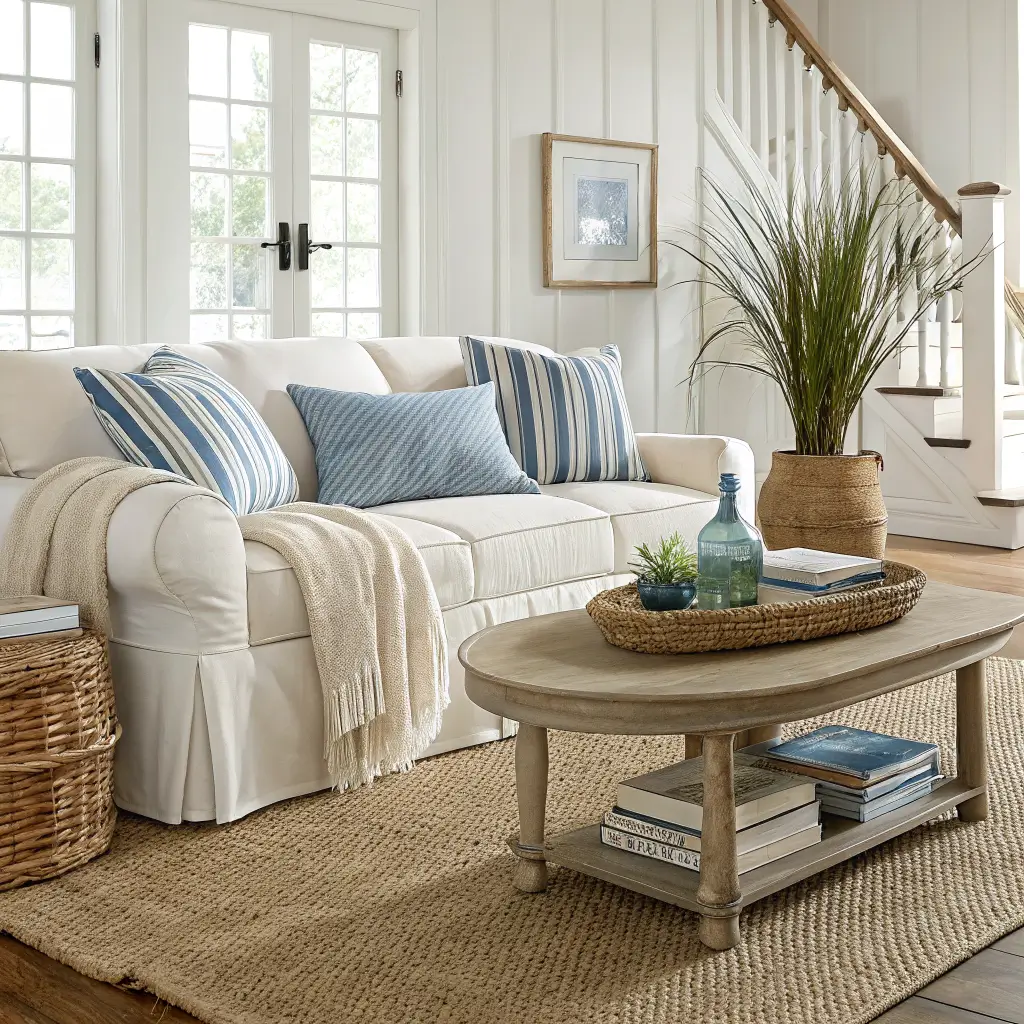
The Pieces That Do the Heavy Lifting
A slipcovered sofa or chair
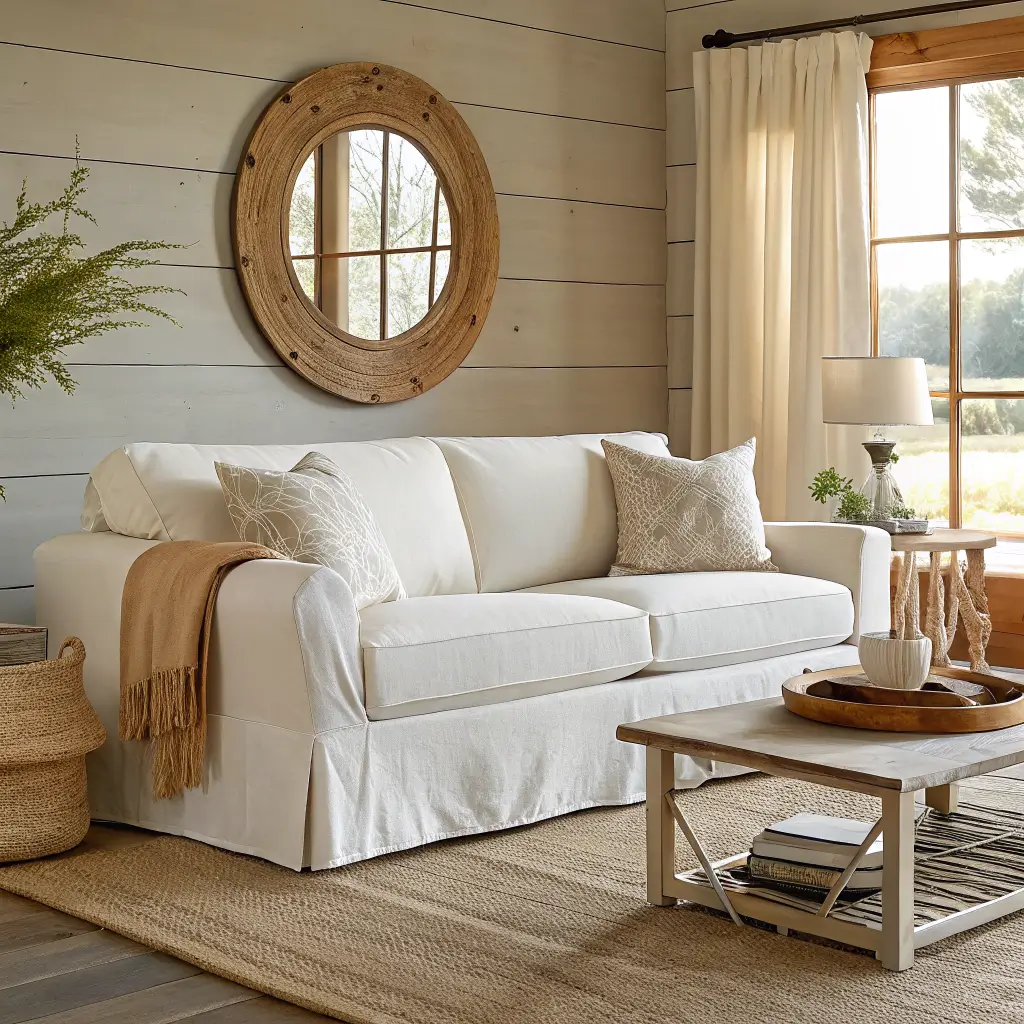
This is the anchor. Get a tailored slipcover with separate cushion covers, not a one-piece loose cover that bunches up. Baggy slipcovers are the single fastest way to push a room from coastal into “rental beach house circa 2004.” Linen, washed cotton, or a linen-cotton blend in white, ivory, or oatmeal.
A natural-fiber rug
Jute, seagrass, or water hyacinth. This one is non-negotiable for me. Jute is softer underfoot and warmer-toned; seagrass is more durable and slightly greenish-gold. For a living room, I’d go with at least an 8×10 so the front legs of all seating land on the rug.
Light wood furniture
Pale oak, ash, whitewashed pine, blonde wood. Avoid anything red-toned (cherry, dark mahogany) — it fights the palette.
Striped textiles, used sparingly
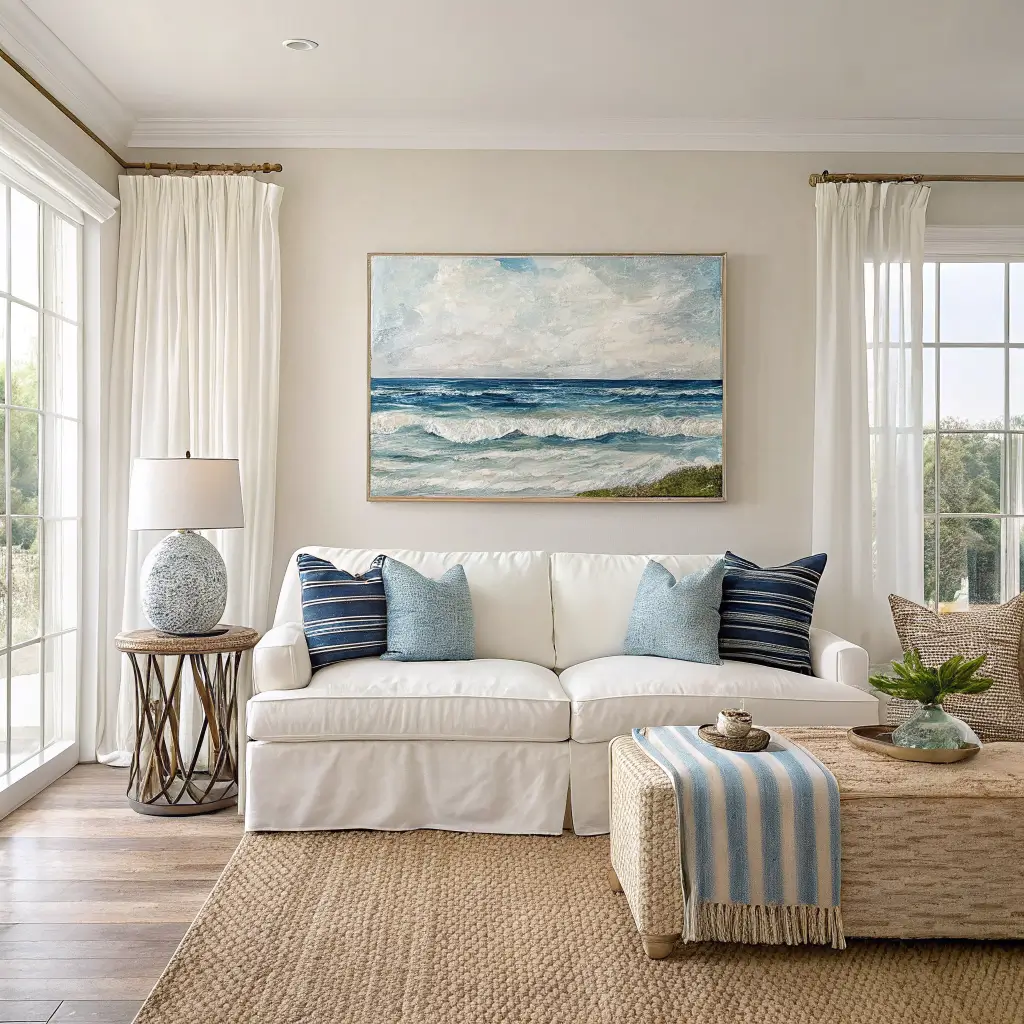
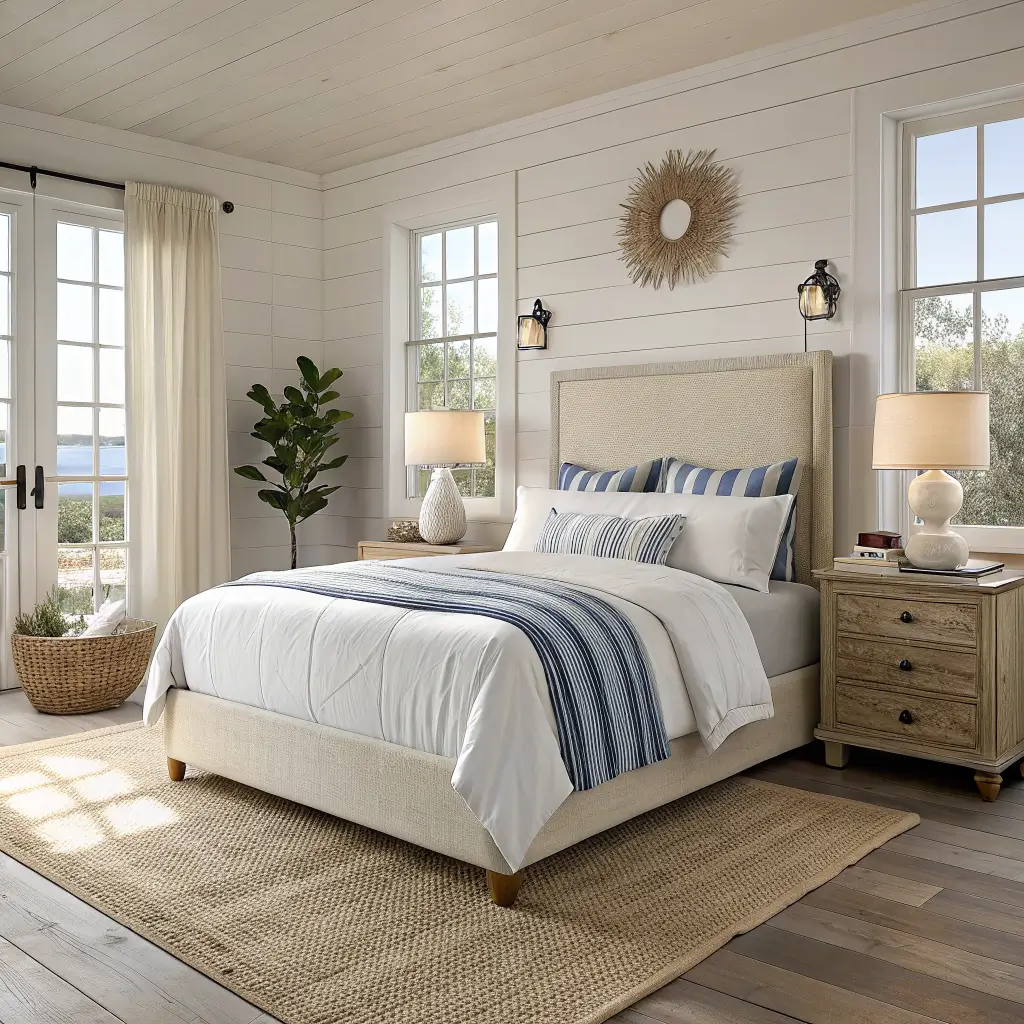
A blue-and-white striped pillow or throw is the most efficient coastal signal there is. One stripe per room is plenty. Two is the ceiling. Three reads like a uniform.
Woven baskets and trays
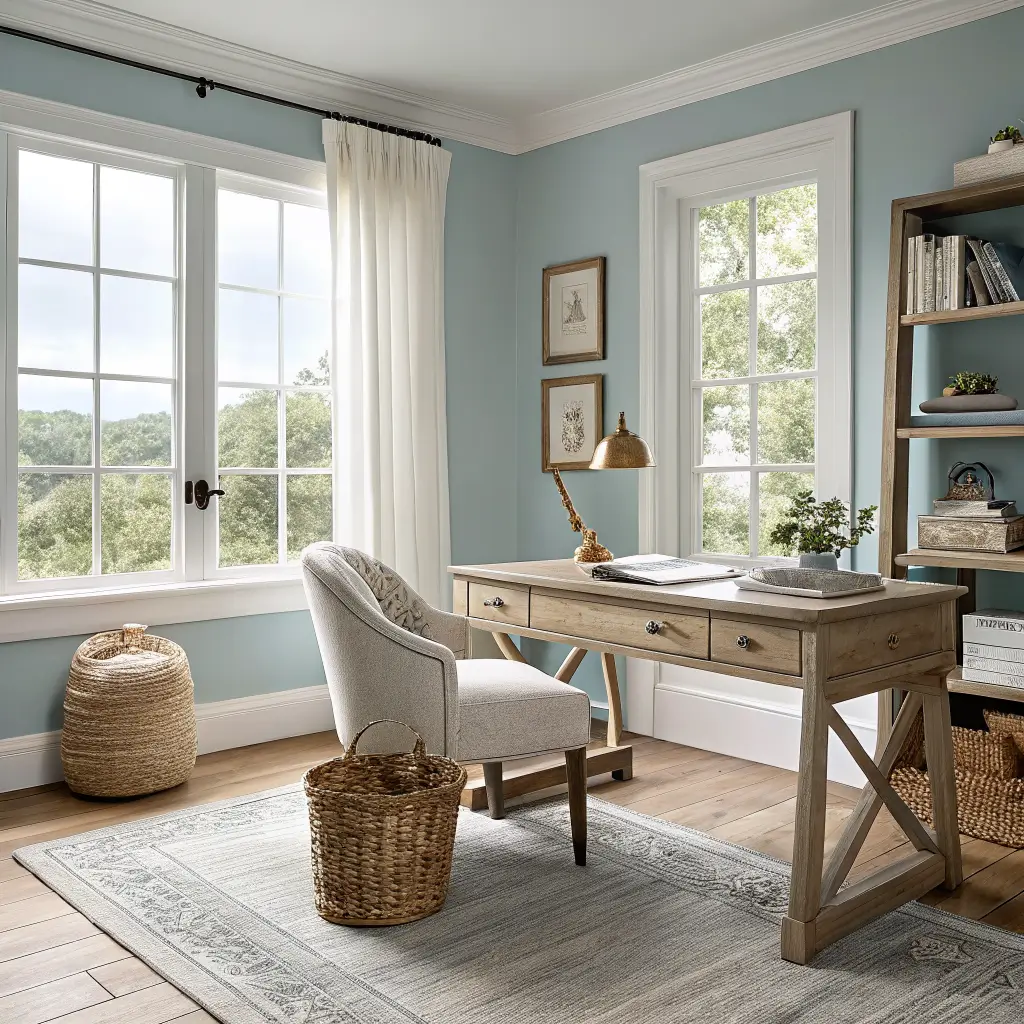
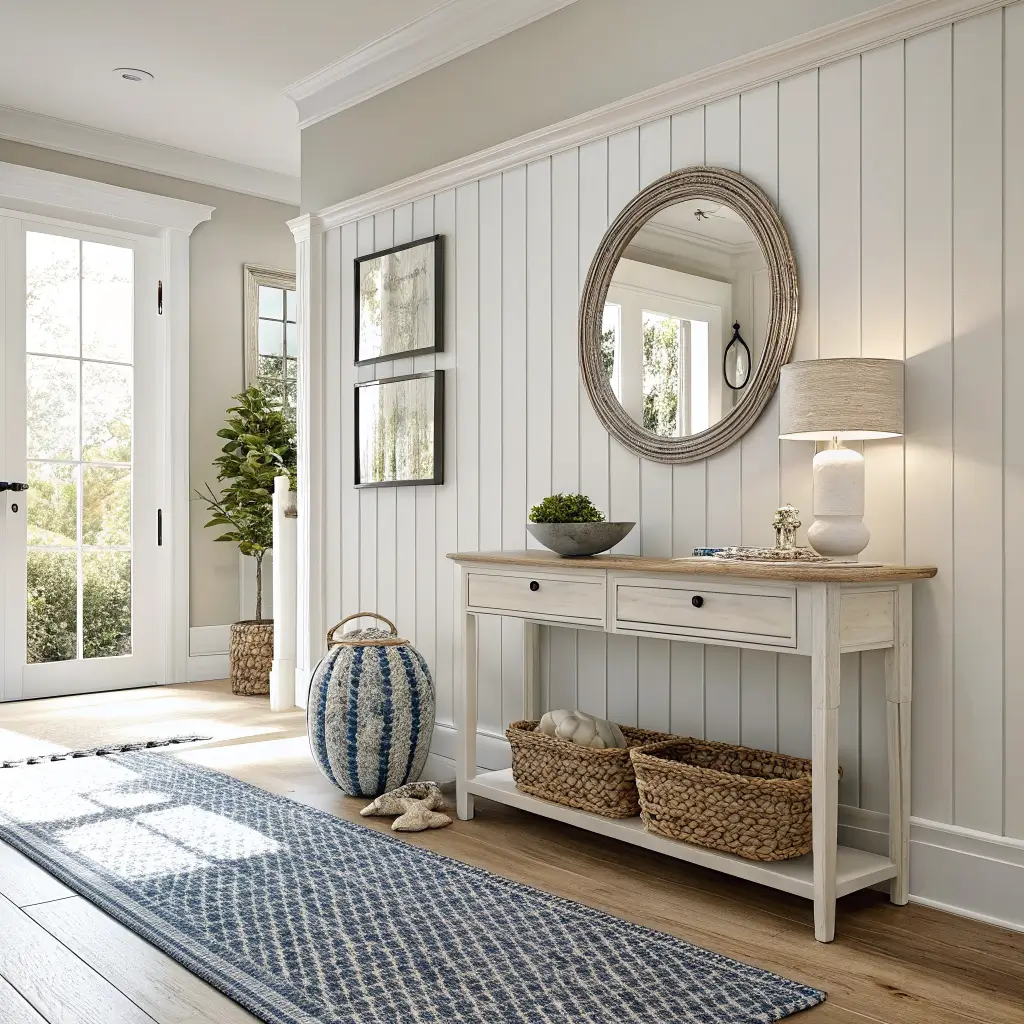
The contrast between smooth white walls and rough woven texture is what makes the whole style work. I keep two large seagrass baskets next to my sofa for throws, and a smaller round one under a console for shoes.
Mirrors
Mirrors are doing real work here, bouncing daylight around. A large round mirror with a rope, jute, or simple wood frame above a console or mantel earns its keep.
Shells and sea glass — carefully
One sculptural shell on a stack of books is good. A bowl of mixed shells from the beach is fine if it’s tasteful. A shelf lined with twelve types of coral is not. Treat shells like sculpture, not collectibles.
How to Put It Together Without It Looking Themed
Here’s the order I’d work in:
1. Paint the walls in one of the whites or pale blues above
2. Place the largest pieces — sofa, bed, dining table — and leave breathing room around them
3. Add the rug before any other decor
4. Bring in one or two woven storage pieces for texture before you start accessorizing
5. Layer in blue through pillows, art, or ceramics — never the wall-to-wall main event
6. Style surfaces last, and edit ruthlessly
Let in more light
Hang curtain rods 4–6 inches beyond the window on each side so the drapes stack back off the glass when open. This single trick made my living room feel noticeably brighter. Floor-length white linen panels, hung high (close to the ceiling, not just above the window frame), do more for the style than any accessory.
Mix smooth and rough
If everything in the room is smooth (painted walls, glass lamp, ceramic vase), it falls flat. If everything is rough (jute, seagrass, raw wood), it goes rustic. The combination is the trick. I keep mentally checking: smooth, rough, smooth, rough.
One focal point per room
A slipcovered sofa, a shiplap wall, a large seascape, or a striped rug. Pick one. The other elements support it. Three competing focal points and your eye doesn’t know where to land.
Shiplap, Paneling, and Walls
Shiplap still works, but only if you stop short of doing every wall. One feature wall, a half-wall behind a bed, or a ceiling treatment is current. Whole rooms of shiplap read 2016.
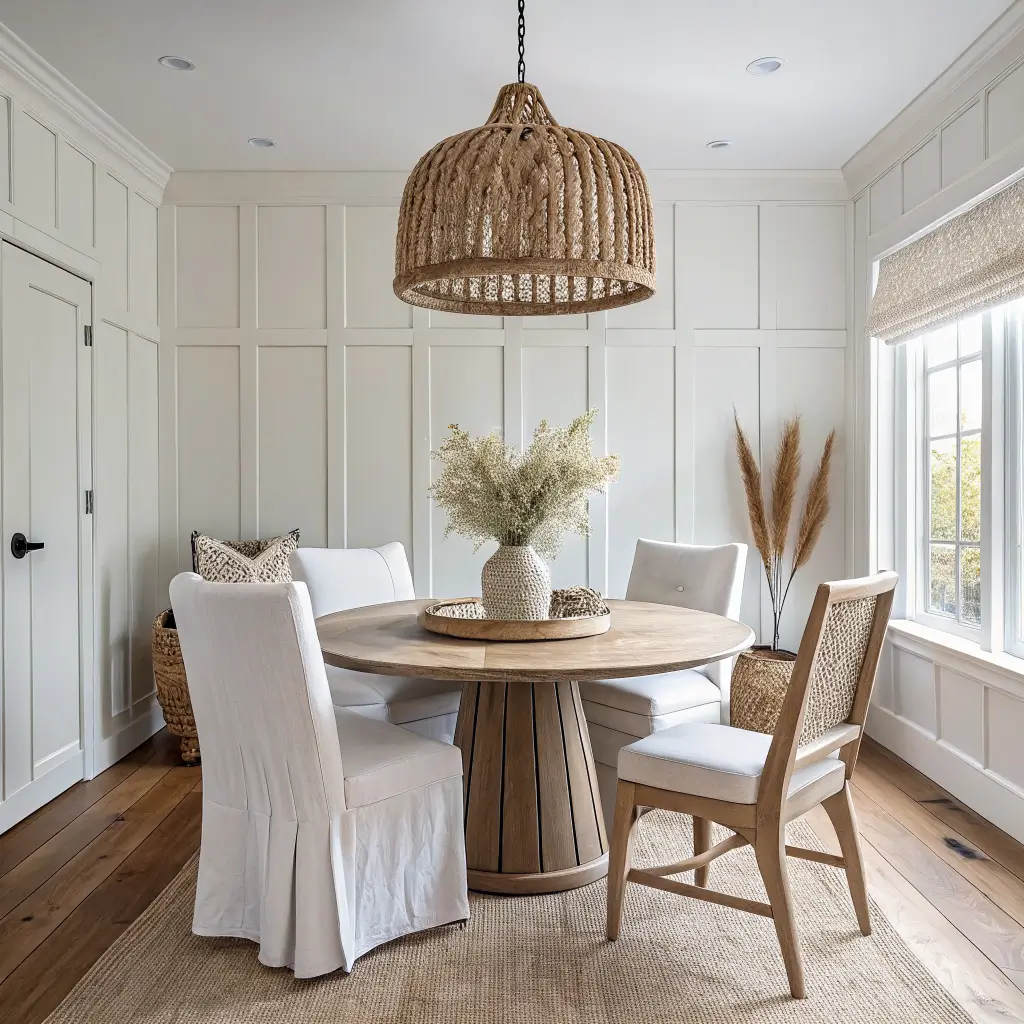
Vertical paneling (sometimes called board-and-batten or vertical shiplap) feels more current than horizontal right now and works especially well in entryways, half-walls in bathrooms, and dining rooms. Paint it the same color as the rest of the wall for a quieter, more modern look.
Where to Spend and Where to Save
Spend on:
– The sofa and its slipcover (you sit on it every day; cheap upholstery shows fast)
– The rug, especially if it’s the main floor surface
– Lighting — one well-chosen lamp beats three cheap ones
– Paint and the labor to do it right
Save on:
– Pillows and throws (rotate these seasonally anyway)
– Baskets — Target, HomeGoods, and IKEA all have perfectly good ones
– Wall art (great prints exist for under $50; framing is what you pay for)
– Small ceramics and vessels
Mistakes I See Constantly
– Too much navy. Heavy navy or charcoal walls flatten the lightness that makes this style work. Use deep blue as an accent only.
– The seashell explosion. One sand dollar in a frame: yes. A whole shadowbox: stop.
– Slipcovers that don’t fit. A baggy slipcover always looks unmade.
– All white, no texture. A white room with white pillows on a white sofa with a white rug looks like a hotel lobby, not a coastal living room. The texture is what makes it warm.
– Cluttered shelves. Coastal styling needs negative space — the empty area around objects. Leave a third of every shelf empty.
Seasonal Swaps That Keep It Interesting
The same room can shift through the year without redecorating.
– Spring and summer: lighter linens, brighter blues, sea-glass accents, more white
– Fall and winter: oatmeal-toned knit throws, taupe pillows, warmer woods, a chunkier wool blanket draped over the sofa arm
I keep two bins in my closet — “warm season” and “cool season” pillow covers and throws — and swap them twice a year. Total cost: zero, once you own them.
Blending Coastal With Other Styles
If full coastal feels like too much, blend it:
– + Modern Farmhouse: keep the light palette and slipcovers, drop the rustic distressing
– + Boho: add layered texture (a vintage rug over jute, more woven wall pieces), but hold the line on the color palette
– + Transitional: keep stripes and slipcovers, pair with tailored, simple silhouettes and skip the obvious coastal references entirely
The version I live in now is somewhere between coastal and transitional. There’s a jute rug, a slipcovered sofa, Boothbay Gray on one wall, two blue-and-white striped pillows, a large piece of abstract art that happens to read like water, and exactly one shell on a stack of books. No one walks in and says “beach house.” They say it feels calm. That’s the goal.
Conclusion
The coastal decor that feels right to me is never the one with the most anchors. It is the cottage where the owner has left a bowl of beach glass on the coffee table, hung sheer curtains that move with the breeze, and kept a stack of paperback novels on the window seat. The room smells like salt and old wood, and nothing in it was bought as a set. That is the difference between coastal decor and beach-themed decor — one is a place, the other is a product.
More Decor Ideas to Explore
- The Complete Guide to Luxurious Bathrooms: What Actually Makes a Bathroom Feel High-End
- Little Apartment Ideas: A Real Guide to Decorating 350–700 Sq Ft (Renter-Friendly, Budget-Aware)
- Coastal Kitchen Décor That Doesn’t Look Like a Souvenir Shop: A Real Guide to Getting It Right
- 16 Upcycled Garden Decor Ideas That Turn Junk Into the Best Part of the Yard