Coastal Farmhouse Decor: How to Mix Beach and Rustic Without It Looking Like a Souvenir Shop
If you’ve been searching for coastal farmhouse decor that actually feels current — not a wall of starfish and “Gone to the Beach” signs nailed over a barn door — you’re in the right place. This is the style I’ve been refining in my own house for about four years, and I’ve made nearly every mistake worth making. I bought the rope-handled jars. I had two oars crossed over a doorway. At one point my mantel held a galvanized bucket of seashells and a chippy white “BEACH” sign. It was a lot.
What works is quieter than that. Here’s how I’d put it together now.
What Coastal Farmhouse Actually Is (and Who It’s For)
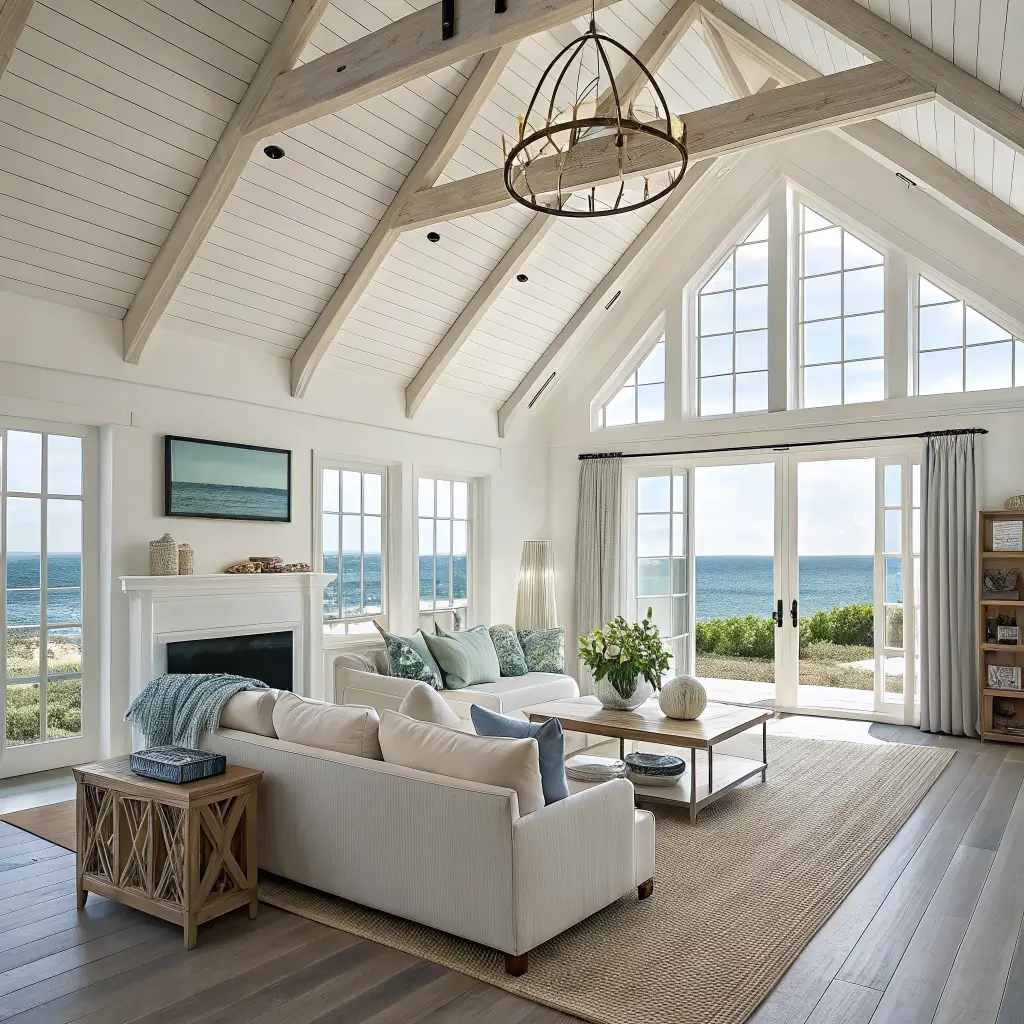
Strip it down and you’ve got two ideas sharing a room: coastal brings the airy, washed-out, ocean-adjacent feel — pale floors, linen, woven texture, hazy blues and greens. Farmhouse brings warmth and structure — chunky wood, black metal, vintage finds, simple silhouettes.
Done well, it reads as a light, uncluttered home with rustic backbone. Done poorly, it’s beach kitsch glued onto shiplap.
This style suits you if:
– You want a calm, light-filled home but find pure minimalism cold.
– You like the ocean — or just the feeling of it — without literal nautical motifs.
– You’ve got kids, pets, sand, or all three, and need slipcovers and rugs you can actually live with.
– You enjoy hunting estate sales for an old dough bowl as much as ordering a new sofa.
It shines in open-concept main floors (800–1,800 sq ft), but I’ve seen it work beautifully in a 400-square-foot studio with white walls and one good jute rug.
Time, Money, and Skill: What You’re Signing Up For
Single-room refresh: one to two weekends if your furniture is mostly bought. Most of that time goes to painting, hanging curtains properly, and styling.
Full open-concept rework: three to six weeks, mostly waiting on rug and sofa lead times.
Budget breaks down roughly like this:
– Budget makeover ($600–$1,500): 8×10 jute rug ($120–$250), set of seagrass baskets ($40–$100), linen-look curtain panels ($40–$120/pair), 4–6 pillow covers at $12–$30 each, a vintage-look wood coffee table ($200–$400).
– Mid-range ($3,000–$7,000 per room): slipcovered linen sofa ($1,200–$2,800), solid wood dining table ($800–$2,000), woven pendant ($200–$600), 9×12 jute or jute/wool rug ($300–$900), framed art set ($150–$500).
– Higher-end ($8,000+): custom cabinetry, real hardwoods, designer lighting, original art.
Skill level runs beginner to intermediate. Painting walls, swapping hardware to matte black, and styling shelves are weekend jobs. Installing v-groove paneling, building floating shelves, or whitewashing reclaimed wood take more patience.
The Palette I’d Actually Use
Get the colors right and the rest is easy. Get them wrong and no amount of jute will save you.
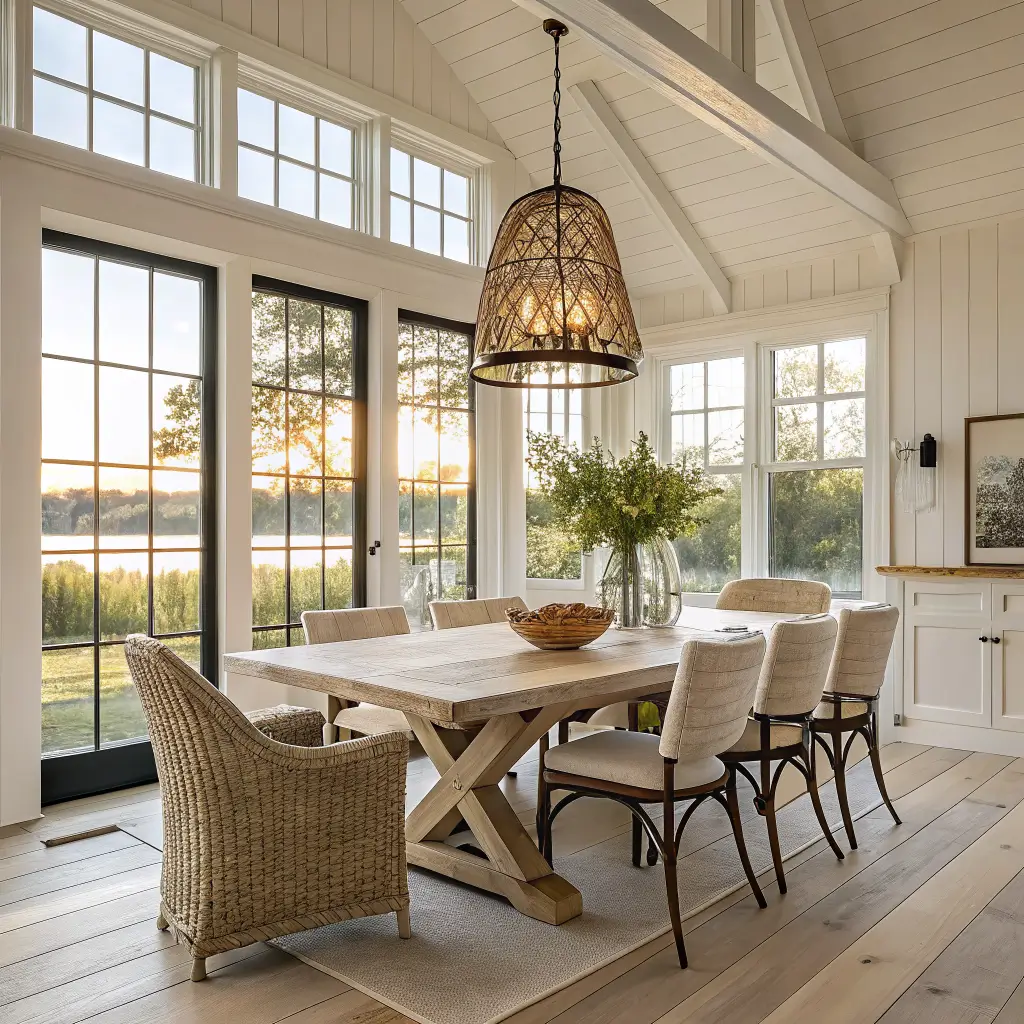
Walls and trim: I use Sherwin-Williams Alabaster in my main living spaces — it’s warm enough that it doesn’t go blue in north light. Benjamin Moore Simply White is the cleaner alternative if your light skews yellow. Pick one white and run it through the house.
Secondary neutrals: A soft greige like Sherwin-Williams Agreeable Gray on a bedroom or hallway adds depth without breaking the flow.
The coastal hits: sea-glass green, hazy blue, muted aqua, foggy gray, pale driftwood beige. Use them on a kitchen island, a single accent chair, throw pillows, or art — not on every wall.
The structural color: black. Black cabinet hardware, black window mullions, a black metal lamp or picture frame. This is what keeps the look from sliding into Pinterest-2017 cottage cute.
A rough rule I use: 80–90% neutral, 10–20% soft coastal color, with black as the punctuation.
Materials and Textures That Earn Their Place
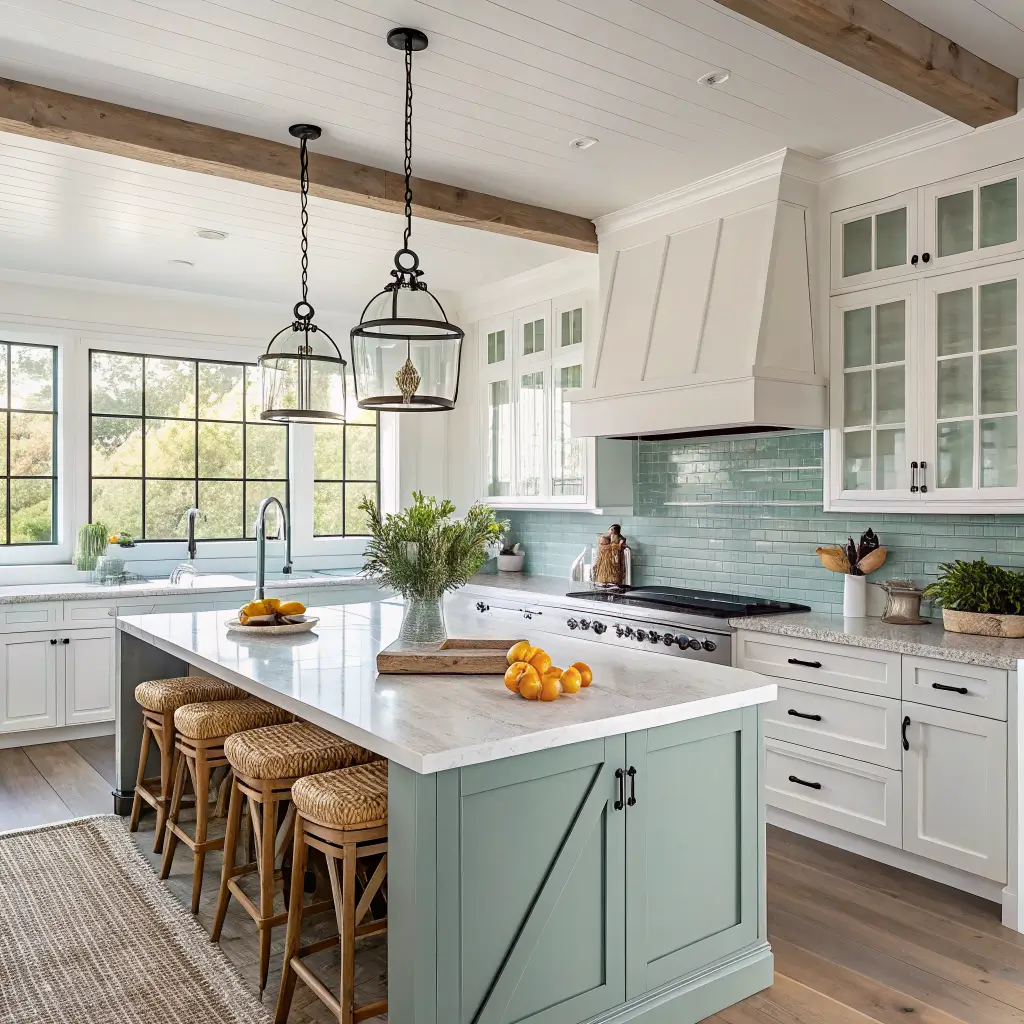
– Woods: white oak, oak, or pine with a weathered or matte finish. Avoid anything orange or super-glossy.
– Textiles: washed linen, cotton ticking stripes, chunky knit throws, jute, sisal.
– Naturals: rattan, seagrass, cane, driftwood. Shells exist but sparingly — see the rule of two below.
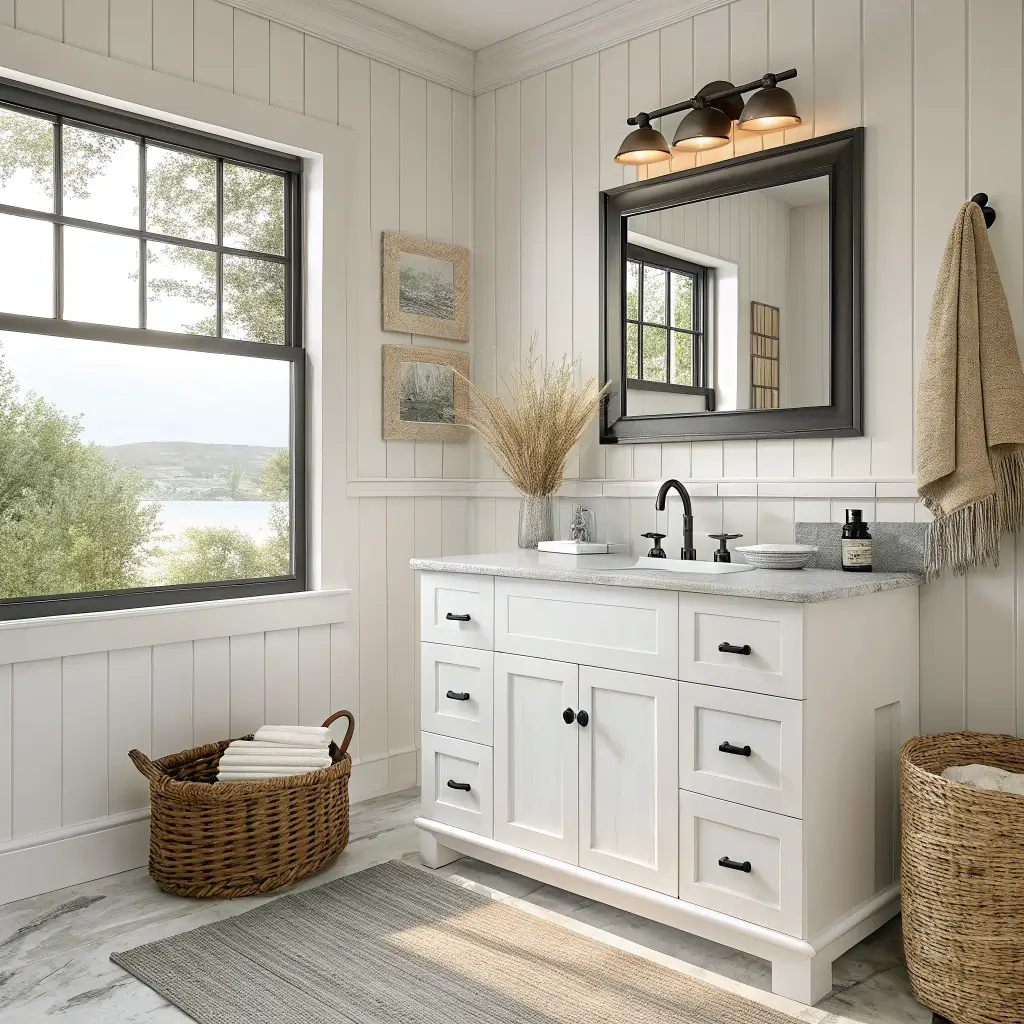
– Hard finishes: white shaker cabinets, marbled quartz, subway tile with warm gray grout, black or polished nickel fixtures.
Aim for three textures in every vignette — for example, a wood tray, a linen-wrapped book, and a ceramic vase. Not three colors. Three textures.
The Hero Pieces
If your budget only stretches to a few big buys, these are the ones that carry the style:
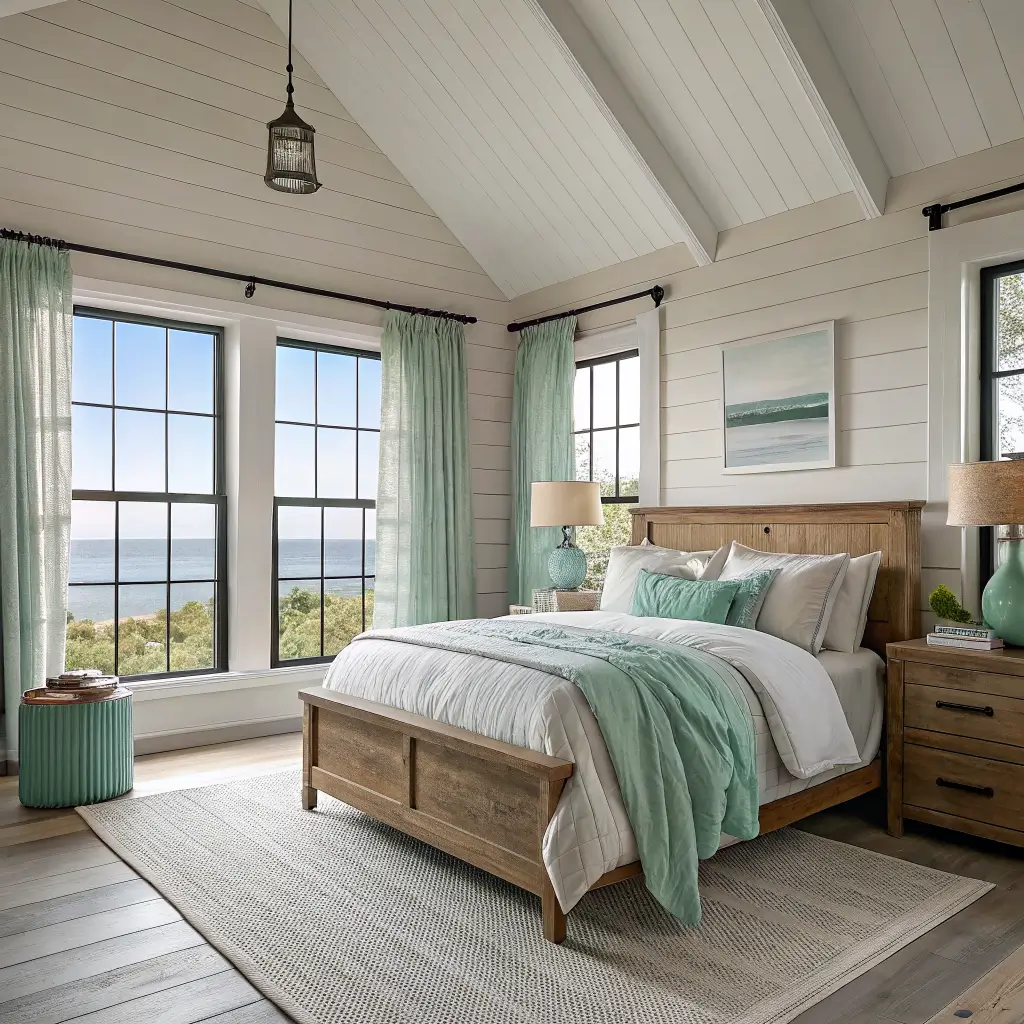
– A slipcovered sofa in white or natural linen, 80–90″ for a standard living room. Removable, washable covers are the whole point — I have a 65-pound dog and a toddler, and mine has survived both.
– A solid wood dining table, 72–96″ long, trestle or turned legs, in a warm but not orange oak.
– Pale floors. Either wide-plank light hardwoods or painted floors in a driftwood tone. If you can’t change floors, an oversized neutral rug does similar work.
– White shaker cabinets with matte black hardware in the kitchen.
– One statement woven pendant — rattan, bamboo, or seagrass — over the dining table or island.
The Things That Tie It Together
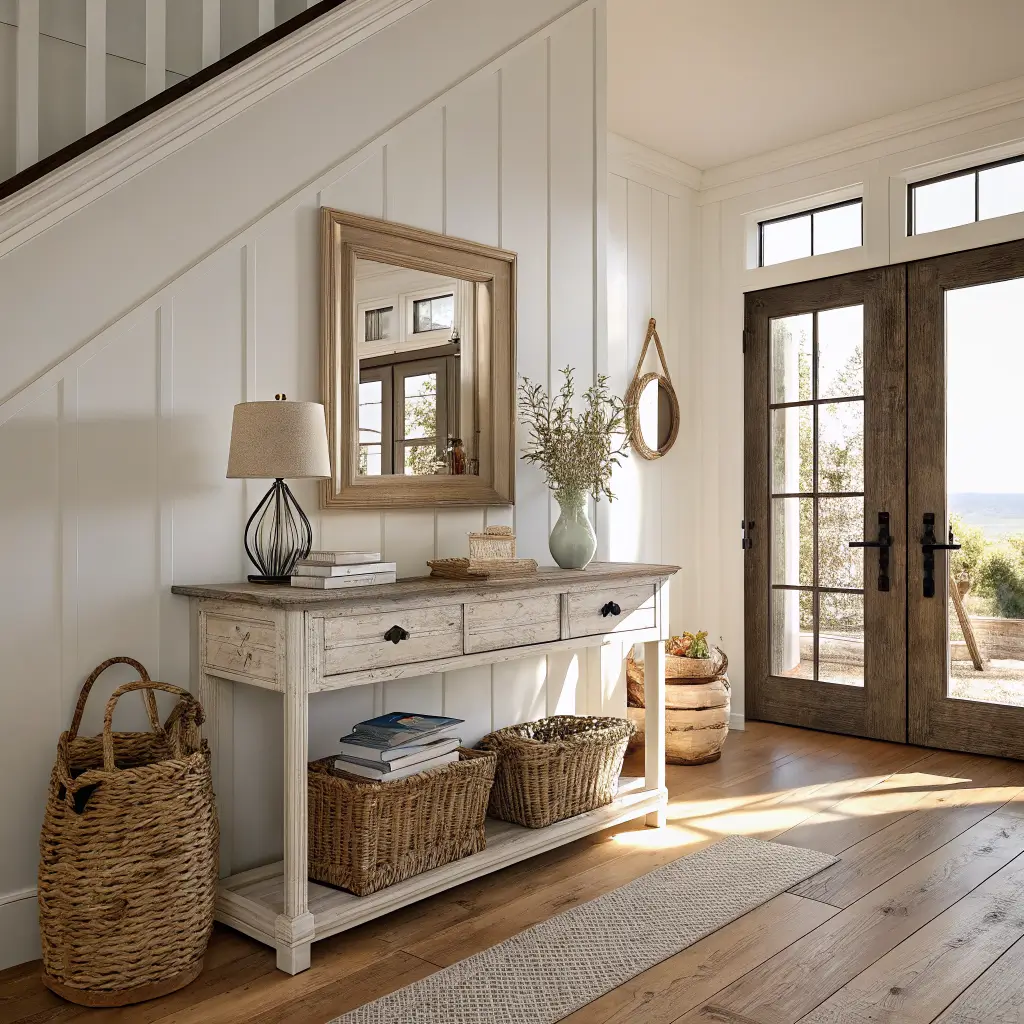
– Jute or jute-blend rug, 8×10 or 9×12, flat-woven so sand and crumbs sweep out.
– Woven baskets — round seagrass, square lidded rattan, handled belly baskets. I have four within ten feet of my sofa and they hold everything I don’t want to look at.
– Cross-back counter stools or spindle-back dining chairs.
– A chunky wood or black metal coffee table. I scored mine — a reclaimed pine farm-style table — for $80 off Facebook Marketplace, sanded the top, and rubbed in a coat of hardwax oil. It’s the piece people ask about most.
Accessories, Edited
Here’s where most people go wrong. The instinct is to add. The discipline is to subtract.
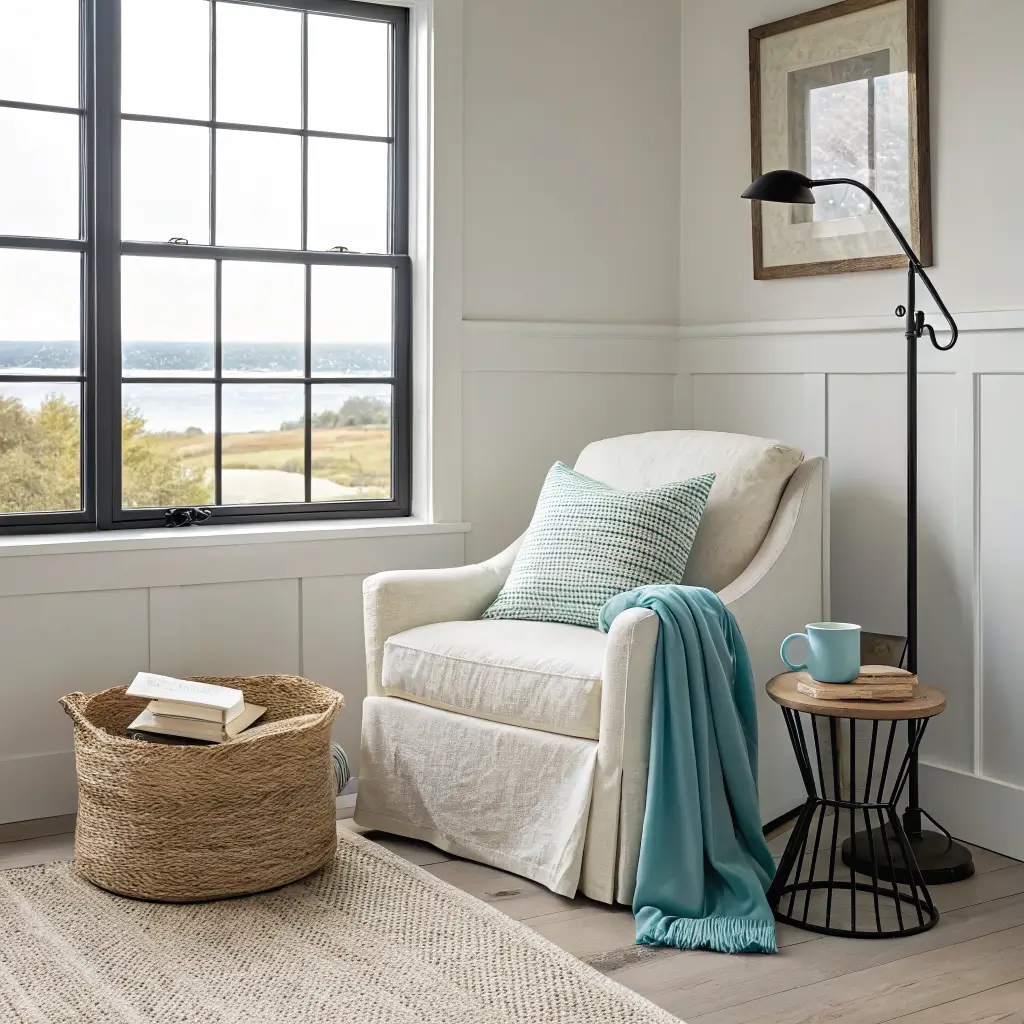
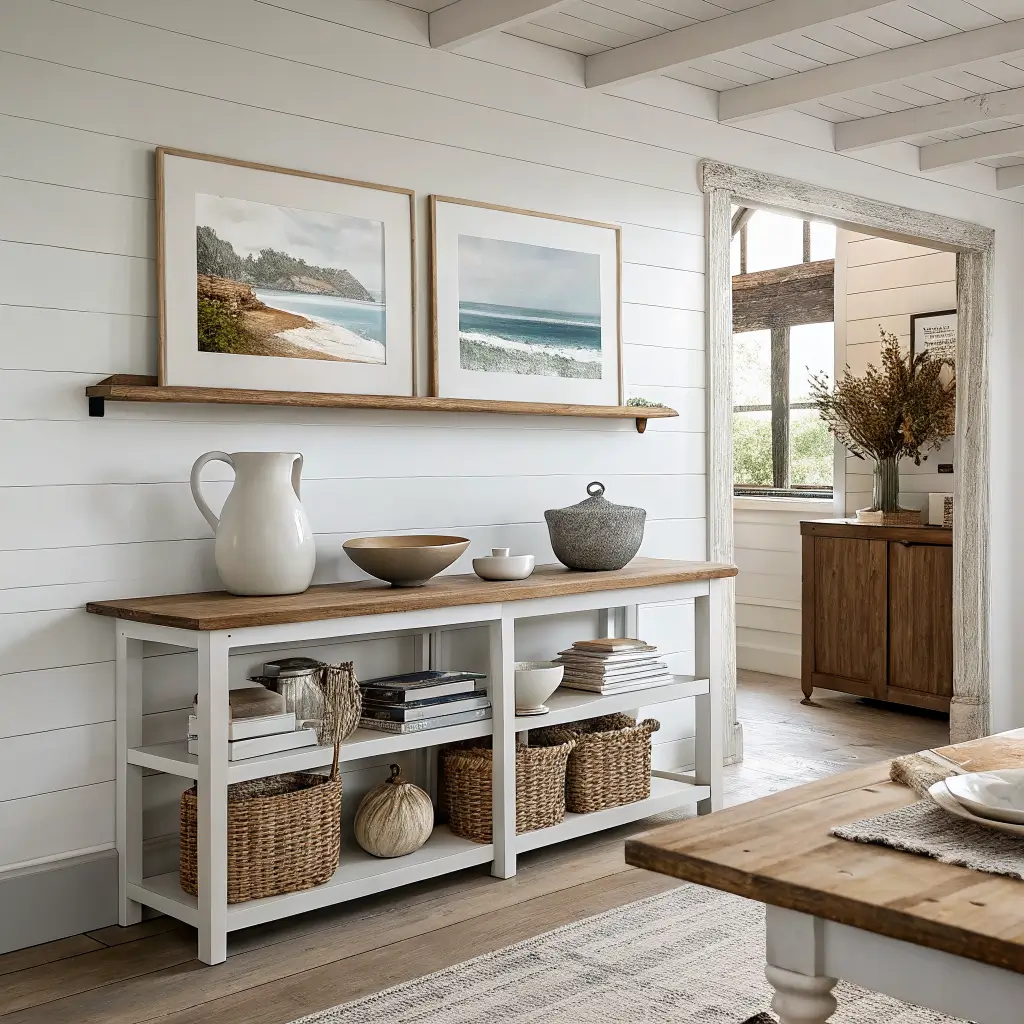
– Coastal art: abstract seascapes, line drawings of dunes, moody beach photography. Not literal lighthouses or anchors.
– Mirrors with driftwood or white-painted frames to bounce light.
– Pillows and throws in stripes, soft plaids, and textured solids — sea-glass, foggy blue, sandy beige, off-white.
– Vintage farmhouse objects: wooden dough bowls, ironstone pitchers, old cutting boards. One or two per room.
The rule of two: no more than two overt coastal motifs per room. A driftwood mirror plus a bowl of shells? Fine. Add an oar, a rope basket, and a wooden seagull and you’ve crossed into souvenir shop.
Putting a Room Together, in Order
I do it this way every time:
1. Lay the light canvas. White walls, pale floor (or large neutral rug). Remove anything dark and heavy first — espresso console tables are the silent killer of this look.
2. Place the big wood elements. Coffee table, sideboard, dining table, beams if you have them.
3. Bring in the woven layer. Jute rug, baskets, pendant, woven shades.
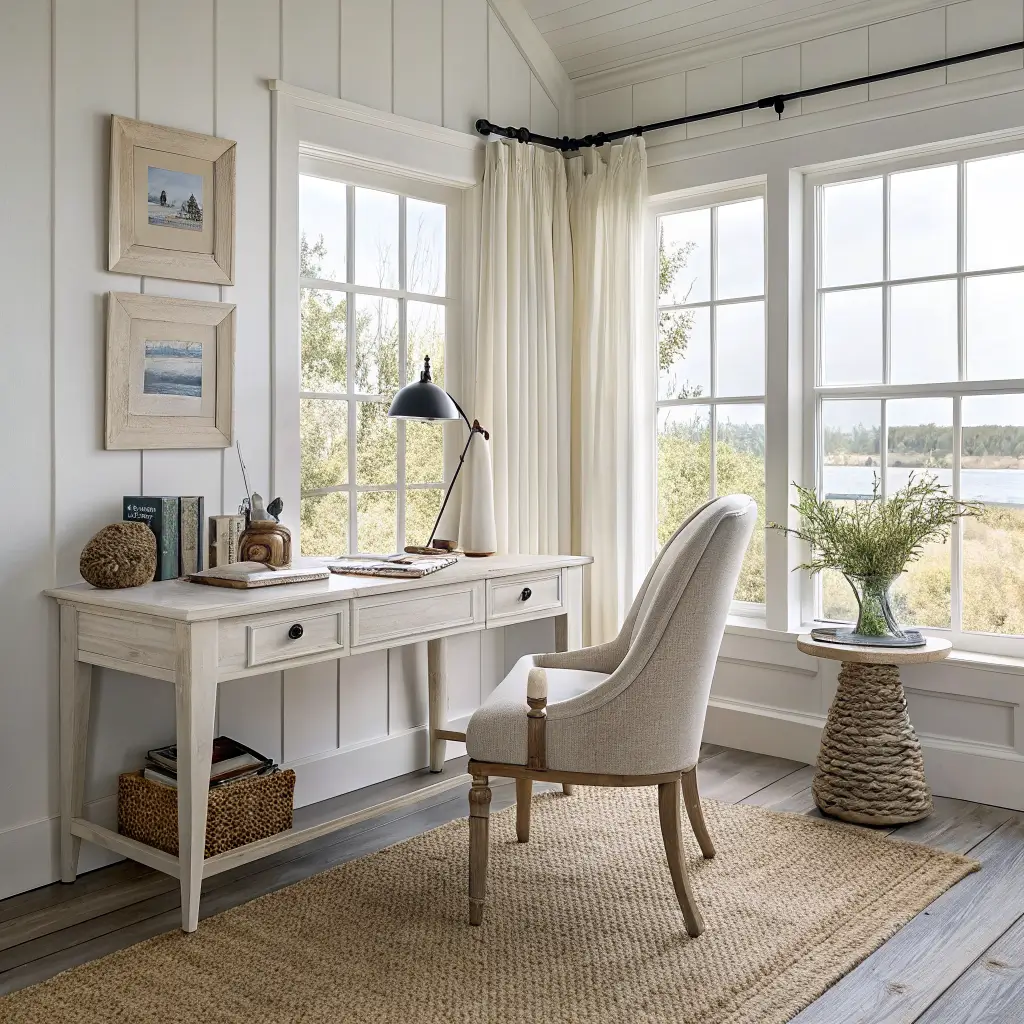
4. Add textiles. Slipcovers, pillows, throws, curtains. Hang the curtains high and wide — rod 4–6 inches above the window frame, extending 8–12 inches past on each side. This single move makes ceilings look taller.
5. Hang art and mirrors. Keep it modern — abstract, line drawing, photography.
6. Edit accessories. One or two coastal nods, a couple of farmhouse pieces, plenty of empty surface.
For coffee tables, my formula is three things: a small stack of books, one sculptural object, one small vessel or plant. That’s it.
Common Mistakes (Most of Which I’ve Made)
– Over-theming. If a stranger walked in and said “ahoy,” you’ve gone too far.
– Starting with dark, heavy anchors. A chocolate leather sectional or espresso floors will fight you forever. Lighten the bones first.
– Too much chippy paint and distressing. Heavy distressed finishes date a space fast. One authentic vintage piece beats five faux-aged ones.
– Cluttered surfaces. A bookshelf with eight little objects per shelf reads as visual noise. Half the stuff, twice the impact.
– Ignoring how you actually live. A high-pile cream rug in a beach house with three kids is a crime scene by August. Flat-weave, slipcovered, washable — always.
Easy Updates by Season
Big furniture stays. Small stuff rotates:
– Summer: lightweight gauzy curtains, eucalyptus in a stoneware crock, blue-and-white striped pillows.
– Fall: wheat or dried grasses, rust or ochre pillows tucked into the existing palette, heavier knit throws.
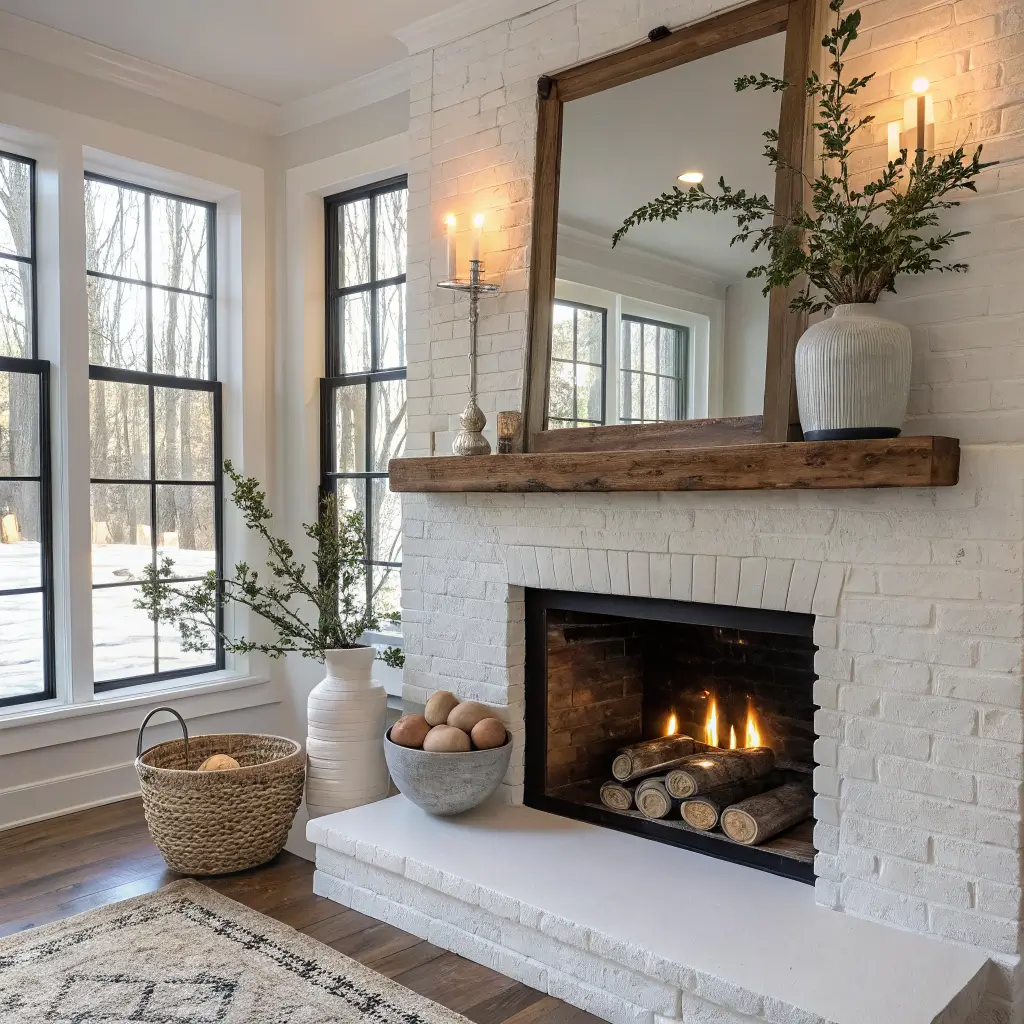
– Winter: wool and sherpa throws, black metal lanterns, more candles. The cool palette needs warming up December through February.
Budget Moves With the Biggest Payoff
If you’ve got a dark, dated kitchen and no renovation budget:
– Paint the cabinets white or paint just the island a muted coastal blue-green. I used Benjamin Moore Beach Glass on an island once and it changed the whole room.
– Swap hardware to matte black. A $40 fix that reads as intentional design.
– Replace one light fixture — the pendant over the sink or island — with something woven.
– Add a runner in jute or jute-blend.
Four changes, under $500 if you do the work yourself, and the kitchen reads entirely differently.
Is Coastal Farmhouse Going Out of Style?
The chippy, sign-heavy, galvanized-bucket version? Yes, that ship sailed. The quieter, more architectural version — light walls, real wood, black metal, woven texture, edited accessories — is just good design with a regional accent. Lean into the calm and the natural materials, skip the slogans and the symbols, and it’ll still look right in ten years.
Now go put the wooden seagull in a donation box.
Conclusion
The coastal farmhouse decor that makes sense to me is in a kitchen where the table is a reclaimed barn door, the chairs are painted the palest blue, and the centerpiece is a galvanized bucket of hydrangeas cut from the yard. The owner wears an apron that has been washed so many times it feels like linen, and there is always flour on the counter because she bakes on Saturdays. That is the style — not staged, but lived.
More Decor Ideas to Explore
- Modern Coastal Decor: A Real-World Guide to Getting the Look Right (Without the Beach-Theme Cringe)
- Little Apartment Ideas: A Real Guide to Decorating 350–700 Sq Ft (Renter-Friendly, Budget-Aware)
- Coastal Kitchen Décor That Doesn’t Look Like a Souvenir Shop: A Real Guide to Getting It Right
- Very Tiny Bedroom Ideas: How I Made a 7×9 Box Room Actually Livable