Very Tiny Bedroom Ideas: How I Made a 7×9 Box Room Actually Livable
Very tiny bedroom ideas usually fall into two camps: Pinterest fantasies that need a £4,000 joiner, or generic “use baskets!” advice that doesn’t help when you’re staring at a 7-foot wall trying to fit a double bed, your clothes, and somewhere to put a glass of water.
I’ve lived in a 6 m² (about 65 sq ft) box room in a Victorian conversion for three years. One window, one door, a radiator eating half a wall, and a sloped bit of ceiling for character. I rearranged it four times before it worked. What follows is what I’d do again, what I’d skip, and what I wasted money on so you don’t have to.
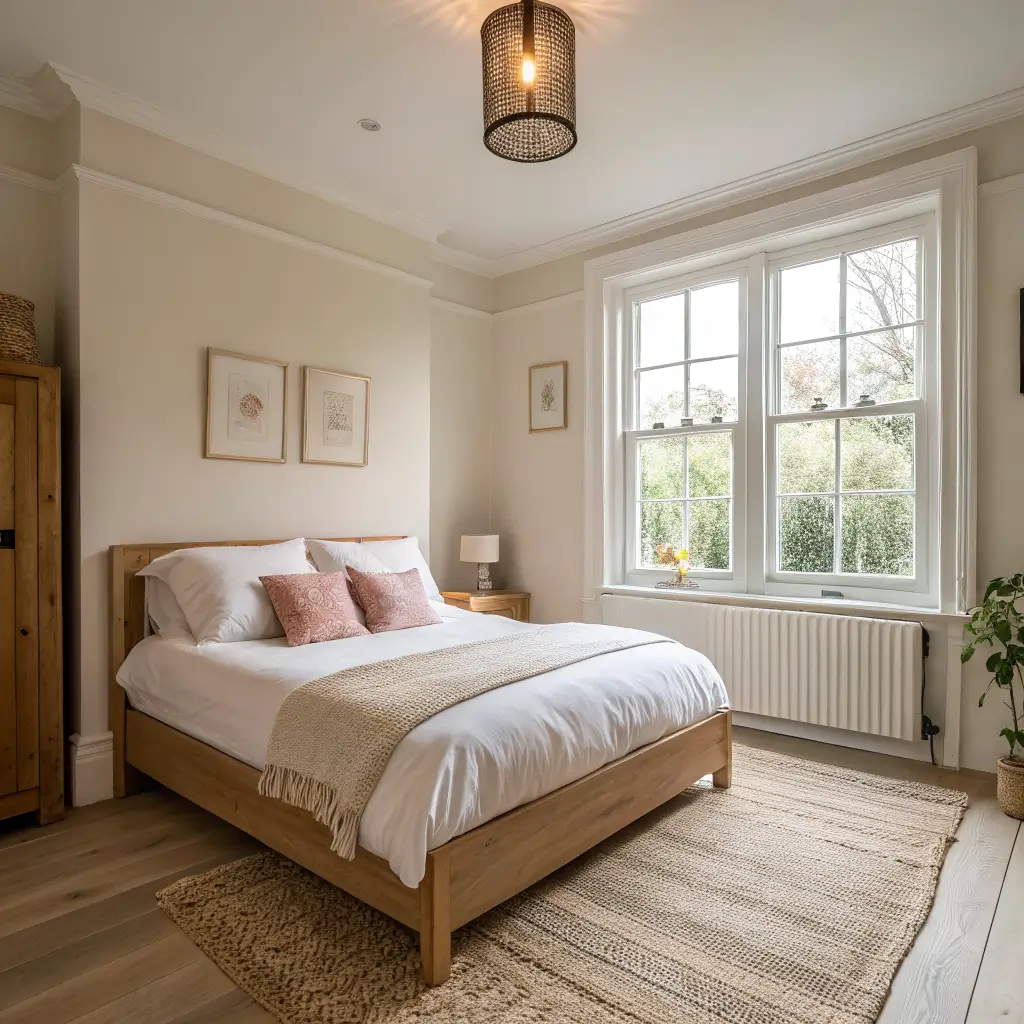
Who This Setup Is For
If your room is roughly 5–8 m² (54–86 sq ft) — think 6’x8′, 7’x9′, or 8’x10′ with one window and one door — this is for you. That’s the standard “box room” in older UK houses, the bedroom in a city studio, or the spare room you’re converting into a guest-room-plus-office.
The style I’m working in is function-first, leaning Scandi-minimal with a bit of Japandi: low furniture, light woods, calm palette, nothing fighting for attention. It works for renters because most of it is reversible.
Time and Money: What You’re Actually Looking At
A light refresh — declutter, rearrange, restyle the bed, add a couple of hooks — is a Saturday afternoon. Three hours, maybe £40 if you buy new bedding.
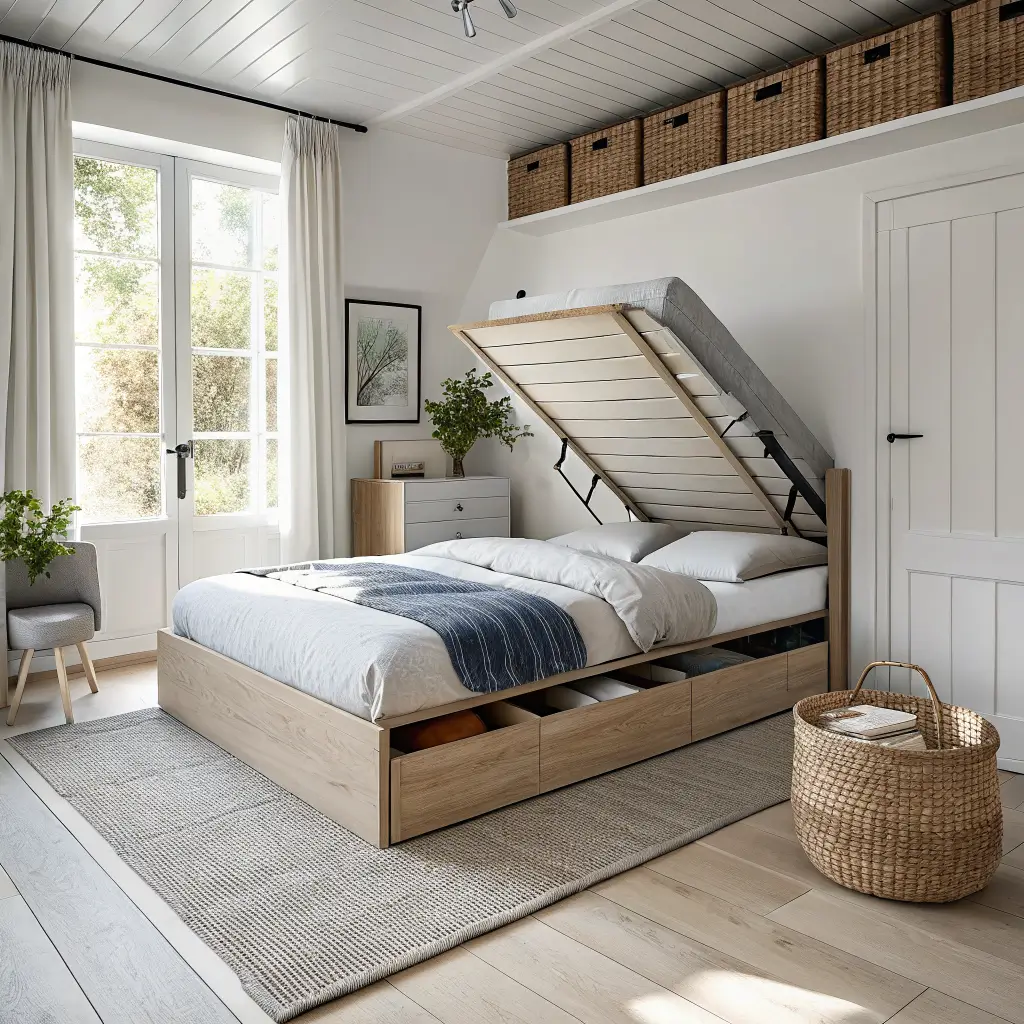
A proper mini-makeover with peel-and-stick wallpaper, a storage bed, and a slim wardrobe is a weekend. Two days, 6–12 hours of actual work. Expect roughly:
– Storage bed frame (IKEA MALM or BRIMNES style): £199–£329 / $229–$399
– Narrow wardrobe around 50–100 cm wide: £100–£300 / $130–$350
– Wall-mounted shelving (BOAXEL, ENHET): £15–£45 per section
– Light-filtering curtains: £30–£80 per pair
– Under-bed storage bins: £8–£20 each
If you’re going custom — Murphy bed or built-in wardrobes around the bed frame — you’re in the £800–£3,500 range depending on materials and whether you’re hiring a joiner.
Skill-wise: anyone can declutter, hang curtains, and screw hooks into a door. Flat-pack assembly, wall-mounted rail systems, and cutting peel-and-stick around an outlet are intermediate. Take your time on the wallpaper. I rushed mine and there’s a bubble above the radiator I now pretend is a feature.
The Three Pieces That Actually Define the Room
Get these right and everything else falls into place.
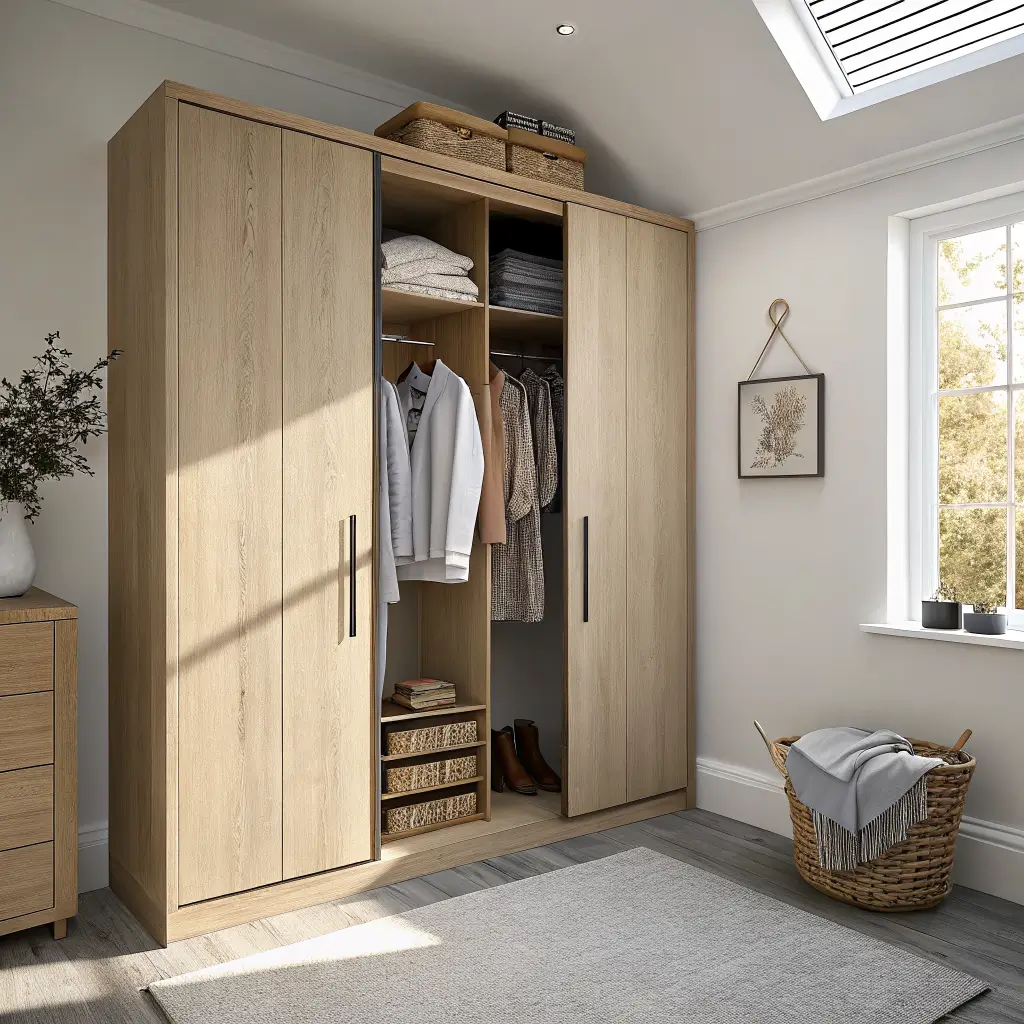
1. A bed that’s also storage
The mistake I made first: a pretty metal frame with nothing underneath, and a separate dresser shoved against the wardrobe. The room felt like a furniture showroom for ants.
Options that work in a very tiny bedroom:
– Drawer bed (MALM, BRIMNES, UNDREDAL style): 2–4 drawers built into the base. Easy access, no lifting. Good for clothes you wear weekly.
– Ottoman lift-up bed: the whole mattress lifts on gas struts. Huge storage cavity. £300–£700 / $350–$800. Best for bedding, suitcases, off-season clothes.
– Daybed with trundle (HEMNES): around £279 / $349, extends from single to double. Genuinely useful if the room doubles as an office or guest room.
I went with an ottoman bed in the end. The drawers on my first storage bed kept getting blocked by the rug.
2. A wardrobe that doesn’t eat the room
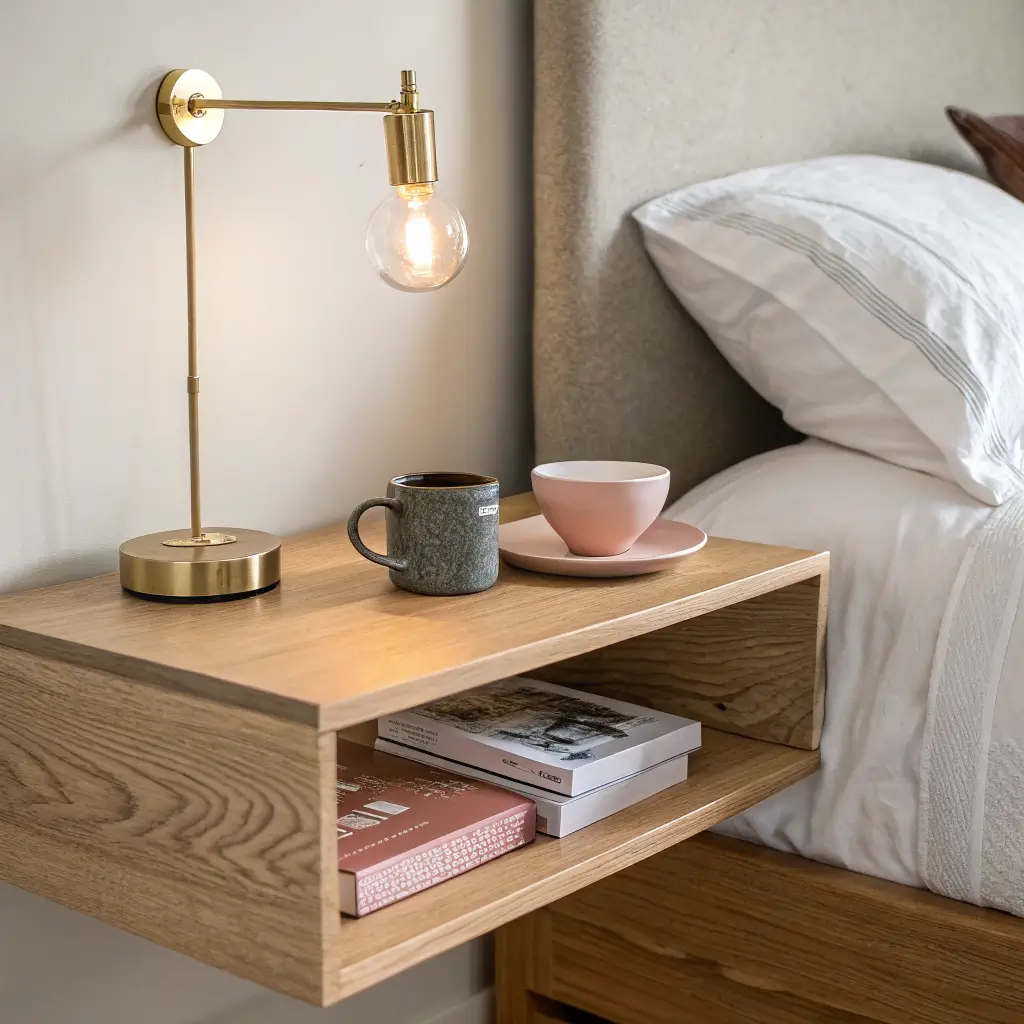
Standard wardrobes are 60 cm deep. In a tiny room, that depth is brutal. Look for:
– Shallow wardrobes at 35–40 cm deep — clothes hang sideways on a front-facing rail
– Narrow PAX-style units at 50–75 cm wide
– Open clothing rails with a shelf above for folded items
The open-rail look is everywhere on Instagram, but be honest with yourself: if your clothes aren’t beautifully curated and color-sorted, an open rail will make the room feel chaotic. I lasted six weeks before I bought a wardrobe with doors.
3. A nightstand that isn’t really a nightstand
There’s no room for a 40 cm cube next to the bed. Better options:
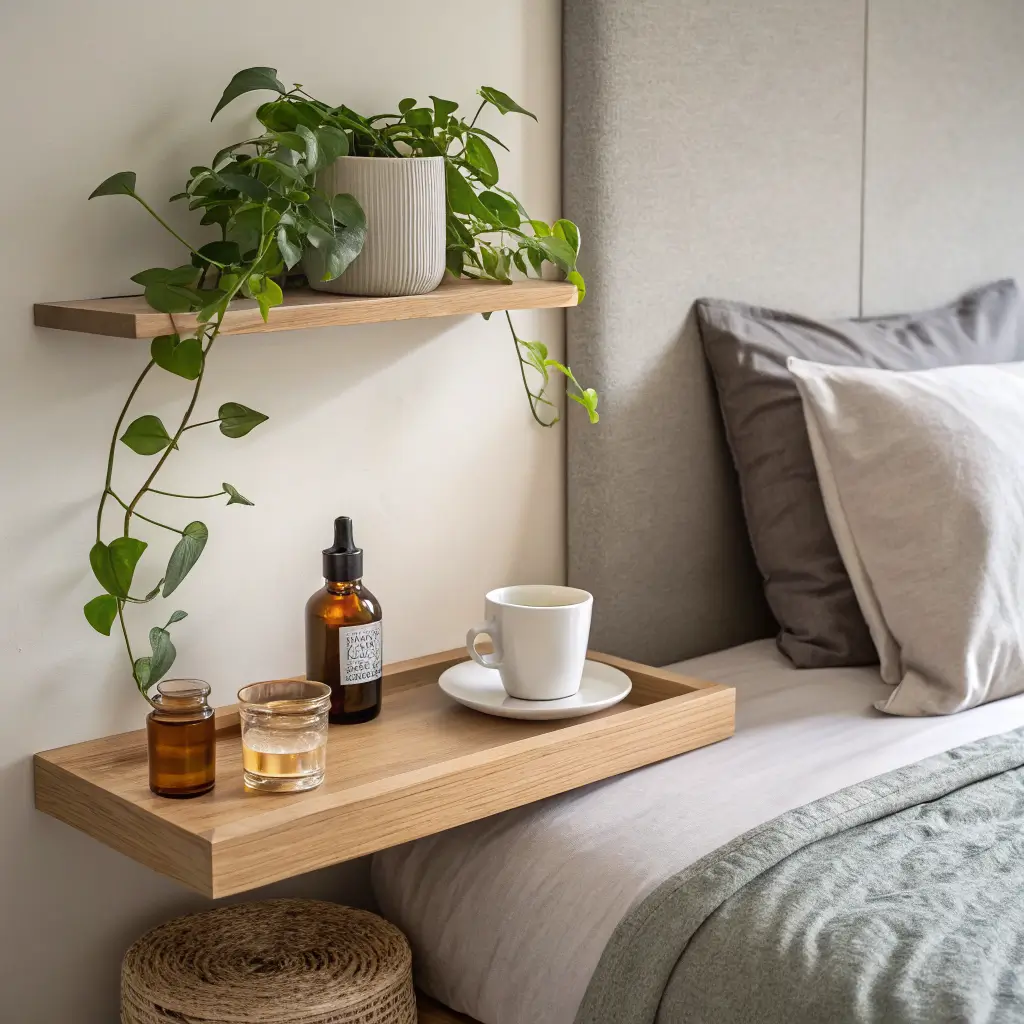
– A narrow wall-mounted shelf, 10–20 cm deep, at mattress height
– A slim C-table that slides partially under the bed
– A floating shelf with a plug-in wall sconce above it, so your lamp isn’t eating the surface
This single swap — shelf instead of nightstand — gave me back about 30 cm of floor space.
Color and Light: The 70/20/10 Rule That Works
After painting one wall dark green and instantly regretting it, here’s the split that actually makes a tiny room feel bigger:
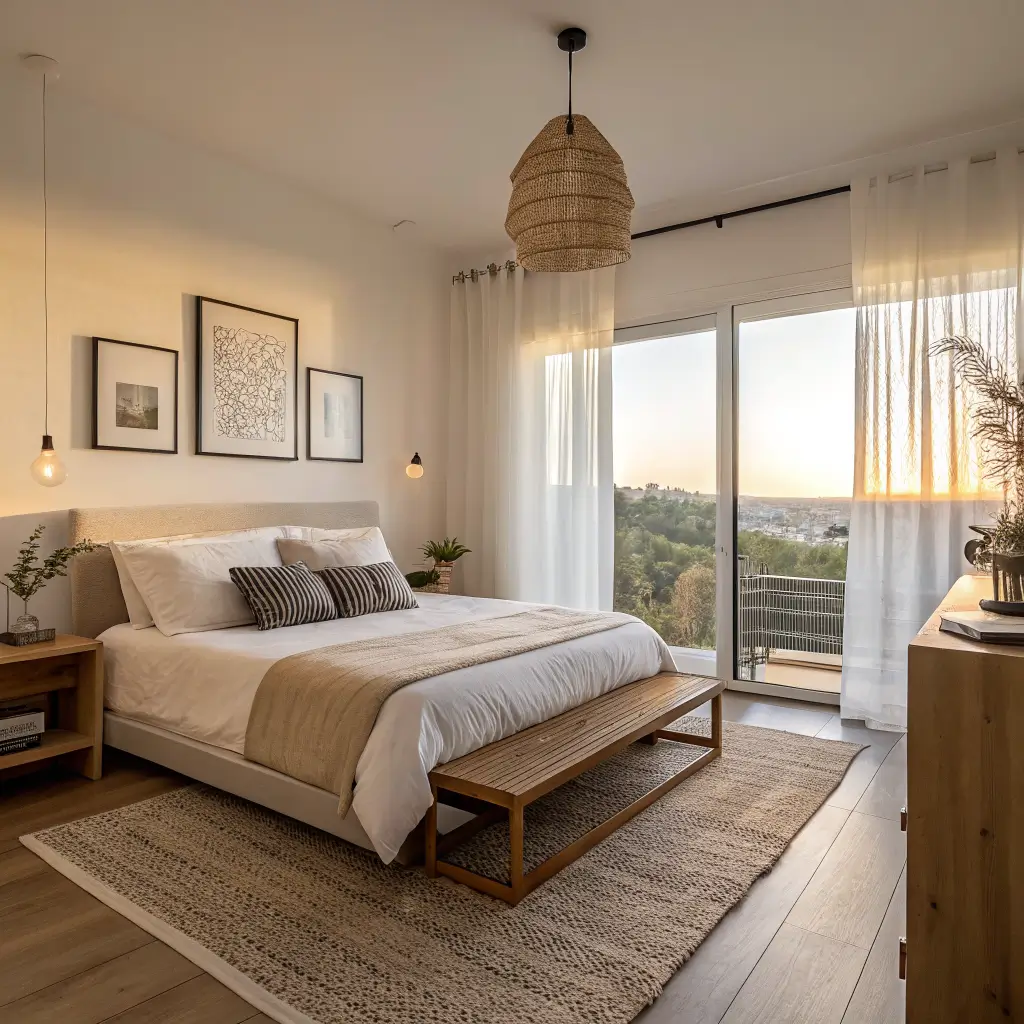
– 70% light — walls, duvet, curtains in off-whites, warm whites, or pale greige. Think Benjamin Moore White Dove or Dulux Egyptian Cotton.
– 20% medium — wood furniture, rug, headboard in light oak, ash, or birch.
– 10% dark accent — one lamp, one art frame, one cushion in charcoal, navy, or black.
Use a matte or eggshell paint finish. Tiny rooms have weird shadows from limited light, and gloss makes every imperfection obvious. Matte hides a multitude of dodgy plaster.
For accents, pick one color and repeat it three times. A dusty blush cushion, a print with the same pink in it, and a small ceramic on the shelf. Three random “pops of color” make a small room look like a charity shop window.
Layout: What Goes Where
Get the bed in first. Everything else negotiates around it.
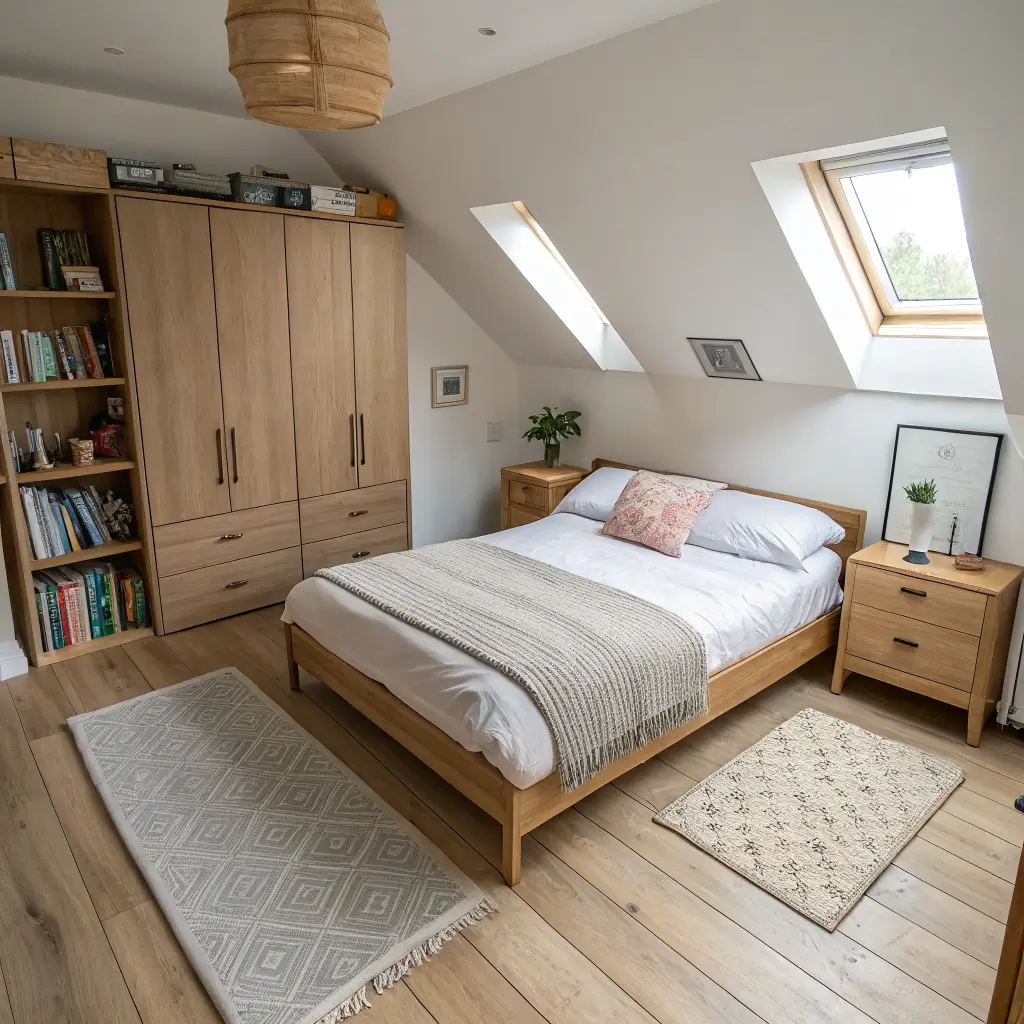
In a very tiny bedroom, push the bed against the long wall or into the corner. Yes, you lose access on one side. You also get back about a meter of floor space, which is the difference between a usable room and a room you sidle through.
If the room is long and narrow, put the bed on the shorter wall so you’re not creating a bowling-alley effect.
Then:
– Wardrobe goes on a wall that doesn’t block the window or the door swing
– Shelves go above the bed or on the wall opposite, mounted 30–40 cm below the ceiling
– Hooks go behind the door for bags, robes, and the jacket you actually wear
– Mirror goes opposite or adjacent to the window to bounce light around
Use painter’s tape on the floor to mock up footprints before you drag furniture around. I cannot stress this enough. I moved a wardrobe three times because I kept misjudging the door swing.
Dressing the Bed Without Burying It
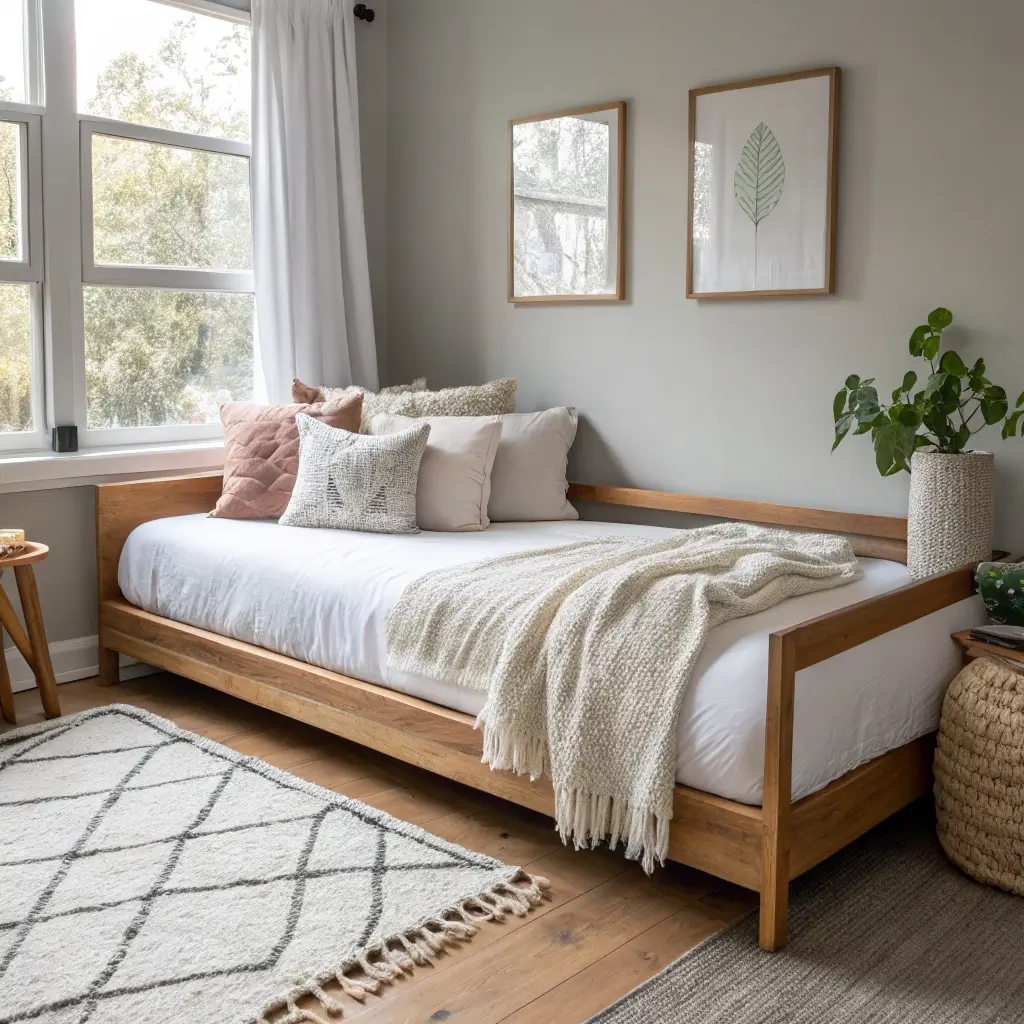
In a tiny room, the bed is the visual center, the seating, and often the only horizontal surface. Style it like a daybed:
– Fitted sheet, simple duvet, two sleeping pillows plus one or two decorative cushions max
– A textured throw — chunky knit, waffle weave, or linen — folded across the bottom third of the bed. This visually elongates it.
– If the bed is against a wall, line 2–3 pillows along the long side for a nook feel
Stick to 3–4 textures total across the whole room. Cotton bedding, a knit throw, jute rug, light wood furniture. That’s it. Any more and it stops being calm.
Lighting in Layers
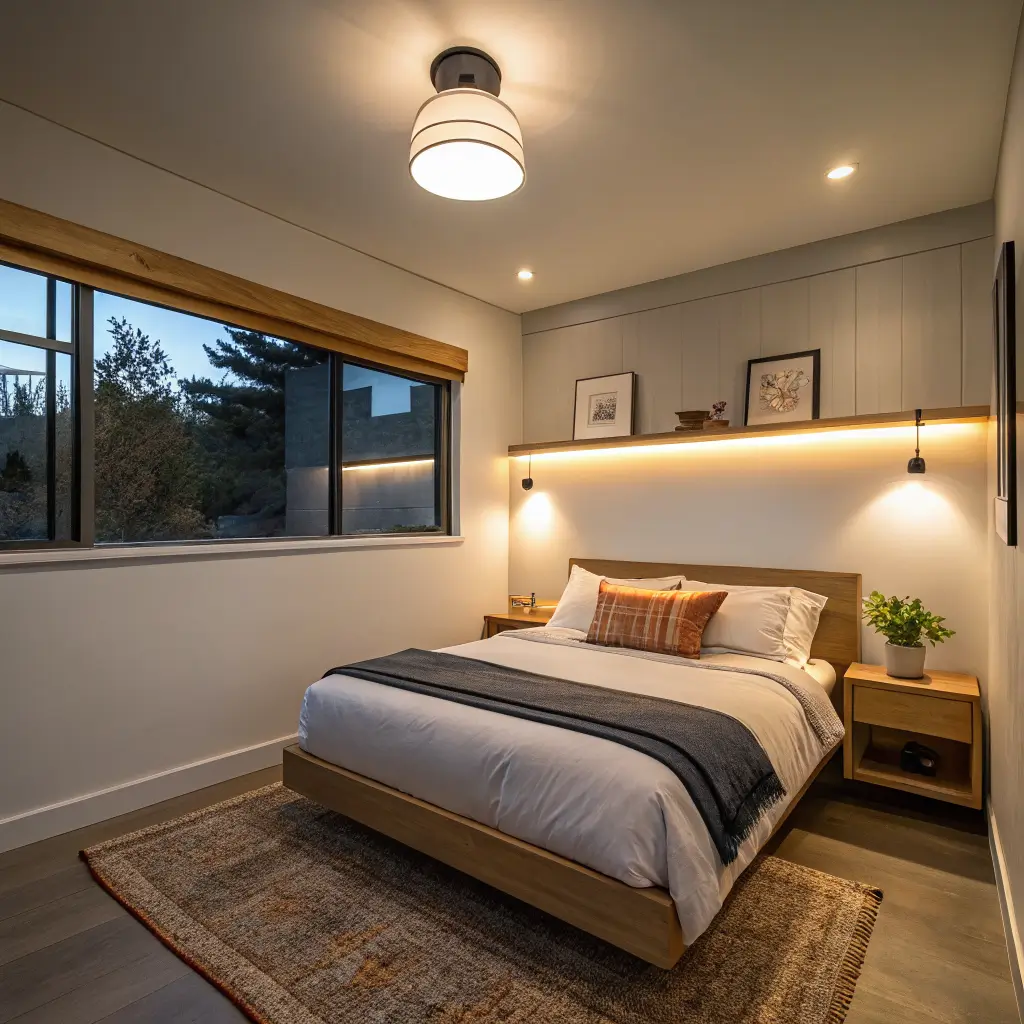
One overhead bulb in a tiny room makes it look like an interrogation cell. You need three sources:
– Overhead: a flush mount or small pendant, nothing dangling at head height
– Task: plug-in wall sconces or clamp lights so your bedside surface is free
– Ambient: a small lamp, or an LED strip tucked behind the headboard or under a shelf
Plug-in sconces are the renter’s best friend. £30–£100 a pair, no electrician needed, and they free up your tiny shelf for a book and a glass of water.
Five Mistakes I Made So You Don’t Have To
Buying matching bedroom furniture. The classic bed + two nightstands + dresser set will swallow a tiny room. Pick one main storage piece and a storage bed. That’s the whole brief.
Painting an accent wall dark. It made the room feel like a cave even with the curtains open. If you want drama, do it in textiles and art, not on the biggest surface in the room.
Crowding every surface. I had a candle, a diffuser, three books, a wireless charger, a plant, and a tray on a 20 cm shelf. Rule I use now: one tray plus two or three daily-use items. Everything else lives in a drawer or a basket.
Ignoring vertical space. All my storage was at waist height for a year. Once I put shelves 30 cm below the ceiling for books and baskets, the floor finally cleared.
Blocking the window. A tall wardrobe next to a small window kills the light. Keep the window wall low — a slim bench, a low dresser, or nothing at all.
Easy Updates Without Buying More Furniture
Seasonal swaps that don’t cost much:
– Winter: wool cushion covers, a heavier knit throw, deeper accent tones (burgundy, forest, rust)
– Summer: linen pillow covers, cotton gauze blanket, sage or sky blue accents
Bigger refreshes:
– Peel-and-stick wallpaper behind the bed — faux wood slats, a subtle pattern, or a soft mural. £20–£50 a roll, and you can take it down when you move.
– A new lampshade or a better sconce changes the feel of the room more than new bedding will.
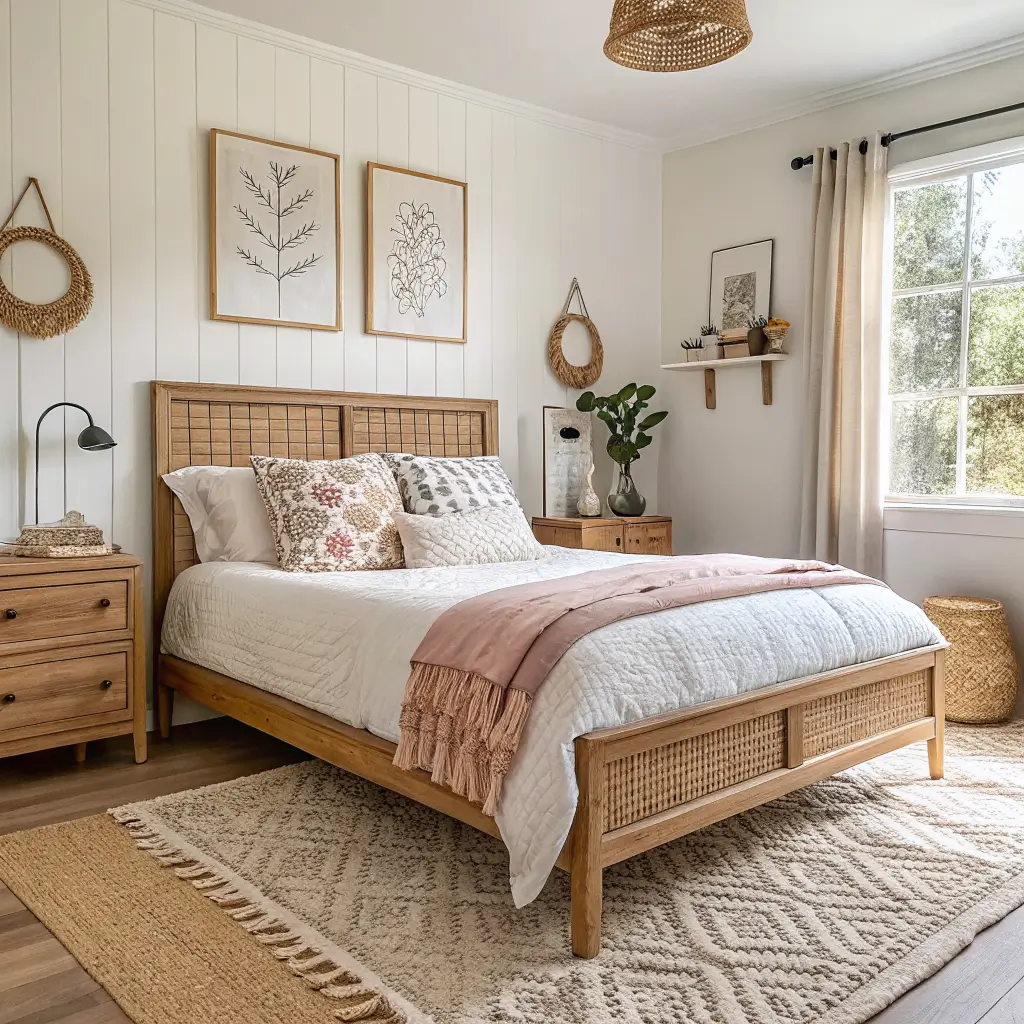
– A rattan or cane headboard adds texture without weight if you’re tired of the Scandi look.
Cross-Style Riffs on the Same Bones
The same layout works in different moods:
– Boho-Scandi: light walls, rattan headboard, two patterned cushions, jute rug
– Modern coastal: white base, navy and sand accents, striped throw, woven baskets
– Japandi: low platform bed, warm beige walls, one large piece of art, almost nothing else
Pick three words for the mood you want — mine are “calm, soft, low” — and hold every new purchase up against them. If it doesn’t fit, it doesn’t come in. That’s the rule that’s kept the room feeling like a room and not a storage unit with a mattress in it.
Conclusion
The very tiny bedroom ideas that worked for me came from a room that was seven by nine with a single window that looked at a brick wall. I bought a bed with drawers underneath, hung a shelf above the headboard for books, and added a mirror that reflected the window. The walls were white, the bedding was light gray, and the only color was a single plant on the windowsill. The room felt like a ship’s cabin — compact, efficient, and completely mine.
More Decor Ideas to Explore
- Very Small Laundry Room Ideas: How to Make a Closet-Sized Space Actually Work
- Very Small Walk-In Closet Ideas That Actually Work in a 4×4 Space
- French Coastal Decor: A Real Guide to Getting the Look Without the Beach-House Clichés
- Little Apartment Ideas: A Real Guide to Decorating 350–700 Sq Ft (Renter-Friendly, Budget-Aware)