Boho Coastal Decor: A Real Guide to Getting the Layered, Beachy Look Right
You want your living room to feel like a slow morning on a Greek island with the windows open, but every time you try it you end up with either a sterile beach-house cliché or a Pinterest board exploded onto your sofa. Boho coastal decor lives in a specific sweet spot — airy and light like coastal, layered and collected like boho — and it’s easy to tip too far either way.
I’ve decorated my own apartment in this style over about two years (with a few rearranges I’d rather forget), so here’s what actually works.
What Boho Coastal Actually Is — and Who It’s For
Coastal on its own can feel a little staged. Boho on its own can feel heavy and dim, especially in a small space. The fusion fixes both: you get the breathing room and soft palette of a beach house with the texture, plants, and personality of a boho space.
This is the right style for you if:
– You want a relaxed, vacation-ish feel without anchors or “Beach” signs
– You like plants, baskets, linen, and stuff you’ve collected from trips
– Formal rooms make you uncomfortable
– You rent (almost all of it is non-permanent)
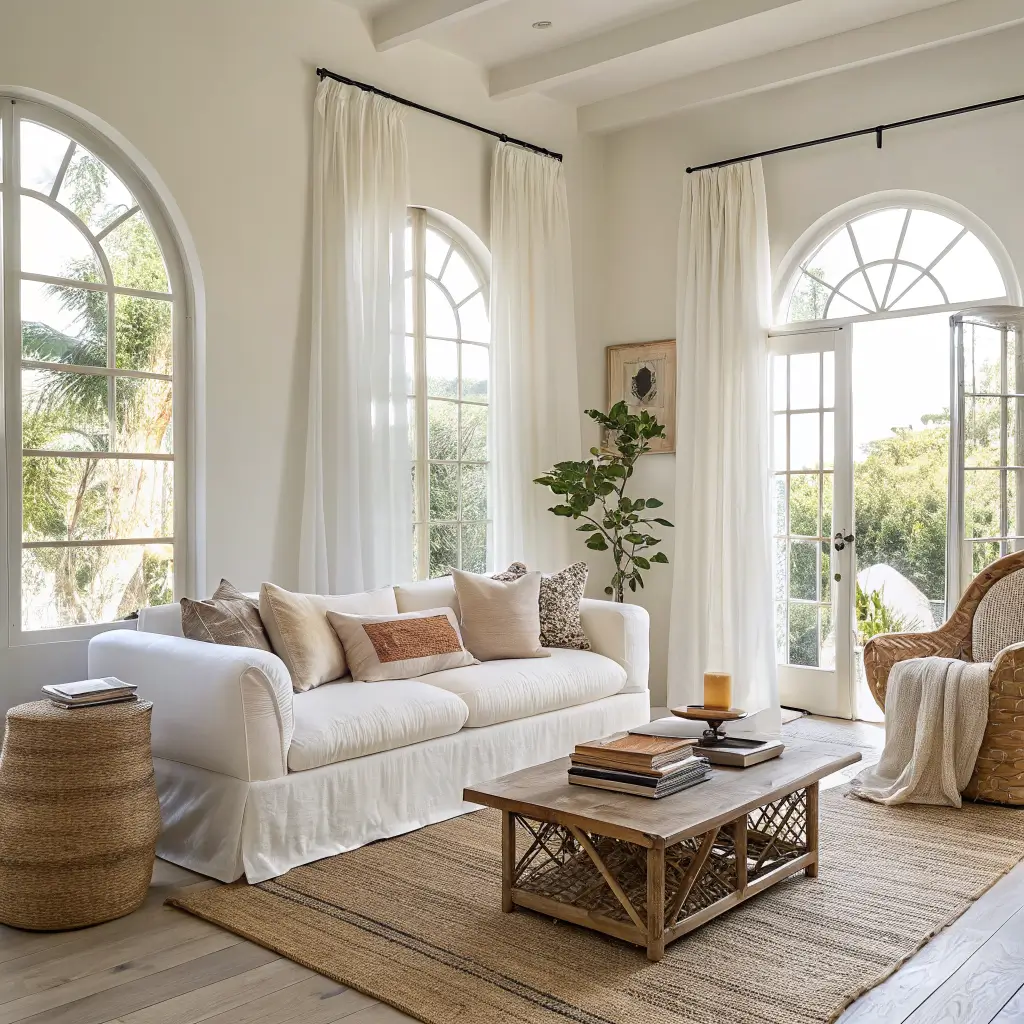
It works in studios up to open-concept layouts. My best results have been in living rooms around 150–250 sq ft and bedrooms around 120 sq ft — enough room to layer without choking the space.
Time and Budget, Honestly
A pillow-and-textile refresh of a living room takes me about 2–4 hours, including the inevitable swap-things-around stage. A full styling weekend, with some new furniture, art-hanging, and maybe a pendant swap, runs 1–2 days if you’ve got basic DIY skills.
Rough cost tiers based on what I’ve actually paid:
– Budget refresh, $250–$600: 2–3 rattan or jute baskets ($25–$60 each), a 5×7 jute or flatweave rug ($80–$180), 4–6 pillow covers ($15–$30), one simple macramé wall piece ($20–$60).
– Mid-range, $800–$2,000: Linen or slipcovered sofa ($700–$1,500), rattan accent chair ($150–$300), woven pendant ($150–$300), framed coastal prints ($30–$80 each).
– Investment, $2,000–$5,000+: Vintage wood pieces, designer lighting, custom or commissioned art, higher-end linens.
The Palette and Materials That Make It Work
Get the palette wrong and everything else falls apart. I learned this when I tried to add a navy velvet pillow because it was “coastal” — it sat there like a brick and I gave up after a week.
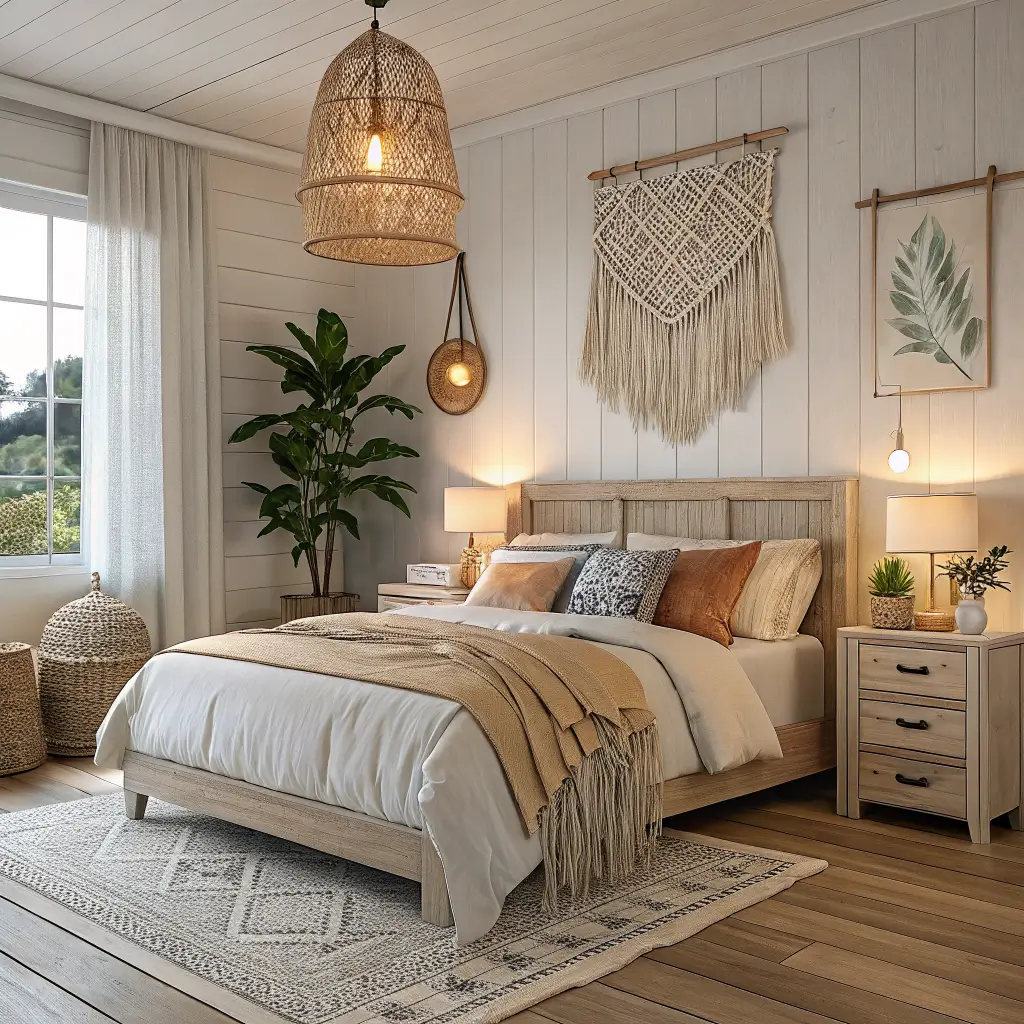
Colors, in the proportions I actually use:
– Base (60–70%): white, off-white, cream, sand beige
– Coastal cools (20–30%): seafoam, sage, soft aqua, muted teal, powder blue, light denim
– Boho warms (10–15%): terracotta, clay, muted rust, blush, a hint of mustard
– Wood/neutral grounding: light oak, driftwood gray, warm beige
Materials to layer in:
– Natural fibers — rattan, wicker, cane, bamboo, jute, seagrass, sisal
– Washed linen, cotton, gauzy muslin, macramé, crochet
– Whitewashed or weathered wood, light pine or oak
– Terracotta and ceramic vessels, glass in sea-glass tones, driftwood
The rule I keep coming back to: if it looks like it could exist in a fisherman’s cottage or a Moroccan riad, it’s probably right. If it looks like a corporate hotel lobby, skip it.
The Hero Pieces Worth Spending On
Three things make or break the look. Spend here:
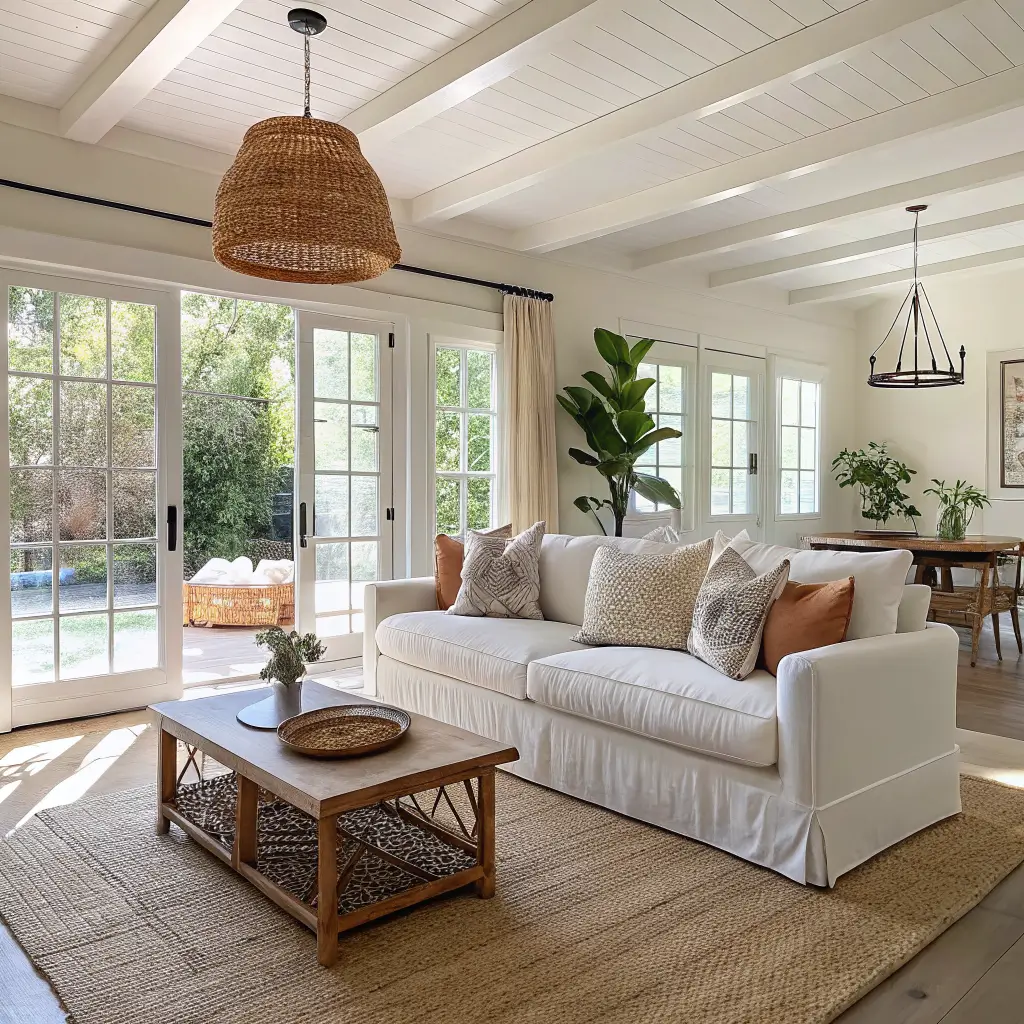
A light, slipcovered or linen sofa. White, oatmeal, or natural. Aim for 80–90″ wide in a living room. I have a washable slipcover one from Article that has survived a black cat and red wine. Pottery Barn, IKEA’s Söderhamn with a Bemz slipcover, and Article all hit the $700–$1,500 range.
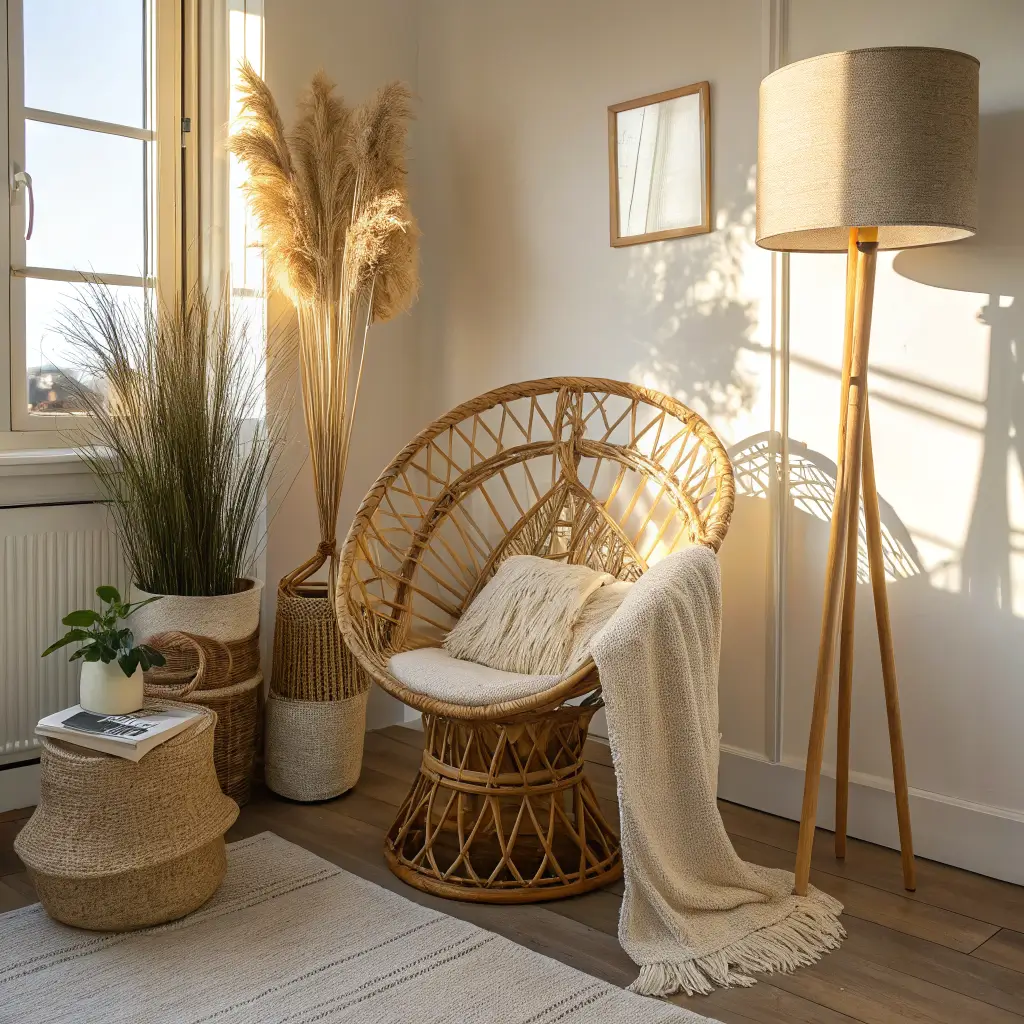
A rattan or cane accent chair. This is the single piece that does the most work for the least money. I bought mine secondhand on Facebook Marketplace for $40. New ones run $150–$300, and a bistro version can be as low as ~$80 at chain decor stores.
A jute or seagrass rug, sized correctly. This is where people mess up. Get one too small and the room looks unmoored. The front legs of your sofa and chairs should sit on the rug. For most living rooms that’s an 8×10, not the 5×7 you’re tempted to buy because it’s cheaper. Expect $150–$350 for an 8×10 jute.
Where to save: throw pillows (covers from Etsy or H&M Home are great), baskets (HomeGoods, thrift stores), art (prints, not originals), small ceramics, and most plants if you grow them yourself.
Putting It Together Without It Looking Like a Catalog
Here’s the order I use every time I restyle a room:
1. Set the base. Walls in a soft white or off-white. I use Benjamin Moore Simply White in eggshell — warm enough not to feel clinical, cool enough not to go yellow at sunset. Lay the rug, position the sofa toward the best window.
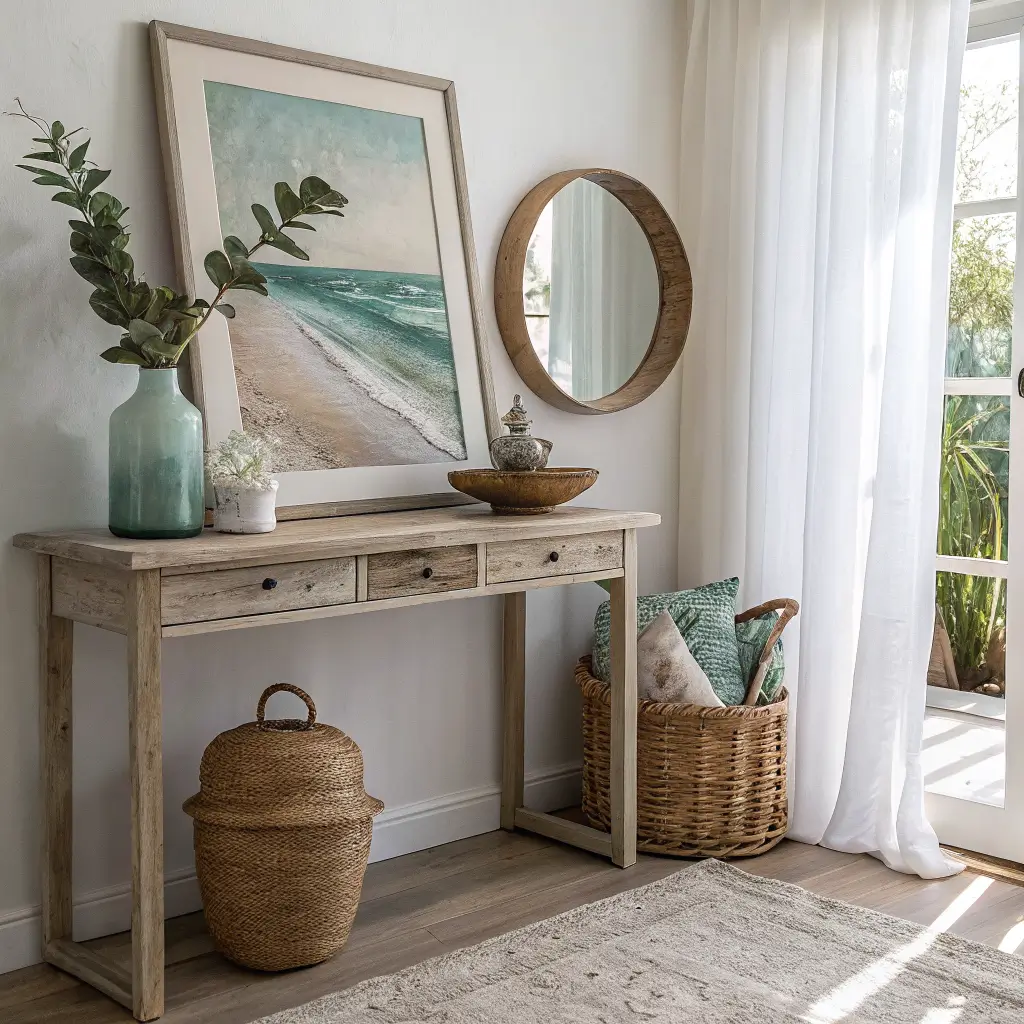
2. Add the bigger pieces. Coffee table, side tables, baskets next to the sofa for blankets, a console behind the sofa or by the entry with one large organic-shaped mirror above.
3. Layer textiles. A linen throw on the sofa arm, another folded at the end of the bed. For pillows, I do 5 pillows on a standard sofa: two solids in the back corners (linen, sand or white), two with pattern or texture in front (a block print, an embroidered piece), and one lumbar in an accent tone like terracotta.
4. Bring in plants. One large statement plant — a 5–6 ft fiddle leaf, kentia palm, or bird of paradise — in a woven basket in the empty corner past the sofa. Then 2–4 smaller plants on shelves, a stool, or in hanging planters.
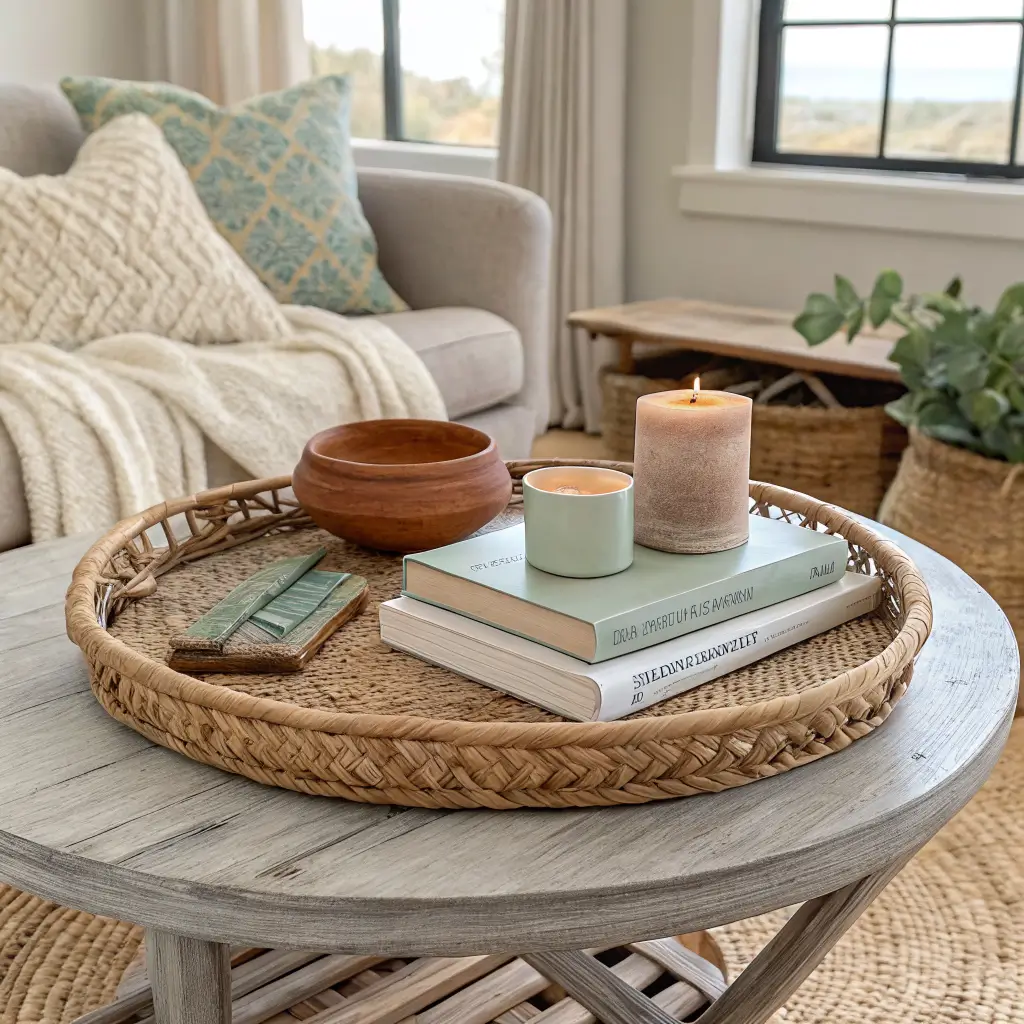
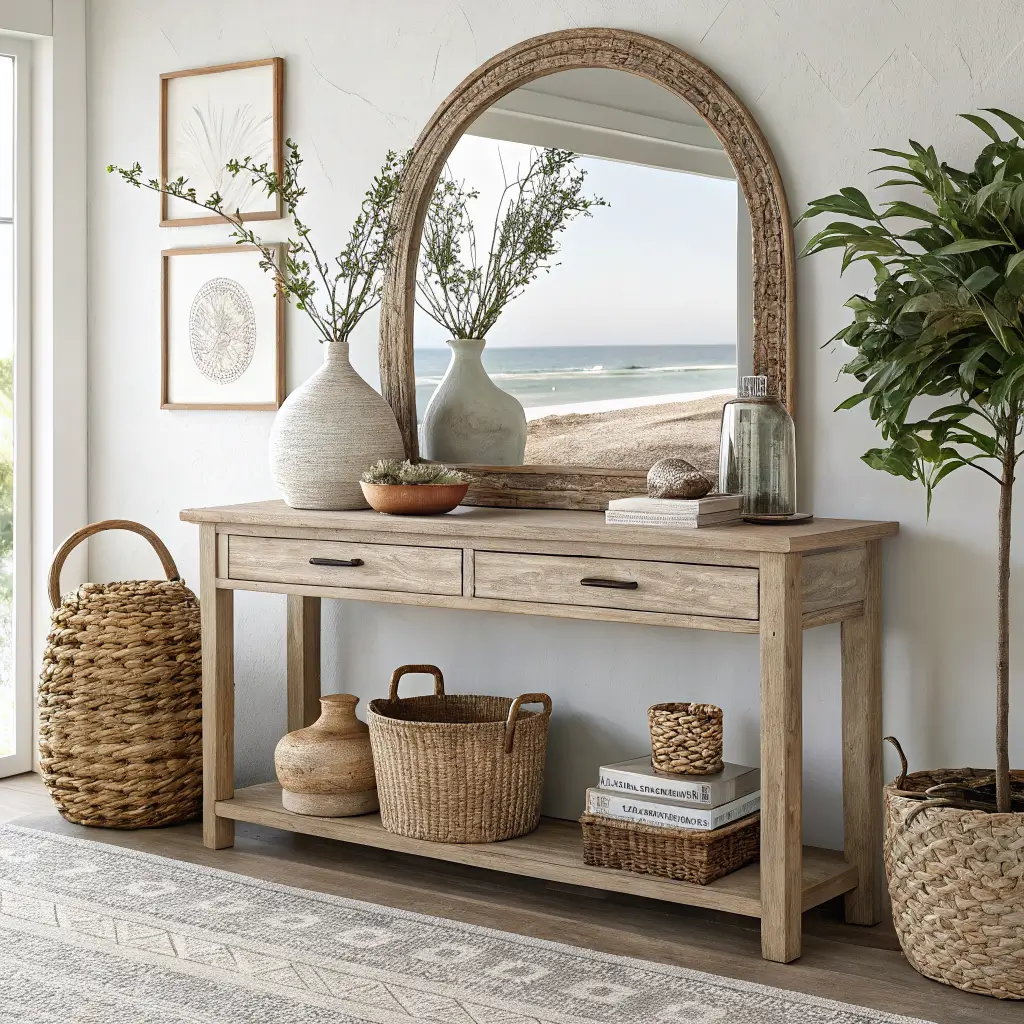
5. Build vignettes. Coffee table: a flat tray, a stack of 2–3 books, a candle, one small object (a piece of driftwood, a ceramic bowl). Console: layered art (one leaning, one hung), a vase with eucalyptus, one collected object. The rule is odd numbers and varied heights.
6. Fine-tune lighting. Ditch the overhead can lights at night. Two table lamps with rope, rattan, or natural ceramic bases, plus a floor lamp near the chair. Warm bulbs, 2700K, never higher. This is the single biggest difference between a room that looks alive and one that looks like a furniture showroom.
7. Edit. Remove 10–20% of what you just placed. Boho can layer; coastal needs breath. The empty space is part of the design.
The Mistakes I Made So You Don’t Have To
Too many literal beach references. My first attempt had a starfish on the shelf, a “Salt Water Cures Everything” sign, a jar of shells from a trip to Cape Cod, and a sailboat print. It looked like a gift shop. Now I have exactly one bowl of shells on a bookshelf and a single abstract seascape print. That’s it. The vibe should come from materials and color, not props.
Pattern stacked on pattern. A patterned rug AND patterned pillows AND patterned curtains is a fight. Pick one to lead. If the rug is busy, keep pillows mostly solid with one print. If the rug is plain jute, your pillows can party.
Dark, heavy furniture you didn’t replace. A mahogany credenza will sabotage everything. If you can’t get rid of it, paint it, lime-wash it, or drape it with a linen runner and stack books on top to break it up. I lime-washed an oak dresser using a $12 kit and it changed the whole room.
Everything at tabletop height. Hang plants. Hang art high. Use a tall floor lamp. Lean a ladder shelf in the corner. Your eye needs somewhere to travel upward.
Confusing layered with cluttered. Layered means three textures on the sofa. Cluttered means you can’t see the sofa. If a surface has more than 3–5 objects on it, you’re probably over the line.
Seasonal and Easy Swaps
The whole point of this style is that the bones don’t change — only the soft stuff does.
– Summer: lighter linen pillow covers, more white and aqua, a woven sun hat hung on the wall, fresh eucalyptus in a glass jug, sheer curtains.
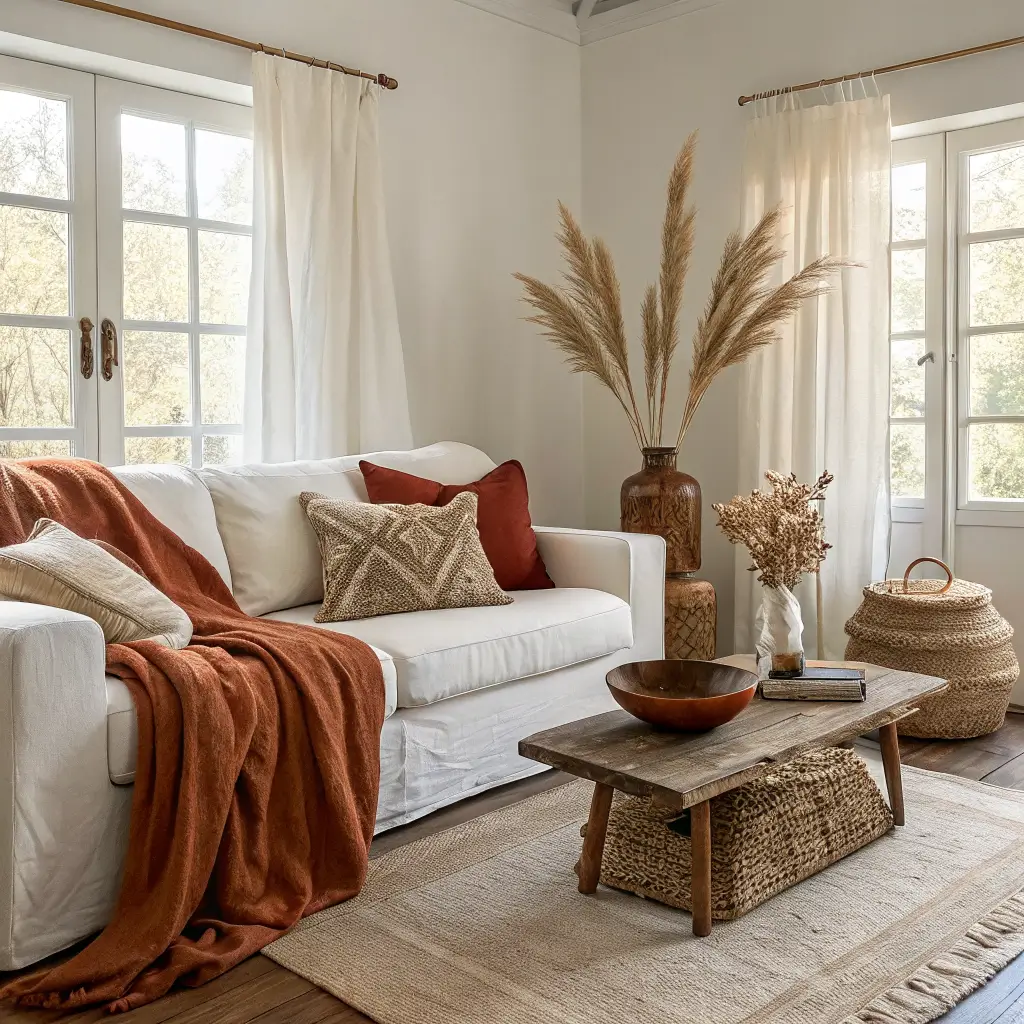
– Fall: swap in terracotta, rust, and ochre pillow covers, heavier chunky knit throw, pampas grass or dried wheat in a tall floor vase, a brass candlestick or two.
– Holidays: simple warm-white string lights, eucalyptus garland on a mantel or console, brass votives. Skip red and green — it fights the palette.
Keeping It from Drifting Off-Theme
Every time I’m tempted to buy something new, I run it through three filters. If it doesn’t hit at least two, it doesn’t come home:
– Is it natural, handmade, or has a handmade feel?
– Is the color soft and sun-washed?
– Does it feel relaxed, not formal or shiny?
That filter has saved me from a lot of $30 mistakes at Target.
The best pieces in my apartment are things I didn’t plan: a chipped terracotta pot from a Lisbon flea market for €4, a rattan magazine rack my neighbor was throwing out, a hand-thrown ceramic mug I use as a pen holder on the console. Those are what make a boho coastal room feel like yours and not like a showroom — and they’re the part no store can sell you.
Conclusion
The boho coastal decor that feels right to me is not the one with the most macramé. It is the porch where the owner has hung a hammock between two posts, left a stack of woven blankets in a basket, and filled the corner with potted plants that have survived three winters. The room smells like salt and jasmine, and the wind moves through it like the house is breathing. That is what boho coastal means — not a style you buy, but a space you grow into.
More Decor Ideas to Explore
- Coastal Eclectic Decor: How to Get the Collected Beach-House Look Without the Gift-Shop Vibe
- Moody Coastal Decor: How to Get the Dark, Atmospheric Beach-House Look Without the Nautical Cheese
- Tiny Living Room Ideas: A Real Guide for Spaces Under 150 Square Feet
- The Beachy Bathroom Guide: How to Get the Coastal Look Without It Feeling Like a Gift Shop