French Coastal Decor: A Real Guide to Getting the Look Without the Beach-House Clichés
French coastal decor is what you want when you love the calm of a seaside room but can’t stand another rope-wrapped starfish or “Gone to the Beach” sign. It’s coastal with grown-up taste — closer to a farmhouse on the Île de Ré than a Cape Cod gift shop. Linen, limewash, a little rattan, the occasional faded red stripe, and almost no obvious nautical kitsch.
I redid my own living room in this style over about three months, mostly because I’d already made the mistake of going full navy-and-white in my last apartment and ended up with a room that looked like a Pottery Barn catalog from 2011. This version is warmer, softer, and quieter. Here’s how I’d put it together now.
What French Coastal Actually Is (and Who It’s For)
Think Provence on the water. The bones are French country — carved wood, embroidered linens, vintage ceramics — but the palette and materials lean seaside: creams instead of mustards, seafoam instead of rooster red, seagrass instead of terra-cotta tile.
The hallmarks:
– Natural materials: linen, rattan, seagrass, jute, light woods
– Subtle nautical hints, never literal — rope detail on a mirror, an oyster basket holding magazines, a vintage map of Brittany
– Old-world French touches: a curved console leg, a pewter platter, hand-embroidered pillowcases
This look works for you if you want coastal without the theme park, or if you already love French country and want a lighter, breezier version. It’s also forgiving for renters — most of the impact comes from textiles, paint, and accessories rather than built-ins.
Where it shines: small to medium rooms (roughly 120–250 sq ft). The pale palette and vertical paneling visually push the walls out, which is exactly what cramped living rooms and low-ceilinged bedrooms need.
Time, Money, and Skill — The Honest Numbers
Mini refresh (new cushions, art, a basket, swap out a lamp): one weekend, $400–$900.
Full room re-style with new furniture, paint, maybe some paneling: 2–4 weeks once you factor in sourcing and delivery.
Realistic budgets for a living room or bedroom:
– Budget-conscious: $1,500–$3,000
– Mid-range: $4,000–$8,000
– High-end: $10,000+
Some real price points I’ve either paid or shopped recently:
– Linen cushion covers: $25–$60 each
– Jute or seagrass 5×8 rug: $120–$350
– Woven rattan basket: $40–$120
– Slipcovered linen sofa: $1,500–$3,500
– Solid oak coffee table, light stain: $400–$900
– Rattan accent chair: $300–$800
– Oversized seagrass pendant: $250–$700
– French-style carved console or buffet: $1,200–$4,000
Skill-wise: styling and textile swaps are beginner territory. Tongue-and-groove paneling is doable in a weekend if you’re comfortable with a nail gun. Anything electrical — pendant swaps, sconces — get a pro.
The Palette: Where Most People Get It Wrong
The biggest mistake I see (and made myself) is reaching for crisp white walls and a navy sofa. That’s American coastal. French coastal is warmer and dustier.
Base neutrals: buttery cream, ivory, warm white, pebble gray, sandy beige. If you’re painting walls, skip anything labeled “brilliant white.” I used Farrow & Ball’s School House White in my last refresh and it reads cream in low light, warm white in sun — exactly the elasticity you want.
The blues and greens — and this is the key shift — favor green-leaning shades:
– Seafoam, celadon, pistachio, soft sage
– Duck-egg blue, pale turquoise, faded navy, muted teal
Accents: coral, terracotta, and one specific thing — a single small pop of faded red. A piping detail on a cushion, a bistro chair, the matte red of an old enamel pitcher. That one red note is what makes the room read French instead of generic beach house. Leave it out and you’ve got coastal Pottery Barn.
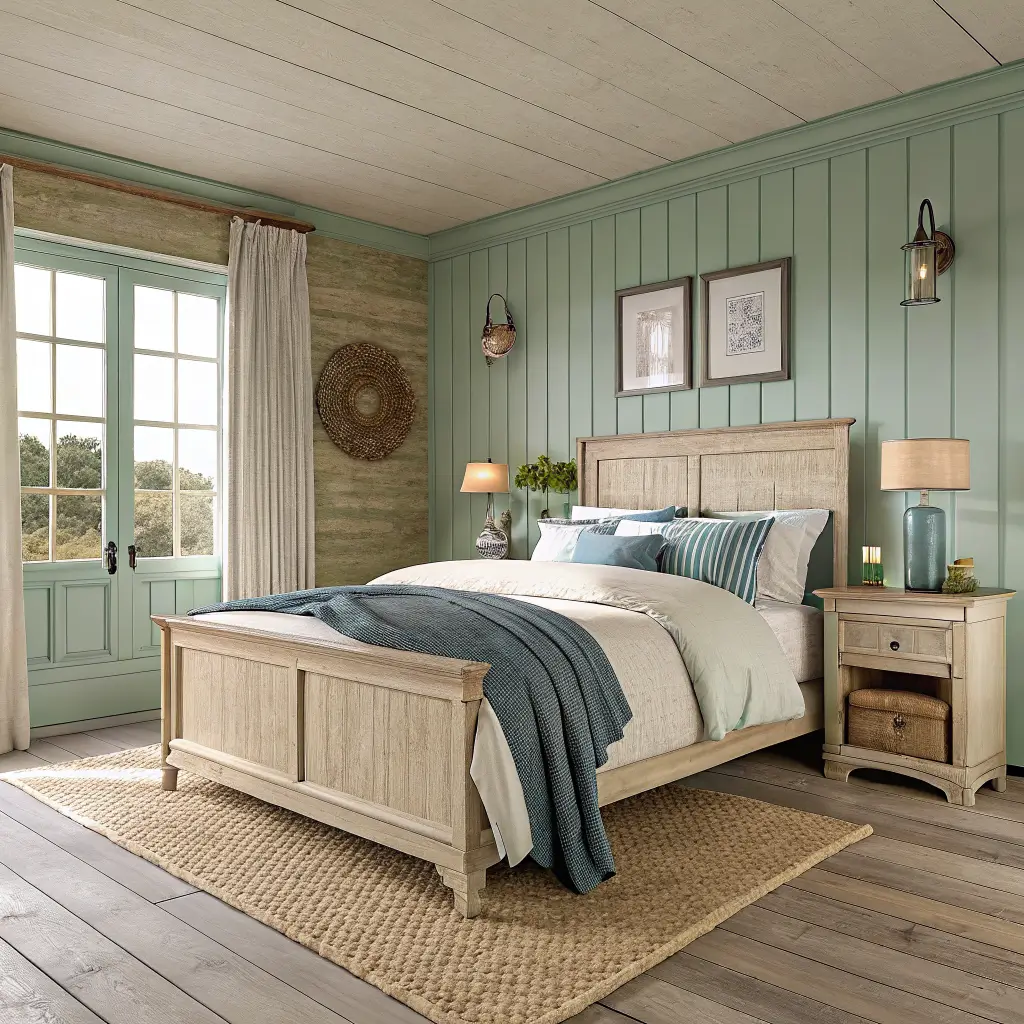
Hero Pieces That Anchor the Look
If you only invest in three things, make it these:
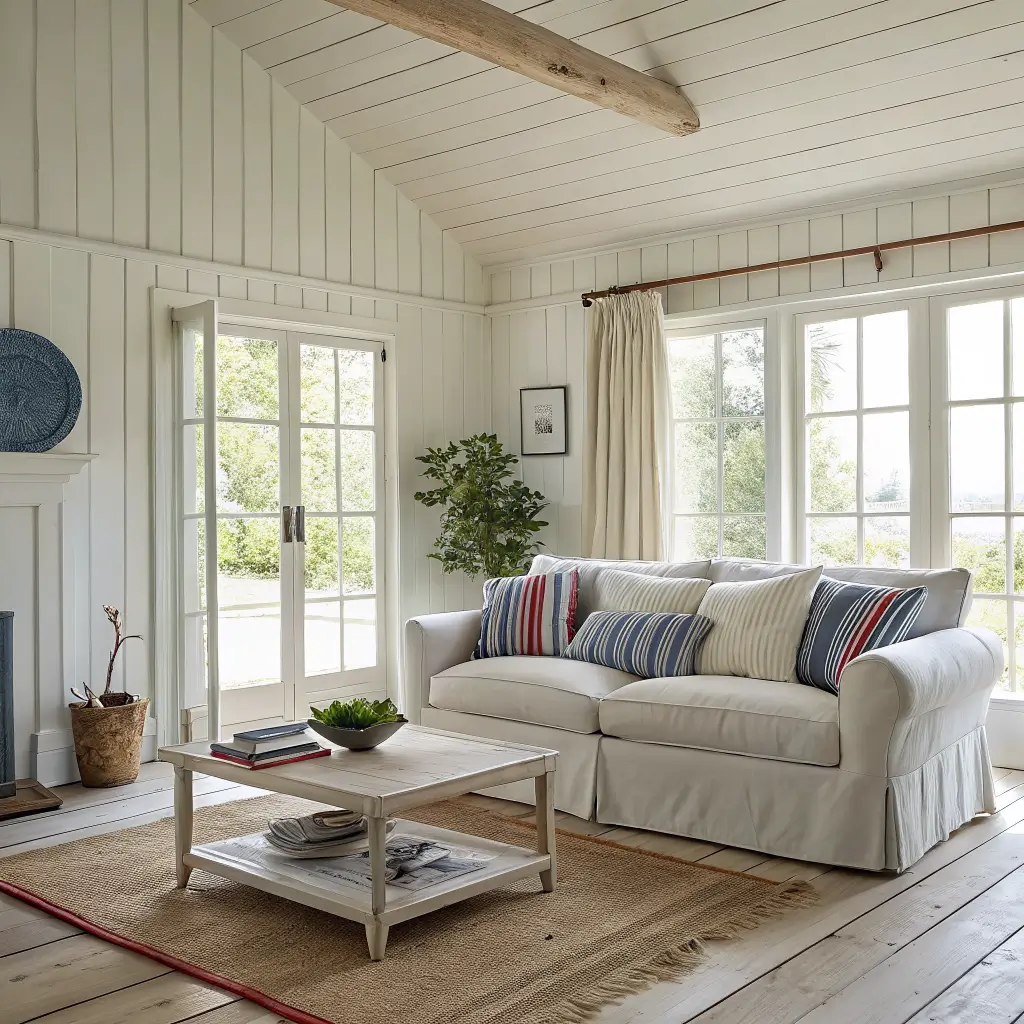
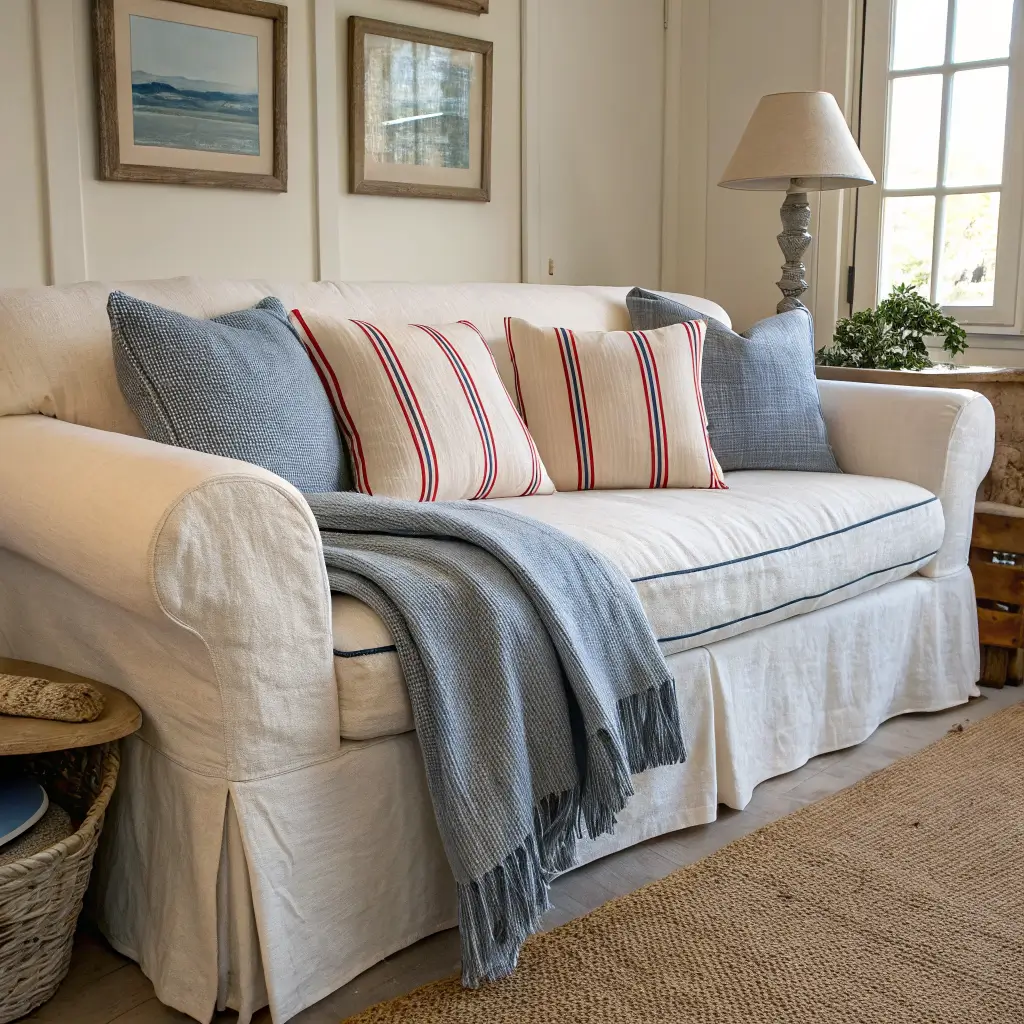
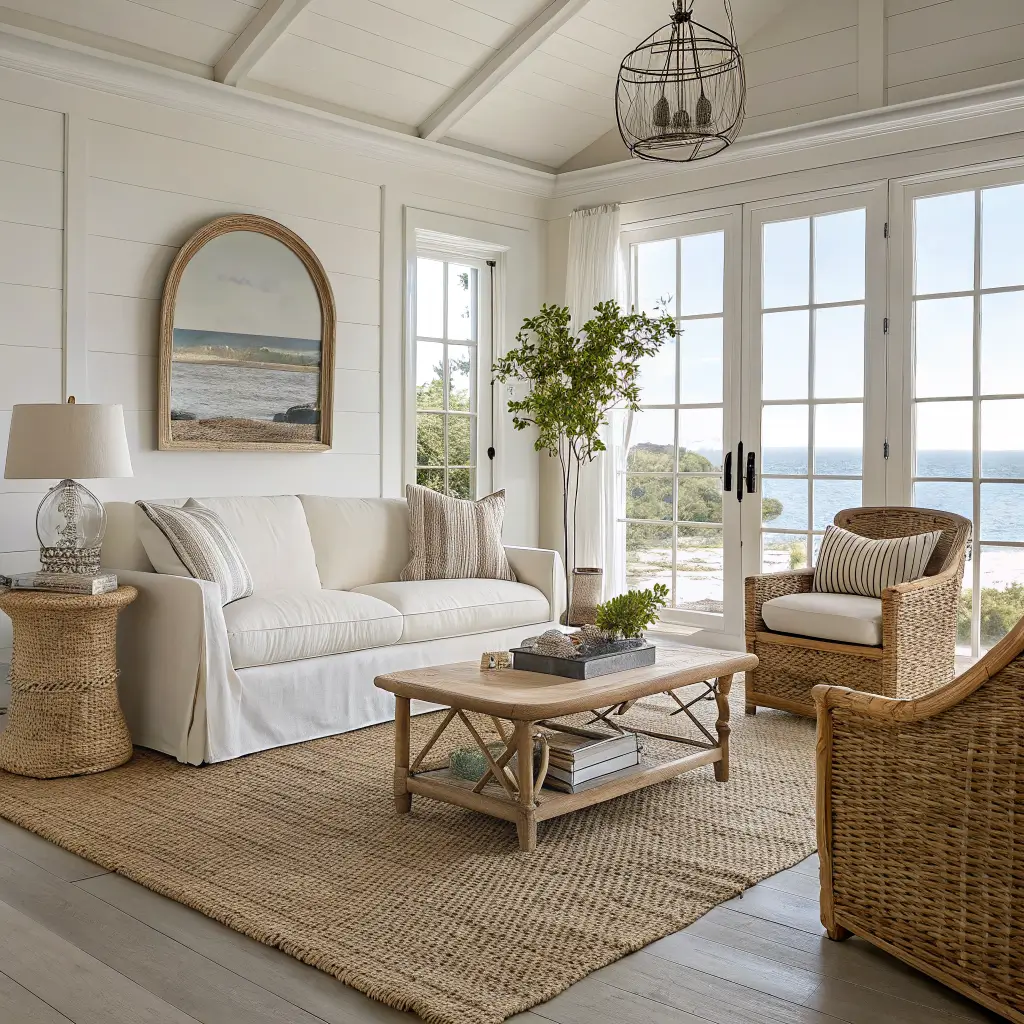
A slipcovered linen sofa in warm white or cream. The slipcover matters — it should look slightly crinkled and lived in, not taut. Aim for at least 38–40″ seat depth so you can actually sprawl. Mine has washable covers, which is the only reason it survived a red wine incident in year one.
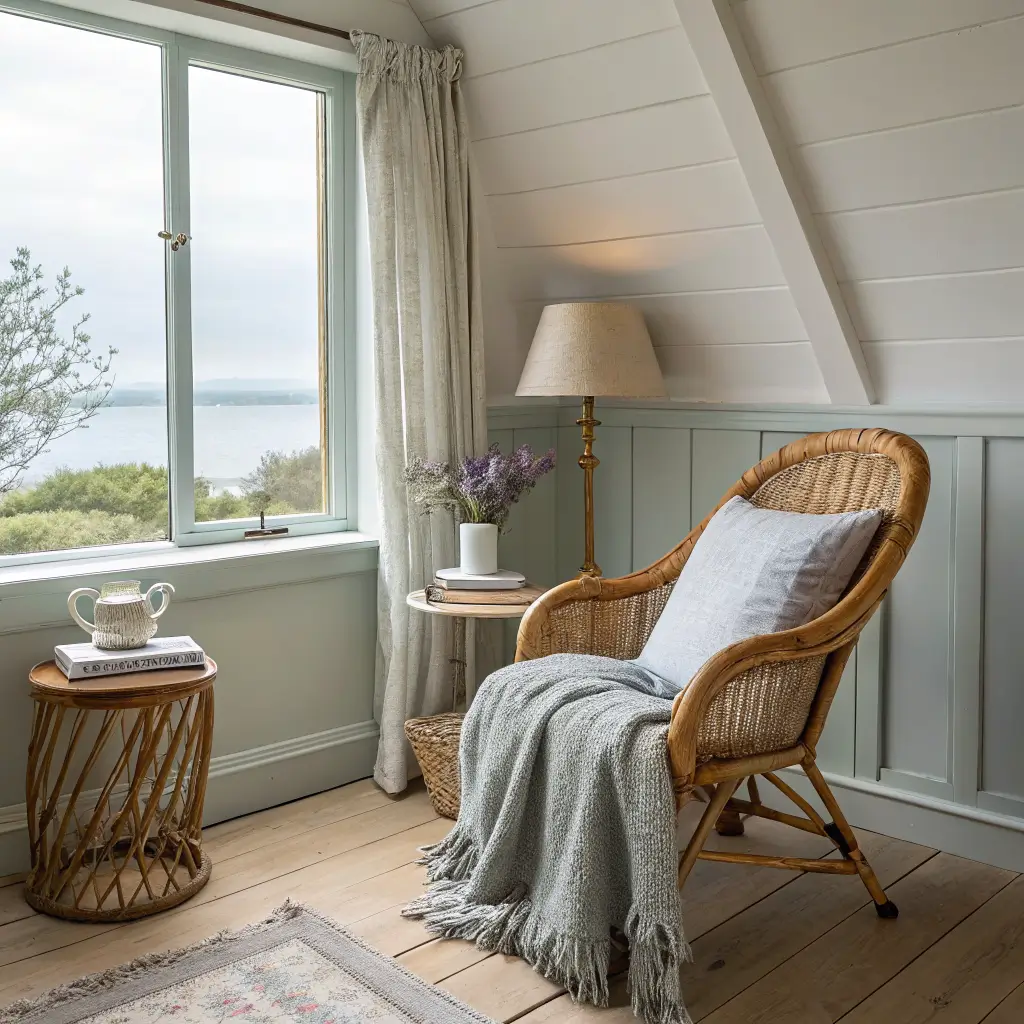
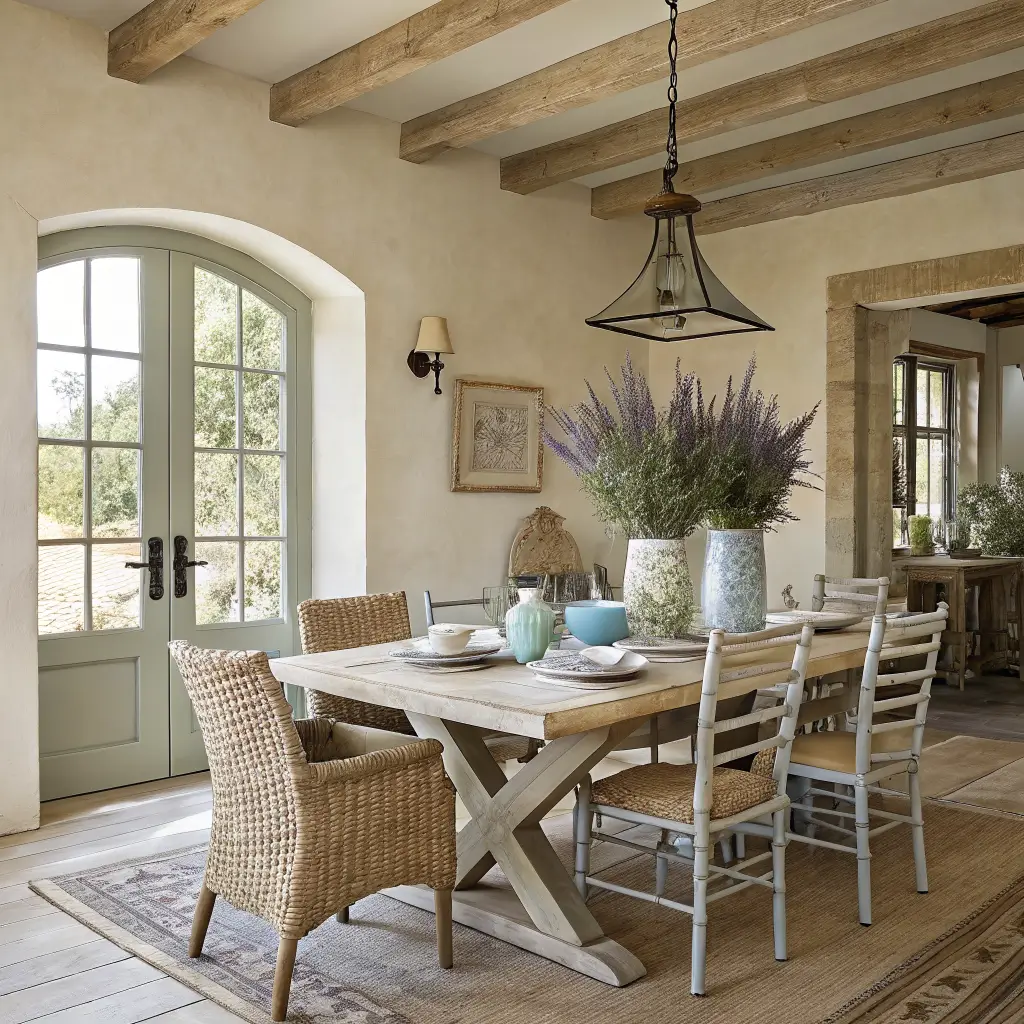
A rattan or French bistro-style chair in a natural or honey finish. One is enough. Two starts to feel like a sunroom.
A light wood coffee table — oak, ash, or pine, with a natural, limewashed, or driftwood stain. Simple lines, maybe a subtle turned leg. Skip anything glossy or dark.
After those, supporting players:
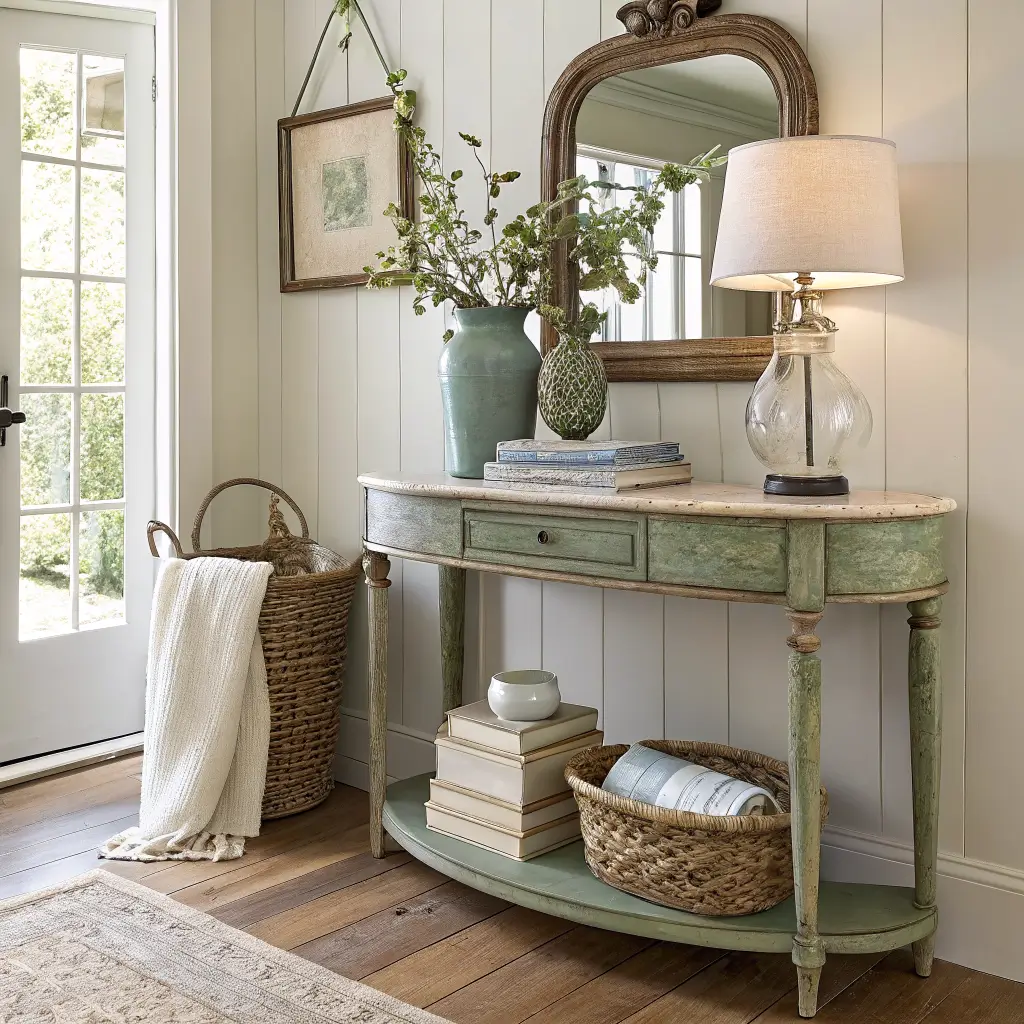
– A carved-leg console or buffet in muted paint or natural wood
– Side tables in rattan or painted cream with worn edges
– Ladder-back dining chairs
– Open shelving for ceramics, glass bottles, and books
Textiles: The Layering That Makes It Work
This is where flat rooms become real ones. The trick is mixing a lot of texture in a small color range.
Cushions — mix three stripe scales with two solids:
– Wide stripe in seafoam and cream
– Pinstripe in faded navy and ivory
– Faded red and cream stripe (this is your French note)
– Solid duck-egg linen
– Solid pebble gray linen
Throws: one chunky knit wool in soft gray or sand, plus a lightweight chambray or linen in pale blue.
Rugs: large seagrass or jute as the base, layered with a smaller wool or cotton flatweave near the sofa where bare feet go. Seagrass is hard underfoot — that second layer matters more than people admit.
Curtains: sheer or lightweight linen in white, ivory, or pale seafoam. Mount the rod 4–6 inches above the window frame and 8–12 inches wider on each side. This single change does more for ceiling height than any paint trick.
Accessories That Sell It
The greenery is non-negotiable but specific:
– Lavender in a simple glass carafe
– Olive branches in a stoneware pitcher (these last months as dried stems)
– Rosemary in a small terracotta pot in the kitchen
For walls, I’d hang two to four pieces loosely grouped — not a tight grid:
– A vintage nautical map (eBay is full of real ones from $40–$150)
– A soft seascape painting or print
– Black-and-white photography of an oyster hut, dock, or French port
– A rope-edged or weathered wood-frame mirror placed opposite a window
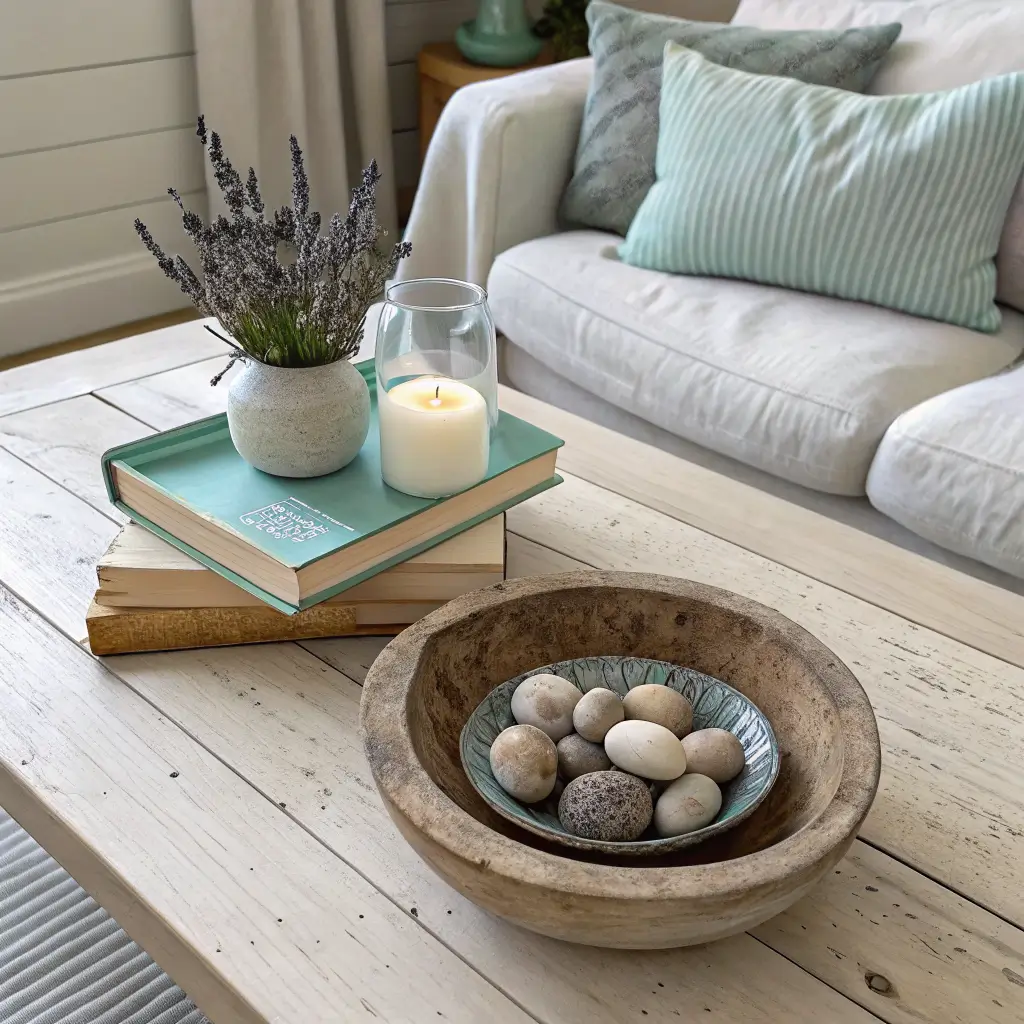
On surfaces: ceramic vases in pale blues and greens, glass carafes that catch light, a driftwood bowl on the coffee table. A small enamel pitcher in cream. A pewter platter leaned against the wall on a buffet.
The thing I regret buying: a set of decorative wooden oars. They went straight to Goodwill within two months. The thing I’m glad I bought: a $22 thrifted wicker oyster basket I now use to corral throws by the sofa.
Putting the Room Together
Here’s the order I actually work in when I style a room from scratch:
1. Paint and walls first. Warm white or cream. If you’re paneling one wall, do it now — vertical tongue-and-groove behind the sofa or bed, painted cream or soft sage.
2. Set the rug. Largest one possible. Front legs of the sofa and chairs should sit on it.
3. Place the sofa facing the light or the view. Angle chairs in.
4. Hang curtains high and wide, then the mirror opposite the window.
5. Add cushions and throws — mix scales, repeat colors at least twice across the room.
6. Style two vignettes: one on the console (lamp, books, vase with olive branches), one on the coffee table (tray, candle, small bottle, bowl).
7. Hang art last, in a loose cluster.
8. Add the one red thing.
Mistakes to Avoid
Going theme-park nautical. Anchors, starfish, “Beach This Way” signs. None of it. Stick to rope detail, oyster baskets, maps.
Stark white everything. Reads cold and American. Use ivory and cream.
Blue overload. All-blue-and-white feels like a chain hotel. Bring in sea greens, sage, pistachio.
Too much rattan. When every piece is woven, the room buzzes. Balance with solid light wood and lots of linen.
Cluttered surfaces. Three items per vignette, then stop. Negative space — the empty parts of a tabletop or shelf — is what makes the rest read intentional.
Keeping It Fresh Through the Year
Warmer months: swap wool throws for linen, bring in lavender, lighten cushion covers to pale solids.
Cooler months: layer a smaller wool rug over the seagrass, swap in deeper sea green and muted navy cushions, add hurricane lanterns and pewter candleholders. A single brass-based table lamp with a linen shade changes the whole evening mood.
If you want to drift the style sideways:
– Boho-French coastal: keep the natural fibers and restrained palette, add a kantha throw and a few collected ceramics from travel.
– Minimalist-French coastal: drop most of the patterns, keep the textures, lean harder on solid linens and a single piece of strong art.
Start with paint, rugs, and curtains. Those three carry more weight than any single furniture piece, and they cost less than people expect. Build the rest over a year. The room gets better as it ages — which is the whole point of the style.
Conclusion
The french coastal decor I love is in a house in Normandy where the shutters are painted a faded blue, the kitchen has a zinc countertop that has been wiped ten thousand times, and the dining table is covered in a linen cloth that has never been ironed. There is a bowl of apples on the sideboard, a vase of wildflowers from the garden, and a window that looks at the sea through a hedge of roses. It is not decorated. It is simply lived in, and the living is what makes it beautiful.