The Look: Calm, Light, and Built Around the Bed
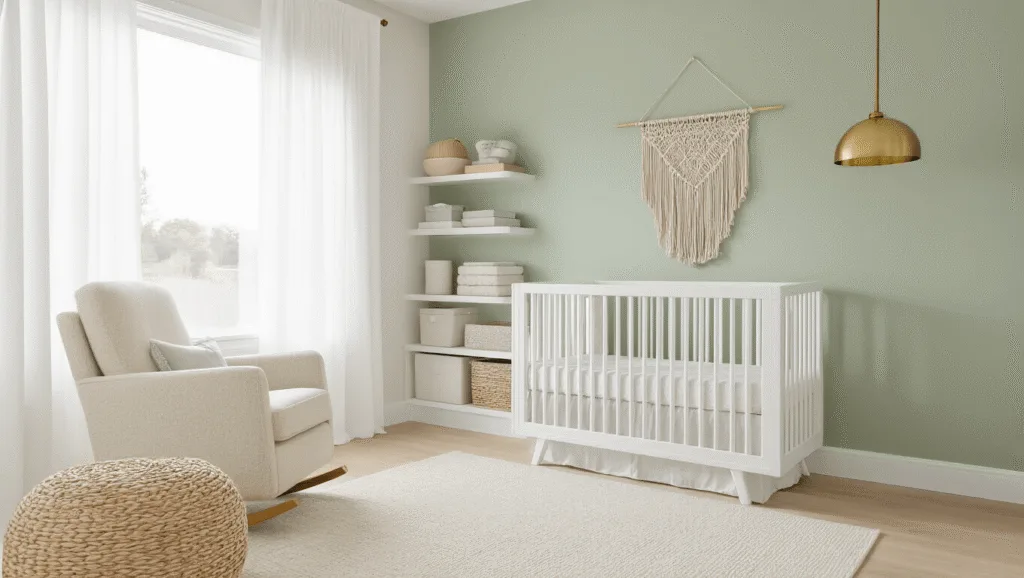
The style I keep coming back to is a mix of Scandinavian and warm minimalist. Light walls, light wood, one or two soft accent colors, and almost nothing on flat surfaces. It works because a tiny room can’t carry visual weight the way a 14×16 primary bedroom can. Pile on patterns and tchotchkes and the walls start closing in.
This approach works best for:
– Rentals and apartments
– Box rooms and former offices turned bedrooms
– Guest rooms that double as something else
– Rooms roughly 7×9 to 10×10 feet
– Studio sleeping alcoves and attic bedrooms with weird angles
The setup itself takes a weekend if you’re painting and assembling a storage bed. A simple refresh — new bedding, a mirror, swapping a lamp — is a Saturday afternoon.
Realistic budget ranges:
– $150–$500 for a refresh (paint, mirror, bedding, under-bed bins, one lamp)
– $500–$1,500 for a mid-range makeover with a new bed frame and lighting
– $1,500+ if you’re adding a storage bed, slim wardrobe, and wall-mounted everything
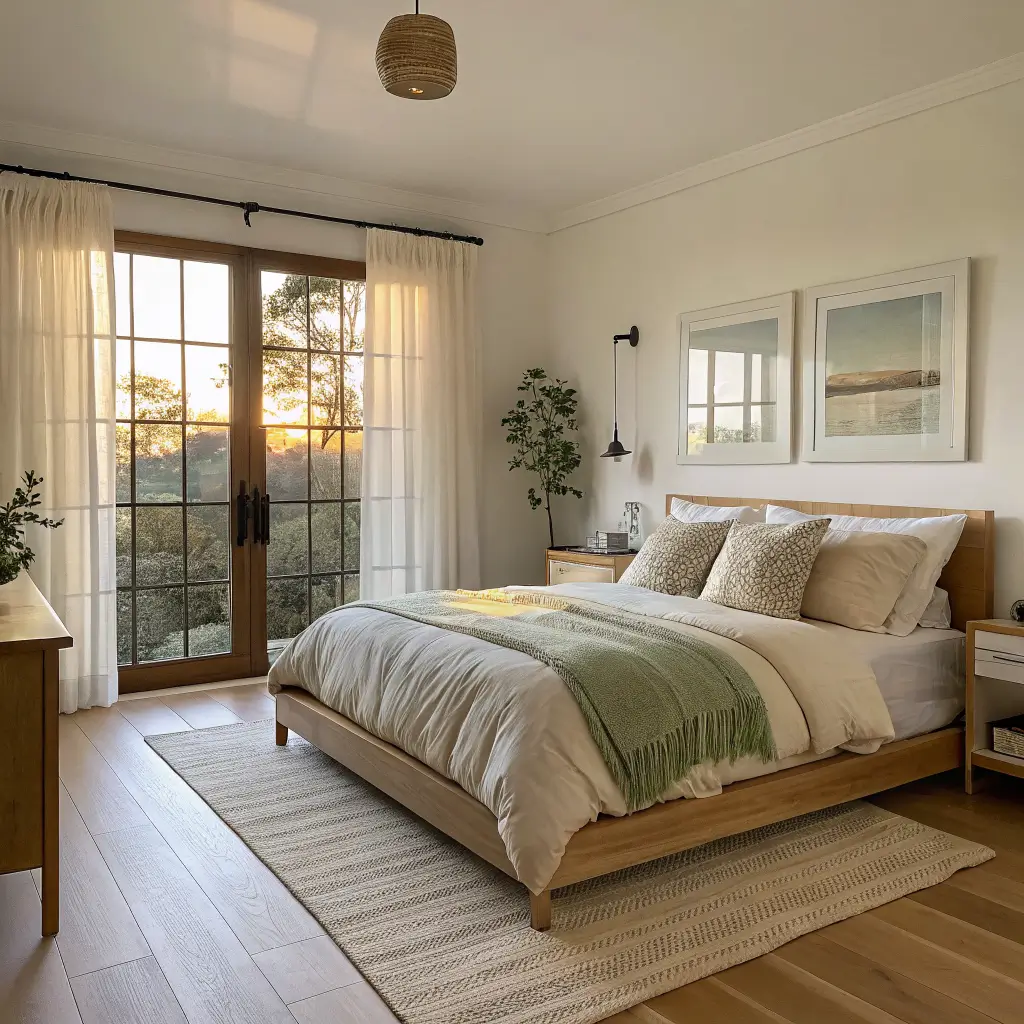
The Pieces That Earn Their Spot
In a very small bedroom, every item has to justify itself. Here’s what I’d actually buy, in priority order.
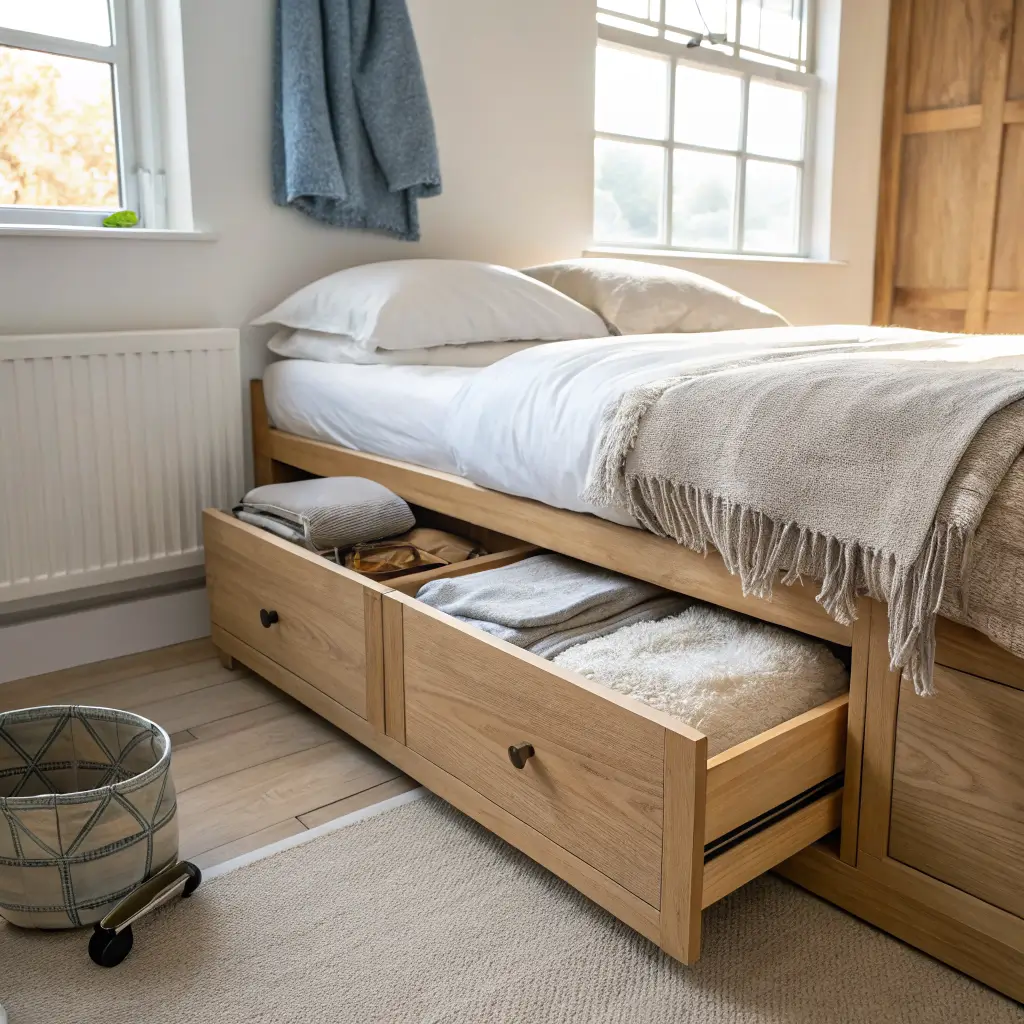
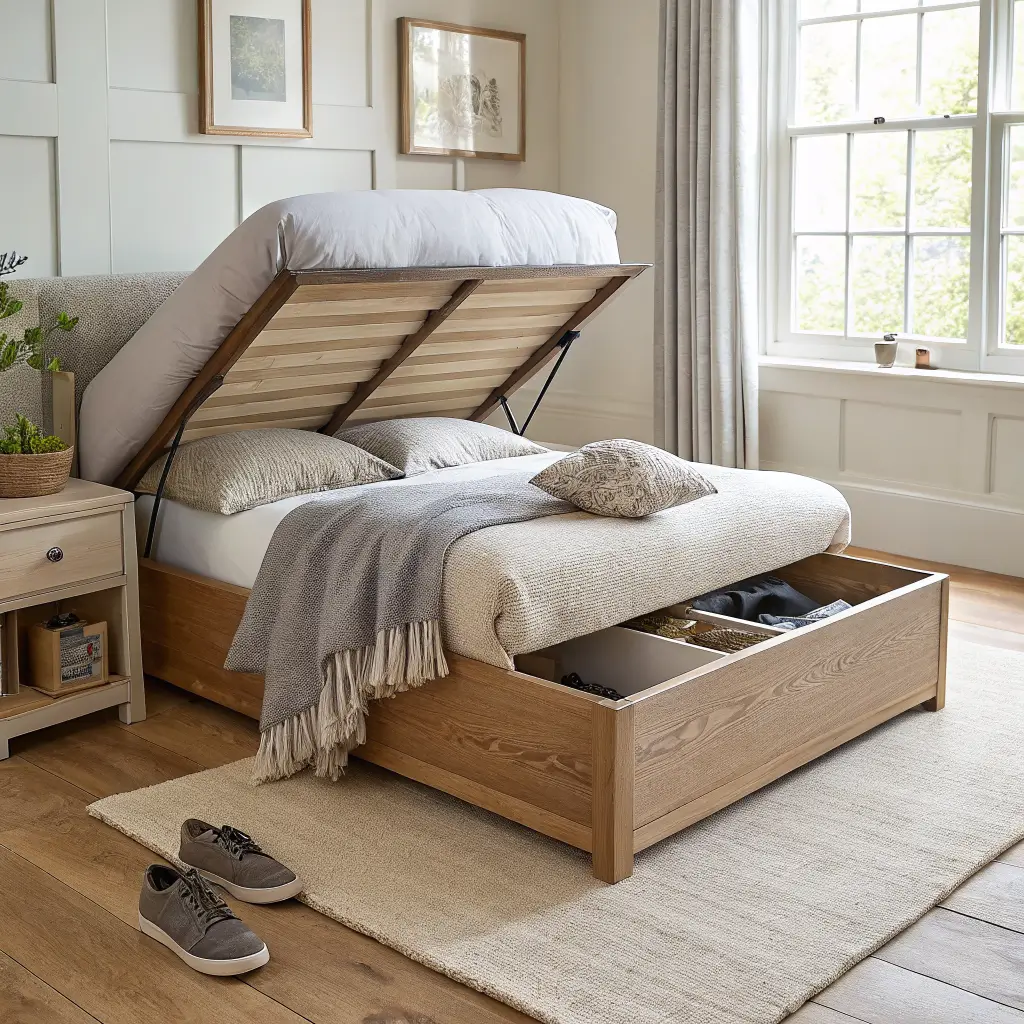
A storage bed. This is the single most useful piece in a tiny room. A frame with four built-in drawers or a lift-up platform replaces a dresser entirely. IKEA’s Malm and Nordli are the obvious picks; I have the Nordli and the drawers hold most of my off-season clothes and all my extra bedding. If you have no closet, a good storage bed gives you the equivalent of a small wardrobe under your mattress.
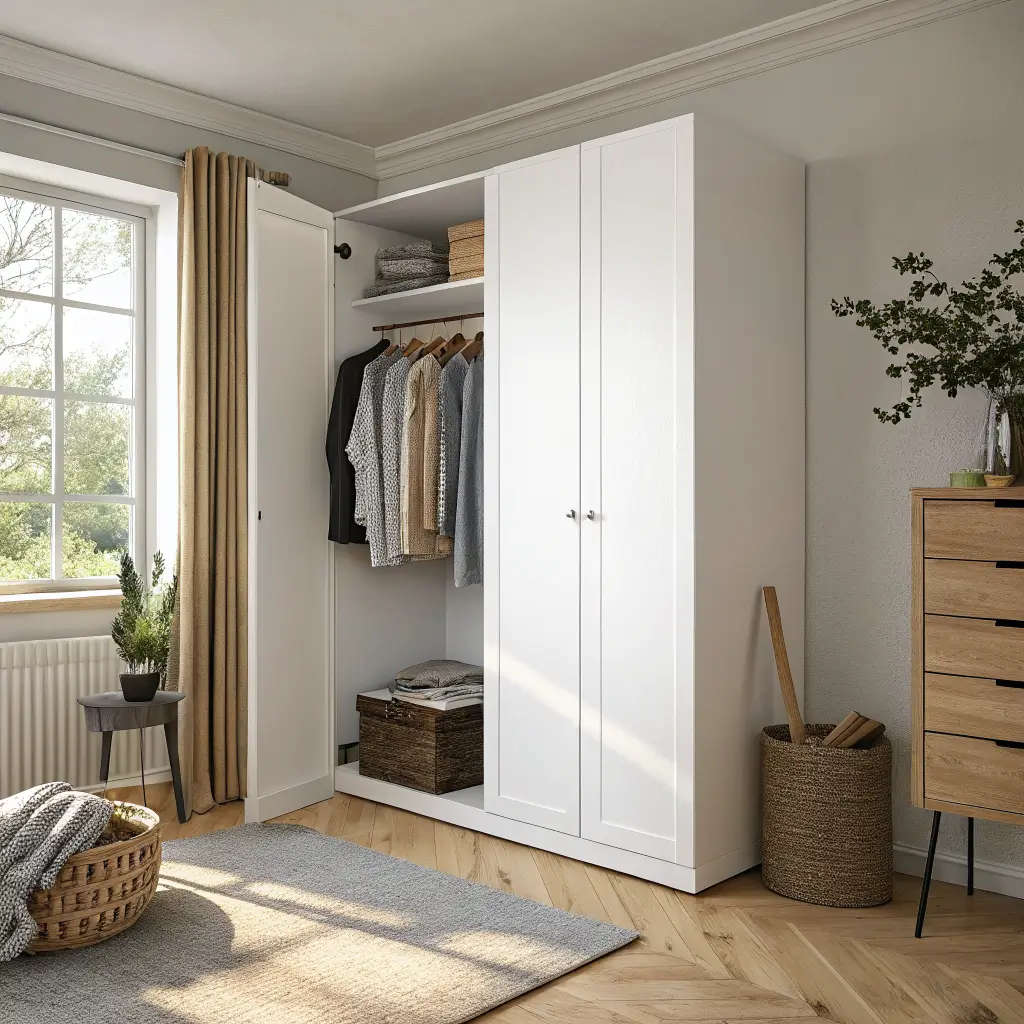
A slim wardrobe or open clothing rail. If you don’t have a closet, a 20-inch-deep wardrobe (Pax shallow units are 14 inches) hugs the wall without eating the room. A pipe-style clothing rail works too and looks intentional if you keep the hangers matching and the clothes color-grouped.
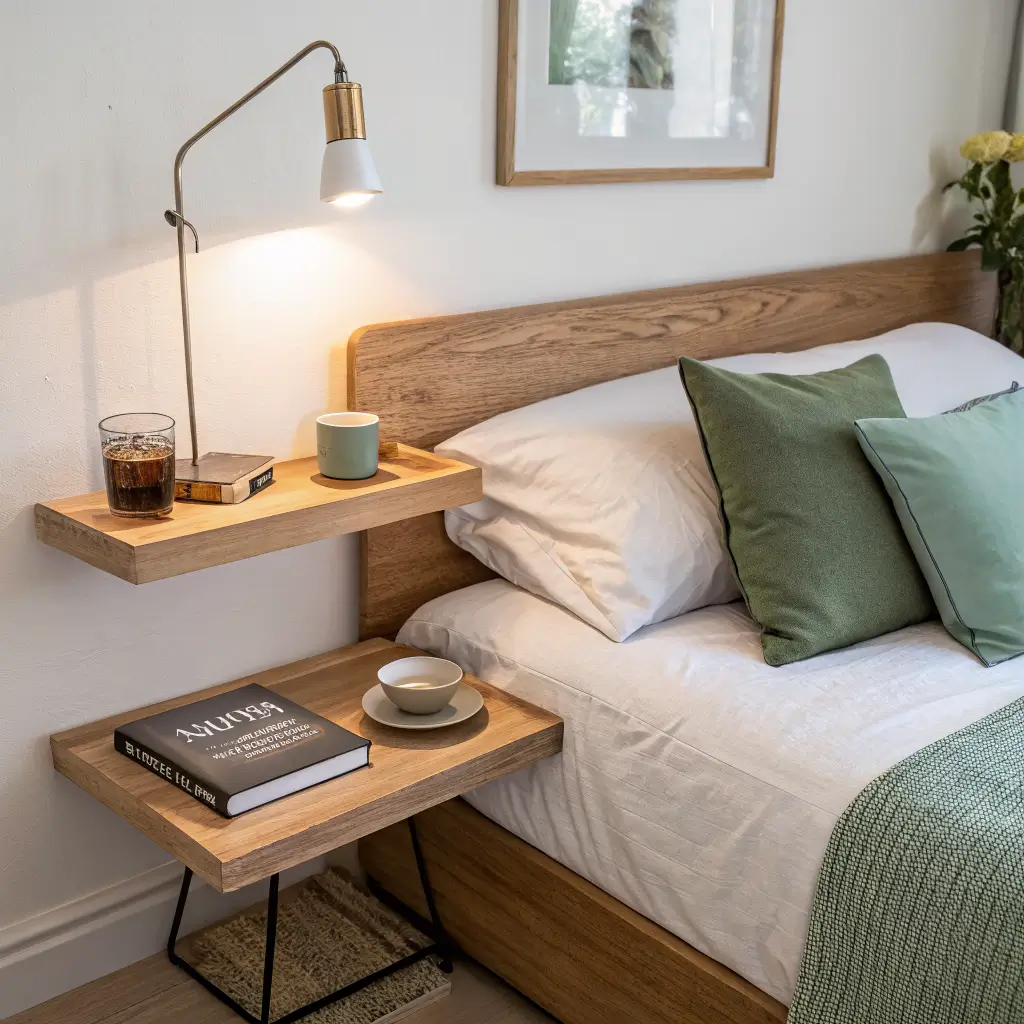
Wall-mounted shelves over a nightstand. A floating shelf 10–12 inches above the mattress, mounted to the wall, is my favorite swap. It holds a book, a glass of water, and a small lamp without taking floor space. I use this on one side of my bed and a tiny stool on the other.
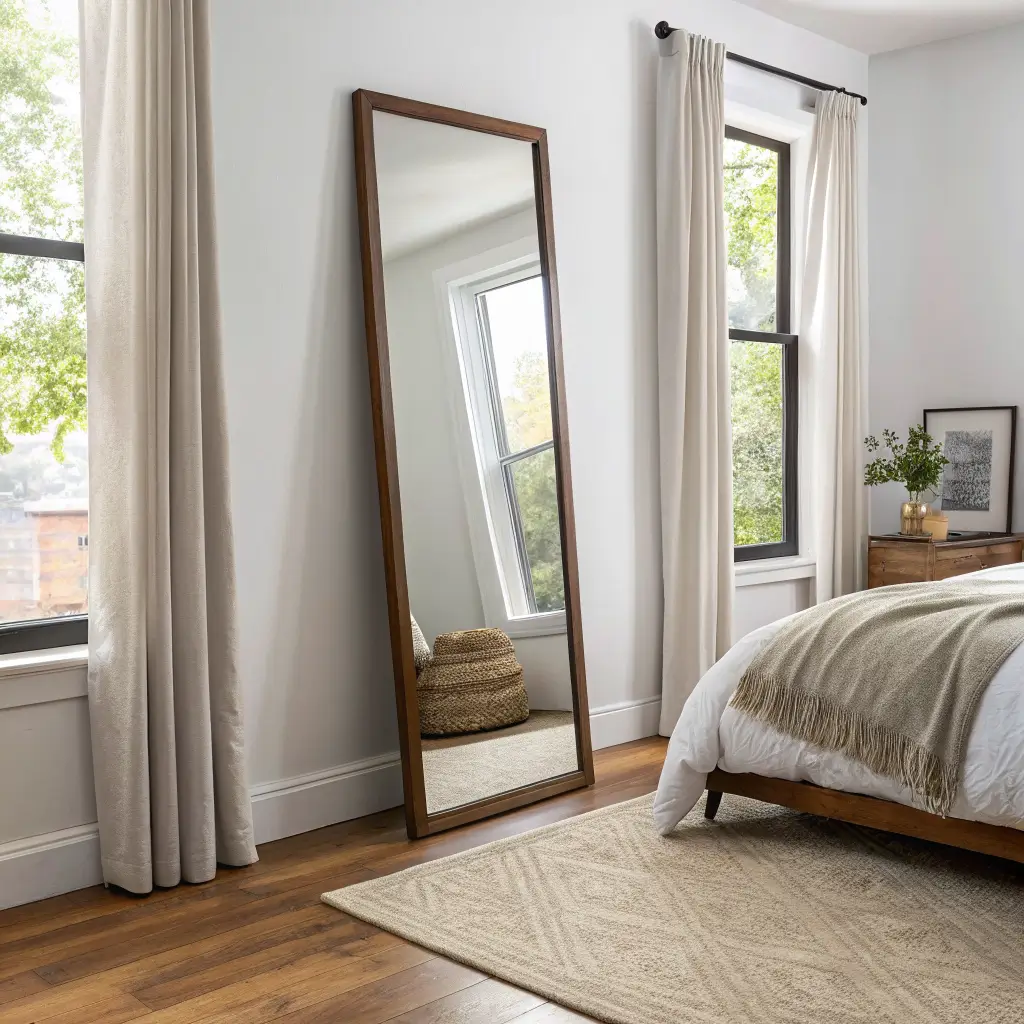
One large mirror. Not a gallery of small ones. A leaning floor mirror or a 24×60 wall mirror placed across from the window doubles the apparent light in the room. This is the cheapest trick that makes the biggest difference.
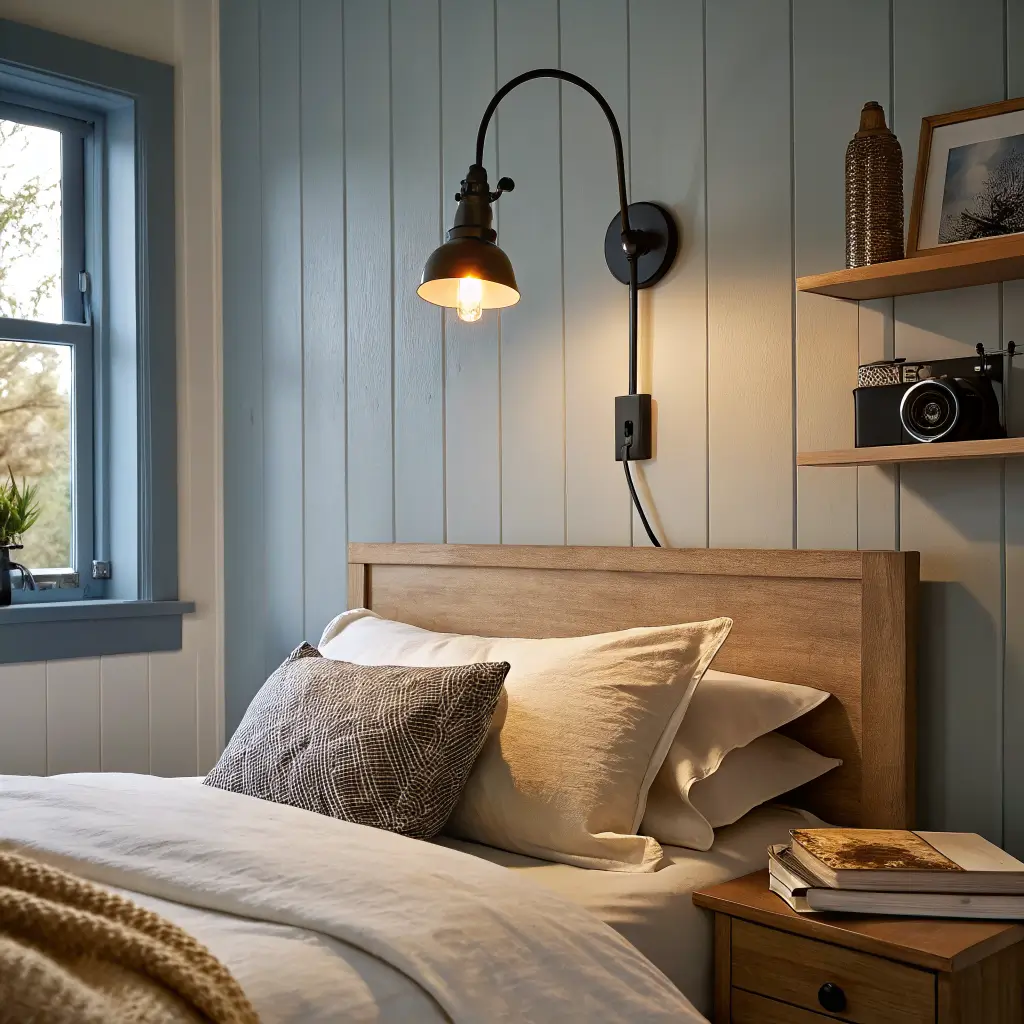
Wall sconces or clip-on reading lights. Plug-in sconces (Hay, IKEA’s Skurup, or a hardwired Article option) free up the surface beside your bed and look more grown-up than a table lamp.
A storage ottoman or bench at the foot of the bed. Only if you have at least 18 inches of clearance. Holds shoes, extra pillows, or a folded throw, and gives you a place to sit and put on socks.
Putting It Together
Color and palette
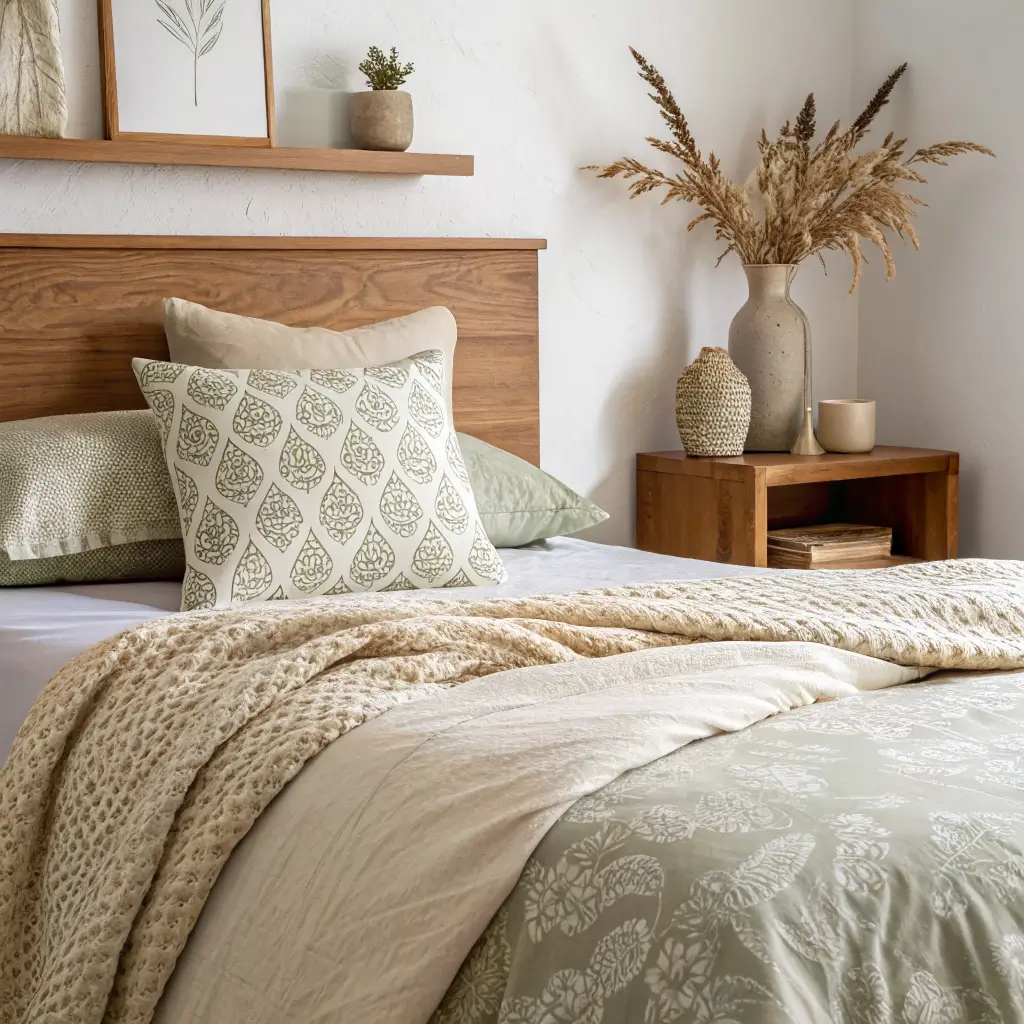
I’d stick to two to three main colors plus one accent. My current room is warm white walls (Benjamin Moore White Dove in matte), oak furniture, oatmeal linen bedding, and a small amount of sage in one pillow. That’s it.
Light colors recede. Dark colors advance. In a tiny room, you want the walls to step back, so save the moody charcoal for a bigger space. If you want depth, paint the ceiling the same color as the walls — it removes the visual line where they meet and the room reads as taller.
Layout
Push the bed against the longest uninterrupted wall, usually opposite the door. If there’s a window on that wall, centering the bed under it is fine as long as the headboard doesn’t block the glass. Low headboards are your friend here — anything over about 40 inches starts to feel like a wall.
For a 9×9 room with a queen bed, you’ll typically have:
– About 24 inches of walking space on one side
– 18 inches on the other (just enough)
– A clear path from door to bed
If a queen makes the room feel like a closet, a full is honestly fine for one person. I resisted this for years and then downsized and never missed the extra inches.
Layering without clutter
The rule I follow: one textured throw, one patterned pillow, one solid duvet. That’s the entire bed. If everything has a pattern, nothing reads as a feature. If everything is plain, the bed looks flat. One of each, and you’re done.
Lighting
You want three light sources minimum: overhead (or a flush-mount if your ceiling is low), bedside (sconce or shelf lamp), and one more — a small floor lamp in a corner, or a clip light on a shelf. Layered light makes a room feel finished. A single overhead bulb makes any room feel like a dorm.
Where to Spend, Where to Save
Spend on:
– The bed frame (storage beds with cheap drawer mechanisms fall apart in a year)
– A real mirror (frameless or thin-framed; thick chunky frames make it look like a prop)
– Bedding you actually like touching
Save on:
– Nightstands — a stool, stacked books, or a $30 wall shelf works
– Art — printables and thrift-store frames are fine; in a small room you only need one or two pieces anyway
– Bins and baskets — IKEA, Target, or even shoeboxes covered in linen
The single best $20 I ever spent on a small bedroom was four flat under-bed storage bins on wheels. Pulled my sweaters out of a dresser I then sold.
Mistakes I’ve Made (So You Don’t Have To)
Buying full-size furniture. A standard 32-inch-deep dresser will eat a tiny room. Look for pieces under 18 inches deep, or skip dressers entirely and use under-bed storage plus a wardrobe.
Floating the bed in the middle of the room. Tempting if you’ve watched a lot of design videos. Doesn’t work under 11 feet of wall. You need the bed against something.
Too many small decor objects. A row of seven tiny ceramic vases on a shelf creates more visual noise than one 14-inch vase alone. Edit ruthlessly.
Blocking the window. Heavy floor-length curtains in dark fabric will shrink the room. Use light linen panels mounted high and wide — about 4 inches above the window frame and 6 inches past it on each side. Makes the window look bigger and lets in more light.
Putting a tall bookshelf next to the bed. It looms. If you need vertical storage, mount shelves to the wall instead, starting about 18 inches above the mattress.
Skipping the door swing. Measure how far your door opens before you place anything. I once put a nightstand exactly where the door hit it.
Easy Updates and Variations
You don’t need to redo the room to keep it feeling current.
Seasonal swaps:
– Linen bedding in summer, brushed cotton or flannel in winter
– Swap one pillow cover, not all of them
– Rotate a single piece of art
Style variations on the same bones:
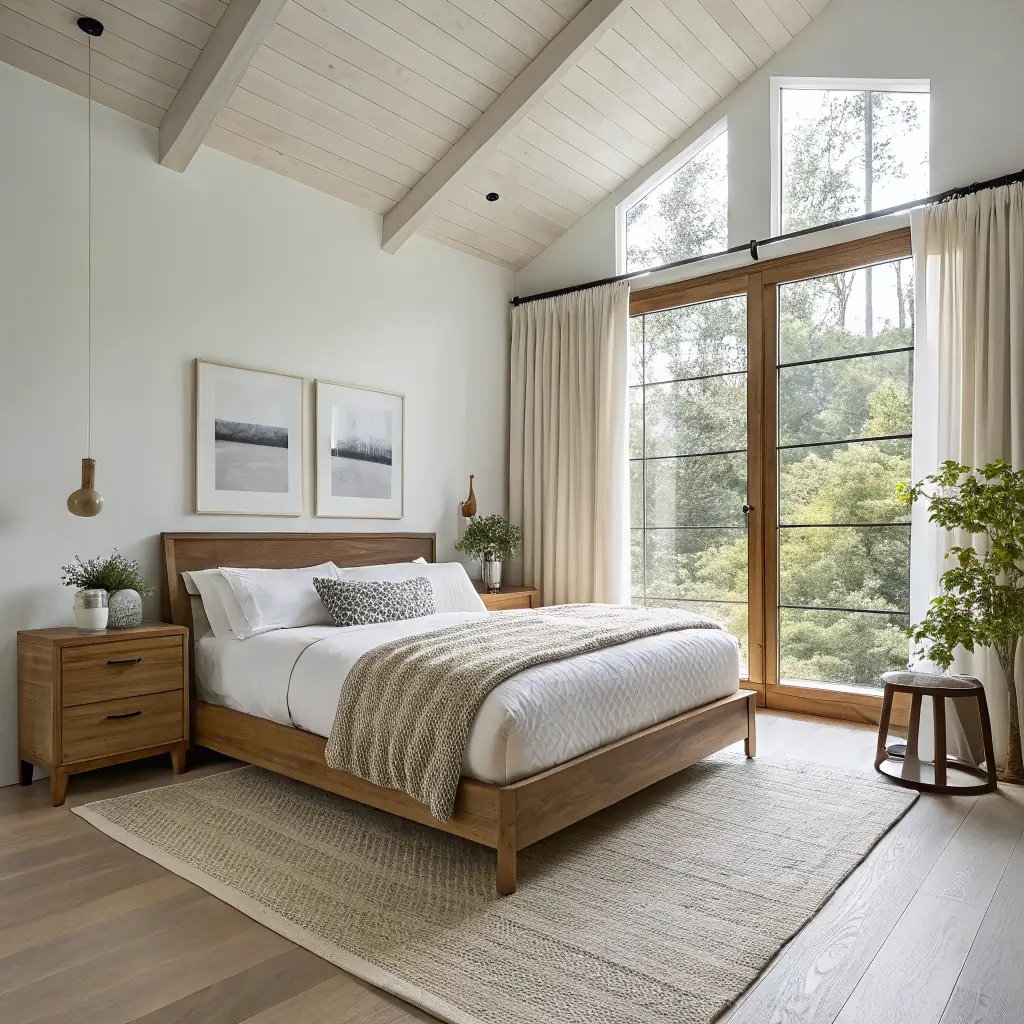
– Scandi-cozy: light oak, cream bedding, one boucle pillow, a small jute rug
– Warm modern: matte black sconces, warm white walls, oak nightstand, charcoal throw
– Boho small-space: linen bedding, one woven wall hanging, baskets for storage, no more than one patterned textile
The cheapest high-impact upgrades, in order:
1. Paint (one weekend, about $60)
2. A large mirror ($80–$200)
3. Wall sconces to replace table lamps ($40–$150)
4. Under-bed bins and matching baskets ($50–$100)
If you do those four things and nothing else, a very small bedroom will look like a different room.
The trick isn’t making a tiny room feel big. It’s making a tiny room feel deliberate — like you chose every piece in it, and like nothing in there is fighting for space it shouldn’t have.
Conclusion
The very small bedroom ideas that worked for us came from admitting that the room was nine by nine and we were two people. We bought a bed with drawers underneath, added a wall-mounted shelf for books, and hung a mirror that reflected the one window. The walls were white, the bedding was light gray, and the only color was a single plant on the windowsill. The room felt like a ship’s cabin — compact, efficient, and completely ours.
More Decor Ideas to Explore
- Tiny Bedroom Design: A Real Plan for Rooms Under 110 Square Feet
- Very Small Laundry Room Ideas: How to Make a Closet-Sized Space Actually Work
- Little Bedroom Ideas: How to Maximize a Small Bedroom Without Making It Feel Like a Closet
- Very Small Balcony Decor: How to Style 10–35 Square Feet Without Making It Feel Like a Closet