A luxurious living room isn’t about cramming in gold trim and calling it done.
I learned that the hard way after I bought a glossy mirrored console table about six years ago thinking it screamed “high-end.” It screamed something, all right — mostly fingerprints. It sat in my living room for four months before I sold it on Facebook Marketplace at a loss and started over with a different idea of what luxury actually meant.
What I’ve landed on, after redoing my own living room twice and helping two friends rework theirs, is closer to what designers are calling “quiet luxury” — warm, layered, restrained, and built around fewer but better pieces. Here’s how I’d put one together from scratch.

Who This Look Is For
This style suits you if you want a room that feels like a good boutique hotel lobby: calm, plush, expensive-feeling, but not stiff. It works for people who entertain, people who work from home and need a polished video background, and people who’d rather spend $1,200 on one rug than $300 on four.
It does not suit you if your living room is a chaos zone of toys, dog beds, and gaming gear with no closed storage. The look depends on editing. You need somewhere to hide the mess.
Where it works best:
– Main living rooms in houses or larger apartments
– Open-plan living-dining spaces where you can zone with rugs
– City condos where polish matters more than square footage
– Media rooms — but only if your tech is tucked behind cabinetry
The Budget Reality
I’ll be honest about what this costs because most “affordable luxury” articles lie.
Entry level — keep your sofa, upgrade the layers around it: $1,500–$4,000
– Wool or wool-blend 9’×12′ rug: $400–$1,200
– Two real lamps (not the $40 ones): $150–$500 each
– Linen or velvet curtain panels: $100–$300 per panel
– One oversized piece of art: $200–$800
Mid-range — new sofa plus the core pieces: $6,000–$15,000
– Sofa from a decent retailer: $2,000–$5,000
– Stone or marble coffee table: $800–$3,000
– Accent chairs: $700–$2,000 each
– Statement chandelier: $800–$3,500
Designer level: $20,000–$80,000+, and at that point you’re either commissioning custom pieces or buying from Italian houses like Boca do Lobo, plus probably adding millwork and paneling.
I sit somewhere in the entry-to-mid range, and my room reads as expensive because of where I chose to spend: the rug, the lighting, and the drapes. Those three carry the whole look.
The Color Palette I’d Actually Use
Forget cool grays. The version of luxury that’s holding up right now leans warm.
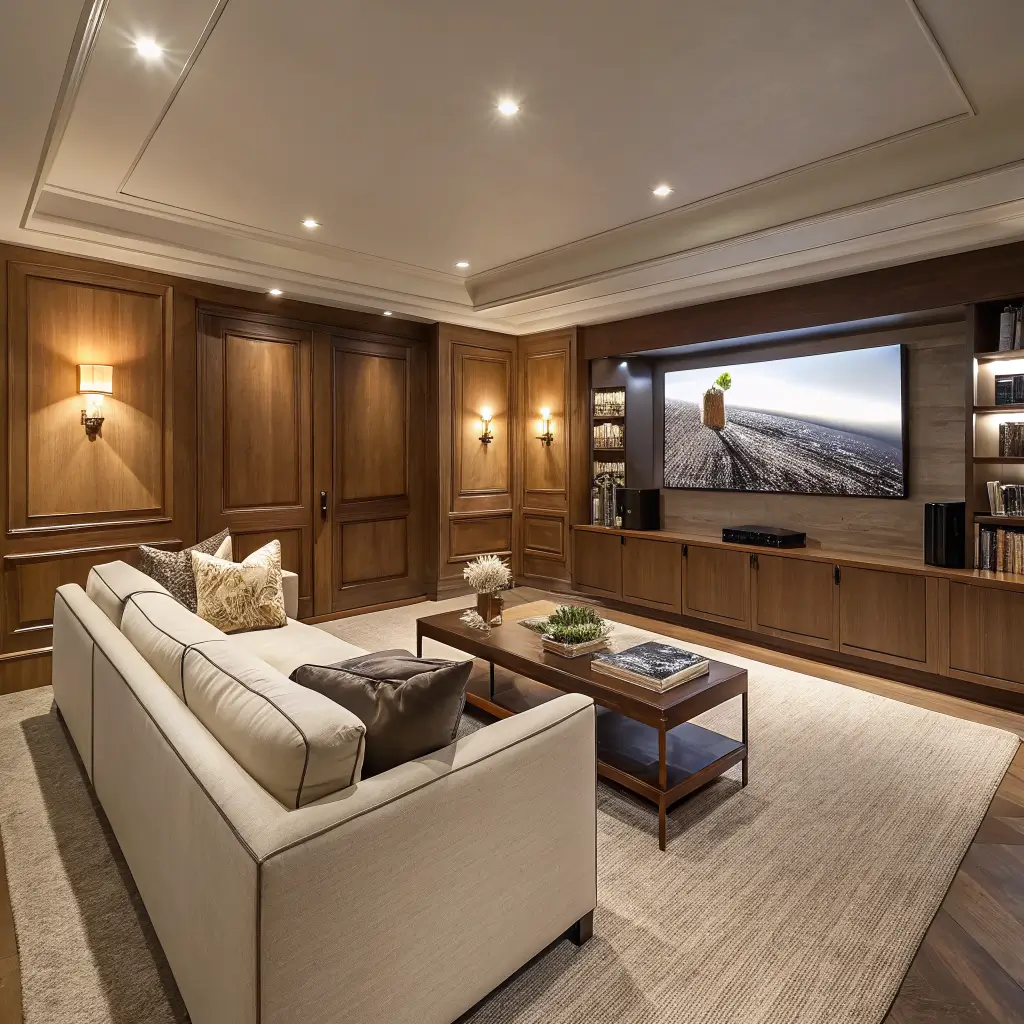
Base (80% of the room): warm white, cream, greige, soft taupe, gentle warm gray.
Accents (15%): espresso brown, deep charcoal, muted olive, rust, or burgundy. Pick one, maybe two. I use espresso brown and a muted olive. That’s it.
Metals (5%): brushed brass as the dominant, blackened steel as the secondary. Pick your two and repeat them everywhere — lamp bases, picture frames, drawer pulls, the legs on the coffee table.
The mistake I made early on was using polished chrome on one fixture, antique bronze on another, and brass on a third. The room looked like a salvage yard. Once I swapped everything to brushed brass and matte black, it instantly read as intentional.
The Pieces That Actually Carry the Look
1. The Sofa
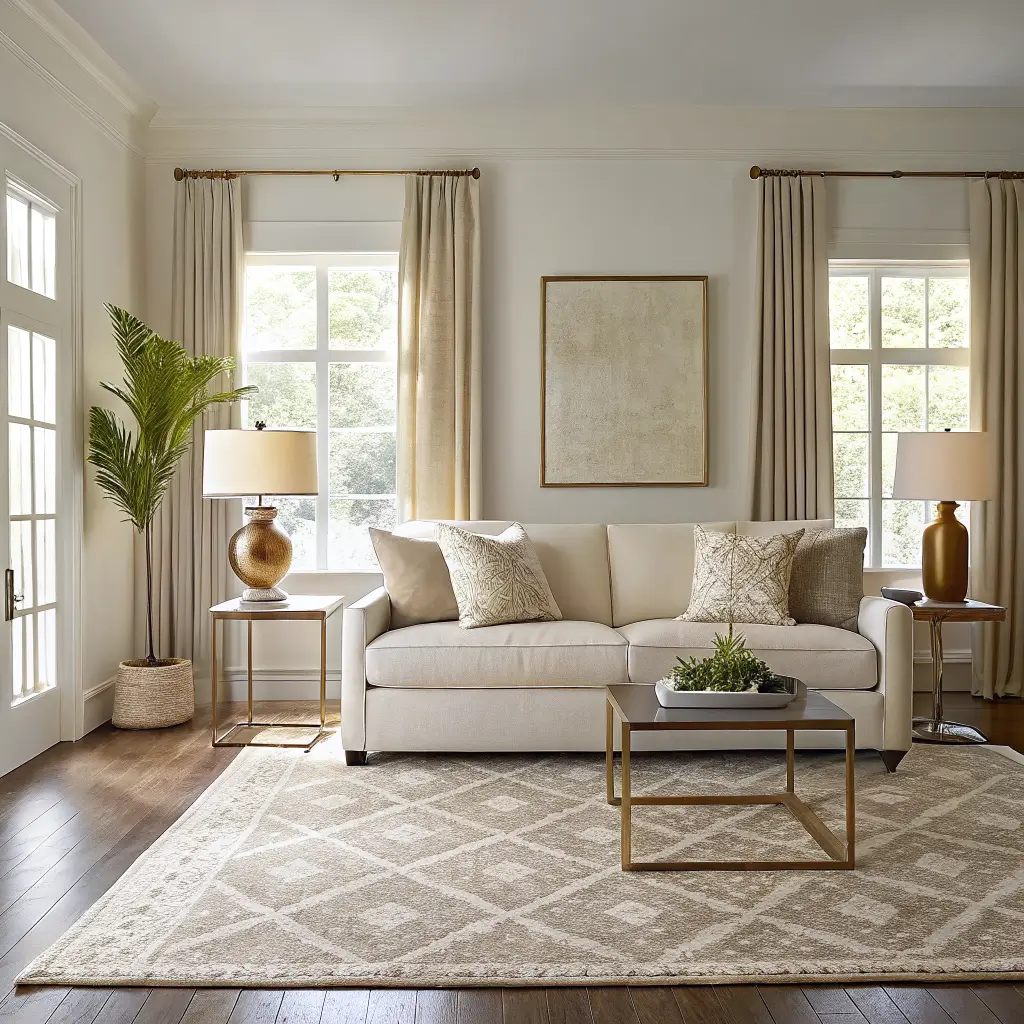
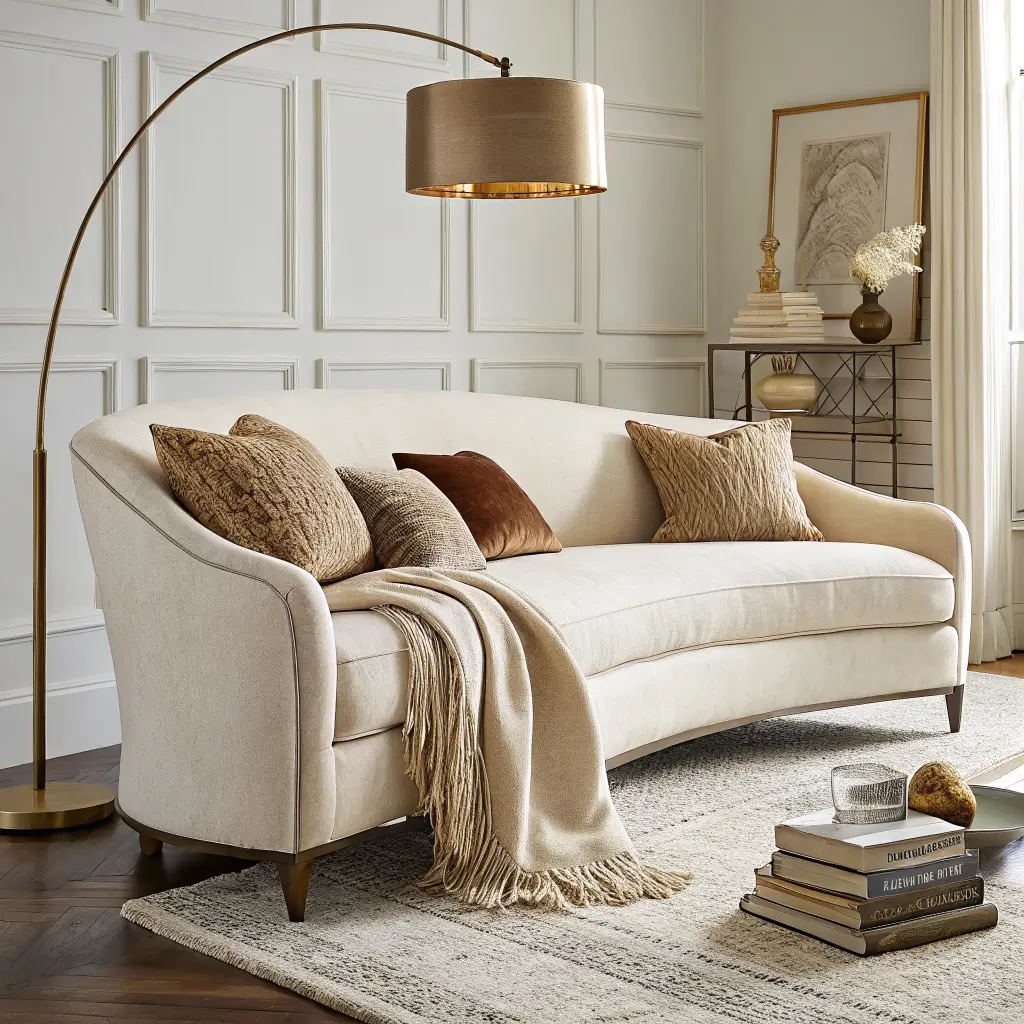
Aim for 84″–110″ wide depending on your room. Performance linen, textured chenille, or bouclé in a warm neutral. Curved or soft-edged silhouettes are doing a lot of work right now — the boxy tuxedo sofa is starting to feel dated.
Skip the matching loveseat-and-chair set. Nothing kills a luxury feel faster than a three-piece furniture suite that came together in one delivery. Mix.
2. The Rug
This is where most people undershoot, and it’s the single biggest tell that a room was decorated on a budget without thought. All front legs of your seating need to sit on the rug. A 5’×7′ floating under the coffee table makes a $4,000 sofa look like it came from a college dorm.
– Small rooms: 8’×10′ minimum
– Standard: 9’×12′
– Larger or open-plan: 10’×14′ or two layered rugs to zone
Wool or wool-silk blend. Plush, not flat. Budget around $400–$2,000 for a good 9’×12′.
3. Coffee Table
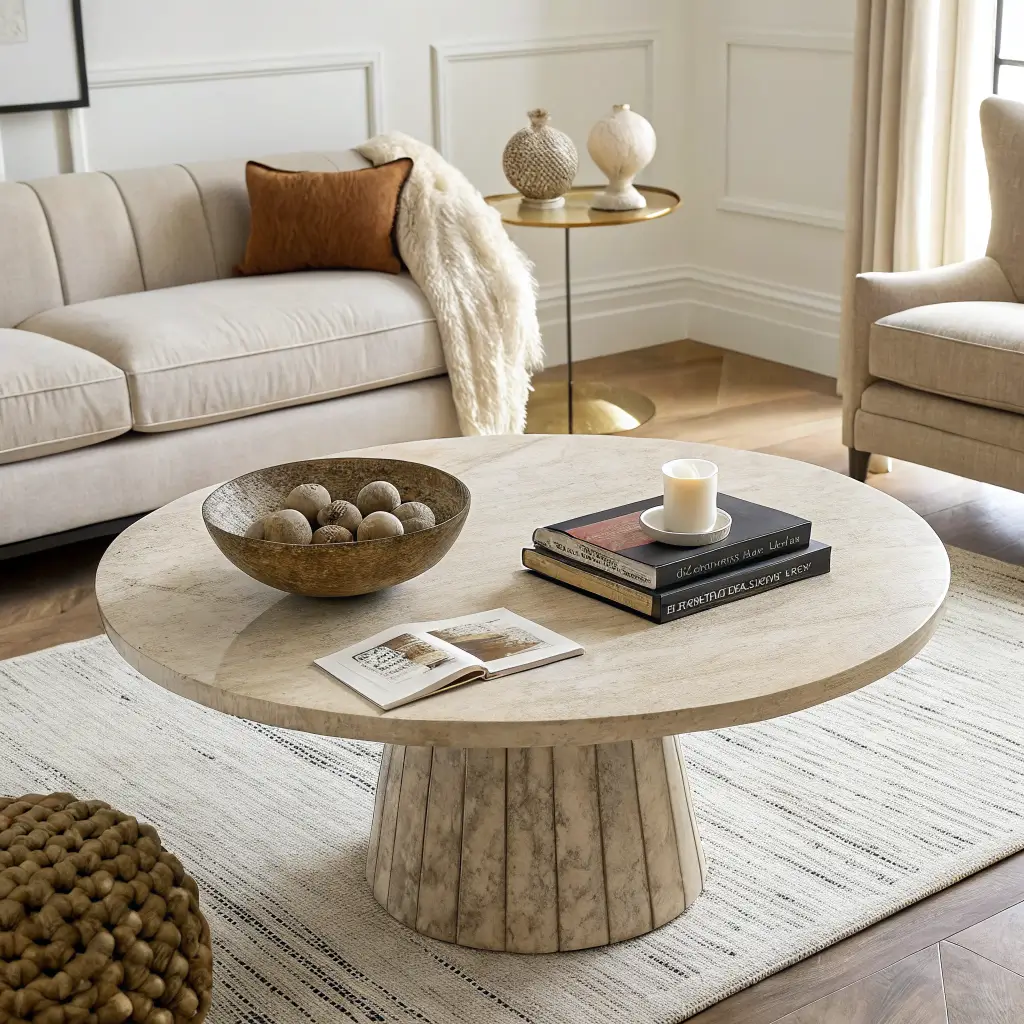
A travertine pedestal, an oval marble slab, or a chunky walnut piece. Organic shapes are softer and more current than sharp rectangles right now. $800–$3,000 buys something that’ll look great for fifteen years.
I have a round travertine table I found on Article for around $900. It has a small chip on one side from when my brother dropped a wine bottle. I don’t care. Stone shows wear in a way that looks lived-in rather than damaged.
4. Lighting — The Thing Most People Get Wrong
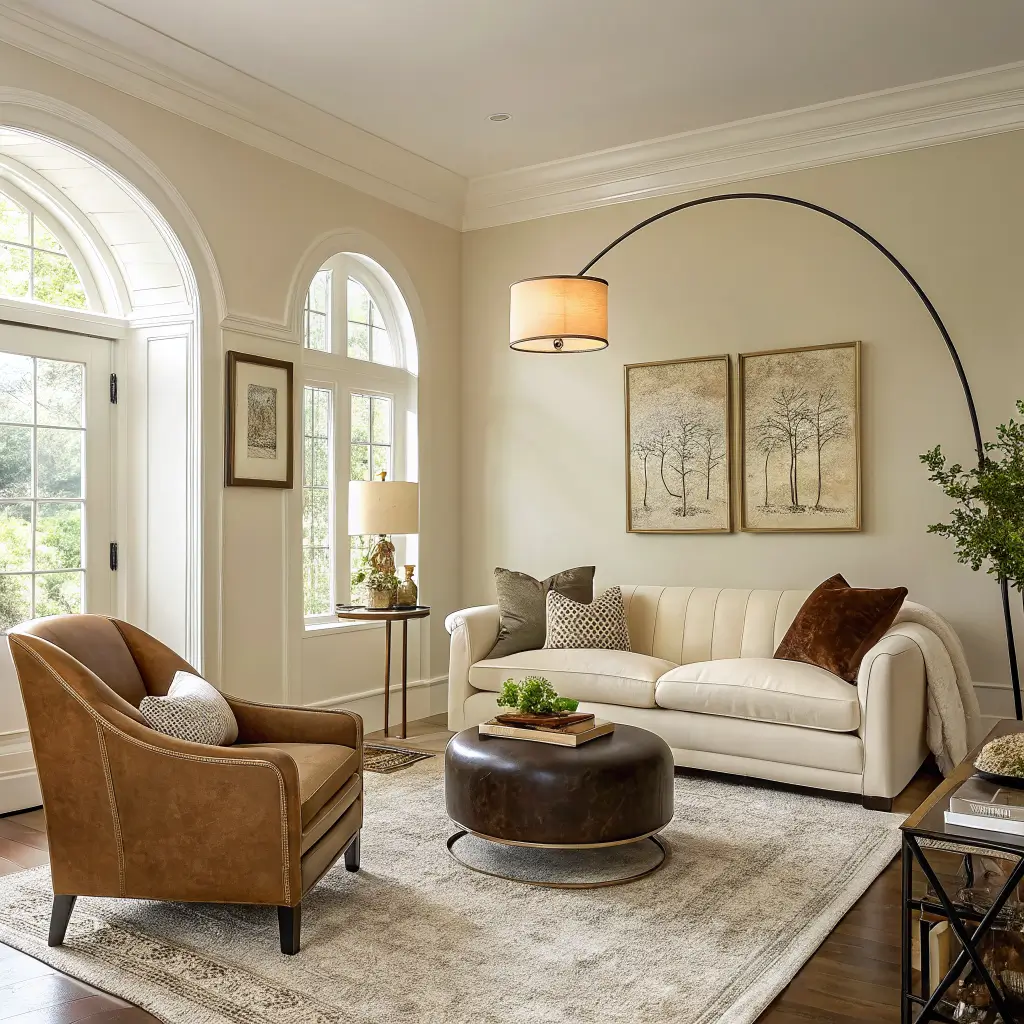
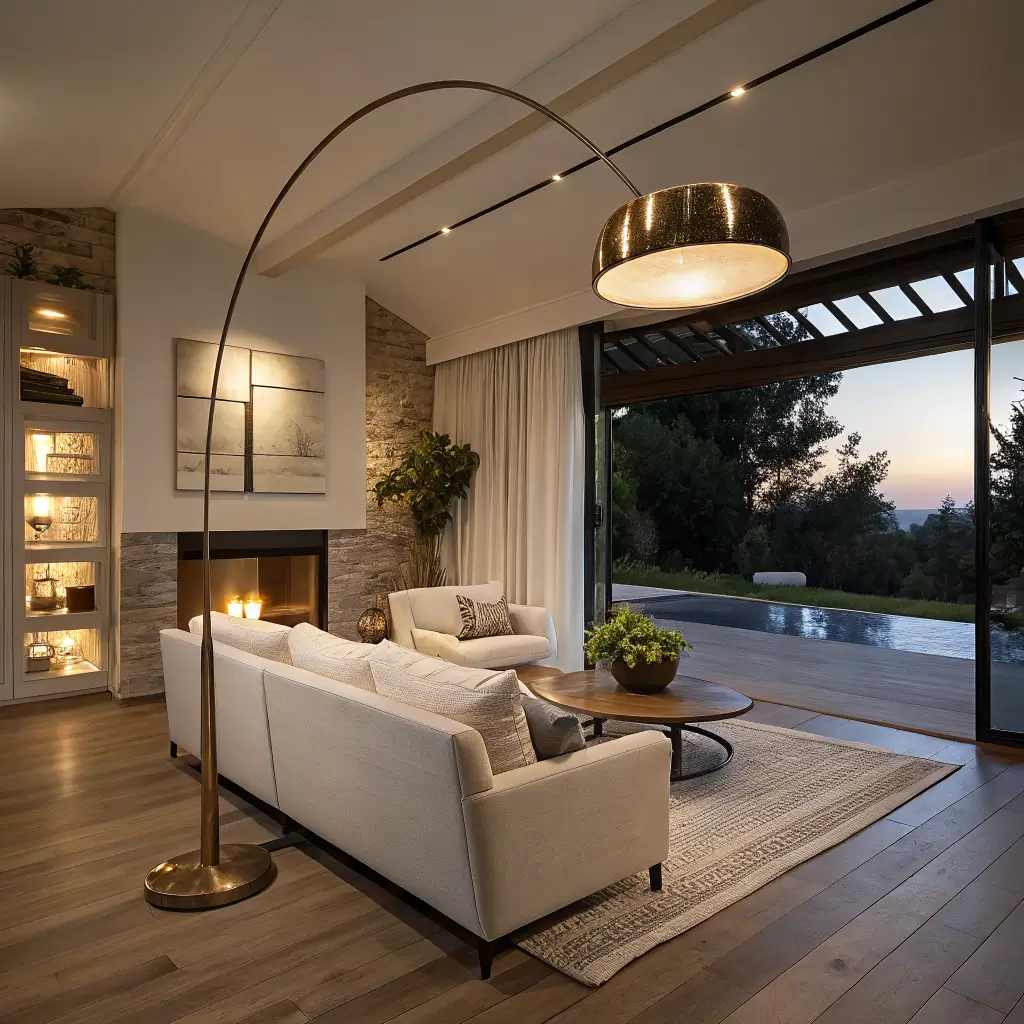
You need at least three light sources at different heights, all on dimmers, all using warm bulbs (2700K, no higher).
– Overhead chandelier or pendant
– A floor lamp — arched or sculptural
– Two table lamps minimum (side tables, console behind sofa)
One ceiling light with a cool bulb is what makes a room feel like a rental nobody loves. Adding a $200 arched floor lamp in the corner past my sofa did more for the room than a $600 piece of art did.
5. Drapes
Hung high and wide. Rod goes 6–10 inches above the window frame and extends 8–12 inches past each side. Panels should kiss the floor or pool by half an inch — no high-water curtains.
Linen, linen-blend, or velvet. $100–$300 per ready-made panel works fine. I use unlined linen from a mid-tier retailer and they look like they cost five times what I paid.
6. One Big Piece of Art
Not a gallery wall. One oversized piece above the sofa or fireplace, centered around 57″–60″ from floor to art center. Abstract canvas, large-format black-and-white photo, or a textured wall piece.
Cheap fix if originals aren’t in budget: large prints in heavy mats with proper frames. A $40 print in a $200 frame reads more luxe than a $300 print in a thin black box.
Putting It Together (The Actual Order)
This is the sequence I’d follow if I were starting tomorrow:
1. Empty the room. Down to the floor. You can’t see what’s working otherwise.
2. Paint if walls need it. Warm white or soft greige. I’d use Benjamin Moore White Dove or Sherwin-Williams Accessible Beige.
3. Drapes up first — rods mounted high and wide.
4. Rug down. Keep 12–18 inches between rug edge and walls.
5. Sofa goes on the rug (front legs on it).
6. Accent chairs angled toward sofa, not pointed straight at it like a dental waiting room.
7. Coffee table centered in the group, 14–18 inches from the sofa front.
8. Lighting — chandelier centered over the seating zone, not the room. Floor lamp by a chair, table lamps on side surfaces.
9. Art and mirror. Mirror opposite a window if you can swing it — it doubles your daylight.
10. Soft layers last. Five to nine pillows on the sofa, one throw, three to five objects on the coffee table.
That last edit matters more than anything: walk in from your front door and look at the room. Pull two things off every surface. It’ll feel more expensive immediately.
The Mistakes I’d Save You From
– Rug too small. I covered this above. It’s the number one error.
– Only overhead lighting. Cold and flat.
– Knick-knack soup. A dozen tiny objects looks like a thrift store display. Fewer, larger sculptural pieces.
– Matching furniture sets. Mix or it’ll look generic.
– Tiny art above a huge sofa. Art should span roughly two-thirds the width of the sofa.
– Three different metals. Pick two. Repeat them.
Seasonal Swaps Without Buying New Furniture
The bones stay neutral. I change about four things between summer and winter:
– Spring/summer: linen pillow covers in cream and oatmeal, a lighter cotton throw, an olive tree in a stone planter, white pillar candles.
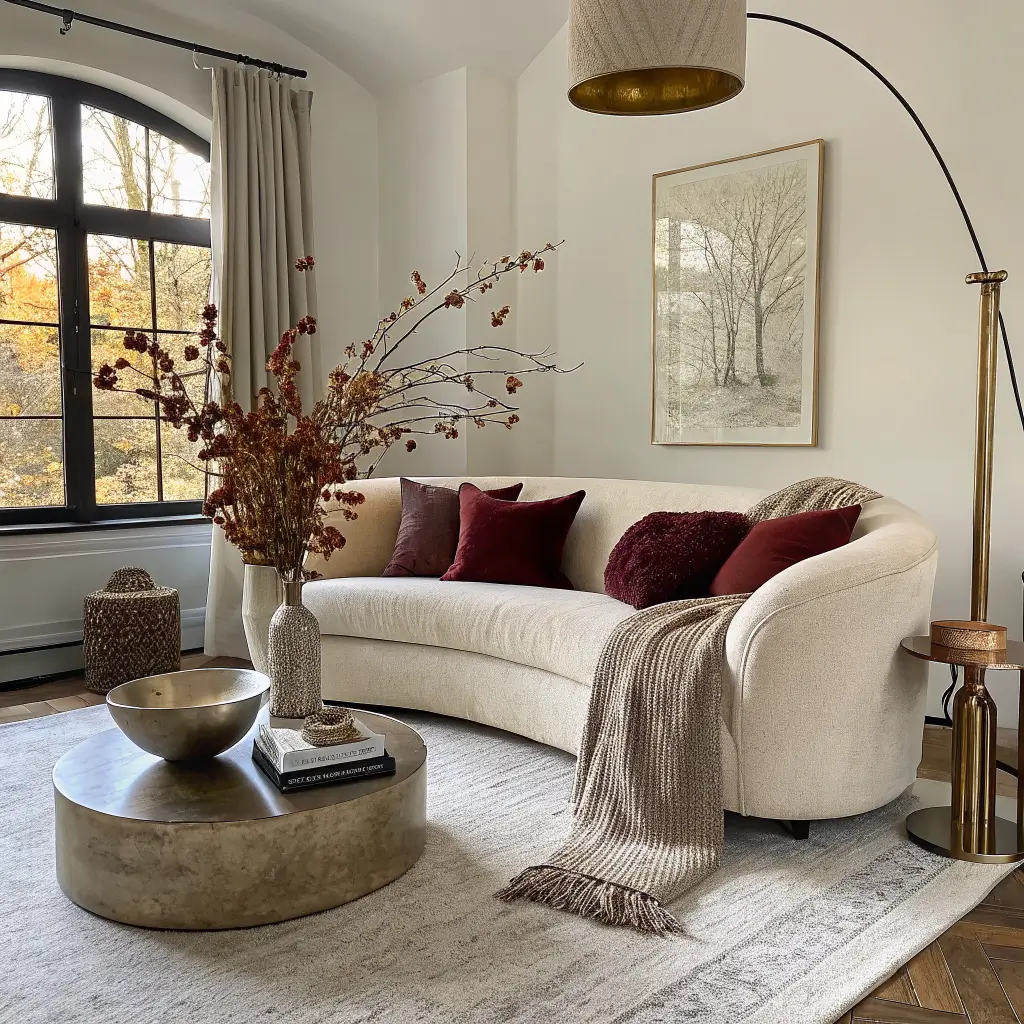
– Fall/winter: velvet or wool pillow covers in espresso and burgundy, a chunky wool throw, eucalyptus or dried branches in a tall vase, amber candles.
Total cost to swap, if you already own the base inventory: maybe $150 a season.

Upgrade in Phases If You’re Doing This on a Budget
Don’t try to buy everything in one weekend. You’ll panic-buy and regret half of it.
– Year 1: rug and lighting. These two transform a room more than furniture does.
– Year 2: sofa or accent chairs, whichever is more dated.
– Year 3: custom drapes, built-in storage, or original art.
The version of this room I have now took me about four years to assemble. The early version had a $300 IKEA sofa and a rug that was too small. It still looked dramatically better than what I’d had before, because the lighting and the drapes were doing the heavy lifting from day one.
That’s really the trick. Luxury isn’t the price tag on the sofa. It’s the floor lamp casting a pool of warm light into a corner at 8 p.m. with the drapes brushing the floor and a stone bowl on the coffee table catching the glow. You can build to that in stages. Just start with the layers, not the furniture.
Conclusion
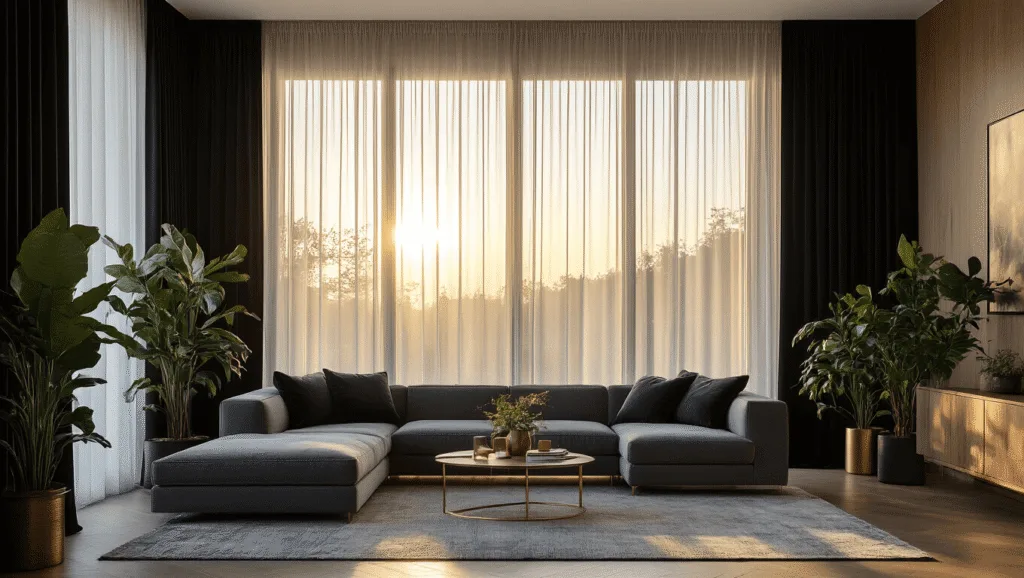
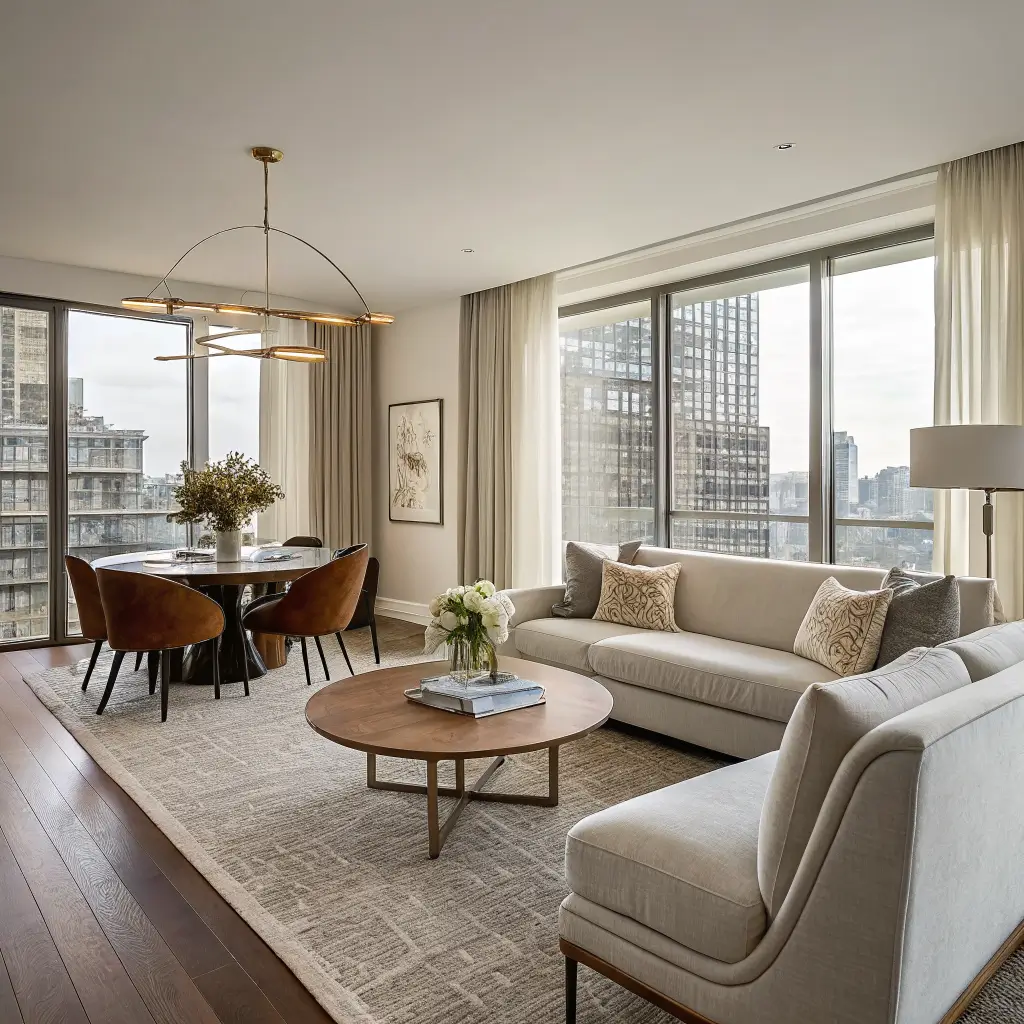
The luxurious living room that felt truly expensive to me had a charcoal sofa, a single marble coffee table, and a wall of windows that framed a view of the city. The owner had added one large abstract painting, a brass floor lamp, and a stack of books about architecture. The room felt expensive because it was confident, not because it was full.
More Decor Ideas to Explore
- Rustic Coastal Decor: How to Get the Look Without It Feeling Like a Beach Gift Shop
- 16 Upcycled Garden Decor Ideas That Turn Junk Into the Best Part of the Yard
- Tiny Laundry Room Ideas: A Real Plan for Closets, Alcoves, and Awkward Corners
- 19 Rustic Nautical Decor Ideas That Look Like They Washed Ashore