What “Tiny” Actually Means, and Who This Is For
A workable tiny ensuite sits somewhere between 2.5 and 4 square metres — roughly 1.2–1.6 m wide by 2.0–2.4 m long. Below that you’re in powder-room territory and need to drop either the shower or the toilet. Above it and you’ve got more breathing room than this article assumes.
This is for you if:
– You’ve got a boxy or awkward ensuite off a master, loft, or attic conversion.
– You and a partner are sharing a footprint built for one.
– You’re carving a second bathroom out of a cupboard or under-stair void to add resale value.
– You rent and want the cosmetic version without ripping anything out.
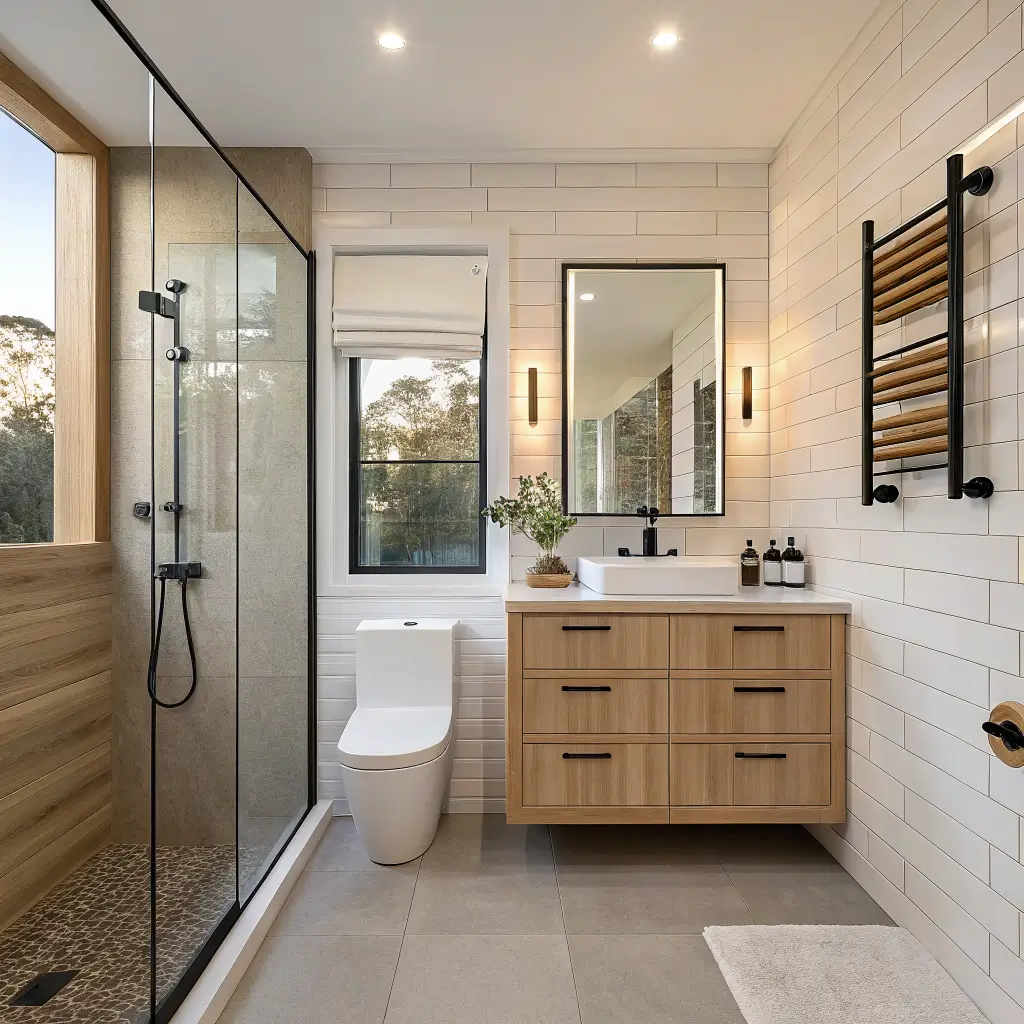
The look I keep coming back to is soft modern with a Japandi lean — pale timber, warm white walls, matte black or brushed nickel hardware, one textured surface doing the heavy lifting. It reads calm in a space that could easily feel claustrophobic.
Budget: What This Actually Costs
Three honest tiers, based on what I’ve spent and what tradespeople I trust have quoted recently.
Cosmetic refresh — £250–£800 / AU$450–$1,200 / US$300–$900
Paint, new mirror, hardware swap, shelves, hooks, textiles, maybe a new toilet seat. One or two weekends if you’re handy.
Mid-range update — £1,500–£4,000 / AU$3,000–$7,000 / US$2,000–$5,000
Where most people land. Rough costs inside that:
– Compact wall-hung vanity: £150–£500 / AU$600–$1,600 / US$200–$700
– Back-to-wall or wall-hung toilet: £150–£400 / AU$400–$1,000 / US$200–$600
– Frameless or quadrant shower enclosure: £200–£800 / AU$700–$1,800 / US$300–$1,200
– New lighting plus a properly ducted extractor: £80–£300 / AU$200–$600 / US$100–$400
Allow 3–7 days of trade time depending on availability.
Full remodel — £5,000+ / AU$10,000+ / US$7,000+
Retiling, new waterproofing, concealed cistern, sintered stone top, maybe underfloor heating. Plan for 2–3 weeks including cure time for waterproofing membrane and grout. Don’t try to rush this; the membrane needs to dry properly or you’ll be tearing it out in two years.
The Layout Decision That Changes Everything
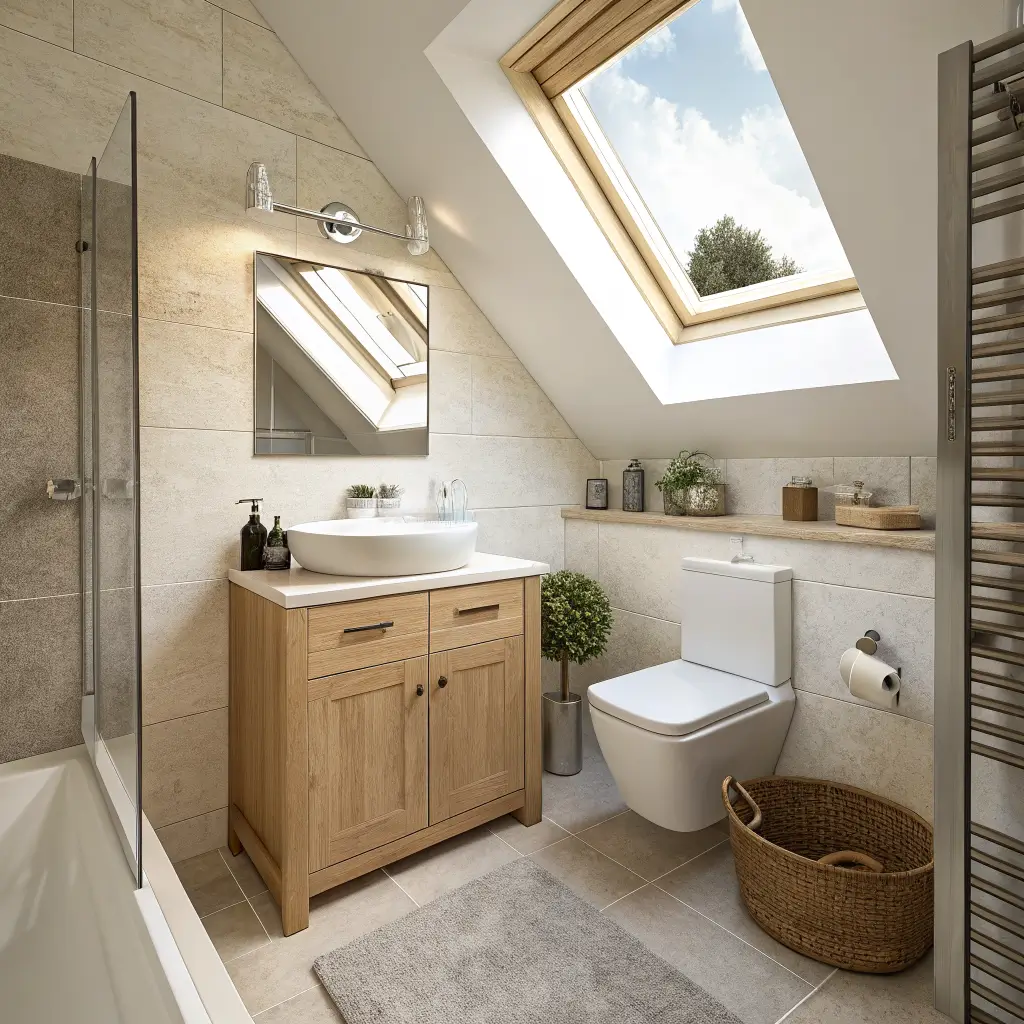
Before anything else, figure out the layout. Get this wrong and no amount of nice tile saves it.
Your four real options:
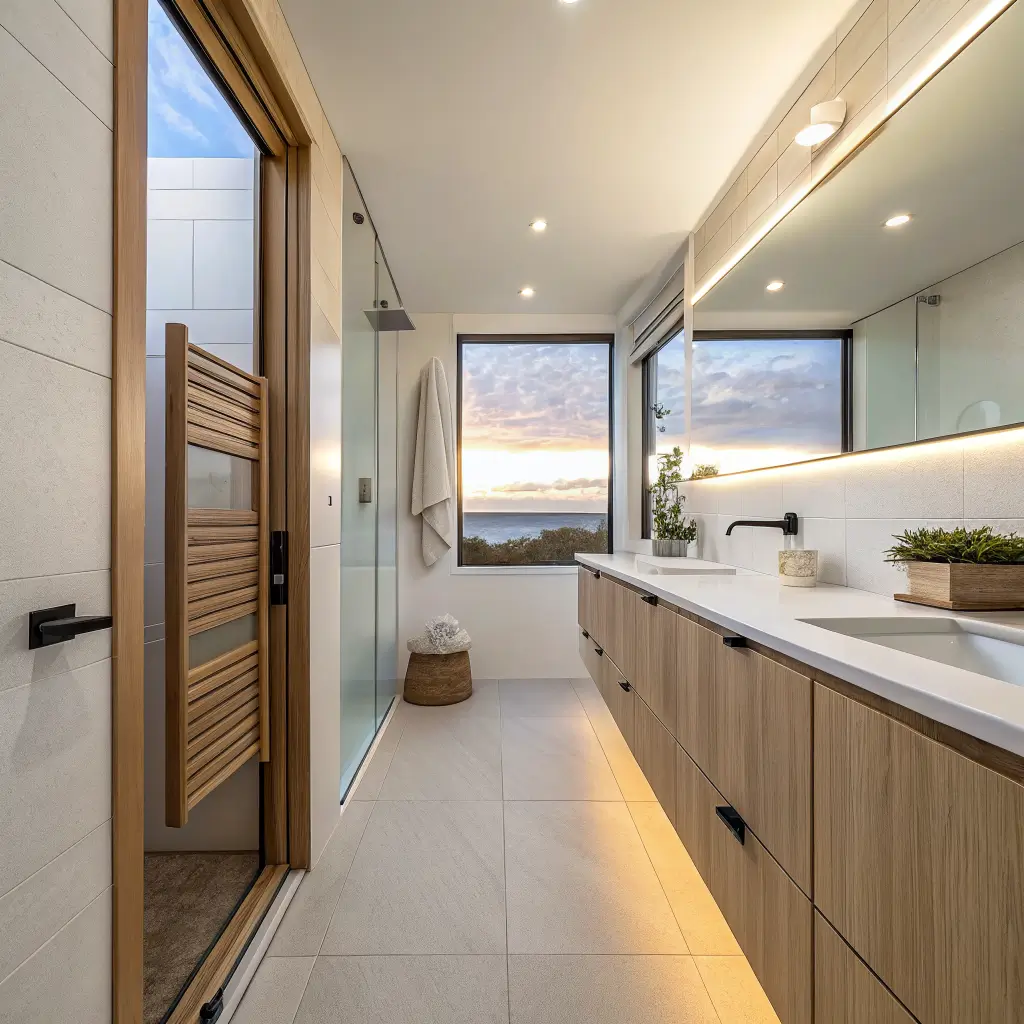
– Galley — door centred on the short wall, vanity along one long wall, shower at one end, toilet at the other. Best for narrow rectangles.
– Corner shower — 900×900 mm shower in the back corner, toilet behind a small nib wall, slim vanity on the long wall. This is what I ended up with.
– L-shape — toilet and basin on one wall, shower on the adjacent wall. Feels more open from the doorway.
– Wet room — no enclosure, whole floor tanked and graded to a linear drain. Brilliant in very tight rooms but only if your waterproofer knows what they’re doing.
Clearances I won’t compromise on:
– Shower: 900×900 mm minimum, 850×900 mm if you’re truly stuck.
– 800 mm clear in front of the toilet. Less than this and you knock your knees on the vanity every time you sit down. Ask me how I know.
– 700–800 mm walkway between fixtures.
– Door: a cavity slider is almost always the right call. A hinged door eats around 0.8 m² of floor area just swinging open. If you can’t do a pocket, do an outward swing or a barn-style slider on the bedroom side.
The Pieces That Make a Tiny Ensuite Work
Three hero pieces carry the whole room.
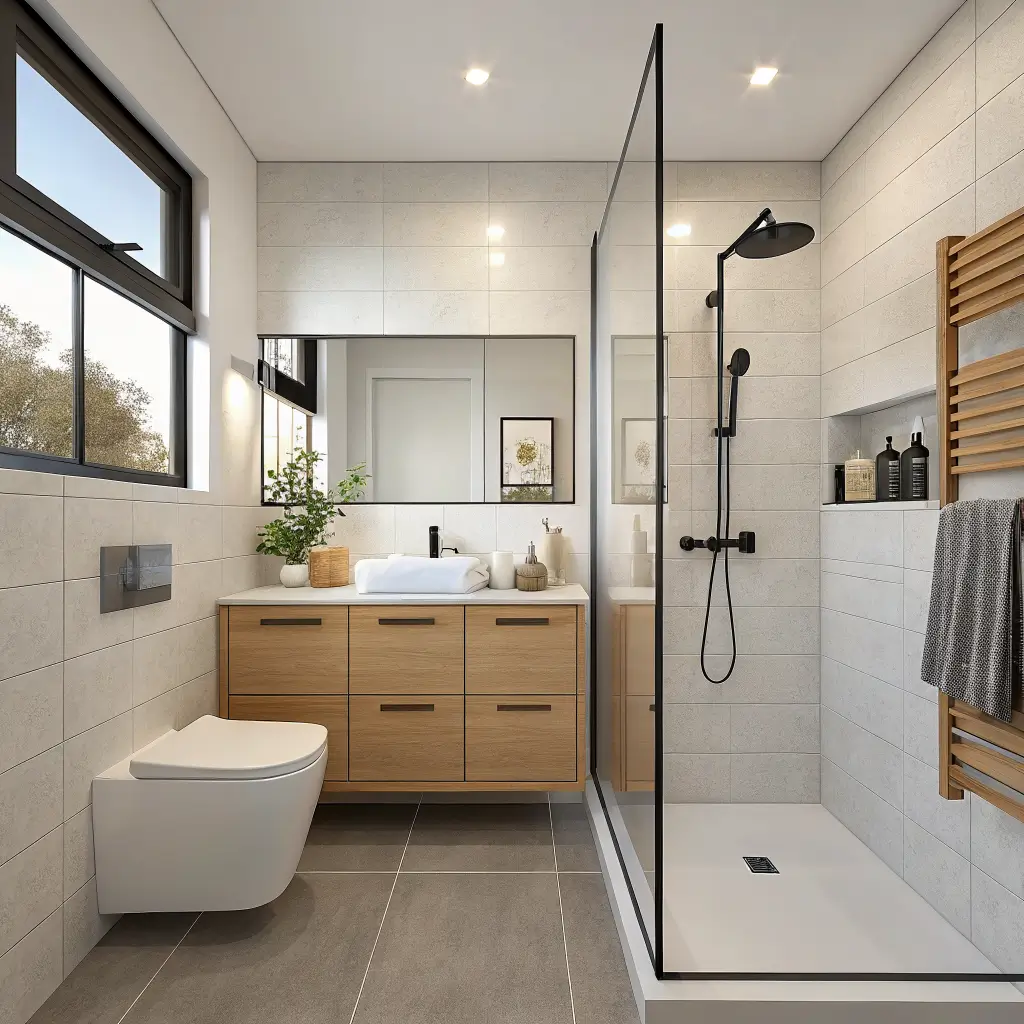
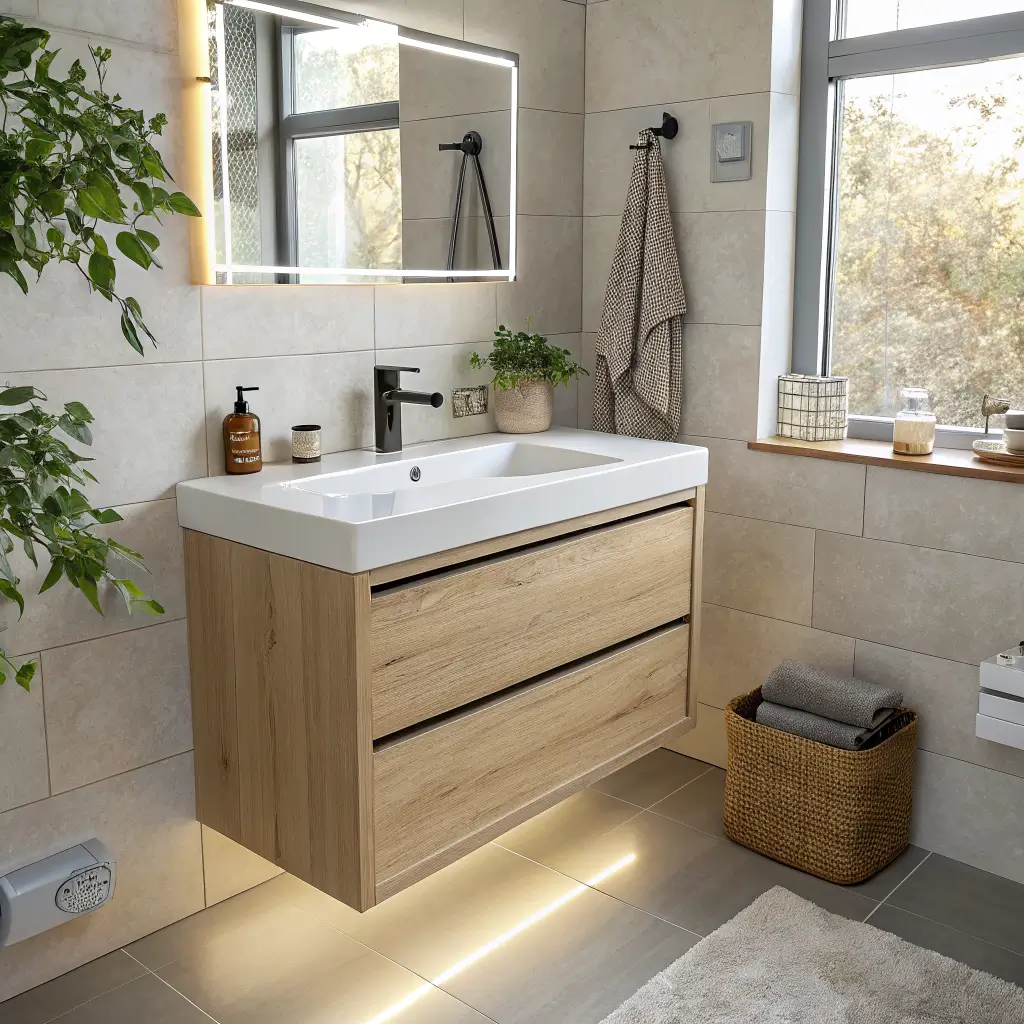
A wall-hung vanity, 450–500 mm deep maximum. Floating it off the floor is the single biggest visual trick — you can see the floor continue underneath, and the room reads bigger by a good 20%. Standard vanities are 550–600 mm deep, which in a 1.4 m wide room is genuinely too much. I replaced mine with a 460 mm deep slimline and suddenly I could open a drawer without standing in the shower.
A back-to-wall or wall-hung toilet with concealed cistern. A standard close-coupled toilet projects about 700 mm into the room. A back-to-wall pan with the cistern hidden behind a tiled nib comes in around 500 mm. That 200 mm changes the room.
A frameless fixed glass panel. Skip the framed enclosure with its chunky aluminium and skip the curtain if you can. A single 8 mm fixed pane of toughened glass — sometimes called a walk-in panel — keeps sightlines clear straight through to the back wall.
Then a few supporting players:
– Mirrored cabinet above the vanity, ideally semi-recessed. Storage and a light bouncer in one.
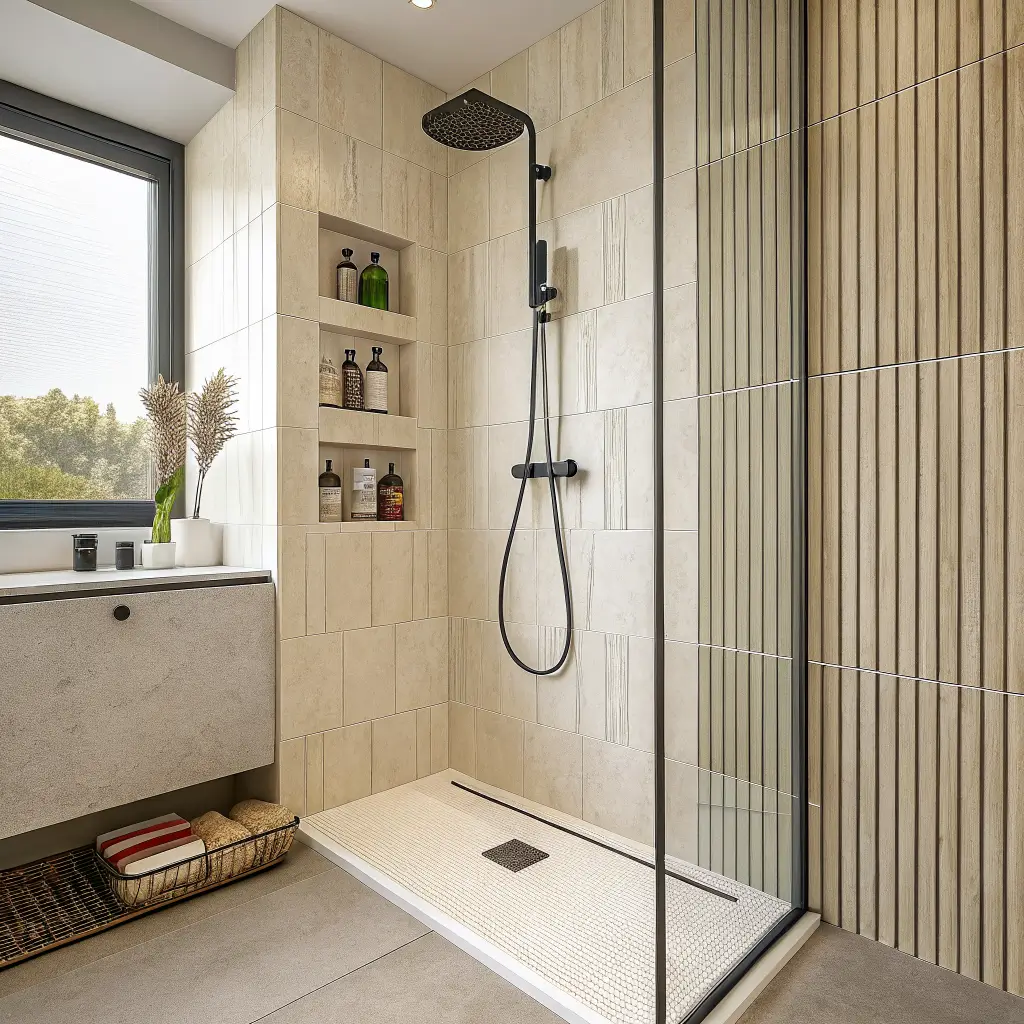
– Recessed shower niche for products. Keep the ledge narrow — 100 mm is plenty — so bottles don’t fall forward.
– Two or three hooks on the back of the door for towels and a robe. Always more useful than a towel rail you can’t fit.
– A slim tall cabinet if there’s a dead corner, 200–300 mm wide.
Colour, Tile, and the One-Texture Rule
For rooms this size, restraint wins.
I’d pick a warm white for the walls — something with a touch of cream so it doesn’t go blue under LED light. Sherwin-Williams’ Greek Villa, Dulux Natural White, or Farrow & Ball Wimborne White all work. Pair it with a pale timber or warm greige vanity, and one accent: matte black taps, or brushed nickel if you want it softer.
Large-format porcelain tiles on the walls — 600×600 mm or bigger. Fewer grout lines, calmer surface, room reads larger. On the floor, drop to 300×300 mm or a small mosaic so there’s enough fall to the drain and decent slip resistance. Rectified edges, thin grout, grout colour matched to the tile within a shade or two. Coloured grout lines on a small wall = a tile chart, not a bathroom.
The rule I follow religiously: one hero texture, everything else calm. That means if you want fluted tile, terrazzo, or a micro-cement wall, it goes on one surface — usually the shower back wall — and the rest stays plain. I tried fluted tile on two walls in version one and the room felt like a 1970s sauna. Live and learn.
Run the same floor tile straight through the shower with no threshold change. This is the trick that does more for perceived size than any mirror. Your eye reads the floor as continuous, so the room feels continuous.
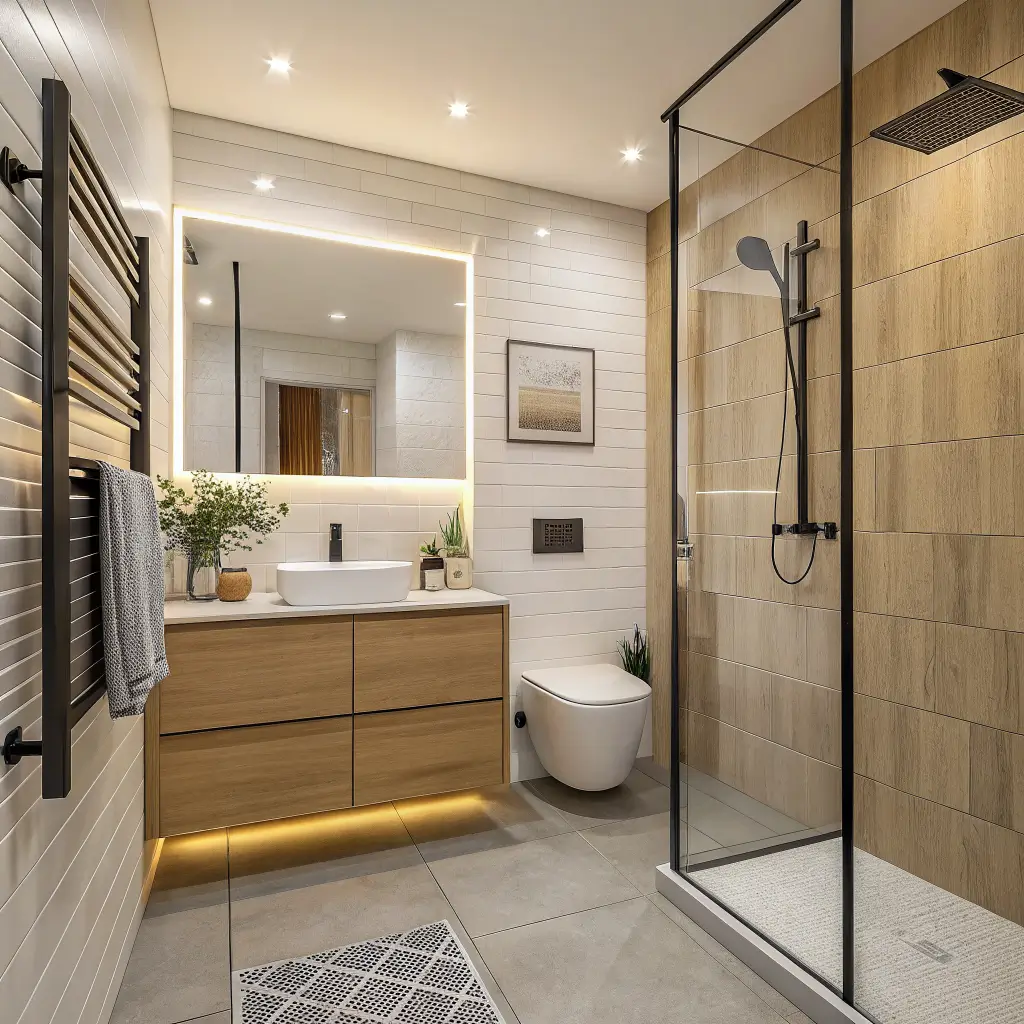
For lines that lift the ceiling, use vertical stack-bond tile or vertical fluting on one wall. Horizontal layouts widen; vertical heightens. In a low-ceilinged loft ensuite, go vertical.
Lighting (The Thing Everyone Underestimates)
A small bathroom lit by one sad ceiling downlight will always look small and sad. You need layers.
– Ambient: two or three ceiling downlights, IP-rated for wet zones, on a dimmer if your electrician will run one.
– Task: lighting at the mirror. Either a backlit mirror with an integrated LED halo, or two vertical sconces either side of the mirror. Top-down lighting from the ceiling only casts shadows under your eyes and makes shaving or makeup miserable.
– Accent: a strip of warm white LED under the wall-hung vanity. Floats the cabinet visually and doubles as a night light.
Colour temperature matters. Stick to 3000K — warm enough to feel human, clean enough to read true colours. 4000K reads like a dental surgery. Always.
And a properly ducted extractor fan vented outside, not into the ceiling cavity. Mould in grout will age your ensuite faster than anything else.

Where to Spend, Where to Save
Spend on:
– Tapware and the shower mixer. Cheap chrome pits within a year, cheap matte black chips and looks dusty. Buy mid-range minimum from a brand with a 10+ year warranty.
– The fixed glass panel. 10 mm toughened, proper brackets.
– Waterproofing labour. Not the place for a mate’s cousin.
Save on:
– The mirror. A plain frameless rectangle from IKEA looks better than most “designer” mirrors in a tiny room.
– Accessories. Hooks, toothbrush holders, soap dispensers — these are interchangeable. The £4 ones look the same as the £40 ones once they’re full of toothpaste.
– The vanity carcass if the top is good. A flat-pack cabinet with a sintered stone or solid-surface top reads expensive.
The Mistakes I See (and Made)
Trying to fit a full-size vanity. That extra 100 mm of depth is the difference between a room that works and a room you hate.
Mixing three metal finishes. Pick one. Taps, shower fittings, hooks, towel ring, door handle — all the same finish. Maybe a second finish on the light fitting if you want a feature.
A tile feature wall plus patterned floor plus textured ceiling. Pick one surface to do something interesting. The others go quiet.
No window covering plan. If you have a window, a strip of frosted vinyl film costs about £15 and looks better than any blind in a wet space.
Underestimating storage. A tiny ensuite needs more concealed storage per square metre than a big one, because there’s nowhere to hide a mess. Plan for a mirrored cabinet, drawers in the vanity, and at least one shelf or niche from day one.
Cluttered countertop. Decide on the daily essentials — soap, hand cream, maybe a small plant — and corral them on a small tray. Everything else goes in a drawer. A pothos on the cistern shelf is enough greenery; you don’t need a jungle.
Easy Updates Without a Renovation
If you’re not gutting anything, here’s what shifts the feel of a tiny ensuite the most for the least:
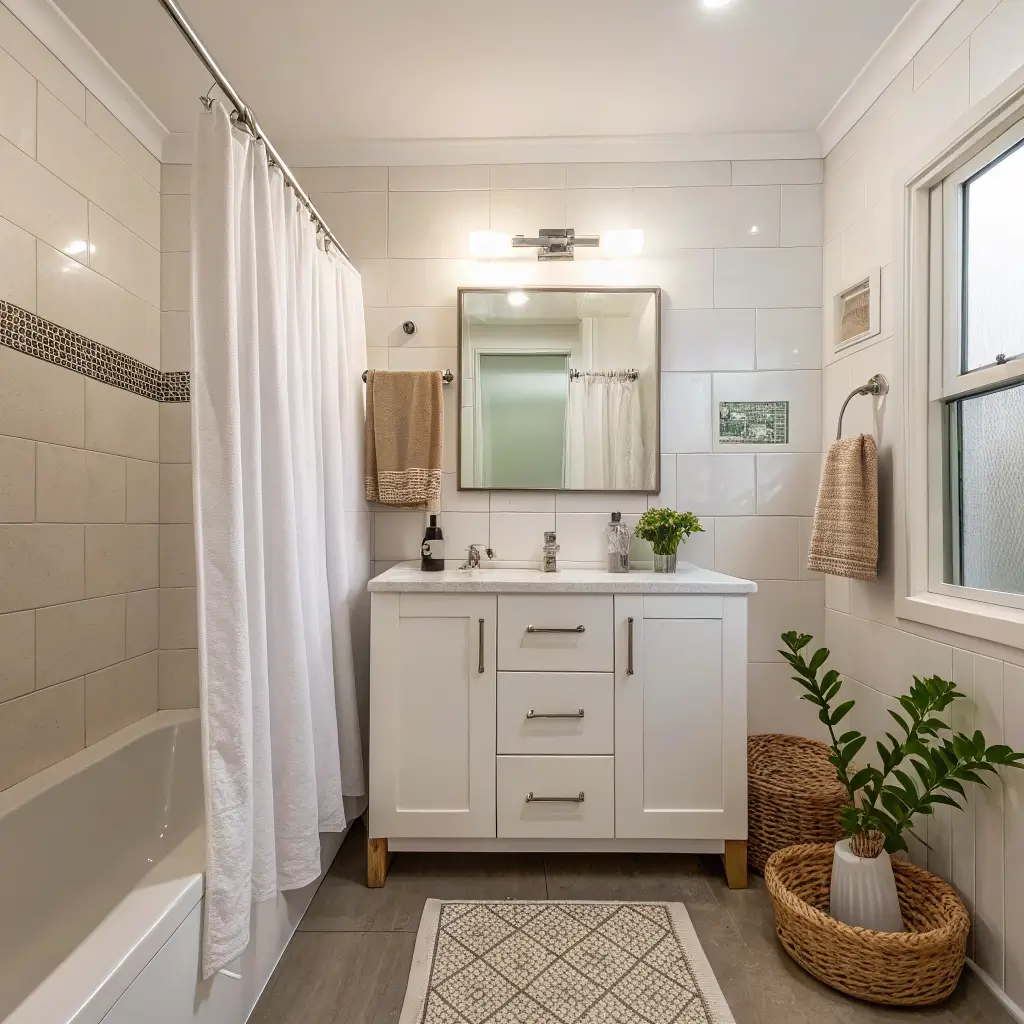
– Swap the shower curtain for a clear glass panel if the plumbing allows, or hang the curtain rod as high as it’ll go — ceiling height if possible. Raises the eye line.
– Replace the tapware and handles in a current finish (brushed nickel ages best in my opinion) while keeping plumbing positions.
– Repaint in a warm white with a satin or eggshell finish — washable, slight sheen bounces light. Skip flat matte in a wet room.
– New towels in two colours max. Three at a push. More than that and it’s a linen sale.
– Peel-and-stick tile film over dated tile if you rent. Not a long-term answer, but a year of looking at something nicer.
Seasonally, I rotate textiles — heavier waffle towels and a darker bath mat in winter, lighter linen towels and a pale jute mat in summer. Takes ten minutes, costs nothing, makes the room feel considered.
The version of my ensuite I have now isn’t bigger than the one I started with. It’s exactly the same 2.94 square metres. But the floating vanity, the cavity slider, the single fixed glass panel and the continuous floor tile have all done their quiet job — and most mornings I forget it’s small at all.
Conclusion
The tiny ensuite ideas that worked for me came from a micro bathroom off the bedroom with a corner shower, a wall-mounted sink, and a window that opened onto a courtyard. I had painted the walls a pale blue, added a heated towel rail, and hung a single shelf for toiletries. The room was not a spa. It was a bathroom that happened to be small. And that was exactly enough.
More Decor Ideas to Explore
- Tiny Living Room Ideas: A Real Guide for Spaces Under 150 Square Feet
- Rustic Coastal Decor: How to Get the Look Without It Feeling Like a Beach Gift Shop
- Little Balcony Ideas That Actually Work When You Have 40 Square Feet to Play With
- The Beachy Boho Bedroom: How to Get the Look Without It Feeling Like a Hotel Gift Shop