Little Kitchen Ideas That Actually Work in 40–120 Square Feet
If you’re searching for little kitchen ideas because yours feels like a closet with a stove in it, I’ve been there — twice, actually. My current galley is 7 feet by 11 feet, and before this I cooked in a one-wall studio kitchen that was about 38 square feet of counter, sink, and a fridge I had to side-shuffle past. Most of what I learned came from getting it wrong first.
Here’s what I’d do if I were starting over tomorrow.
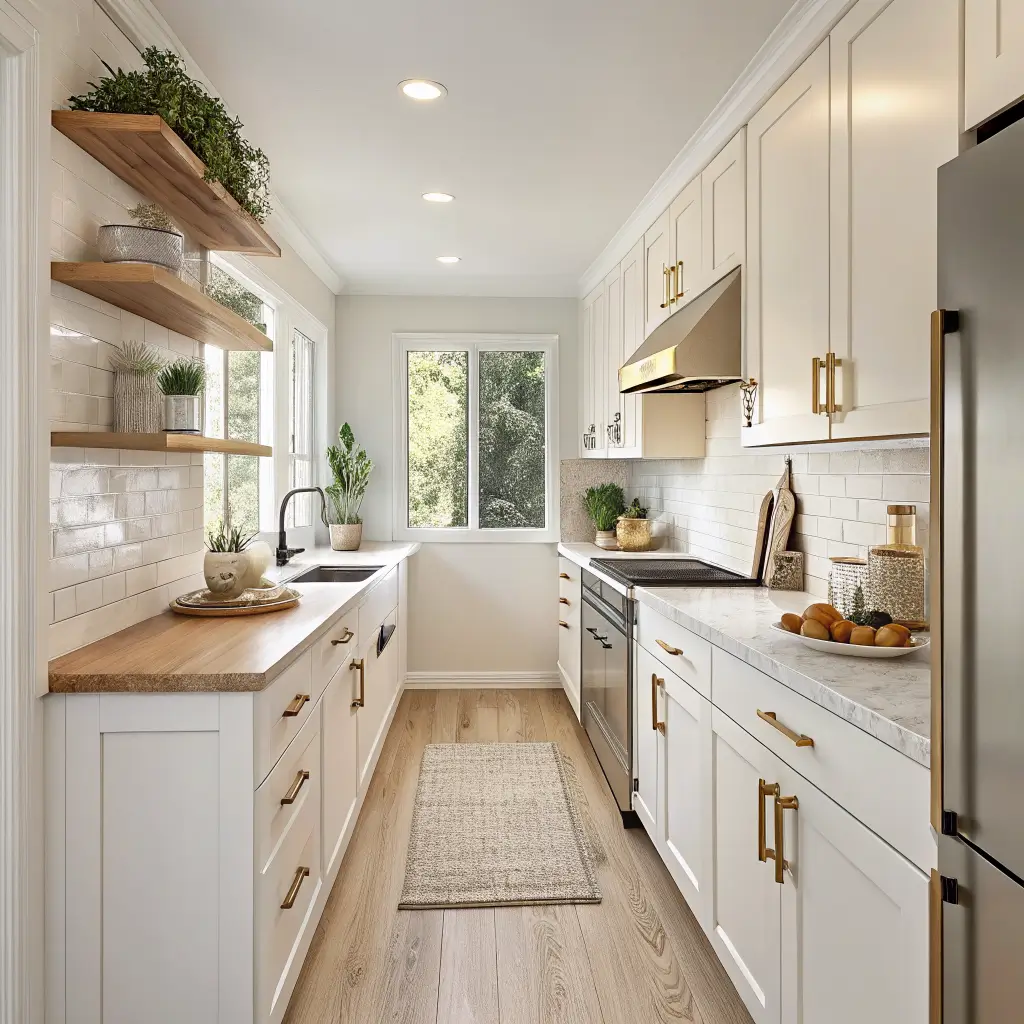
Who This Is For (and the Layout You’re Probably Working With)
Small kitchens fall into a few predictable shapes:
Galley: two parallel runs, usually 7–10 feet long
L-shape: two adjoining walls, often open to a living area
U-shape: three walls of cabinets, the most boxed-in feeling
One-wall: everything on a single run, common in studios and tiny homes
If your kitchen is somewhere in the 40–120 square-foot range and matches one of those, you’re in the right place. The strategies overlap, but I’ll flag where layout changes the call.
A quick read on commitment level:
A weekend or two: paint, hardware, organizers, plug-in lighting, peel-and-stick backsplash. Materials usually $150–$500.
A month of weekends: open shelves, hardwired under-cabinet lights, a movable island, swapping a couple of appliances. $1,500–$5,000.
A real renovation: cabinets to the ceiling, new counters, layout shifts within the existing plumbing. $8,000 on the low end, north of $25,000 with custom work.
The Look That Makes a Small Kitchen Feel Bigger
I tried high contrast first. Navy lowers, white uppers, a black-and-white patterned floor. It photographed well and felt awful to stand in. The room read as three short stripes instead of one space.
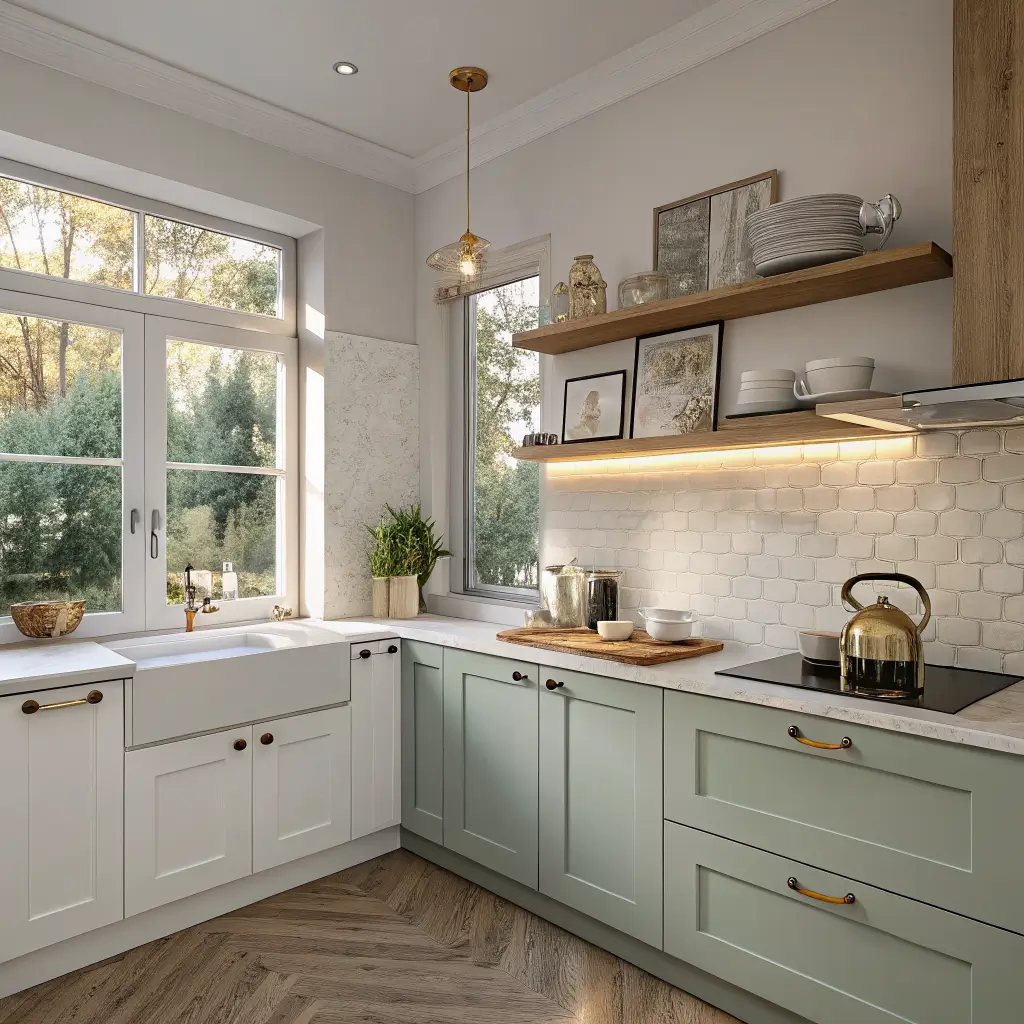
What actually works is low-contrast: cabinets, walls, and backsplash kept within a narrow tonal range so your eye glides across the room instead of stopping every 18 inches. That doesn’t mean boring. It means the contrast comes from one place — hardware, a single feature, or the lower half of the room — not everywhere at once.
The three directions I’d steer toward in a small kitchen:
Scandi-minimal: warm white cabinets, light oak shelves, brushed nickel or black hardware
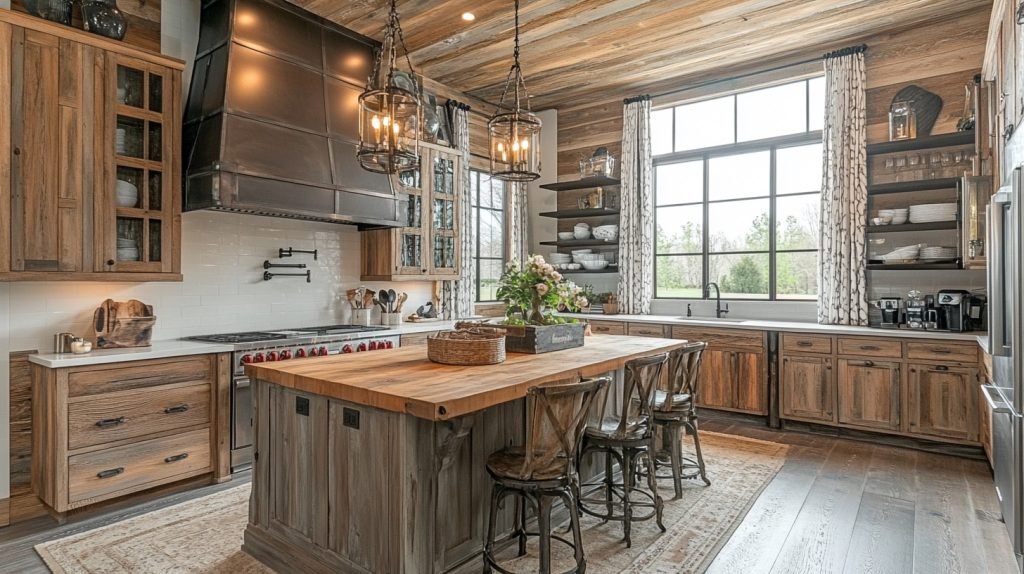
Quiet farmhouse: shaker fronts in a soft ivory, butcher block, matte black pulls, one piece of warm pottery
Urban flat-front: slab cabinets in greige or pale sage, integrated handles, a single bold backsplash
Colors I’d Actually Use
For walls and cabinets, I keep coming back to warm whites — something in the neighborhood of Benjamin Moore White Dove. Pure white goes blue under cheap kitchen lighting. Avoid stark white if your kitchen has no natural light; it’ll read gray and dingy by 4 p.m.
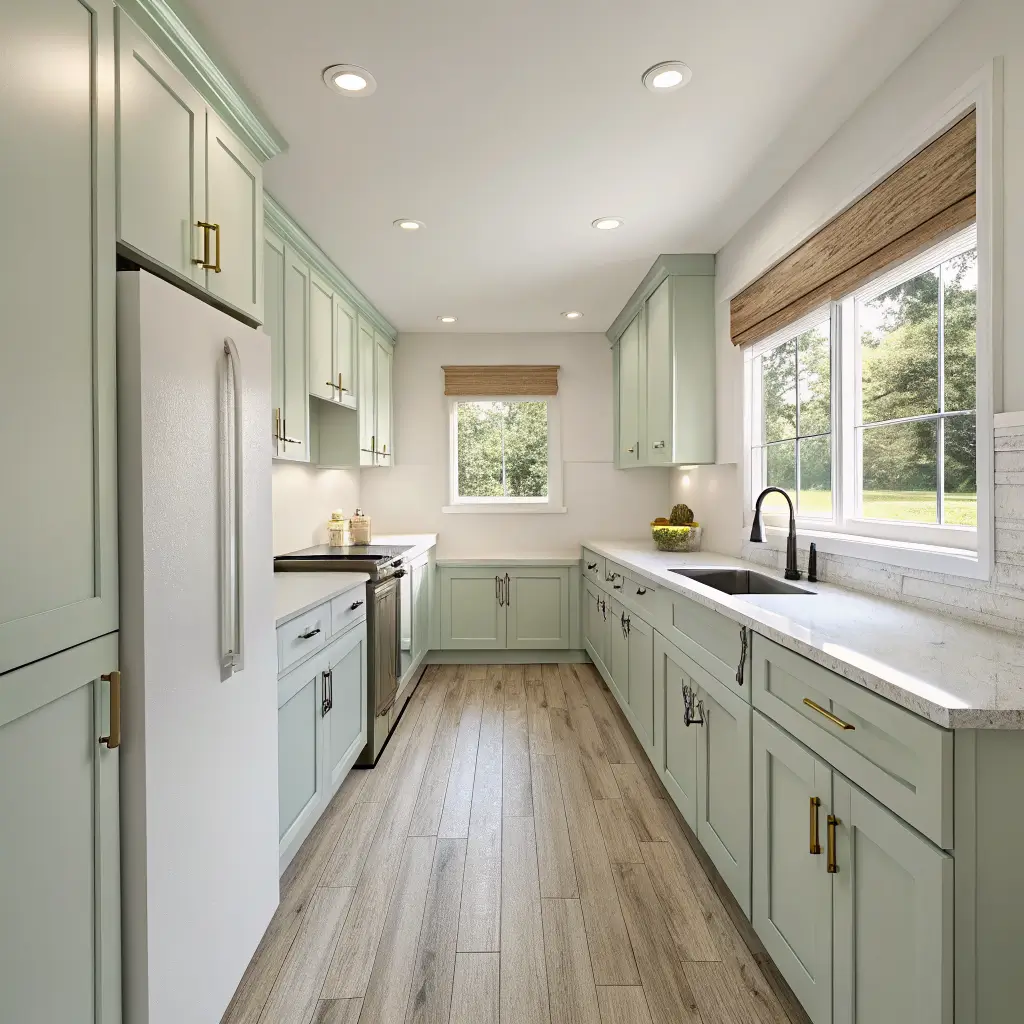
For a little color without the commitment: pale sage, greige, soft taupe. I painted my current lowers a muted sage and left the uppers and walls in the same warm white. The room reads taller.
Materials Worth the Money
Counters: butcher block ($25–$45/sq ft) if you want warmth on a budget; light quartz ($60–$100/sq ft installed) if you want it to look seamless with a matching backsplash
Backsplash: white subway tile in a horizontal stack widens a narrow galley. Or run the counter material right up the wall — fewer grout lines, more apparent depth.
Flooring: wood-look LVP runs around $3–$6/sq ft. Lay the planks along the longest dimension of the room. This is the single change that made my galley feel longer.
Hardware: $3–$7 per pull. Brushed brass, matte black, or unlacquered brass. Cheap cabinets look expensive with good pulls; expensive cabinets look cheap with builder-grade knobs.
The Pieces That Actually Earn Their Space
In a small kitchen, every object competes for real estate. Here’s what stays and what goes.
Stay:
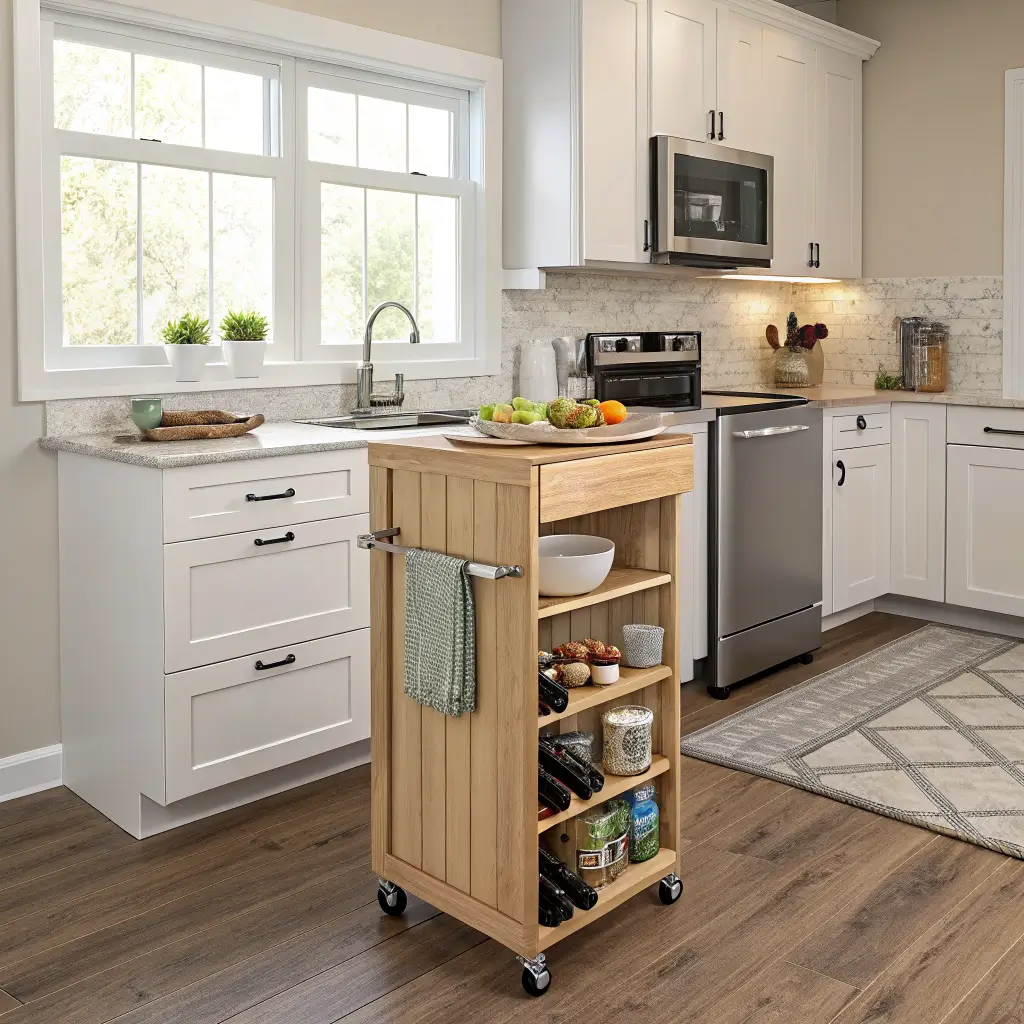
A slim movable cart or island — 18–24 inches deep, 30–40 inches long, with an open or slatted base so the floor reads through it
One compact appliance footprint: a 24–28-inch counter-depth fridge instead of the standard 30–36, or a 24-inch range
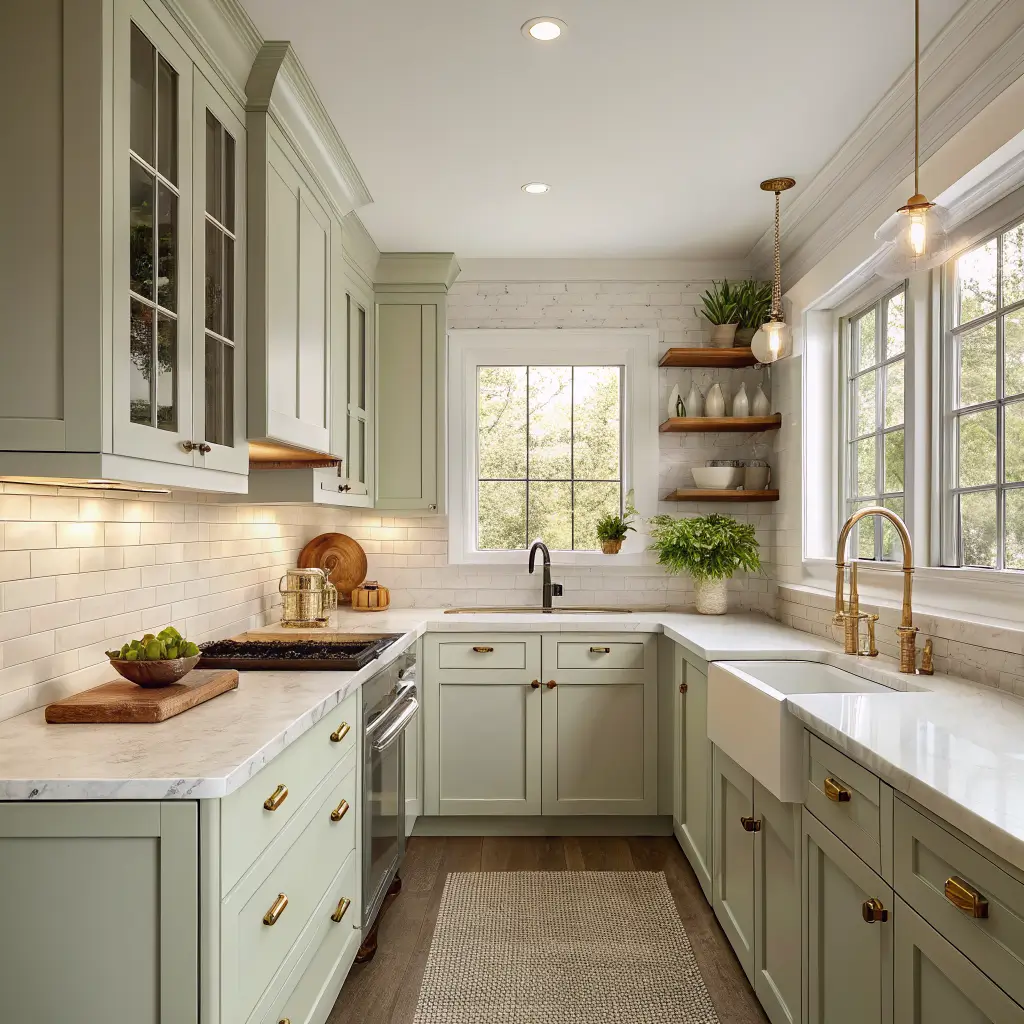
Cabinets to the ceiling. The 14-inch gap above standard uppers is dead space and a dust shelf. Either box it in, add stacked cabinets, or trim it with crown.
Under-cabinet LED strips. $30–$70 a run, plug-in versions if you’re renting. This is the closest thing to a magic trick.
A pull-out pantry column — even a 6-inch one between the fridge and wall holds an alarming amount of spice and oil
Go:
Knife block (use a magnetic strip on the wall — saves probably 50 square inches of counter)
Bulky paper towel holder (under-cabinet mount)
Standing mixer if you use it twice a year (closet)
Any small appliance you haven’t touched in three months
The Open Shelf Question
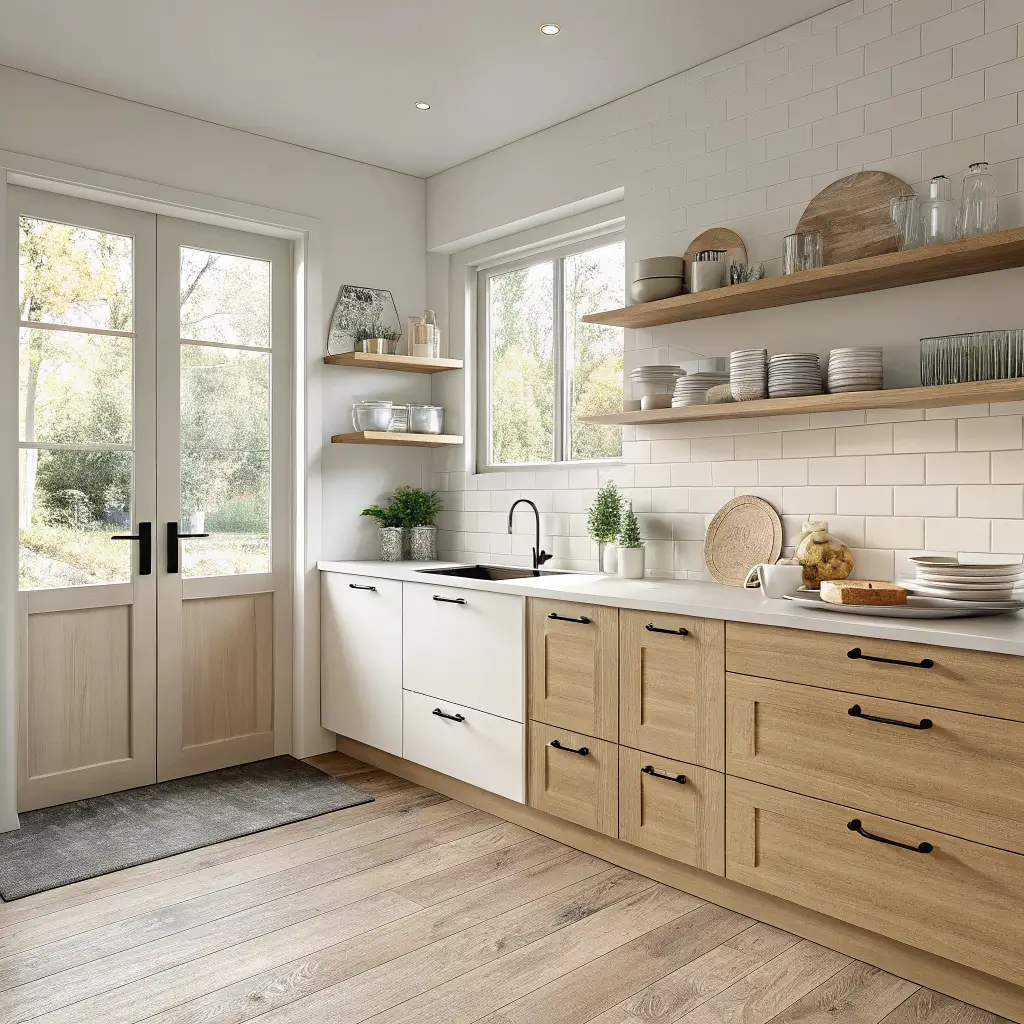
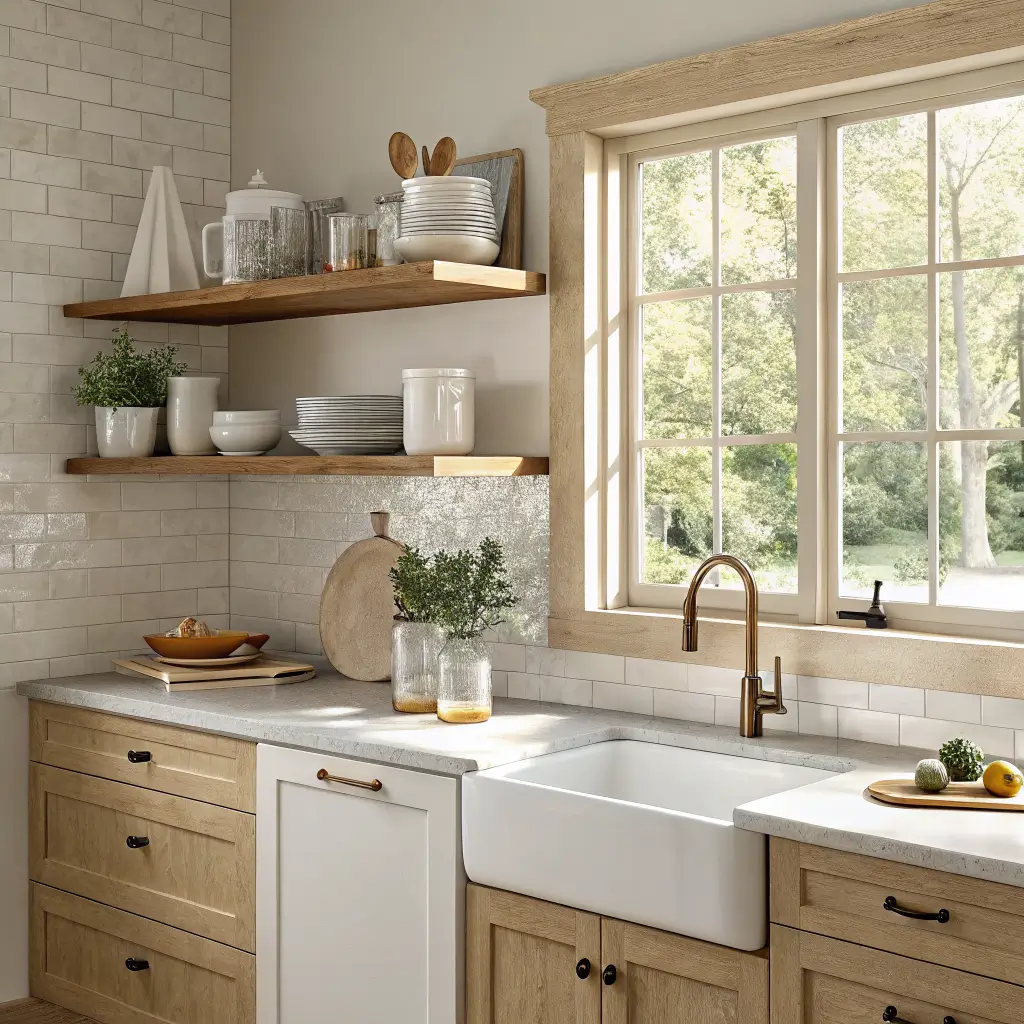
I’m going to be opinionated here: don’t replace all your upper cabinets with open shelves. One run, maybe two. Open shelves above the sink or flanking a window look great. Open shelves where you’d actually store cereal boxes and Tupperware look like a yard sale.
When I do open shelves, I keep them 8–10 inches deep, hold them to two shelves max, and load them with daily-use dishes — white plates, clear glasses, a couple of mugs. Nothing decorative that doesn’t also work.
How to Actually Put It Together
The order matters. I rearranged my current kitchen three times before I figured this out.
1. Paint and floors first. All of it. Walls, cabinets if you’re painting them, trim. Pull the appliances out. This is the worst weekend; everything after is fun.
2. Cabinets to the ceiling. If you’re not doing a full reno, build a simple soffit or add stacked cabinet boxes above the existing uppers and paint everything one color. The visual lift is enormous.
3. Lock in the work triangle. Sink, stove, fridge — the three points you walk between most. In a galley, put the fridge at one end so it’s accessible without crossing the cook zone. In an L-shape, keep the sink and stove on the same run if you can.
4. Walkways. This is non-negotiable: keep 36 inches of clear floor between opposing counters, 42 if two people cook. I put a cart in my galley that left 32 inches and removed it within a week. Bruised hips, dropped pans.
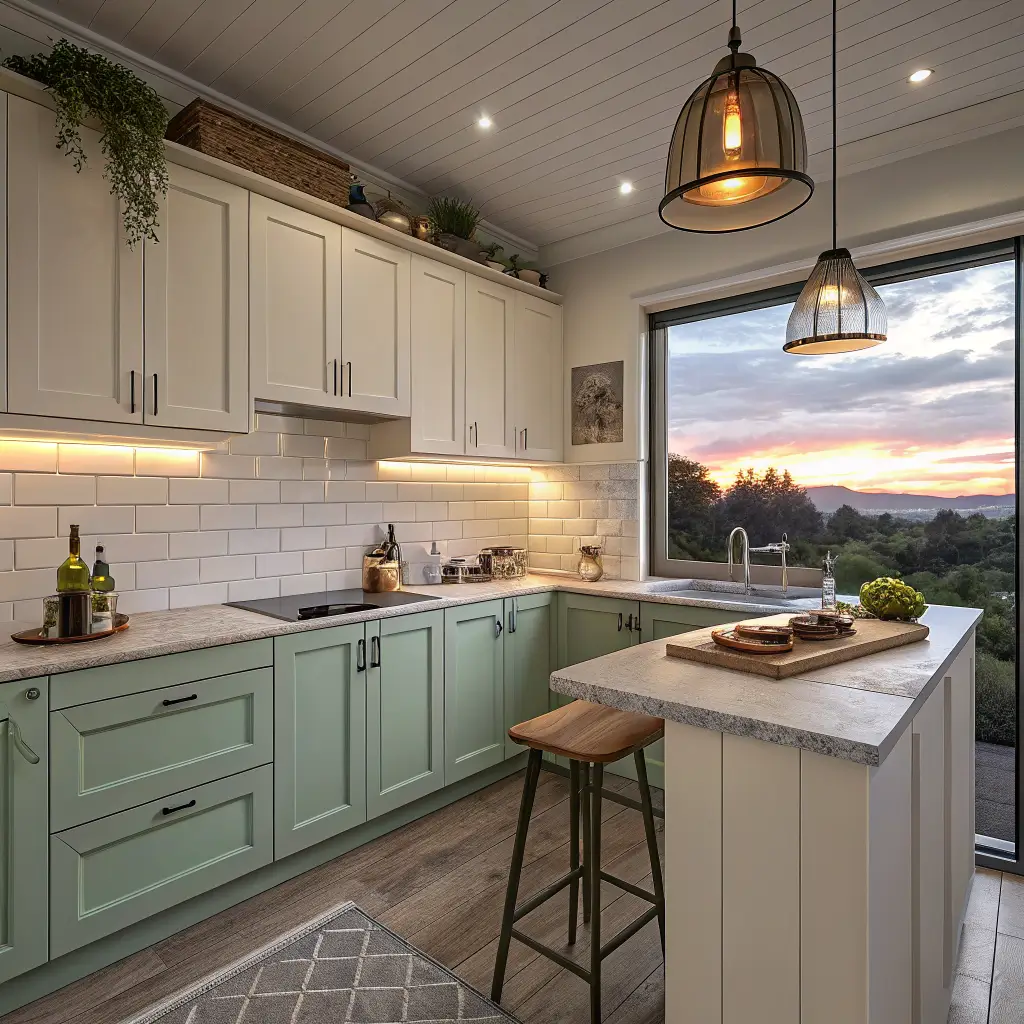
5. Lighting in layers. Ceiling fixture for ambient, under-cabinet for task, one small pendant or sconce for warmth. The under-cabinet light is the one most people skip and most regret skipping.
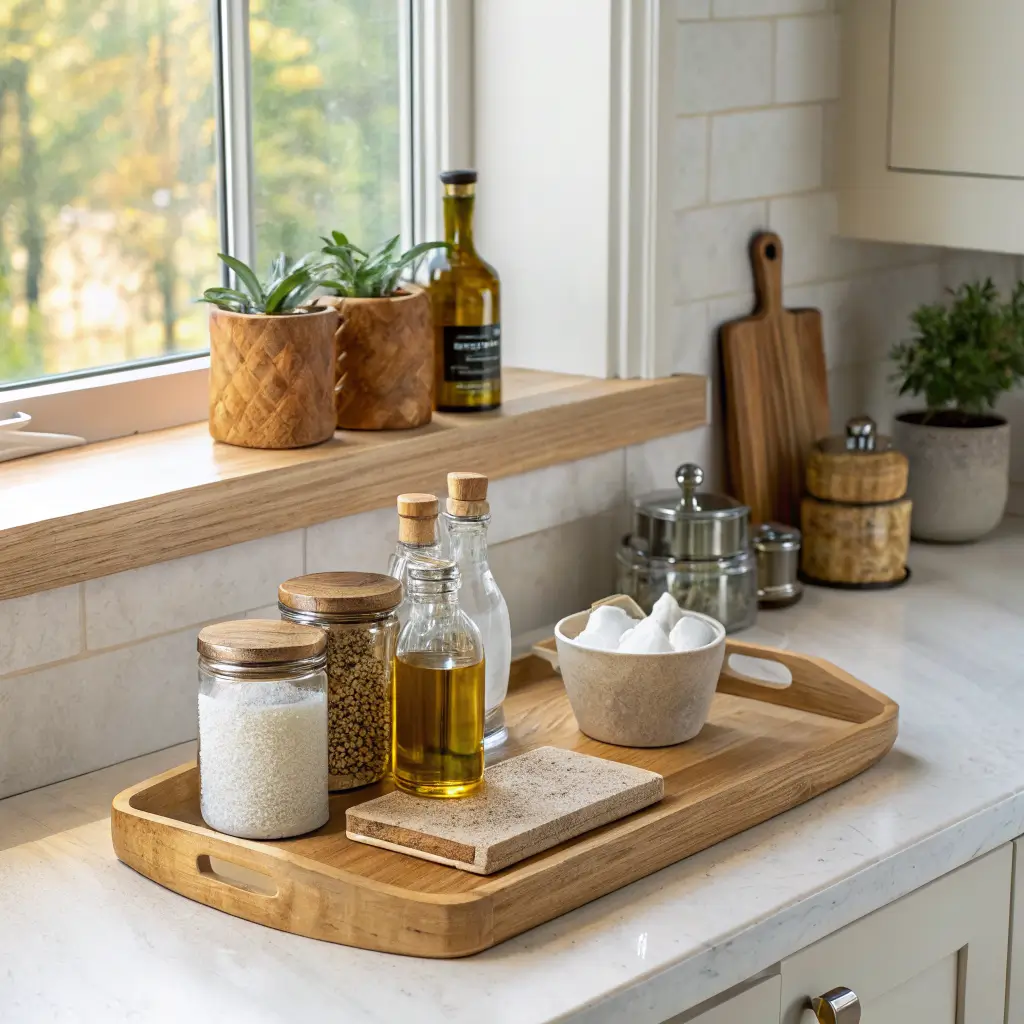
6. Style the surfaces last, and lightly. A tray near the stove with oil, salt, and pepper. A small plant on the sill. A wood cutting board leaned against the backsplash. That’s the whole counter program.
Where to Spend and Where to Save
Spend on:
Hardware (you touch it every day)
Lighting (changes how the room feels at every hour)
The one appliance you use most — for me, the range
Save on:
Backsplash tile. Plain white subway is $0.20 a tile and looks better than most patterned stuff.
Open shelving. IKEA pine, sanded and oiled, runs $15 a shelf and looks identical to the $200 versions.
Bar stools. Slim metal ones from Target or Wayfair around $80 each, tucked fully under the counter.
Mistakes I Made So You Don’t Have To
Too much contrast. Covered above. Pick one place for contrast and let everything else be quiet.
A countertop microwave. It ate 200 square inches of prep space for two years. I finally bought an over-the-range combo unit and the kitchen doubled.
A swinging pantry door. Replaced with a sliding barn door on a $40 track and got back roughly 12 square feet of floor.
Decorative canisters that didn’t match anything. Now I keep flour, sugar, and coffee in three identical clear glass jars with matching lids. They disappear into the background instead of demanding attention.
Styling open shelves with “stuff.” Tiny picture frames, a small ceramic rabbit, a vintage scale. It looked like a junk drawer threw up. Daily dishes only.
Easy Updates When You Get Bored
Every season I swap:
The tea towel (I keep two — one neutral, one with whatever color I’m into)
The fruit in the bowl (citrus in winter, stone fruit in summer — sounds dumb, changes the whole counter)
A small grocery-store bunch of eucalyptus or branches in a slim bud vase
Once a year or so, bigger moves:
New hardware. Twenty pulls at $5 each is $100 and a completely different kitchen.
A new pendant fixture over the sink or island. $80–$200 and it changes the room’s whole personality.
Repainting the lowers a different color while keeping the uppers and walls the same. A weekend, a quart of paint, totally different feel.
If You’re Renting
Stick to: peel-and-stick backsplash (the gel kind, not the foam — it actually looks like tile), plug-in under-cabinet lights, removable hooks and rails, a freestanding cart you take with you, and replaceable hardware (keep the originals in a bag under the sink for move-out).
Small kitchens reward restraint more than any other room in the house. The mistake is treating them like big kitchens with less square footage. They’re a different animal — one where the empty counter is the luxury, and the right four objects beat the right forty.
Conclusion
The little kitchen ideas that worked for my friend came from a space between forty and one hundred twenty square feet with a single counter, a two-burner stove, and a window above the sink. She had hung a pot rack from the ceiling, added a fold-down table for prep, and kept a magnetic knife strip on the wall. The room was not a chef’s kitchen. It was a kitchen for one person who liked to cook. And that was exactly what it was.
More Decor Ideas to Explore
- The Little Apartment Aesthetic: How to Style a Small Space That Feels Cozy, Cohesive, and Actually Yours
- Coastal Bathroom Decor: How to Get the Beach-House Look Without the Souvenir-Shop Vibe
- Coastal Living Room Decor That Doesn’t Look Like a Gift Shop: A Modern, Rental-Friendly Guide
- 16 Lake House Bathroom Ideas That Feel Like a Morning Swim