Coastal Beach Decor: A Real-World Guide to Getting the Look Without the Theme-Park Vibe
Coastal beach decor goes sideways the moment you buy three ceramic anchors and a “Gone Surfing” sign in the same afternoon. I know because that’s roughly what my first attempt looked like in 2019, in a rental two hours from any actual ocean. The room read as a TJ Maxx clearance shelf, not a beach house. It took me a few rearranges and one regretful navy-and-red striped rug to figure out what actually makes this style work: light, texture, and restraint. Not seashells.
Here’s how I’d build it now, room by room, with the numbers and specifics I wish someone had handed me the first time.
What This Style Actually Is (and Who It’s For)
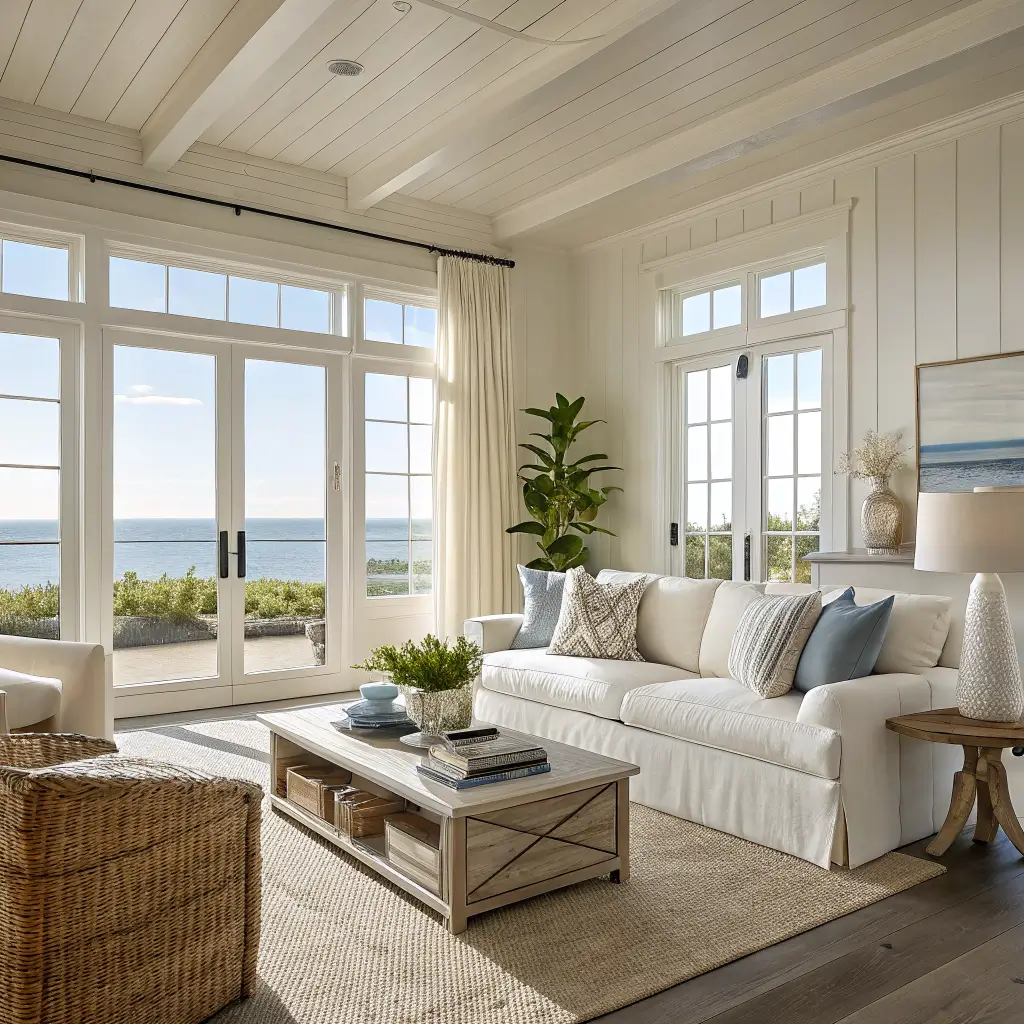
Modern coastal is breezy and informal. Think sun-bleached wood, washed linen, soft blues, a lot of white, and natural fibers underfoot. It’s the cousin of nautical, but quieter — fewer ship wheels, more driftwood and gauzy curtains.
It works best for:
– Renters who want a light, airy refresh using textiles, art, and peel-and-stick wallpaper
– People in small apartments where pale walls and slim furniture actually buy you visual square footage
– Open-plan living/dining areas where a blue-and-natural palette ties zones together
– Anyone with kids or dogs — slipcovers and jute rugs are extremely forgiving
– Landlocked homes that want a year-round vacation feel without the kitsch
If you love heavy carved wood, jewel tones, or maximalist pattern, this isn’t your style. Don’t force it.
Time and Budget: What You’re Actually Looking At
One room (living room or bedroom): a weekend, if you’re painting, rearranging, and swapping textiles.
Smaller refresh (shelf, entry, bath): 2–4 hours.
Here’s what real spending looks like at each tier.
Budget mini-refresh ($75–$200):
– Coastal throw pillows: $15–$30 each (HomeGoods, Target)
– Small tabletop pieces (shells, mini signs, glass floats): $7–$20
– One coastal print or framed poster: $20–$50
Mid-range room makeover ($400–$1,000):
– Jute or seagrass rug, 5’×7′ to 6’×9′: $80–$250
– Ceramic, glass, or rope-base table lamps: $40–$90 each
– Large canvas or art set: $60–$150
– Slipcovered accent chair: $150–$350
Higher-end full living room ($2,000–$5,000+):
– Slipcovered linen-look sofa (Pottery Barn / Crate & Barrel tier): $800–$2,000+
– Solid or reclaimed-wood coffee table: $300–$800
– Woven wood shades, custom: $150–$350 per window
If I had a thousand dollars to spend, I’d put it on the rug, the lamps, and one piece of real art and let everything else be thrifted or basic. The big mistakes I see — and made — happen when people blow the budget on small “beachy” tchotchkes and skimp on the bones.
The Color Palette That Actually Reads as Coastal
Skip “ocean blue.” That phrase has sold a lot of bad paint.
Walls and trim:
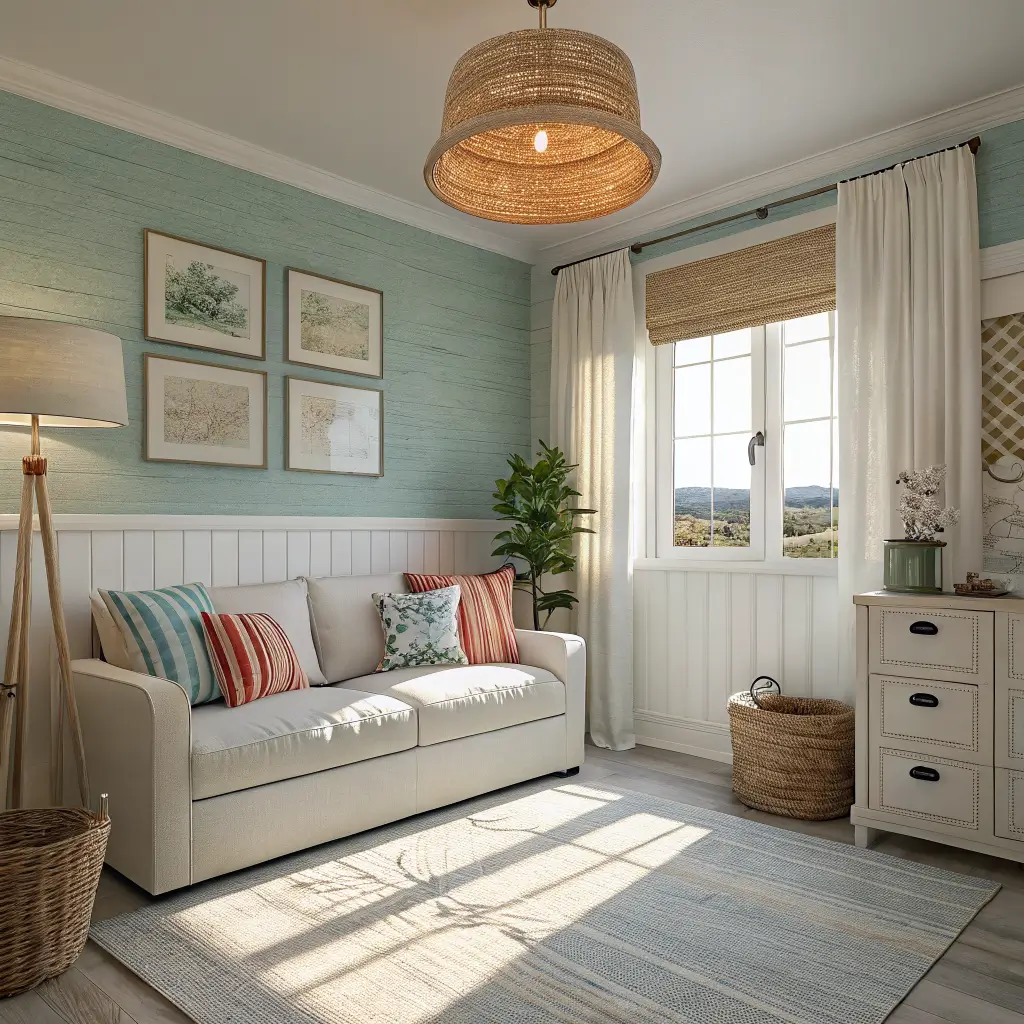
– Sherwin-Williams Dover White or Alabaster — warm, soft, not stark
– Avoid pure cool whites; they go hospital fast in north-facing rooms
Blues and blue-greens:
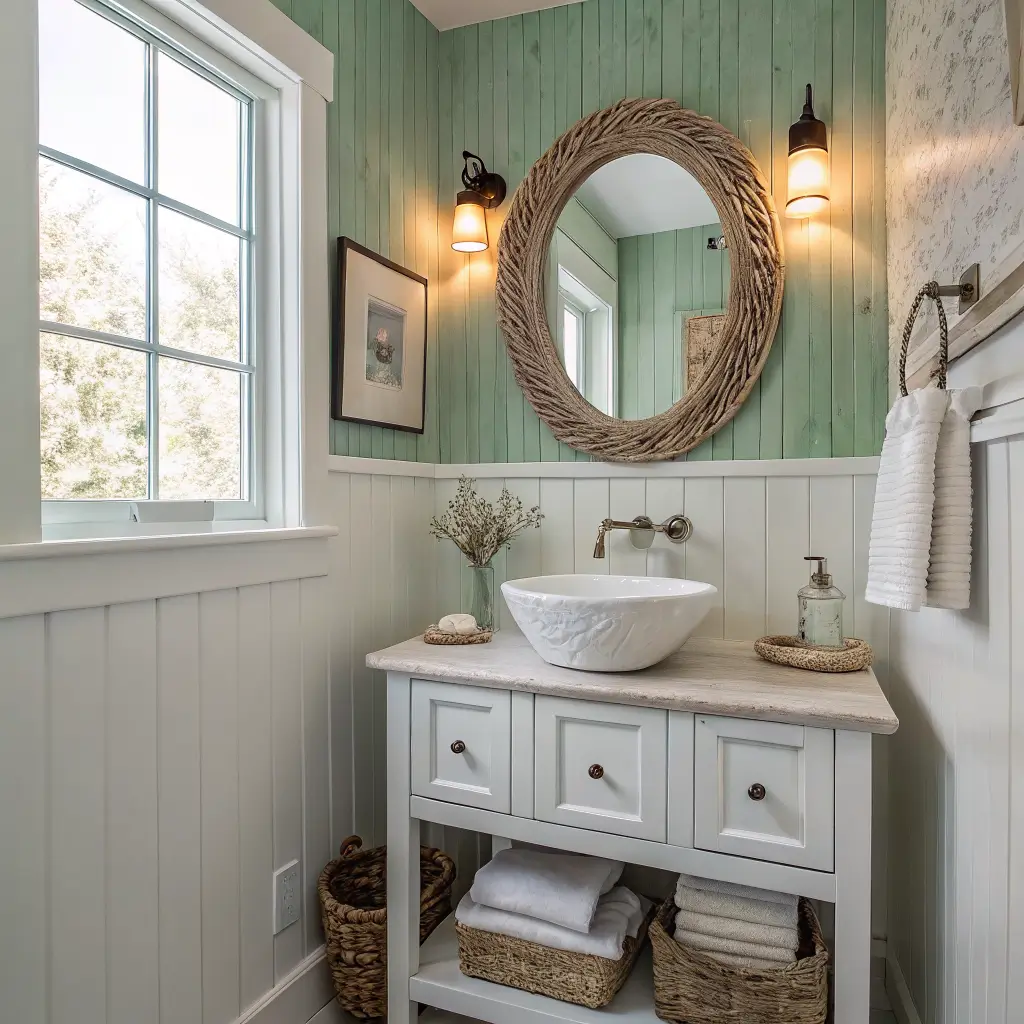
– SW Watery or Rain for an accent wall, a powder room, or built-ins
– Pale aqua and faded sky blue for textiles
Neutrals:
– Sand beige, oat, warm greige for rugs and upholstery
Accents:
– Sea-glass green, muted navy, soft coral, driftwood gray
A formula that’s never failed me: 60% light neutrals (walls, sofa, rug) + 30% soft blues/greens + 10% darker grounding tones (a black lamp base, a navy pillow, a dark wood frame). That last 10% is what keeps the room from looking washed-out and bridal.
The Materials That Carry the Whole Look
If you nail the materials, you can be lazy about everything else.
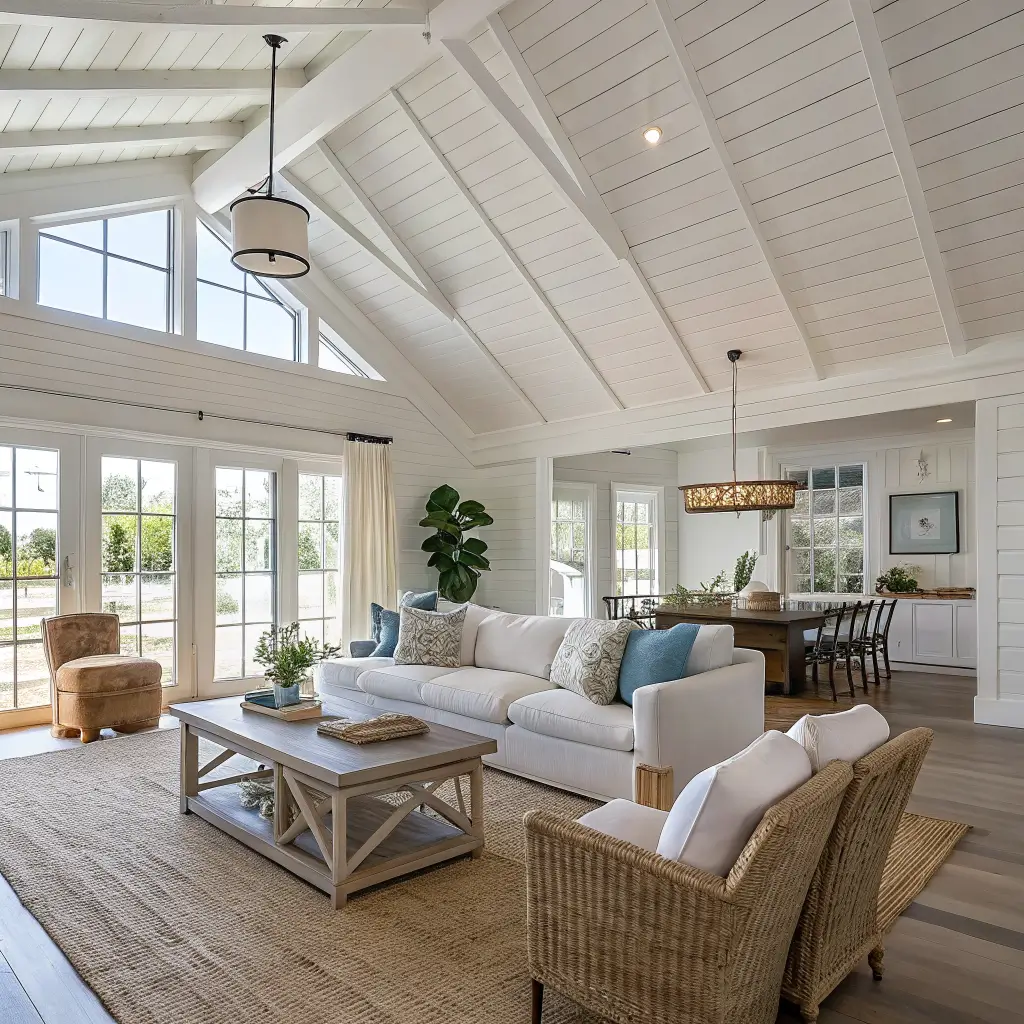
– Natural fibers: jute, seagrass, rattan, wicker
– Light woods: whitewashed, bleached, or weathered oak and pine
– Textiles: washed linen, cotton, gauzy sheers, slipcovers
– Organic accents: driftwood, real or faux coral, beach stones, dried grasses
– Glass: clear, sea-glass green, recycled
– Rope and woven cane for lamp bases, mirror frames, and chair backs
Texture is the whole game. Combine smooth (glass, painted wood), rough (jute, seagrass), and soft (linen, cotton) on every surface and you’ve already done 70% of the work.
The Hero Pieces
These are what anchor the room. Cheap out elsewhere if you have to, but get these right.
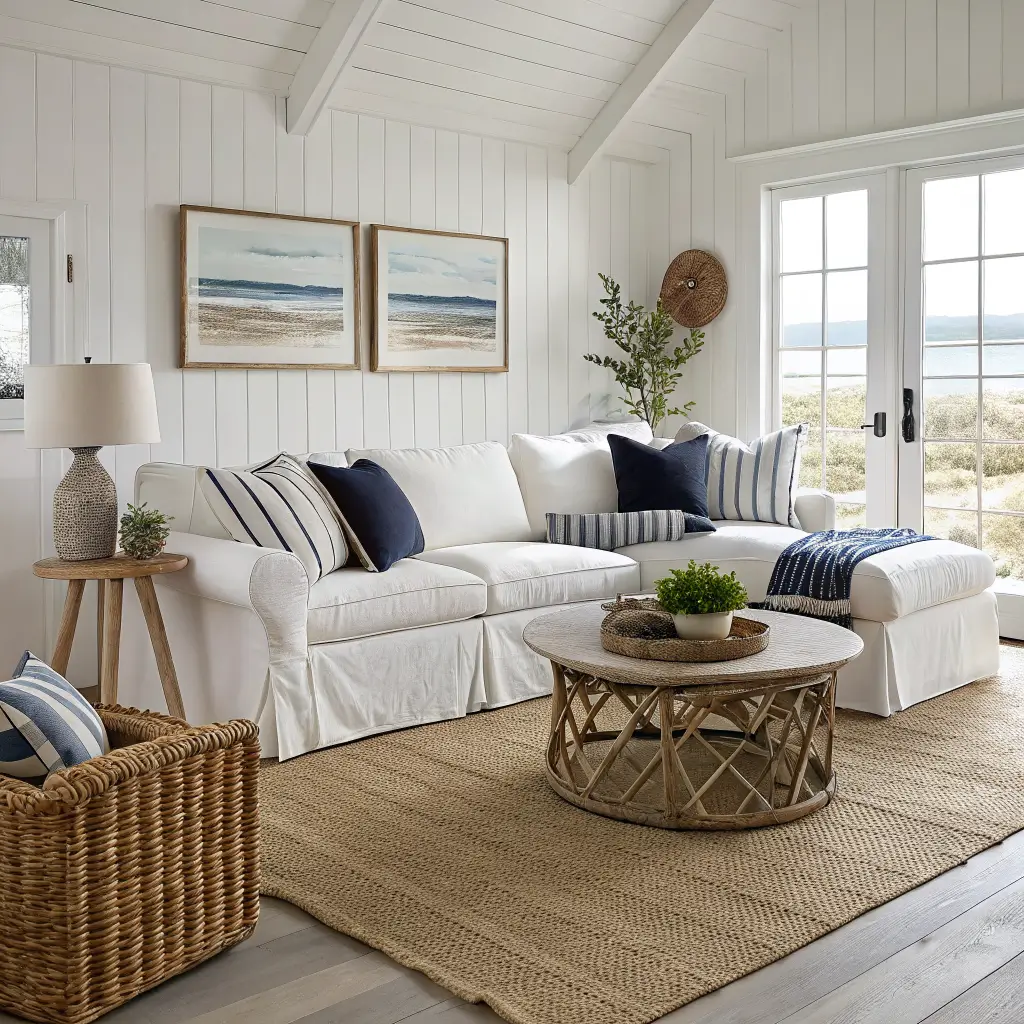
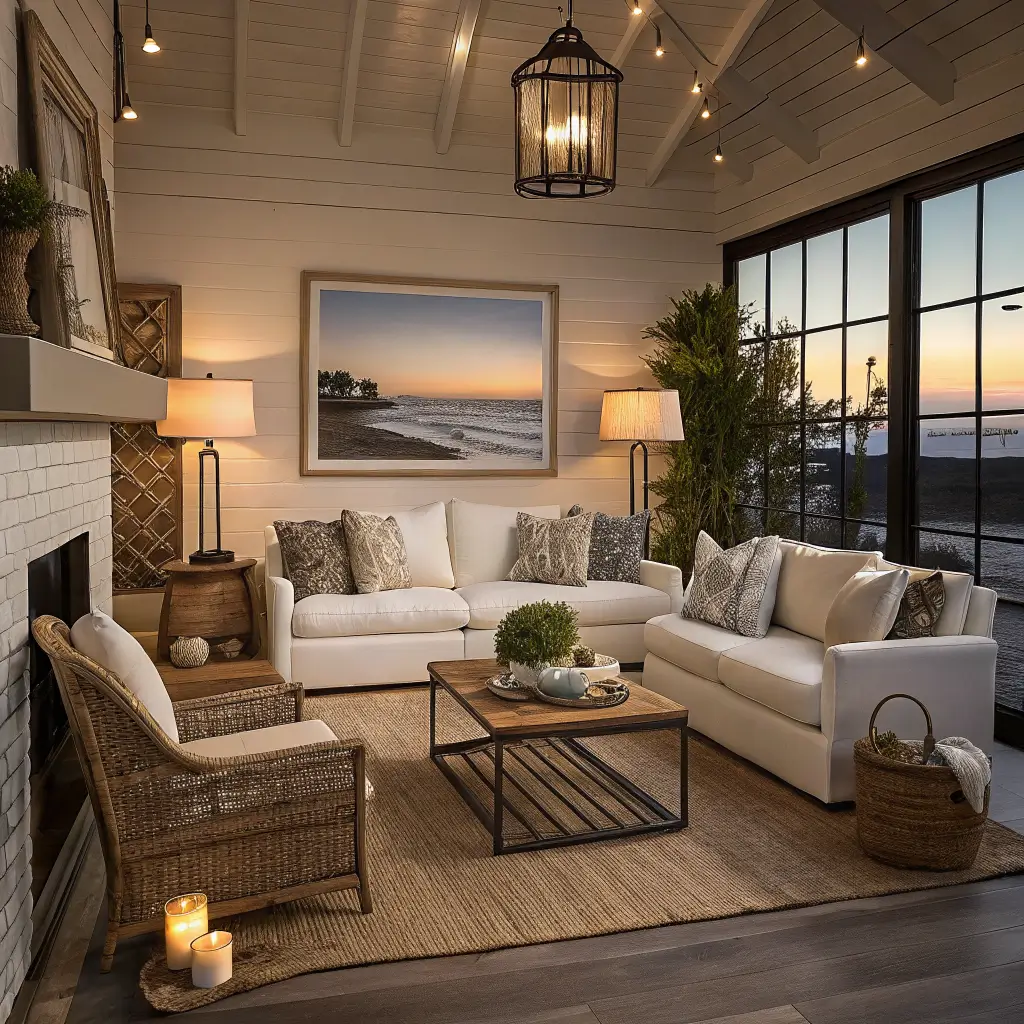
1. A slipcovered sofa, 84″–92″ wide, in white, cream, or oatmeal. Washable slipcovers are not negotiable if you actually live in the room. I had a non-slipcovered linen sofa for two years and one red-wine night ended that experiment.
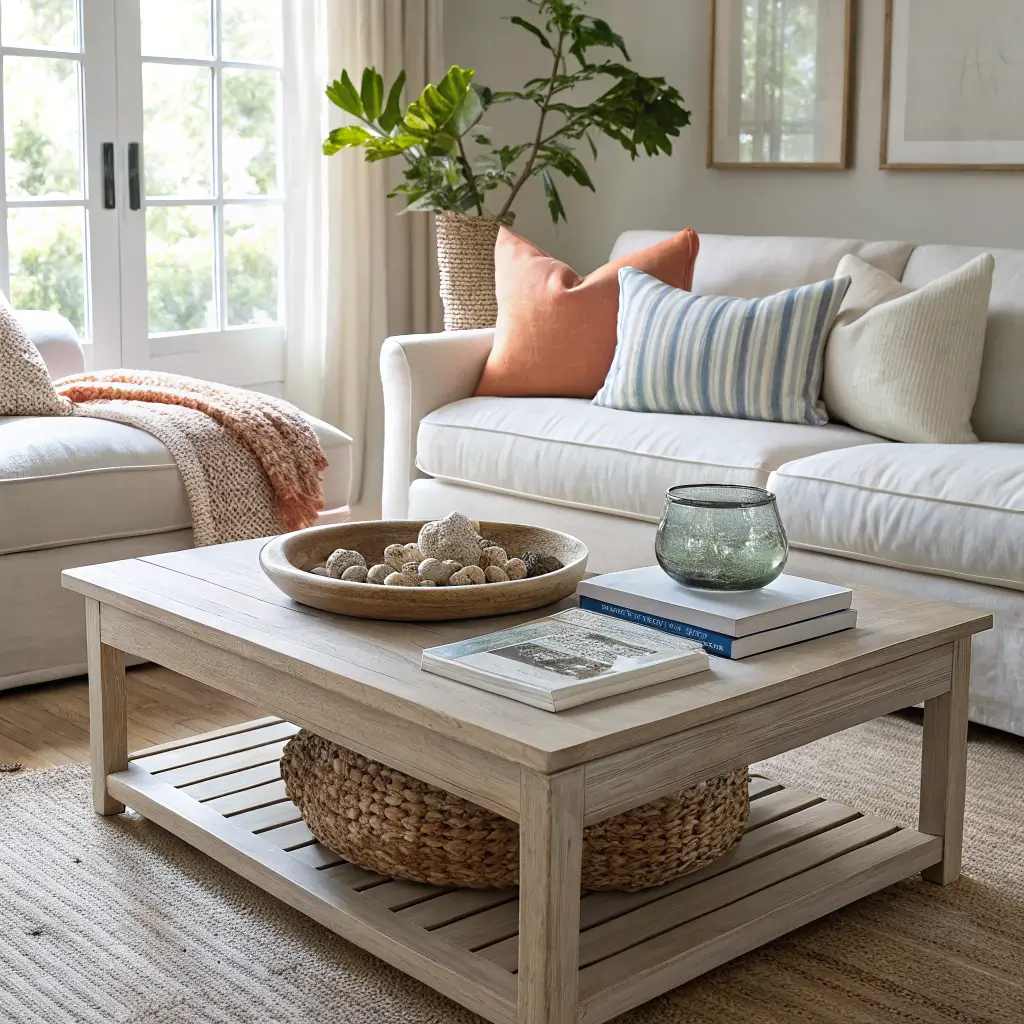
2. A natural-fiber rug. Jute or seagrass, 6’×9′ or 8’×10′ for most living rooms. Front legs of the sofa and chairs go on the rug, not floating off it. This single rule fixes more bad-feeling rooms than anything else.
3. One substantial piece of art. Over the sofa, 36″–48″ wide. An ocean horizon, an abstract blue, a black-and-white beach photo — pick one and commit. Tiny art floating on a big wall is the most common mistake I see.
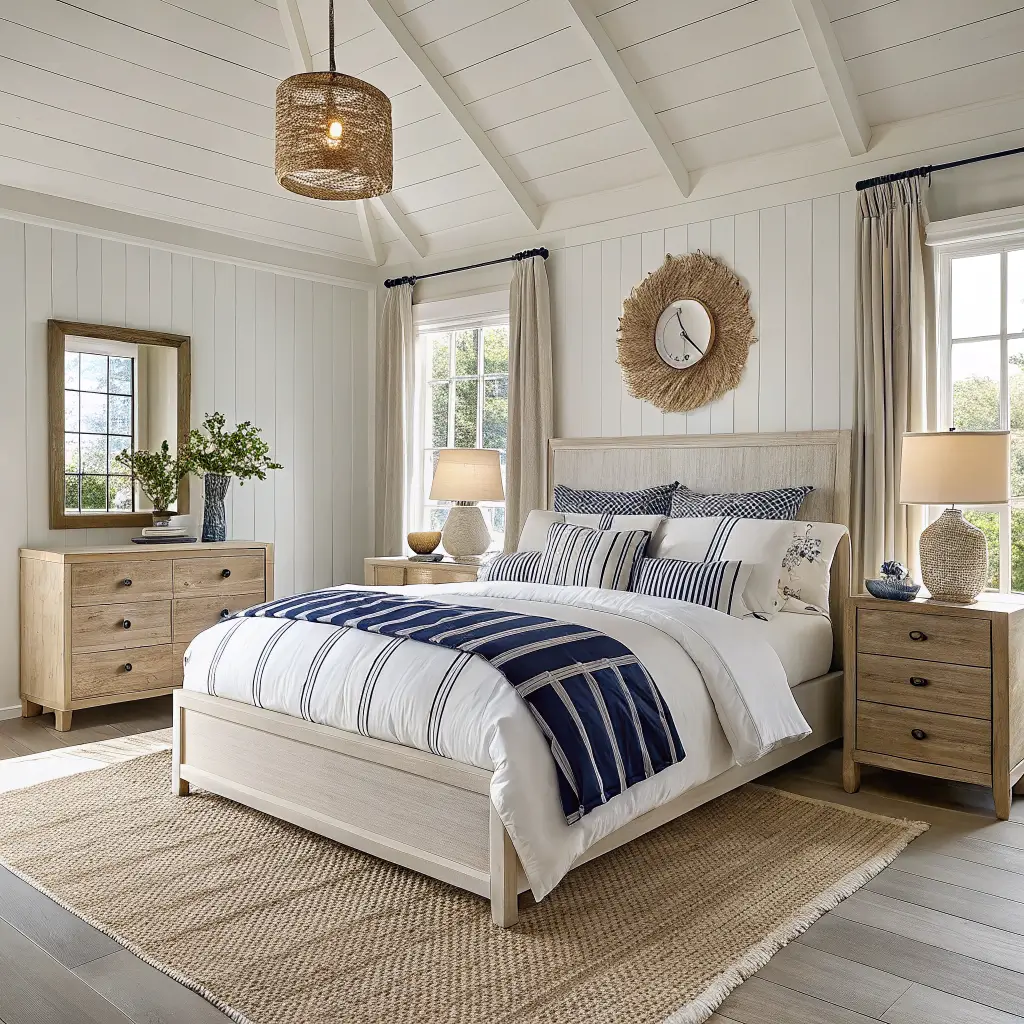
4. Coastal bedding if it’s a bedroom. White or oatmeal duvet, one or two patterned shams (stripes or subtle coral), and a textured throw at the foot.
The Supporting Cast
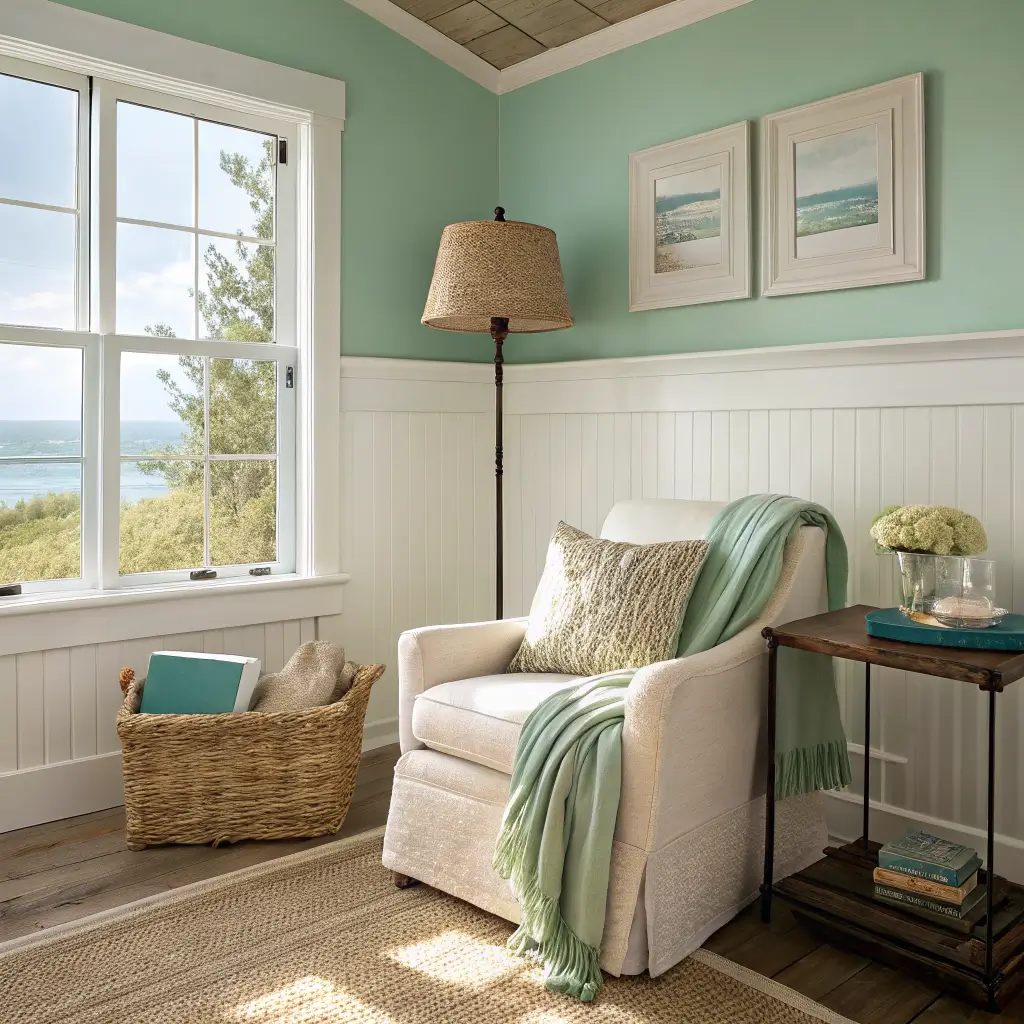
– Throw pillows: 4–6 across a sofa, mixing stripes, solids, and one motif (a starfish or coral print, not three)
– Woven baskets for blankets, plant covers, magazine storage
– Table lamps with rope, glass-bottle, or textured ceramic bases — light linen shades
– A mirror framed in driftwood, whitewashed wood, or rope. Mirrors are huge here because they bounce light the way water does.
– Side tables in white, driftwood finishes, or with cane panels
– Lanterns with real or LED pillar candles for floor corners and consoles
Signature Accessories — Use Sparingly
This is where coastal goes wrong. The fix is brutal restraint.
– Driftwood, shells, and coral grouped in one bowl or tray, not scattered across every surface
– Beach signage: one piece per room, max. A pallet-wood “SEA” or a framed vintage map beats five painted signs.
– Nautical touches (rope knots, a compass, a lantern) — one or two per room
– Indoor plants: a 4-foot kentia palm in the corner past the sofa, or snake plants in seagrass baskets
Treat shells like jewelry. A few good pieces, displayed with intention.
How I’d Actually Build the Room, In Order
1. Paint the walls Dover White or Alabaster. Eggshell finish for living rooms, satin for bathrooms and kitchens.
2. Hang sheer or light linen curtains floor to ceiling, rod mounted 4–6 inches above the window frame. Heavy drapes kill this style instantly.
3. Lay the jute rug. Big enough that the sofa’s front legs sit on it.
4. Center the sofa facing your focal wall or the best window.
5. Add a light or whitewashed wood coffee table and two accent chairs — rattan, cane-backed, or slipcovered.
6. Hang one big piece of art over the sofa, bottom edge 8–10 inches above the back cushions.
7. Style the sofa with 4–6 pillows: two solid 22″ linen squares at the ends, two patterned 20″ in the middle, one lumbar with a motif.
8. Build the coffee table vignette: a wood or rattan tray + 2–3 books + a small bowl of shells or stones + one short candle or trailing plant.
9. Add lamps. Two on a console or one each on side tables. Warm bulbs, 2700K, ideally on dimmers.
10. Drop in one tall plant. A palm, a snake plant, or a tall vase of pampas grass.
The Mistakes I Made So You Don’t Have To
Going too nautical. My first round had a rope-framed mirror, an anchor pillow, a ship-wheel clock, and a “BEACH” sign in one 12-foot room. It looked like a seafood restaurant. Cap overt nautical motifs at 1–2 pieces per room.
Dark, heavy furniture. That mahogany coffee table from my old apartment did not survive the transition. If you can’t replace it, paint or slipcover. A whitewash treatment on a cheap wood table takes an afternoon and changes the whole room.
Too much blue. Blue sofa, blue rug, blue walls, blue art. The room ends up looking like a swimming pool. Keep large surfaces neutral and concentrate blue in textiles and art.
Cluttered shell collections. Every surface dusted with starfish. Group them: one large glass jar full of shells beats fifteen shells lined up on a shelf.
Harsh overhead lighting. Coastal homes feel sunlit, not fluorescent. Three light sources per room minimum — overhead, table, and floor — all on warm bulbs.
Seasonal Swaps That Actually Make Sense
Spring/summer:
– Brighter aqua and turquoise pillows
– A striped indoor/outdoor rug layered over the jute
– Bowls of fresh shells, glass floats, white slipcovers
Fall/winter:
– Chunky knit cream or oatmeal throws
– Swap aqua pillows for warm sand, rust, deeper indigo
– Brass candleholders, dried pampas grass, woven pumpkins instead of orange ones
– Pine garlands with shells and starfish ornaments at the holidays — sounds weird, looks great
Cheapest Ways to Refresh Without Buying More Stuff
– Repaint one wall. A weekend and $40 in paint gets you further than $300 in pillows.
– Peel-and-stick wallpaper in a powder room or behind open shelves. Renter-safe, removable, and a single niche transforms fast.
– Thrift the wood pieces. I found a solid pine end table at a Goodwill for $12, sanded it down, gave it two coats of a whitewash mix (one part Alabaster to one part water), and it looks like a $200 piece.
– Swap hardware. Brushed nickel or rope drawer pulls on a basic dresser instantly shift the feel.
– Rearrange before you buy. Move the sofa. Move the rug. Try the lamp on the other side. Most rooms that feel “off” don’t need more stuff — they need the stuff in a different place.
The version of coastal that actually feels like a beach house — the kind you’d want to spend a weekend in — isn’t about how many shells you can fit on a shelf. It’s the linen curtain moving in the breeze, the warm lamp glow at dusk, the bare feet on a jute rug. Build for that and the rest takes care of itself.
Conclusion
The coastal beach decor that does not make me cringe is in a rental in the Outer Banks where the owner has hung a hammock on the porch, left a basket of beach towels by the door, and filled the bookshelf with paperback mysteries and field guides to local birds. There are no decorative oars, no rope-wrapped mirrors, no signs that say ‘Life’s a Beach.’ Just the things you actually need when you are at the beach, and the space to use them.
More Decor Ideas to Explore
- Coastal Bathroom Decor: How to Get the Beach-House Look Without the Souvenir-Shop Vibe
- Very Small Bathroom Ideas: What Actually Works in 15–45 Square Feet
- Coastal Room Decor That Doesn’t Look Like a Theme Restaurant: A Real-World Guide
- Coastal Minimalist Decor: A Real Guide to Getting the Light, Calm Beach-House Look (Without the Seashell Clichés)