Very Small Bathroom Ideas: What Actually Works in 15–45 Square Feet
If you’re searching for very small bathroom ideas, you’ve probably already stood in your bathroom doorway and thought: there is no way to make this feel like anything other than a closet with plumbing. I’ve been there. My first apartment bathroom was 5×6 with a tub that swallowed half the room, a pedestal sink, and a medicine cabinet so shallow it couldn’t hold a bottle of mouthwash standing up. I made every mistake on the list below before I figured out what tiny bathrooms actually need.
Here’s what I’ve learned from redoing three of them — one rental, one condo, one 32-square-foot hall bath in a 1940s house.
The Look: Modern Minimal with Warmth
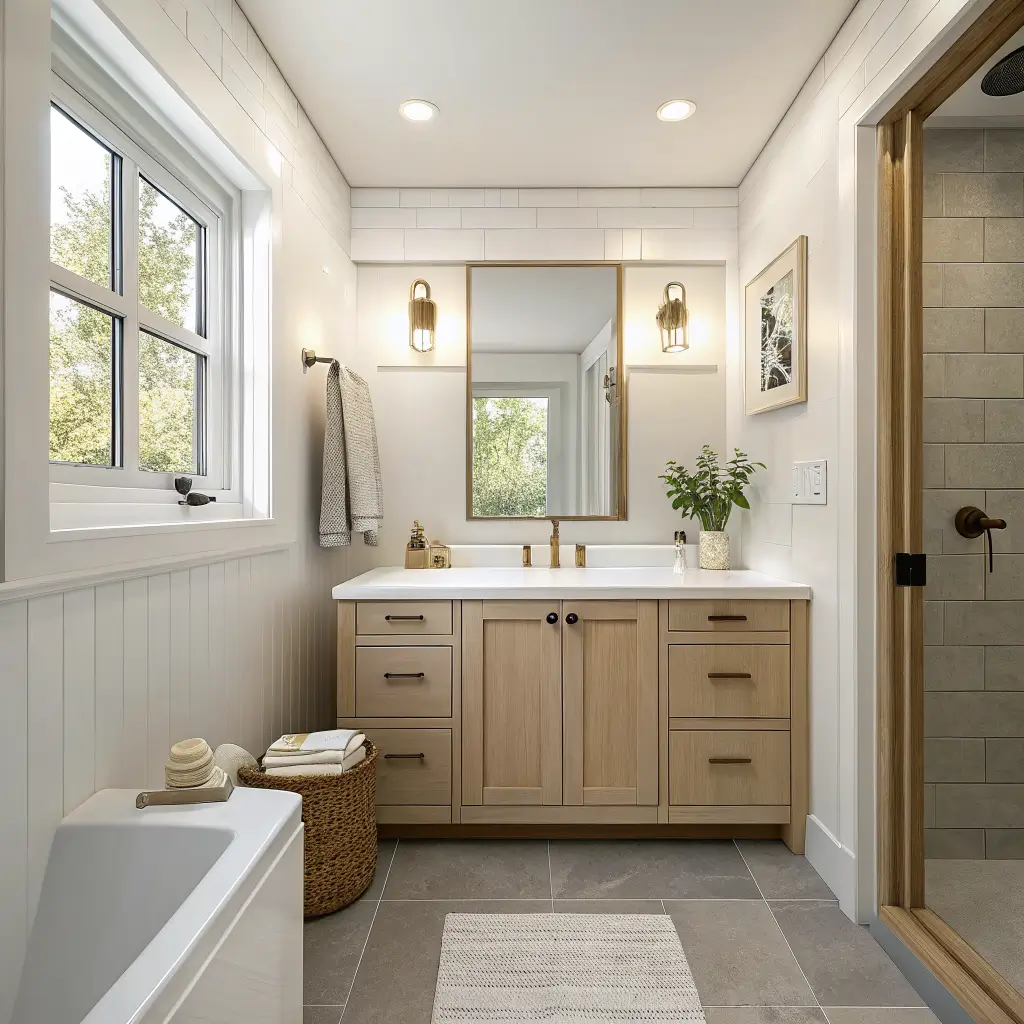
The style that works in a very small bathroom is some version of modern minimal — light, quiet, and edited — with one or two warmer influences layered in so it doesn’t feel like a dentist’s office.
The three flavors I keep coming back to:
– Scandi: white walls, pale wood, soft contours, almost no visible clutter.
– Modern organic: stone, matte ceramics, a single trailing plant, brushed brass.
– Urban spa / wet room: continuous tile, glass shower panel, dark grout, moody lighting.
Who it’s for: anyone in a city apartment, an older house with a stingy hall bath, a tiny home, or a rental where you can’t move walls. If you have 15 to 45 square feet to work with, this is the playbook.
What It Costs (Real Numbers)
I’ll skip the “it depends” answer and give you the brackets I’ve actually spent in.
Budget cosmetic refresh: $150–$500
– Peel-and-stick floor tile: $1.50–$3.50/sq ft
– Shower curtain + heavy liner: $25–$80
– Framed mirror: $40–$120
– Matte black towel bar + hooks set: $40–$100
– A weekend of your time
Mid-range update: $700–$2,500
– 24″ or 30″ vanity with top and sink: $250–$900
– Recessed medicine cabinet (often lighted): $150–$500
– Frameless glass shower door for a 48″ opening: $400–$1,000 just for the door
– Large-format porcelain floor tile: $2–$6/sq ft
Compact remodel: $3,000–$10,000+
– Wet-room style shower with glass panel, installed: $3,500–$8,000
– Marble or marble-look wall tile: $8–$20/sq ft
– Heated floor mat for a small footprint: $400–$1,200 installed
Skill-wise: paint, peel-and-stick, hardware, and shelving are beginner-to-intermediate. A floating vanity, recessed niche, or glass door is where I call somebody. Moving plumbing always.
Colors and Materials That Hold Up
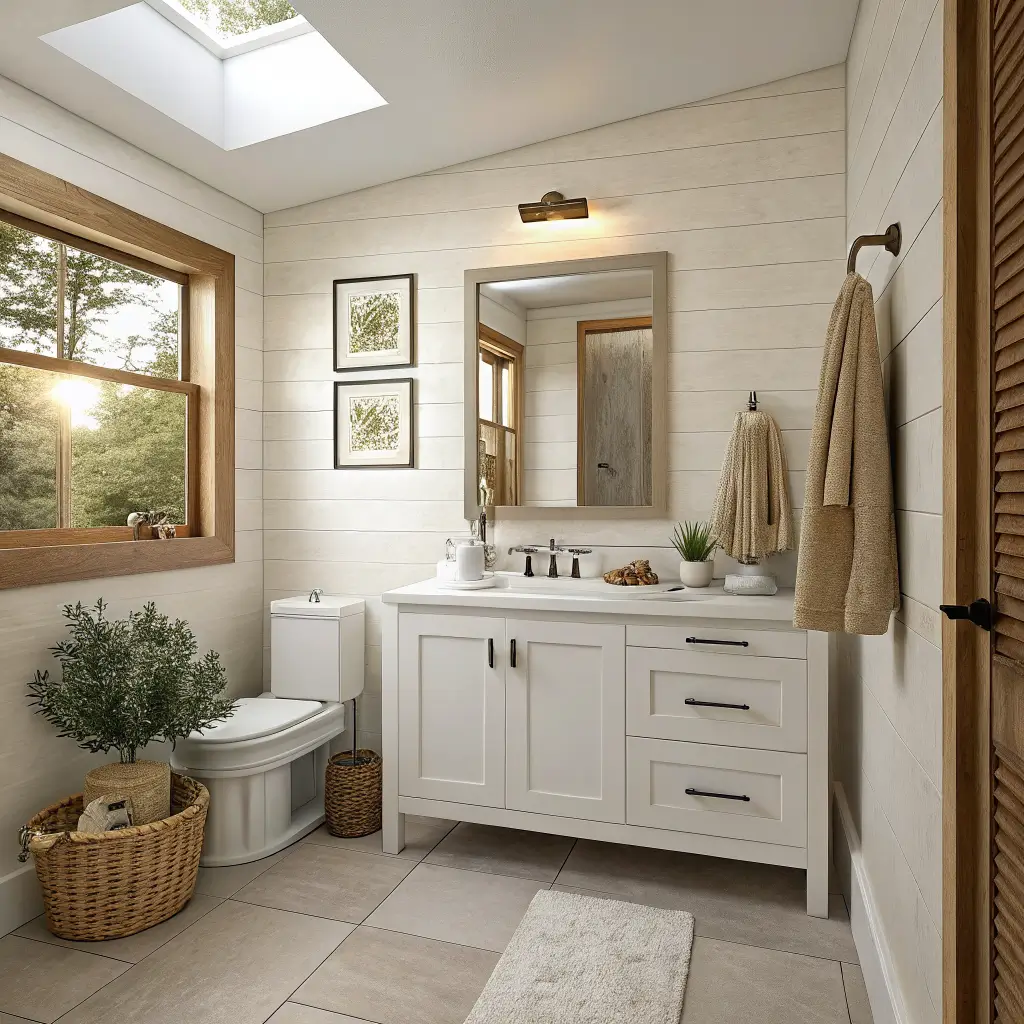
For walls and floors in a tiny bath with little or no natural light, I’d choose a warm white every time. Pure cool whites go bluish under LED bulbs and make the room feel like a hospital. Something in the Swiss Coffee / soft ivory family reads clean but still has warmth. Use the same color on walls, ceiling, and trim — fewer visual breaks, taller-feeling room. This was the single biggest improvement I made in my 32-square-foot bath.
Neutrals worth considering for tile and floors: greige, pale taupe, stone beige. They photograph flat but in person they make the room feel like a hotel instead of a utility closet.
Save the drama for one of two places:
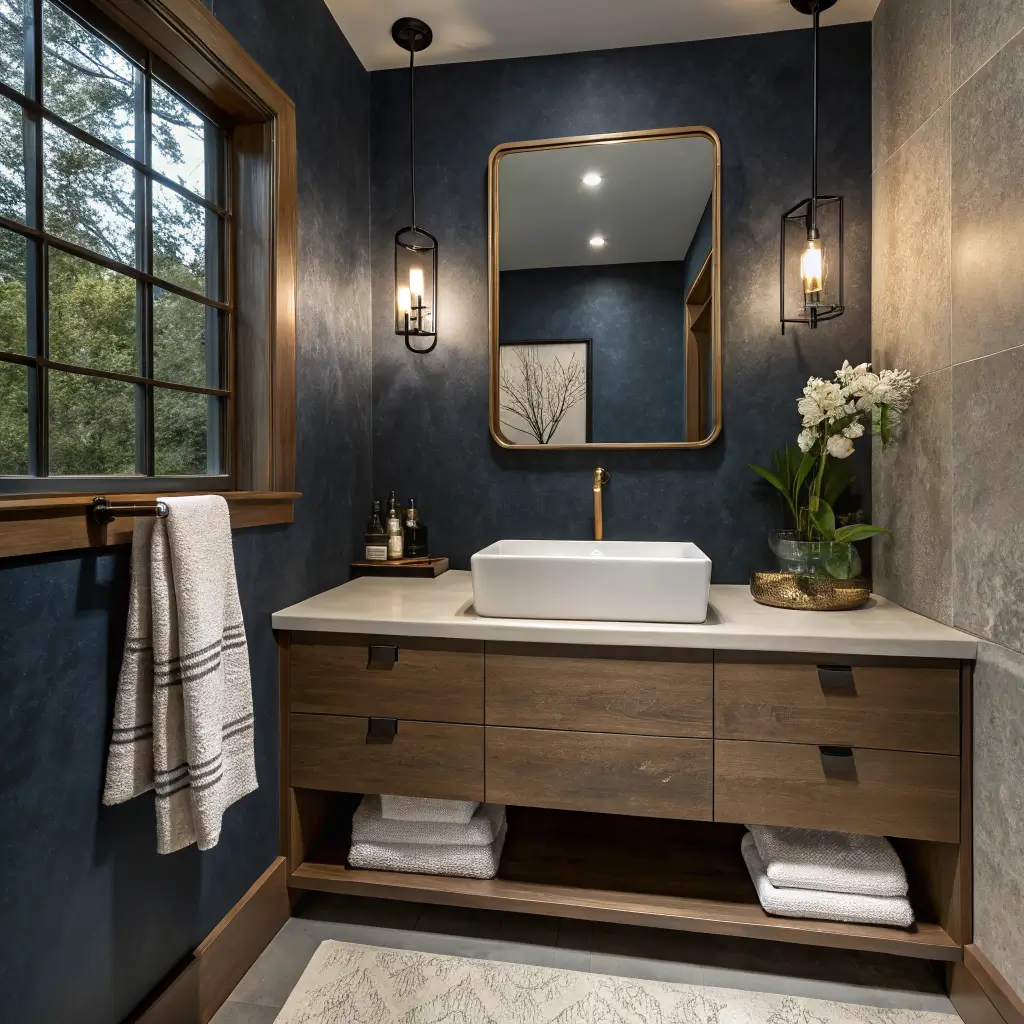
– The vanity (ink navy, charcoal, or forest green looks expensive against a light wall)
– A powder room’s four walls — go ahead and paint it Hague Blue or do a moody wallpaper. Half-baths can take it because nobody lingers.
Metals: pick one and commit. Matte black, brushed brass, or brushed nickel. Mixing two only works if one is clearly dominant and the other is a small accent. In my current bath I made the mistake of buying a brass faucet, then a black towel bar on sale, then brushed nickel hinges came with the vanity. It looked like a hardware aisle. I replaced the hinges and the bar and slept better.
For tile, the rules I follow:
– Large-format porcelain (12×24 or 24×24) on the floor. Fewer grout lines = bigger-looking floor. This is the cheat code.
– Subway tile (2×8 or 3×12), stacked vertically, for shower walls. Vertical stack draws the eye up.
– Wood-look porcelain plank if you want warmth without the water damage of real wood.
– Quartz for the vanity top. One slab, no seams to scrub.
The Pieces That Actually Earn Their Space
A right-sized vanity
In a very small bathroom, the vanity is the most important furniture decision you’ll make. Stick to 24″–30″ wide for baths under 40 sq ft. A 36″ looks great in a showroom and ruins the room you actually have.
A floating (wall-mounted) vanity is worth the extra installation hassle. Seeing the floor continue underneath makes the room read as bigger — I’d estimate it added a foot of visual space in my condo bath. Bonus: nothing collects dust and hair underneath because you can actually mop under it.
Get one with drawers, not just doors. Doors mean a black hole where things go to die. Drawers with dividers mean you can find your nail clippers.
A tall mirror or recessed medicine cabinet
A wide-and-short mirror over the sink is the default and it’s the wrong call. Go taller than you think — close to the ceiling if your light fixture allows. It moves the eye upward and doubles whatever’s behind you.
A recessed medicine cabinet is the storage win people sleep on. You’re using the wall cavity that’s already there. Lighted versions with anti-fog and dimming are around $300–$500 and they replace your vanity light and your mirror in one move.
A glass shower door (if you possibly can)
If you have a shower stall, swap the curtain for a frameless glass panel or door. A curtain visually chops the room in half. Glass lets the eye travel all the way to the back wall. In my 5×7 hall bath this was the single biggest “wait, did you knock out a wall?” change.
If you’re stuck with a curtain (renting, budget), get a clear or very pale fabric one and hang the rod as high as possible — ceiling height if you can. Pretend the curtain is a window treatment, not a privacy screen.
Storage Without Bulk
The mistake everyone makes: adding furniture. Don’t add furniture. Use the walls.
– Over-toilet shelving or a narrow cabinet, mounted at least 12″ above the tank. Two open shelves for rolled towels and a small basket of overflow.
– A recessed shower niche at chest height, tiled to match (boring) or in a contrast tile (more interesting). Mine has a strip of the same marble-look I used as a feature behind the vanity.
– Hooks instead of bars. Hooks take a quarter of the wall space and people actually use them. Two staggered rows beat one long towel bar every time.
– Back-of-door organizer for hair tools, lotions, the stuff that has no real home.
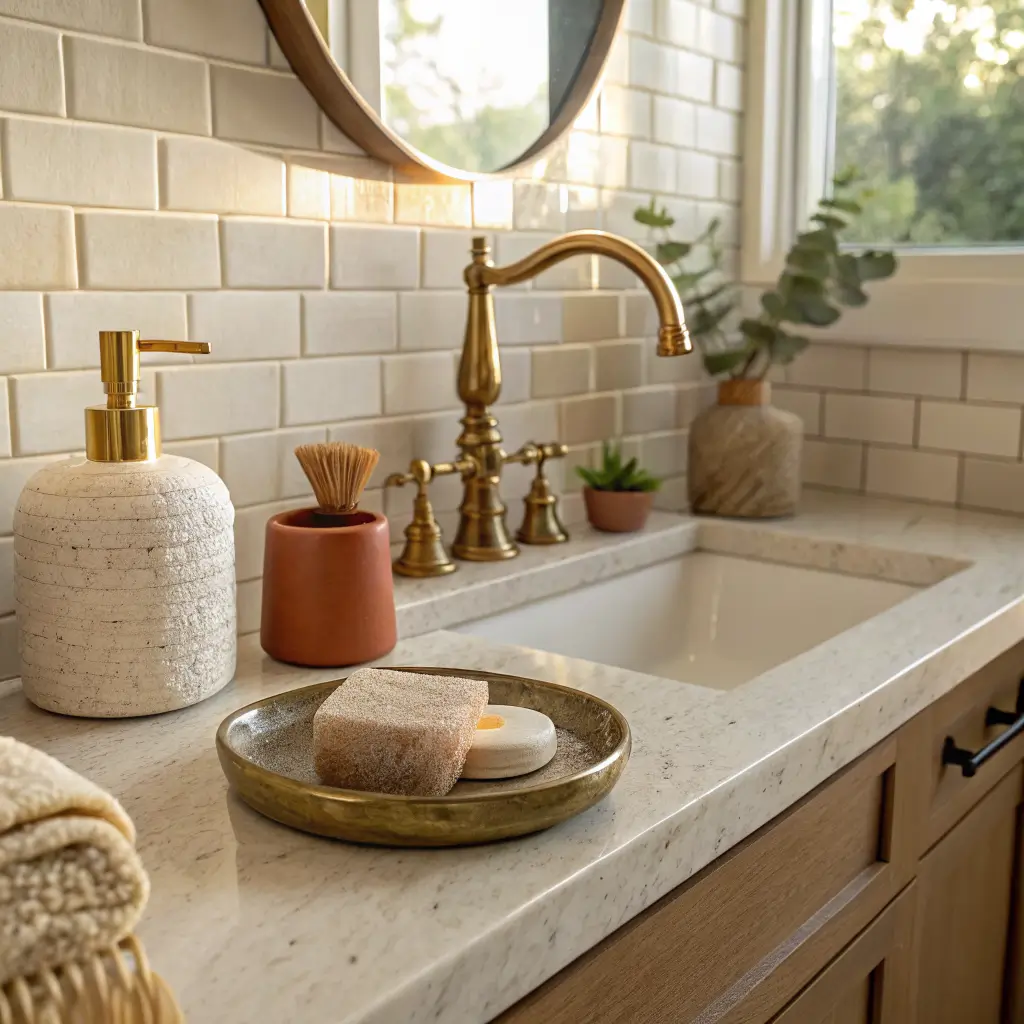
– A small tray on the vanity for the three or four things that genuinely live out (hand soap, a small plant, maybe a candle). Everything else goes in a drawer.
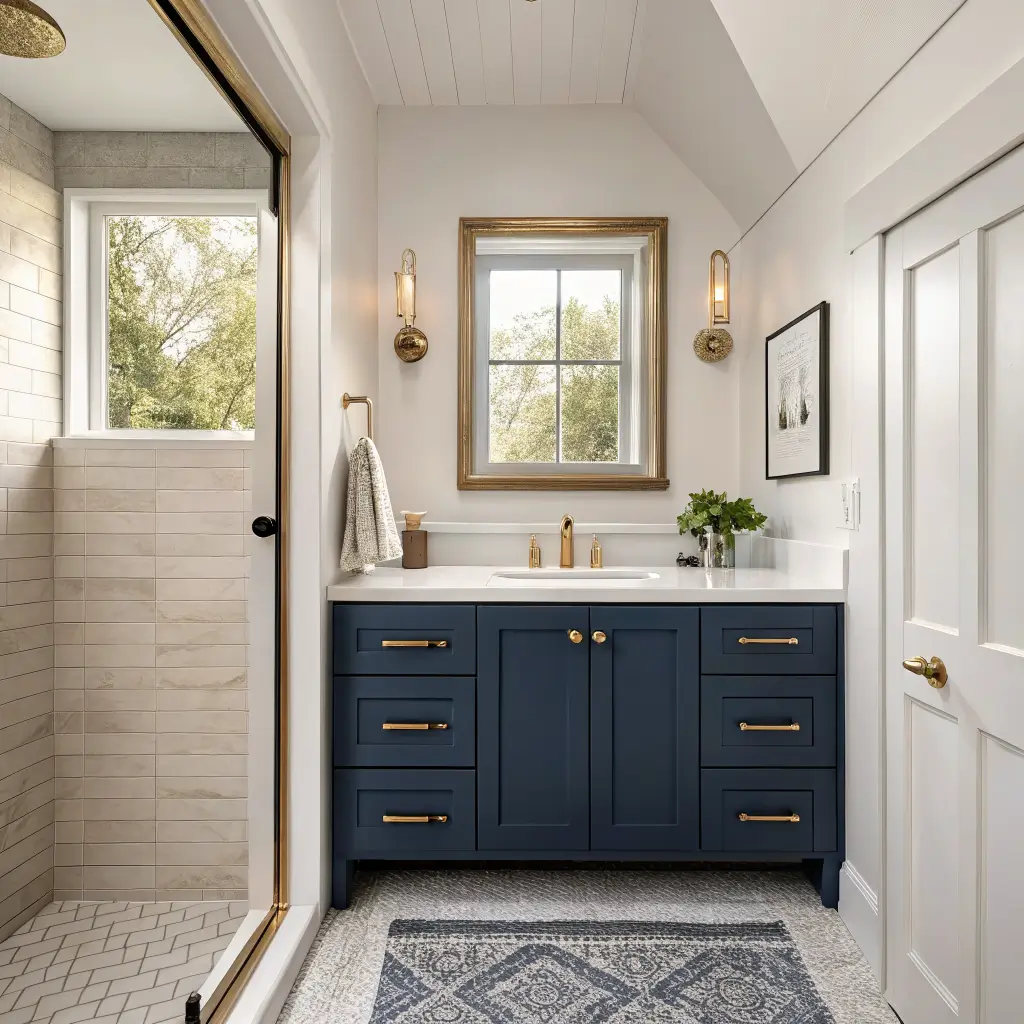
A Layout That Reads as “Designed”
If I were styling a very small bathroom from scratch, this is the order I’d go in:
1. Empty everything. Counters, shelves, the basket on the toilet tank. All of it. Then photograph the room from the doorway. You need to see the bones.
2. Install the big stuff first: vanity, mirror or medicine cabinet, lighting. Make sure cabinet doors don’t bang into sconces. I learned this twice.
3. Pick your single focal point. A patterned floor, OR a feature wall behind the vanity, OR a dramatic mirror. Not all three. Pick one and let the rest be quiet.
4. Run the floor tile into the shower if you’re retiling. Same tile, no threshold strip, no visual cut. The room reads as one space.
5. Add textiles last and sparingly. One bath mat, two or three towels in the same color, done.
6. Stand in the doorway. What do you see first? It should be the mirror or the vanity. If it’s the toilet brush, move the toilet brush.
Lighting: aim for 3000K–4000K bulbs. Below 3000K and the room turns yellow and dingy. Above 4000K and you look like you’re being interrogated. If you can fit sconces flanking the mirror, do it — they light your face from the sides and erase under-eye shadows. If you can’t, a horizontal bar light above the mirror is fine.
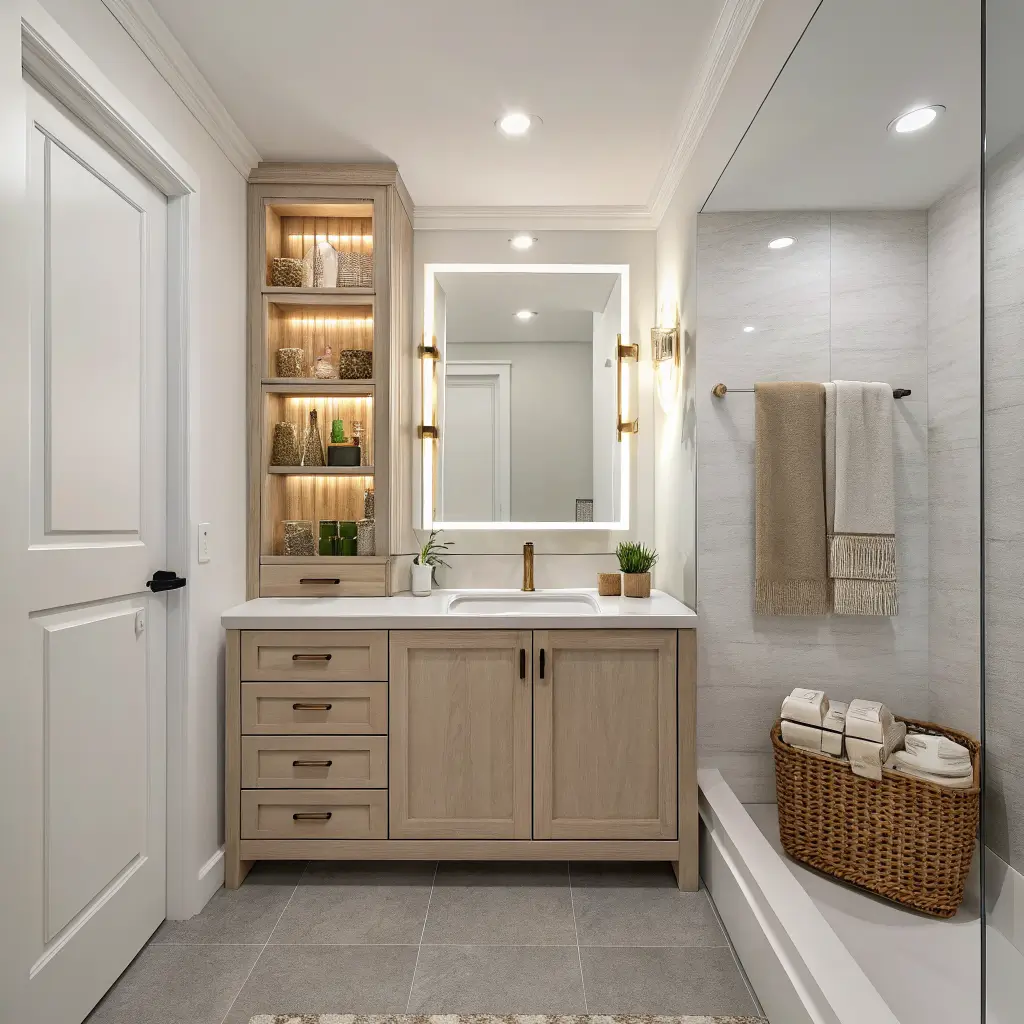
The Mistakes I See Constantly
Cramming in a full-depth vanity. A 21″-deep vanity in a 5-foot-wide room means you turn sideways to get past it. There are 18″-deep vanities. Use them.
Too many patterns. I once had encaustic floor tile, a striped shower curtain, a patterned bath mat, and floral hand towels in a 30-square-foot bath. It looked like a thrift store exploded. Pick one pattern, keep everything else solid.
A tiny mirror over the sink. Builder-grade special. Replace it with something that goes nearly to the ceiling.
One sad overhead light. Add a second source — a sconce, a lighted mirror, even a plug-in puck light inside a glass cabinet. Layered light is what makes a bathroom feel expensive.
A pedestal sink in a family bath. Charming for a powder room, terrible if more than one person needs to store toothpaste. Get a vanity with drawers.
An oversized tub. If you don’t take baths, rip it out. A shower-only layout buys you 18 inches of life back. If you do take baths or you’re worried about resale, look at compact tubs under 54″ — they exist and they’re fine.
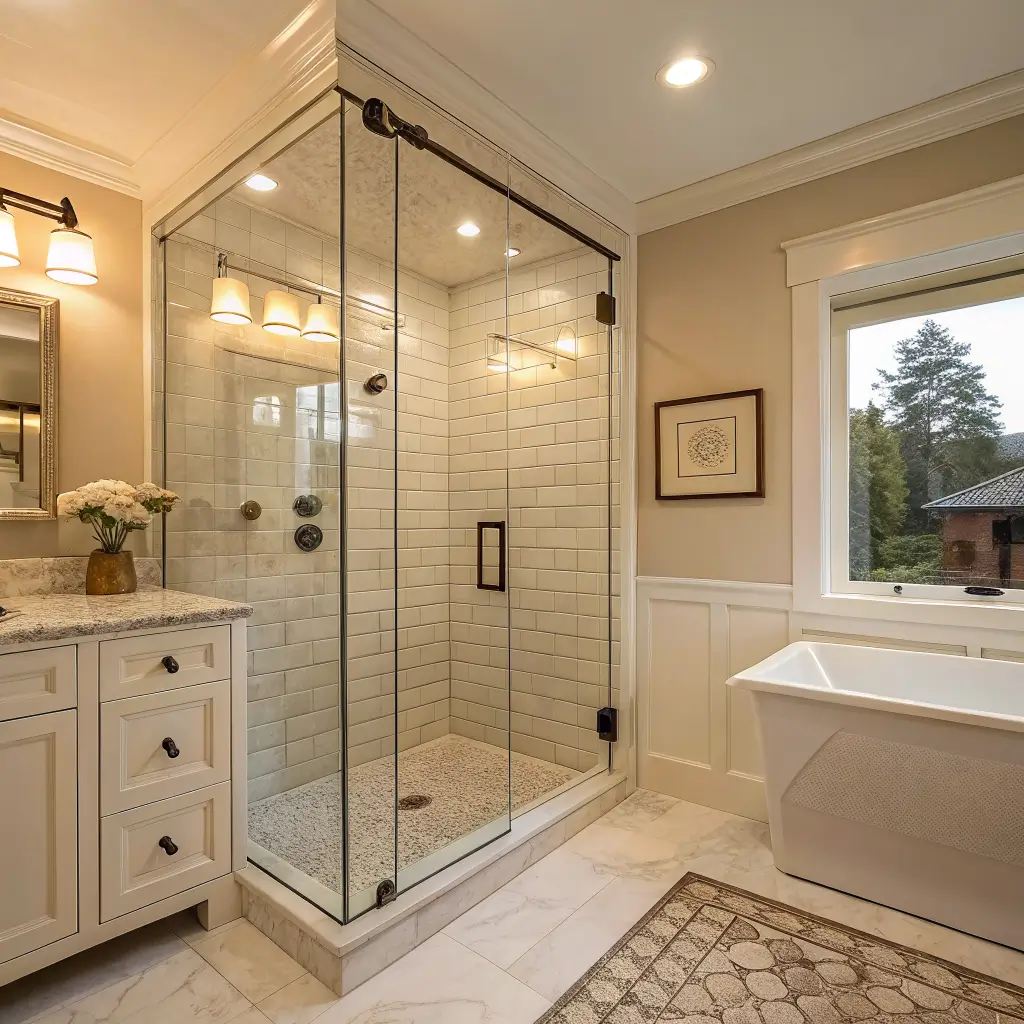
Easy Updates by Budget
If you’re staying a while and the budget is tight, this is the order I’d spend in:
1. Hardware and textiles (under $200). New pulls, faucet handle if you can swap it, towel hooks, towels, bath mat.
2. Paint and a bigger mirror ($100–$300). Warm white walls, taller mirror.
3. Lighting ($150–$500). Sconces or a lighted medicine cabinet.
4. Peel-and-stick floor tile or an accent wall ($100–$300). Looks permanent, isn’t.
5. Glass shower door ($400–$1,000+). The biggest spatial payoff.
6. Vanity swap ($300–$1,000+).
7. Real tile work. Last because it’s the messiest and most expensive.
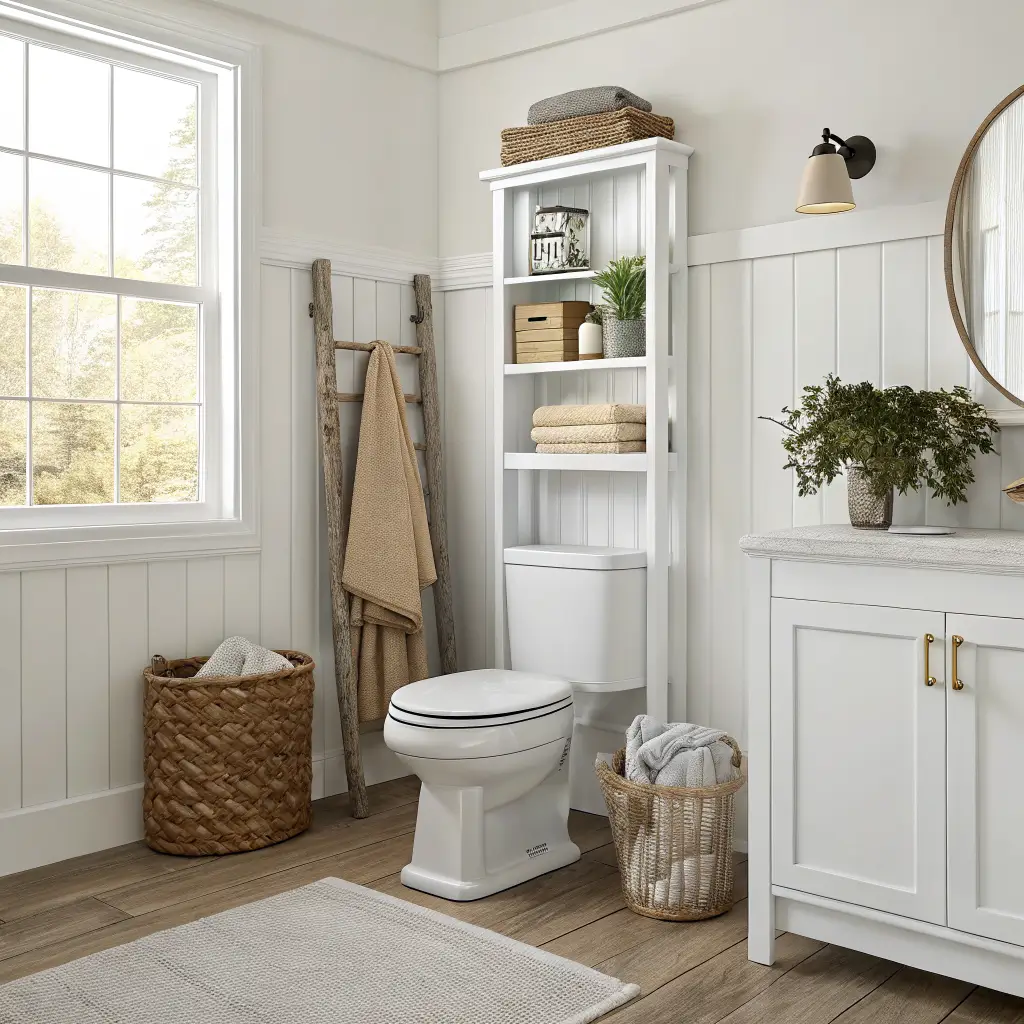
Seasonal Tweaks Without Adding Clutter
Rotate three things and call it good: hand towels, the candle or diffuser on the tray, and one stem of greenery. In fall I do rust-colored linen towels and a small jar of dried wheat. In summer it’s white waffle towels and a single eucalyptus stem in a clear bud vase. That’s the whole “seasonal refresh.” Anything more in a 30-square-foot room is just stuff to dust.
Two Cross-Style Combinations Worth Trying
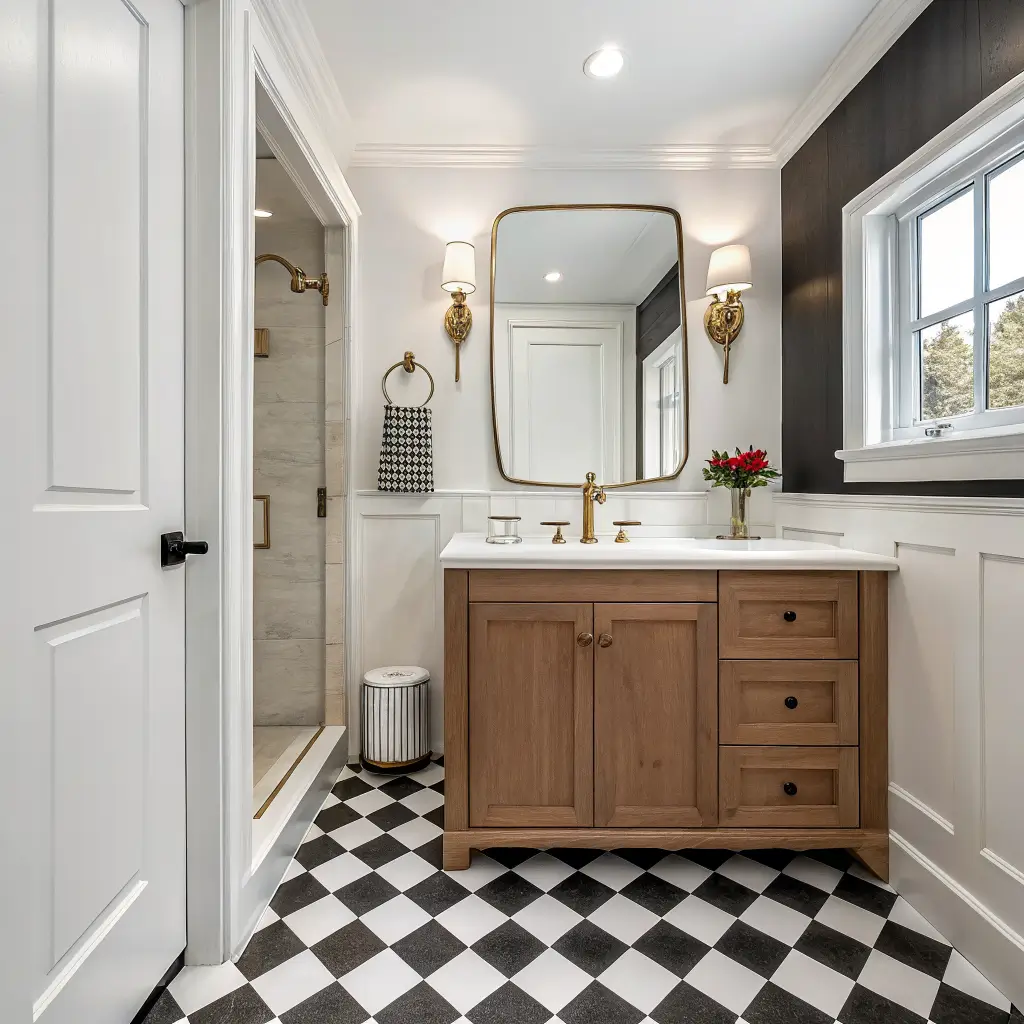
Modern + vintage: floating white vanity, brass faucet, oval vintage mirror with a thick gilt frame, black-and-white checkerboard floor (peel-and-stick works). The vintage mirror keeps the modern lines from feeling cold.
Coastal + boho: warm white walls, sandy beige floor tile, a small woven pendant in place of a flush mount, jute bath mat, one striped hand towel, a piece of driftwood or a small framed line drawing. Skip the seashells in a jar — it ages the look immediately.
The thing nobody tells you about a very small bathroom is that the size is actually an advantage. You can afford the nicer tile because you need so little of it. The marble that would bankrupt you in a primary bath costs $200 here. Spend on the few things that touch your hands and eyes every day — the faucet, the mirror, the light — and let the rest be plain.
Conclusion
The very small bathroom ideas that worked for my mother came from a room that was 15 square feet with a sloped ceiling and a window that looked at the neighbor’s fence. She painted the walls a warm white, added a clawfoot tub that was only four feet long, and hung a curtain instead of a door. The room felt like a cottage, not a compromise, because she had chosen every piece to fit the space instead of fighting it.
More Decor Ideas to Explore
- Very Tiny Bathroom Ideas: How to Style a Micro Bath That Actually Works
- Little Apartment Decor: How to Make 350–650 Square Feet Actually Feel Like Home
- Coastal Minimalist Decor: A Real Guide to Getting the Light, Calm Beach-House Look (Without the Seashell Clichés)
- Coastal Bedroom Decor: How to Get the Modern, Calm Version (Without the Seashell Clichés)