What This Style Actually Is (And Who It’s For)
Think bright contemporary with a playful streak. Not theme-park primary. Not muted sage-and-cream “tasteful nursery” either. Somewhere in between: a clear color story, real furniture, and accents the kid actually picked.
This works for:
– Toddlers through about age 10
– Shared sibling rooms where two kids want two things
– Nursery rooms you’re aging up without starting from scratch
– Small bedrooms that need personality without losing floor space
Time: A weekend gets you a refresh — new textiles, swapped art, repainted accent wall. A full makeover with furniture and storage runs 1–2 weeks if you’re working around a job and a kid who keeps “helping.”
Budget: I’ve done a solid refresh for around $300 (IKEA TROFAST bins, a Target rug, two gallons of Benjamin Moore, secondhand dresser). A full redo with new bed, storage, paint, textiles, and art lands closer to $1,200–$1,500. Built-ins or custom wallpaper pushes higher.
Skill level: If you can roll paint and assemble flat-pack, you can do 90% of this. Murals and wallpapered ceilings are a different conversation.
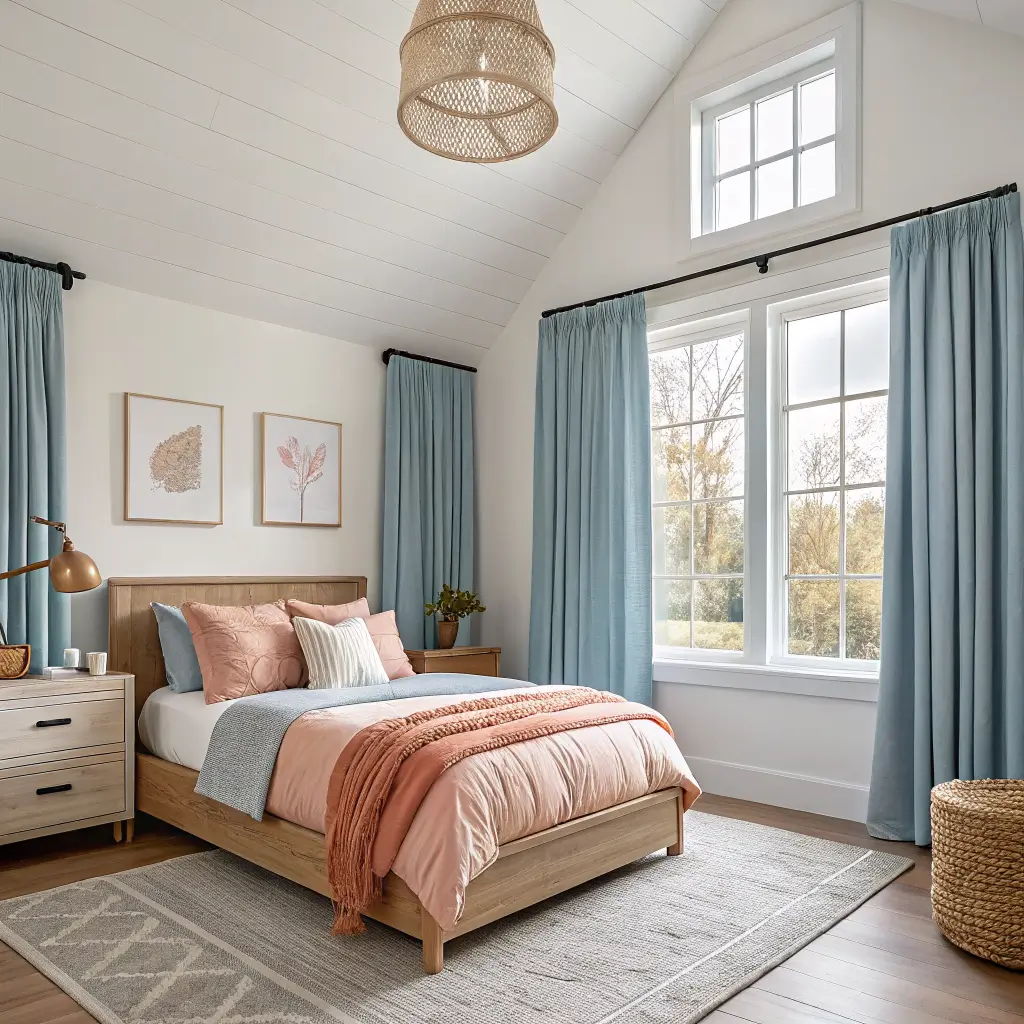
The Color Decision That Actually Matters
Before you buy anything, lock the palette. This is where it goes sideways for most people.
Pick one dominant, one secondary, one or two accents. That’s it. My current rule: 60% calm base (walls, big furniture), 30% main color (bedding, rug, or a painted feature), 10% accent (art, pillows, a lamp).
Some combinations I’d actually use, most of them lifted or adapted from Benjamin Moore’s kids’ room palettes:
– Honeybee CSP-950 + Teacup Rose 2170-50 — warm and happy, reads sunny without being babyish
– Hint of Violet 2114-60 + Fernwood Green 2145-40 — softer, gender-neutral, ages up well
– Sweet Melon 121 + Airway 828 — coral and dusty blue, my personal favorite for a shared room
– Serenata AF-535 + Morning Walk CSP-880 — calm pastels with a bright wake-up
For the base, I keep coming back to Paper Mache AF-25 or White Down OC-131. They’re off-whites with enough warmth that bold colors don’t look harsh against them, and you don’t have to repaint when your seven-year-old decides purple is over.
Paint finish matters more than people think. Use eggshell or satin on walls (eggshell for most rooms, satin if your kid is a wall-toucher), and semi-gloss on trim and doors. Flat paint and kids do not coexist. I learned that with crayon and a magic eraser that took the paint off with it.
The Hero Pieces
A colorful kids room needs a few anchors doing real work. Everything else is supporting cast.
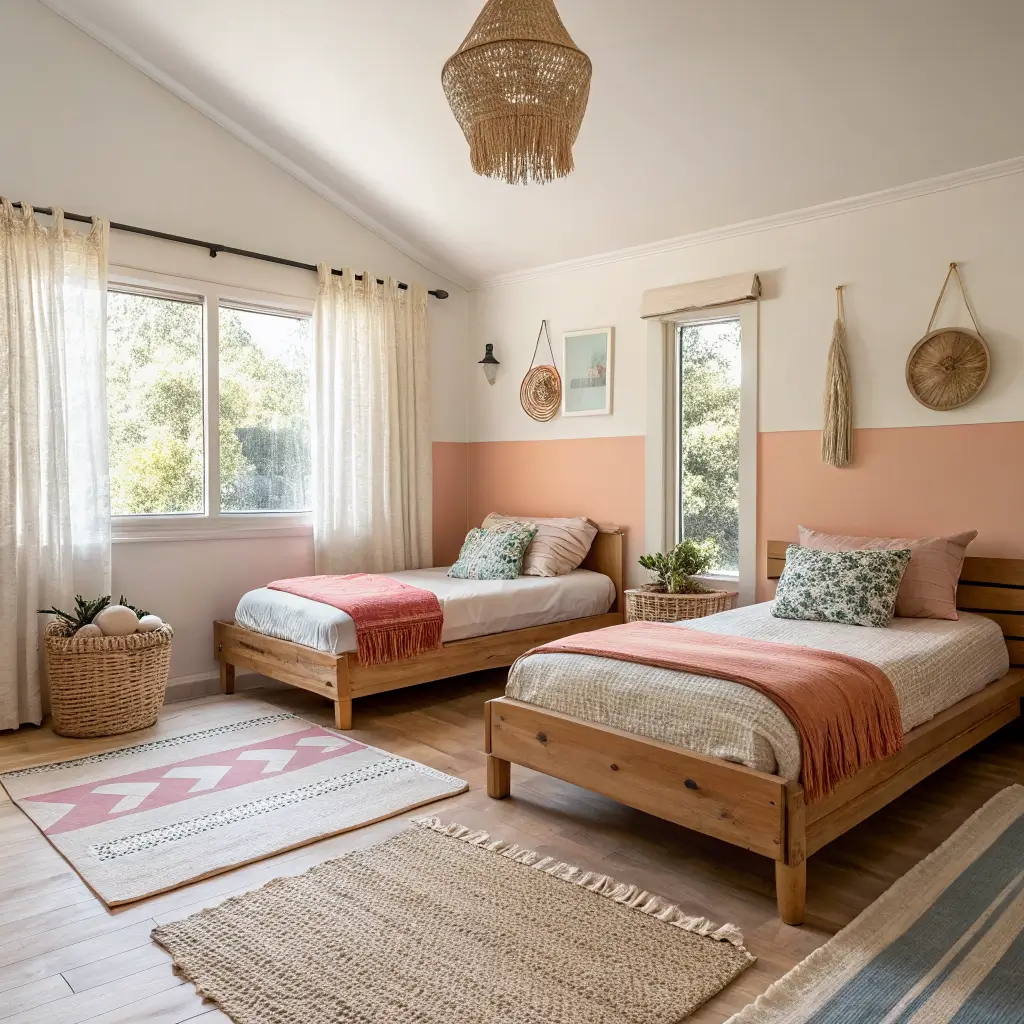
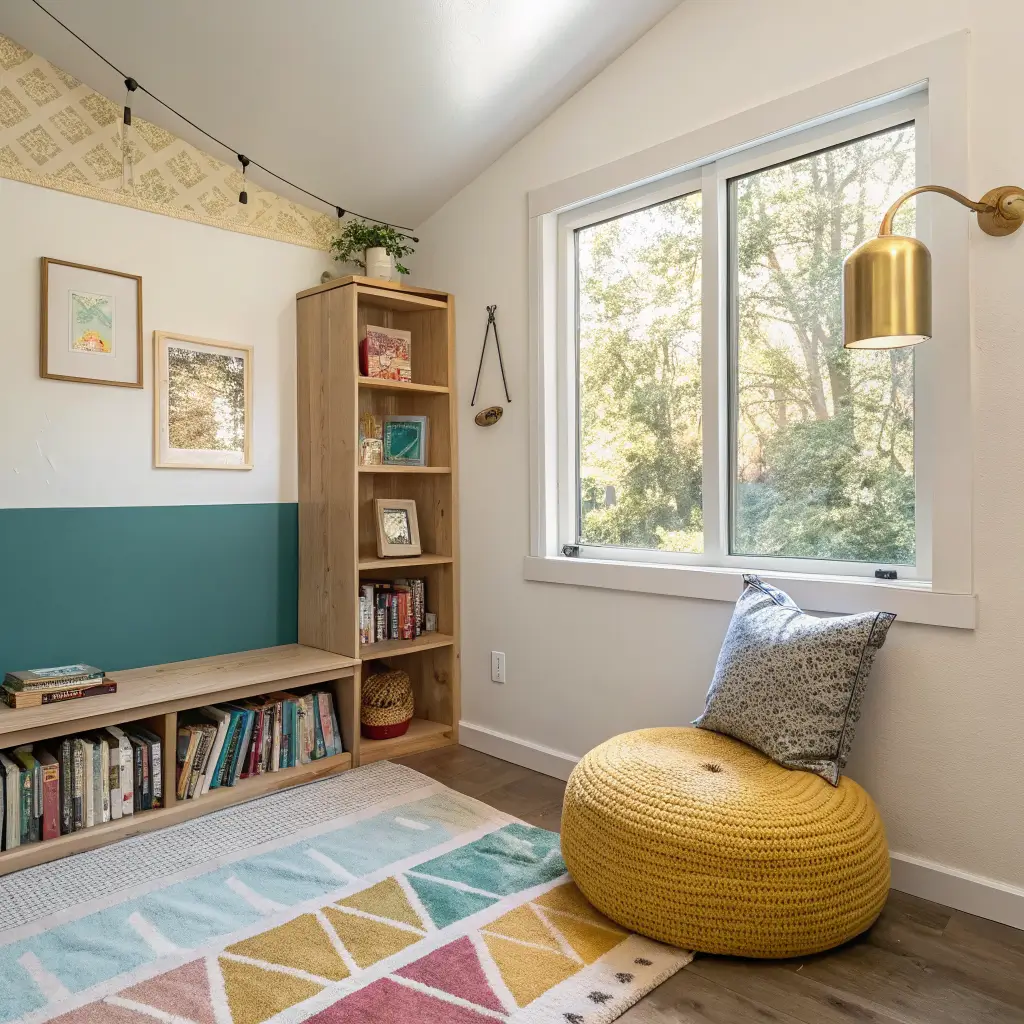
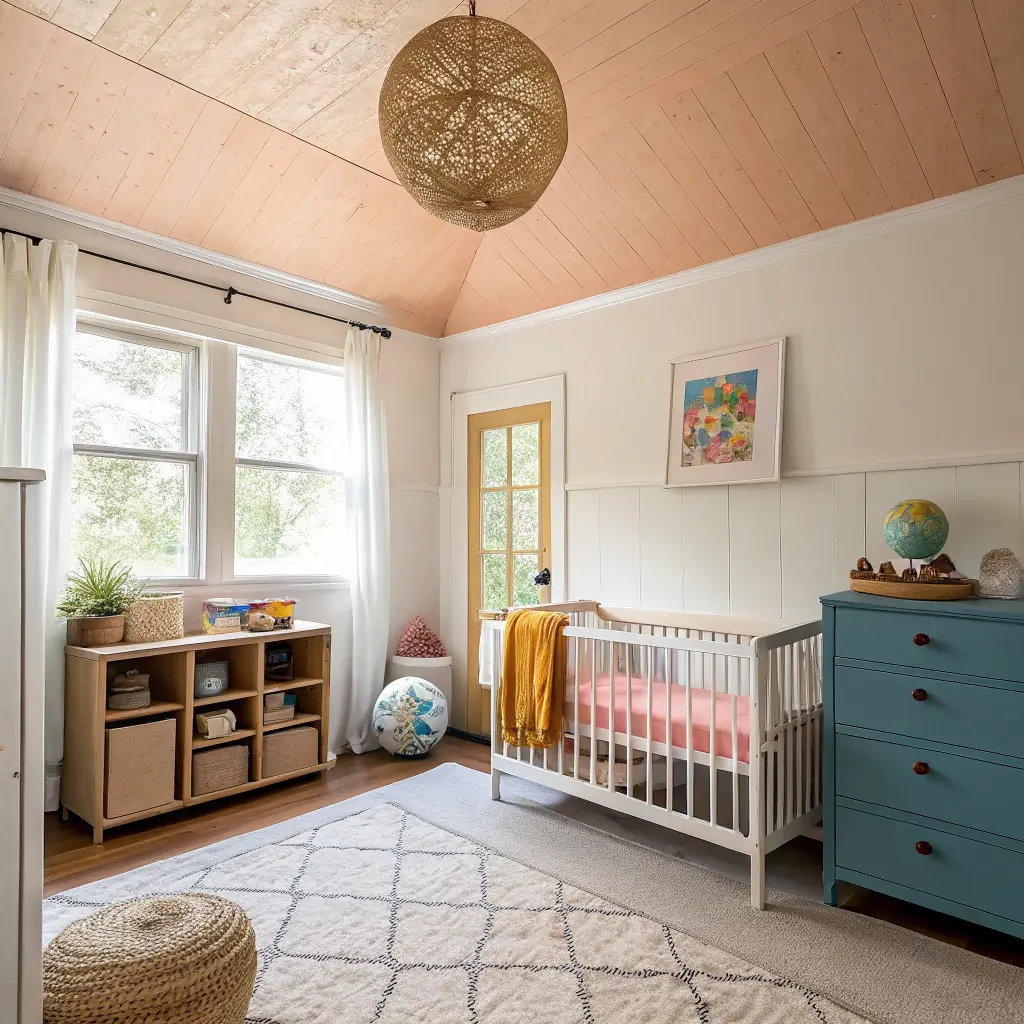
The wall. One painted accent wall, a color-blocked half-wall, or — my favorite trick — a painted ceiling. A pale peach or buttery yellow ceiling makes the whole room feel warmer and costs you one gallon of paint. It’s the kind of thing kids notice from their bed.
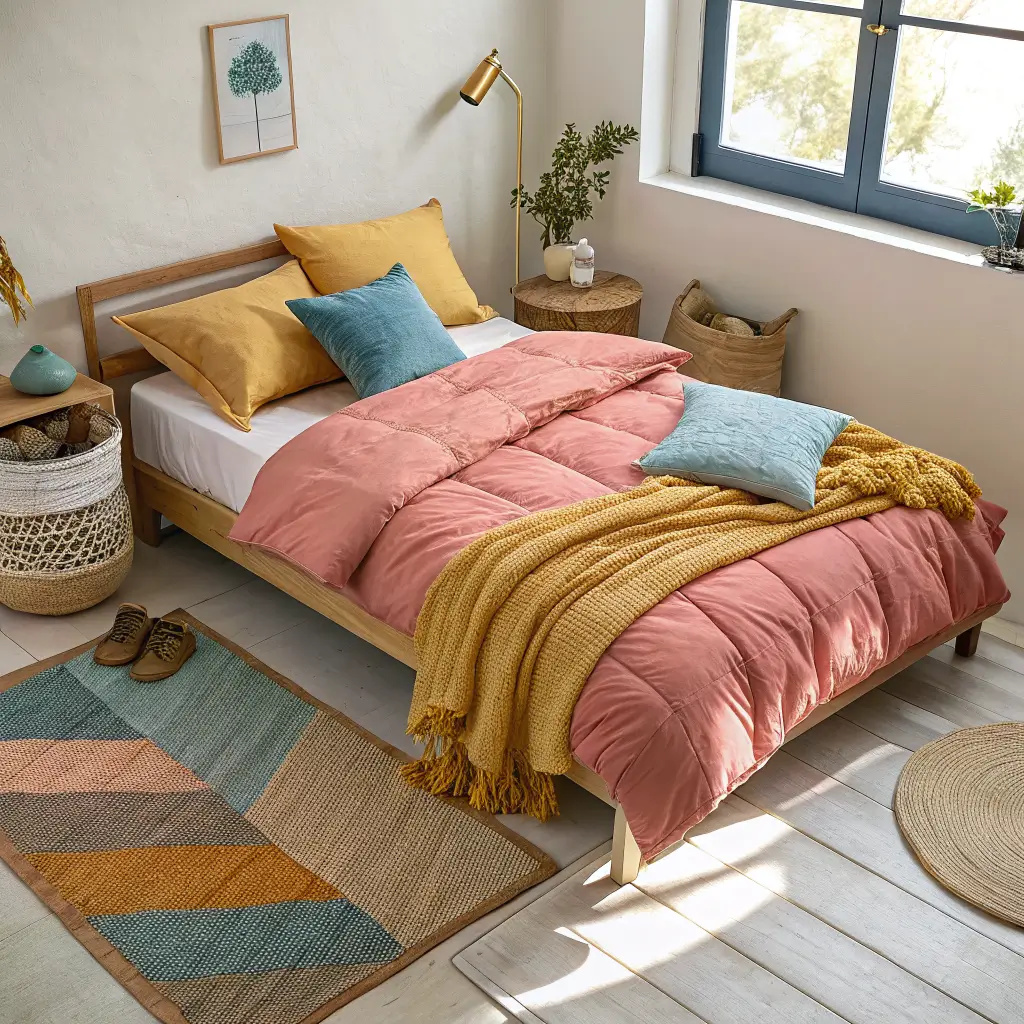
The bed. A simple frame in natural wood or a single bold color. I’d rather have a clean-lined bed in tomato red than a fussy white one with a million spindles. If you’re doing bunks for siblings, keep them low-profile so the room doesn’t feel boxed in.
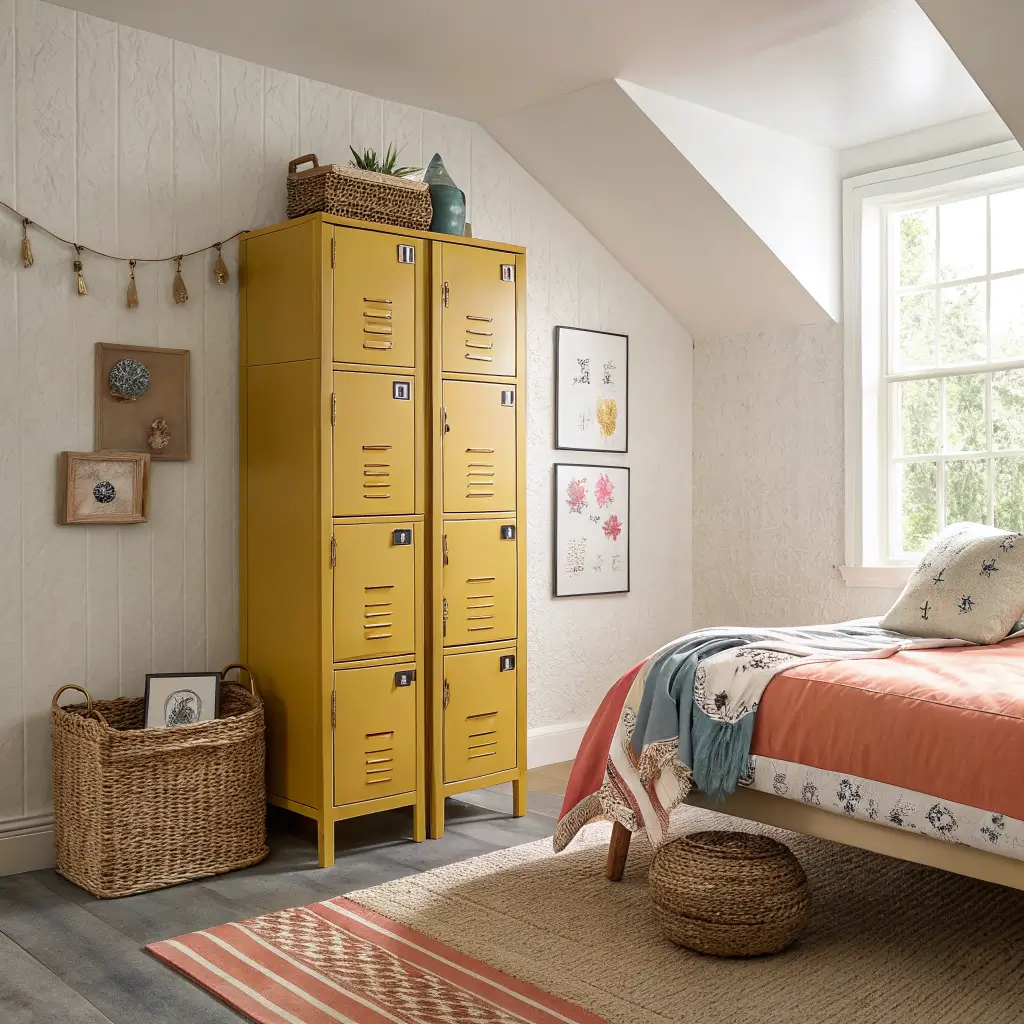
Storage that earns its place. This is the difference between “colorful” and “chaotic.” Mustard Made lockers are the splurge version — they come in mustard, berry red, sage, and slate, and they double as the room’s statement piece. The budget version is IKEA TROFAST (around $50–$100 depending on size) with mixed-color bins, or painted thrifted cabinets.
Rug. Patchwork or a flat-weave with two or three of your palette colors. Skip plush pile. You’ll be vacuuming Cheerios out of it for years.
Textiles. Duvet cover, two pillow shams, curtain panels, one floor cushion. That’s enough. Each one should pull from the palette, not introduce new colors.
Lighting. A wall sconce by the bed for reading, a ceiling fixture that isn’t a flush-mount disc, and a warm night light. I put a brass sconce in my daughter’s room and it changed the whole feel — suddenly it looked styled, not stocked.
How to Put It Together Without It Getting Loud
Order of operations:
1. Paint first. Walls, ceiling, any built-ins. Do this before furniture lands.
2. Place the big stuff. Bed, dresser, storage. Live with it a few days before committing.
3. Layer textiles. Bedding, rug, curtains.
4. Add storage and shelving. Books on the bookshelf, bins where they belong.
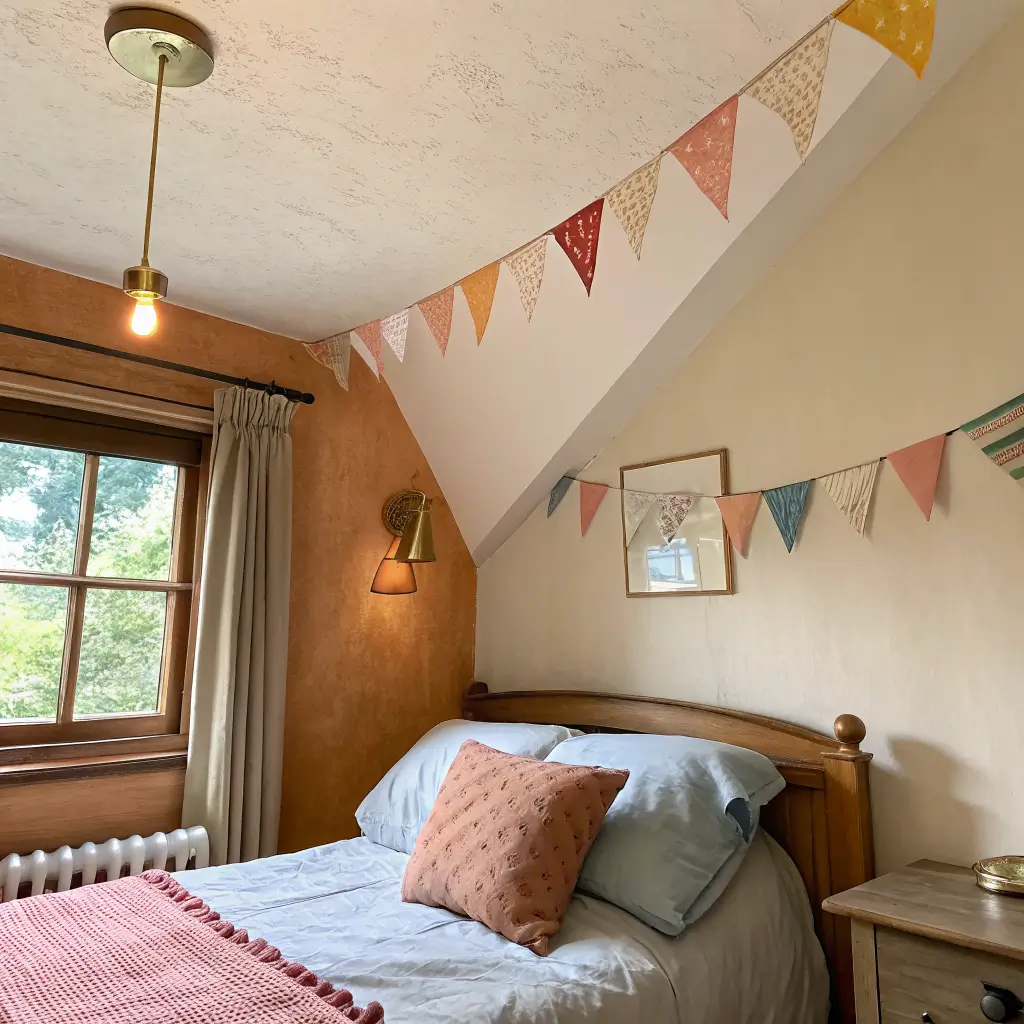
5. Style last. Art, plush, one or two whimsical things — a fabric bunting, a wall hook shaped like an animal, a canopy if your kid is into it.
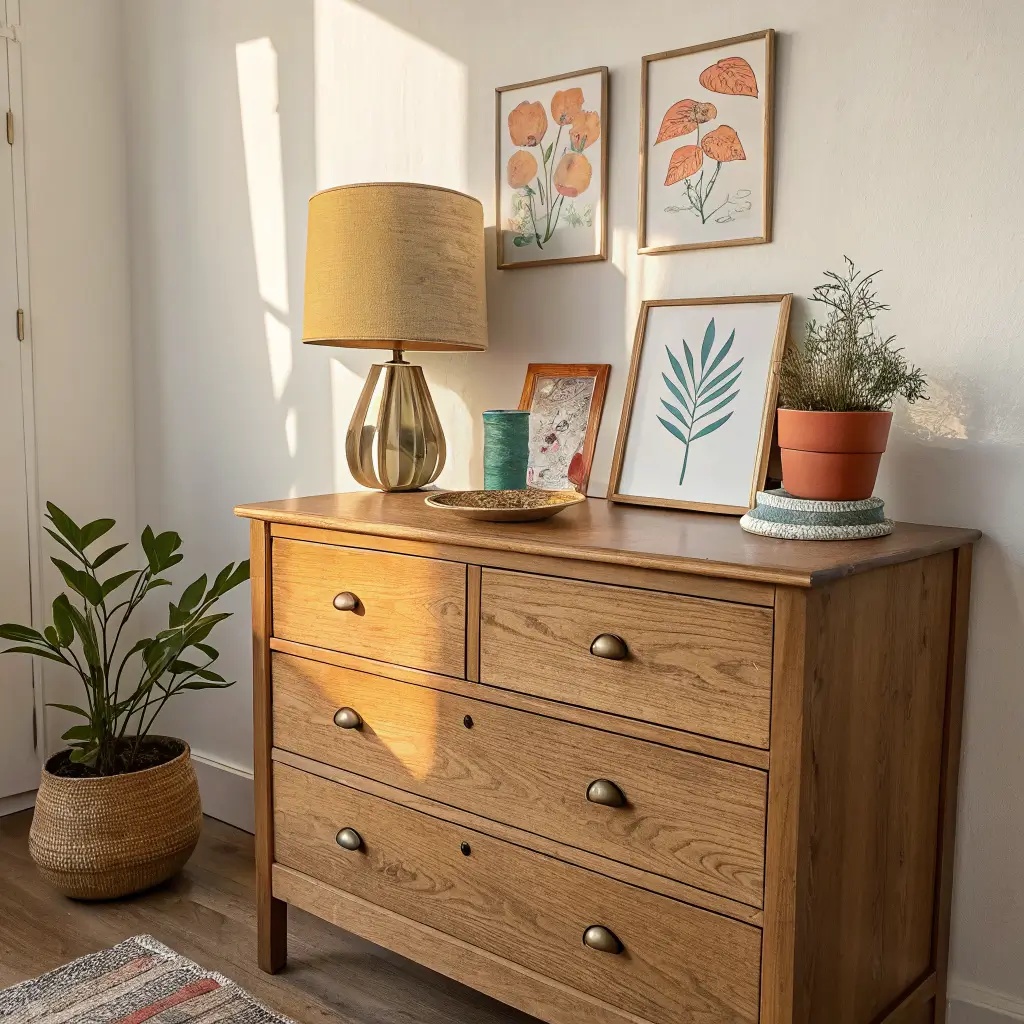
Repeat each color in at least three places. This is the rule that fixed my daughter’s room. The mustard shows up in the lampshade, two throw pillows, and the spines of a few books on the shelf. The room reads intentional, not random.
Check the room from two spots: standing in the doorway, and lying on the bed. If the color story makes sense from both, you’re done. If something jumps out as not belonging, it doesn’t belong.
Where to Spend, Where to Save
Spend on:
– Paint (Benjamin Moore Regal Select runs about $70/gallon and the coverage is worth it for the trim alone)
– The bed frame — it’s going to live there for years
– Storage you’ll actually use, not cute baskets that don’t fit anything
Save on:
– Art. Print from Etsy for $8 a piece, frame from Target for $15.
– Throw pillows. They get destroyed.
– Decals and bunting. Trends shift, kids’ tastes shift faster.
– The rug, if you can find a washable one. Ruggable and similar brands run $150–$300 and survive juice.
I bought a $200 woven pendant for my daughter’s room and she asked me to take it down because it “looked like a basket.” I replaced it with a $40 paper globe and she was thrilled. Spend where it counts.
The Mistakes I See Constantly
Using every color you like. Pick four. Put the rest in a Pinterest board for later.
Forgetting it’s a functional room. Reading light, hamper, a chair an adult can sit in, somewhere to put a water cup. If the color story is gorgeous but bedtime is miserable, you failed.
Buying only trend pieces. Rainbows everywhere, mushroom everything, checkerboard rugs. Pick one trend, anchor the rest in things that’ll still look right in three years.
Pattern scale problems. A big bold floral curtain plus a big bold geometric rug plus a big bold pillow print equals visual static. Mix scales: one large pattern, one medium, one small (like a tight stripe or a check).
Skipping washable everything. Washable paint, machine-washable rug covers, removable duvet covers, wipe-clean bin fronts. If you can’t clean it with a wet cloth, reconsider.
Easy Updates as Your Kid Grows
The whole reason to build the room around an off-white base and a tight palette is so you can shift it without starting over.
$50 refresh: New pillow covers, swap art, change out one basket color.
$150 refresh: New duvet cover, new curtain panels, repaint one accent wall.
$400+ refresh: Replace the rug, add a wallpapered nook or closet interior, swap hardware on the dresser to brass or colored knobs.
Cross-style variations if “colorful” needs to play with another vibe:
– Boho colorful: terracotta, mustard, rust, layered jute rug under a patterned cotton one, woven baskets.
– Scandi colorful: white walls, pale wood furniture, two bright accent colors only (red and green, or blue and yellow), nothing else.
– Modern colorful: color-blocked walls, clean-line furniture, one sculptural light fixture, no clutter.
The best colorful kids room I’ve put together isn’t the brightest one. It’s the one where my daughter walks in, drops her backpack in the exact bin it belongs in, and flops on her bed under the peach ceiling she picked out herself. The color does the work. The room still functions. That’s the whole goal.
Conclusion
The colorful kids room that worked for my sister was not a cartoon. It had white walls, a single mural of a forest that she had painted herself, and a rug in a pattern of green and yellow that looked like a meadow. The toys were stored in woven baskets, the bed had a duvet in a solid blue, and the only bright color was a single red chair where her son sat to read. She said she wanted the room to feel like a place to grow, not a place to be entertained. And it did.