What Modern Luxury Actually Looks Like Now
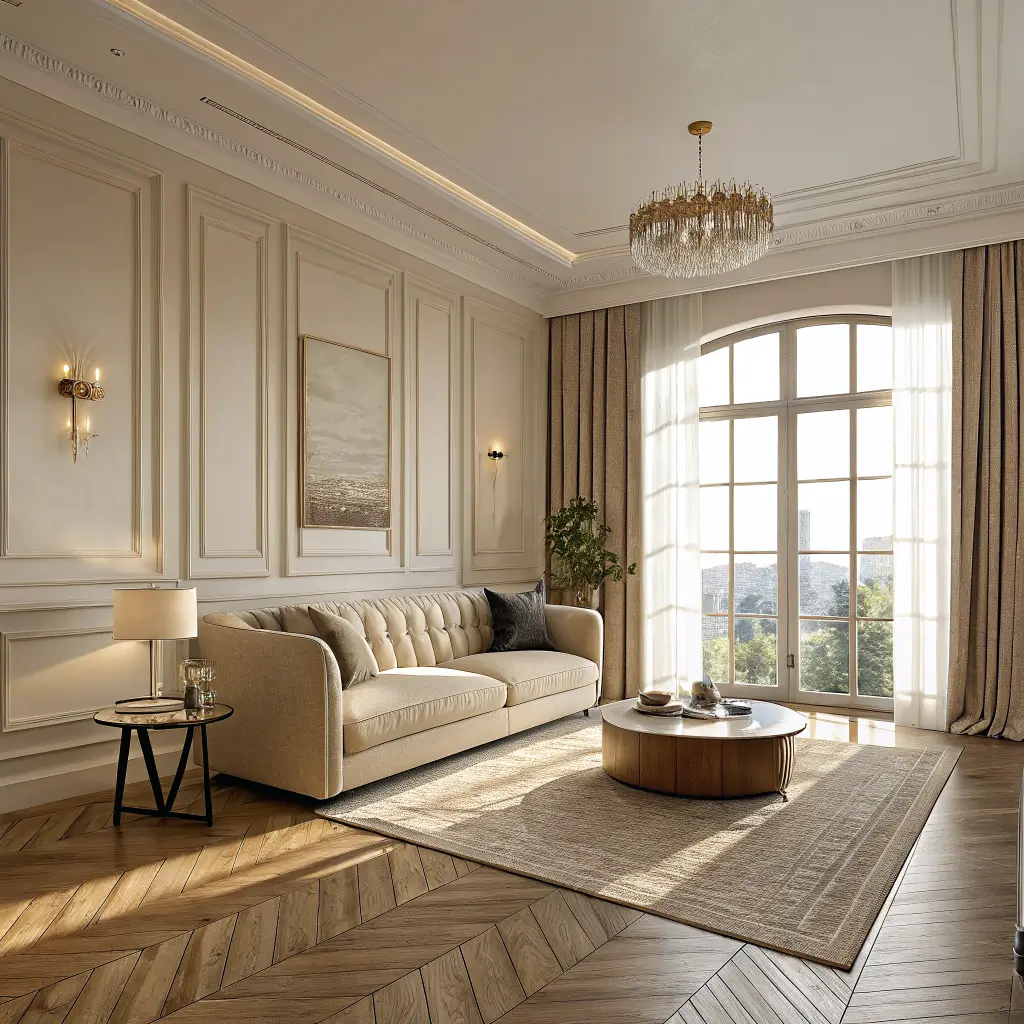
Forget the all-white, chrome-and-marble version from a decade ago. The current read on modern luxury is warm minimalism with serious texture — creamy walls, curved silhouettes, stone, oak, bouclé, brass. Low visual noise, high tactile interest. The phrase people use online is “quiet luxury,” and it fits: the room shouldn’t announce itself, it should just feel correct the second you walk in.
The core palette I keep coming back to:
– Walls and large upholstery: warm whites, cream, greige, soft mushroom. Benjamin Moore Swiss Coffee and White Dove are both safe bets.
– Secondary neutrals: warm gray, oat, sand.
– Accents in small doses: chocolate brown, espresso, charcoal, muted olive, rust, bronze. A jewel tone (emerald, sapphire) if you want a pulse point.
– Materials: oak, walnut, travertine, real or marble-look stone, wool, linen, bouclé, brushed brass, blackened steel, smoked glass.
Pick one undertone — warm or cool — and stay in it. The fastest way to make a room look cheap is to mix a cool gray sofa with warm beige walls. They fight, and you’ll feel it without knowing why.
Who This Room Is For
If you entertain, work from home in your living room, or just want the space you sit in every night to feel composed, this style earns its keep. It photographs well but it’s not fussy. It’s especially good in:
– Open-plan living/dining setups
– Condos and apartments with decent natural light
– Family rooms that need to feel grown-up but still handle real life
– Living rooms that double as media rooms (the layered lighting fixes the “TV cave” problem)
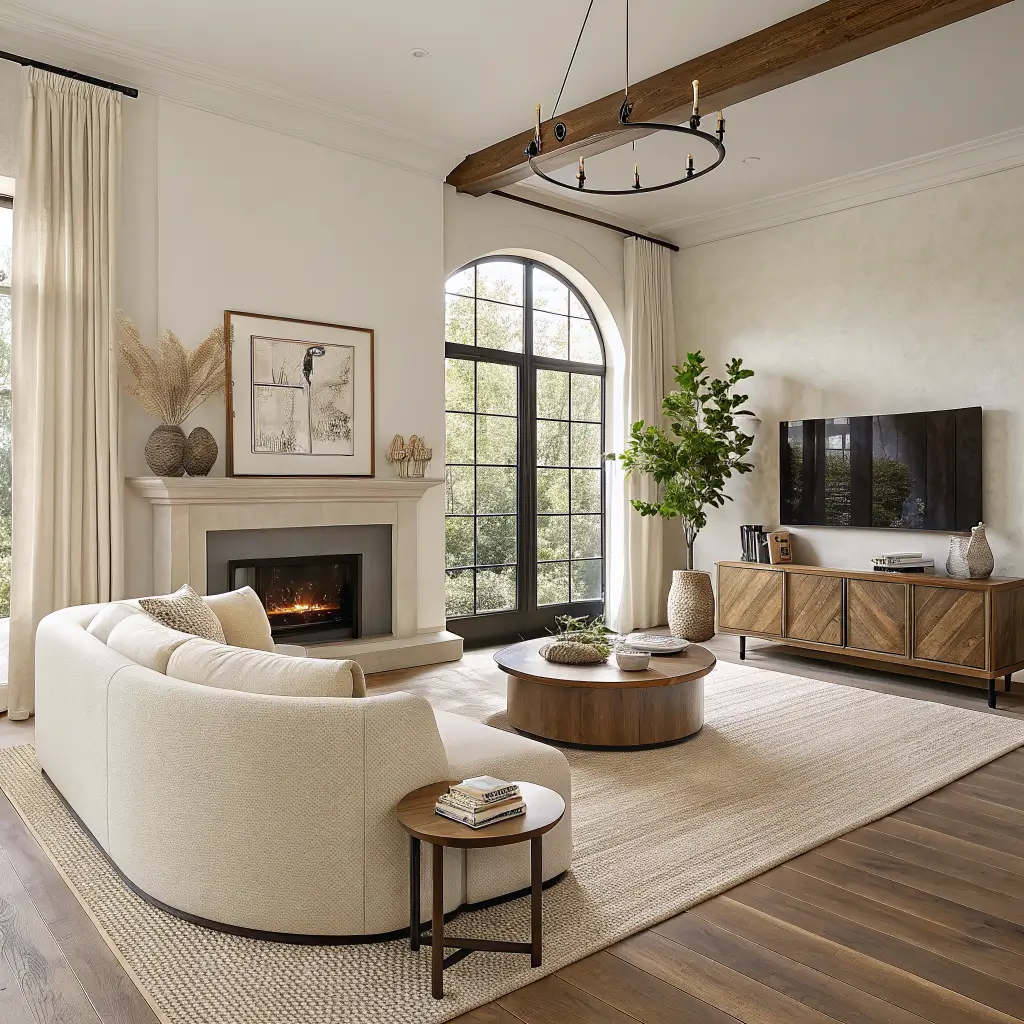
You need at least about 180 square feet to pull it off comfortably. For a curved sectional or a large floating sofa, give yourself 12’×16′ minimum so nothing has to shove against a wall.
What It Costs
I’ll split this into two tiers because the gap is real.
Attainable version (Article, West Elm sale, CB2, Wayfair, IKEA mixed with one or two splurges):
– Sofa or small sectional: $800–$2,000
– 9’×12′ rug: $250–$1,000
– Coffee table: $200–$800
– Media console: $300–$1,200
– Lighting (ceiling + two lamps): $200–$1,000
– Textiles, art, decor: $300–$1,000
– Total: roughly $2,000–$6,000
High-design version (Minotti, B&B Italia, RH, hand-knotted rugs, custom millwork):
– Sofa: $6,000–$18,000+
– Rug: $2,000–$10,000+
– Coffee table in real stone: $1,500–$6,000
– Built-in media wall: $4,000–$20,000+
– Designer chandelier and sconces: $1,000–$8,000+
– Art: $500 to whatever you’ll part with
– Total: $20,000–$75,000+
Most people land somewhere between. My own room sits around $7,500 because I went hard on the rug and the lighting and was patient about everything else.
The Hero Pieces (Where to Actually Spend)
The sofa
This is the piece. Get it wrong and nothing else saves you.
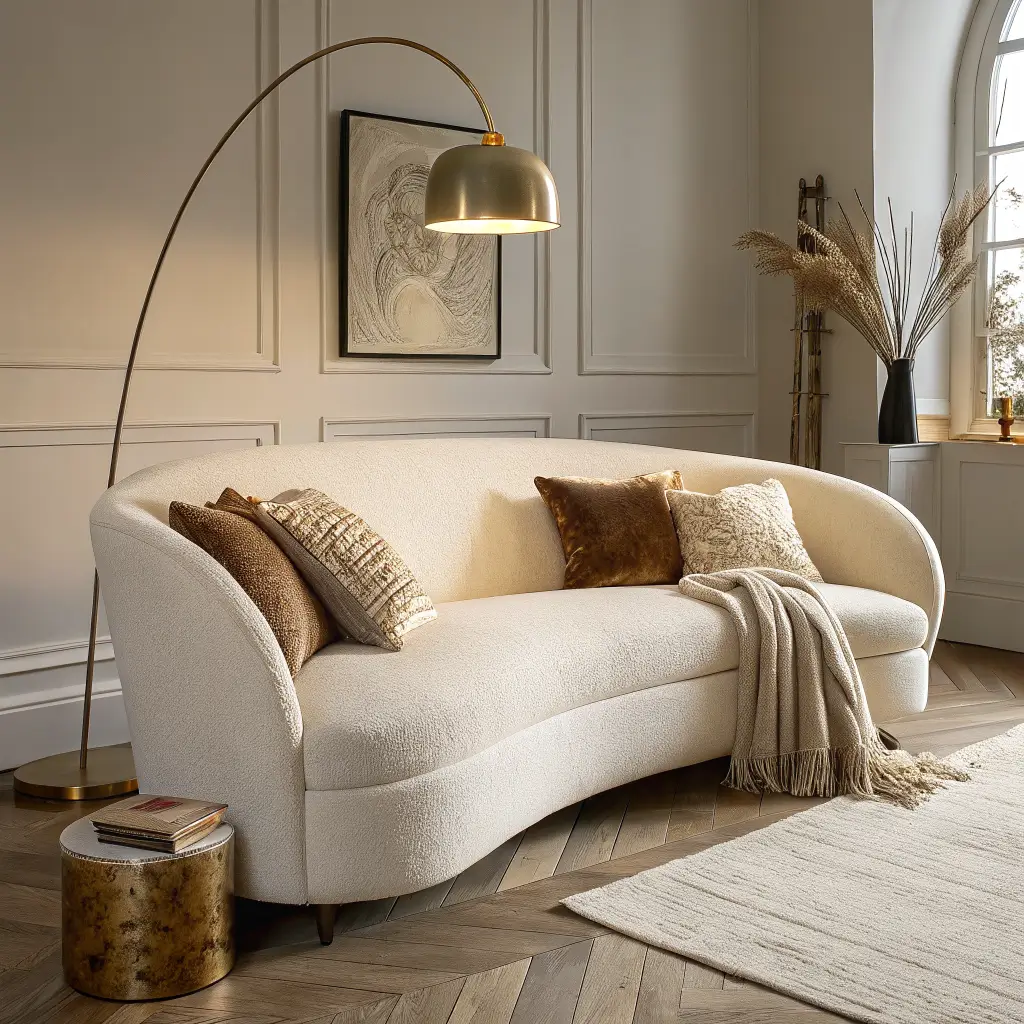
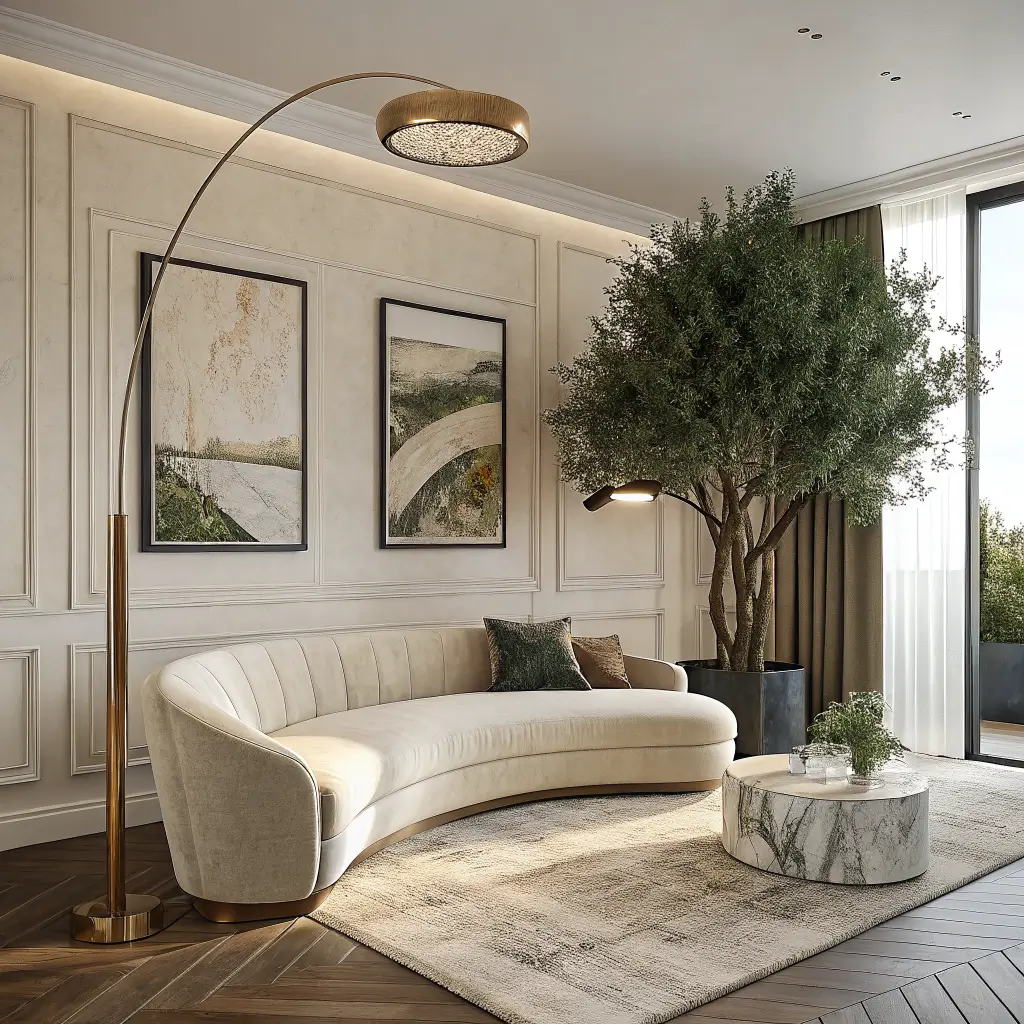
Current silhouettes lean curved or softly rounded, low-profile, with bench cushions and deep seats (38″–44″). For a 3-seater, look at 84″–96″ wide; for a sectional, 110″–150″+.
The first sofa I bought for this room was a sharp-edged tuxedo in a cool gray velvet. Looked great in the photos. In the room it felt like a hotel lobby chair scaled up — pretty, uncomfortable, and totally out of step with the warm cream walls I’d already painted. I sold it on Facebook Marketplace nine months later for about half what I paid and replaced it with a cream bouclé curved sofa from Castlery. Different room instantly.
If bouclé scares you (pets, kids, white-knuckle anxiety), go for a performance linen weave in oat or greige. Same effect, much more forgiving.
The rug
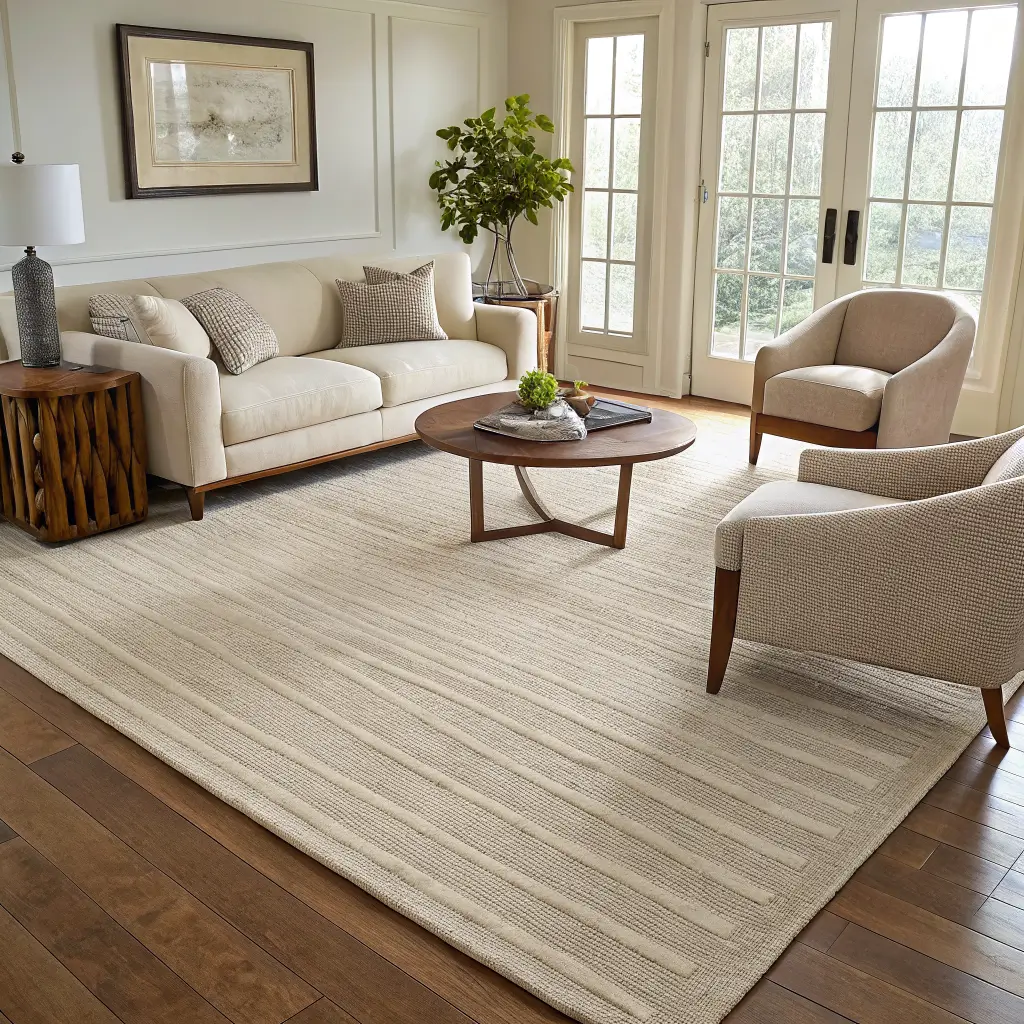
Never go smaller than 8’×10′. Aim for 9’×12′. The front legs of every seating piece should sit on the rug. A rug that floats in the middle of the room like a postage stamp will undo a $5,000 sofa.
Wool or wool-blend, low pile, tone-on-tone or subtle abstract pattern. I have a hand-loomed wool in oatmeal with a faint cream stripe and it’s done more for the room than any other single purchase.
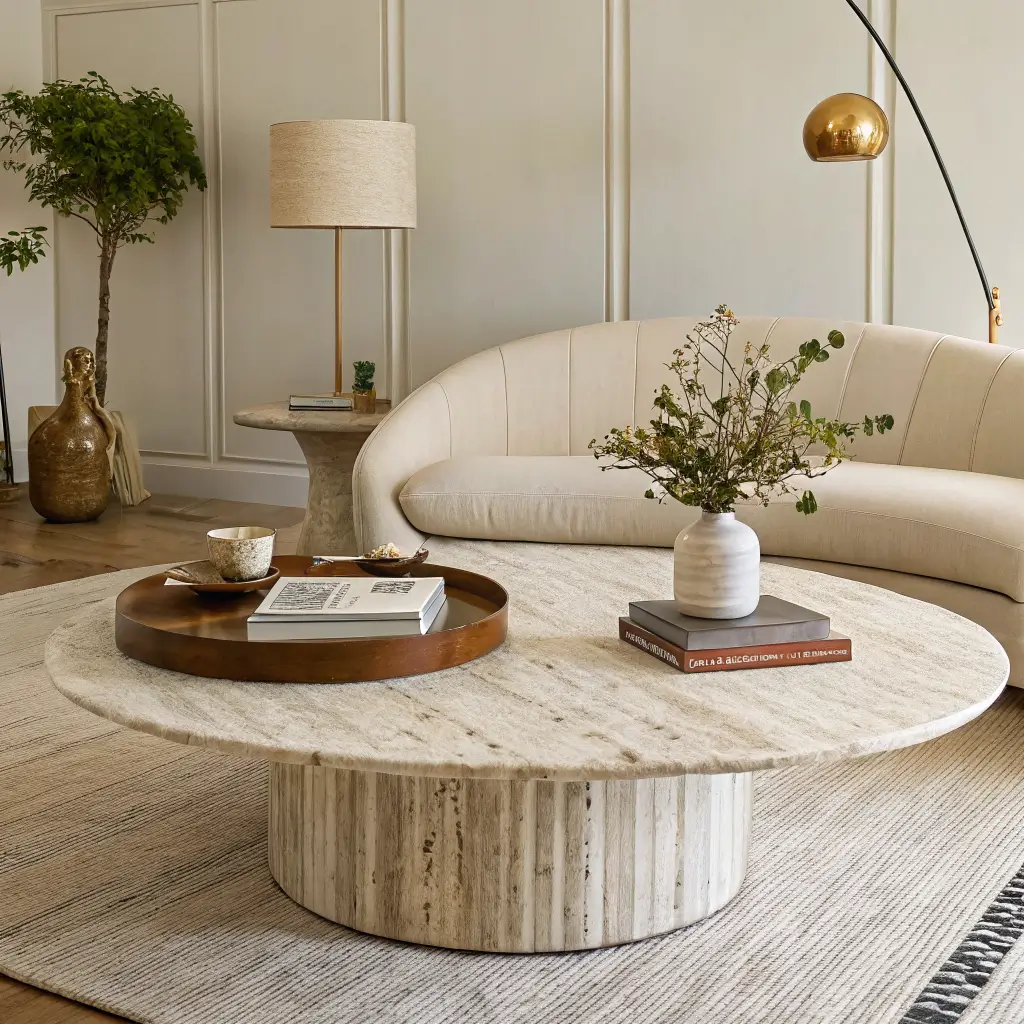
The coffee table
Go sculptural. Round, oval, or pebble-shaped to soften the lines of the sofa and the rectangle of the TV.
Travertine is having a long moment for a reason — it has visible texture and warmth that polished marble doesn’t. CB2 and Crate & Barrel both do good travertine pieces in the $500–$900 range. If you can swing it, a solid stone piece will outlast every other thing in this room.
Keep about 18″ between the table edge and the front of the sofa.
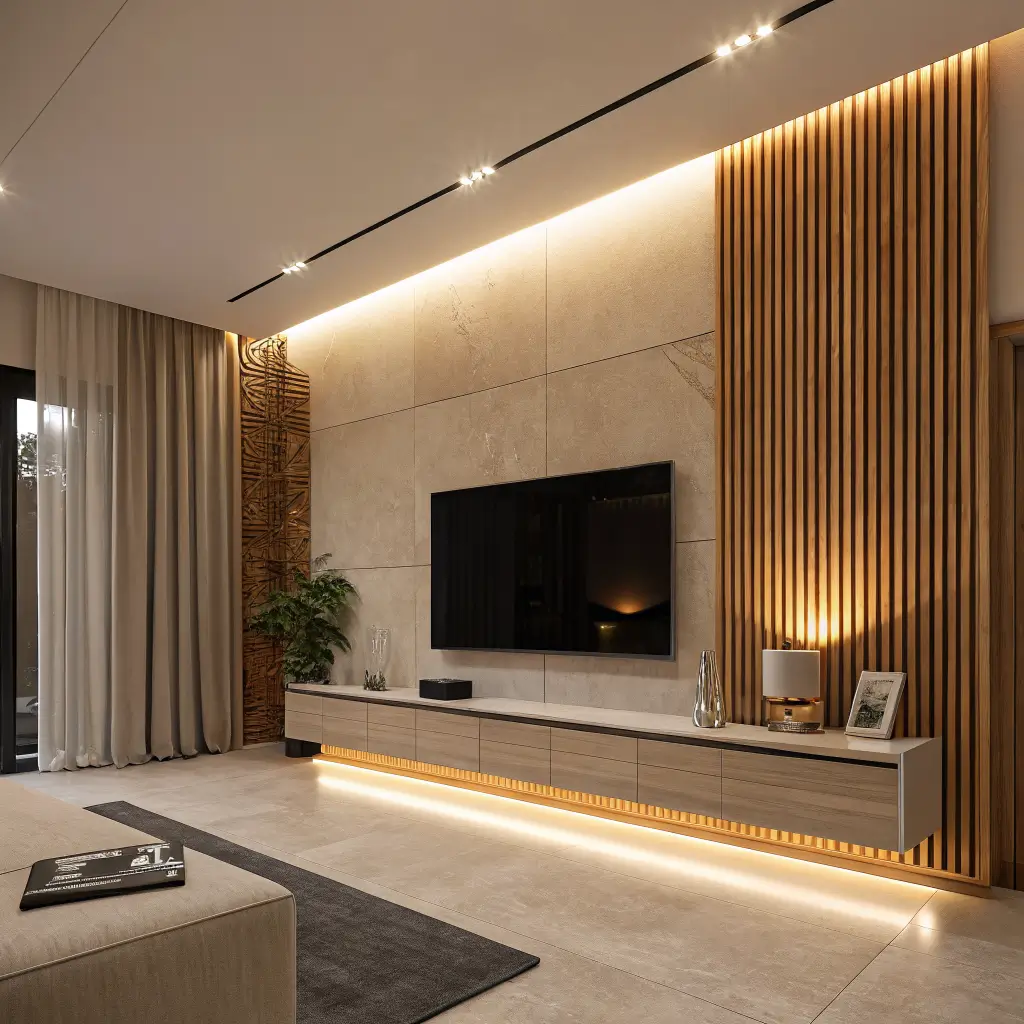
The feature wall
The TV wall is where most living rooms die. Options that work:
– Vertical wood slat panel behind the TV (oak or walnut)
– Microcement or venetian plaster in a warm off-white
– Painted accent in the same color as the rest of the room, with a floating console and a recessed LED strip behind it
The LED strip behind the console is a small detail that does an outsized amount of work. About $25 on Amazon. Set it to a warm 2700K.
Lighting (The Thing People Skip and Shouldn’t)
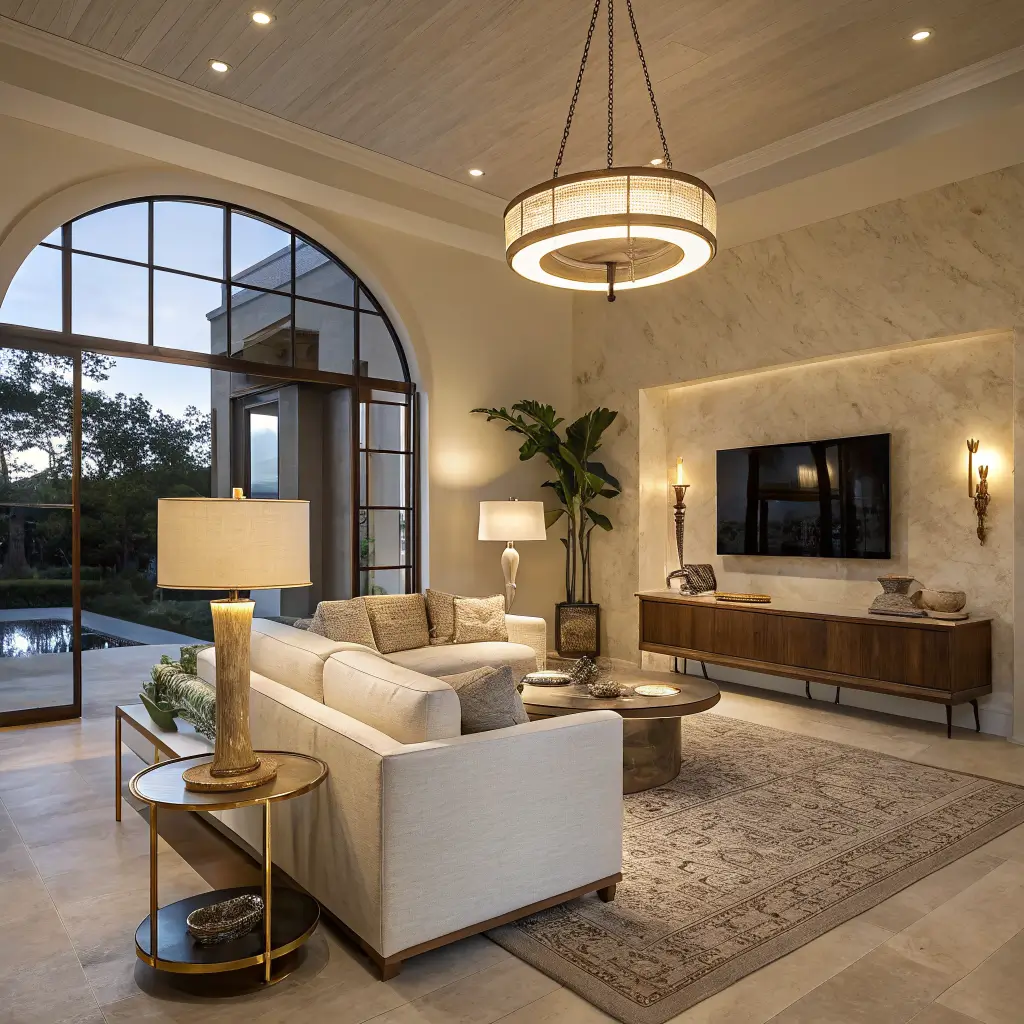
If you do one thing from this article: stop relying on the overhead light.
Aim for 3–5 light sources in a medium room, all on warm white bulbs (2700K–3000K, nothing higher). Mine breaks down as:
– One ceiling fixture on a dimmer (sculptural, not crystal)
– One arched floor lamp behind the sofa
– Two table lamps — one on the console, one on a side table
– LED strip behind the media console
Different heights, all warm, all dimmable where possible. That’s what the “expensive hotel” feel actually is. It’s not the furniture. It’s the lighting.
Layering Textures Without Making It a Mess
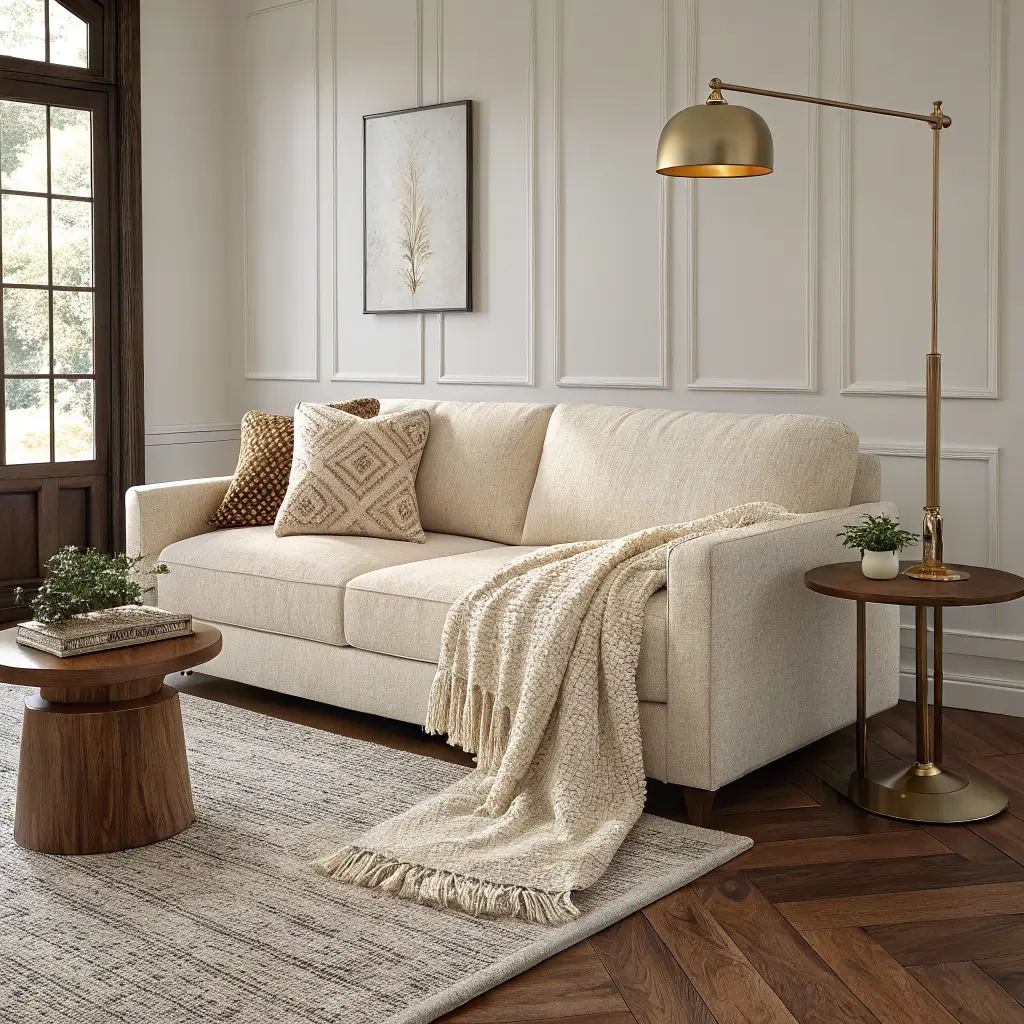
Aim for 3 to 5 distinct textures in the seating area. Mine: linen sofa, wool rug, bouclé pillow, travertine table, brushed brass lamp base. Done.
Patterns should be low-contrast and large-scale. Subtle stripe, tonal abstract, nothing busy. If you can describe a pattern in one sentence, it’s probably right. If it takes three, put it back.
For pillows: two 22″-square pillows in one texture, two more 22″s in a second texture, one lumbar to break it up. Stop there. The mistake everyone makes is too many small pillows in too many colors. It reads cluttered no matter how nice each one is.
Art, Plants, and the Coffee Table
One big piece of art over the sofa beats six small frames. A 40″×60″ canvas or framed photograph at minimum. Leaning a large piece against the wall on a console also works and feels less committed.
For greenery, pick one or two substantial plants — an olive tree, a 4-foot fiddle leaf fig in the empty corner past the sofa, a rubber plant. Or a tall ceramic vase with bare branches if you kill everything green. Skip the cluster of small succulents.
Coffee table styling, the formula I use:
– One tray (stone, wood, or leather)
– One sculptural object or low vase
– One small stack of books (2–3 max)
That’s it. The negative space matters as much as the objects.
Mistakes I Made (or Watched Other People Make)
Rug too small. Covered above, but worth repeating. A 5’×7′ rug in a normal living room is the single most common error and it makes everything look like a furnished rental.
Too much stuff. After you style the room, walk out, come back in, and remove 30–40% of what you added. I’m serious. Modern luxury is a restraint game.
Stark instead of warm. All-white walls plus white sofa plus chrome plus glass equals dentist’s office. Add oak, add a stone with visible veining, add a chunky knit throw. The warmth is the whole point.
Three different metals. Pick one dominant (I use brushed brass) and one secondary (blackened steel). That’s the budget.
Mixing undertones. Cool gray rug, warm cream sofa, taupe curtains — they’ll all read slightly off and you won’t be able to name why.
Keeping It Fresh Without Redecorating
Big pieces stay neutral. Small things rotate.
Seasonal swaps that actually work:
– Pillow covers: linen and cotton in spring/summer, bouclé and velvet in fall/winter
– Vases: olive branches and eucalyptus most of the year, bare branches in winter, something flowering in spring
– Throws: a chunky cream knit in winter, a flat-weave linen in summer
– Coffee table books: rotate two or three at a time so the table doesn’t get stale
Annual upgrades on a budget: swap cabinet pulls and curtain rods to brass or matte black. Add picture-frame molding to one wall painted the same color as the wall itself — quiet architectural detail, about $80 in materials.
Variations If Pure Modern Luxury Feels Too Cool
– Bohemian crossover: keep the curved sofa and neutral rug, layer a vintage Moroccan rug on top, add handmade ceramics and a woven wall piece.
– Coastal: swap to sandy beige and driftwood tones, add light oak, linen everywhere, one muted blue accent.
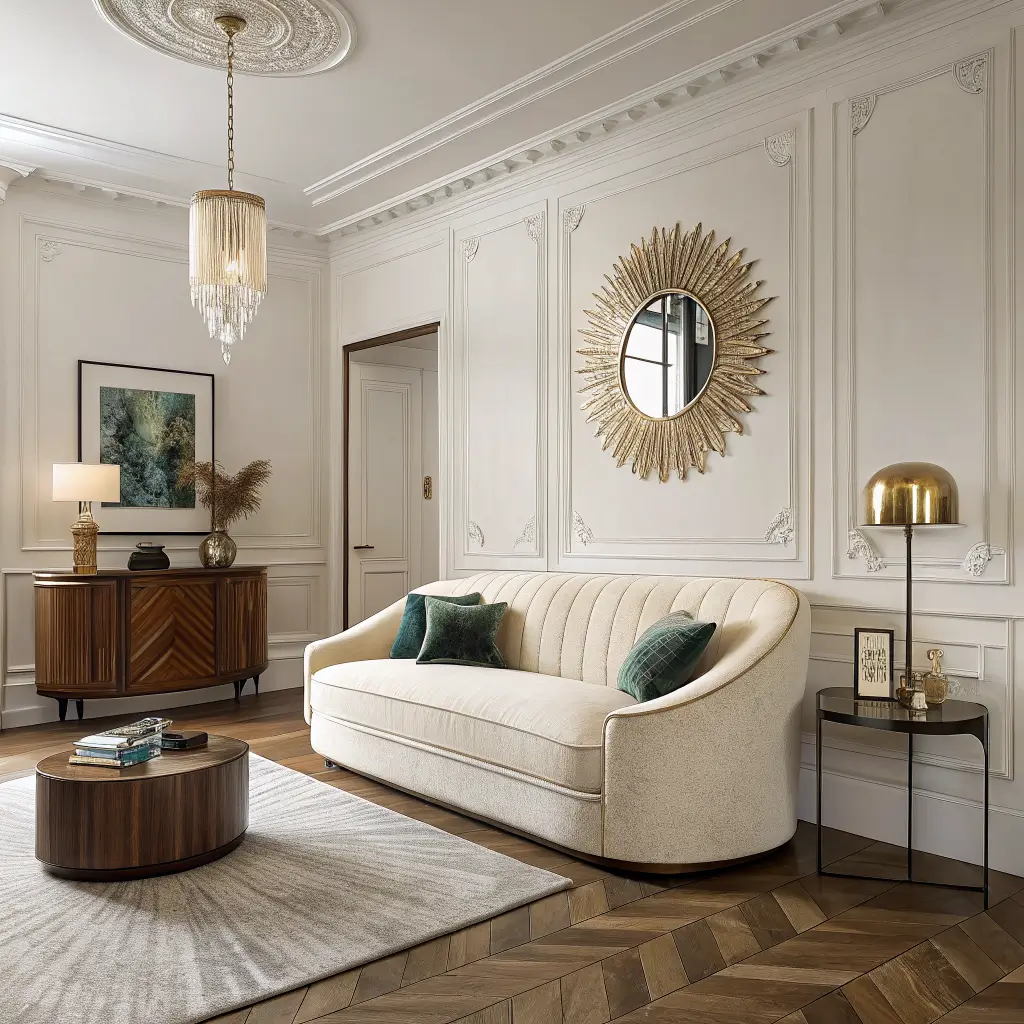
– Art Deco lean: introduce a fluted cabinet, a geometric brass mirror, and one deeper jewel tone (emerald velvet pillow, sapphire art piece). Keep everything else quiet.
The one rule that holds across all of them: pick a focal point, build the seating around it, light the room in layers, and edit until each piece can breathe. That’s the whole trick.
Conclusion
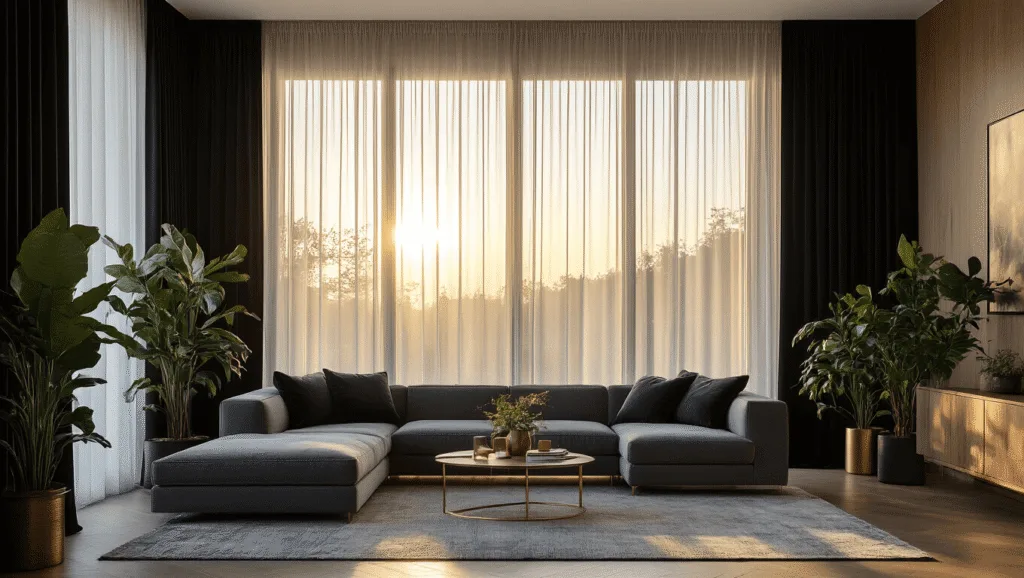
The modern luxury living room that convinced me this style was not about money had a charcoal sofa, a single marble coffee table, and a wall of windows that framed a view of the city. The owner had added one large abstract painting, a brass floor lamp, and a stack of books about architecture. The room felt expensive because it was confident, not because it was full.
More Decor Ideas to Explore
- Modern Luxury Bathroom: How to Get the Spa-Like Primary Bath Without It Feeling Like a Hotel Lobby
- Tiny Living Room Ideas: A Real Guide for Spaces Under 150 Square Feet
- The Beachy Boho Bedroom: How to Get the Look Without It Feeling Like a Hotel Gift Shop
- Coastal Chic Decor: How to Get the Hamptons Look Without Going Full Beach Gift Shop