The Look, and Who It’s For
You want your living room to feel like the inside of a good seaside rental — the kind with white linen sofas and a single huge piece of ocean art over the fireplace — and instead it looks like a Bed Bath & Beyond clearance aisle exploded. I’ve been there. My first attempt at coastal chic decor involved three glass jars of sand, a wooden “BEACH” sign, and a navy-and-white rug so high-contrast it gave me a headache. I lived with it for about four months before I admitted what I’d done.
What actually works is quieter than that. It’s about light, texture, and restraint. Here’s how I get there now.
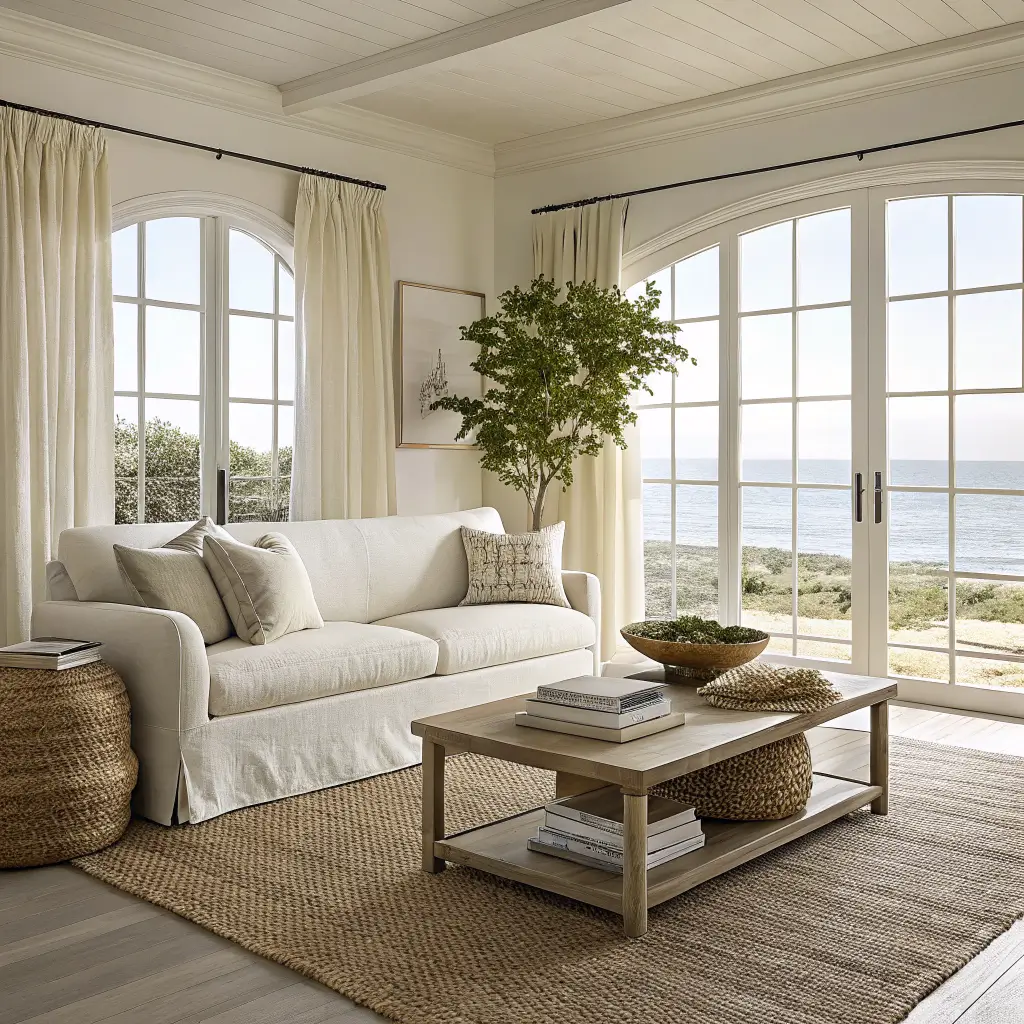
Modern coastal — or coastal chic, or elevated coastal, whatever you want to call it — is Nantucket-grandmother-with-good-taste, not souvenir shop. Think slipcovered sofas, jute underfoot, one enormous seascape, and a palm in the corner. The ocean is referenced, not reenacted.
It suits you if:
– You want a calm, light, slightly spa-like home
– You have kids, dogs, or a tendency to spill wine (slipcovers wash, jute hides crumbs)
– You’re a renter who can’t paint everything but can swap textiles
– You don’t actually live near the beach and don’t care — this style works in a Denver apartment
The style flexes from a 300-square-foot studio up to an open-concept great room. Because everything reads light, it makes small spaces feel bigger, which is half the reason I went this direction in my 700-square-foot apartment.
Time and money, roughly:
– Textile-only refresh: $300–$800, one weekend
– Mid-range makeover with some furniture: $1,000–$3,000, one to three weeks once orders arrive
– Full room from scratch: $3,000–$10,000+
The Color Palette (and the Blues That Will Wreck It)
The whole thing lives or dies on the palette. My rule: 70% warm neutrals, 20% muted blues or greens, 10% accent. That’s it.
For wall paint, I keep going back to soft, warm whites — Benjamin Moore Chantilly Lace if the room gets good natural light, Sherwin-Williams Snowbound if the light is cooler and you want some warmth added back in. Pure white turns blue in north-facing rooms. Learned that the hard way after painting my bedroom Decorator’s White and waking up inside an ice cube.
For blue, the trap is going too saturated. Royal blue, primary blue, anything you’d describe as “pop of color” — skip it. The blues that work are grayed-out and muted:
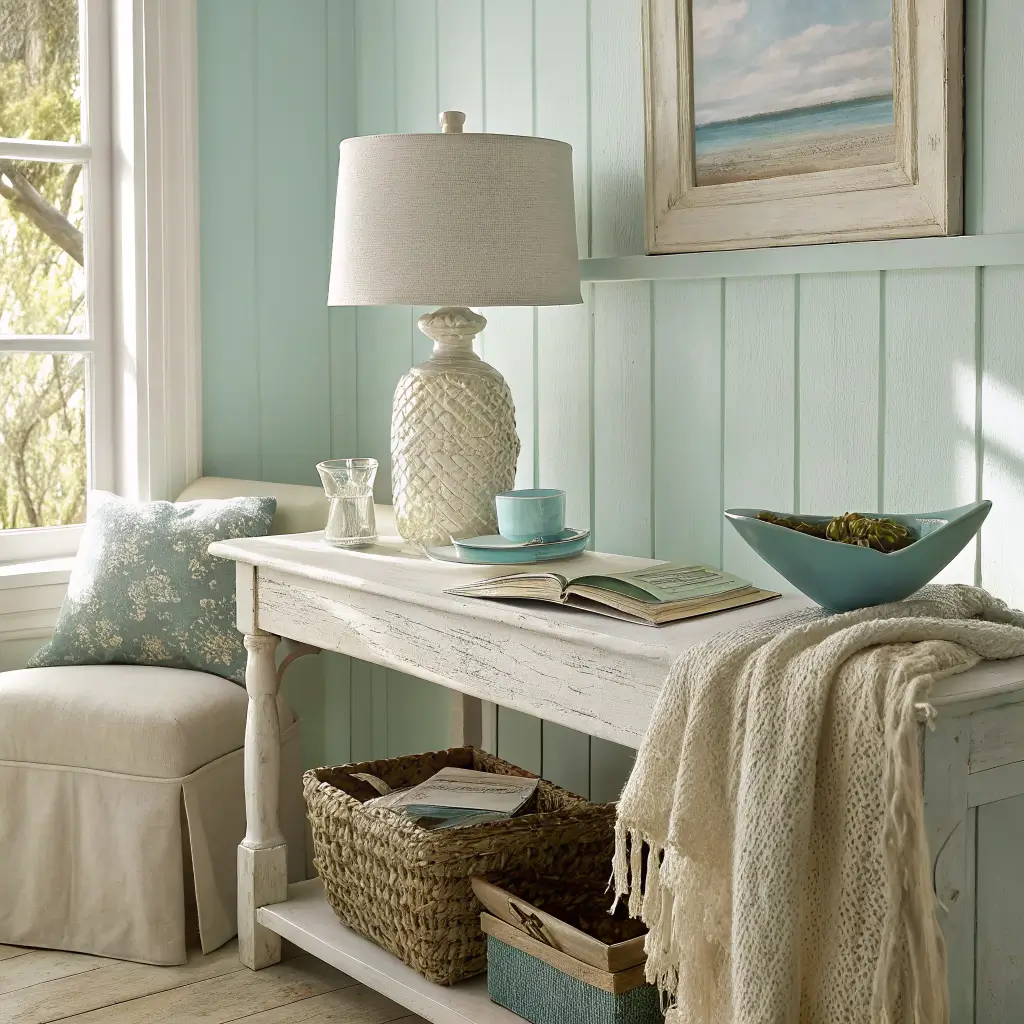
– Benjamin Moore Palladian Blue (pale, slightly green)
– Benjamin Moore Beach Glass (the name is on the nose but it’s correct)
– Sherwin-Williams Sea Salt (more green than blue, reads coastal anyway)
– Sherwin-Williams Krypton for a stronger soft blue
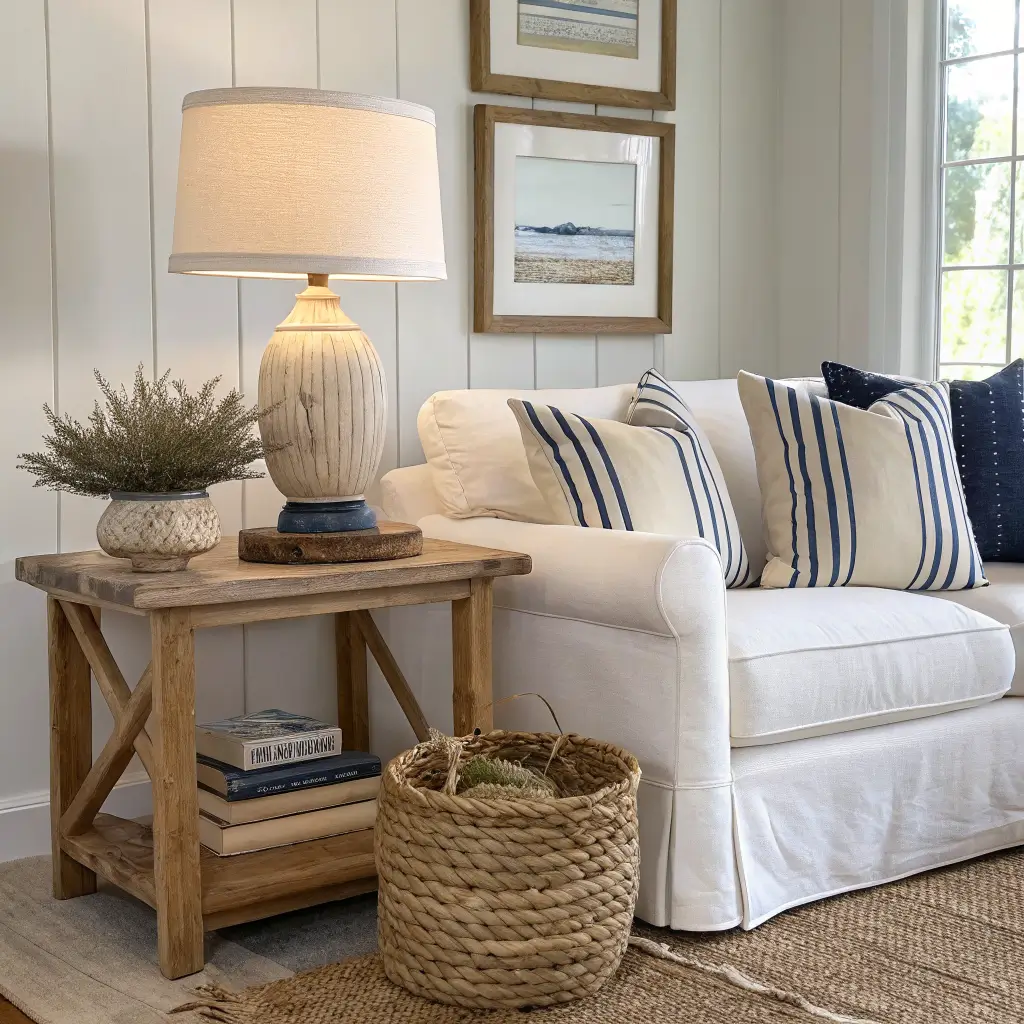
Navy belongs in small doses — a stripe pillow, the binding on a rug, a single lamp base. Not on the walls and not on the sofa.
Add sand tones (BM Pale Oak is a workhorse greige) and one optional accent: sage, soft coral, or a hint of yellow if you want a Palm Beach lean.
The Hero Pieces
If you only buy four things, buy these.
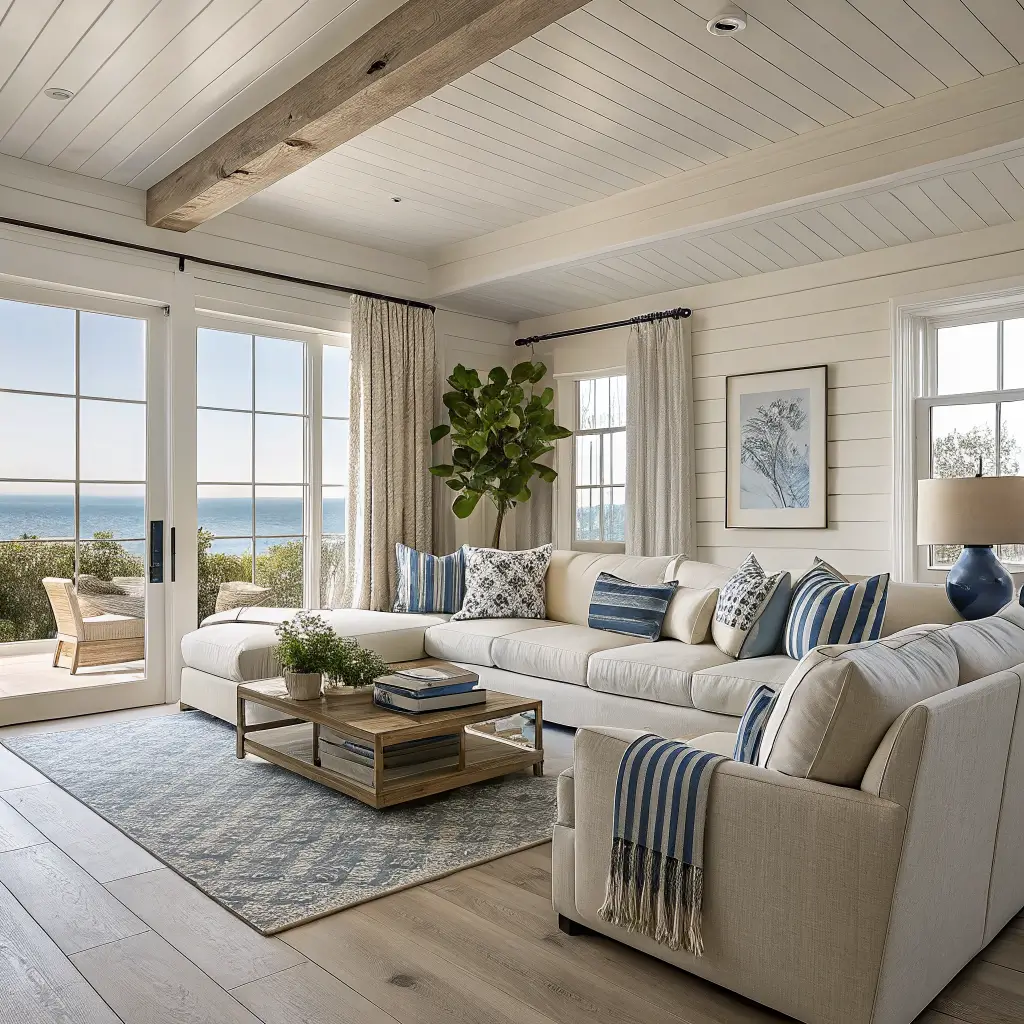
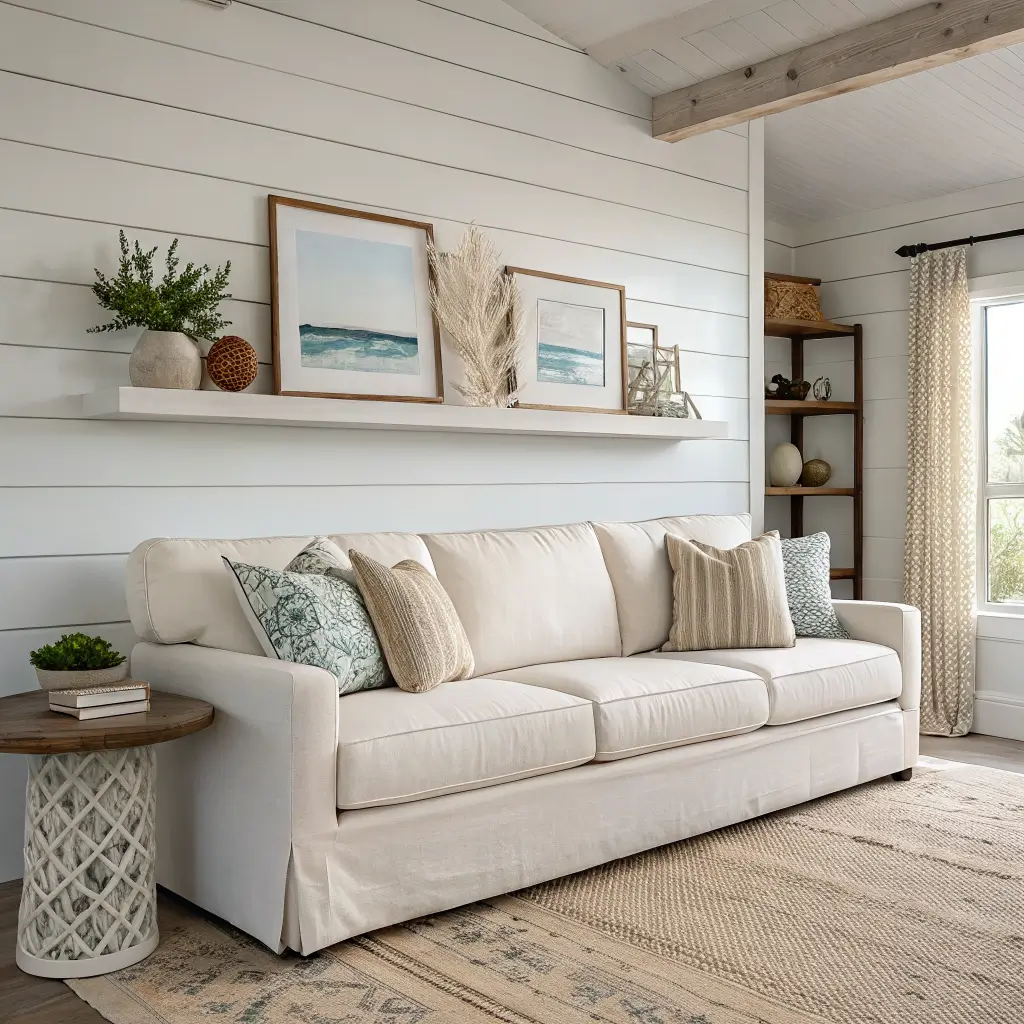
1. A slipcovered sofa in white, cream, or oatmeal linen. 84 to 96 inches for most living rooms. Performance fabric if you have kids or a dog who thinks the couch is a towel. Expect $900–$2,500 for something that won’t collapse in two years. I have a 92-inch slipcovered sectional in a washable cotton-linen blend and I’ve thrown the cushion covers in the wash maybe a dozen times. They still look fine.
2. A natural fiber rug. Jute, seagrass, or sisal in a 6’×9′ or 8’×10′. Budget $150–$600. Important: jute sheds for the first month and feels rough underfoot. If you want barefoot-friendly, go with a flatter weave or layer a cotton dhurrie on top in winter.
3. A light wood coffee table. White oak, ash, or whitewashed pine. Open base, simple legs, 40–52 inches long. $250–$800. Skip glass — it fights the texture story.
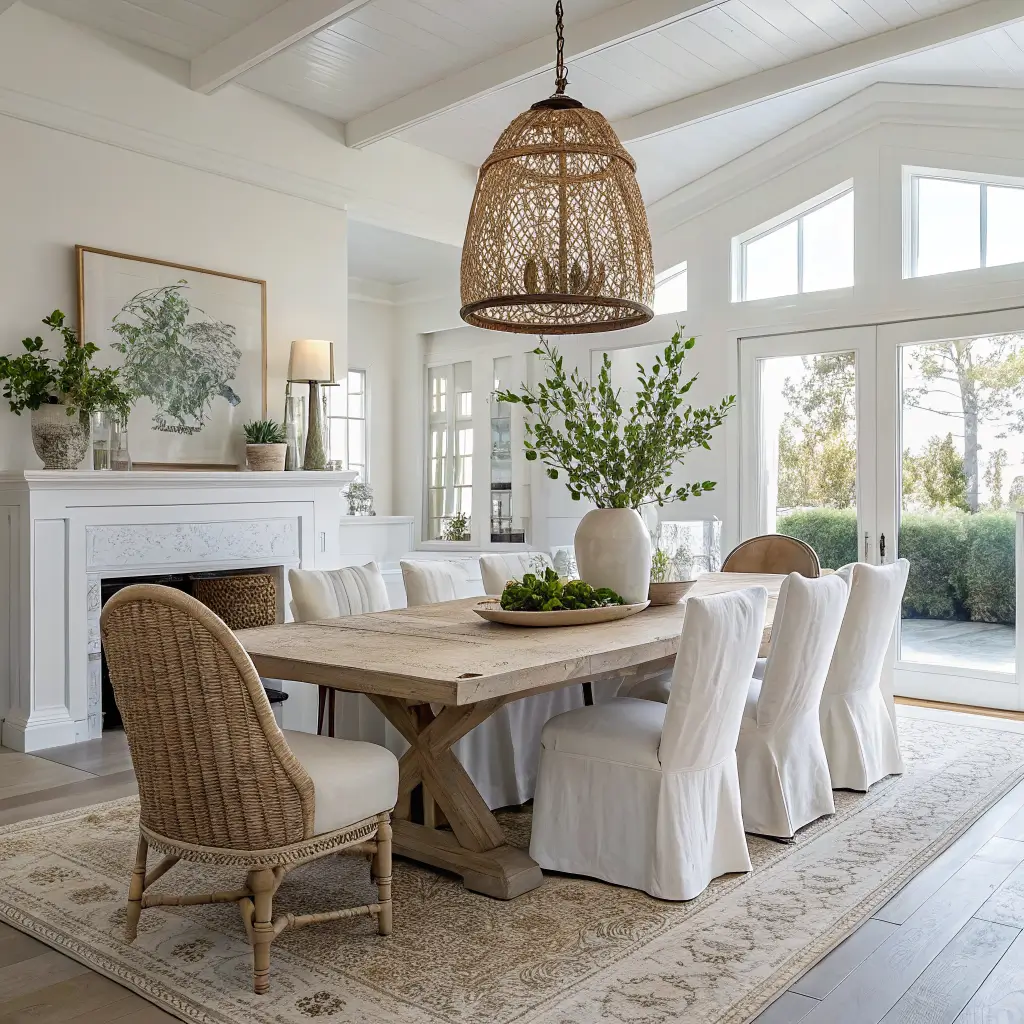
4. One real lighting moment. Either a woven rattan or rope pendant (18–30 inches across, $200–$800), or a pair of ceramic table lamps in a chalky white or driftwood finish, $100–$250 each. Warm white bulbs only — 2700K to 3000K. Daylight bulbs kill the mood instantly.

How to Put It Together
This is the order I work in, and it matters.
Anchor first. Rug down in the seating zone, sofa positioned with its front legs on the rug, accent chairs across from it, coffee table centered. Get the bones right before you think about a single pillow.
Curtains go high and wide. Mount the rod 4–6 inches above the window frame and extend it 6–12 inches past each side. This is the single biggest cheat code for making a room feel taller and more expensive. Linen or cotton, floor-length, white or oatmeal. Tab-top or rod-pocket panels at $60–$200 a pair do the job. The puddle should just barely brush the floor.
Build the pillow mix with this formula: one stripe, one organic print (batik, block print, abstract), one solid textured neutral. Vary the scale — a wide stripe with a small-print batik, not two medium prints fighting each other. For a standard sofa I do five pillows total: two 22-inch in the corners, two 20-inch inside those, one lumbar in the middle.
One big piece of art beats six small ones. A 30″×40″ or larger seascape, shoreline abstract, or even a vintage map over the sofa. Below the art, the sofa back should hit no more than 6–10 inches under the bottom of the frame.
Style surfaces in odd numbers with height variation. On a coffee table: a stack of two books, a small bowl or coral piece on top, and a low vase with a single olive branch. Three things, three heights, done.
Finish with one tall plant. A 4–6 foot olive tree, kentia palm, or fiddle-leaf in a woven basket planter in the empty corner past the sofa. If you can’t keep plants alive (I killed two olive trees before I admitted I’m bad at this), a decent faux from Afloral or Nearly Natural runs $150–$300 and nobody will know.
Where to Spend, Where to Save
Spend on:
– The sofa. Cheap slipcovered sofas sag in a year.
– The rug, if it’s natural fiber in a high-traffic area.
– Lighting. Cheap lamps look cheap in a way pillows don’t.
Save on:
– Pillow covers. HomeGoods, Target’s Studio McGee line, and Etsy linen shops have $20–$40 covers that look like the $90 ones.
– Art. Society6, Juniper Print Shop, and even vintage seascape prints off eBay framed at Michaels look better than mass-market wall decor.
– Baskets and trays. Thrift stores are full of them. My favorite woven tray was $4 at a Goodwill in Asheville and lives on my ottoman.
– Curtains. Amazon and IKEA have linen-look panels that read just as well as the $300 ones once they’re hung correctly.
The Mistakes I Made So You Don’t Have To
I bought too many literal beach objects. Shells in jars, starfish on shelves, a piece of driftwood I dragged home from Cape Cod. One coral sculpture or a single bowl of curated shells is plenty. The rest goes in a closet bin labeled “summer” and comes out in June if at all.
I picked a blue that was too bright. A “Mediterranean blue” pillow set I ordered online looked aggressive next to everything else. Muted blues only — if it would look at home on a piece of weathered beach glass, you’re good.
I put shiplap on a whole wall and regretted it. It made the room feel like a TV set. If you want shiplap, do a half-wall, a fireplace surround, or a ceiling detail. Peel-and-stick shiplap runs $2–$4 a square foot and is fine for renters, but use it surgically.
I crammed every shelf. Negative space — the empty room around your objects — is what makes the styled rooms in magazines look styled. Two or three things per shelf section. Let some shelves be almost empty.
I forgot comfort. A rattan accent chair I bought because it photographed well was punishing to sit in. Coastal chic is supposed to feel like a slow weekend. If your seating isn’t comfortable, none of this works.
Easy Swaps and Seasonal Updates
The point of building a neutral base is that small changes shift the whole mood.
Summer:
– Swap to lighter pillow covers in pale blue and white stripe
– Roll up any wool throws, put out cotton ones
– Linen runner on the dining table, simple white ceramic vase with eucalyptus
– A woven beach tote actually hung by the door (functional, not decorative)
Fall and winter:
– Layer a cream wool or sheepskin throw over the jute rug
– Switch to deeper navy and sage pillow covers
– Add candles in brass or antique bronze holders
– Heavier linen drapes if you have them; otherwise just leave the lighter ones up
Cross-style blends that actually work:
– Boho coastal: keep the palette, add a muted kilim, a hanging rattan chair, more plants
– Scandi coastal: cooler whites, paler woods, fewer accessories, almost monochrome art
– Traditional coastal: a pair of blue-and-white ginger jars, tailored skirted sofa, a chinoiserie lamp
“But I Don’t Live Near the Ocean”
Doesn’t matter. I don’t either right now. The reason this look works in landlocked apartments is that it’s really about light, natural texture, and breathing room — not about whether you can see saltwater from your window. Nobody walks in and asks if you live near a beach. They just say it feels calm in here.
That’s the whole goal. Calm, light, lived-in, a little bit witty about the ocean rather than shouting about it. Build the neutral base, pick your two or three blues, edit hard, and let the linen and the jute do most of the talking.

Conclusion
The coastal chic decor I remember was in a hotel in the Hamptons where the lobby had a marble floor, a single orchid on a chrome table, and a wall of windows that framed the ocean like a painting. It was not cozy. It was not rustic. It was calm and expensive and completely unwilling to try too hard. That is coastal chic — the confidence to let the water do the talking and keep everything else very, very quiet.
More Decor Ideas to Explore
- Coastal Minimalist Decor: A Real Guide to Getting the Light, Calm Beach-House Look (Without the Seashell Clichés)
- Coastal Farmhouse Decor: How to Mix Beach and Rustic Without It Looking Like a Souvenir Shop
- Very Small Bedroom Ideas That Actually Work in a 9×9 Room
- 16 Lake House Bathroom Ideas That Feel Like a Morning Swim