The Complete Guide to Modern Coastal Home Decor (Without the Beach-Theme Cheese)
Coastal home decor gets a bad rap because most people picture starfish on every shelf, anchor pillows, and a wooden sign that says “Beach This Way.” I lived two hours from the ocean for a decade and tried to fake the feeling with all the wrong stuff before I figured out what actually makes a room read coastal: light, texture, and restraint. Not novelty.
This is the version I’d build now. Relaxed, a little bit tailored, and quiet enough to live in year-round.
Who This Look Is For (and Where It Works)
Modern coastal is for people who want a calm, low-clutter home with a lot of natural light. If your nervous system settles down in rooms that feel airy and bright, this is your style. It’s also genuinely practical for families: slipcovers wash, jute hides dirt, and the whole palette forgives a lot.
It scales surprisingly well.
Small apartments (400–800 sq ft): Light walls, fewer pieces, glass and pale wood to keep things from closing in.
Open-concept homes (1,200+ sq ft): Repeat one wall color and one rug material across zones so the eye flows.
Rentals: Skip the shiplap, lean hard on textiles, rugs, lighting swaps, and art.
It lives best in living rooms, bedrooms, dining areas, and bathrooms. It also looks great on a covered patio with Adirondack chairs and a couple of rope lanterns, but I’d save outdoor styling for after you nail the interior.
What It Costs (Real Numbers)
I’ve done this three times — once as a $400 rental refresh, once as a full living-room makeover, and once on a primary suite with new lighting and shiplap. Here’s what each level actually runs.
Budget refresh: $300–$800
Textiles and accents only. Realistic if your walls are already light and your big furniture is neutral.
– Throw pillows: $15–$40 each (Walmart, Kirkland’s, HomeGoods)
– Jute or seagrass rug, 5×7 to 6×9: $80–$250
– Coastal wall art: $25–$100 per piece
– Woven storage baskets: $15–$60
Mid-range makeover: $1,000–$3,000
– Slipcovered sofa: $700–$1,800
– Light wood coffee table or console: $250–$800
– Lighting (pendant, lamp, or chandelier): $120–$500 per fixture
– Shiplap or beadboard materials: $200–$600 per room
High-end: $5,000+
– Custom white oak dining table: $1,500–$3,000
– Designer wool or performance rug: $500–$2,000
– Larger original art or framed prints: $300–$1,000+
Time: A small-room refresh is one or two days. A whole-home update with paint and a couple of light installs is two to four weekends, no question.
The Palette That Actually Works
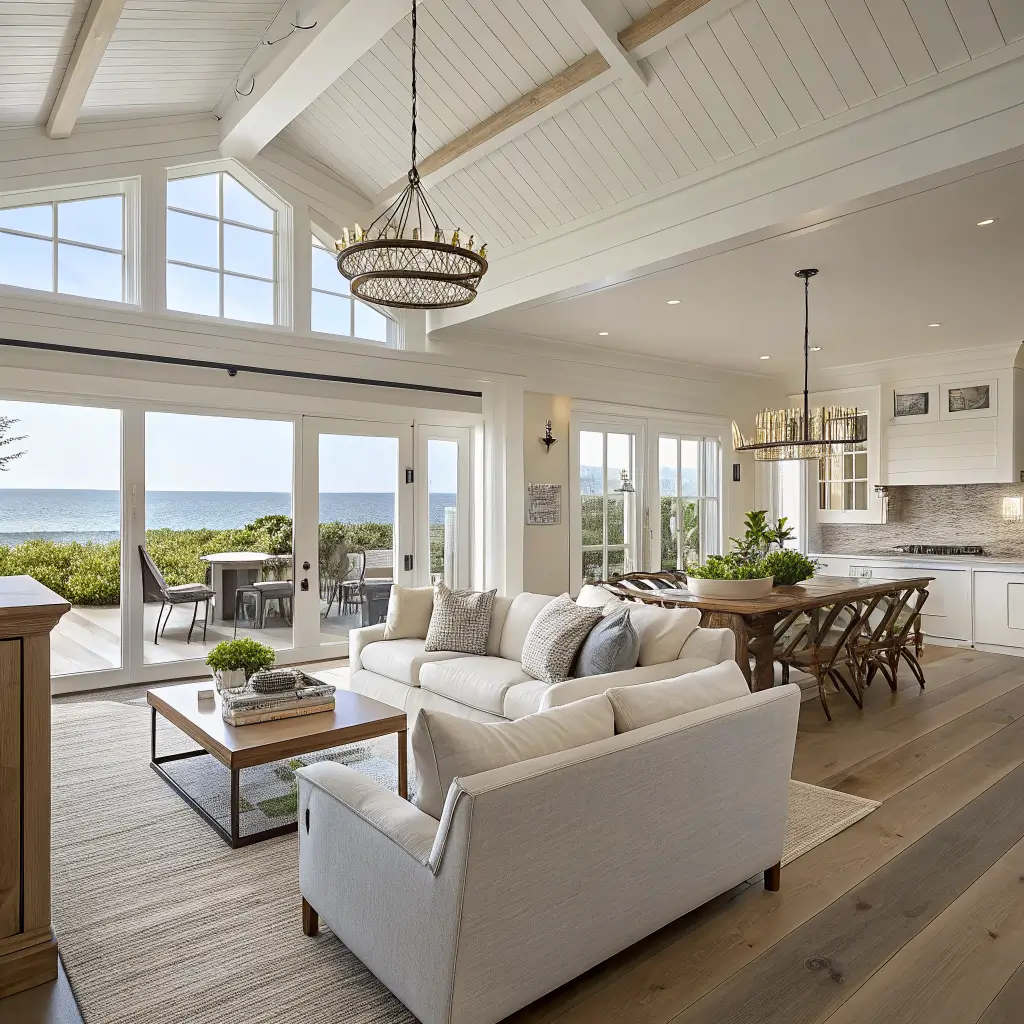
This is where most coastal rooms go sideways. People reach for bright nautical blue and stark white and end up with a room that looks like a chain seafood restaurant. The trick is to keep the base soft and warm, not crisp and chilly.
Whites and off-whites I’d actually use:
– Benjamin Moore Chantilly Lace (clean, slightly cool)
– Benjamin Moore White Heron (warmer, my favorite for north-facing rooms)
– Sherwin Williams Pure White or Snowbound
Soft neutrals for walls or upholstery:
– BM Pale Oak — looks like sand in good light, the safest pick I know
– BM Moonshine for a barely-there gray-blue
Blues and greens with no neon edge:
– BM Beach Glass, Palladian Blue, Boothbay Gray
– SW Sea Salt (the famous one — pale, soft, reads green or blue depending on light)
Accents, used sparingly:
navy, coastal charcoal, faded coral, sea glass green.
A rule I follow: wall paint goes in eggshell, trim goes in satin. Flat reads chalky in beach light; high gloss looks plasticky. Eggshell is the right amount of subtle sheen for a coastal room.
The Materials That Do the Heavy Lifting
Coastal style is really a texture story. If you nail the materials, the color almost styles itself.
– Natural fibers: seagrass, jute, water hyacinth, rattan, wicker
– Light woods: white oak, whitewashed pine, driftwood finishes
– Fabrics: linen, washed cotton, cotton duck, gauzy sheers
– Glass and ceramics: clear, sea glass green, soft blue
– Metals: brushed brass, antique bronze — warm, never chrome
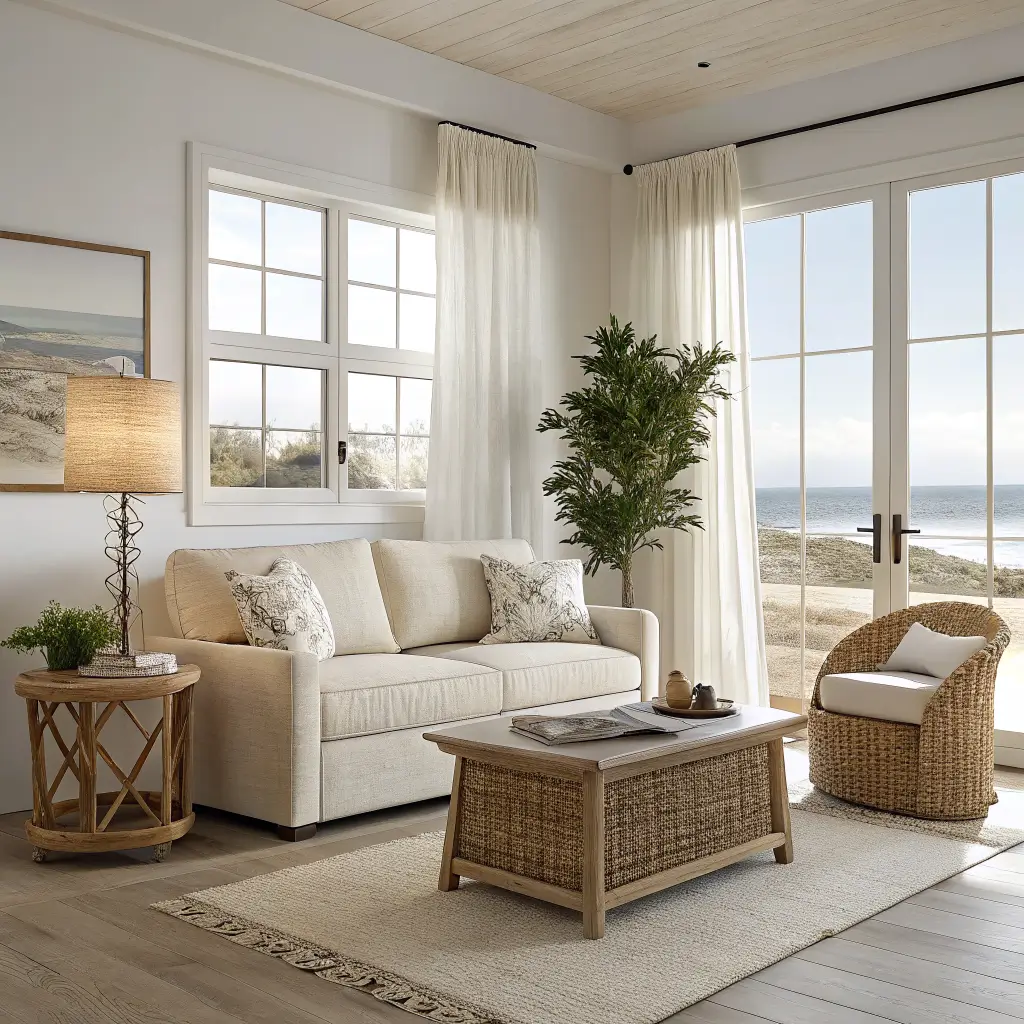
Aim for three to four different textures per room. A linen sofa, a jute rug, a rattan chair, and a glass lamp will do more for the mood than any anchor-shaped object ever could.
The Hero Pieces
If I were starting from an empty room, I’d buy in this order:
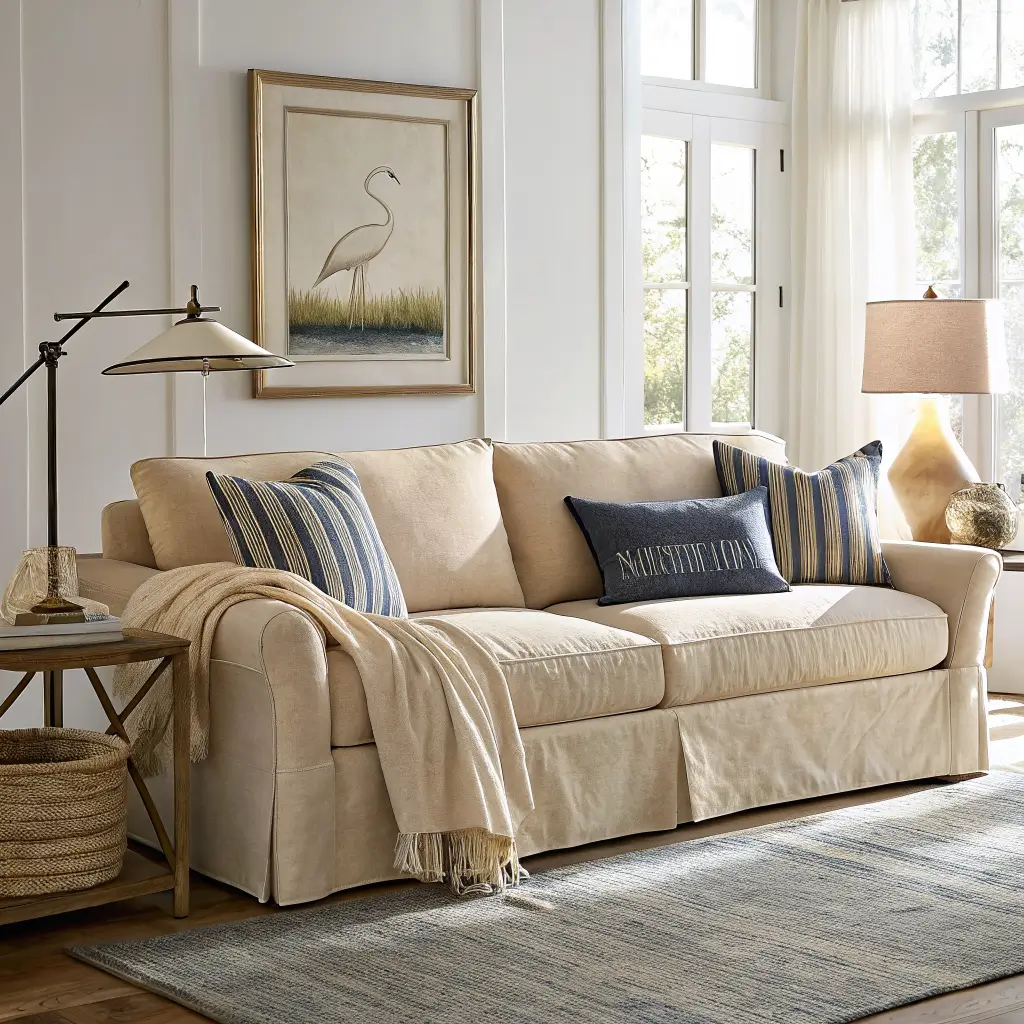
1. A slipcovered sofa in white or warm beige.
Get one with removable, washable covers and individual cushion covers, not a single bench seat slip. I bought a one-piece slipcover sofa from a discount retailer first and regretted it inside two months — the cover bunched, looked sloppy, and the cushions sagged. Tailored, multi-piece slipcovers are the difference between “beach house” and “tired futon.”
2. A light wood coffee table.
White oak, whitewashed pine, or a driftwood finish. Keep it cushion-height or just slightly below. Skip glass tops for coffee tables if you have kids — fingerprints will ruin you.
3. A natural fiber rug, sized correctly.
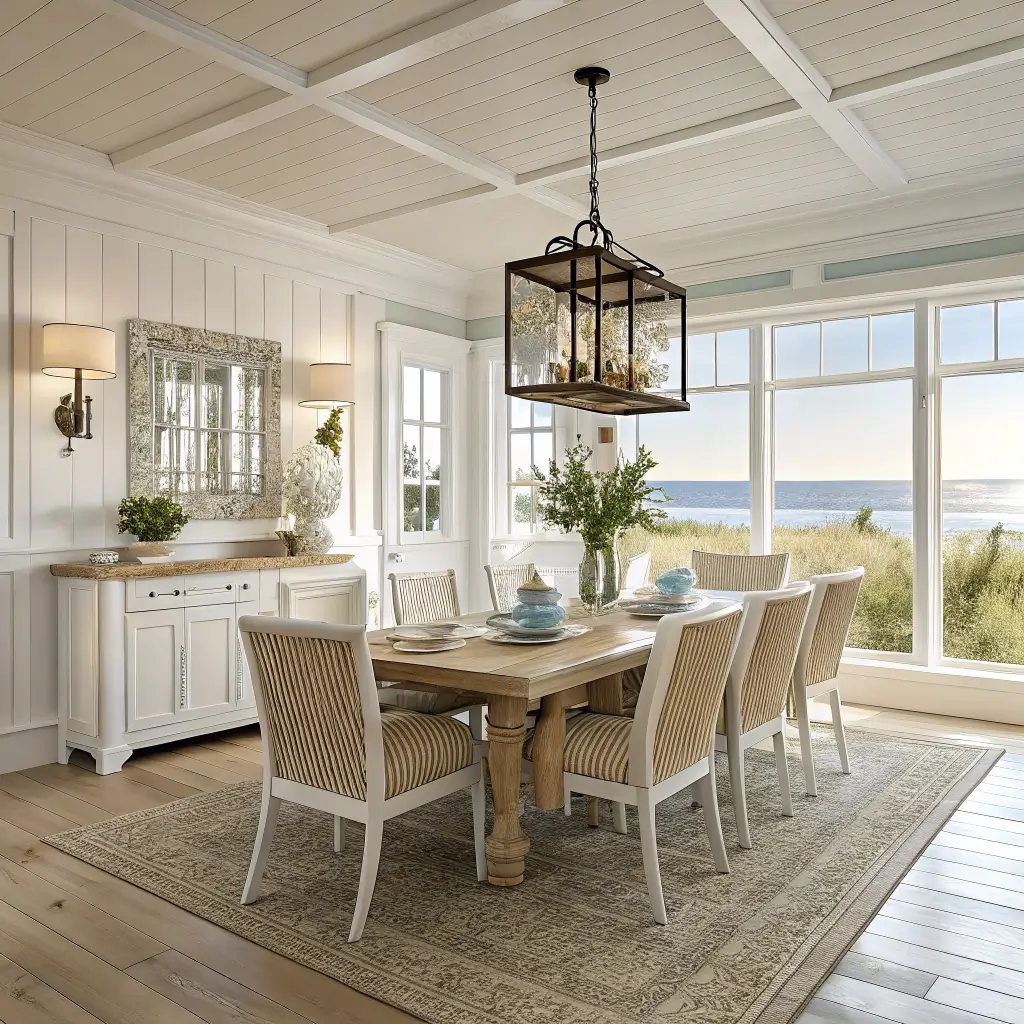
The biggest mistake people make is going too small. Your rug should sit under at least the front legs of the sofa and chairs, not float like a postage stamp in the middle of the floor. For most living rooms that’s an 8×10 minimum. For dining, the rug needs to extend 24 inches past the chairs on every side so chairs don’t catch when pulled out.
4. One rattan or cane accent chair.
This is the piece that quietly tells everyone the room is coastal without spelling it out. I found mine at a Saturday estate sale for $45 and re-caned the seat with a kit from the hardware store. Best decor purchase I’ve ever made.
5. Lighting.
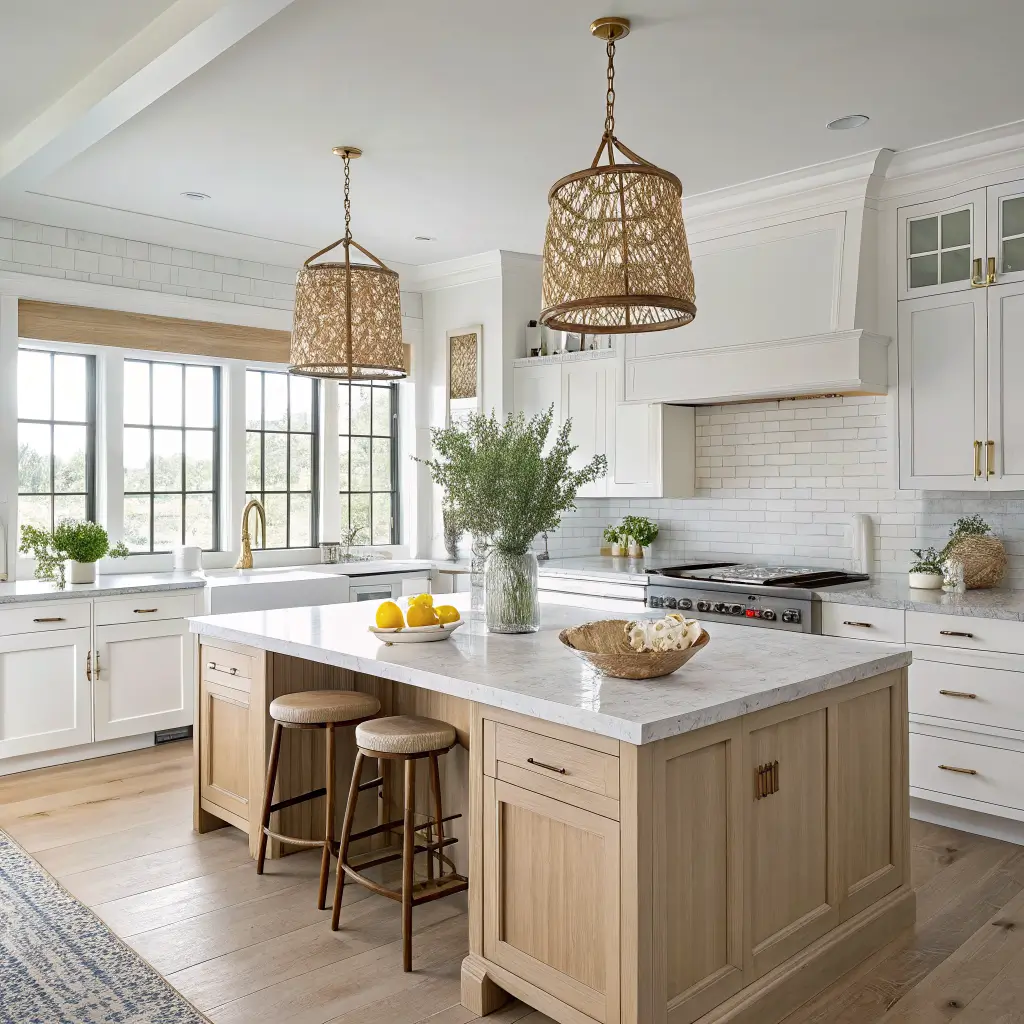
A wood-bead chandelier over the dining table, a rattan or rope pendant over the kitchen island, glass lamps with linen shades on side tables. If your budget is tight, change one fixture — the dining light. It’s the one people register first when they walk in.
How to Put a Room Together
Step 1: Foundation
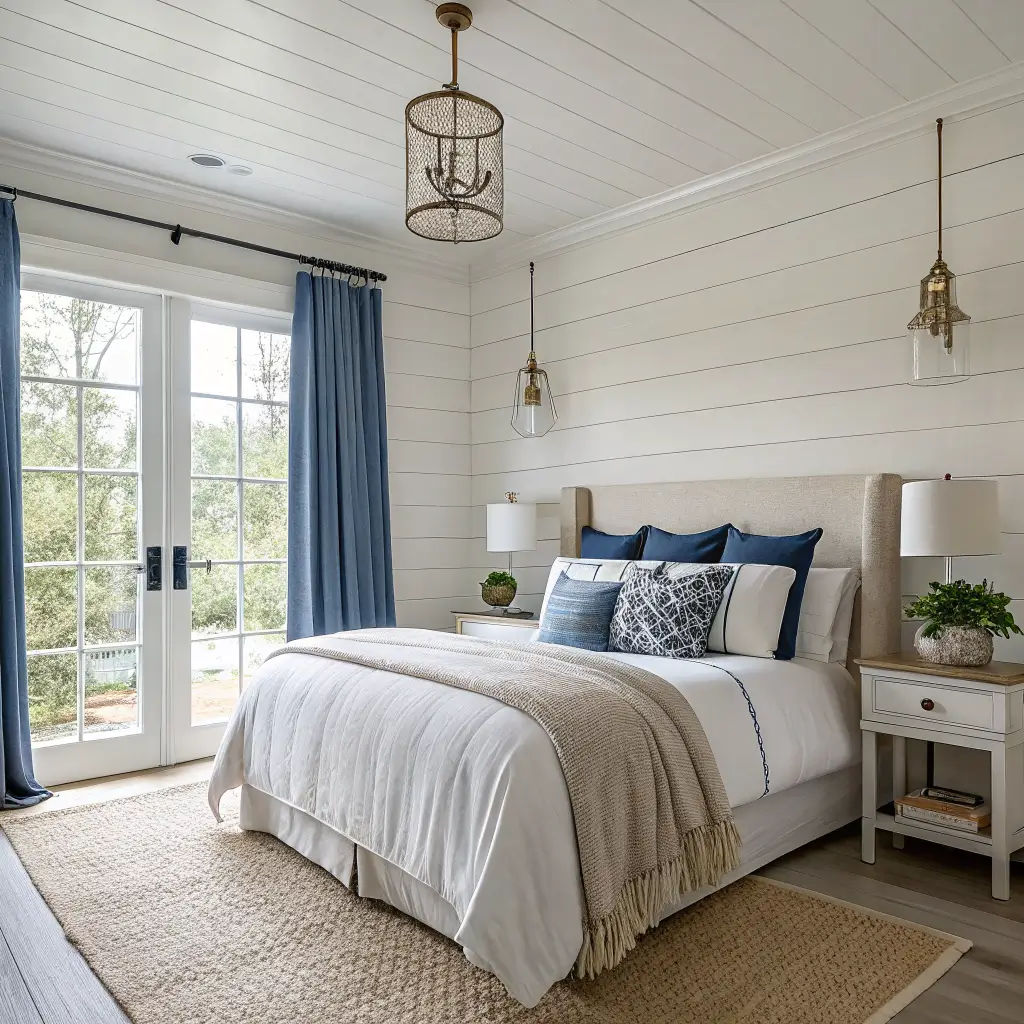
Paint first. Install any shiplap or beadboard before furniture goes back in. I’d do shiplap on one wall only — usually behind the bed or behind the TV. Every wall shiplapped is too much, and it dates the room.
Step 2: Anchor furniture
Sofa first, facing the focal point (a window, the fireplace, or the TV — pick one and commit). Avoid heavy rolled arms and dark leather. Add the coffee table, then side tables.
Step 3: Textiles
Two to five throw pillows on the sofa. My formula:
– Two larger pillows in a textured neutral (linen, slubby cotton)
– Two medium pillows in a pattern (a thin blue stripe, a subtle geometric)
– One small lumbar in a solid accent (navy, faded coral, sea glass green)
Mixing pillow sizes is what makes a sofa look styled instead of staged. All-matching pillows are the giveaway that someone bought a “living room set.”
Add one lightweight throw, folded at an angle over one arm. Not draped perfectly. A little casual.
Step 4: Lighting and mirrors
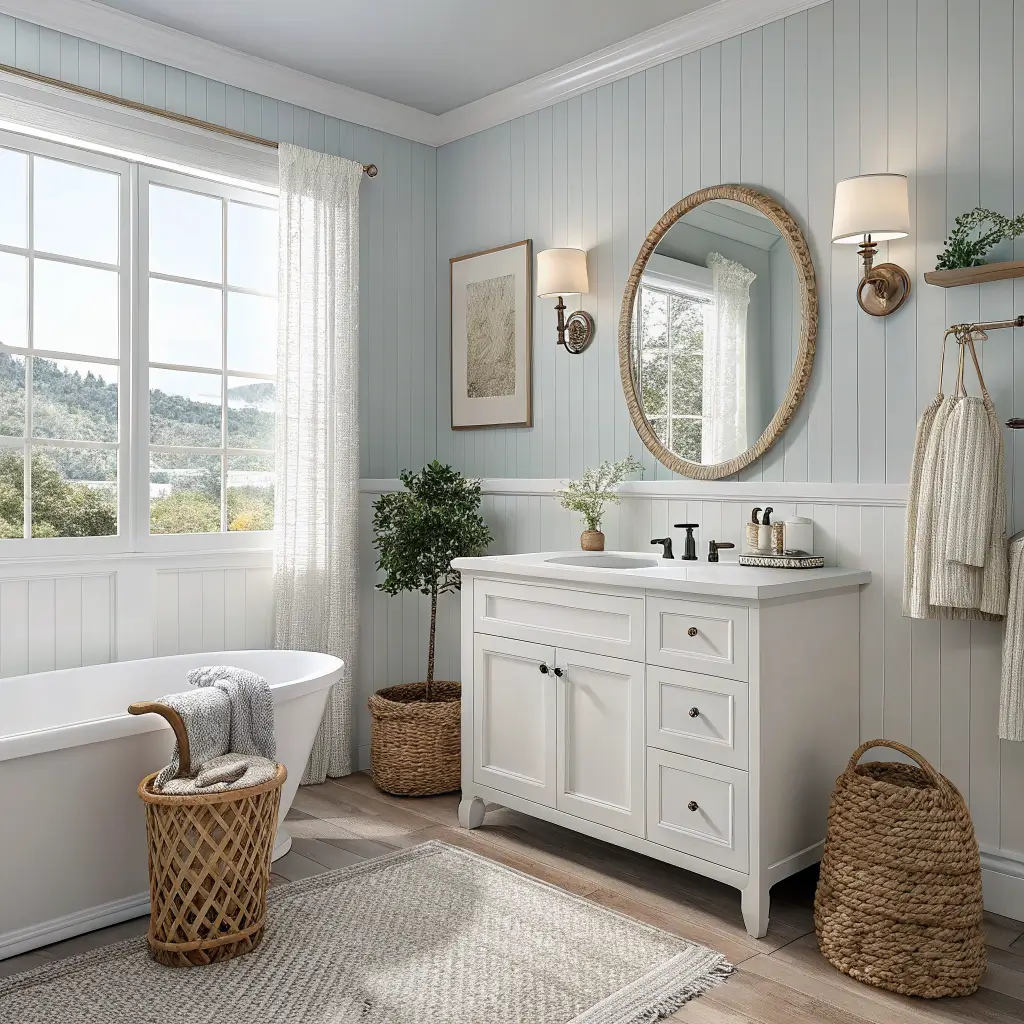
Hang a mirror opposite your biggest window. This is the single highest-return move in a small coastal room — it doubles the light and makes the space feel twice as deep. Driftwood, whitewashed wood, or rope-wrapped frames all work.
Step 5: Accessorize
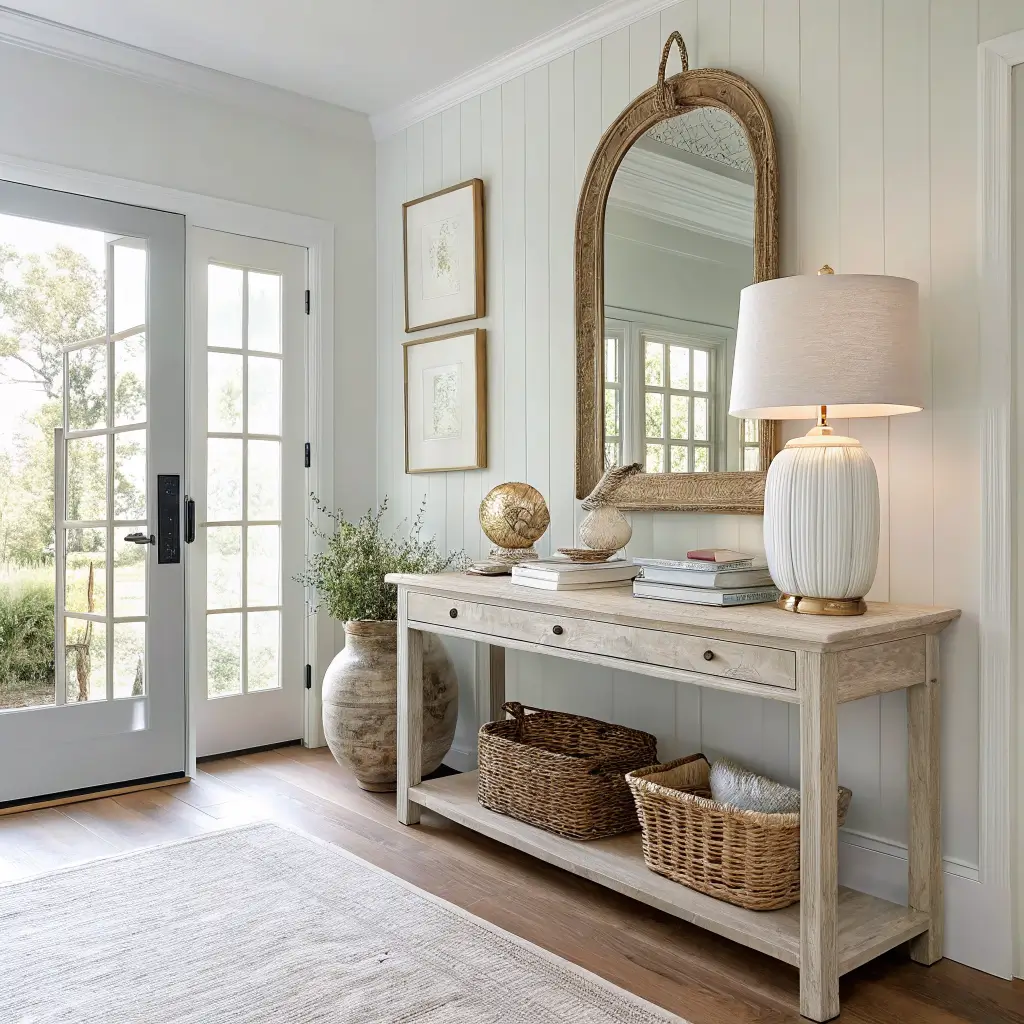
Style surfaces in clusters of three at varied heights. A lamp + a short stack of books + a small clamshell or ceramic bowl on a console works every time. On open shelves, alternate books, baskets, and one or two sculptural objects — leave at least a third of the shelf empty. Empty space is part of the design.
Step 6: Edit
Walk out of the room. Come back in. Remove two things. The room will look better.
The 60-30-10 Color Rule
I use this on every room.
– 60% light neutrals — walls, big upholstery, curtains
– 30% soft blues and warm woods — rug, coffee table, accent chair
– 10% high-contrast accents — navy pillow, black iron lamp, faded coral throw
Keep your big pieces neutral so you can change pillows and art seasonally without buying a new sofa.
Mistakes I’ve Made (So You Don’t Have To)
The theme trap. My first attempt at this look had a rope mirror, an anchor pillow, a sailboat painting, a “BEACH” sign, and a bowl of shells. It looked like a gift shop. Pick one or two themed objects max per room. Let texture and color do the rest.
Too-dark wood. I held onto a dark espresso coffee table for two years trying to make it work with a white slipcover sofa. It always looked like two roommates who didn’t get along. I finally chalk-painted it in a warm off-white, sanded the edges back, and the room exhaled.
Heavy curtains. Drape rods belong 4–6 inches above the window frame and extend 8–12 inches past each side, with light linen or cotton panels that puddle slightly on the floor. Heavy lined drapes that fall right at the window frame make a room feel short and dark.
Cluttered surfaces. Every coffee table doesn’t need a tray, a candle, a stack of books, a vase, a bowl, and a remote caddy. Two or three objects, breathing room around them. That’s it.
Too much shiplap. I said it above. Saying it again.
Seasonal Updates Without Redecorating
The whole point of building a neutral base is that small swaps shift the mood.
– Summer: brighter aqua and faded coral pillows, a striped runner in the kitchen, a bowl of lemons
– Fall/winter: chunky cream or oatmeal knit throws, darker navy pillows, a few dried grasses in a tall glass vase
– Holiday: a dried-grass wreath, white candles in clear hurricanes, plain white string lights — skip red and green entirely
Plants That Belong in a Coastal Room
The greenery matters more than people think. My picks:
– Olive tree (4–6 ft) in a woven basket — the single best plant for this style
– Fiddle leaf fig in the corner past the sofa, if you have decent light
– Snake plant for bathrooms and low-light spots
– Pampas grass in a tall ceramic vase — a few stems, not a whole field
Skip fake ferns. Fake palms in particular age a room ten years.
Keeping the Whole Home Cohesive
If you’re styling more than one room, repeat materials. Same rattan tone across spaces. Same wood finish on side tables in the living room and nightstands in the bedroom. One white paint across all the trim. This is the quiet move that makes a home feel designed instead of decorated room by room.
And keep closed storage everywhere — lidded baskets, cabinet doors, drawers. A coastal room reads calm because nothing visible is out of place. Hide the cords, hide the mail, hide the kid stuff. The look depends on it.
That’s the whole thing. Light walls, natural textures, restrained color, real plants, and the discipline to stop styling before the room gets busy. Build that base and you can live with it for years without it feeling like a phase.
Conclusion
The coastal home decor I remember best was in a house on Cape Cod where every room had a different shade of white, every window had a view of the water, and every piece of furniture looked like it had been carried in from the porch during a storm. The owner said she had never bought anything new. She had inherited, found, or been given every item in the house, and that is why it felt like a home instead of a rental.
More Decor Ideas to Explore
- Coastal Farmhouse Decor: How to Mix Beach and Rustic Without It Looking Like a Souvenir Shop
- Coastal Bedroom Decor: How to Get the Modern, Calm Version (Without the Seashell Clichés)
- Tiny Bathroom Ideas That Actually Work: A Real Guide for Small, Awkward, and Windowless Baths
- 16 Lake House Bathroom Ideas That Feel Like a Morning Swim