Rustic Coastal Decor: How to Get the Look Without It Feeling Like a Beach Gift Shop
Rustic coastal decor is what most people actually want when they say they want a “beachy” home — calm and breezy, but warm and grounded, not a wall of seashells and rope-wrapped picture frames. I’ve been styling my own place this way for about four years now, and the first version was, frankly, embarrassing. I had a navy anchor pillow. I had a sign that said “BEACH” with an arrow. I lit a driftwood candle next to a ceramic starfish.
It looked like a rental in Cape May.
What I’ve landed on since is quieter, more textural, and reads as a real home that happens to feel like the coast — not a theme. Here’s how I’d build it from scratch, what to spend money on, and what to skip.
What Rustic Coastal Actually Is (and Who It’s For)
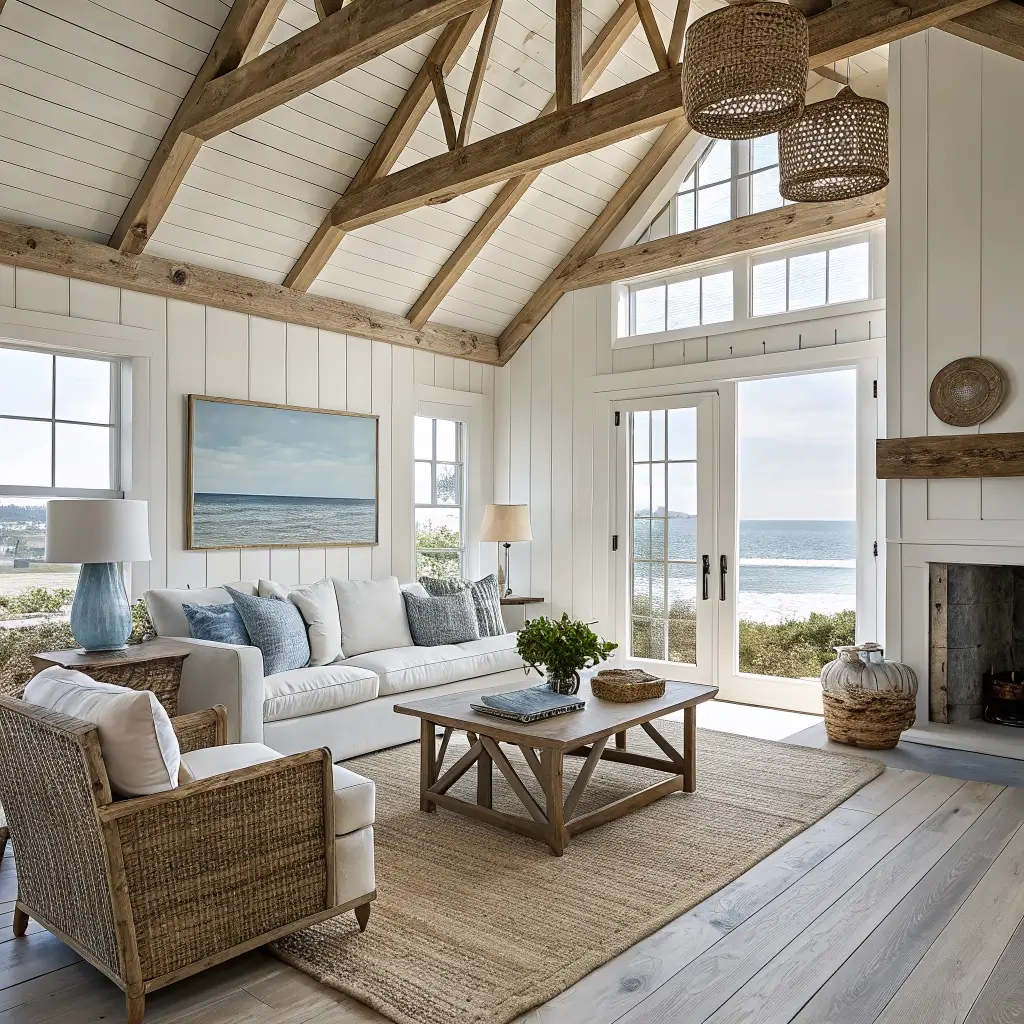
Think of it as three styles in conversation: coastal brings the light palette and airiness, rustic brings reclaimed wood and rough texture, and a touch of farmhouse or modern organic keeps it from tipping too cute or too literal. The result is a room that feels lived-in but edited, with natural materials doing the heavy lifting.
It’s a good fit if you want a relaxed, weathered look that still feels like an adult lives there. It works in small to medium rooms especially well because the whole approach depends on lightness and restraint — you’re layering texture, not piling on stuff. Open-plan spaces work too, as long as you separate zones with rugs and repeat finishes across them.
Year-round is one of the real selling points. Soft linens and woven baskets carry the look through summer; thicker throws and darker wood accents make it feel like a winter cabin near the water.
The Palette I Keep Coming Back To
– Warm white (not stark white — go for something with a drop of cream)
– Sand and oatmeal
– Driftwood and weathered oak tones
– Soft blue, chambray, and a hint of indigo
– Sea-glass green
– Fog gray
– Black, in small doses, for contrast
That’s it. If a color doesn’t fall inside that range, I don’t buy it. The discipline is what makes the look hold together.
Materials That Do the Work
Reclaimed wood, oak, rattan, wicker, jute, linen, cotton, rope, cane, stone, and shiplap or beadboard if you’re going further with the walls. If you can name five of those in a single room, you’re most of the way there.
The Hero Pieces
If I had to start over tomorrow with an empty room, this is where I’d put the money.
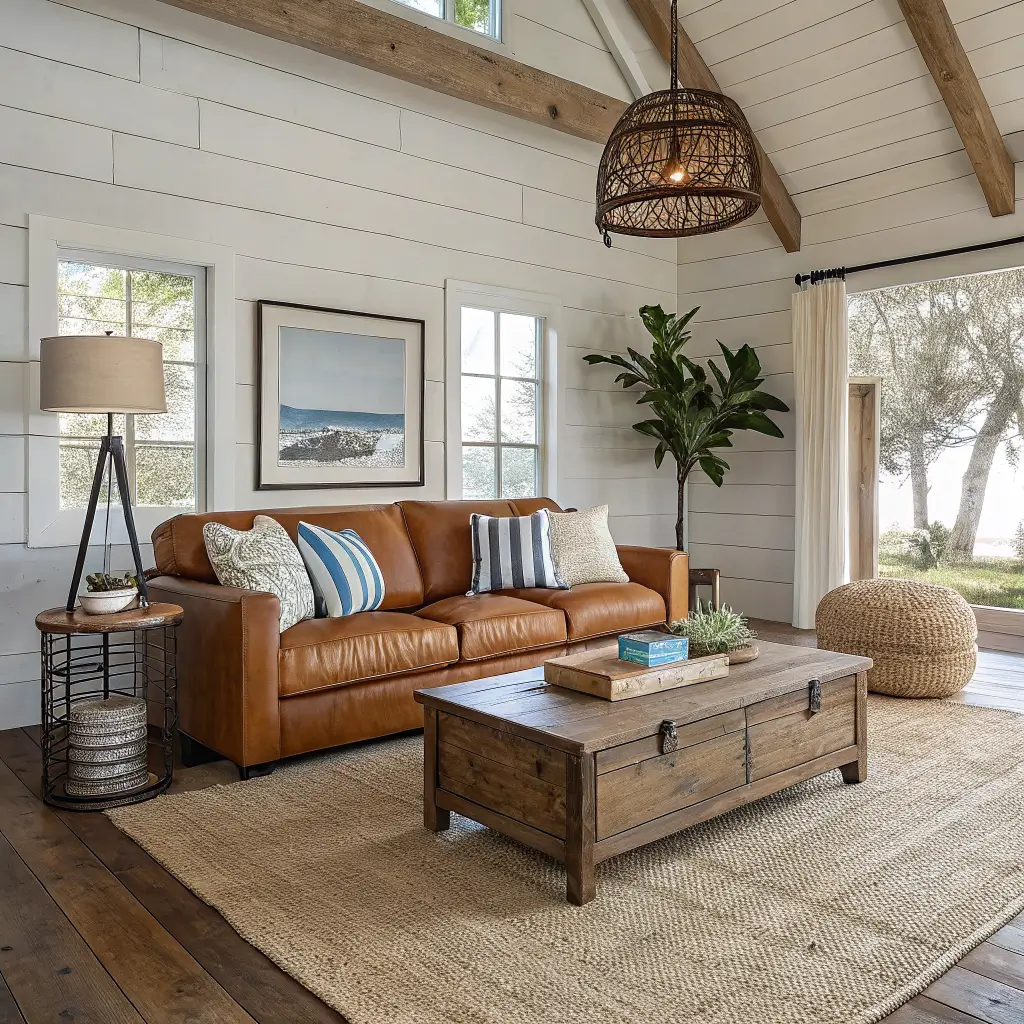
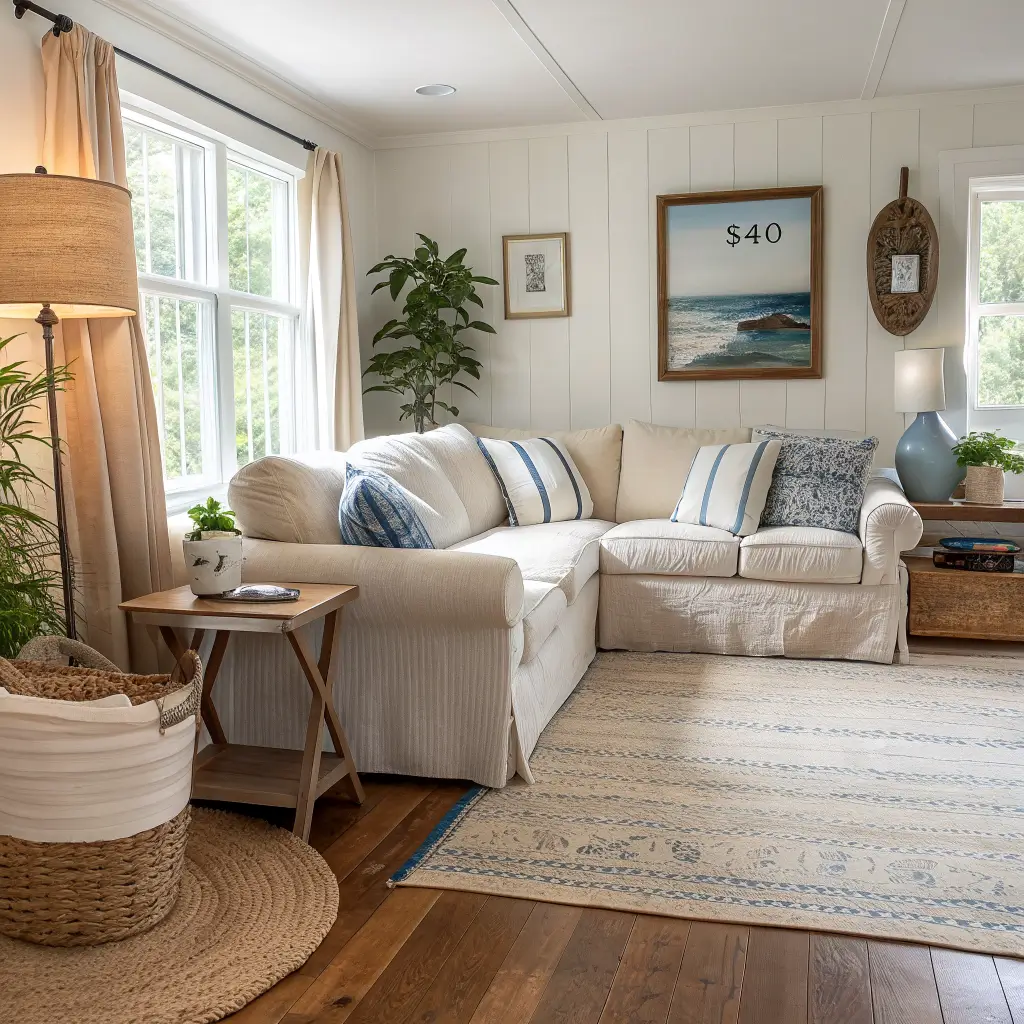
The sofa. A linen slipcovered sofa is the classic move, and slipcovers can come off and get washed, which matters. If you have pets or kids, a warm brown leather sofa in cognac or nutmeg is the smarter call — it ages well and the brown reads rustic without going farmhouse-heavy. I have a slipcovered one in oatmeal and re-wash the cushion covers every couple months. Worth it.
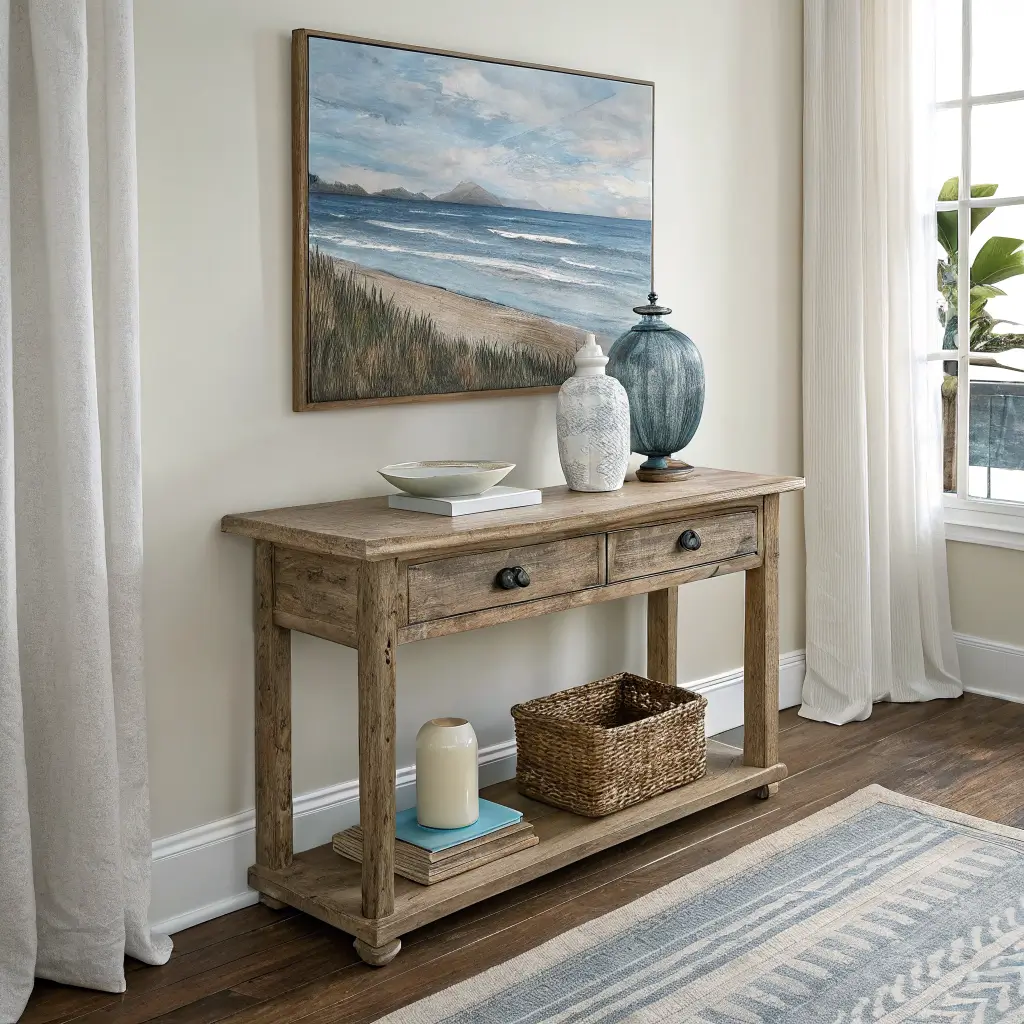
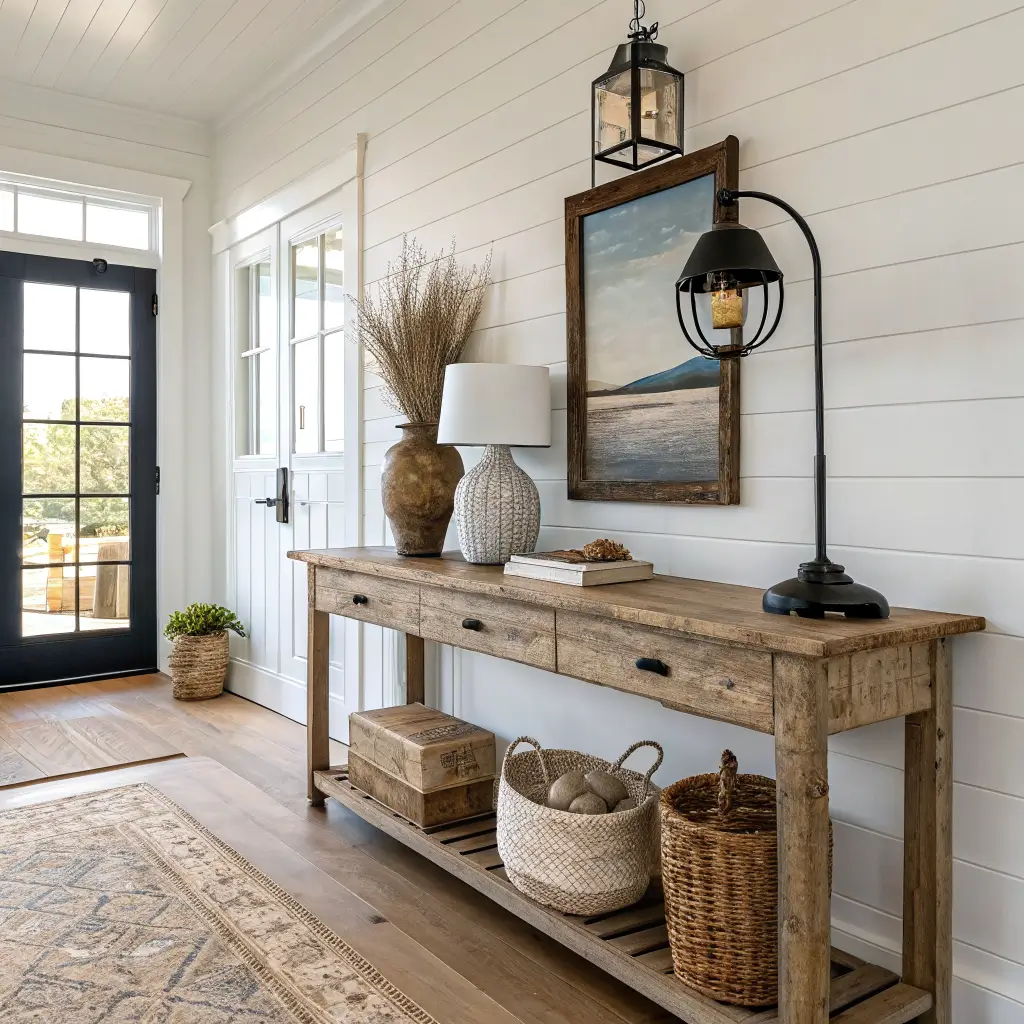
One major wood piece. A reclaimed wood coffee table, a distressed oak console, or a weathered sideboard. This is the rustic backbone. Don’t buy matched sets — one statement piece is doing more work than a coordinated trio.
A jute or natural-fiber rug. A big one. Undersized rugs are the single most common mistake I see in this style. The front legs of your sofa and chairs should sit on it at minimum.
Lighting with texture. A woven rattan pendant, a black metal sconce, or a rope-detail table lamp. The $79.99 rope-and-gold lamps you see at HomeGoods and similar stores work well here; you don’t need to overspend.
Accessories That Don’t Cross the Line
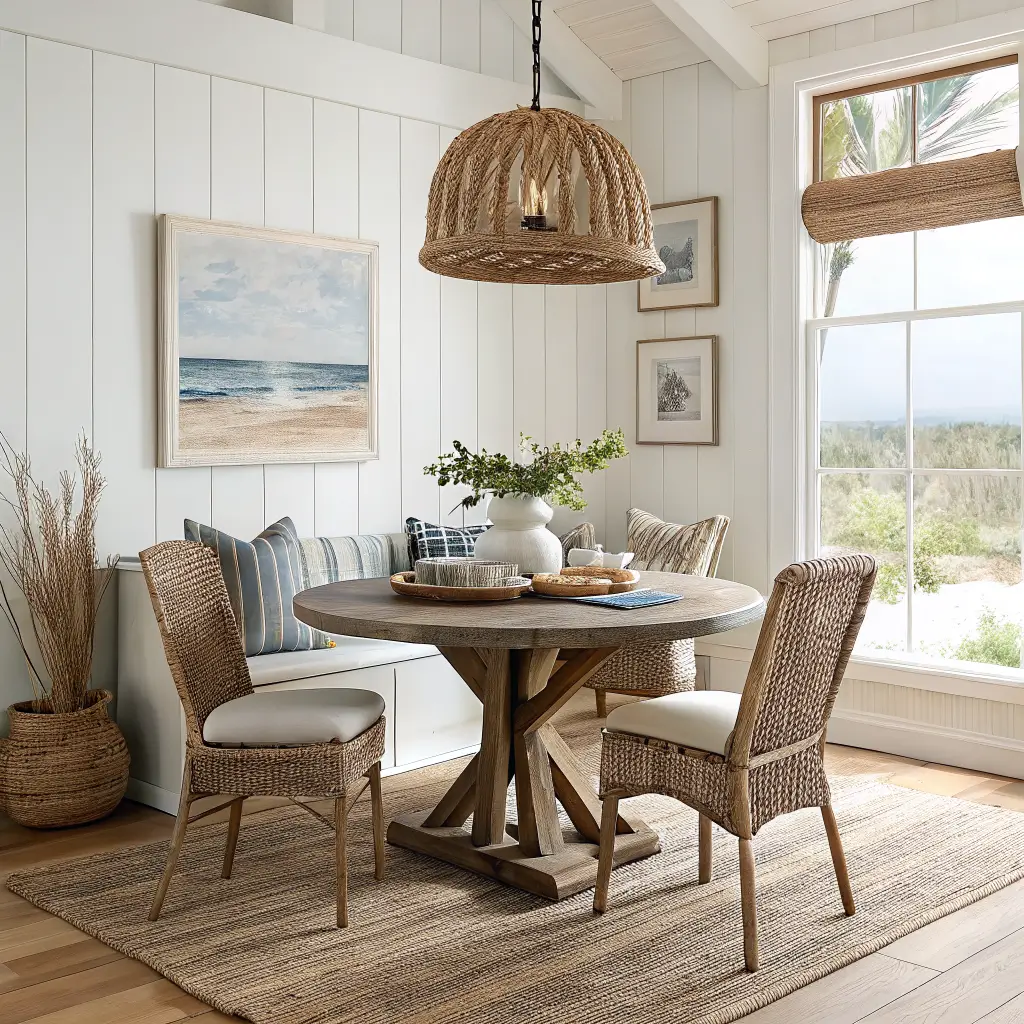
This is where rustic coastal goes wrong fastest. The rule I use: two coastal cues per room, max. A bowl of driftwood pieces and a single seascape painting. Done. Not a bowl of shells and a coral specimen and a framed knot diagram and a glass bottle of sand from your honeymoon.
What works:
– Blue-and-white ginger jars (one or two)
– Abstract seascape or horizon-line art, large scale
– A piece of actual driftwood on a console
– Pottery in cream, sand, or matte black
– Olive branches, dried grasses, or sea oats in a stoneware vessel
– Linen throw pillows with simple stripes
– Woven baskets for blankets and storage
What to skip: anchor anything, lighthouse anything, signs with beach-related words, ship’s wheels, mounted oars (unless they’re real and inherited), starfish in glass jars, and rope wrapped around lamp bases that didn’t come that way from the factory.
How to Actually Put It Together
Here’s the order I’d work in. It matters — I’ve redone rooms by jumping to accessories first and it never holds together.
Step 1: Strip it back. Clear the surfaces. Take down anything that’s reading too literal. You want to see the bones of the room.
Step 2: Get the base right. Walls in warm white, pale gray, or a whisper of blue. Benjamin Moore White Dove is my go-to — it has enough warmth that it doesn’t fight wood tones. If you’re brave, paint window trim or interior doors black for contrast.
Step 3: Place the anchor. Sofa, bed, or dining table goes in first, in a neutral upholstery or warm wood.
Step 4: Lay the rug. Big. Natural fiber. If you want a pattern, a faded blue-gray vintage-style rug layered over jute is the move.
Step 5: Bring in the rustic piece. Coffee table, sideboard, console — one substantial wood piece.
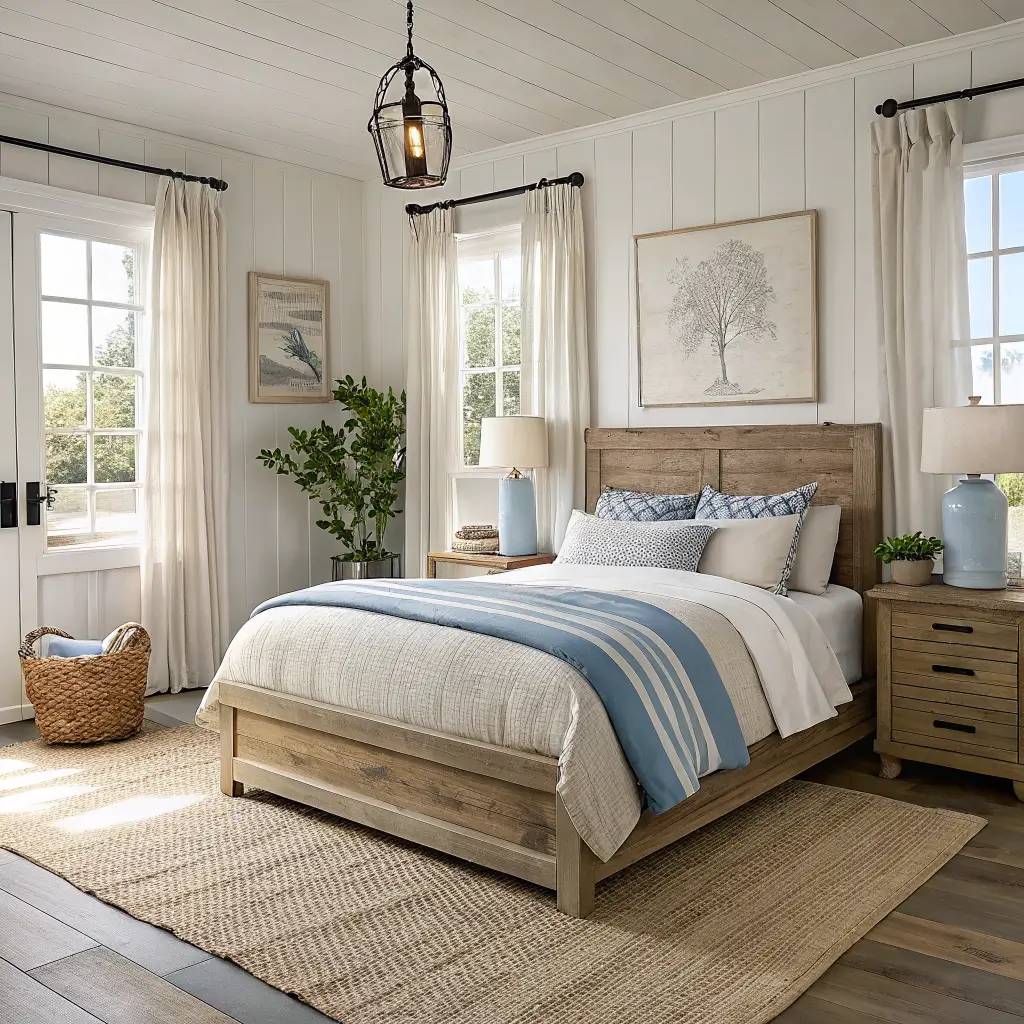
Step 6: Add textiles. Linen curtains in white or ivory. Pillows in cream, sand, and one or two with soft blue stripes. A chunky throw tossed over an arm.
Step 7: Edit the accessories in. Two coastal cues, a few organic touches (branches, pottery), and stop. Walk away. Come back the next day and remove one more thing.
The Texture Rule
Count your textures. You want at least 3 to 5 different ones in any room: wood grain, woven jute, smooth linen, rough ceramic, maybe leather or stone. Glossy surfaces and plastic finishes flatten the whole effect — this style lives or dies on tactile variety.
Budget Breakdown: Where to Spend, Where to Save
A refresh with what you already have, swapping pillow covers, adding a rug and some art, runs $150 to $400. A more complete room update with new furniture pieces lands closer to $800 to $2,500+.
Spend on:
– The sofa (you sit on it every day)
– The rug (size matters more than brand)
– One substantial wood piece
– Lighting if you’re replacing overhead fixtures
Save on:
– Pillow covers (Amazon and H&M Home are fine)
– Baskets (TJ Maxx, HomeGoods)
– Smaller art prints — a $39.99 framed coastal print does the same job as a $400 one if the image is good
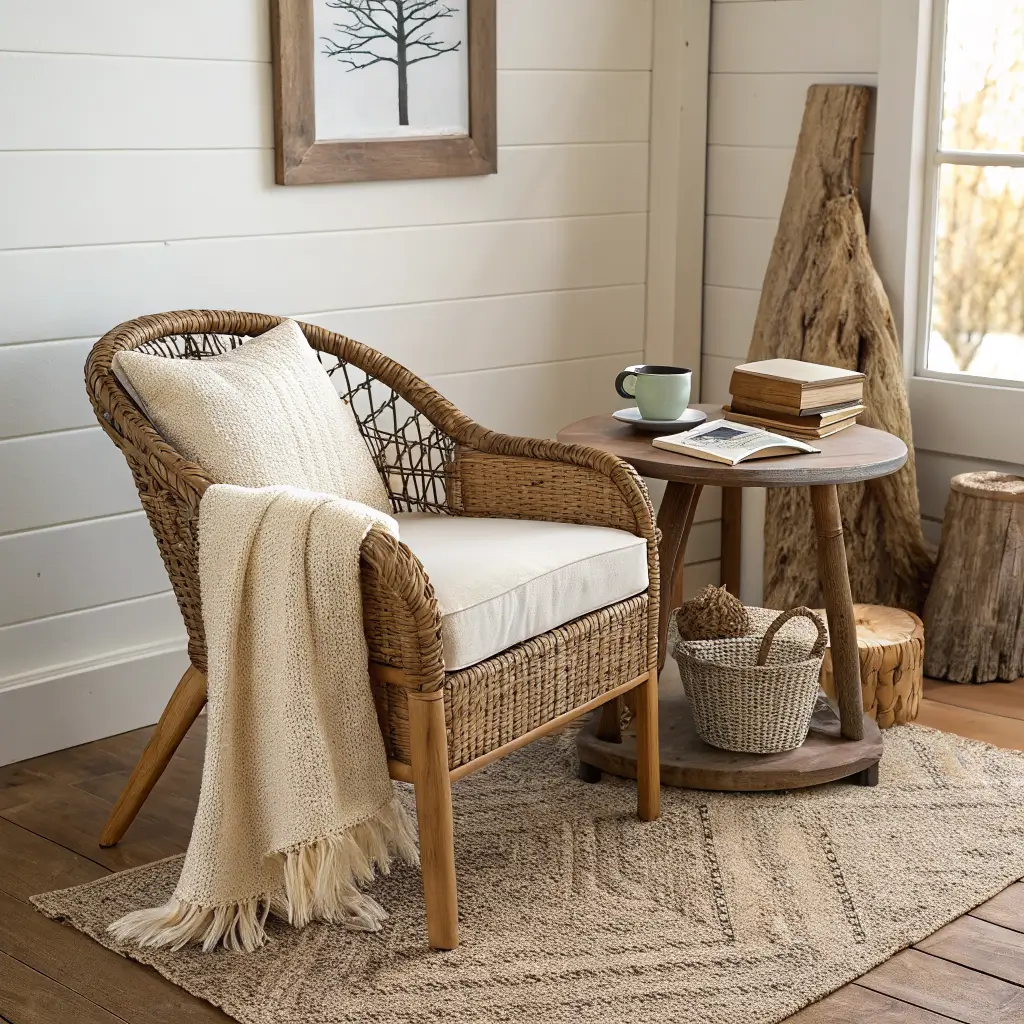
– Accent chairs in rattan (a $79.99 natural wood and rattan bistro chair can fill a reading corner)
The Mistakes I Made So You Don’t Have To
Too nautical. My first attempt, see above. Fix: let the materials carry the theme. Wood, linen, and jute already say “coast” without any anchors involved.
Too dark. I bought a heavy espresso console once and the whole corner went dead. Fix: keep the base airy. Light walls, lighter floors, and let one rustic piece carry the weight.
Matching sets. A coffee table and two side tables in the same finish from the same collection reads catalog, not collected. Fix: mix wood tones. A weathered oak coffee table with a black metal side table and a rattan stool feels real.
Too many small things. I had a console covered in seven little objects and it looked like a clearance shelf. Fix: fewer, larger pieces. One big ceramic vessel beats five small trinkets.
Ignoring contrast. All cream and beige can go flat. Fix: a few black accents — picture frames, a lamp base, drawer pulls — sharpen the whole room.
Seasonal Swaps That Actually Work
Spring and summer: lighter linen pillow covers, pale blue accents, a bowl of sea glass on the coffee table, sheer curtains let all the way down.
Fall and winter: swap in cream wool throws, oatmeal knit pillows, deeper wood candle holders, a heavier rug layered over the jute one.
The base furniture doesn’t change. Only the soft stuff rotates.
Cross-Style Variations
If you want to push the look in a specific direction:
– Rustic coastal + farmhouse: more shiplap, more distressed wood, black hardware, a farmhouse table in the dining room
– Rustic coastal + modern organic: cleaner silhouettes, less pattern, more oak and ceramic, almost no overt coastal references
– Rustic coastal + boho: layered rugs, more rattan, relaxed textiles — keep the palette muted or it tips into full bohemian
A Few Real Questions Worth Answering
Can you use leather in coastal decor? Yes, and I’d argue you should. A cognac or nutmeg leather sofa or armchair adds warmth and grounds the lighter elements. Avoid black leather — it fights the palette.
What’s the best rug for a rustic coastal living room? Jute or sisal, sized generously. If you want pattern, layer a faded blue-gray flatweave on top. Skip shag, skip anything with a glossy finish.
Is rustic coastal the same as coastal farmhouse? Close cousins. Coastal farmhouse leans harder on shiplap, white paint, and distressed everything. Rustic coastal is a bit more restrained and material-driven, less “fixer-upper.”
What wood tones work? Weathered oak, driftwood gray, light walnut, and reclaimed pine. Avoid orange-toned woods (red oak, cherry) — they fight the cool undertones in the palette.
The honest test for whether you’ve got it right: walk into the room and try to find the single object that “says beach.” If you can’t find one easily, you’re doing it correctly.
Conclusion
The rustic coastal decor that works is in a cabin where the beams are exposed, the floor is wide-plank pine, and the coffee table is a piece of driftwood that washed up after a storm. The owner has a wool throw on the sofa, a lantern on the mantel, and a window that rattles in the wind. It is not polished. It is not finished. It is a room that knows the coast is not always gentle, and it is built to weather whatever comes.
More Decor Ideas to Explore
- Neutral Coastal Decor: A Real Guide to a Calm, Light-Filled Home (Without the Anchors and Shell Jars)
- Very Small Bathroom Ideas: What Actually Works in 15–45 Square Feet
- Little Kitchen Ideas That Actually Work in 40–120 Square Feet
- Coastal Apartment Decor: A Renter-Friendly Guide to the Modern, Non-Kitschy Look