Who This Is For (and What It Costs)
Small bathrooms in the 15–40 sq ft range — think powder rooms, narrow hall baths, tight ensuites. If you’ve got a 3’×5′ or 5’×8′ footprint, this is written for you.
Rough budget brackets I work in:
Cosmetic refresh ($150–$500): paint, new shower curtain and liner ($25–$80), matching towel set ($40–$120), over-toilet shelving ($60–$200), peel-and-stick tile at $1.50–$5/sq ft.
Mini remodel ($800–$3,000): 24″–30″ floating vanity ($250–$900), lighted medicine cabinet ($200–$600), sliding glass door ($300–$800), compact toilet ($200–$500).
Full small-bath redo ($4,000–$10,000+): custom tile, wet room layout, heated floors, designer fixtures.
A weekend handles the cosmetic stuff. A new vanity, lighting rewire, or peel-and-stick floor takes 2–4 weekends if you’re doing it yourself. Plumbing and electrical past a basic swap — call someone.
The Style I Keep Coming Back To
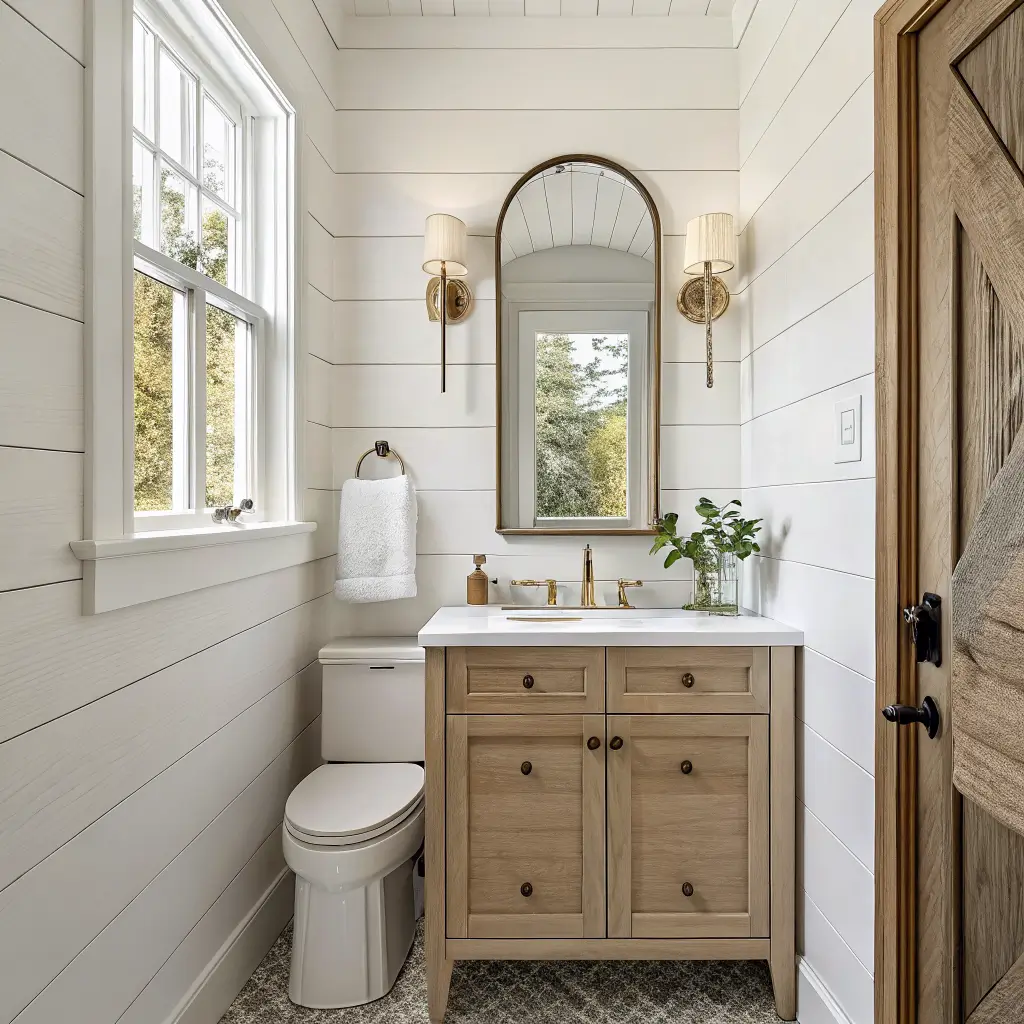
After trying a bolder, jewel-toned moment in my old apartment (deep teal walls, brass everything — too much in a windowless room), I now lean three directions that all work in tight square footage:
Modern minimalist spa: simple lines, light wood, one metal finish, integrated storage.
Soft Scandi: light oak, warm white, greige, linen.
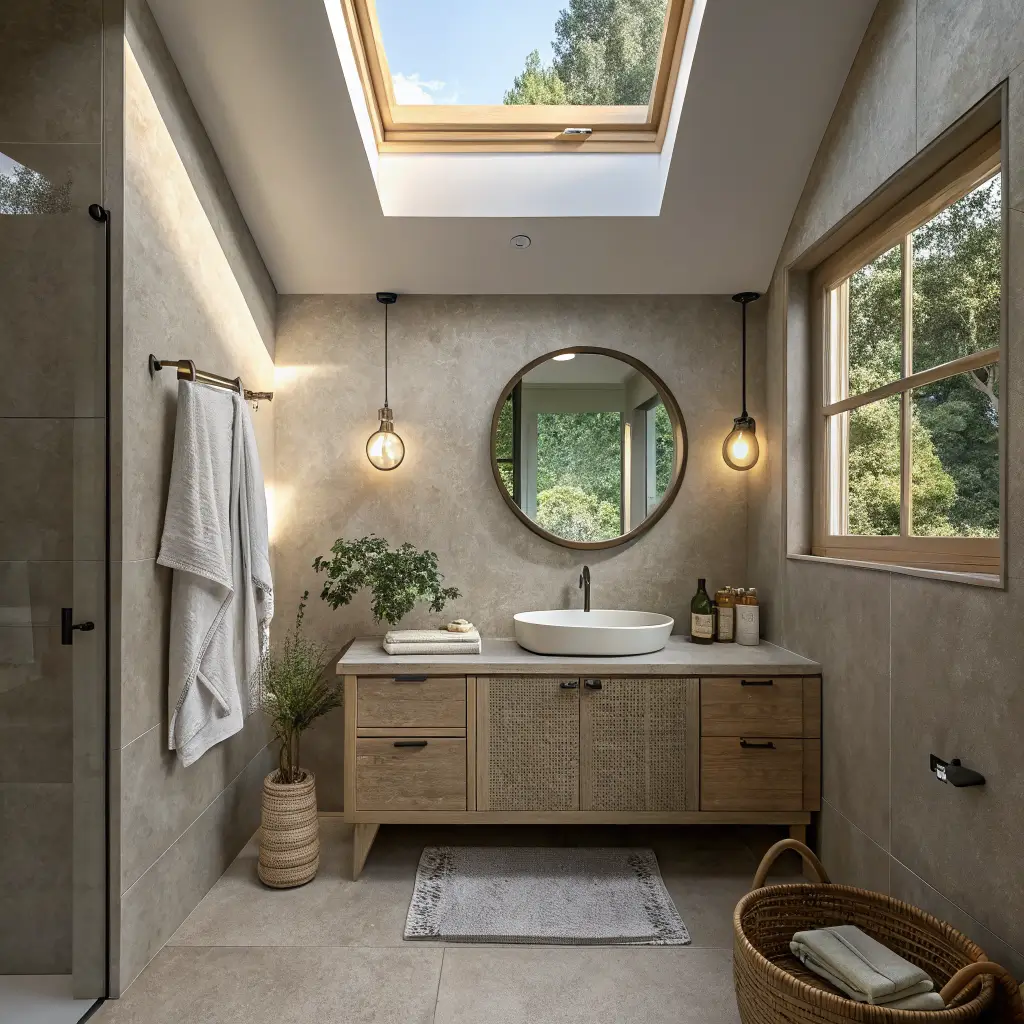
Japandi: muted earthy tones, stone-look tile, almost nothing on the counter.
The thread between them: light surfaces dominate, one warm wood tone, one metal, and clutter is hidden, not styled.
Colors I’d actually paint a small bath right now: warm white (Benjamin Moore White Dove), soft greige (Sherwin-Williams Accessible Beige), or — if you want color — a muted sage or dusty blue-gray on every surface including the ceiling and trim. Painting the ceiling the same color as the walls in a tiny bath makes the room feel taller, not smaller. I was skeptical until I did it in my powder room with a soft clay color. The walls stopped having a stopping point.
The Pieces That Actually Make a Small Bath Work
A right-sized vanity
This is where most people overshoot. A 24″–30″ wall-hung vanity is almost always the right call in a small bath. Wall-hung means you see floor underneath, which reads as more square footage and is easier to mop around.
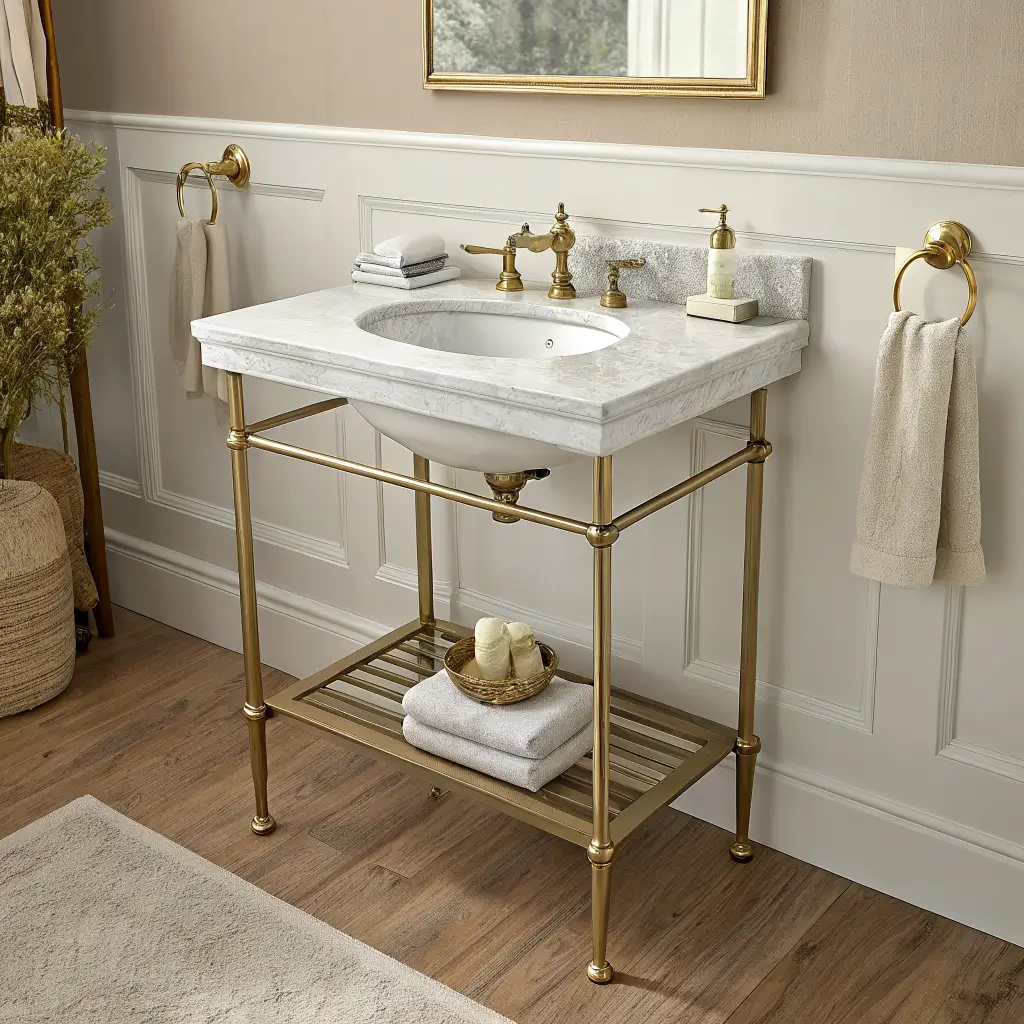
For powder rooms, a console vanity with open metal legs and a stone top looks expensive and takes up almost no visual space. I have a 24″ brass-legged console with a white marble top — about $480 — and it makes the room.
Storage that isn’t visible
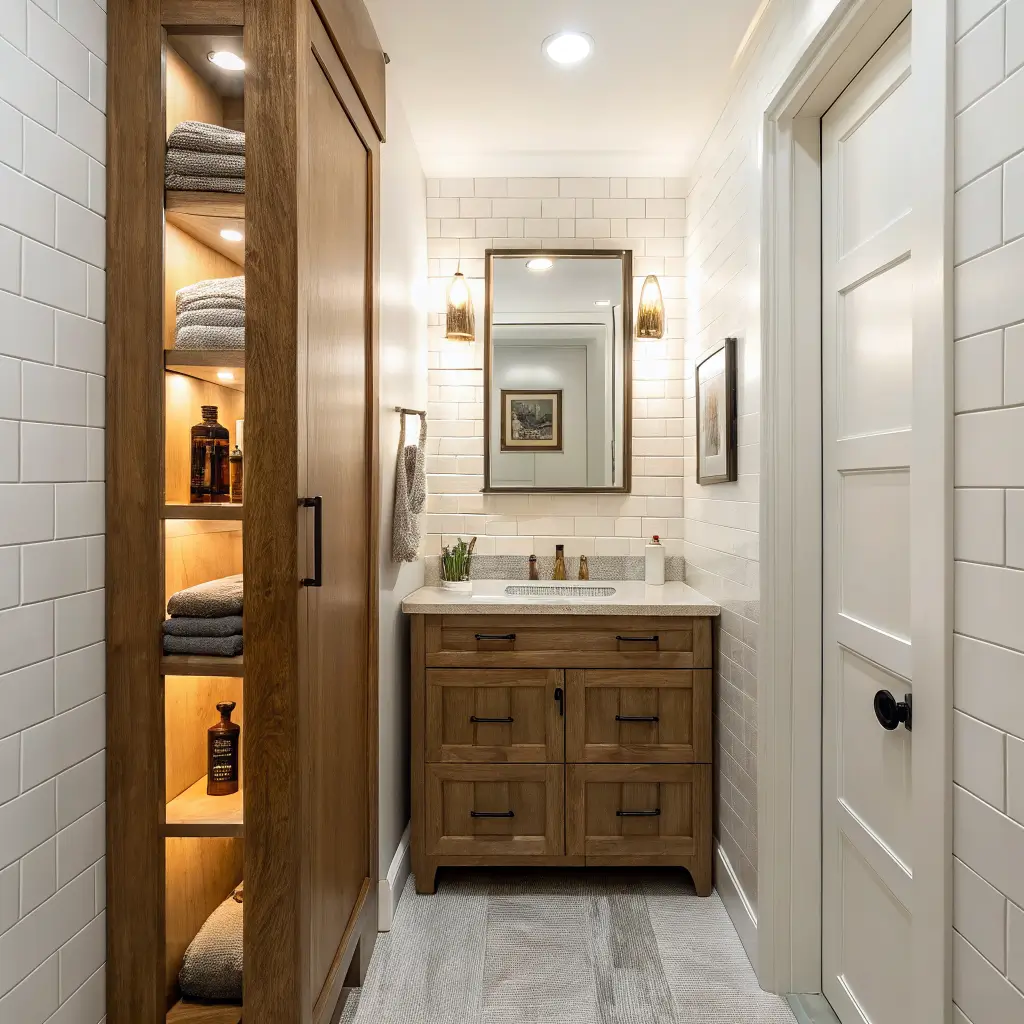
Open shelves with cute baskets photograph well and live badly. After a year of dust on my “styled” open shelving, I switched to closed storage and never looked back.
Recessed medicine cabinet, 20″–30″ wide. The newer ones with LED edge lighting, defog, and an interior outlet for your toothbrush are worth the $300–$500.
Over-toilet cabinet, not shelving — mounted 12″–18″ above the tank so the lid still comes off.
Tall narrow linen tower if you have one spare wall. 12″–15″ deep is plenty.
Lighting in layers
A single overhead bulb is the number one reason a small bath feels grim. You need at least two sources:
Sconces flanking the mirror at roughly eye level (around 60″–66″) for even face light. No raccoon shadows.
Vanity bar above the mirror if your wall is too narrow for side sconces.
Bulbs in the 2700K–3000K range. Cool white in a small bathroom makes everyone look ill.
Put the overhead on a dimmer. Non-negotiable.
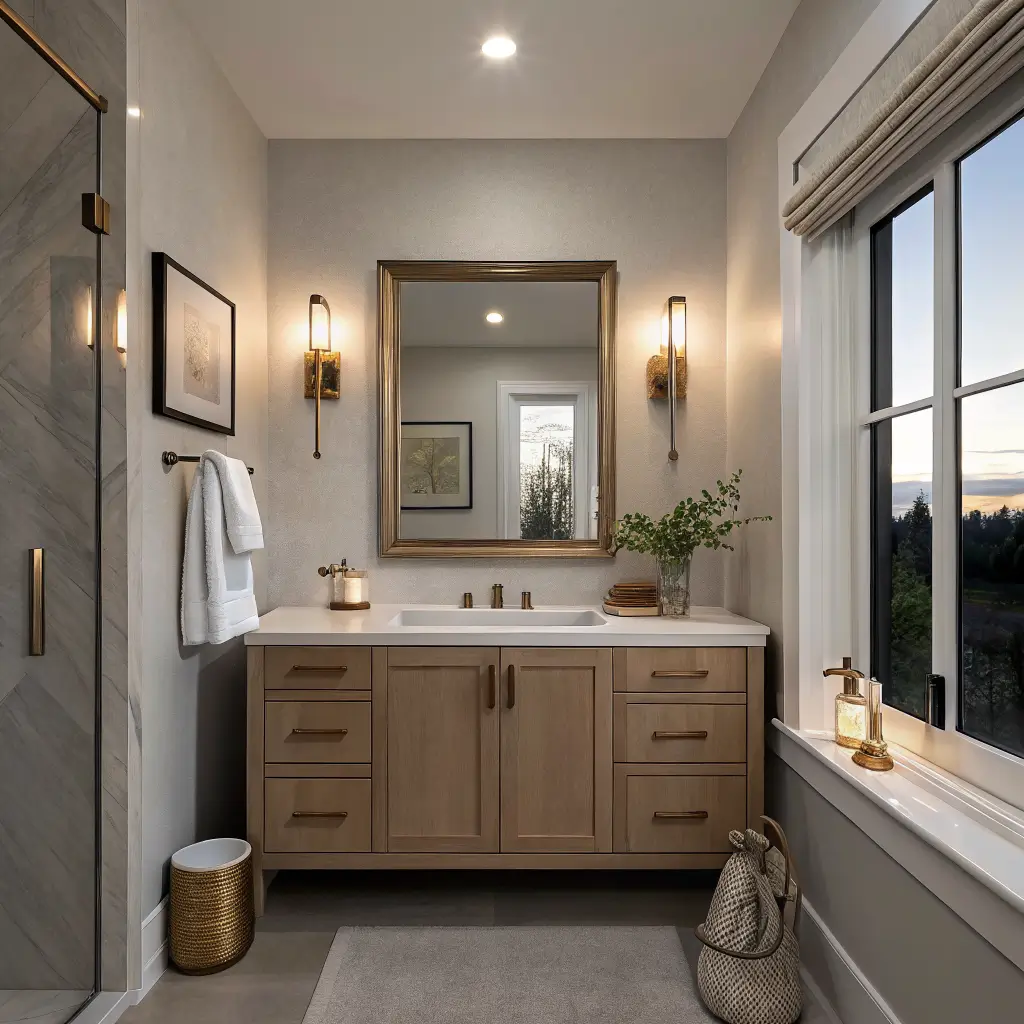
A mirror that’s wider than you think
Hang one mirror that’s as wide or slightly wider than the vanity, frameless or with a thin metal edge. In my hall bath I replaced a 20″ oval with a 30″ rectangle and the room visibly grew. For long narrow baths, a mirror that spans most of one wall genuinely doubles the sense of depth.
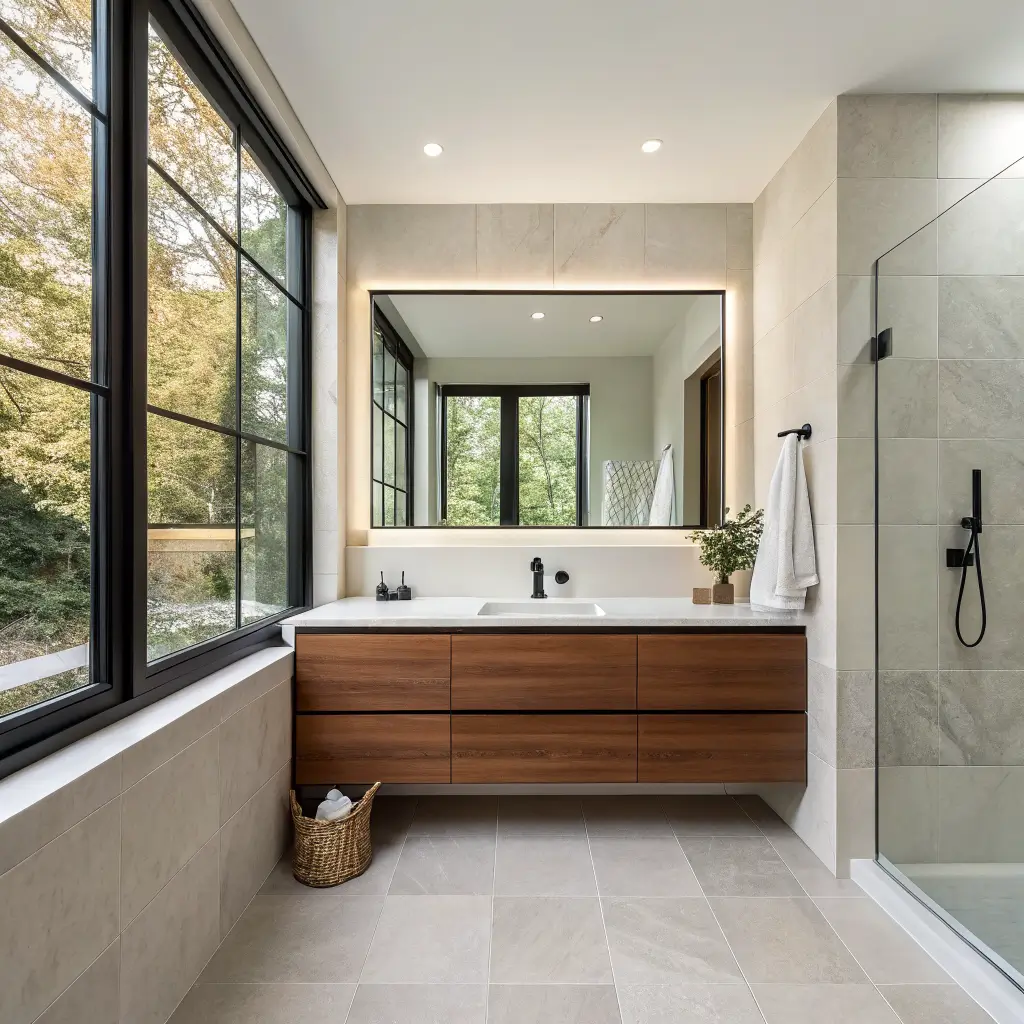
Glass instead of curtain (when possible)
A clear glass shower panel — even a single fixed panel — extends the sightline across the room. A shower curtain stops your eye dead at the rod. If you can’t swap to glass:
Hang the curtain rod 4″–6″ higher than standard and wider than the tub.
Pick a linen-look solid or simple stripe, not a busy print.
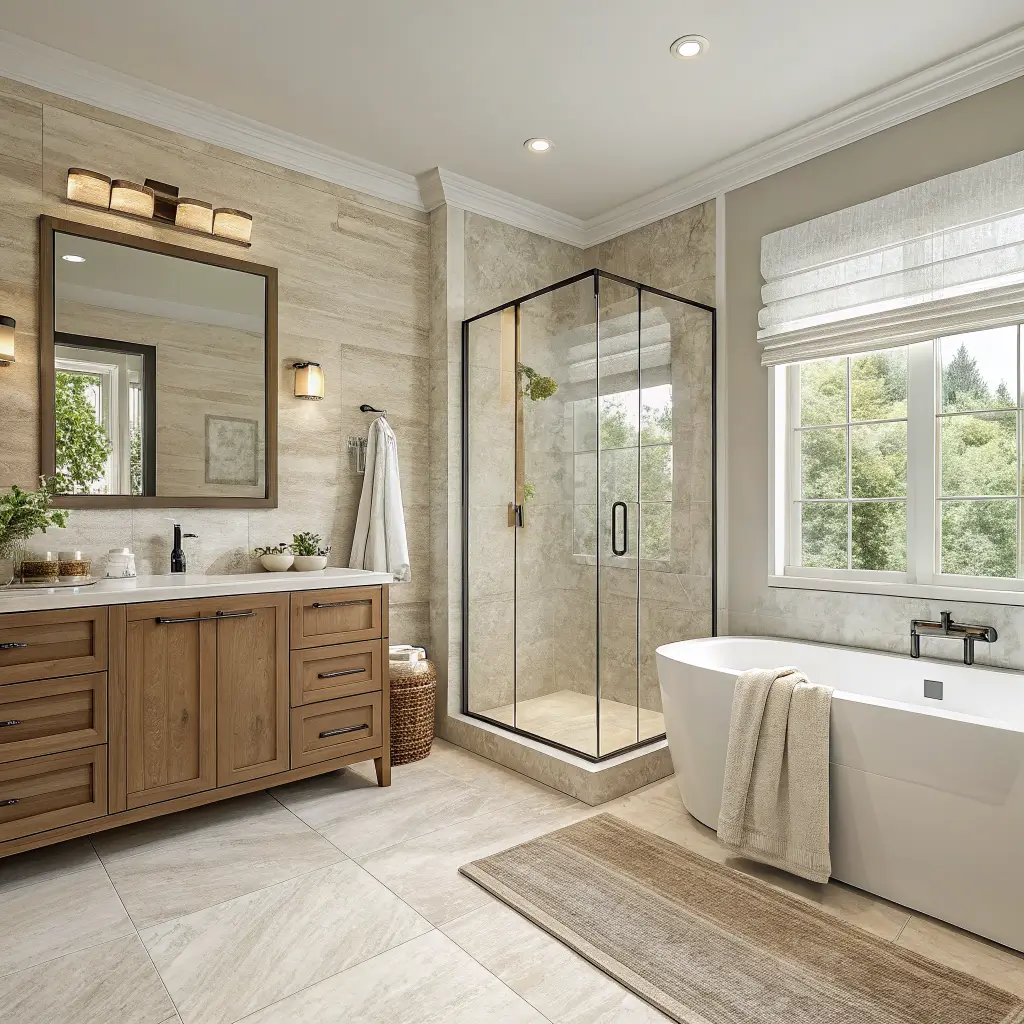
One metal, repeated
Pick a finish — matte black, brushed nickel, or brushed brass — and use it on the faucet, cabinet pulls, towel bar, hooks, toilet paper holder, and mirror frame. Mixing metals can work in big bathrooms. In small ones it just looks like you couldn’t commit.
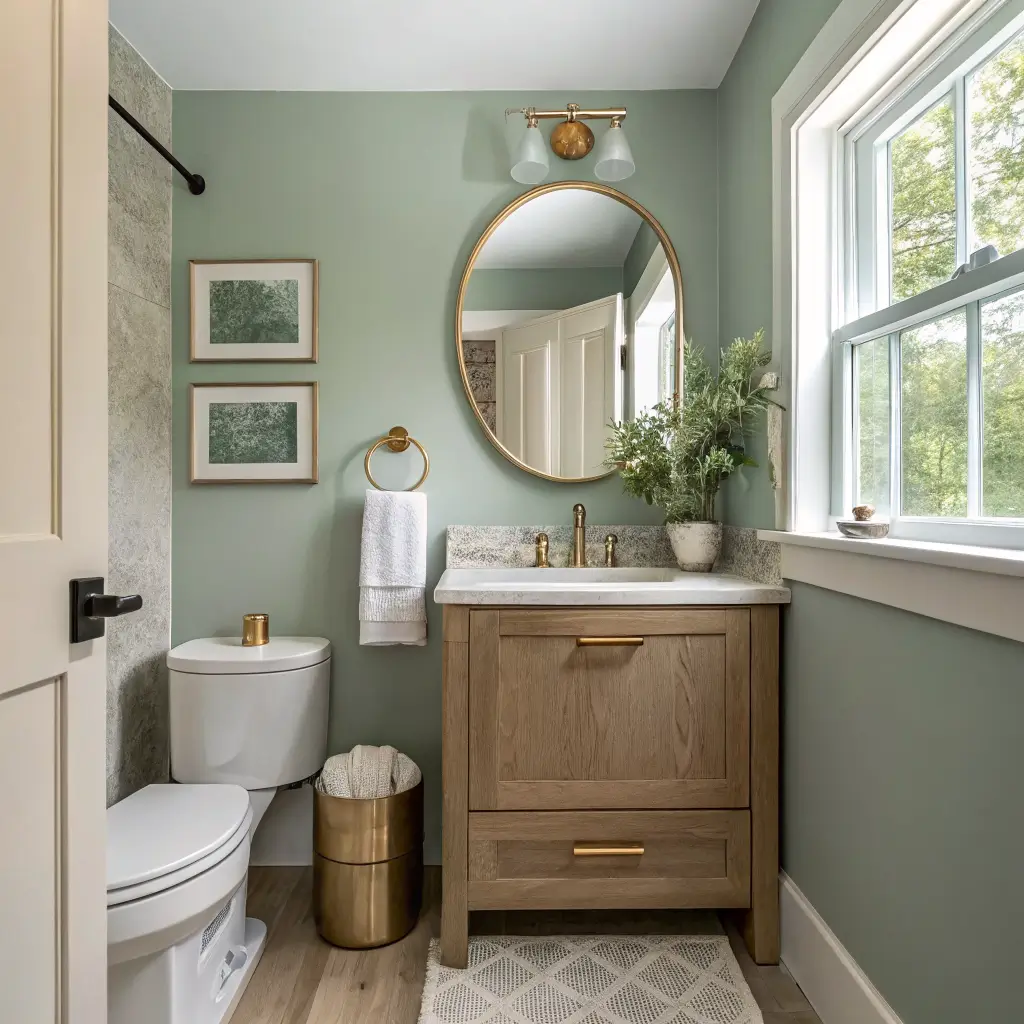
Putting It Together
Here’s the order I work in, because I’ve done it out of order and regretted it.
1. Paint everything first. Walls, ceiling, trim. Use a satin or semi-gloss for humidity tolerance.
2. Install the big pieces: vanity, toilet, shower glass.
3. Set heights properly. Vanity top at 32″–34″, mirror bottom 5″–10″ above the faucet, towel bar at 48″–50″ from the floor, hooks around 60″.
4. Add lighting and the mirror.
5. Layer textiles. Towels, bath mat, shower curtain — in one accent color repeated at least three times (towel + mat + a small piece of art, for example).
6. One or two plants, max. Snake plant, pothos, or a ZZ tolerate humidity and dim light. Skip anything fussy.
7. Edit the counter. Soap pump, toothbrush cup, maybe a small tray. That’s it.
Rule of thumb I follow: 80–90% of surfaces stay light and quiet. Color and pattern get one controlled hit — a patterned floor tile, a wallpapered powder room, a dark vanity. Not all three.
The Mistakes I Made So You Don’t Have To
Vanity too deep. Standard vanity depth is 21″. In a tight bath, look for 18″ deep models. Two inches changes everything.
Too much tile. I once tiled walls to the ceiling in white subway and it felt like a subway station. Now I tile the wet zones only and paint the rest.
Pattern stacking. Patterned floor + patterned wallpaper + bold curtain = chaos. One pattern, then solids.
Open shelving as the main storage. Looks great empty. Looks like a junk drawer in three weeks.
Tiny art and tiny accessories everywhere. One larger piece beats five small ones every time.
Frosted glass shower door. I thought it’d feel more private. It just blocked light. Clear glass, every time.
Renter-Friendly Versions
Everything above adapts if you can’t drill, paint dark, or swap the vanity:
Peel-and-stick floor tile over the existing floor. The SPC (stone plastic composite) versions hold up to water far better than the cheap vinyl ones. Plan on $1.50–$5/sq ft.
Peel-and-stick wall tile behind the vanity as a backsplash moment.
Over-the-door organizers for hair tools, products, extra TP.
Tension rod with a curtain to hide under-sink plumbing on a pedestal — store baskets behind it.
Removable wallpaper on one wall in a powder room. This is the cheapest high-impact move in decor, period.
When I moved out of my rental, peel-and-stick floor came up in about an hour with a hair dryer. No damage deposit issues.
Keeping It Looking Good
The small-bath trap is creep. You buy a new shampoo in a loud bottle, a kid leaves a bath toy, you add a second hook. Six weeks later it looks nothing like the day you finished.
What helps:
Refillable dispensers for shampoo, conditioner, body wash. Same shape, same color, no labels yelling at you.
A lidded bin under the sink for backups so nothing sits out.
Quarterly edit. Once a season, take everything off the counter and only put back what you used that week.
Easy Seasonal Swaps
The bones stay the same year-round. What changes:
Towels and bath mat: sandy neutrals and pale blue in summer, rust and olive in fall, cream and charcoal in winter.
Art: swap a print in a moisture-resistant frame. An 11″×14″ is plenty.
Greenery: fresh eucalyptus stems in a small vase last about three weeks in a humid bath and smell incredible. Dried stems through winter.
Scent: citrus diffuser in summer, amber or cedar candle in winter.
Two Cross-Style Versions If You Want Inspiration
Boho-coastal small bath: warm white walls, light oak floating vanity, brass faucet, rattan basket under the sink, striped Turkish hand towels in rust and cream, one terracotta vase, snake plant in a woven pot.
Modern-industrial small bath: matte black hardware, concrete-look porcelain floor, warm walnut floating shelf, frameless mirror with black edge, single trailing pothos, charcoal towels.
Both use the same formula: light dominant surface, one wood, one metal, one plant, two accent colors. That’s the whole trick to making a little bathroom feel finished instead of cramped.
Conclusion
The little bathroom ideas that worked for my mother came from a tight space with a pedestal sink, a corner shower, and a window that looked at the neighbor’s fence. She had painted the walls a warm white, added a mirror with a light above it, and hung a shelf for towels. The room was not beautiful. It was clean, and it worked, and that was exactly what a bathroom needs to be.