The Look: Modern Minimal With Cozy Layers
Tiny room ideas usually fail for the same reason: people try to shrink a normal bedroom instead of designing for the space they actually have. I learned that the hard way in a 7m² box room in a Victorian conversion, where I crammed in a double bed, a wide dresser, a reading chair I sat in maybe twice, and called it a day. It looked like a storage unit with pillows.
What follows is how I’d do it now, after redoing that room twice and helping a friend tackle her even smaller studio nook.
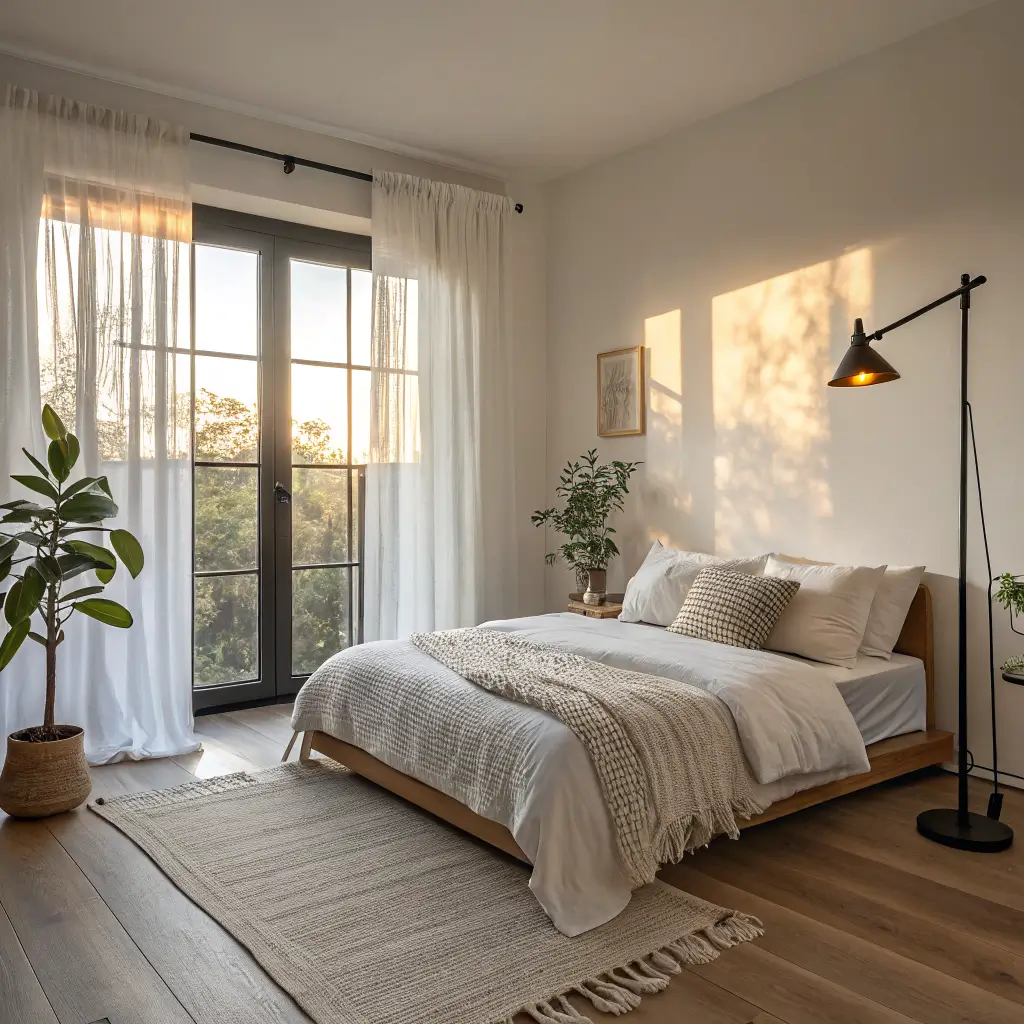
I land on the same approach every time for small rooms — clean lines and a tight palette, then warmed up with texture and lamps so it doesn’t feel like a hotel.
Who this is for:
– Renters in city flats and student housing with one tiny room to work with
– Anyone with a box room, attic with sloped ceilings, or converted nursery
– People who need one room to sleep, work, store clothes, and decompress
Where it works best: rooms between 6–10 m² (65–110 sq ft), though the same logic stretches up to about 12 m² where the layout’s still cramped.
What It Costs and How Long It Takes
A fast refresh — declutter, rearrange, swap bedding, add a couple of lamps — runs me about 3 to 5 hours and £150–£300 / $180–$350. That covers IKEA under-bed boxes at £10–£20 each, an LED strip for around £15, a basic wall mirror for £25–£60, and a fresh cotton duvet set.
A mid-range makeover is one to two weekends and £400–£900 / $450–$1,000. You’re buying a storage bed frame (IKEA BRIMNES or MALM, £200–£400), maybe a low slatted base to drop your mattress height (£70–£150), a bigger rug (£120–£350), and a pair of plug-in sconces (£50–£150).
Higher-end is custom built-ins or fitted wardrobes, which start around £1,000 / $1,200 and climb fast.
Skill-wise, almost everything here is beginner-friendly. Hanging curtains higher, mounting a mirror, plugging in sconces. Wall-mounted shelves and ceiling-height curtain tracks push into lower-intermediate territory.
Colors and Materials I Actually Use
There are two directions that work for small bedrooms, and one that doesn’t.
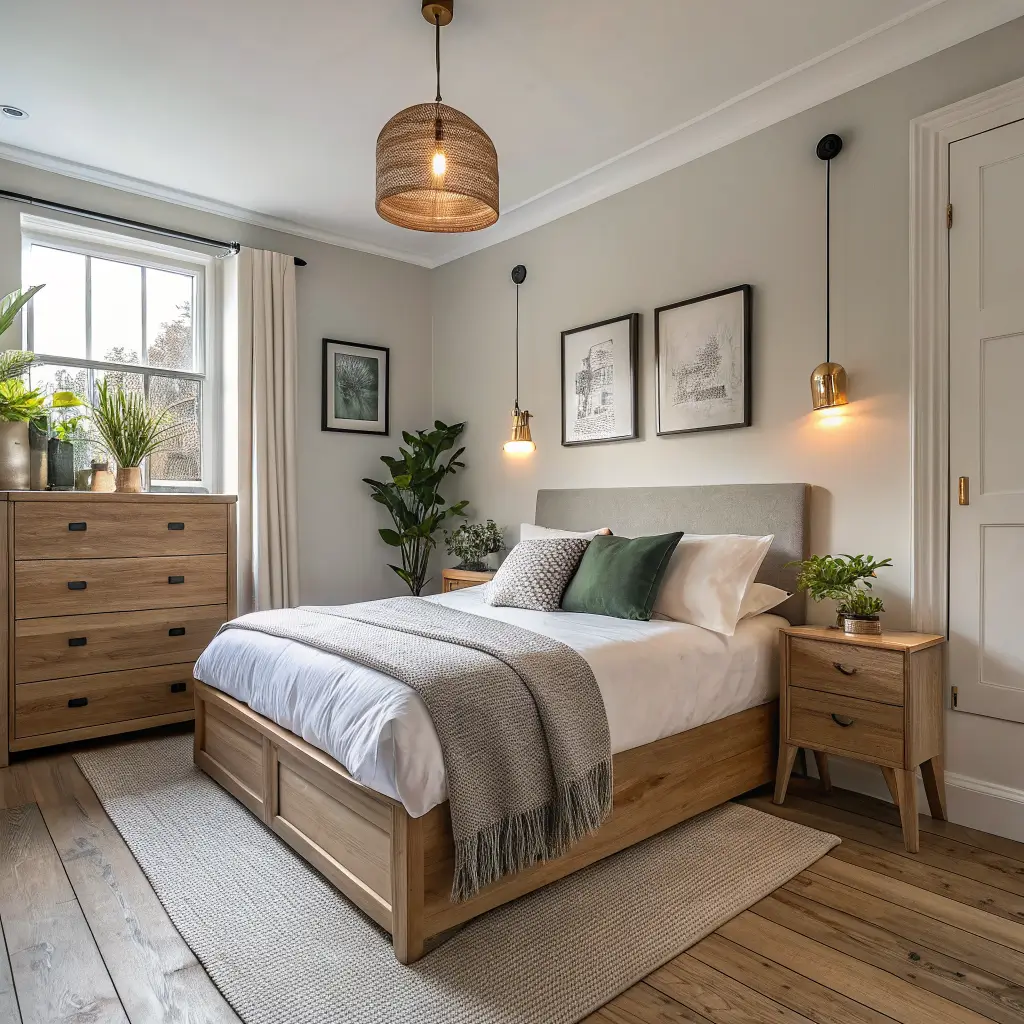
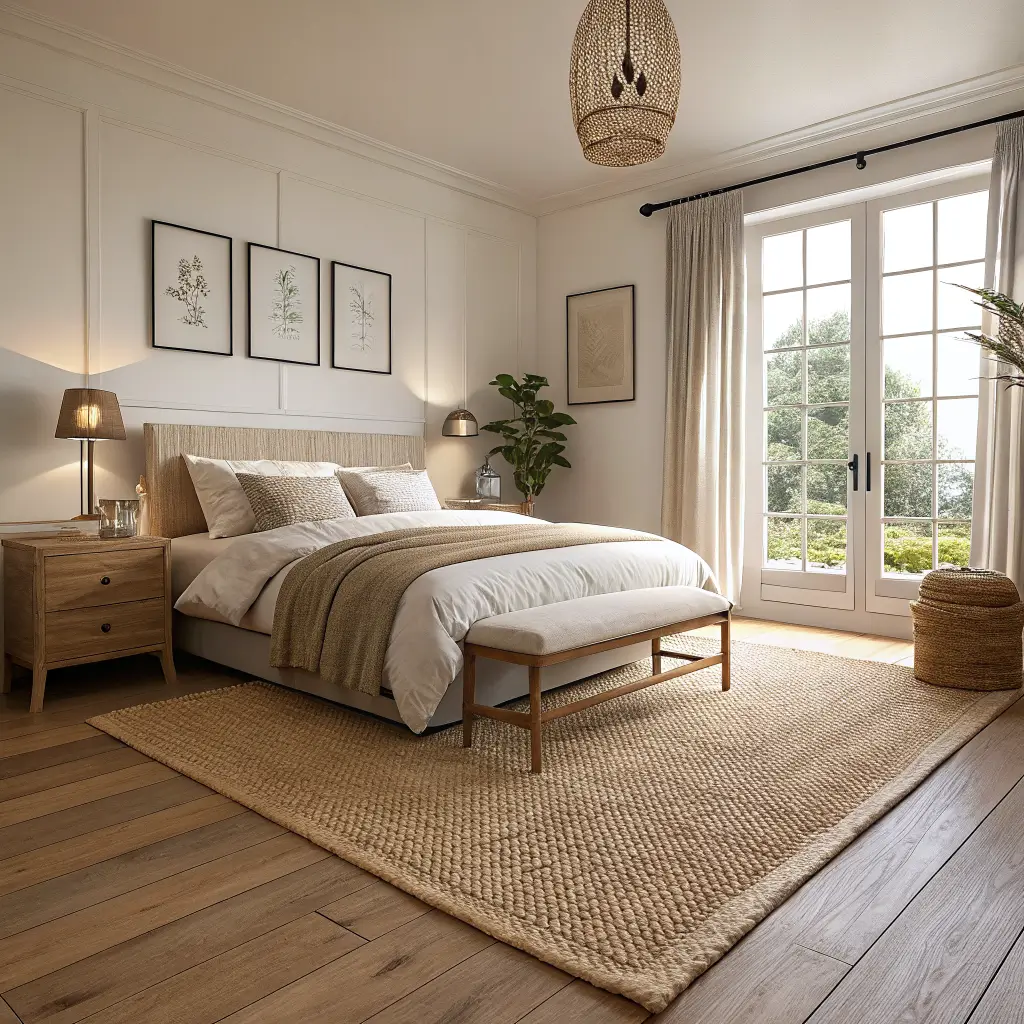
Go very light. Soft white, off-white, pale greige. I used a color close to Behr Silver Mine in the box room and it made the whole place read taller.
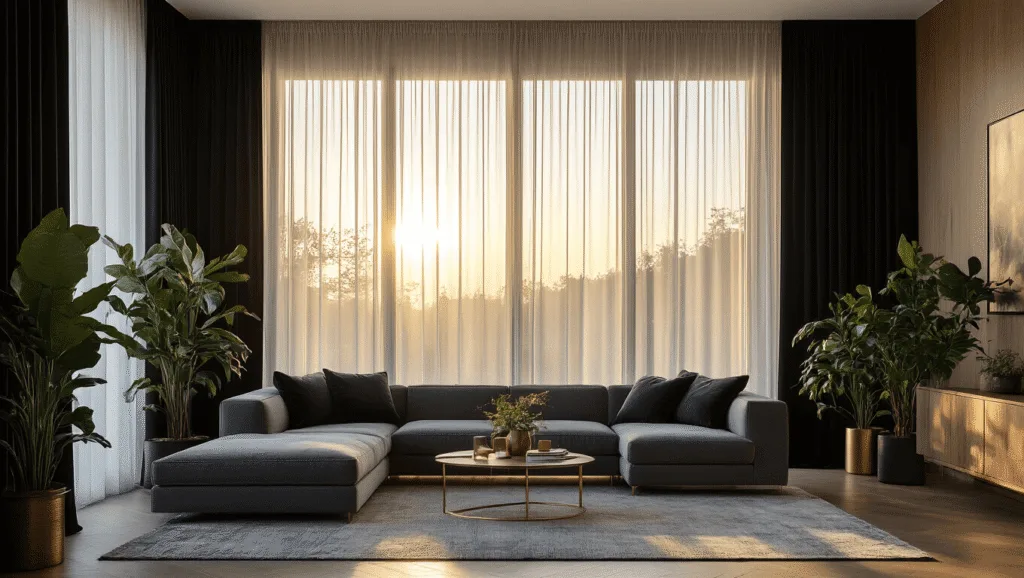
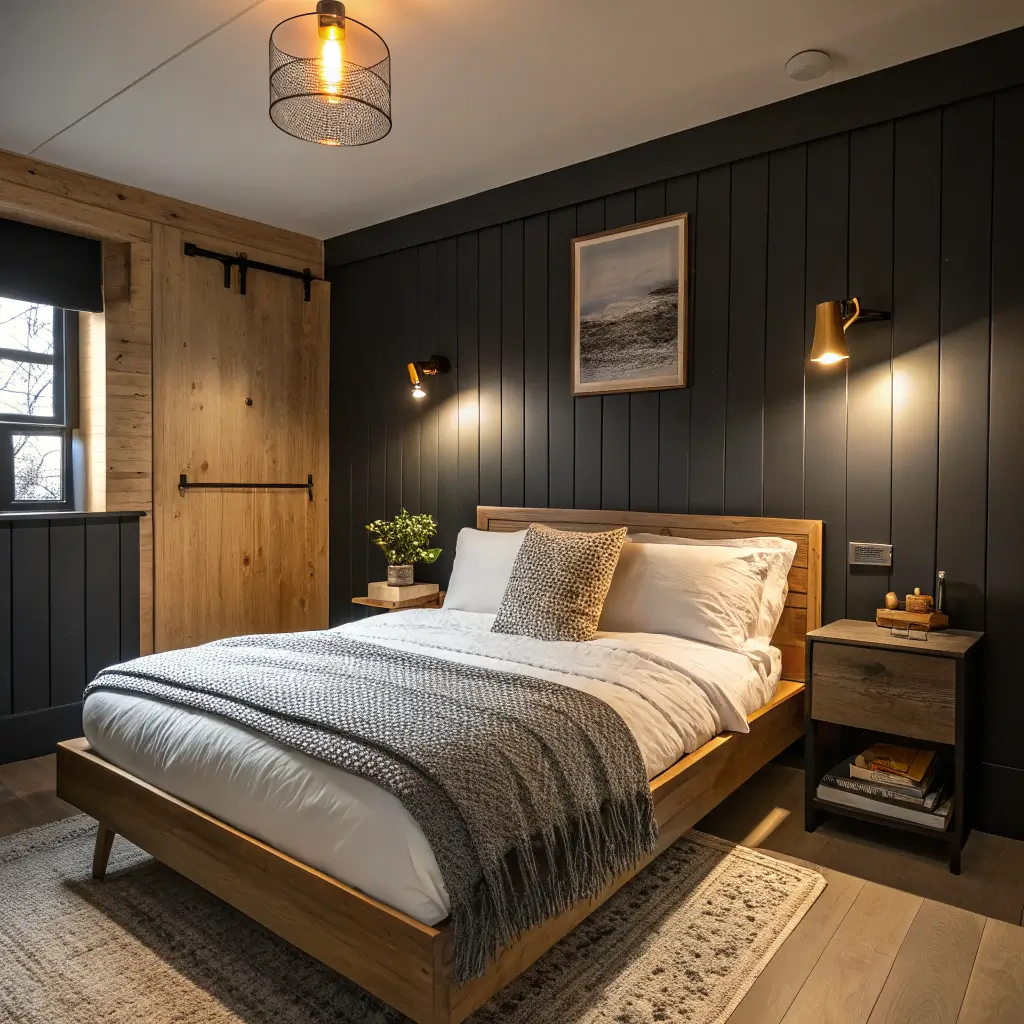
Or go very dark. Charcoal, inky navy, almost-black. Counterintuitive, but a deep wall color makes the corners disappear and the room feels enveloping rather than cramped. My current bedroom has near-black walls and looks bigger than the white version did.
Avoid mid-tones. Muddy beiges, dusty sages at half-strength, mushroom greys. They sit right where your eye notices the walls, which shrinks the room.
For accents, I always work in a little bit of black — a frame, a lamp base, the bed legs. Without it everything goes soft and washed out. Then one calm hue if you want it: muted blue, sage, sandy beige in textiles and art.
Materials I keep coming back to:
– Light woods (oak, birch, whitewashed) for bed and shelving
– Linen and cotton curtains; chenille, bouclé, or chunky knit throws
– Black, brushed brass, or chrome metal for lamps, rods, hardware
– One large mirror or glass piece to bounce light
The Hero Pieces
1. The Bed Setup
Your bed is the single biggest object in the room. Get it right and half the work is done.
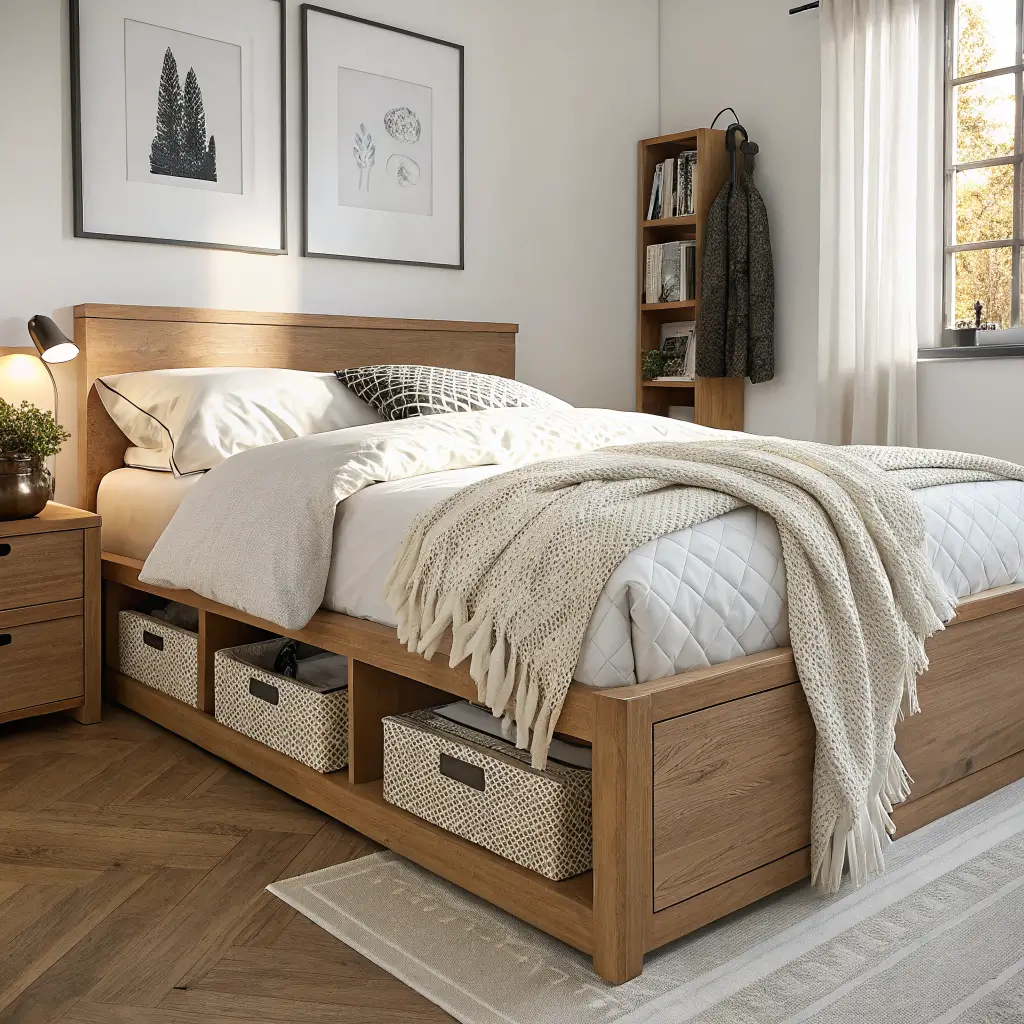
Get storage in the bed itself. An ottoman-lift or drawer bed replaces a separate dresser in most tiny rooms. I keep off-season clothes, spare bedding, and a suitcase under mine. Add a few labeled fabric bins for the awkward stuff.
Lower the mattress. Swap a tall divan for a low slatted platform. Mine dropped about 25cm and it felt like the ceiling rose. Sounds small. Isn’t.
Keep bedding visually quiet. White or off-white duvet with subtle texture, two or three pillow sizes, one chunky knit throw. That’s it. The bed reads cozy without screaming for attention.
2. Curtains That Cheat the Ceiling
This is the cheapest, biggest-impact move in the article.
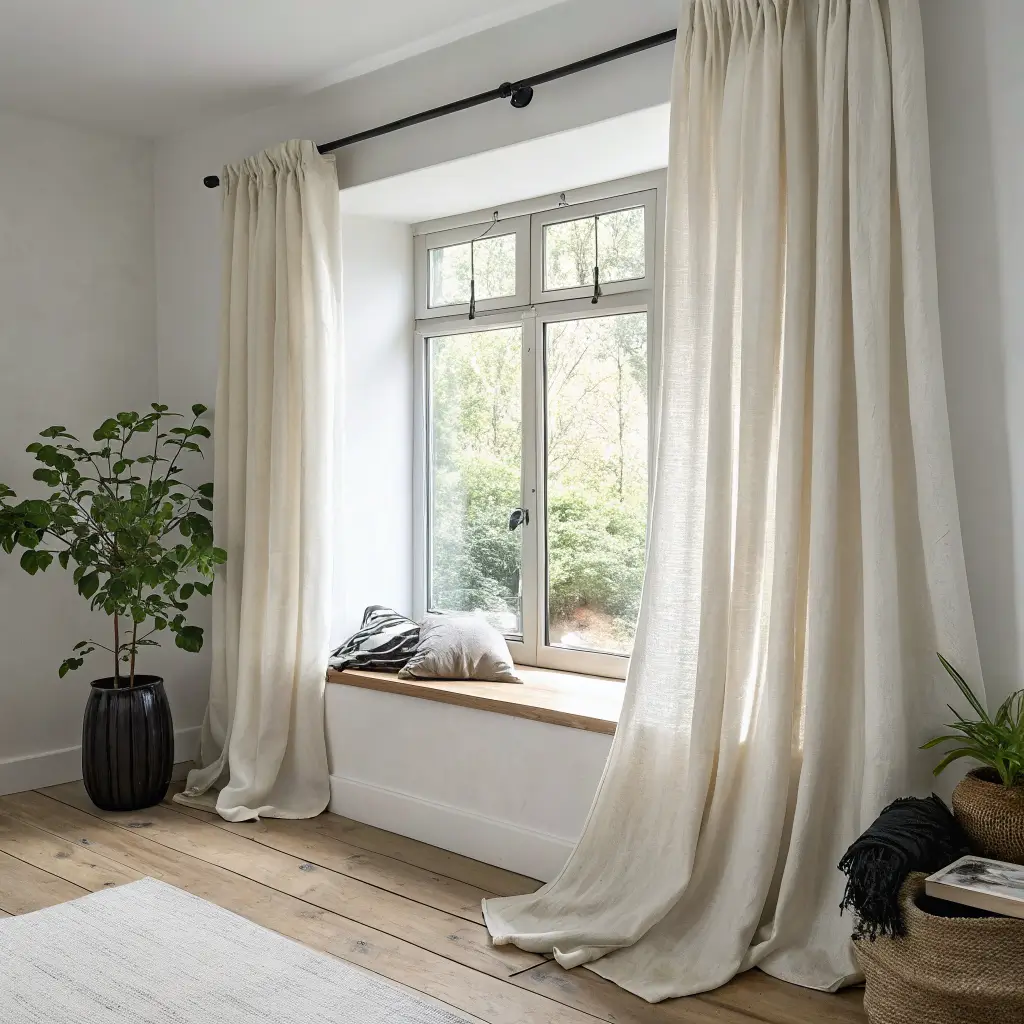
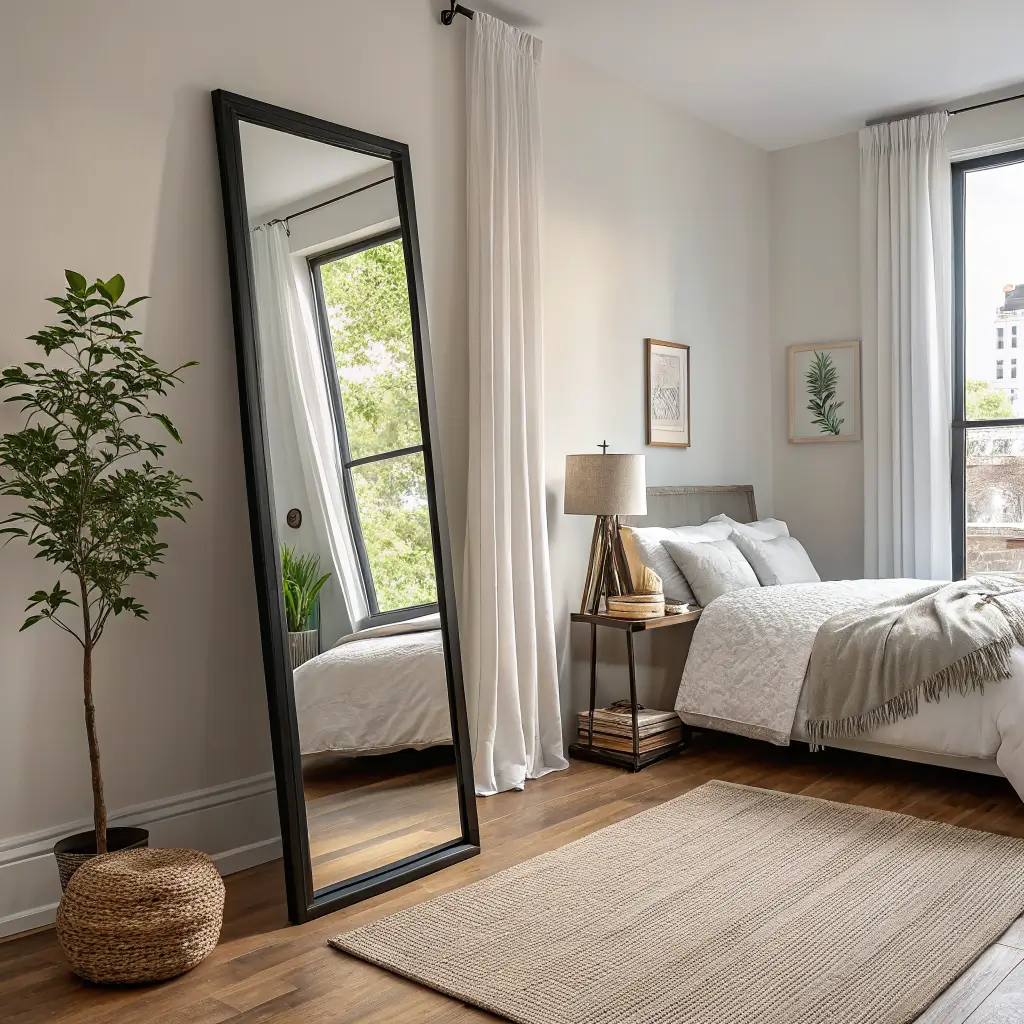
Mount your curtain rod 2–3 inches below the ceiling or molding, not just above the window frame. Extend the rod 8–12 inches past the window on each side so the curtains stack off the glass when open. Use floor-length linen or cotton voile.
In rooms where furniture sits under the window or there’s no wall space around it, fit roman shades in a fabric close to your wall color so they disappear.
3. One Big Mirror
A full-length mirror leaning or mounted opposite a window does more for a tiny room than any other single object. I bought a £40 leaner from a charity shop and it doubled the apparent light in the room.
If there’s no wall for a leaner, a round mirror above the dresser pulls double duty as a vanity and reflector.
4. Layered Lighting (Never Just the Ceiling Bulb)
Single overhead light in a small room equals dungeon. You need three layers:
– Ambient: the ceiling fixture, but in warm white (2700–3000K). Cool white kills it.
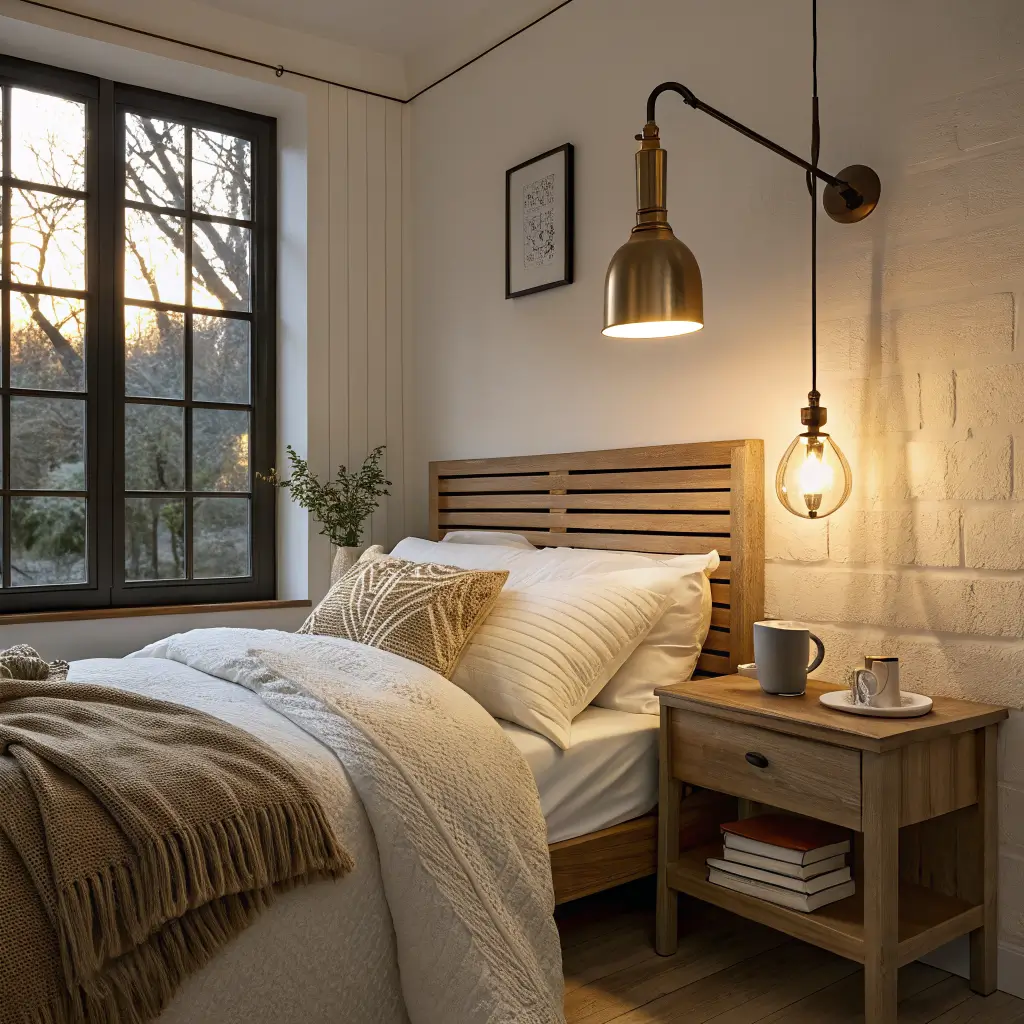
– Task: plug-in sconces or swing-arm lamps above the nightstands — they free up the surface, which matters when your “nightstand” is 25cm wide. A small desk lamp for the work corner.
– Accent: LED strip behind the headboard or under a shelf. Battery candles in the evening. This is the layer that makes the room feel designed instead of just lit.
5. Storage That Goes Up, Not Out
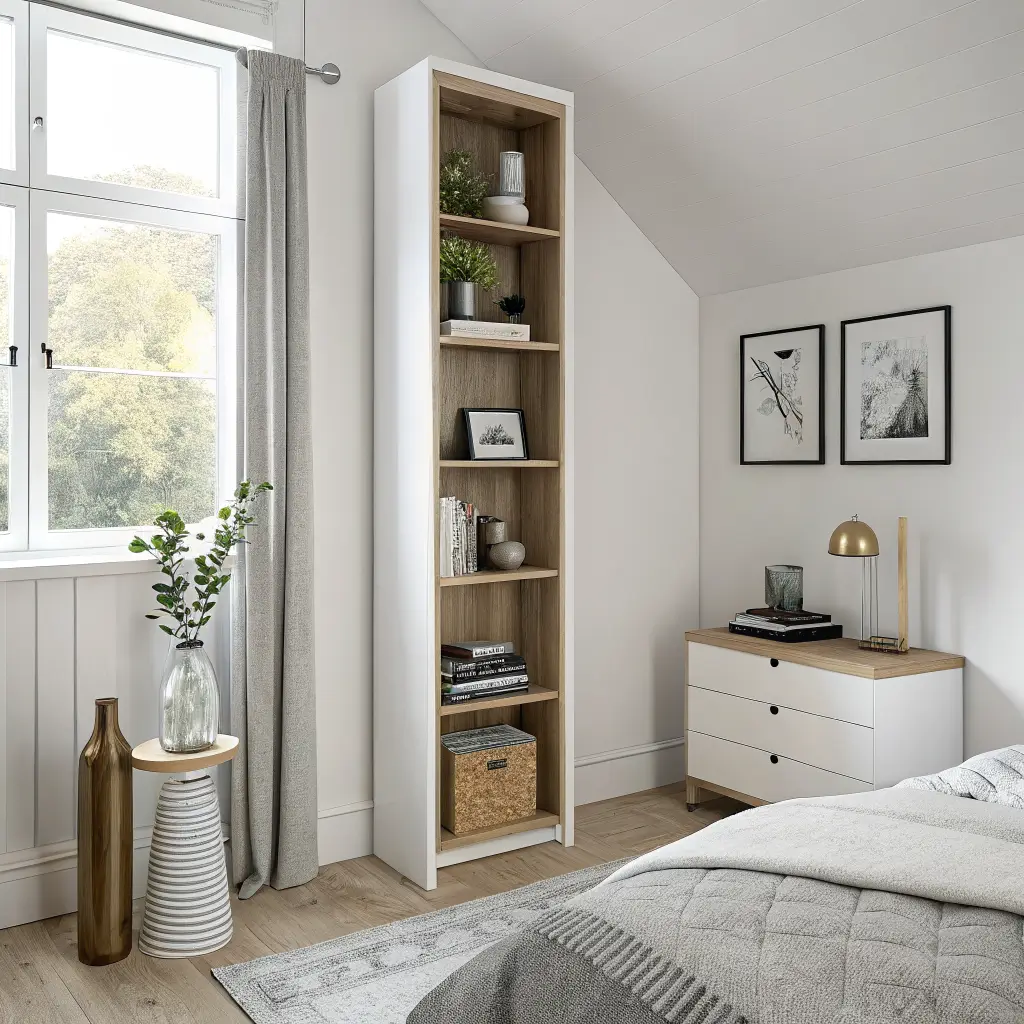
– Tall, narrow shelving instead of wide bookcases
– Floating shelves above the bed or desk, but kept curated — three or four objects max per shelf
– A wall-mounted fold-down desk if you need a workspace; mine is 60cm wide and folds flat against the wall
– A storage ottoman or bench at the foot of the bed for linens and as a perch
6. Personality So It’s Not a Showroom
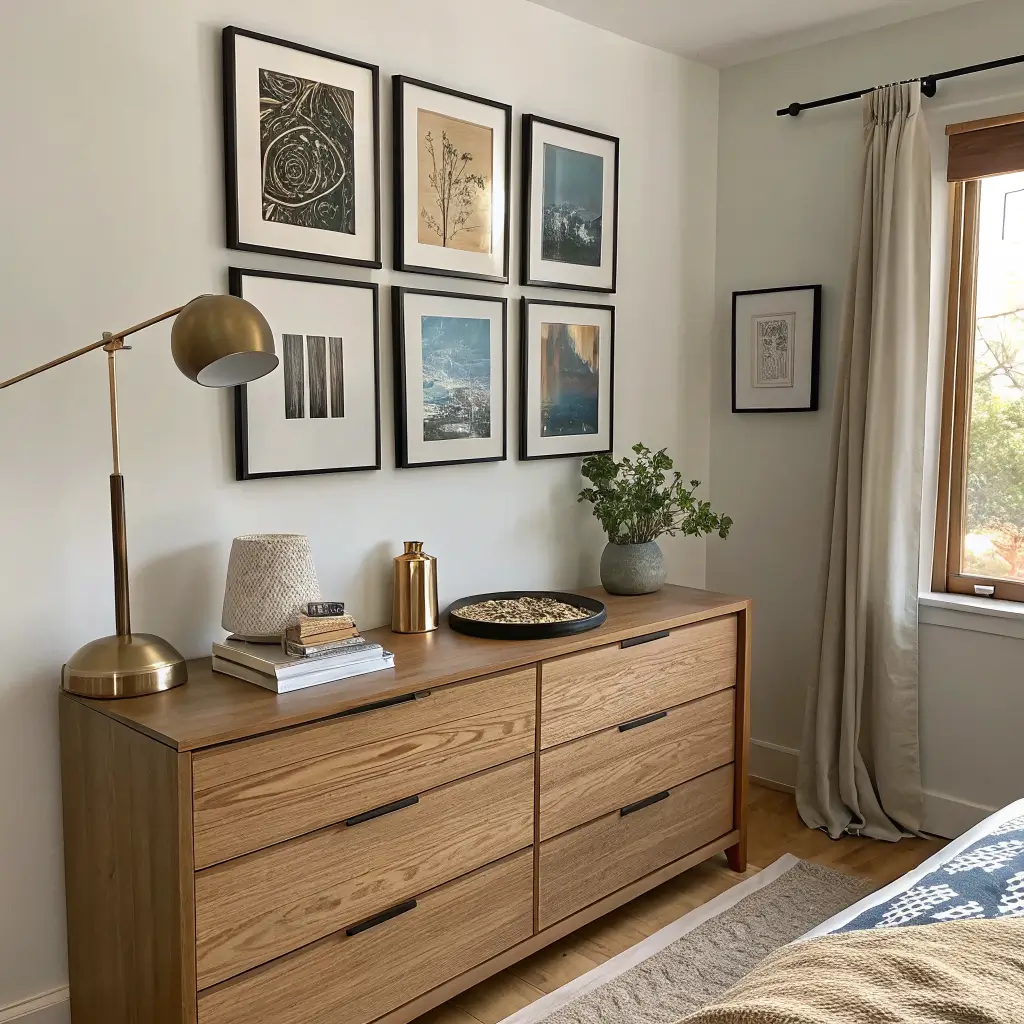
Hang art higher than feels normal — closer to the ceiling than the bed — to pull the eye up. Mix frame sizes for a collected look rather than a matched set.
Plants that survive low light: snake plant, pothos, philodendron, spider plant. One on the dresser, one on the windowsill, done.
A small hobby thing — a record player on a wall shelf, a tiny vanity, a stack of cookbooks if that’s your thing. The room should look like someone specific lives there.
How to Put It Together, In Order
1. Strip it back. Pull everything out you can. Get rid of duplicate storage (the second dresser, the chair you don’t sit in). Install closet organizers — a double-rod system roughly doubles hanging capacity for £20.
2. Plan zones on paper. Sleep zone, work/vanity zone, storage zone. Mark door swings, the radiator, where the window light falls.
3. Rug down first. Largest rug you can fit, ideally with at least the front bed legs on it. In rooms under 8m², I go near wall-to-wall — a 5×7 or 6×9 in jute or low-pile wool. Bare floor strips around a small rug make the room read smaller, not bigger.
4. Bed against the longest uninterrupted wall. Or, in some box rooms, tucked into a corner to free up floor in front of the door. Prioritize the view from the doorway — that’s the first impression every time you walk in.
5. Add storage. Under-bed bins. Tall narrow wardrobe over a wide one. A dresser shallow enough that drawers open without blocking the path.
6. Curtains and lighting next. Steam the curtains before hanging — wrinkled linen looks sloppy at ceiling height. Get the sconces or bedside lamps in. Add the LED strip last.
7. Decor and styling. Gallery wall, plants, surface styling. Tray plus lamp plus one object per surface, with visible empty space around them. Empty surface area is what makes a small room feel calm.
Mistakes I’ve Made (So You Don’t Have To)
Over-furnishing. The reading chair I mentioned earlier. Cost £180, sat unused, made the room feel half its size. If a piece doesn’t earn daily use, it’s stealing space.
Everything low and horizontal. Low bed, low dresser, low shelf, art hung at eye level. Ceilings felt 7 feet tall. Fix: one tall element per wall — a tower shelf, a tall headboard, art hung high.
Surface clutter. Twelve small candles, three trinket dishes, a stack of books, a mug. Fix: closed storage (lidded boxes, baskets) and curated groupings of three or fewer. Visible matching containers make open storage look intentional.
Random color choices. I used to buy what I liked individually and end up with a navy throw, a mustard cushion, a sage rug, and a rust lamp. Fix: pick one base neutral, one accent hue, one dark contrast and filter every purchase through it. Anything outside the palette goes back.
Relying on the ceiling light. Already covered, but worth repeating because it’s the single fastest way a small room reads grim.
Keeping It Fresh Without Spending
Repeat the same materials across pieces — light wood plus white plus black metal across the bed, shelf, frames, and lamp. That repetition is what makes a small room feel pulled together rather than a pile of stuff.
Habits that prevent the spiral:
– One-in-one-out for clothes and decor
– A 15-minute Sunday tidy of every visible surface
Cheap seasonal swaps:
– Two or three cushion covers and the main throw — switch chunky knit and rust tones in winter for linen and pale stripes in summer
– Print swaps inside existing frames; the gallery layout stays, the content changes
– Spray-paint a tired lamp base in brushed brass for the cost of one can
Layout shuffles cost nothing. Switch the headboard wall. Move the desk under the window for spring. The room feels new and you’ve spent £0.
If you want to push the style somewhere specific, two blends work well in tiny rooms without adding visual noise: light walls plus rattan baskets and sandy-toned rugs with a couple of blue-and-white striped textiles for a boho-coastal lean, or clean-lined modern furniture paired with one or two vintage prints and a distressed rug for something with more history.
The room I started with — the Victorian box room — ended up holding a queen storage bed, a 30cm-deep dresser, a fold-down desk, and a leaner mirror, and still had walking room around the bed. Same square footage. Fewer, smarter pieces. That’s the whole trick.
Conclusion
The tiny room ideas that worked for my friend came from a box room that was eight by eight with a single window and a sloped ceiling. She had bought a daybed that doubled as a sofa, added a wall-mounted desk, and hung a curtain to hide the storage. The room was a bedroom, an office, and a reading nook, and it worked because every piece of furniture had more than one job.
More Decor Ideas to Explore
- Tiny Kitchen Ideas: A Real Guide to Making Under-100-Square-Foot Kitchens Work
- Coastal Apartment Decor: A Renter-Friendly Guide to the Modern, Non-Kitschy Look
- Coastal Living Room Decor That Doesn’t Look Like a Gift Shop: A Modern, Rental-Friendly Guide
- How to Decorate a Beachy Bedroom That Feels Like a Resort, Not a Theme Park