The Look and Who It’s For
Modern coastal is the version I keep coming back to. Relaxed, refined, built on natural texture and a light palette — not a single anchor in sight. If you want vacation energy without committing to a full nautical theme, this is the lane.
It suits you if:
– You want a calm, hotel-on-the-water bedroom you can actually sleep in
– You like natural materials (jute, rattan, linen, light wood) more than glossy ones
– You’re tired of clutter and want fewer, better pieces
– You live nowhere near the beach and don’t care — this works in a Chicago walk-up the same as a Florida bungalow
It works in primary bedrooms, guest rooms, kids’ rooms with a softer palette, and short-term rentals where you want the photos to do some heavy lifting.
Budget and Timeline Reality Check
Fast refresh (one weekend, 3–6 hours of styling): new bedding, pillows, a jute rug, a couple of lamps, art. You can land between $400 and $900 if you shop Target, IKEA, and Wayfair. A 6’x9′ jute rug runs $120–$250. A white cotton duvet with shams is $80–$150. Rattan lamps go $40–$90 each.
Mid-range redo (1–2 weekends with delivery and assembly time): $1,200–$3,000. This is where I’d put most people. A light wood or upholstered queen bed at $500–$1,200, nightstands at $200–$450 each, an 8’x10′ jute or sisal at $300–$800, linen curtains around $80–$250 per window.
High-end ($3,500–$8,000+): a real solid wood bedroom set, custom or oversized art, premium linen bedding, a designer wool-and-jute rug. This is the resort-suite version.
If you have to pick one category to spend on, spend on the rug. A scratchy synthetic jute look-alike will undo every other good decision in the room. I learned this after returning a $79 rug that shed like a golden retriever and pivoting to a wool-jute blend that’s still in great shape four years later.
The Palette (And What to Use If You’re Sick of Blue)
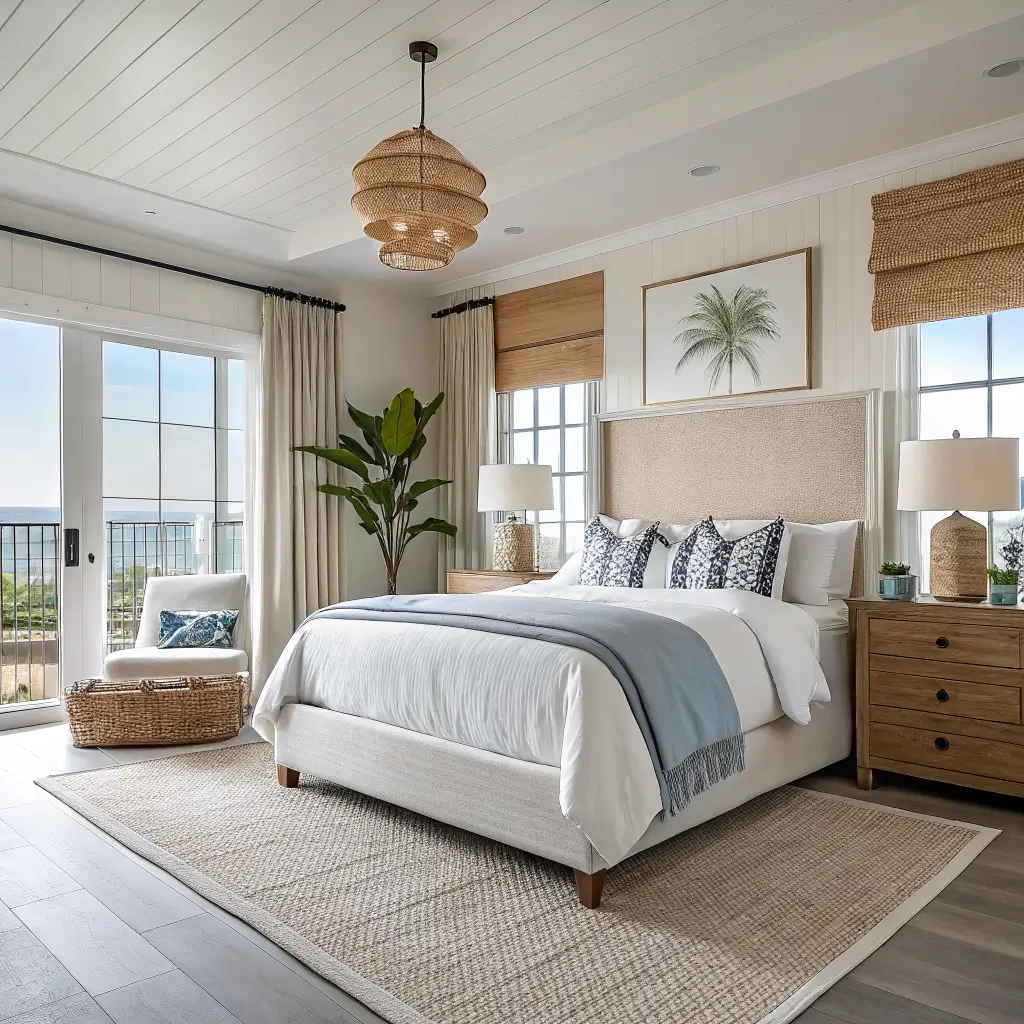
Start with 70–80% neutrals and let the accents do quiet work in the remaining 20–30%.
Base neutrals I actually use:
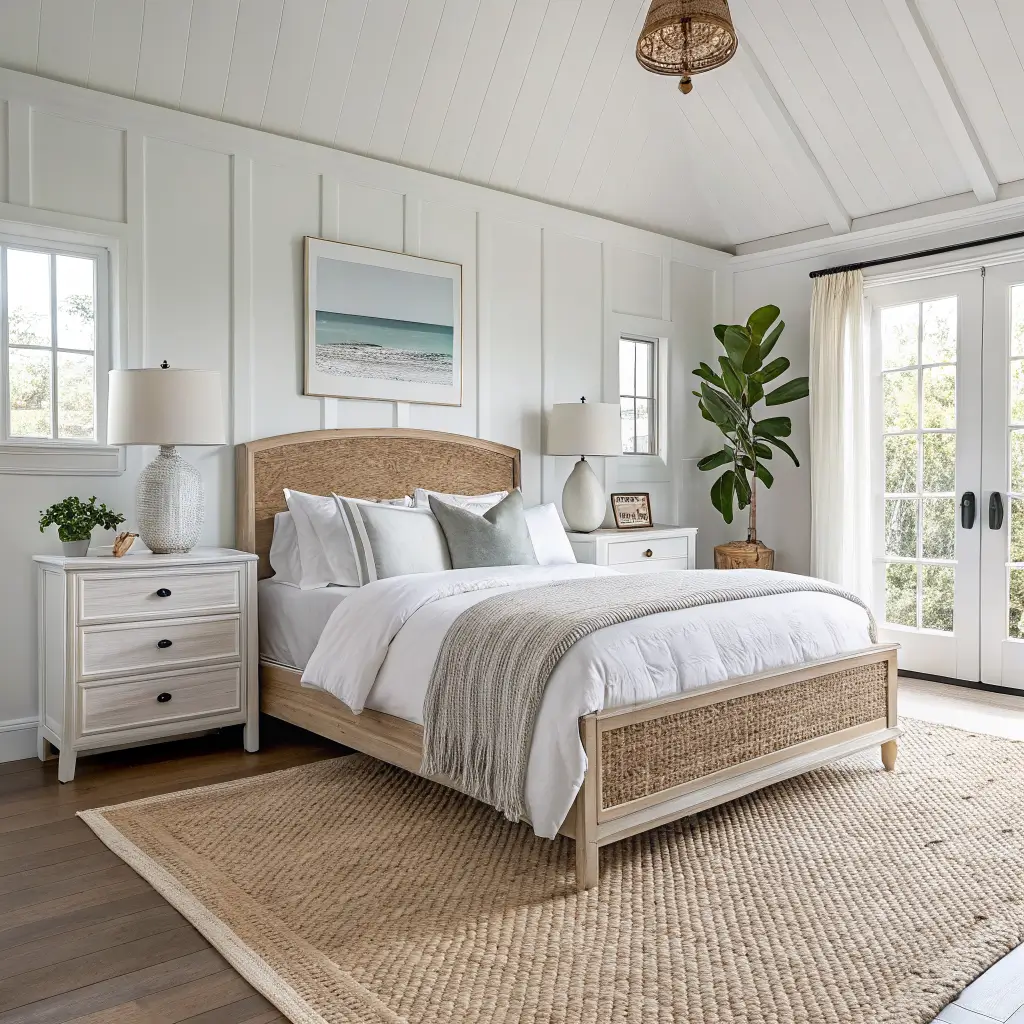
– Benjamin Moore White Dove on walls — warm enough to not feel like a hospital
– Sherwin-Williams Alabaster if you want a touch creamier
– Sand, greige, and bleached-driftwood tones for larger pieces
Accents — pick two, not five:
– Sea glass green, soft teal, or sky blue
– Navy as a contrast anchor (use sparingly)
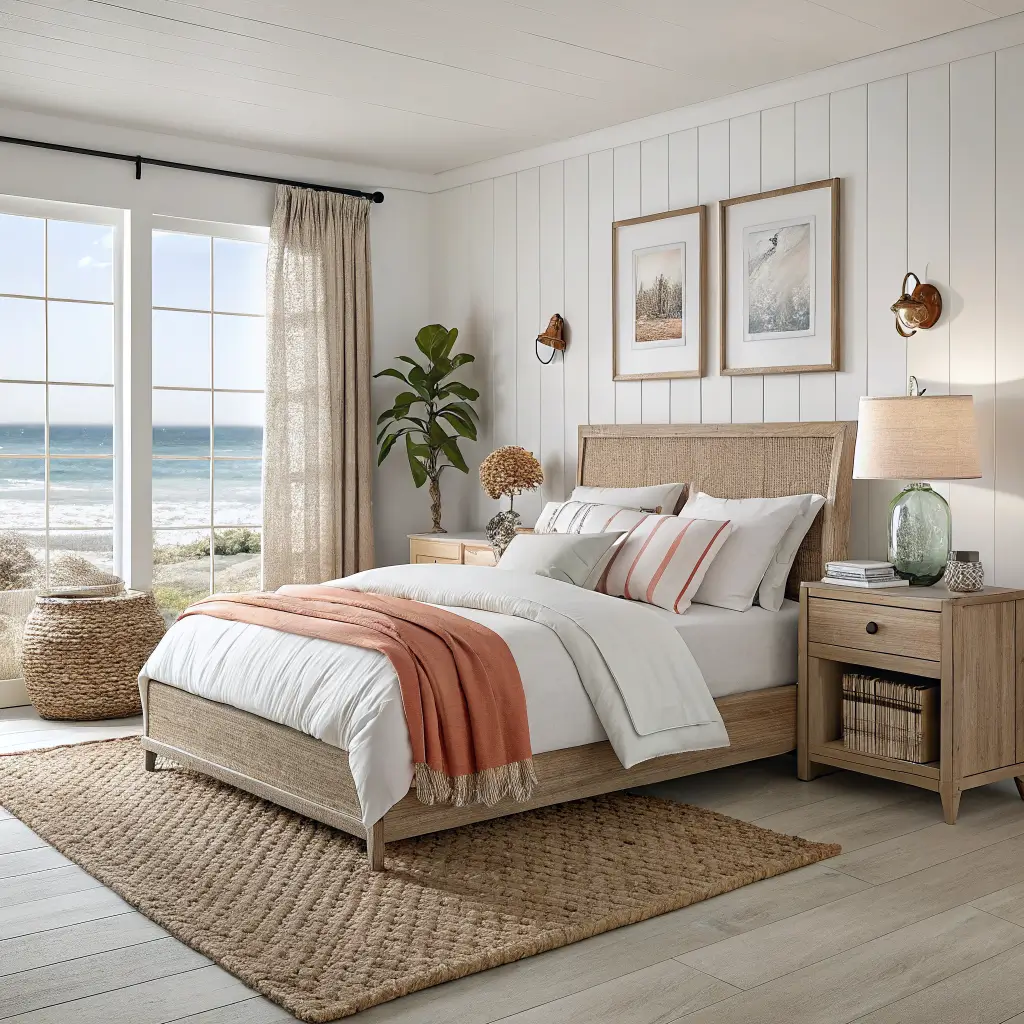
– Warm coral or blush for sunset references
– Seagrass green if you want to skip blue entirely
If blue isn’t your thing, build the whole room around white, sand, driftwood gray, and a soft botanical green. It still reads coastal because the materials carry the story.
The Pieces That Make It Work
Bed and headboard.
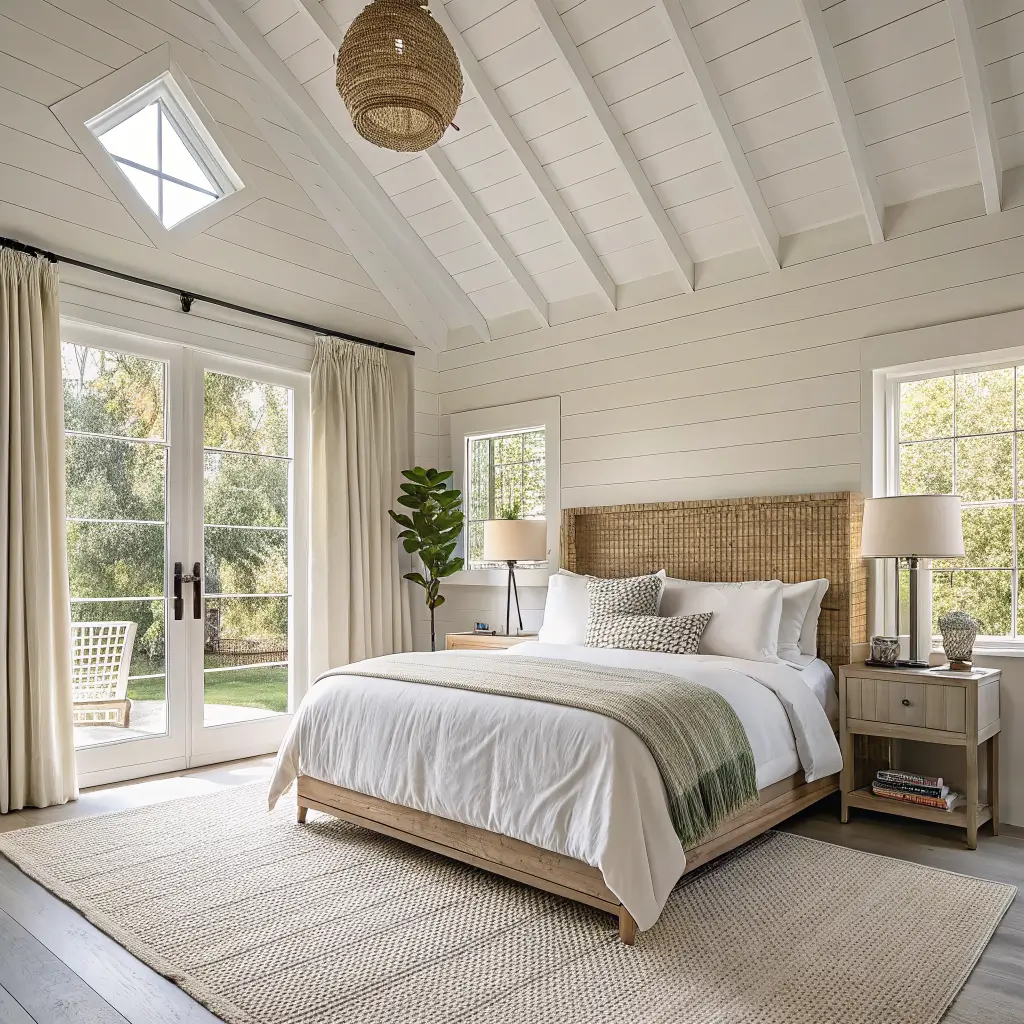
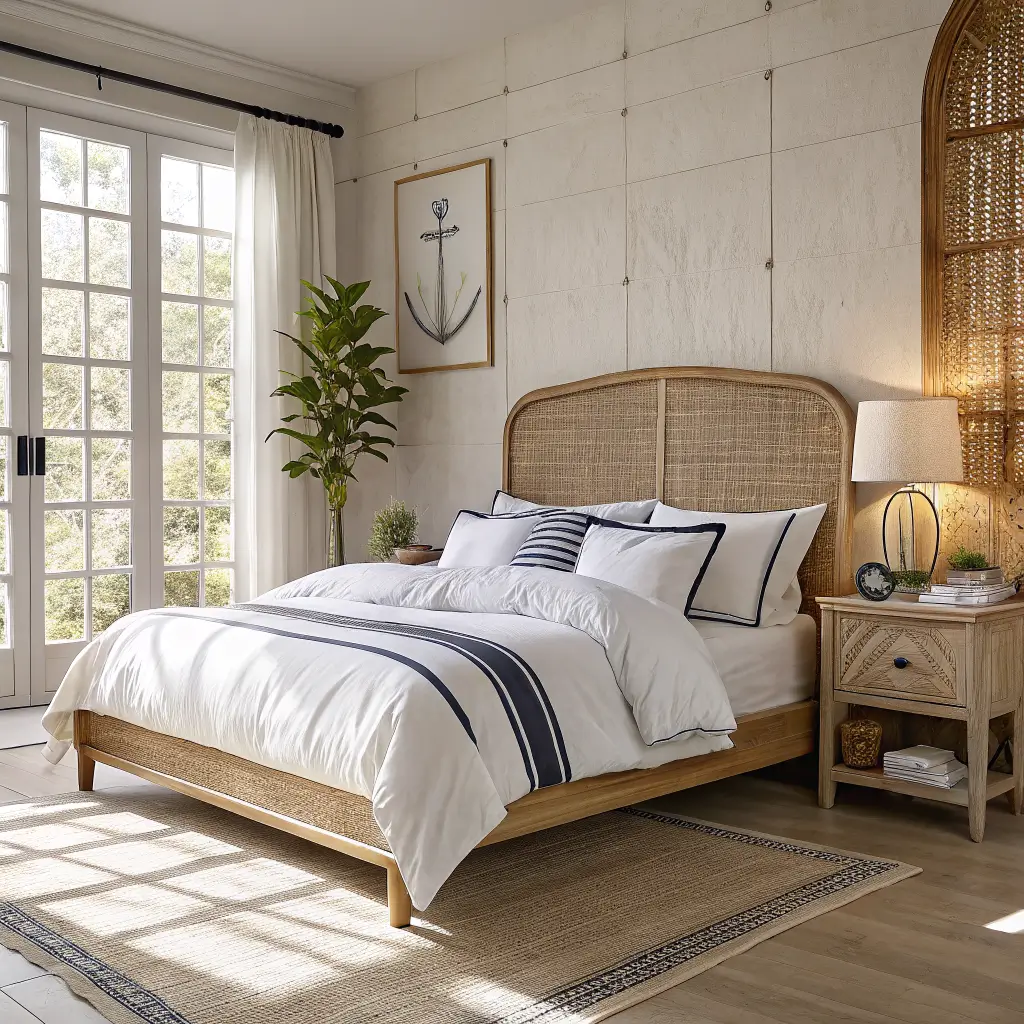
A rattan or cane headboard is the fastest way to signal coastal without a single shell. If rattan feels too on-the-nose, an off-white upholstered headboard with a clean shape does the same job more quietly.
Rug.
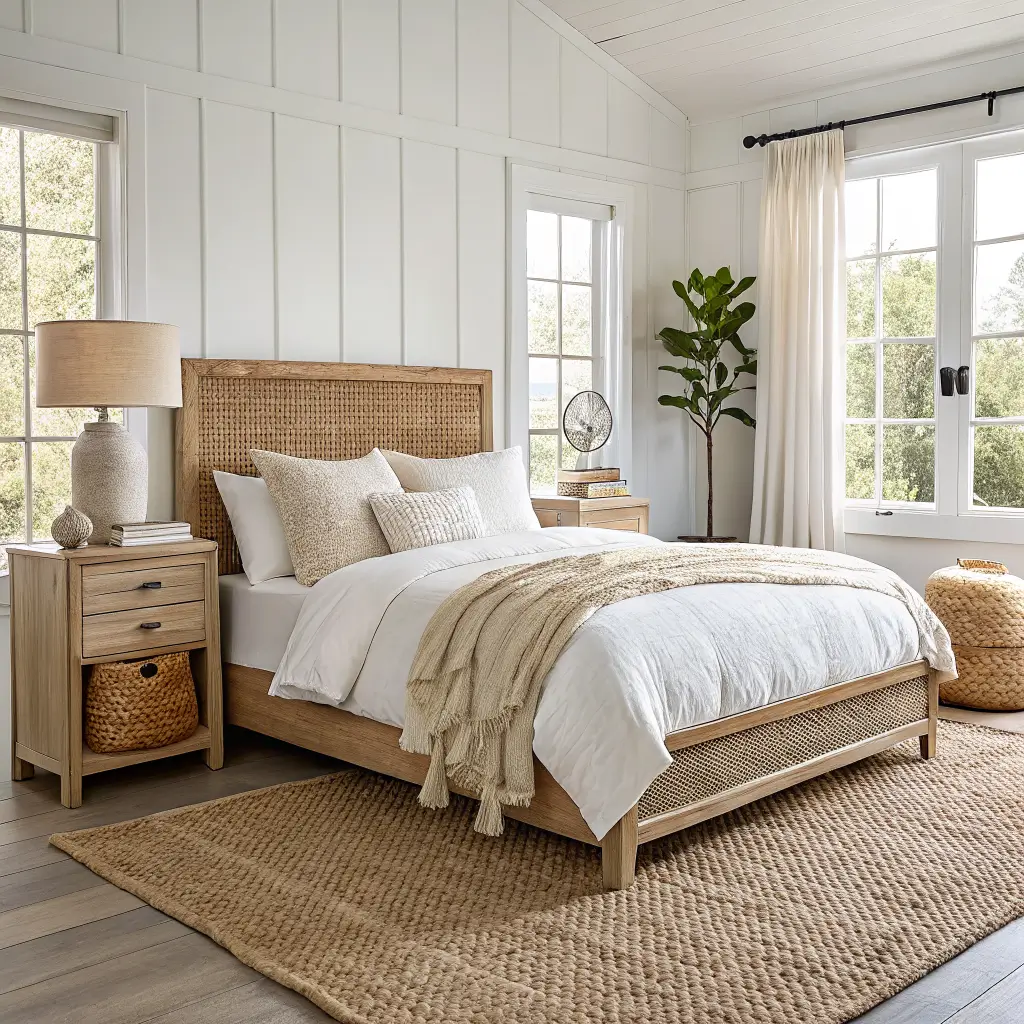
Jute, sisal, or a jute-wool blend. Size up if you can — the front two-thirds of the bed should sit on the rug, with 18–24 inches of rug visible on each side. A too-small rug under a queen bed is the single most common mistake I see.
Bedding, layered like this:
– White cotton sheets (300–400 thread count, percale not sateen — percale has that crisp hotel feel)
– A linen duvet or lightweight quilt in white, oatmeal, or pale sand
– 2 euro pillows in white at the back
– 2 standard shams, ideally with a subtle stripe
– 1 lumbar in your accent color (sea glass, navy, or coral)
– A gauzy linen throw or chunky knit tossed at the foot — emphasis on tossed, not folded into a hotel triangle
Nightstands.
Light oak, whitewashed wood, or a soft cane-front. Brushed brass hardware warms up cool tones — I swapped the original knobs on mine for $4 brass pulls from a hardware shop and it changed the whole room.
Lighting.
This is where most beachy bedrooms fall apart. One overhead fixture is not enough.
– Two textured ceramic or rattan-based table lamps on the nightstands
– A woven pendant or small rattan chandelier overhead (16–24″ diameter for a standard bedroom)
– A small accent lamp or candle on the dresser for evenings
Window treatments.
Linen curtains hung high and wide — rod 4–6 inches above the window frame and 6–8 inches past each side. Add bamboo or woven wood shades behind them for warmth and privacy. This combination is my favorite cheat code: the room instantly looks more expensive.
Texture Is the Whole Game
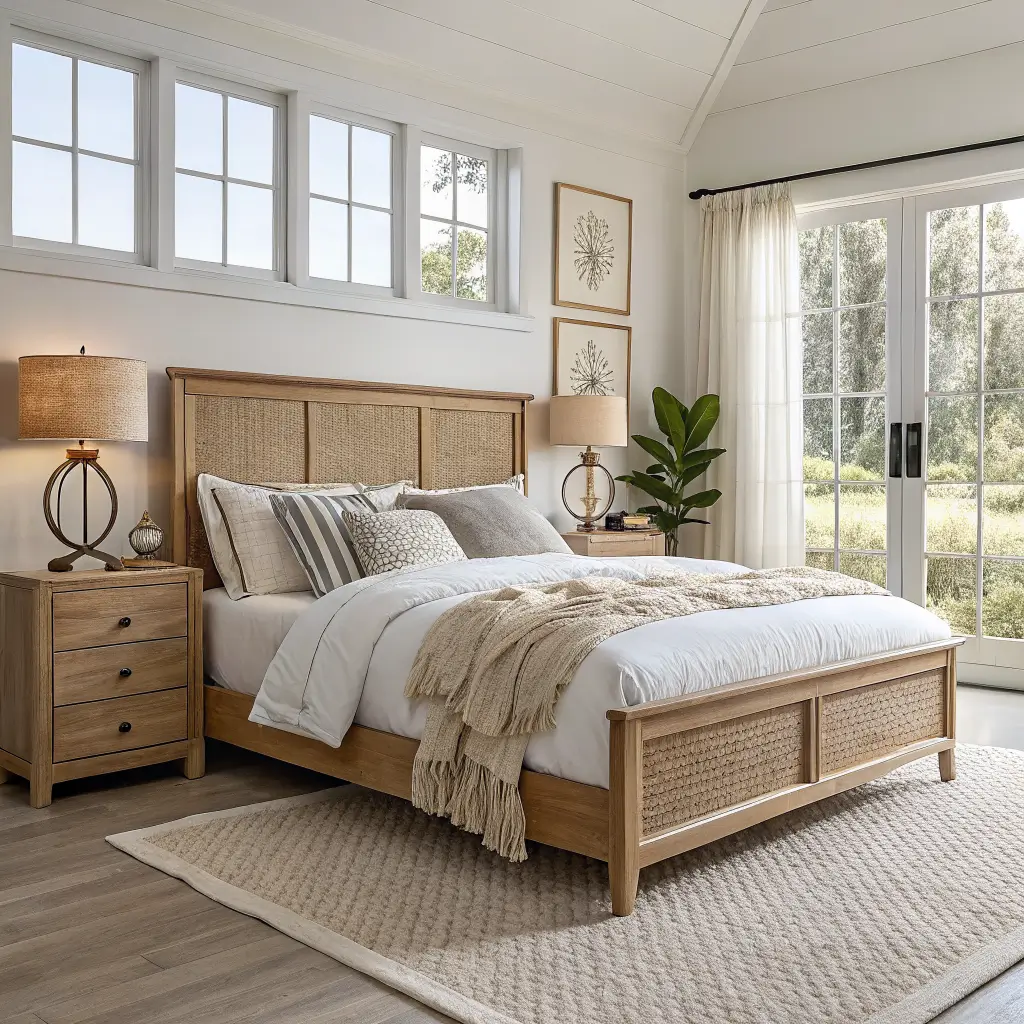
The reason beachy rooms look flat on Pinterest is that someone forgot the texture layering. You need at least four different feels in the room:
– Smooth: cotton sheets, ceramic lamp base
– Nubby: jute rug, linen curtains
– Woven: rattan headboard, seagrass basket
– Soft: knit throw, linen pillow covers
When I rearranged my current bedroom for the third time (yes, three), the version that finally clicked was the one where I forced myself to count textures. I was at three. I added a chunky cotton throw and a wicker basket under the window for extra pillows. Suddenly the room had depth on camera and felt warmer in person.
Putting It Together, Step by Step
1. Strip the room down. Remove dark drapes, busy art, heavy decor. Start with an empty stage.
2. Paint if you can. White Dove or Alabaster on the walls, semi-gloss on trim. If you’re renting and can’t paint, lean harder on white bedding and light textiles to fake the brightness.
3. Lay the rug. Center it under the bed with the front two-thirds on top.
4. Place the bed on the main wall, ideally where you see it first from the door. That’s the sightline you’re styling for.
5. Dress the bed in the layers above.
6. Add nightstands with one lamp plus one or two objects each — a small plant, a stacked pair of books, a ceramic dish. Stop there. Negative space matters.
7. Hang art above the bed. One large piece (around two-thirds the width of the bed) or a tight group of two or three aligned prints. Beach landscape photography, abstract ocean washes, or vintage coastal maps — not signs telling you which way the beach is.
8. Hang a mirror opposite a window to bounce light around.
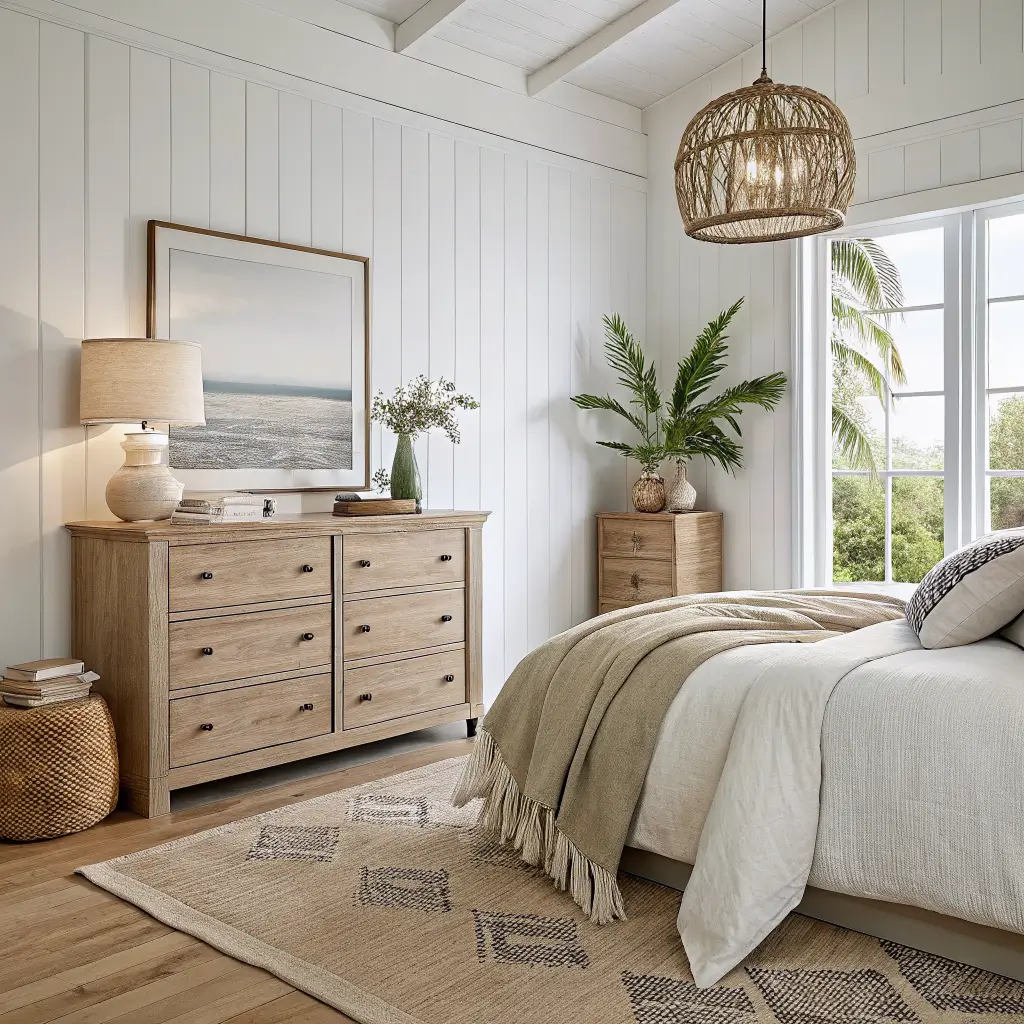
9. Finish with greenery. A 4-foot potted palm in the empty corner past the dresser, or a fiddle-leaf if you’re more of a botanical-coastal type. One real plant beats five faux ones.
Mistakes I’ve Made So You Don’t Have To
Too many literal beach motifs. Pick one. Maybe two. A bowl of real shells I collected on a trip earns its spot. A starfish-shaped wall hook does not.
Dark, bulky furniture fighting the airy palette. If you can’t replace it, lighten everything around it: white bedding, pale rug, light art, sheer curtains. A dark dresser surrounded by light can actually look intentional. A dark dresser plus dark bedding plus dark rug looks like a cave with a seashell in it.
No texture. Laminate nightstands, flat polyester bedding, no rug — the room photographs and feels lifeless. Add jute, rattan, and linen and the whole mood shifts.
Cluttered surfaces. Group small things on a tray so they read as one composition instead of visual noise. Three objects on a tray beats seven loose ones every time.
Single overhead light. Layered lighting is non-negotiable. Bedside lamps on dimmable bulbs at 2700K — warm, not blue-white — make the room feel like dusk in a beach house instead of an office.
Rental-Friendly Workarounds
If you can’t paint or change flooring:
– Use a large jute rug to cover whatever floor you’ve inherited
– Hang sheer linen curtains floor-to-ceiling on tension rods or Command hooks
– Try peel-and-stick wallpaper in a subtle vertical stripe on the bed wall only
– Swap cabinet hardware (keep the originals in a bag for move-out)
– Lean a large piece of art against the wall instead of hanging it
Seasonal Updates Without Buying a Whole New Room
The bones stay the same. The textiles flex.
Summer: swap in light aqua and white striped pillow covers, a gauzy linen throw, a brighter print or two. Open the windows behind sheer curtains.
Cooler months: rotate to navy, denim, and oatmeal pillow covers, a chunky cream knit throw, candles in textured glass on the nightstand. Same room, different mood.
Cross-Style Variations
– Boho-coastal: add a woven wall hanging above a dresser, tasseled pillow covers, and a Moroccan-style stool — but keep the palette light and the rug jute.
– Rustic coastal: introduce one darker wood piece (a reclaimed bench at the foot of the bed) and a plaid throw in sandy tones.
– Modern minimal coastal: strip back to fewer accessories, clean-lined oak furniture, matte black lamp bases, and a single oversized photographic print over the bed.
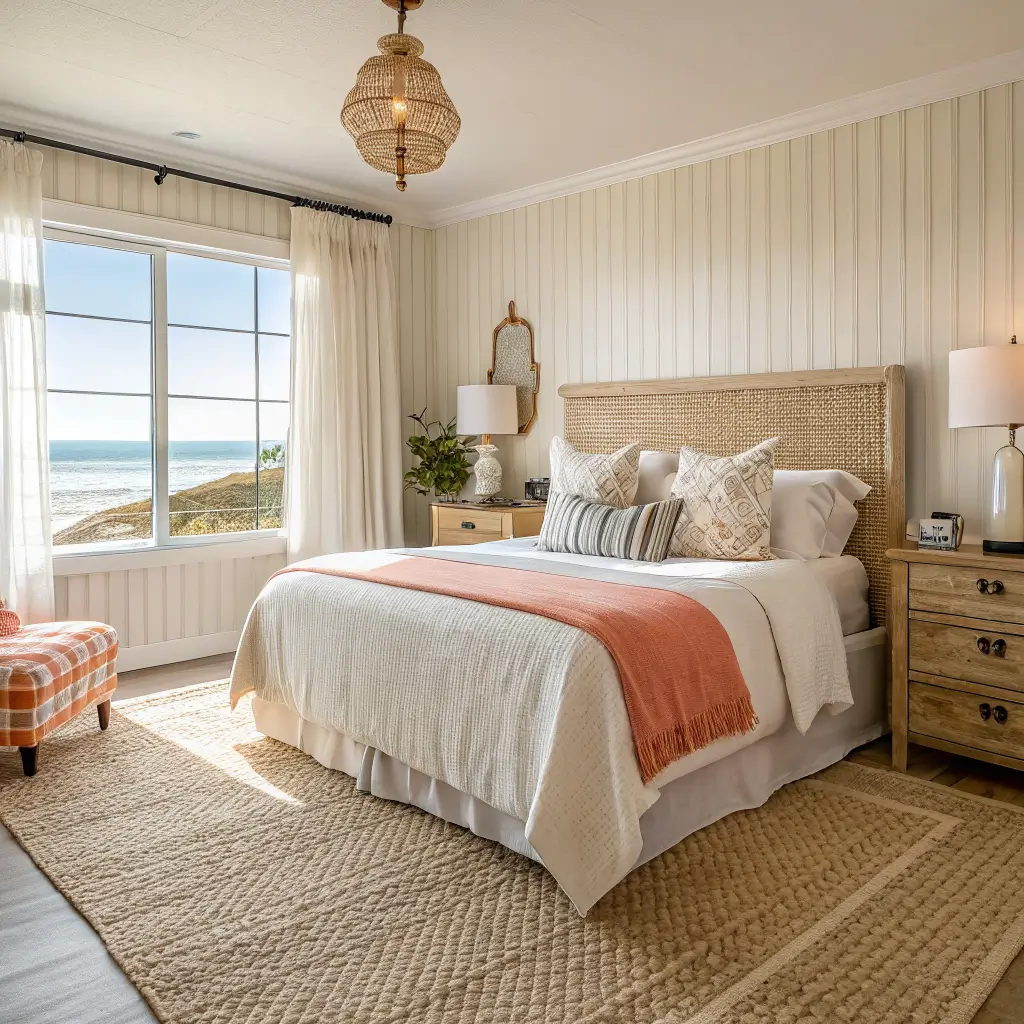
The test for anything new: does it feel calm, light, and like something you’d find in a house with salt air coming through the screen door? If not, it goes in another room.
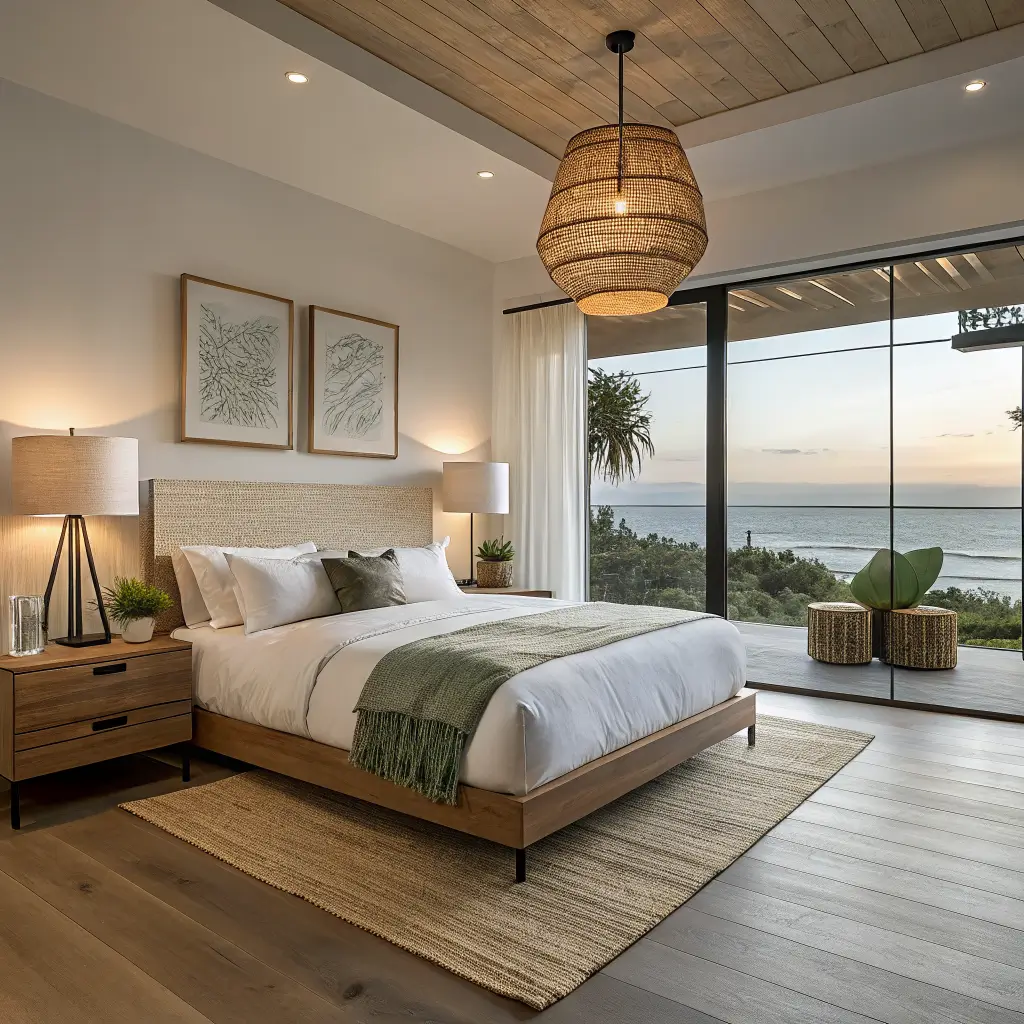
The first time I pulled off a beachy bedroom that actually felt right, it was because I stopped trying to match a Pinterest board and just focused on keeping the bed soft, the light warm, and the surfaces mostly empty. That small shift made the room feel like a place I wanted to be at the end of a long day.
Conclusion
The beachy bedroom that felt like a resort to me had white linen sheets, a ceiling fan that clicked in a rhythm I could not predict, and a window that looked directly at the ocean. The owner had left a stack of paperback novels on the nightstand, a ceramic bowl of sea glass on the dresser, and nothing else. The room was not decorated. It was prepared. And that is what a beachy bedroom should be — a place to rest after you have been in the water all day.
More Decor Ideas to Explore
- The Colorful Powder Room: How to Pull Off a Bold Half Bath Without Regretting It
- Very Small Bedroom Ideas That Actually Work in a 9×9 Room
- Coastal Beach Decor: A Real-World Guide to Getting the Look Without the Theme-Park Vibe
- Very Small Laundry Room Ideas: How to Make a Closet-Sized Space Actually Work