Beachy Room Decor: A Modern Coastal Guide for Bedrooms, Living Rooms, and Rentals
You want beachy room decor that actually feels like a calm morning by the water — not a seafood restaurant with a ship’s wheel nailed to the wall. That’s the whole problem with this style. The line between “airy California beach house” and “tacky souvenir shop” is thinner than people think, and most of us cross it the first time we try.
I’ve made the mistake. My first attempt at a coastal bedroom involved a navy-and-white striped duvet, a wooden anchor over the bed, a rope-wrapped lamp, and three different shell shadow boxes. It looked like a gift shop threw up. I stripped it back, rebuilt it around light, texture, and one good piece of ocean art, and it finally felt like the room I’d been picturing.
Here’s how to get there without the detour.
What Modern Coastal Actually Looks Like (and Who It’s For)
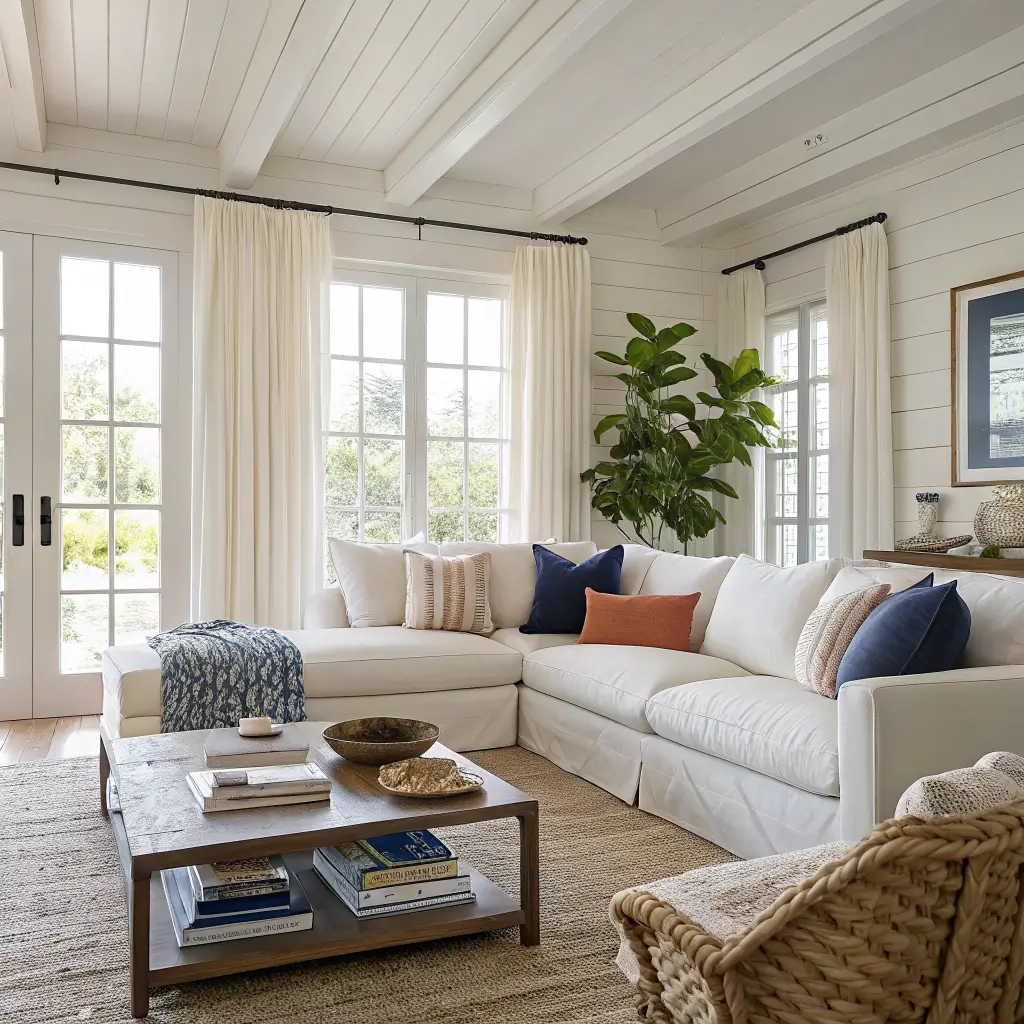
Forget the anchors. Modern coastal — sometimes called California casual — is about light walls, natural fibers, weathered woods, and a soft blue or sandy palette. The vibe is the air after you’ve been at the beach, not a beach-themed bedroom set.
This works for you if:
– You’re a renter who can’t paint or replace flooring and needs the look to come from textiles, art, and accessories.
– You live near the coast and want the inside to echo what’s outside.
– You like minimal but find pure white minimalism cold.
– You’re decorating a bedroom, living room, dorm, or small office and want it to feel like a quiet exhale.
It scales down to about a 10×10 bedroom and up through a 300 sq ft living room without much change in approach — the principles hold.
Time and Budget: What You’re Actually Looking At
A pillow-and-art refresh: 2 to 4 hours, including the time you’ll spend standing across the room squinting at where to hang things.
A full room with paint: one weekend if you’re doing it solo.
Here’s where the money goes, roughly:
Budget refresh — $150 to $400
– Throw pillows in coastal motifs: $15–$25 each at Target, H&M Home, HomeGoods
– Small framed art: $15–$40 per piece
– A 5×7 jute or seagrass rug: $70–$130
Mid-range — $600 to $1,500
– Larger canvas or framed coastal print: $60–$150
– A rattan accent chair: $150–$350
– Linen duvet set in soft blue or sand: $120–$250
Higher end — $1,500 and up
– Weathered solid-wood coffee table or dresser: $500–$1,200
– Driftwood, rope, or bleached-wood chandelier: $250–$700
– 8×10 wool-jute blend rug: $500–$1,000
If I had to pick where to spend, I’d put the money on the rug and the largest piece of art. Pillows and small accessories are where cheap looks fine. A skimpy 4×6 rug under an 84″ sofa, on the other hand, will undermine everything else you do.
The Color Palette That Keeps It from Going Cheesy
Stop reaching for bright aqua. That’s the single biggest tell that a room is trying too hard.
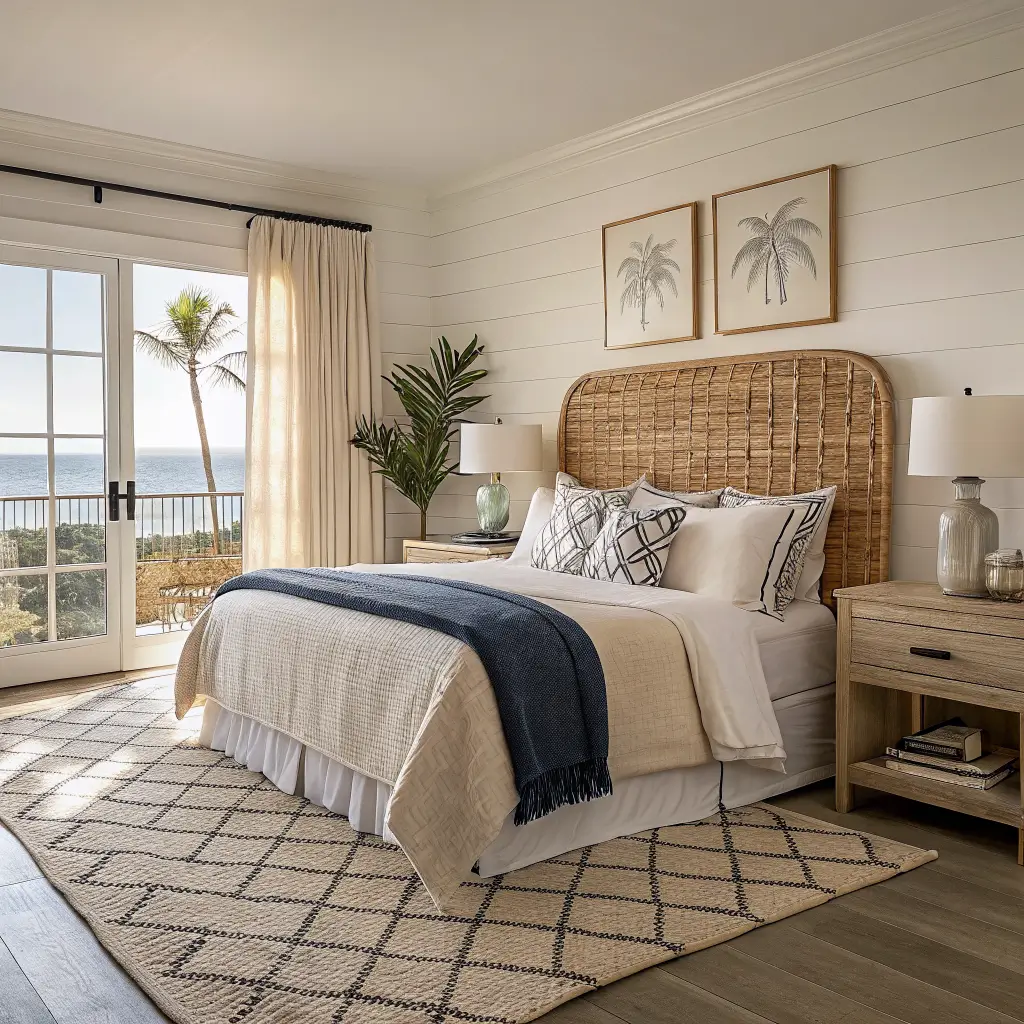
Walls: soft whites and warm off-whites. Sherwin-Williams Alabaster and Dover White are reliable. If you want a wall color with a hint of blue, Sherwin-Williams Watery or Topsail are both quiet enough to live with.
Larger furniture and rugs: sand, oatmeal, pale greige, warm beige, white.
Accents: faded navy, sea-glass green, muted coral, and a little terracotta for warmth. A pure-saturated turquoise looks great on a vacation rental Instagram post and exhausting in real life.
The ratio I use: 60–70% light neutrals, 20–30% soft blues or greens, about 10% darker accents like navy or charcoal for depth. Without that 10%, the room reads bland. Without the 70% neutral base, it reads theme-y.
Materials That Do the Heavy Lifting
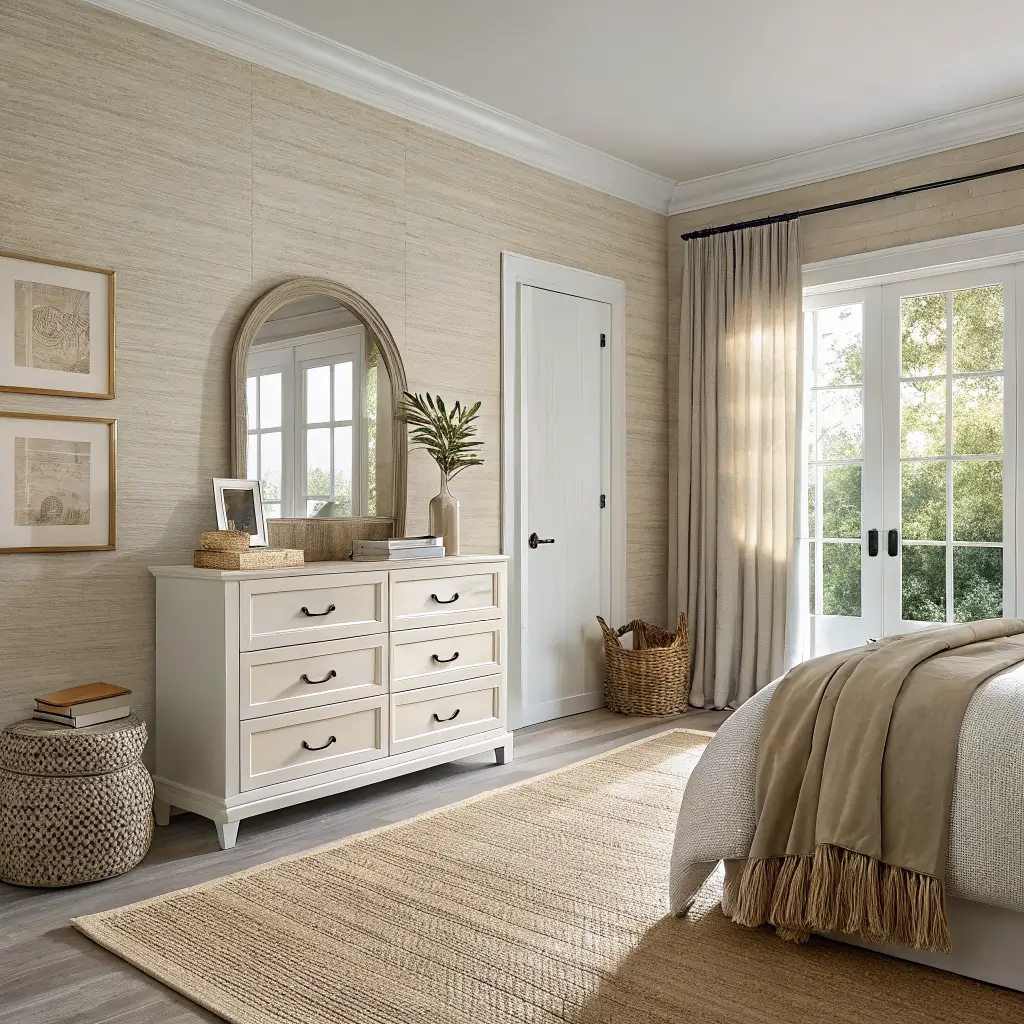
The materials carry this style more than the colors do. If you got nothing else right but used these in combination, the room would still read coastal:
– Woods: weathered oak, whitewashed pine, light rattan, driftwood finishes
– Fibers: jute, seagrass, linen, cotton, rope, lightweight gauze
– Ceramics and glass: matte white pottery, sea glass, simple stoneware
– Metals: brushed brass or matte black, used sparingly — a lamp base, a picture frame edge
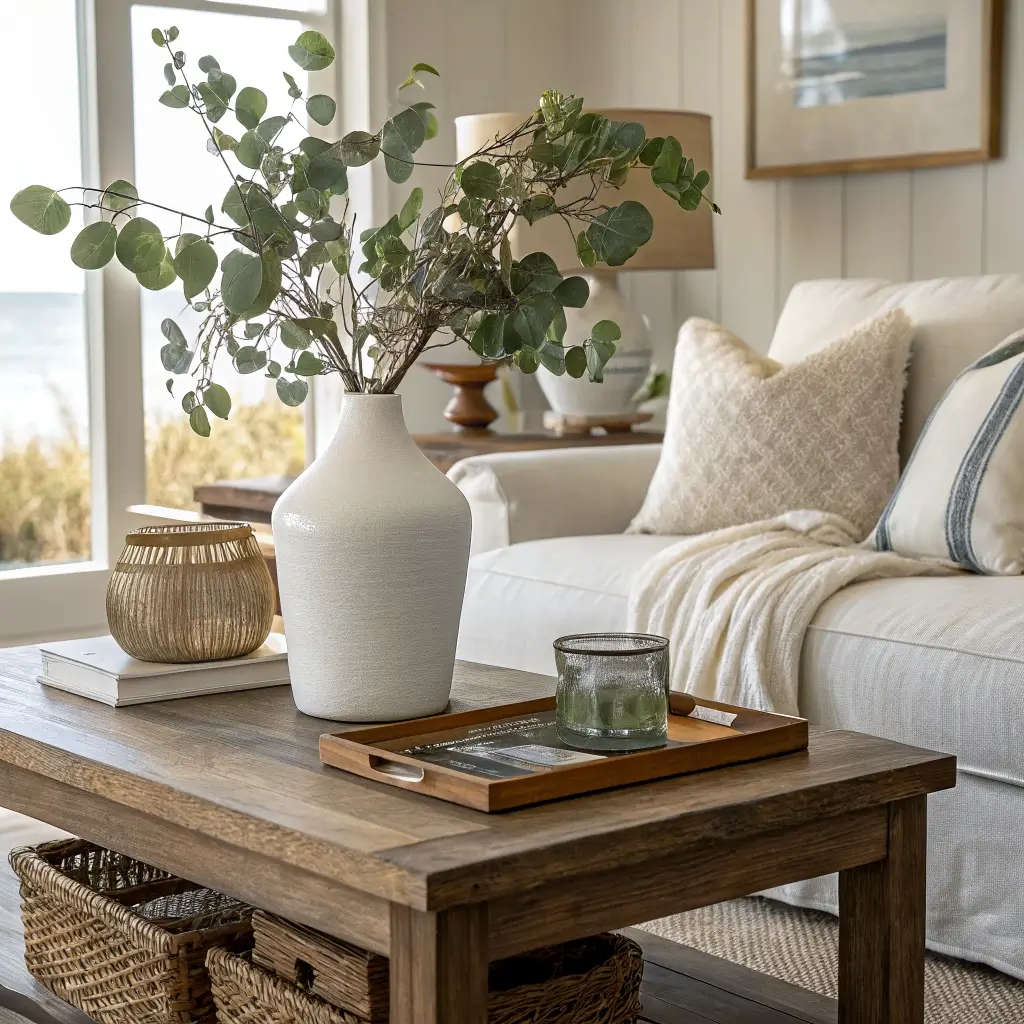
Mix smooth and rough on every surface. A glossy ceramic vase next to a knobby jute coaster on a weathered wood table is doing more work for the style than any “beach” sign ever could.
The Hero Pieces
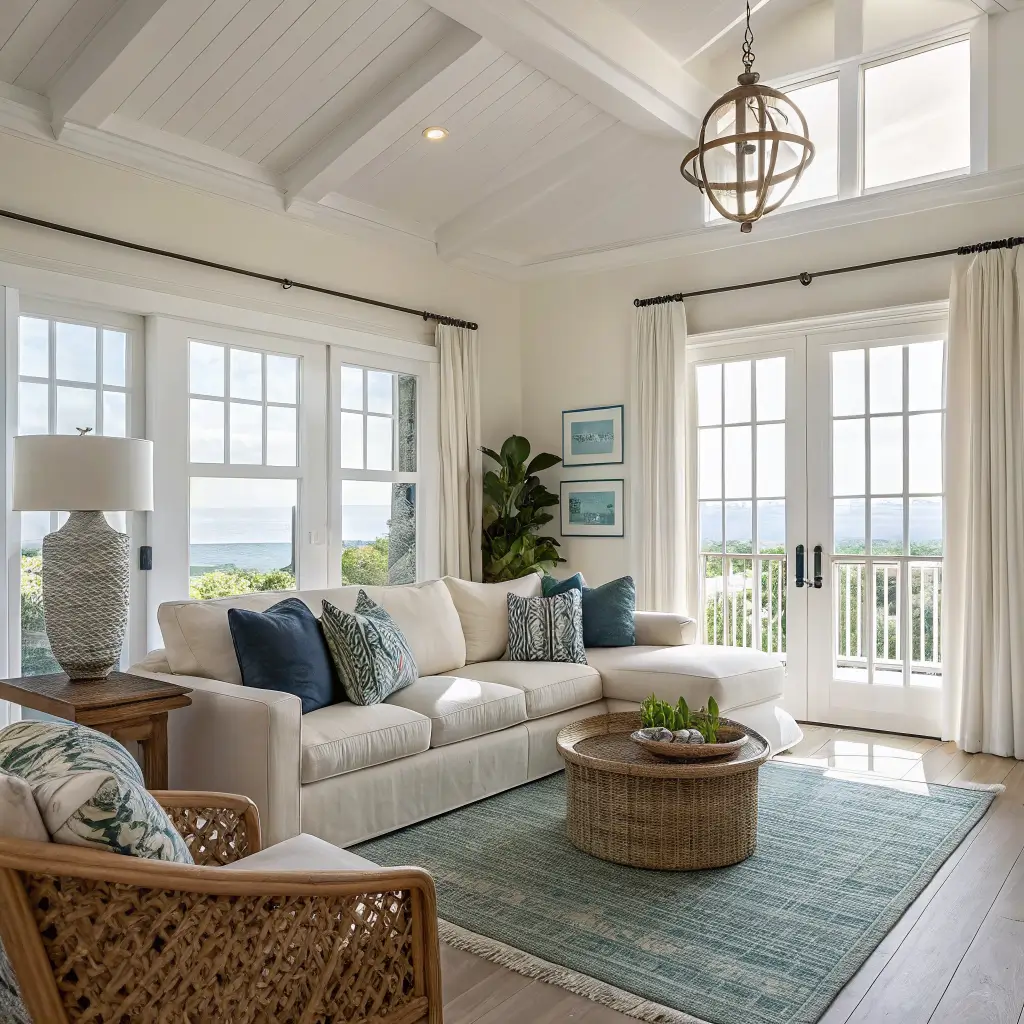
Every coastal room needs three anchors. Get these right and the rest is decoration.
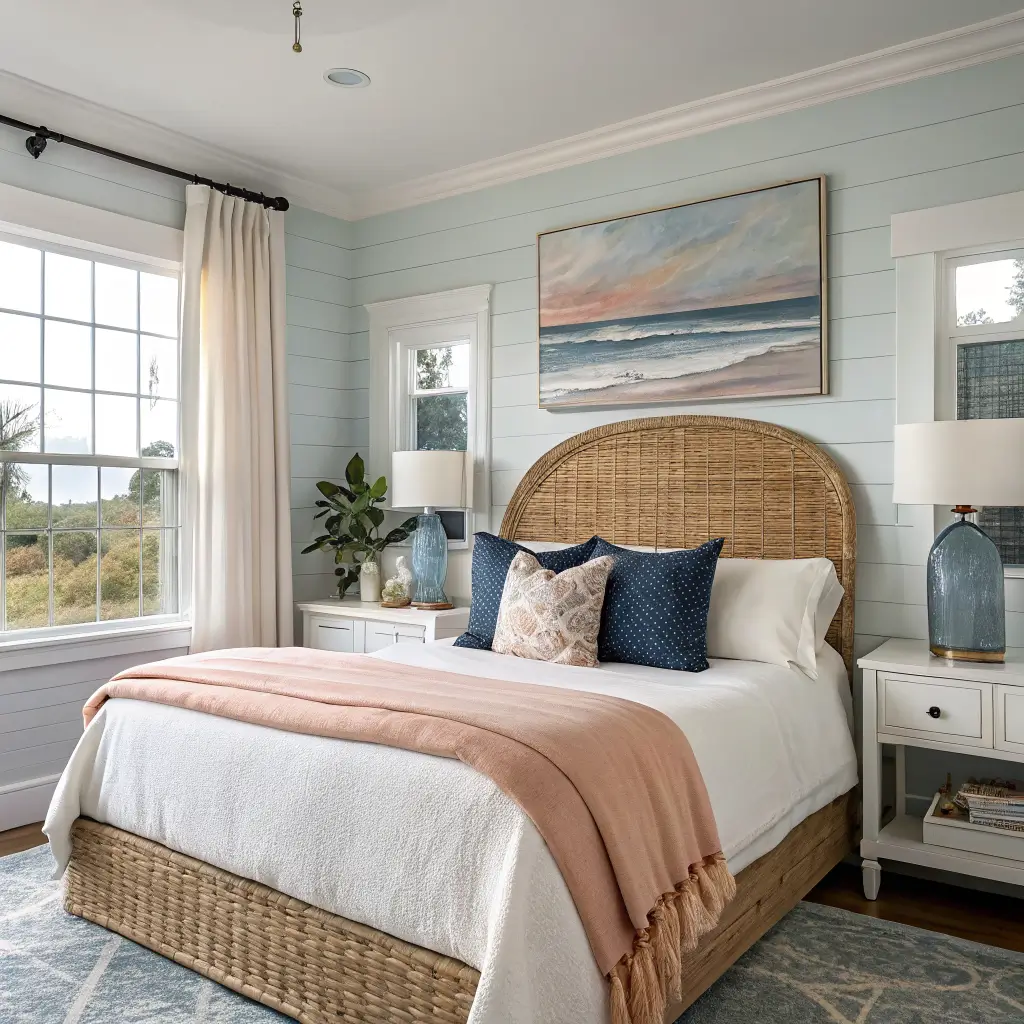
1. A light, soft sofa or bedframe. Slipcovered white or cream sofas are the obvious move for a reason — you can wash them, and they read airy without trying. For bedrooms, a rattan or woven headboard does the same job in one piece.
2. A natural-fiber rug. Jute or seagrass. This is non-negotiable for me. It’s the texture of sand underfoot translated into a rug. Size it generously — in a bedroom, it should extend 18–24″ past the sides of the bed.
3. One large piece of coastal art. A single big ocean photograph, a wave print, or a watercolor seascape above the sofa or bed. Make it roughly two-thirds the width of the furniture below it. Tiny art over a king bed is the proportion mistake I see in 90% of attempted coastal rooms.
How to Put It Together, Step by Step
Order matters here. Doing it backwards is why people end up frustrated and adding more shells to fix problems that more shells can’t fix.
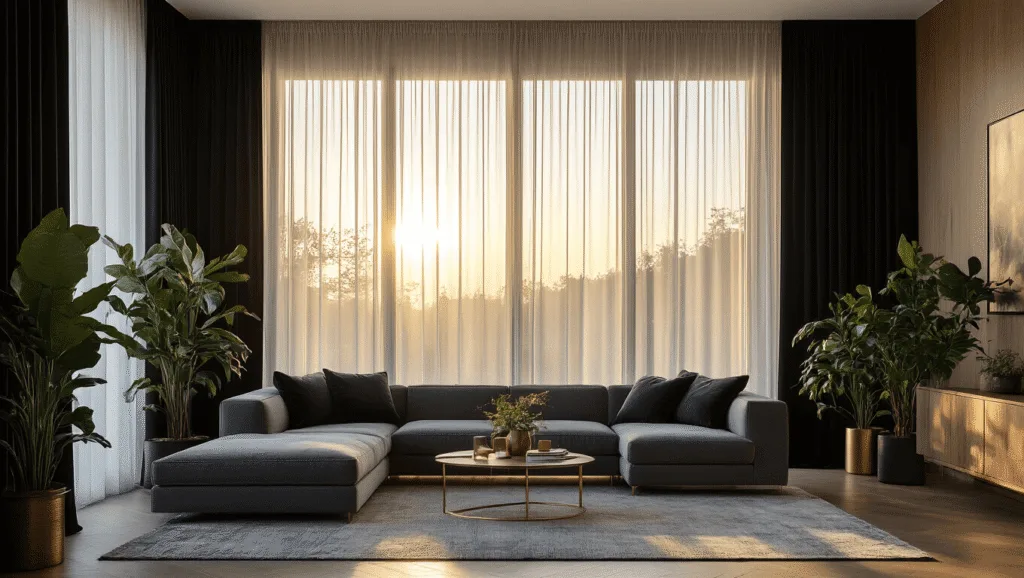
1. Start with the background. Paint or peel-and-stick wallpaper first, before anything else is in the room. Swap heavy drapes for lightweight cotton, linen, or sheer panels in white or sand. If you do nothing else, change your curtains — heavy dark drapes will kill a coastal room faster than anything.
2. Place the big furniture. Position the sofa or bed where it gets the most natural light. Keep walkways open. If you can swap one dark wood piece for a whitewashed or light-wood one, do it now.
3. Lay the rug, then add lighting. Rug under the front legs of the sofa at minimum, fully under the bed extending past the sides. Use warm white bulbs (2700K) in every lamp. Cool daylight bulbs will make the whole room feel like a dentist’s office.
4. Layer the textiles. On a sofa or bed, use 2–3 pillow designs: one stripe, one organic motif (palms, coral, abstract waves), one solid. Stop there. Add a lightweight throw — waffle weave or loose linen — draped, not folded.
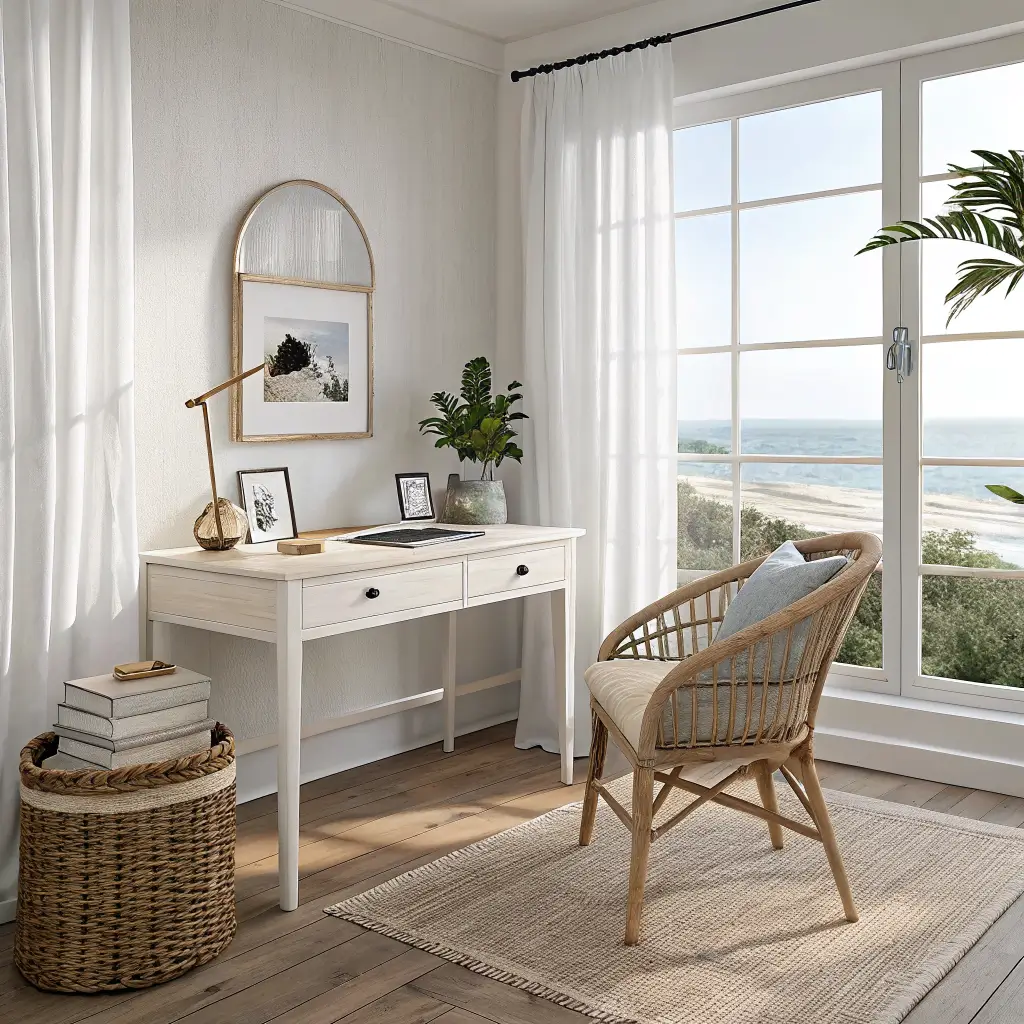
5. Hang the art and a mirror. Big art at eye level. Add a round or arched mirror on the wall opposite a window — it bounces light around and gives a subtle porthole nod without being literal.
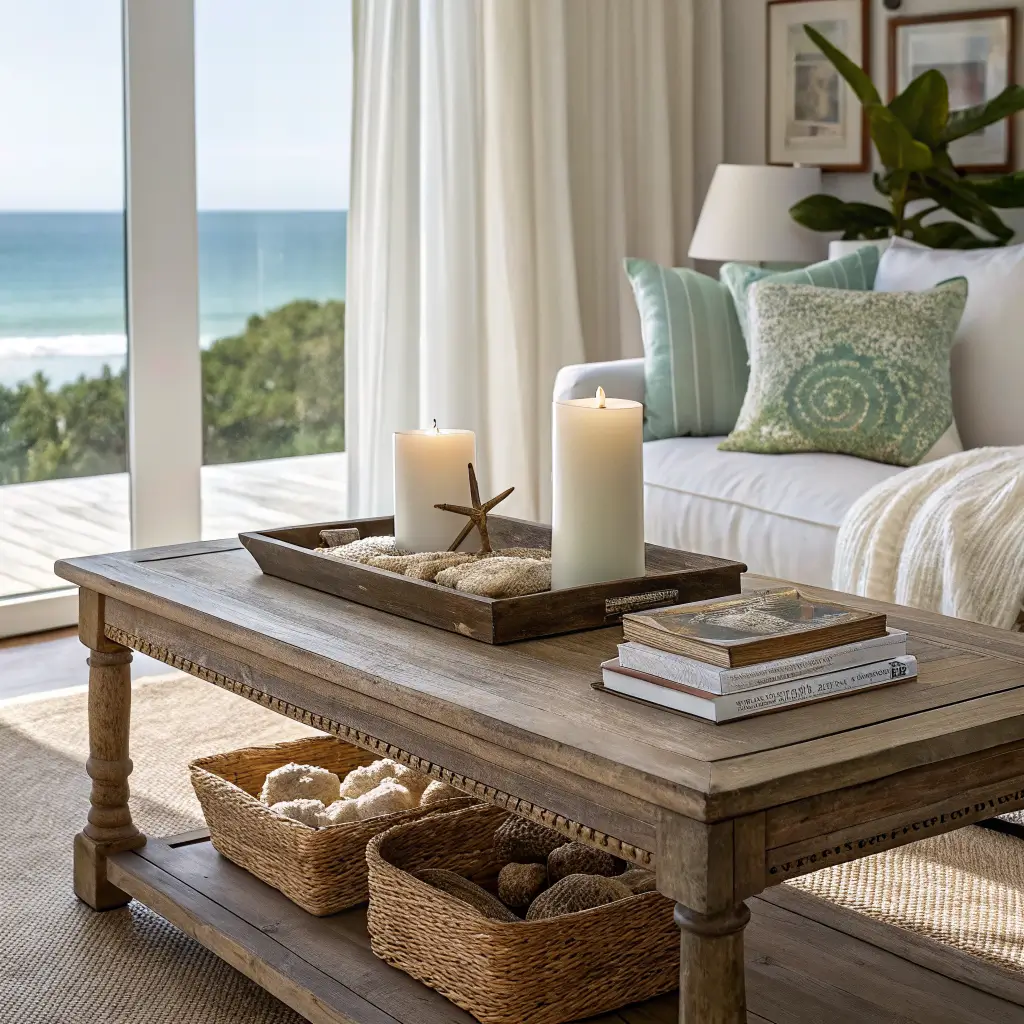
6. Style surfaces in groups of 3 or 5. A coffee table tray with a candle, a short stack of books, and a low bowl of shells or smooth stones. That’s it. Resist adding a fourth thing.
7. Add greenery and one personal touch. A snake plant, a small palm, or some grass-like greenery in a woven basket. Then one real piece of you — a framed photo from a trip, a jar of sand from a beach you actually went to. That’s the difference between a styled room and a styled room that feels like yours.
The Mistakes That Sink Most Beachy Rooms
I’ve made most of these. Skip ahead.
Going too nautical. Anchors, ship wheels, red-white-and-blue stripes. Cap obvious nautical items at one or two pieces, max.
Keeping dark, heavy furniture. A chocolate-brown leather sectional fights everything else you’re doing. If you can’t replace it, get a light slipcover or drape a heavy oatmeal linen throw across the back and load it with light pillows.
Scattering tiny shells everywhere. Corral them. One glass cylinder or wide ceramic bowl, all the shells inside, done.
Too many patterns at once. Pick one main color family and let the textures do the variety work.
Wrong proportions. Rug too small, art too small, lamps too short. If you measure nothing else, measure the wall above your sofa or bed before you buy art.
Renter-Friendly Workarounds
If you can’t paint or drill freely:
– Peel-and-stick wallpaper on one accent wall. The grasscloth-look options are surprisingly good for coastal.
– Tension rods for curtains so you can hang sheers without brackets.
– Command strips rated for the actual weight of your art. Don’t trust the small ones with a real frame.
– A large leaning mirror against the wall instead of a hung one.
– A jute rug over ugly carpet covers a multitude of landlord sins.
For a dark room with bad light, the trick isn’t more lamps — it’s reflective surfaces. Add a large mirror, swap any matte décor for a glass or ceramic version, and use light-colored throws over any dark furniture you’re stuck with.
Easy Updates by Season
The bones stay the same year-round. You’re just swapping textiles and a few accents.
Spring and summer: brighter aqua or soft turquoise pillow covers, lighter cotton throws, fresh greenery, a few playful motifs if you want them (a surfboard print, a single piece of coral).
Fall and winter: swap to deeper navy, camel, and charcoal pillow covers. Add chunky oatmeal or grey knit throws. Keep the walls and big pieces light — this is “winter beach house”, not a switch to a different style.
The cheapest evolution is swapping pillow covers instead of buying new inserts. A set of four covers runs $40–$60 and changes the whole room’s mood.
Coastal Crossed With Other Styles
If pure coastal feels too quiet to you:
– Boho-coastal: more pattern (mudcloth, block prints) in the coastal palette, more plants, a low pouf or floor cushion.
– Scandi-coastal: cleaner lines, more restraint, almost all white and pale blue, light woods only.
– Farmhouse-coastal: shiplap and matte black hardware, but keep the palette light and lean on woven textures instead of barn-style accents.
Quick Answers to the Questions That Keep Coming Up
How do I do beachy without it looking cheesy? Focus on color, light, and texture. Limit literal motifs (shells, surfboards, “Beach” signs) to one or two pieces in the whole room.
Best colors for a coastal room? Warm whites, sand, soft blue, and small doses of navy. Skip bright tropical aqua unless it’s on a single pillow.
Coastal vs. beachy vs. nautical? Nautical leans on sailing motifs and primary navy-red-white. Beachy is broader and can be kitschy or playful. Modern coastal is the calm, minimal version — natural materials, soft palette, no overt symbols.
What if I can’t paint? Light curtains, a jute rug, a leaning mirror, and a peel-and-stick wallpaper accent will do 80% of the work.
The thing I wish someone had told me before I bought that anchor: a coastal room isn’t built out of beach objects. It’s built out of light, texture, and restraint. Get those right and you can leave the shells in a single bowl on the dresser — which is exactly where they look best anyway.
When I finally stopped buying coastal-themed objects and started paying attention to how light moved through my rooms, the whole thing clicked. A beachy room decor approach works best when you treat it like a quiet backdrop for real life, not a stage set.
Conclusion
The beachy room decor that worked for my friend was not anchors and starfish. It was a living room with white walls, a jute rug, a slipcovered sofa, and a single framed photograph of a foggy morning on the shore. She had added a ceramic bowl of shells she had collected herself, a stack of books about sailing, and a lamp with a base that looked like driftwood. The room felt like the coast because the objects had come from the coast, not because they had been bought to look like it.
More Decor Ideas to Explore
- How to Decorate a Beachy Bedroom That Feels Like a Resort, Not a Theme Park
- 16 Upcycled Garden Decor Ideas That Turn Junk Into the Best Part of the Yard
- Little Living Room Ideas That Actually Work in a Tight Footprint
- Coastal Living Room Decor That Doesn’t Look Like a Gift Shop: A Modern, Rental-Friendly Guide